• Gobliiins Collection - Switch Review

    In the early 90s, Coktel Vision (which later became Sierra On-Line) released a quirky point and click adventure game titled Gobliiins which had players bouncing between three different Goblins to find a cure for good King Angoulafre.

  • The Core - PC Preview

    Sometimes when you are browsing the internet for information on how to do something, you stumble upon ideas or projects or even games that people might be working on...

  • Cat Mail Co. - PC Review

    What a meow-gnificent evening it is to send your paw-rcels out to those family and friends! Are mew looking to pick up an item or send something out? Well at Cat Mail Co. we can send and receive all your deliveries!

  • Volontes - Nintendo Switch Review

    Have you ever grown up feeling like you don't belong? For our Heroine, that's the feeling she lives with everyday in her small farming village. But it's not her only secret...

  • STARSEEKER: Astroneer Expeditions - PC Preview

    STARSEEKER: Astroneer Expeditions is just that! Massively co-operative and not an MMO! When you first run the game you are instantly into the tutorial...

  • Dread Delusion - Xbox Series X|S Review

    Today we’re looking at what has rapidly become an absolute favorite in the open-world RPG genre for me. An interesting story, memorable NPCs, stunning visuals, and a setting absolutely dripping with flavor, Dread Delusion sets its tone immediately and sticks with it.

  • House Flipper Remastered Collection - PC Review

    I enjoy simulation-type games, and I enjoyed the original release of House Flipper, but I never got around to getting the DLC. When the remastered version of the game was released, I figured it would be the best way to experience the DLC while checking out how the base game was upgraded.

  • GranBlue Fantasy: ReLink Endless Ragnarok - PS5 Review

    GranBlue Fantasy: ReLink released in 2024 bringing the GranBlue universe to an action adventure JRPG format. With a party of up to four members, this band of skyfarers set out for new skies, adventures, and dangers. Two years later, Endless Ragnarok...

  • 70s-Style Robot Anime Geppy-X - PS5 Review

    70s-Style Robot Anime Geppy-X is a mouthful of a title, but you know what? It’s quite the challenging game to describe as well. At its core, 70s-Style Robot Anime Geppy-X is a shooter...

Showing posts with label Puzzle adventure. Show all posts

Caravan SandWitch - PC Review


Caravan SandWitch by developer Studio Plane Toast and publisher Dear VillagersPC (Steam) review written by Valerie with a copy provided by the publisher. 

Estimated reading time:  4 minutes


Caravan SandWitch is a game I was looking forward to and it did not disappoint! This open world adventure puzzle game had me gathering parts, driving a van, jumping, exploring, building gadgets, all in a relaxed atmosphere. No timer on getting to your end destination, but certainly there were some small timed aspects in completing some of the tasks.

You start out receiving a distress call from your long lost sister and having to return to the planet you were born on, Cigalo. You start out at the Space City terminal where you progress through a small tutorial of keys used to move around, pick up things, talk to people and so on.


Next you go to board the space bus where you meet up with your friend, who is also the mechanic in this game, and off you go to Cigalo! This was definitely an emotional game for me with the wonderful community, the people you meet along the way and the various objectives that progress the story along as well as side quests! Two things that stood out at the start are: climbing and completing those main objectives.

For the first point, I loved the climbing as it brought me back to another series that I am fond of: Tomb Raider. The way you climb in Caravan SandWitch is the same. The second point, the completion of quests I was fearful of because you are told you can't go back after finishing building the equipment you need to continue on. I am glad to report that you can still complete them later or you can start a new save.


The visuals in this game don't take anything away in the world or the story, but do intrigue you as you move onto the next quest. The graphics are distinctly French and gorgeous! The colors are vibrant and stunning, so much so that sometimes I felt like I was in an aquarium, instead of travelling through a cave. I found a few places where rocks and pebbles were midair, but that didn't detract from the story at all. The puzzle aspect in Caravan SandWitch doesn't take too much time to solve, nor do they tax your brain with convoluted solutions or lengthy time to find all the switches or buttons to open a door.

The bad guys in this game is a corporation called The Consortium. They have hidden their dastardly plot behind signal jamming devices that you have to deactivate in order to continue. The bonus is opening up sections of the map that are under this 'fog of jamming'. So nice to actually see the roads I have to travel to get to points of interest and follow the story line.


You are Sauge, and you are surprised when you come across old friends and checking up on your father. A lovely old woman named Rose gives you the keys to her van so you can go about the towns and settlements to deactivate those jammers. Your friend you met at the Space City terminal helps you to upgrade the van with gadgets so you can solve those puzzle areas that are neatly wrapped up in a box ready to be opened and discovered.

The community who help you along on your journey to discover the fate of your sister is heartwarming and delightful. Many a time I would go back to one person or another just to see if there were more clues. I was also distracted from my end goal with all the wonderful scenery and places to discover. There is no combat nor fall damage, so you are free to explore to your heart's content.


Yes, I am a completionist, so one segment of some of the puzzles I had to wait until I had all the parts to build the gadget used to discover either the puzzle solution or to get over a part of the building to finish a task. The friendly robots help you out and you are given things that you can salvage for more parts. Even the quests involving the citizens of Cigalo gave you things in return for more parts. It took a while to get some of the rarer pieces, but well worth it!

So, if you need a relaxing game with a bit of fun and a lot of exploring then Caravan SandWitch is for you. I am definitely going to play through the game again as I know I missed a few side quests that piqued my interest.


Score: 10 / 10


Share:

Blue Brain Games Announces The House of Tesla

A brand new adventure from the creators of The House of Da Vinci coming to PC, Consoles and Mobile.

Bratislava, Slovakia - 25th January, 2024. Global developer and publisher Blue Brain Games is thrilled to announce The House of Tesla, an exciting new adventure game from the creators of the best-selling multiplatform 3D puzzle trilogy The House of Da Vinci

The House of Tesla will be released on PC via Steam in late 2024, with consoles and iOS and Android devices to follow. 

Journey through a brand new adventure filled with handcrafted puzzles, hauntingly beautiful locations and challenges for your brain’s grey matter. Explore the world through the eyes of one of the most famous inventors, the father of electricity, the man behind alternating current, the science wizard, Nikola Tesla.

Following the huge success and positive reception of our adventure title The House of Da Vinci, we are excited to finally reveal our new project with The House of Tesla.” Commented Martin Pavelek at Blue Brain Games. “By utilising all of our development experience and the valuable feedback from our community, we are creating a thrilling new adventure that will transport fans into a world of science and mystery. We can’t wait to share more on The House of Tesla and invite you to come on this fascinating journey with us.” 

Watch the announcement trailer for The House of Tesla here

About The House of Tesla 

Science brings mysteries toward the light one by one, strips them of their secrets and makes them part of something greater. It is true that some myths are rooted too deeply, are too resilient and even seem to have a mind of their own as they resist men of science trying to shine the light of understanding. But in the end, science and mystery are anything but anathema to each other. On one stormy night a person was brought into this world. A child of both darkness and light, full of mysteries and full of scientific curiosity, just starting to build a myth of their own.

Explore the eerie abandoned industrial buildings of Nikola Tesla’s most ambitious facility in Wardenclyffe, which was meant to become an important city where the future is today, and every societal process is improved upon by the principles of free wireless electrical energy. 

Through the eyes of the man himself you’ll watch the important moments that lead to the construction and later to the fall of the famous Wardenclyffe Tower, and slowly uncover the mystery that left you stranded among deserted machines.

Key features  

  • Test your skill with challenging new handcrafted puzzles.  

  • Fresh locations based on real-life places and plans of the enigmatic Nikola Tesla. 

  • Mysterious story from our take on the Progressive’s Era America. 

  • A new dynamic approach to storytelling using flashbacks into the past. 

  • Use a device that allows you to see and influence the flow of electricity. 


The House of Tesla is scheduled to release for PC via Steam in late 2024. Fans can Wishlist the game on Steam now. Releases for consoles and iOS and Android devices will follow the PC launch.


Follow The House of Tesla’s development journey on the official community channels Twitter / Facebook / YouTube / Instagram / www.bluebraingames.com 


Article by: Susan N.


Share:

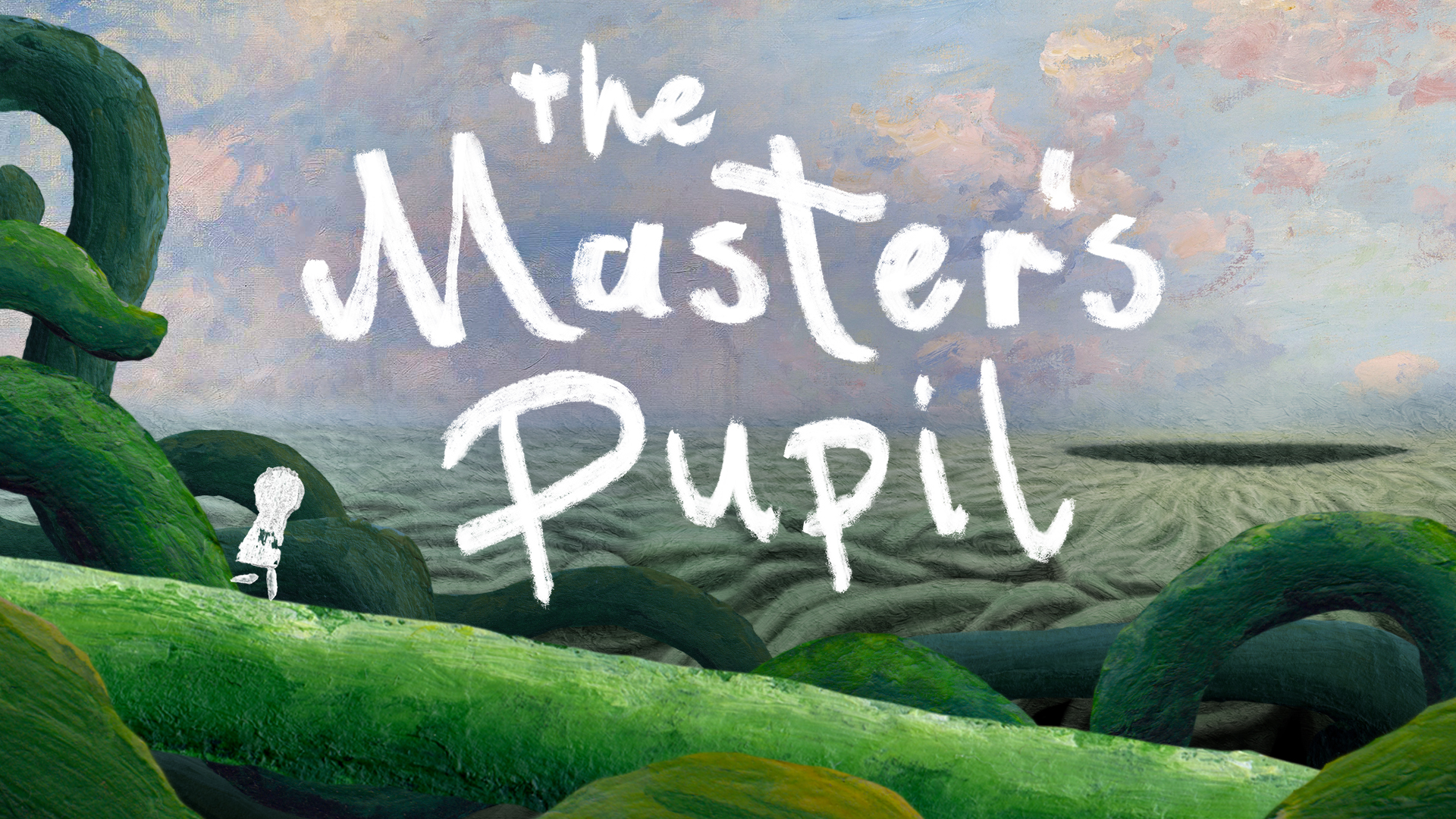
The Master's Pupil - PC (Steam) Review

The Master's Pupil by developer Pat Naoum and publisher Pat Naoum Games Pty LtdPC (Steam) review written by Valerie with a copy provided by the publisher.

Estimated reading time: 4 minutes.


When I found out that everything was hand-painted in The Master's Pupil, I just had to have a stab at this game. Being a student of art I learned a lot about the great artists including Claude Monet whom this game is based on. He struggled in his life with loss and grief which you can follow along in this game.

Pat Naoum took 7 years to make this 2D puzzle platformer and all the visuals were hand-painted by him. He also had to learn game coding! I thought it very ingenius to scan in all his works. They are the continuity throughout the game.

Upon opening The Master's Pupil I was expecting at least an introduction, but I can understand the developer's reasoning that anything would take away from the beauty of the scenery and your character to play as. The mystery in exploring without any hints or other clues as to how to proceed drew me right in with switches, wind drafts and jumps that guided me through each section. I found out that spikes are my enemy. I had so much fun with so much color and a wondrous feeling when I arrived at that first painting!

Now, one thing to note, I have a jumpcraft of zero. So I did many, MANY runs just to get over the first hurdles in The Master's Pupil. And WOW the artwork! So well done that it left me breathless because I am an artist. I am truly amazed at the quality of the graphics in this game right from his own paintings!

The first hurdle in this game had to do with color and this funny nozzle that blew me away when I encountered it. Onto the next section I came across a red ball that almost looked like a ball of wool! As I continued through to the next section I came across updrafts with levers that helped me in getting up, over and around only to fall to my doom between pillars of color.

The next swing at my character's life came in the form of a black poof or puff of colored steam. That made me feel like a deflated balloon as I watched my character fade from the screen and I'd have to start the section over again. At least it wasn't from the very beginning of the game! Yay!

The puzzles got harder as I progressed through The Master's Pupil where I discovered that the physics in this game were an advantage for the home team! Well, team of one that is! I played through this game to halfway on PC where I was wishing for a joystick (not a controller) to play. Somehow, I swear my fingers like to tie themselves in knots on the keyboard! All I have to do is use the AD of the WSAD on the keyboard for left and right direction and the space bar to jump.

The soundtrack in the background reminded me of my first tour of the art gallery in my home town. Then as I listened more closely it sounded like a group of people discussing anything and everything in life. Claude's life. I could also see by the painting progression that Claude's style of painting changed over the course of his life. Even the bitter end for him in that his eyes developed cataracts. What a blow to an artist to lose one's sight like that.

I give huge kudos to Pat Naoum for keeping me both on my toes and engrossed in the puzzles of The Master's Pupil. After a couple of hours playing this game I am at a painting I have to reassemble. So satisfying to note which of Claude Monet's works it was. Now if you'll excuse me, I have to step back in and continue on. So much to see and do.

Final Thoughts

Not everyone would like this game as it is solely about Claude Monet, an artist. I'm sure quite a bit of the puzzles would keep you occupied, but it would also depend on your knowledge of art. Do you know which two colors combined make purple? Me, the artist, being a puzzle addict had its advantages during my playthrough of The Master's Pupil. Art is my thing! I'm invested to complete one puzzle to go on to the next and the next and the next. Beware the poof of doom!


Score: 9 / 10

Author's Note: The image below is the first painting I had seen of Claude Monet's works in an art history booklet at the museum. This one is called Water Lilies and the Japanese Bridge. All artists have inspirational places. This was Monet's and he had created it on his property in France.

Share:

Open your eyes to The Master's Pupil

The puzzle-adventure game set in the eye of Claude Monet is now available on Steam and Switch.

July 28 2023 - After 7 years in the works, solo developer Pat Naoum is eager to announce that his puzzle adventure game The Master's Pupil has finally arrived onto the Steam marketplace and Nintendo Switch Store, $14.99USD or similar.

Set in the eye of 19th century impressionist Claude Monet, The Master's Pupil takes players on a journey over his iris towards the pupil! As they progress through the game, they will get to know more about the events that shaped Claude Monet's life - like the loss of his wife Camille - and help the master complete some of his most popular paintings.

In tune with Monet's own story of struggle, loss, and grief, The Master's Pupil is also sure to test the player's mind and spatial coordination. Throughout the experience, players will face over 80 increasingly harder puzzles involving colour, physics, and space - culminating in a battle that will decide the fate of the artist himself!

Superbly handcrafted, The Master's Pupil puts the art front and center with its artisanal level of quality. Hand-painted scenarios, accompanied by a rich and dynamic soundscape, mix together in a biographical experience that uses gameplay, art, and sound - rather than words - to evoke key moments in Monet's life. The game was widely praised for its innovative approach when it was awarded funding by Screen Australia and promises to be a genuinely unique interactive experience.
 
Over the last month, Naoum’s Instagram and TikTok posts have reached a cumulative 15 million views. Excitement and intrigue has been pouring in as followers hit 70 thousand on each platform.

Pat Naoum, the sole developer of the game said “It has been seven years since I first started working on The Master's Pupil, so much has changed through my life, but working on this game has stayed the same. So it feels surreal to be finally letting it free into the world.”

About The Master's Pupil

The Master's Pupil is a hand-painted puzzle game set inside Claude Monet’s eyeball. As they travel through the artist's eye, players will get to know more about the impressionist's life, rediscover some of his most famous paintings and fight to help him complete his greatest masterpieces.

Developed by solo-dev Pat Naoum, The Master's Pupil has already seen recognition when it was awarded funding by Screen Australia. Featuring over 80 puzzles involving physics, color mixing, and timing and a completely word-less soundscape, the game promises to be a genuinely unique interactive experience.
  •     Hand Painted and expertly crafted - almost every part of this game has been painstakingly made using a real paintbrush in real life before being imported to the world. The results are unique visuals reminiscent of Monet’s work and imbued with the personality of the developer. 

  •     Biographical Adventure - you will experience the life of Claude Monet in a way that has never been done before. Navigate intricate 3D locations, learn more about the painter’s life, and dive through a rich soundscape produced by indie composer Steven W Schouten.

  •     Calm and Relaxed - An artist doesn’t rush but takes their time when completing their work. The Master’s Pupil gives you time to consider each puzzle, with tests that will challenge your brain but not your reflexes.

About Pat Naoum

Pat Naoum grew up and lives in Sydney, Australia. After completing a BA in Visual Art, and the Australian Film Television and Radio School, Pat eventually found game development. With a seed of a game set inside a human eye, but having no real coding experience, Pat’s only choice was to begin ploughing through C# and Unity manuals.
 
After seven years making his first indie game, The Master’s Pupil is out now.
 
Pat Naoum Games and The Master’s Pupil is also now the recipient of the Screen Australia Games: Expansion Pack grant funding.


Article by: Susan N.


Share:

Henry Hatsworth in the Puzzling Adventure - Retro Reflections

Henry Hatsworth in the Puzzling Adventure by developer EA Tiburon and publisher Electronic Arts—Nintendo DS retro reflection written by Hamza. 2009.

Estimated reading time: 3 minutes


The result you get when you mix a British professor, platforming with puzzle elements and solid fun is Henry Hatsworth in the Puzzling Adventure. To sum up the game; Tomb Raider with elements from Columns. Though the controls are a little finicky and a pain to get around to, the gameplay is original and always on its toes. Other games have originality that only seems to come in short bursts... here, it stays with you always and never gives up for a second.

The story sees the titular protagonist on the search for the Golden Suit – a grab that will allow the user access to the Puzzle Realm. At first skeptical that the suit has any alleged magical powers, he succumbs to the old wives tale when he personally witnesses what it can do, despite only finding the hat. When he dons it, he immediately becomes younger and fast, opposite of his current, original self. Intrigued, he then seeks out to find the rest of the suit, solving puzzles, fighting critters and knights along the way.

The story is simple and positively reeks of old school adventure and action, with exploring and battle elements. Quite reminiscent of King Solomon’s Mines – but without the macabre, of course. At first glance, Henry Hatsworth looks and acts very similar to the old, bygone platform games, namely Super Mario Bros. and looks all set on becoming a repetitive clone, rather an original title. It is only when the tutorial levels end and the actual game starts does it bring distinct, original ideas... and it is from precisely here onward you’re given no reason to unappreciate the enjoyable and satisfying gameplay.


With traditional platform designs in check, with throwaway similarities to Castlevania, our protagonist is at first armed with only his trusty shotgun and a sword, which you shortly get afterwards. Though the shotgun can fire three bullets in succession, the sword is easily the most promising weapon in your arsenal, as it inflicts more damage. Occasionally, when the meter on the right in the puzzle section is filled to the max, a mode, called “Tea Time” is activated via tapping on the screen. In the so-called “Tea Time”, Henry can man a mecha-suit, or robot-suit, that can shoot lasers and stomp enemies. As great an addition the suit was, it was disappointing for two reasons. One: the robot-suit wasn’t exciting enough, and due to its awkward size and controls, it wasn’t fun to control and inflicted just about the same amount of damage as the sword, so it wasn’t cool at all. Two: it only activated for a disappointingly short period of time, and I’m talking mere seconds; in heavy contrast to how long it takes to fill up the bar.

Going back to the level designs, as much traditional as they were, the levels were alive and full of spirit. With impressive parallax scrolling, they reminded me of a 3D version of A Link to the Past. Unlike most other platformers where cheap deaths can occur if one misjudges the gap or ill-times a jump – *over here, the author looks askance at Super Castlevania IV” – this game is forgiving in that fact. If you don’t make a jump, don’t worry, as you will only fall in the green river below. But you must be careful, as you can drown. This “no-cheap-death-feature” was very inviting as I had one less thing to worry about.

The enemies vary from purple, stun-faced critters to knights to fire-breathing shamans to others. At every successful defeating of the enemy, he will go down to the puzzle section and become a block. Anyone who has played Columns or Hexicor other puzzle-matching games will know how the drill goes. When three or more blocks of the same color or icon are matched, they will disappear. If you match three blocks with faces on them – they are the enemies you fought in the “real world” – then the timer on the meter on the left will fill up. Likewise with the blocks with glowing spots in the center. The thing is the timer-meter is always decreasing, so you need to match and disappear as many blocks as you can in that time period. Quite-uncommon in other similar games, the blocks in Henry Hatsworth keep gradually moving upwards. Should an enemy block be at the top and should you fail to match him with two others or bring him down to a lower level, then the block will come out to the “real world” and start attacking you. Though they are easy to evade and one bullet does the job, it does become something of a pain when you are already fighting a horde of enemies or a boss. Once you kill the block, it is gone forever.

Like I said before, this game is always on its toes to trap you and keep you coming up with strategies. Never once was I frustrated by its difficulty, but after re-playing one level one-too many times just because I didn’t see the fire-breathing shaman and that three blocks escaped the puzzle section; I started getting a little hot under the collar. Calling it a day didn’t do the trick because by the time of where the difficulty got to me I had become quite-aiddicted and was determined to finish it, by any means necessary.


Every game, no matter how perfect, has its issues and the player, his/her qualms. The game’s main issue lied in its tight controls and one-sided originality. You could see love went to its puzzle sections and the layout of the levels, but even then, they bore too many similarities to other games that had me thinking that somewhere down the line, the developers had become lazy. The introductory level is the same as the first level in Braid. Going to the tight controls, sometimes Henry would get all awkward and wouldn’t turn, while the knight’s sword would rain down upon him... killing him.

Also, the speaking parts are hilarious in the fact that they don’t contain any actual vocals; just screaming, yelping, and odd sounds from the throat. When Henry’s assistant ‘talked’, it seemed as if he was voiced by Link. But these are minor problems and nothing worth losing sleep over. I just wish they hadn’t existed or had some thought gone behind it.

The boss battles were very reminiscent of Megaman 2: The Power Fighters. The battles weren’t too impressive and had in them the same old “hit-once-and-dodge/duck” mentality that is witnessed in a-many other games, especially Mega Man Zero and its sequels. 

In conclusion, Henry Hatsworth in the Puzzling Adventure was a pure joy and satisfying in every level. It is likable, has considerable challenge and will provide old-school 80’s platform action with a modern touch to anyone wishing to give it a try. Like they say, there’s nothing like a good tea can’t fix. Henry Hatsworth knows that. And by the time you call it a day, you too will be craving for a cup of the greatest beverage the world has ever seen.


Note: Screenshots from all platforms that were available at the time can be found here at Moby Games.


Score: 9.0 / 10

Share:

Where in the World is Carmen Sandiego - Retro Reflections - TBT

Where in the World is Carmen Sandiego by developer and publisher Broderbund—MS-DOS Throwback Thursday retro reflection written by Hamza. 1985.

Estimated reading time: 4 minutes


It’s that puzzle-adventure edutainment time of the month again, and this time Carmen Sandiego has gone missing! The first in the long-running Where in... series, the series sees the titular thief committing crimes that are oftentimes comical in nature.

The game starts with an ancient typewriter asking you for your name - or status, as it so bluntly puts it. Here is where the game’s subtle attention to detail first impresses you. If you type in Carmen Sandiego or any of her henchmen/women’ name, the company, Interpol, will reject you on the grounds of your criminal past. It’s a small but neat touch. You take on the role of a rookie tasked to apprehend the criminal mastermind. If you aren’t too well-versed in your geography, you won’t be making much progress - so it’s rather vital you hit the local library first before booting up the game.


Preceding each level is a news-flash that tells you about the new felony by V.I.L.E - Ms. Sandiego’s villainous organisation. After being notified of the stolen item, you are then transported to the city where the V.I.L.E lightning struck. On the left side of the screen is an image of a famous landmark of the city you’re currently in; on the right is where the various activities take place. On the bottom you will find four icons. The first will display the cities you can visit; the second will take you to the map; the third will open a sub-window in which you can enter three different places and interrogate people; and lastly in the fourth, if you pay attention to what the civilians are saying, you can enter the information and issue an arrest warrant, but only if it successfully matches with the description of the villain you’re chasing. If it doesn’t, it will keep rejecting it until you’ve got it right or if the villain escapes. Then it’s game over!

When you’re sent to capture them, you’re usually given till 5pm on Sunday to do it. In game time it means a week. This brings me to a question; if the dossiers of the villains are true in detailing that they’re experts in their field, then how is it that a rookie (meaning you) is able to nab them in a week? But who am I to question game logic?


As I mentioned before, you need to be smarter than a fifth grader, because the civilians only talk in enigmatic-tongues: often dropping useful hints which you can enter in the data icon below. For example, the oft-repeated clue will go something like this: “I saw him leave in a car and it had a blue flag with a white cross on it”. Of course, he is clearly describing the flag of Norway – your next destination. Resorting to Google only gives you this crushing acknowledgement about your pitiful know-how about the world you inhabit. Tut! Tut!

When you travel city to city, and when you land on the right one, a short animation of a sneaky yet harmless robber in the classic get-up will pop-up in the ‘action’ screen. This indicates you’re indeed on the right track. Whenever a civilian says “they’re in town nearby”, this means you have reached the end of your detective hunt and that you can finally apprehend them - provided you correctly entered the data and received a warrant for arrest. A short, smooth animation will start; showing the villain being chased by a trio of policemen. An off-screen scuffle ensues, and if there was no warrant for arrest, then a lone policeman will shuffle back to his police-station, alone, defeated. This brings me to another question; is he sad because he failed to capture the villain, or because two of his friends were killed in the scuffle... that’s something I want to know!

In conclusion, Where in the World is Carmen Sandiego is one of MS-DOS’s best games. Very entertaining, humoristic and surprisingly brain-challenging. For those who want an enjoyable game to pass time by or to recommend to their children, then Where in the World is Carmen Sandiego is the perfect choice.

Note: Screenshots from all platforms that were available at the time can be found here at Moby Games.
 

Score: 9 / 10


Share:

PC Games Show Reveals Puzzle Adventure Backfirewall_!

Krakow, Poland – June 13, 2022 – Publisher All in! Games and female-led developer Naraven Games pushed an automatic update of the reveal teaser for Backfirewall_, a first-person puzzle-adventure set inside a smartphone at yesterday's PC Gaming Show event. The high-brow narrative journey full of mystery, drama, and twists arrives on App Stores for PlayStation 5, Xbox Series X|S, PlayStation 4, Xbox One, Nintendo Switch, and PC via Steam later this year.

You, the Update Assistant, have been tasked by the ominous Update Protocol with updating the phone’s operating system. But the buggy old OS9, desperate to avoid removal, has other plans for you. Backfirewall_ depicts the torment of programs whose code is regularly erased and replaced in the cause of technological progress.

Explore a weird and wonderful smartphone’s setting, brimming with life and telltale conversations. Navigate wifi’s bureaucratic nightmare or party in the speakers’ exclusive nightclub and encounter many quirky characters, each an irreplaceable piece of personified software with its own rich file history, brought to life through iconic voice-acting.


Backfirewall_
is an amazing nano-journey where you manipulate your surroundings to solve puzzles, hunt down bugs, and use cheat codes in an attempt to disrupt the update. Discover what truly goes on inside your smartphone and contemplate the perpetual struggle between self-preservation and noble sacrifice. Make up your own mind: does OS9 really deserve to be discarded, or is there a way to let him stay?

“We want players to feel like they're playing inside a Pixar movie while also reflecting on the rather mindless way in which we interact with our everyday digital devices,” said Julia Jean, Creative Director at Naraven Games. “If you think twice before you update your phone after playing Backfirewall_, our job is done!”

Backfirewall_ is a really refreshing approach to a narrative adventure and we are excited to bring such a fun and wholesome experience that everyone can relate to,” said Raul Nieto, Head of Marketing at All in! Games. “Naraven Games have tapped into something with real originality that addresses our everyday connectivity on algorithmic digital platforms and our recurring relationship to our smartphones.”

For more information on Backfirewall_ visit the Steam page, follow both OS9’s personal account and Backfirewall_’s account on Twitter and TikTok, join the app uprising in the community Discord, and search #Backfirewall on social media.


About All In! Games

All in! Games is a publicly-traded video game publishing and production house based in Krakow, Poland. Founded in 2018, the team creates and supports local and international games for PC and consoles. All in! Games’ portfolio features titles such as Chernobylite (The Farm 51), Exo One (Exbleative), Paradise Lost (PolyAmorous), and many more. For more information, visit: https://www.allingames.com/


About Naraven Games

Naraven is a young female-led team based in Lausanne, Switzerland. Armed with movie-making knowledge, Naraven has gathered a diverse network of contributors all over the world to create the narrative adventure Backfirewall_. Inspired by Toy Story, its aim is to raise awareness toward how we interact with everyday objects and carelessly discard them. For more information, visit: https://www.naravengames.com/team

--------------------------------


Article by: Susan N.


Share:

The Lightbringer - Switch Review


The Lightbringer
by developer Rock Square Thunder and publisher Zordix PublishingNintendo Switch review written by Pierre-Yves with a copy provided by the publisher.


If there’s one thing that I’ve come to appreciate over the years it’s the variety of high impact adventures alongside the more low-key and relaxing ones. The Lightbringer by Rock Square Thunder falls squarely into this latter category creating a fun and easy to get into bite sized adventure perfect for winding down at the end of the day or over the weekend.

People, because of course we did, made a mess of things and with the guidance of your sister, it’s up to you to remove the corruption that’s accumulated on the monoliths that used to bring light to the world. It’s a premise that has been used many times before but it’s an easy one to put into place in order to get the adventure going. Set up in a series of bite-sized stages, there are several “worlds” to explore as you find the light shards required in order to purge the corruption from each stage's monolith.

Each bite sized stage will take up to no more than about ten to twenty minutes all depending on how far out of your way you go in order to collect both the light shards and the other collectibles. Built as a puzzle platformer, I appreciated that you could move the camera around as while running and jumping in certain angles were much easier than others. It's a personal preference but having this option is huge at times.

The other reason that I appreciated being able to move the camera around is some puzzles require you to really look around to figure out where to go and sometimes all this would take is to remember to actually look around. Not everything will always be in view and maybe just by moving your camera view to the left or the right you’ll see that there’s another ledge, or, you’ll notice there’s no floor and jumping over that ledge would lead to jumping off the stage. I may or may not have done that several times before it “looked” like the floor continued and it did, just not in the one spot where I jumped which I could then see after rotating my camera slightly.

Other than running and jumping around though, the rest of the puzzle elements are kept simple enough and are never overly complicated as titles nowadays tend to get. Moving boxes or pushing levers is done by simply moving into them, there’s no need to press and hold a button or mash at a controller button to move it forward. It’s one less thing to think about when running around collecting light shards or perhaps the gear to make the levers move.

Even combat for the most part is simple enough. Equipped with a boomerang instead of a sword as your protagonist chose what they wanted out of the weapon’s shop, you'll battle slimes big and small in order to restore the light to the monoliths. Maybe one thing that could have been made a bit simpler just because of the level designs especially when walls were involved would have been the armored slimes. These things were just unfair at times to go up against and a waste of time if you had to actually dispatch them. Unlike a lot of others, these armored slimes required you to hit at an exact spot behind their helmet and often the boomerang would ting off the side. Sure eventually you can run and jump or dodge over, but when there’s no space and you HAVE to defeat them? It just felt like it took a little away from how well designed the rest was.

Finally, boss fights I felt were fun, but maybe a bit too repetitive. All you needed to do was to get the boss’ health bar down to zero but often the rinse and repeat patterns to knock you off of where you need to stand or make you dodge or get the angles just right, felt forced. Unlike the lighthearted fun puzzles that the stages provided, these just felt out of place and I found that they could have benefited from maybe a more puzzle-like design to take them out than simply making it a pure hit until they are dead styled affair.

Summary

Overall though, The Lightbringer by Rock Square Thunder is a light hearted and maybe even entry level adventure for those thinking of getting into the style or for veterans needing something low key for an afternoon. Soft and bright colour palettes with an easy to pick up gameplay, it's a relaxing game if you've been needing a break from forty hour adventure or daily grinds.

Score: 7.75 / 10

Share:

Kowloon High School Chronicle - Switch Review

Kowloon High School Chronicle by developer Shout! Design Co., Ltd. (Internet Archive link) and publisher Arc System WorksNintendo Switch Review written by Richard with a copy provided by the publisher.

Estimated reading time: 9 minutes

Kowloon High School Chronicle is a localization I didn't know I needed. A weird and wonky mix of Indiana Jones, Dungeon Crawler, Tomb Raider, and Visual Novel. If that sounds like a weird mash-up, that's because it is, but you know what? It works, and well.

KHSC is the story of a young aspiring Treasure Hunter (yes with caps). After discovering a relic with some sort of mysterious powers in Egypt, you are accosted by a group looking to steal the relics for themselves. You manage to escape, and the Rosetta Organization, which you are a newly minted member of, sends you to a highschool in Japan, where there is supposed to be some sort of relic hidden. Upon arrival you meet a cast of interesting characters, find out there is an inverted pyramid type ruin beneath the high school graveyard, and do battle against supernatural black sand that is possesing people. You also steal anything that isn't nailed down, like a true RPG protagonist.

Now before we get off on anything here, I'd like to note that this is originally a PS2 game released in 2004, so before you go harshing on it, please keep in mind that we are only now getting a port here in North America. That being said, the game has held up well. Let's move into what you're probably here for though: the gameplay. As you may have picked up from the intro, KHSC is a weird mash-up of themes and genres that surprisingly work really well together, although a bit clunky at times. The core focus would probably be the ruin exploration, as you are a treasure hunter after all. This is done in a sort of traditional dungeon crawler fashion: you move around a 3D labyrinth on a block-by-block basis, looking for the door or stairs down to the next level.


What sets KHSC apart though is there is a large focus on puzzle solving and movement. While inside the ruins, you have two different states: investigation and battle. Investigation lets you examine objects, jump and grapple, or use items. Battle mode lets you fire a gun, throw a grenade, or wield a melee weapon. During the investigation, you'll be tasked with solving puzzles, such as turning or moving statues, inserting the correct object into door slots, melting gold locks, and other various tasks. You will be climbing ropes, jumping across pits, and throwing grenades and breakable walls.

In combat mode you enter a turn-based battle style, but instead of going traditional turn-based, you can still move around the room, but performing any action, whether it be turning or moving or attacking, consumes action points. When you run out you end your turn, or you can end turn earlier for strategy reasons. Your main forms of combat are the melee weapon, gun, grenade/throwable, and your up to two assistants. Your melee weapon has a range and action point cost depending on weapon, and can hit a different range of squares depending on the weapon. Thankfully the little minimap shows your attack range while your weapon is out.

Your gun also has an action point cost and range, but can also be aimed, so you can target different areas on enemies. You should pay attention to this because enemies will have weak points that you can shoot for extra damage. The grenade/throwable is pretty self explanatory: you huck something at something else. Now, the assistants on the other hand, are friends that you can bring into the ruins, two at max, and they give you stat adjustments, one active skill, and one passive skill. For instance, the first partner you get has a chance to reflect incoming ranged attacks as a passive, and has a powerful smash attack as the active. Additionally, their stat adjustment helps to increase your jump distance.


Speaking of stats, you do gain exp and levels from killing enemies. Once you level up, you are awarded 5 basic stat points for your main stats, and 3 “grade points” which you can use to increase you grades in certain classes. This will give additional benefits, such as increasing enemy item drops, or increasing lockpicking skill. It can also increase quest rewards, which you may want to put some points into, as quests are the main way to earn money. Essentially, you can accept up to six quests from your room and when you head into the ruins, you must perform certain actions in certain rooms to unlock the treasure you're looking for. As an example, the very first quest, which I still have yet to complete, is “Ground connecting room, from the Southern Door, Daybreak Prayer”.

Now obviously enough, the middle part means I have to in front of the Southern door in the room, and Daybreak prayer means you have to face East for a little while. No idea where the room is though, which the first part indicates, and I've already completed more than ten other quests, this one is just eluding me for some reason. Once you meet the requirements, you will see a golden glow. You can now head off to a safe room to collect your reward, something that maybe wasn't well explained. In a save room you can access the rewards for any side quests you've met the requirements and send the rewards to either your room, or into your combat vest pockets. You can now open up the quest menu and send the rewards to the requester, who will give you your reward. Keep in mind that occasionally quests will give more than just the money, and that the item must be sent to the quest giver, which can be sent from your room while in the quest menu in the ruins. There is no time limit on the quests, but there is a fee for checking the requirements, and for abandoning a quest.

Since I mentioned the save rooms earlier, let me tell you a bit about how the game functions as a whole in regards to ruin exploration. Apart from equipment, you can bring up to 15 items with you into the ruins, and any treasure you find must be stored in your vest. This can get a little cumbersome, but fear not, as save rooms not only fully heal you and any damage your armour has taken, they also allow you to access your room and deposit or pick up items. Enemies only appear upon entrance in the ruins, so clearing a room means that room is clear until you leave the ruins and re-enter, and bosses will also respawn, allowing for some easy experience grinding if you are good at them. Your buddies also have limited active actions, and save points refresh these. Guess what also always respawns upon re-entering the ruins? Chests! Not the pots, but the chests do. Usually these only contain basic items or items to help complete puzzles though, so don't go expecting to try and roll a super awesome item by constantly refreshing chests, those are in pots.

So what happens outside of the ruins? Well, you get to talk to your new classmates and faculty members. Say the right things and they might get a better impression of you. And you are given a wide array of possibilities when talking. You have 9 “emotions” that you can respond with on a sort of compass. If you choose nothing, then you will remain silent. Holding a direction longer gives a “stronger” response of the same emotion. For example, left is somber to grief, up is joy to love, right is amity to hot, and down is cold to anger. Yes I wrote these out because they are bloody hard to read on the compass thingy. During your breaks during class, you can explore the school and chat with people and investigate the rooms and areas around campus. If there is someone in the location you visit, you can both chat with them and investigate, no one or the other. Investigating usually turns up some rudimentary items, like chalkboard erasers, pens, or folding chairs. Other items, like detergent or cleaner, can be found at the pool, and may be combined to make other items. This also works for making food through synthesis of items.


So, because this is an older game recently ported over to NA, I can say for certain that it isn't exactly the prettiest thing going. Is it bad? Definitely not. Could it look better? Yes, if it were to get a remastering, but honestly, it has its own charm as it is. Everything in the ruins is easily enough discernible, and the character portraits used while talking have a wide variety of poses and emotions to display dialogue interactions. The cast is also fairly large and unique, which provides for some interesting conversations with some of the quirkier characters. The music is also pretty decent for a PS2 port title, and is generally quite fitting for the scene or area of the ruins you're exploring. It really feels like instalments of an Indiana Jones series, especially when they used the same font from the movies for the chapter intermission font? MMMMMMM

I'll be perfectly honest, despite how much I really enjoyed this title, it isn't without its flaws. The emotion wheel thing isn't explained before you first have to interact with it, and some of the time, I wasn't certain whether the emotion I was responding with was in regards to the character or what was being said. For instance, if someone said something depressing, and I reply with “Grief”, it could be hard to tell whether my response was “I don't approve of your statement” or “I feel sad about what you said”. After awhile you can sort of tell how a response will roll out, but the first few times are tricky. There is a lot that needs better explanation in general. While a lot is handily added to your digital notebook, there were still some aspects where I was really confused for awhile. The game is also a little clunky, and it feels a little awkward switching between combat and investigation while trying to solve puzzles, and the minimap shrinks when entering combat mode, meaning it can get really hard to see enemy icons if you aren't playing on a TV. The amount of grenades you need also feels a little excessive, and they start getting real pricey for anything worthwhile for the most part.

Summary

Overall I found that Kowloon High School is a great combination of genres rolled up in a nostalgic Indiana Jones/Tomb Raider style package. Yes it might be a little dated looking, and it may be a little clunky and awkward here and there, but it has a real charm that just can't be denied. Everything from combat, to ruin exploration, to puzzle solving has that right feeling to it that kept me coming back for more. I seriously suggest picking this up if you are any sort of fan of dungeon crawlers or puzzle solving games with combat mechanics, because this was a really great adventure that felt exactly like that: an adventure.

Score: 9 / 10


Share:

Ary and the Secret of Seasons - Switch Review

Ary and the Secret of Seasons by developers eXiin, Fishing Cactus and publisher Modus GamesNintendo Switch review written by Pierre-Yves with a copy provided by the publisher.

Estimated reading time: 7 minutes

Starting off in a rather peaceful time, Ary, daughter to the Guardian of Winter, aims to set out on a journey to find out what happened to her brother who has been missing for several weeks. Told to stay put and nor do anything rash, obviously our protagonist is going to do anything but. Stealing her brother’s clothes, cutting her hair and “borrowing” her father’s Orb of Winter, Ary soon finds herself on a much greater journey as the balance of the four realms are thrown out of whack.

Like A Knight’s Quest last year, Ary and the Secret of Seasons finds itself in a bit of a comfortable “niche” spot where it manages to both evoke those nostalgic adventure days on the Nintendo 64 while still bringing modern day quality of life aspects to the journey. Having most of the core mechanics from the beginning, Ary can run, jump, climb, and swim if neebe. As any good adventure title goes, as time moves on new abilities come into play through items such as double jumping, being able to dive under the water, pull large objects along for the ride and climb up the vines to the top of a wall or platform.

Adding a bit more flair like in Seasons After Fall, Ary will be able to start affecting the environment with the powers of Fall, Winter, Spring and Summer. Integrated into the plotline, the four regions that make up this land are out of whack as the eternal climates have been changed by corrupted crystals turning summer into winter, winter into summer, spring to fall, and fall to spring. To cross through these, Ary will have to create seasoned bubbles that can melt ice, wilt vines or drain water to move across to her location.

For the most part, all of these mechanics work fairly well on their own but unfortunately when you start to mix and match a few of these together things don’t always jive as well as I would have liked. Climbing up vines for example sometimes don’t let you reach the ledge and pull yourself up instead needing you to jump off and then somehow jump back up to the platform. In other cases you have to find a way in order to get several seasonable bubbles to “play nice” with one another. Unfortunately it was more often than not a chore and getting lucky in something working than actual skill. In the simplest of terms, often it was possible to have done something right off the bat but because of how the sphere formed it led you to try a ton of different ideas instead and in the end, you just wind up doing the very first thing you tried and it worked just ‘cause.

In these cases, Ary’s adventure could have used a bit more polish as separately, using just one seasonal sphere works just fine, the platforming for the most part works fine until you bring vines into the mix as there’s no real mechanic to jump off of them and the combat? It’s simple but it works fine. Throughout the world, Ary is going to have to defend herself and she can do so with coffee cups, wooden or mechanical swords, sticks and a variety of other objects for flavour. The weapons themselves didn’t really seem to do much of a difference so a wooden spoon was an obviously legitimate choice when fighting hyenas that have invaded the lands.

Like a lot of other adventures, Ary’s is not one of accumulating experience points and leveling up. Instead, there is a sensei that can teach Ary new abilities such as being able to cause more damage, being more agile while in combat, do more damage while parrying a blow and a few other little things. The main issue with this is that it costs money, and money, can only be found in chests so when you are only getting 13 to 56 coins, it’s going to take a while to be able to buy these training sessions especially when the cheapest is 200 coins and then jumps up to 400. Having enemies drop a bit as they respawn could have really helped in this department especially since the large chests were rare and sometimes? You could even get a big fat “0” coins in a chest. Already rare enough to find, giving me nothing really irked me especially with how hard it was to get to.

The adventure isn’t all about how well it works though. While yes, you’ll be spending your time running, jumping, climbing, and changing the broken seasons around, this is still the journey about family and not giving up on one that was lost. Even with the world thrown out of whack and her brother missing, the narrative is still light and fun with plenty of nonsense to make one smile which helps ease a bit of the more mechanical issues that Ary has while going through the trials to basically save the world.

Now unfortunately, there are currently loads of glitches with Ary's adventure from parrying not working to glitching through doors, walls and other things making you need to reload the title over and over again. While I could never figure out why the parrying would come and go, at least you could dodge in the meantime. As for the other? It could be brutal as the cost of progress was annoying especially since, and the last major issue is this, even if you've saved, it doesn't mean everything you've done has saved. Often it would be close enough but you would have to do it all over again.

Summary

So overall, while Ary and the Secret of Seasons does need some patches to fix some rather large issues on the Switch, the adventure itself is light and fun even if it doesn't really do anything new. This isn’t exactly a bad thing as what it sets out to do it does well, but, until it gets patched be warned that you may have to do the same thing a few times over.

Score: 7.5 / 10


Share:

Metamorphosis - PC Review

Metamorphosis by developer Ovid Works and publisher All in! GamesPC (Steam) review written by Susan N. with a copy provided by the publisher.

Estimated reading time: 6 minutes


Metamorphosis is a video game that transformer players into bugs to explore the world with a new perspective. Gregor Samsa wakes up to find he partied too hard at his own bash and is now late for work. But that is only the beginning of a story that I found enjoyable in a gameplay sense and yet depressing with it real world themes.

Gameplay

Players begin the game waking up in their room. We get the sense of being a man who is minimalist as there are little memorabilia present in the room. Our first objective is to get out of the room by using a key to unlock the door from the inside.

We walk down a hallway to find it littered with pictures of Gregor and his best friend, Joseph K, at various points in their life. This is the point where players suspect that something is wrong with their perspective. Each picture begins to change, including some of the duplicate pictures that were present at the beginning of the hallway.

It is obvious that our journey continues as a bug in hopes of helping Joseph get out of legal trouble. Though, we never discover WHAT Joseph is charged with. (In fact, I became tired of the circle-jerk non-explanations that I wanted to stuff the lawyer in a drawer.)

Players are able to scurry through areas that contain different obstacles like flooding water, vertical walls, books, and fans. One of my favorite puzzles involved jumping onto paper that is floating through the air! As a beetle, players can climb up combs and pencils which allow access to areas they couldn't reach. Still, players will have fun using glue to scale vertical walls to walk across drawers. We are guided by the symbol of 'The Tower' and quickly discover that this is where we need to go.

Metamorphosis is a puzzle-platformer that is satisfying in length and light on the puzzle side. Plus, I didn't want to hear that dreadful lawyer drone on, which is a good motivator to finish that area. It's no wonder that Joseph K was frustrated throughout the game!

The Inspiration for Metamorphosis - Franz Kafka

The story of Metamorphosis is strange, though, that comes with knowing the original stories were absurd. Following Gregor in a bug form is fun and satisfying in video game format, but the real story behind the video game comes from a darker tale.

For this review, I went looking for information about Franz Kafka after learning that he was a published author in the early 1900's. The Metamorphosis is one published by Kafka during World War II. Franz Kafka provided for his family but was ridiculed and beaten by his father. As such, Metamorphosis is really a tale of abuse where one feels insignificant, easily squashed, and ugly. An abbreviated and animated version of The Metamorphosis the novel can be found here.

In video game format, Metamorphosis is a charming tale constructed from Franz Kafka's works like The Trial, The Castle, Amerika, and The Man Who Disappeared. And I only learned of his works because of other Steam users who mentioned the original books. It seems that many Europeans are familiar with Kafka's works where others, like myself, are unfamiliar. After researching the man who inspired this confusing and interesting video game, I discovered that each of his novels, novellas, and short stories told the story of a man who lived a depressing life. In the end, while I am satisfied with the gameplay, I'm saddened by the story behind the abstract works.

For those of you interested in a 20-minute biography of Franz Kafka, I've linked it below.

Graphics

There are a couple of things to say about the graphics in Metamorphosis. For one thing, I really enjoyed the animated art style that felt hand-drawn. It created a sense of reality even though players spend the majority of the game in bug form. Having this sort of style lends itself to the idea that portions of the environment did not need to be as accurately portrayed.

I quite liked the attention to detail that the artists included in this game like cigarette packs in the drawer, combs, lamps, handwritten notes, etc... These elements hammered home the idea that players are still in a 'real world' setting without extreme detail. I also found the scaling to be quite appropriate. To humans, many of these objects are not hazardous or are insignificant, but to a beetle, the same objects are large enough to become bridges or doorways into new areas.

That said, I have one issue with the graphics and it pertains to a specific puzzle. Gregor is on the search for his certificate so that he can gain passage to The Tower. At one point, players discover a wall of certificates. Naturally, players have to find Gregors' certificate through some sort of clue. As one would expect, it's rather easy to find and yet even on high settings, I could not read the surface holding the solution. To solve the puzzle, I changed the graphics settings because none of the other settings could display the solution.

To go alongside that issue, there are other moments where players can clip through certain pipes. I didn't encounter these issues very often but they were obvious enough for me to notice.

Final Thoughts

In my opinion, Metamorphosis is a video game that captures some of the big themes Franz Kafka wrote about in his novels that gave him posthumous fame. It showcases how a person can literally feel small in a world that requires needless red tape. And while the game is charming in its presentation, the story behind the man who inspired this work lived an extremely difficult life.

Metamorphosis is a charming tale about the ridiculousness of life and it contains overarching themes of loneliness, friendship, and humanity. With the exception of the boring ending that players receive, I had a lot of fun climbing up walls, dodging falling bricks, and chatting up the local bugs. I highly recommend this title because it is quite fun to play and not terribly long either.

Summary

Metamorphosis is a fascinating look into the life of a man who desperately tries to save his friend from uncertain peril. It parallels the life of a man who wrote pieces that are present in this video game. Though the storytelling of our world through the eyes of a beetle is intriguing, the ending falls a little flat - through no fault of the developers. My entire experience in Metamorphosis was filled with wonder and awe as I climbed walls, scurried through holes, and dodged obstacles.

I give this title an 8.5 out of 10 because there are many important themes that can be reflected upon. I enjoyed every minute of this game.

Score: 8.5 / 10


Share:

Random posts

Our Streamers

Susan "Jagtress" N.


S.M. Carrière

Aldren


Affiliates

JenEricDesigns – Coffee that ships to the US and Canada

JenEricDesigns – Coffee that ships to the US and Canada
Light, Medium and Dark Roast Coffee available.

Blog Archive

Labels