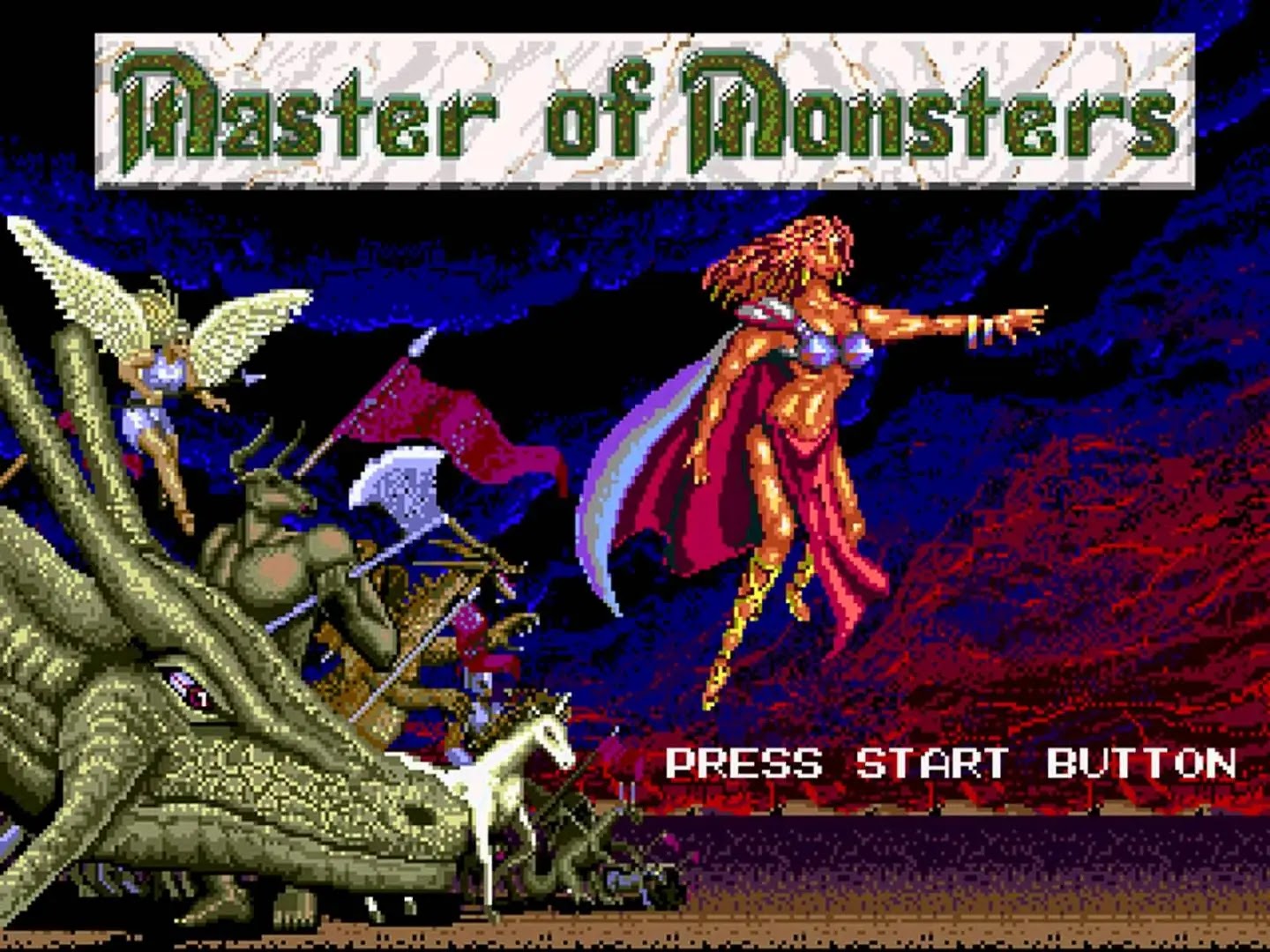
Warsong by developer Career Soft and publisher Treco—SEGA Genesis
retro reflection written by Nick
with a purchased copy.
Estimated reading time: 7 minutes
This is an update to the original article Warsong
- Sega Genesis: Possibly the best strategy game you never played -
Retro Reflections posted on May 25th, 2012.
Back when I first discussed this title with our readers nearly eight
years ago, I was prompted due to some other articles I had posted
around the time focusing on the SEGA Genesis console. However,
Warsong (known as Langrisser overseas originally) is gaining some
modern relevance due to the upcoming release of Langrisser I & II
coming in March this year.
Warsong has long stood as one of my all-time favorite Genesis titles,
though in fairness I haven't played it in several years now, and
there is a good chance the average gamer has never even heard of it,
let alone played it.
I am not sure what inspired me to pick it up at the time. I had heard
nothing about this game in any of the magazines I read, none of my
friends had played it, but something about it caught my eye when I
was mulling what game to purchase next.
But something about the back of that box must have sparked my
interest, because I took the game home, put it in and and began to play.
To define what Warsong is, I would say it was a fantasy strategy/RPG
hybrid – maybe the first I had ever played quite like it.
I immediately loved the game’s art style. The graphics had a
colorful, anime feel to them when showing character portraits. The
actual battles that took place were actually pretty active as
soldiers kill each other off. The backdrops and map designs were
actually pretty well detailed also.
The sound and music get the job done. There was nothing terribly
memorable about it, but this was a game that was more about the
tactics. It would have been nice to have a bit more variety in the
music, but I don’t recall it ever particularly bothering me either.
So how did the game play? Well, there were two aspects to it. There
are the leader characters, and they are the most important. Hints of
Fire Emblem here, as when a leader dies, he or she is gone for good.
I recall saving often to prevent that from happening. Shades of
Dragonforce follow, as each of these main characters had soldier
units they could control. Each character has a range or aura of
influence and if their soldier units fight within that range, they
got bonuses to their stats. Each leader can hire different kinds of
soldiers at the start of each level, and there is a sort of
rock/paper/scissors mechanic to which soldier units perform best
against one another.

There are other factors as well, such as terrain and if your leader
characters have any gear equipped (at the start of each level, a
scenario is given to you and you have a chance to spend your hard
earned gold on different kinds and quantities of soldiers, and that
is also when you can choose to put a piece of equipment on a leader
character). I recall getting so good at the game that I could go
through the first couple of levels or so without buying any soldier
units, to conserve money for when I would need it more in subsequent
levels.
When a leader character dies (the enemy units are made up of these as
well), their support soldiers will perish as well. Some levels also
have assorted neutral characters who will go after anyone who gets to
o close. Some missions are designed for certain types of soldiers as
well – for example one of your heroes can hire mermen and they are
almost essential for water combat – but useless in levels without
water to cross.
The game is made up of twenty levels, which may not sound like much,
but each stage can take quite some time to get through. The menu and
controls are very simple to navigate and while it is easy to learn –
there is are so many different tactics and unit strategies to apply
that there is perfectly valid reason to come back and play again once
you beat the game.
The story itself is nothing new – good guys are put on the run for
attacking bad guys. Good guys regroup after getting smacked around a
bit in the first level, and rally a force to defeat not only the
known bad guys, but the evil controlling them behind the scenes. It
is all really well presented though, with story pieces between levels
and dialog scenes from characters on maps. While you have no options
to change the storyline itself, it was actually one that I found
fairly interesting.
The RPG elements come in the form of gold, equipment, experience and
levels. In fact, this game was the inspiration to a leveling system I
implimented on my MUD over a decade ago that I called a Tier system.
Your characters start off a specific class, level up to a point, and
then choose one of two. Level up some more, and you can again choose
one more new class from a new set of branching options. Some
characters were so similar that their later tiers became the same
thing, like Magic Knight, but there were unique ones too. For example
your lead character Garrett can become a King class, and no one else
can. Each tier brings new skills and powerful stat boosts and adds a
good deal of replay value to the mix.
And replay I did – I can recall beating this game at least three
times – maybe more. And it was a hit among my friends who initially
asked: Warsong? What’s that?
But these were the same friends I had gotten hooked on strategy games
on the NES years before too (Nobunaga’s Ambition, Bandit Kings of
Ancient China and Romance of the Three Kingdoms to name a few) – so
they gave it a shot and not a single one disliked it. Most of them
borrowed it long enough to beat the game once if not twice (and one
other friend borrowed my copy for a day and a half. I was a bit
surprised when he handed it back to me and said I could have it back.
I asked if he had not liked it – turned out he simply went out and
bought his own copy afterward).

To this day, this ranks as one of my favorite all-time video games,
and influenced my opinion on what a strategy game could be. It also
had clear effects on my own game design years later for my MUD,
Kingdoms of the Lost. I played it again recently and feel that it
holds up pretty well today still. If I bring it up in conversation
with most gamers though, none seem to have ever heard of, let alone
played this under-appreciated classic.
The strategy/RPG hybrid genre has seen a nice uptick over the last
several years, since I first reflected on Warsong here at Chalgyr's
Game Room, led largely by the Fire
Emblem series, but numerous other titles like Fell
Seal, Banner
Saga and Disgaea
have had popular runs as well. In particular, Fire
Emblem: Three Houses in 2019 received rave reviews,
and was even my pick for 2019
Game of the Year.
This is a genre that has always just stuck with me, and I'm excited
to see how the updated take on Langrisser 1 pans out, and I never did
get to experience the sequel. I was aware of its existence, but it
never came over to North America, so this is a chance to see where
the story had gone. I am looking forward to doing a modern review of
this retro title once it does release in March.
Score: N/A