• STARSEEKER: Astroneer Expeditions - PC Preview

    STARSEEKER: Astroneer Expeditions is just that! Massively co-operative and not an MMO! When you first run the game you are instantly into the tutorial...

  • The Core - PC Preview

    Sometimes when you are browsing the internet for information on how to do something, you stumble upon ideas or projects or even games that people might be working on...

  • Cat Mail Co. - PC Review

    What a meow-gnificent evening it is to send your paw-rcels out to those family and friends! Are mew looking to pick up an item or send something out? Well at Cat Mail Co. we can send and receive all your deliveries!

  • Volontes - Nintendo Switch Review

    Have you ever grown up feeling like you don't belong? For our Heroine, that's the feeling she lives with everyday in her small farming village. But it's not her only secret...

  • Astro Colony - PC Review

    Astro Colony is a space base building game with three modes: survival, construction, and sandbox. From the intro cinematic right into...

  • Dread Delusion - Xbox Series X|S Review

    Today we’re looking at what has rapidly become an absolute favorite in the open-world RPG genre for me. An interesting story, memorable NPCs, stunning visuals, and a setting absolutely dripping with flavor, Dread Delusion sets its tone immediately and sticks with it.

  • House Flipper Remastered Collection - PC Review

    I enjoy simulation-type games, and I enjoyed the original release of House Flipper, but I never got around to getting the DLC. When the remastered version of the game was released, I figured it would be the best way to experience the DLC while checking out how the base game was upgraded.

  • GranBlue Fantasy: ReLink Endless Ragnarok - PS5 Review

    GranBlue Fantasy: ReLink released in 2024 bringing the GranBlue universe to an action adventure JRPG format. With a party of up to four members, this band of skyfarers set out for new skies, adventures, and dangers. Two years later, Endless Ragnarok...

  • 70s-Style Robot Anime Geppy-X - PS5 Review

    70s-Style Robot Anime Geppy-X is a mouthful of a title, but you know what? It’s quite the challenging game to describe as well. At its core, 70s-Style Robot Anime Geppy-X is a shooter...

  • Net.Attack() - PC Review

    Net.Attack() is dangerously fun. From thinking that I could dip my toe into the tutorial during a lunch break to having put more hours into the game on my first day with it than I did my full-time job, Net.Attack() smoothly pulled me into a ‘just one more level’ mindset.

Showing posts with label Neptunia. Show all posts

Neptunia Game Maker R:Evolution - PS4 Review

Neptunia Game Maker R:Evolution by developer Compile Heart and publisher Idea FactoryPlaystation 4 review written by Richard with a copy from https://keymailer.co. #keymailer #NeptuniaGameMaker
 
Estimated reading time: 8 minutes
Nep nep! It's time once again for our favourite purple haired protagonist! Well, sort of. Today we're talking about the newest and latest Neptunia title: Neptunia Game Maker R:Evolution. This time around we get to focus on big Neptune, the dimension hopper instead of the Goddess version.

In this Neptunia title, big Neptune arrives in a new dimension chasing fancy insects to find another world centered around gaming. This dimension however has more of a focus on game creation itself. As she's checking out a local game store, she gets pushed around and drops her "Nep Note", the book that she keeps Croire in because she's been bad, and also allows her to dimension hop. While trying to find her Nep Note, she comes across a rundown building where she encounters a trio of Goddesses who want to take another shot at game making after their last major failure. So begins Neptune's journey as the CEO of a game company.


If you're familiar with the Neptunia series at all, this should be right at home, feeling a little closer to a mainline title rather than a spin-off, but still in the spin-off/extended universe line. There are some changes from the Sisters vs Sisters gameplay, but it's fairly close, so you may be rather familiar going in if you've played that title. For those new to the series, this may be a bit of a weird place to hop in, as there are a bunch of references you may not understand, but everything is more or less laid out for you to get the gist of things.

So, new things being brought to the table, old staples being used, and a bit of a new viewpoint on things. Since it's the new focus this time, let's talk a bit about the new game development system. In your town area you have access to a number of features, such as building development, game disc creation, a shop, decorating your front plaza, and giving out assignments to any game makers who you've enlisted to help you.


Game disc creation is pretty basic in principle. You choose a genre, a specialization, makers to work on it, and optionally any bonus plans. Depending on the makers' specialties and preferences, the quality of the end product may increase. Once you've started development, you need to wait for the game to finish being made, although you can add bonus plans to it, at the cost of quality. Once development is finished, you'll be rewarded with points used for development as well as a CD. These CDs can be equipped, up to four of them, and they have certain skills attached to them, such as increasing the damage from certain attacks, hence where those additional plans from earlier come in handy. As you continue through the game, you can gain access to more creators and more genres.

In terms of building development, you can pay out CP, the game creation currency, in order to improve your building, which unlocks purchasable upgrades such as increasing CP gain from games and decreasing the cost for the creators and decreasing time required for disc creation. Some unlocks also include new genres or more creators for disc creation opportunities. If you need a little more boost to get some more out of your discs, you can decorate your plaza with monuments relating to some fairly well-known game series to help boost production. Additionally, you can summon creators to your plaza, and then send them out to earn experience in other locations. Yep, creators have levels, and sending them out to other locations gives them experience for leveling. They will also usually return with handy items, like Building Renovation Kits, which are needed to increase the level of your buildings.


So, now that we know about how game creation works, let's take a look at the rest of the gameplay. When you first get onto the world map, you'll notice that different areas are all subdivided into sections, which you have to unlock by paying CP for and sometimes specific permits. This will open up the area and allow you to choose a location to explore, although most areas are restricted by plot progression. Once you enter a stage you are free to roam around the area, collecting any items you find, getting into fight for money, items, exp, and a minor amount of CP, or starting some bike races or time trials!

I know that last item may have interested you, but let me warn ya right now: the bike time trials/races are usually either really easy or table flipping difficult. No seriously. The first time trial you can unlock? I could not get the gold time for it. The race? Almost lapped my opponent. Later stages that was flipped, and the race was difficult to win. The bike is super handy for speedy exploration as long as it's a stage you can ride in.


Ok then, it's time for combat. Combat this time around is active action combat instead of turn-based, similar to how Sisters vs Sisters was. You don't have any action gauge or anything, so you can't "run out of" combo. On the other hand, when you finish a combo with a finisher, you can swap to one of the other three characters you can bring to battle (four in total) and do a chain attack. More chain attacks without getting interrupted or waiting too long before beginning to attack again increases your chain combo, which increases your attack damage up to two times your base value.

Combos can be changed under the skills menu, where you can set what move happens at what point in your combo, as well as swapping other skills around. New moves can be learned as you level up. I'd like to make a comment here since we're talking about combat, some bosses are pretty simple, and others are... surprisingly tough. The last boss for example? Can roll you over if he gets a good attack off on you at the wrong time. One boss fight sequence in the mid game? Really rough. Others were an absolute joke, so it feels like fights are either too easy or too cheap sometimes, although you can be pretty cheap yourself if you abuse certain disc effects.


Fair warning, combat in Game Maker R:Evolution feels... pretty dang clunky at first. Thanks to a disc set-up, some skill reorganizing, and some practice, it was definitely better once I got used to it, but good lord did it feel stiff at the beginning. Also, by the time you reach the end of the game you'll probably be about done with any stages. I know I was getting rather tired of running through areas by the time I hit the last two chapters. I also stopped wanting to deal with disc creation when I maxed out on available points and was basically just going through the motions. As a final point here, I found that the game would crash occassionally, mostly when trying to do disc creation through the pause menu rather than from the company building back in town. Slightly frustrating, but the sheer amount of autosaves the game makes thankfully salvaged that.

Neptunia Game Maker R:Evolution is a pretty decent entry in the series, but unfortunately doesn't rise above "pretty decent". While adding some new elements and changing the battle system slightly keeps it fresh enough from their previous title, the repetitiveness of the dungeons, large number of fights that get boring pretty fast, and the sidequests that are almost entirely "kill x number of y monster" get really grating. While the voice acting is still really solid, and the Live 2D they use for the cutscenes is evolving, it feels like the music direction and dungeon design hasn't. Neptunia VII has a great soundtrack and the dungeons didn't feel all the same, even with some repetition, but that isn't the case for the past few titles. Sure, the music isn't bad, and they've added more area types which is great! But there are still some areas that feel the same as others, or that felt identical to areas in the previous title.


As someone who strives to get the full hundred percent completion in Neptunia titles, especially before I write these reviews, I can say for certain that by the time I got the platinum I was well and done with Game Maker R:Evolution. That being said, if you play more casually and wait longer than I did to do the Neptral Tower, especially considering I crashed about eight times in the tower, it definitely isn't as bad as how I felt at the end. I had fun, and it was mostly enjoyable, despite some of my concerns and issues with the game. While I would really like to see some more improvement in the series, I feel like it is progressing back onto a line that would make a solid RPG instead of just a decent one. I must say though that I really did like the bigger Neptune as a protagonist this time. It was a nice fresh take on the old Neptune.

Overall, Neptunia Game Maker R:Evolution is a decent title that adds some new perspective and elements in the latest Neptunia title entry. While there are some issues of repetitiveness and balancing issues, it was an enjoyable journey from start to finish. While not quite as silly as most titles with Neptune as the main character, there was the opportunity to mix a little more seriousness into some of the scenes while not playing it too straight. While Game Maker R:Evolution might not be the best entry in the series, especially as a stand-alone title, it isn't a bad one either.

Score: 7 / 10

Share:

Neptunia: Sisters VS Sisters - PS4 Review

Neptunia: Sisters VS Sisters by developer Idea Factory and Compile Heart and publisher Idea Factory InternationalPS4 review written by Richard with a copy provided by the publisher.

Estimated reading time: 9 minutes


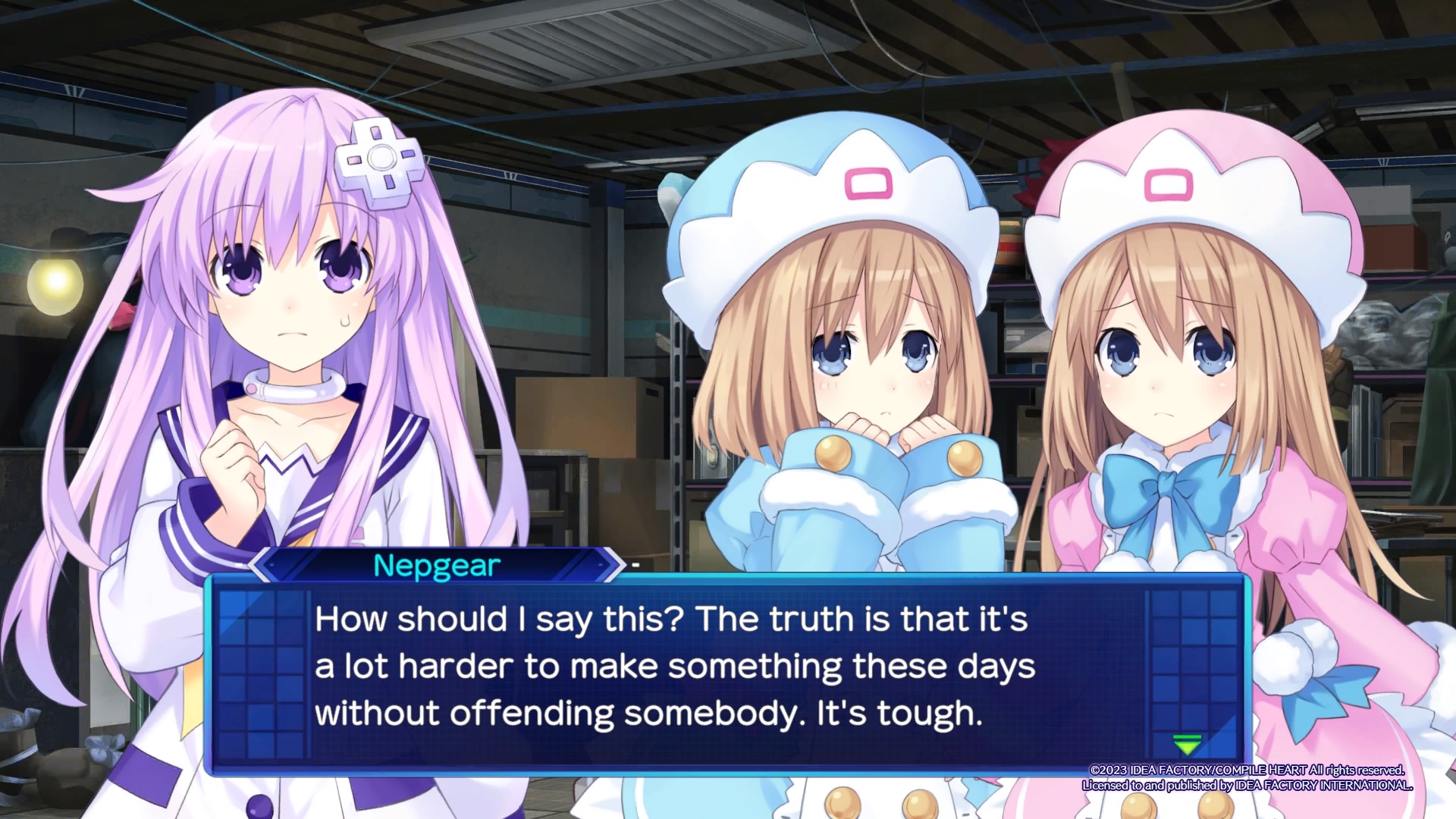
It's that time again where we explore the next title from our friends at Compile Heart and Idea Factory, the next Neptunia game! This time getting a starring role is Nepgear in Neptunia: Sisters VS Sisters.

In Neptunia: Sisters VS Sisters we get to see Nepgear make a return as the protagonist! For those new to the series in general, think of the in-universe world as a sort of personification of the video game, and tech industry. Set in the land of Gamindustri, the world is ruled by four goddesses, each of which are the representatives of a specific company. As the goddesses leave to go investigate issues occurring on the PC continent, the Godesses' little sisters, the Goddess Candidates, are left to take care of things in their absence. No sooner are they left in charge, they get a notification that monsters have appeared nearby Nepgear's home country of Planeptune. So off she and the other candidates go to investigate and get rid of the monsters. Needless to say, everything isn't exactly going to go the ideal route.

Neptunia: Sisters VS Sisters takes a good balance between old and new mechanics for this latest installment in the franchise. Those who have played other titles in the main series line will probably be fairly familiar with how things work, but let's see if we can't break things down a little for the newcomers. The Neptunia titles, including Sisters VS Sisters, function pretty similar. You have a general world map with locations of interest you can select. Some of these may be dungeons, some may be events. When selecting an event, or running into one in a dungeon, you get a Live2D cutscene with the anime stylized characters. When not on the world map or in a cutscene, you get a 3D roaming adventure through a number of locales, where you can smack boxes for items, interact with glowing cubes for treasure, jump around obstacles, or get into fights with enemies.


Combat has taken a bit of an interesting route this time around. Instead of the turn-based system that used to exist before, we now have a...well, mostly active system. Battles are fought with up to three characters in combat at once. While in combat, you have a circular area that you can walk around in. You have a set amount of AP, Action Points, and using different moves in your combo string costs a different amount of AP. Combos can be set up beforehand, and running out of AP means you either need to swap to another character, or wait until the AP regenerates passively. It's highly suggested you swap though, as swapping after you've used a few moves starts a "Chain" which increases your damage. In addition to your combo moves, you also have a Tec gauge which builds up over time while in battle. Once it is full you can use a skill or item. Tec gauges and AP are individual per character, so when you run out you can swap to another character to either continue the combo or use items or skills as needed.

Now, what game with action-style battle mechanics wouldn't be complete without a guard or dodge? Both of these are available for you, and are done in a similar state. Guarding will reduce the damage you take, but your guard can break if it sustains too much damage. Dodging will let you get out of the way, but there's a brief delay before you can dodge again, so make sure you aren't just opening yourself up. Something important to note is that all of your attacks require a lot of commitment. You use an 8 hit slow attack? You're stuck in it. Often times some of the tougher fights, or bosses, become a balance of when to attack, when to block wider hitting moves, and when to dash away, or towards, the enemy. To be honest, when I first started playing, combat felt really...thick, I suppose you could say. After I stopped trying to play an Ys or DMC title through a Neptunia game, I warmed up to it a lot more.

By and large, Sisters VS Sisters is predominantly a title for those already familiar with how things work and the characters involved. A lot of dialogue relies on the player being at least somewhat aware of who the characters are and some of the events from past games, although usually nothing so in-depth that you feel completely out of it. The Neptunia series, regardless of whether the title is a spin-off or not, has always had its writing grounded in a place that's a sort of running commentary on the current video game market and how companies are doing and what is going on at the time. Needless to say, the last few years have been...well, not particularly stellar, so there's a lot to work with. 


From outbreaks, to the rise of mobile and phone gaming, gacha games, lack of available parts for certain systems, as well as the release of mini-consoles that are essentially a nostalgia pitch, Sisters VS Sisters has some commentary for pretty much all of it. That being said, while Sisters VS Sisters is a little more "grim reality" compared to other titles, it doesn't really play itself too seriously the whole time. You can still expect the gags you've come to know and love from the series, just perhaps in a different form.

Another point to take note of is that there are a lot of reused assets from other titles. This isn't really a bad thing, as many of the models and Live2D models seem to be updated, but those familiar with the series will quickly notice textures, dungeon themes, enemies, and music from previous titles. Good news, it looks good and is well implemented. Reusing assets also allows the devs to focus more on other areas, such as the writing and gameplay design. There are a lot of interesting interactions and gameplay does feel pretty smooth, although there are some lapses in certain areas. For example, when exploring an area, you can now usually interact with ladders to create short-cuts to different areas. Climbing said ladders is pretty slow, but setting them up felt pretty novel for the series. Additionally, there are many doors you need to find switches for, which is a bit of a divergence from how the dungeons standardly used to work.

This being said, there are definitely issues with the title. There's a little lag here and there, and often you may have a long portion of dialogue events with no action, although they are fairly far between and the dialogue doesn't usually get too lengthy. The devs have made the choice to split large chunks of dialogue into smaller events, so you can go do some dungeoneering to complete requests in-between to keep a good pace. Also to note is that anytime fog or mist type effects happen during dialogue, there tends to be some lag. Otherwise, I found the title to run quite smoothly. The other major issue you may run into is how..same-y the dungeons can be. For the most part they tend to be varied enough, but fair warning, if you decide to run through the bonus dungeon, expect to be pretty much just done with the dungeon crawling aspect.


Some of the more positive aspects revolve around the little things. For instance, event points are clearly indicated on the mini-map, with lines clearly showing when the event will activate as soon as you touch the indicated yellow area. As a long time gamer, I love seeing this, because it means I can know exactly what I can get away with. Also, I'm pleased to announce that you now get Quest indicators over any dungeons where you can meet the requirements for completing a request. These requests can be picked up from Chirper periodically, which is "totally not blue bird related". Back once again is the ability to customize your characters' appearances with accessories. There's an awful lot, and you can dress up your characters basically however you want with the items you can collect.

There's a few more game mechanics that I feel should be included as well. Let's start with the longer running mechanic: Combo Maker. Essentially, as you level up you get new moves. These moves are different types, such as power (hard hitting), rush (faster and more hitting), or break (more stagger gauge damage). The skills can be assigned how you wish and you can put multiple in a line. You can build up a combo of up to 4 specialized skills, and depending on where in the order the move is, it may receive a power up from being after the skill before it. 

The other mechanic is Disc creation. From battle you get DC, or Disc Coins. These can be spent in order to create equipable discs, which are usually a sort of reference to an existing game of sorts. When creating a Disc, you can select a genre, a developer if you want, and an item if you want in order to create a Disc. These Discs will have different effects, such as increased exp or item drop rate. It's an interesting mechanic where you can put up to four in development at once, and then they take a certain amount of in-game time to complete. You can equip up to four Discs, so it is worth your time.


Summary

Overall, I have to say I really enjoyed Neptunia: Sisters VS Sisters. It feels like a good return to the main series while still trying to change things up enough that it doesn't feel like the older titles, while still keeping what made the previous titles fun. While the dungeon crawling can get a little repetitive, and it is fairly easy to exploit certain mechanics at times, Sisters VS Sisters tends to limit dungeon length, or segment it, in such a way that it usually doesn't become too much. The battle system took me a while to get used to, but once I did I thoroughly enjoyed. If you're new to the series, it may be a little tough to get into, but is still fun. If you're a fan of the series though, I'm certain you'll have a Neptastic time!

Score: 8 / 10
Share:

Neptunia: ReVerse - PS5 Review


Neptunia: ReVerse
by developers Compile Heart, Felistella and developer / publisher Idea Factory InternationalSony PlayStation 5 review written by Pierre-Yves with a copy provided by the publisher.

Estimated reading time: 7 minutes


If there's one series that will continually keep me coming back for more it's Hyperdemension Vert... Errr sorry, wrong script, Hyperdimension Neptunia! Celebrating its tenth year anniversary, Compile Heart and Idea Factory have brought the CPU Goddess to the latest generation of gaming consoles in Neptunia: ReVerse and while this adventure isn't a new one as it's basically ReBirth:1 (V3), this transition comes with a few neat twists.

Starting off from the very beginning ten years ago, Hyperdimension Neptunia was an obscure Japanese RPG that itself was all about video games and its tropes and I'm still in some ways surprised that it had been localized. Happy as I own every entry of the series, but surprised as one had to wonder if the niche market was enough to make it worth bringing over. Having now seen sequels, ReBirths, and spin-offs, the series is popular enough that fans like me no longer even need to worry about "IF" we are going to get it, but when.

And so starting back over from the very beginning, before the introduction of the CPU candidates, before the introduction of a whole Neptunia-verse, Neptunia: ReVerse stars our "fifth" wall breaking protag as she's defeated by the other three Goddess and sent plummeting down to Gamindustri. Found and nursed back to health by Compa, it won't be long before Neptune joins her other bff IF (Iffy for short) as the three travel to regain Neptune's memories through a series of shenanigans.

Having continuously evolved over time, and in some cases rolled back, ReVerse is no different as while it's retelling a story told a few times over, the engine under the hood makes things both look and run smooth. Load times, graphics, combat, if there was one thing that I would have a complaint about is that the pre-movie renders looked dated and I have to wonder if that's because they were originally brought over from the PS Vita (before the PS4 port) which uses a much smaller native resolution than the main consoles outputting full 1080p and 4k. Otherwise everything else looks and sounds great.

Coming back time and time again, there's an appreciation for the style of gameplay that the Hyperdimension, Megadimension, Hyperdevotion, MegaTagmension, Superdimension and Cyberdimension all have in common. It’s the balance between a fairly hardcore Dungeon Crawling experience that often times requires a lot of grinding, and a Visual Novel like a approach to tell the rest of the story. It works and it works well as Compile Heart and Idea Factory have not only done it here, but have also pulled it off in Dragon Star Varnir, Death End re;Quest 1 and re;Quest 2 and the various versions of Fairy Fencer F.

These narrative segments are a combination of pure written dialog and loads of voiced over segments for when things are either really important or the punchline was too much to pass up on. From the protagonist Neptune and her closest friends Compa and IF to the various supporting cast and the other Goddesses, there’s more than enough dialog to go around to the point that sometimes the self-awareness drops in as Neptune herself calls out the walls of text or tries to avoid them to get things moving. It’s brilliant, it’s fun, and it adds something more to the sheer amount of time that you may be, or want to be spending, travelling through the various dungeons in their default format for quests, experience and items before using the Plan System to change things up. New enemies, new items, more powerful enemies, each of these will help you move forward in the story.

This is perhaps the one aspect that I forgot about over time while having gone back through the ReBirths on my Vita as well as the remakes and revamps of Megadimension Neptunia VII. The bosses are HARD. I don’t just mean, alright, sprinkle a little more experience and gain a level and come back. I seriously mean that they are brutal and unless you’ve either gone about and ground for some serious level experience or gone farming for items to unlock new equipment that you wouldn’t have access to otherwise? You. Are. Toast. Not just toast, but fully charcoaled and entirely non-edible Toast.

Thankfully there are some ways around this that won’t take too much time mindlessly grinding away experience but will instead be a bit more fun. In the mindless category there are some dungeons that open up or can be opened up which will help on this but the other is brand new to ReVerse and that is the universally loved to have as a minigame, Fishing! I honestly don’t know what it is about fishing as in real life. While I may have done it while I was younger with one of my grandmothers, as an adult I simply do not have the patience for it. Put it into a video game though and I’m all in.

Taking up a fishing line and heading to one of the local fishing holes, Neptune can cast a line and hope for the best once the bait at the end of the line touches the water. The process is fairly quick as there’s no need to play with the line or worry about whether or not something will bite, it will. What you need to worry about is the fish’s stamina versus that of Neptune. Drain the fish’s stamina and Neptune will catch anything from new gear to various local fish. Fail? It’s not as simple as losing out on bait but Neptune and the rest of the party will be attacked by some fairly tough monsters that are basically boss grade for that part of the game. This is where grinding is made easy as you can either fish to catch stuff or fail on purpose and basically go through a boss gauntlet and not have to worry about how long it takes them to respawn.

Making things even easier on that front is the ability to simply skip through all of the attacks and just see the health bars decrease and damage numbers fly across the screen. There’s nothing wrong with seeing how the combinations of attacks all get put together but after a while, you’ll want to start skipping everything to simply get to what it is that you need to such as getting that low rate item drop or defeating a variety of Shampurus from Mugen Souls that have somehow made it into a dungeon within Planeptune.

Finally also along for the ride are some additions that come over time such as the additions of some characters like Plutia and Peashy from Neptunia Victory and then Uzume from Neptunia VII which are available very early on to be added into your party. This alone helped with the grinding and potential boss fights as these three alone were also Goddesses in their own Gamindustris. Add in that Neptune gets her Goddess form back early enough in the adventure and having four Goddesses to face off against tougher foes makes for a much easier time accumulating experience.

Summary

So overall, while I personally would have enjoyed a brand new Neptunia title for the launch of the Goddess shenanigans on the PlayStation 5, Neptunia: ReVerse is a good place to start for those that would actually have no idea of the series. What better way to start off than the beginning? For returning fans though, I would say that if you’ve been wanting to return back to the beginning as it’s been several years Neptunia: ReVerse is worth it especially on a much larger screen and some added bonuses to get the adventure started off faster with some help from the other Neptunia-verse Goddess.

Score: 8.5 / 10


Share:

Neptunia Virtual Stars - PS4 Review

Neptunia Virtual Stars by developer Compile Heart and publisher Idea Factory International Inc.Sony PlayStation 4 review written by Richard with a copy provided by the publisher.

Estimated reading time: 12 minutes


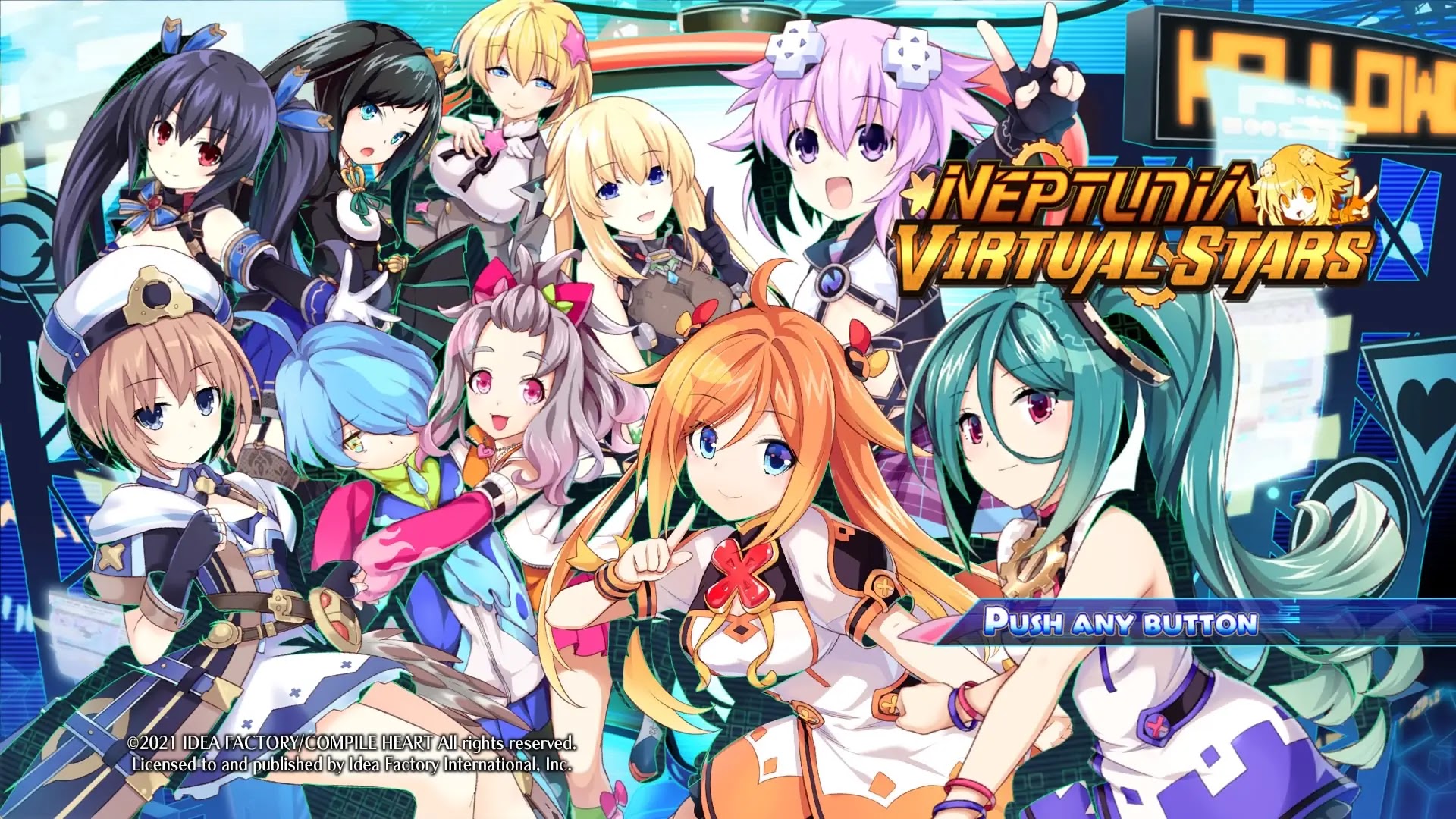
Nya-hello~~, and welcome to another Neptunia spin-off review. This time we'll be taking a look at Neptunia Virtual Stars, or VVVtune if you were following the JP release. This time around we're taking a bit of a step out of the usual genre parody that the spin-offs have been and are getting a lot of guest characters. Let's see how many you know of.

The plot this time around is that Neptune and the three goddesses from the main series: Blanc, Noire, and Vert, are taken to a digital world where the planet of Emote is being invaded in an attempt to make the digital content obsolete. Nep and friends are joined my You and Me (yes those are the actual names), who are part of a Vtuber duo called MEWTRAL. If you aren't aware, a Vtuber is basically a streamer or youtuber that uses a virtual avatar instead of their real selves. Nep and the Vtuber duo must then go out restoring the planet of Emote by defeating Antis and restoring wholesomeness to internet culture. Now I could make a list of Vtubers I may or may not have spent my CERB on (like the tsundereaper), but you're probably not here for that. Needless to say, there are A LOT of guest Vtubers in Virtual Stars, so you're probably bound to find a few dozen you'd like.

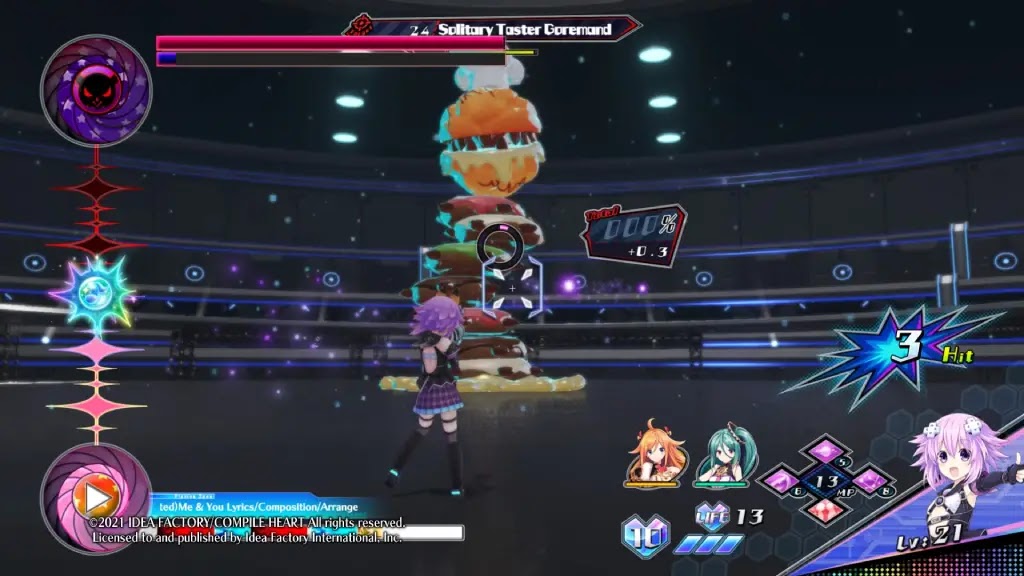
So how's the gameplay in the new Neptunia spin-off? What genre are we going for today? Well, we're going with a combination of 3rd person shooter and hack and slash. The gameplay sees you take control of the four goddesses and a duo of Vtubers. The goddesses play in the style of 3rd person shooter while the Vtuber duo are the hack and slashers.


The goal is to defeat the enemies and make your way to the boss of the stage. Rinse and repeat through the game. Each character has their own unique weapon and...mostly separate stats. Let's start with the goddesses first. Each goddess has a different type of gun: Neptune has a high fire low damage assault rifle, Blanc has a charge cannon, Vert has a long range rifle, and noire has a wide range “sword slash” type gun. Combat is 3D terrain based movement, and there isn't much of a lock-on, so I hope your aim is decent.

You do have an “aim” mode that gives small bullet correction, so feel free to use that though. The goddesses can walk and jump, and they also have a skating dash that lasts about five seconds where you can power slide around. This ends either by pressing dash again, having the five seconds run up, or jumping. The dash will end in a dodge roll if the first two options are used. In addition to your standard fire, each goddess gets four skills that you either start with or learn. These skills consume MP and have...varying usefulness.

Let's take a look at Neptune as an example of goddess play style. Her gun is rapid fire but low damage, meaning it's useful for Tokemeki attacks. Essentially, the higher your TMK value, there's a gauge around an enemy that will fill up faster. Once full the enemy takes damage and is stunned for a while. After some time passes, they can be stunned again. Neptune's skills consist of a sort of grenade shot, a physical kick, some ricochet bullets, and slow drifting mines.


Not going to lie, only the ricochet skill really saw much use with me, and even then it was pretty useless in open areas with no walls. In enclosed areas though? Hoo boy. Something I noticed is that enemy defence values seem to be rather simple comparisons, as occasionally Neptune would be doing either 0 or 1 damage to some of the tankier enemies. When this happens, you can either try and kill them only with TMK, or you could swap characters. Since we're goddess focused at the moment, you can swap to any of the other three goddesses at any time in stage or battle by hitting the appropriate button combination.

Goddesses also have this weird shared health pool that works on hits rather than damage done, so 10 health on a goddess means you can take 10 hits from anything other than the rocket launcher birds. The birds are the worst. Thankfully you also have a health regenerating skill, where your characters will huddle around and slowly restore health and MP. This is super handy to use between battles to top off HP, or when a boss has been stunned so you can get some health back without resorting to items.
So how about the Vtuber combos? Well, these duos work on the hack and slash style, with light and heavy hits, special moves, as well as skills similar to the goddess quartet. Instead of TMK, some enemies have a specific Vtuber they are weak to. Attacking them with that Vtuber will activate the stun like the goddess TMK attack. If you finish off an enemy with a skill, you can activate a finisher as a Vtuber that restores some HP and MP.


The Vtubers can also swap between duo members or to the goddesses at any point and have the healing skill, but unlike the goddesses the Vtubers have an actual health pool instead of a damage check. Incidentally, the Vtubers also have a dodge instead of a dash, which they can use mid-air unlike the goddesses. Additionally, the max run speed of the Vtubers carries into a jump, so keep this handy info in mind if you're having trouble in the bottomless pit platforming sections. Thankfully you don't lose health from falling off the edge of the map.

So then, what is the common mechanics between them? Well, that would be the emote gauge, healing ability, and how boss fights function. I've already covered the heals, so what is the emote gauge? Essentially, it serves two functions. The first is when it is almost full you can summon a Vtuber to assist you. What the Vtuber does is based on who you randomly pull from the pool of saved Vtubers. This can be a buff, heal, or damage to enemies. The second function happens when it is full, you can use a sort of special move where you wail on the enemies and maybe get a few roulette spins. It's...a little hard to describe really, but it can basically just be treated like a special move.

So let's talk a little about the boss fights. Every boss, and mini-boss, will start the fight with a Vtuber themed background song. Each song has “strong” and “weak” sections, which will lean the battle in favour of either you or the boss. During the “weak” portions, the boss will get stronger and new aspects get added to the attacks. During the “strong” portions you get rained with crystals that you can break for various effects. If you manage to push the “resonance gauge” in your favour by performing well, you can enter a special field where you get song bonuses and can use a special attack. As you use the songs in battle more often, they will level and get better buffs and effects. The only issue is that what song plays seems rather random, or at least I couldn't figure it out. To give you an idea, by the end of the game my first song was level 5, and every other song was level 1. This meant that on the last boss, depending on the song playing, I was dealing either 200 or 2,000 damage per hit with a powerful attack. Just something of note.


As you travel through the planet Emote, you will come across some specific types of enemies with little play cubes on them. These enemies may be guarding a captured Vtuber. By rescuing them, you unlock their support as well as a cube that you can equip. These cubes provide stat boosts and can have passive effects. The cubes come from levels 1 to 50 by standard, and can be upgraded if the correct shop is unlocked. In addition to the cubes, you can also equip vanity accessories, like serval ears, which you may or may not see in the screenshots. These have a “moe point” value, which, to my understanding, affects TMK attack, as well as points earned in BeaTik.

Right, so shops and minigame. After clearing the first area, you unlock a hub where you can drop some cash in order to open up different shops, as well as find the BeaTik and Video Butler services. Despite having unlocked Video Butler first, it requires BeaTik, so I'll cover that to start. Essentially BeaTik is the most bare bones rhythm, I hesitate to call it a minigame, I've ever seen. Any button will act as a “hit”, and you just need a moderate sense of timing to complete. The more you do, the more points you earn, which can then be exchanged for items in the BeaTik store. If you turn on the recording mode, you can save a video of your performance. You can then take this video to Video Butler and drop some video coins to turn it into items. Videos don't disappear when converted to items, and the number of coins you use to convert dictates what item you get. You will always get the same item from the same video though, so don't bother dropping a lot of coins hoping the item changes.

Fun note, you can get cards form Video butler that increase goddess stats, and cards from the request kiosk that increase Vtuber stats, both permanently. The request kiosk has the mentioned cards that you can gacha on with Pona coins, as well as common requests from random plebeians in the game, as well as friend requests from the rescued Vtubers. The common requests are usually something along the lines of “perform [action] as [character]”, whereas the friend requests from the Vtubers get an intro and concluding video, and are: collect items, beat enemies, find specific items. Item collection can either be from killing certain enemies or are specific points located in a set area, which you will be notified of, and are visible with a beam of light overhead, although not indicated on the minimap. Yes I spent 20 minutes looping an area trying to find a stupid dumbell for a peanut Vtuber before I figured this out, shut up.


So, graphics are a bit of a weird thing in Virtual Stars. They look pretty fine in combat and wandering areas, the animations on the 3D models are pretty good as well, especially the goddesses. Props for actually matching movement speed to foot movement, having a specific leg movement animation for side-to-side movement while aiming, AND matching the step sound effect to when the foot actually touches down. Outside of combat, all scenes are performed with the 3D models, including any costume changes or Moe Accessory you've added. Thankfully you can turn off appearance for the accessories if you just want the points and effects, but don't want to see them. Unfortunately the lip syncing is... a little poor on the main characters. On the other hand, it seems like the Vtuber guest stars all used their original models, so you can really see a difference there.

Also of note is that the soundtrack is pretty decent. This is really a big focus when you've got the same four tracks repeating on endless loop during the boss fights. Point and case is the final bonus boss. That thing took me so long I'm pretty sure I can recite the lyrics for the first, third, and fourth tracks by heart now. At least they were catchy, and the ones I wasn't a fan of steadily grew on me.

Actually that seems to be the theme of Virtual Stars: the longer I played the more it grew on me. There are tons of references to stuff, such as “totally not Twitter”, “NeoTube not YouTube”, as well as a ton of questionable business/service practices that people have spoken out about. About halfway through, I realized that the game is literally about beating up people who say mean things on the internet, and after that I enjoyed it a lot more, not because the game started getting better, but because I stopped taking it as seriously.


Combat took a while to get used to, and the mechanics behind the boss fights were super confusing and poorly explained at first, but as I started easing into how stuff worked, it started getting a lot more fun. Except the rocketlauncher birds. Screw those things. I also appreciate the fact that you can go back and fight the bosses again, and they will get stronger each time up until the fifth time at which they stop growing. Makes experience farming and practicing the boss fights a lot better, and I've always enjoyed coming back for an overleveled grudge match. 

Virtual Stars does fall short in some areas however, as the enemy “great 8” does not actually consist of 8 bosses, one of the bosses is just a reused palette swap, gameplay will get a little repetitive after a while, and if you're consistently doing the friend requests, you may start getting a bit fed up with traversing the same areas over and over for items you may never use and don't have a sale values. The skills can be incredibly useless sometimes, enemies are usually either pushovers or world champion fighters with no in between, and when you start doing 0 damage it may scare you the first time (pro tip, Blanc does massive damage at full charge). There is a line in the game about “love for your creations really shining through”, and while I can see that it's there, it feels almost like they ran out of time or budget, and the game should've been bigger and longer.

That said, it's not like I didn't enjoy it. I played it, beat it, got the platinum trophy, and didn't curse about it once, so that's a pretty solid statement right there.
 

Summary

Kon-kon-kitsune~~, for those who have skipped to the summary, Neptunia Virtual Stars is a VERY niche game in the Neptunia franchise, even by its own standards. While the gameplay is actually rather well fleshed out for a spin-off title, it's bogged down a little by a very distinct difference between playstyles for the two different character types and some poor instructions or descriptions for mechanics that should really get more explanation.

The guest stars are great, but are probably so niche that few people would know many, if any, of them. That being said, the game really did grow on me the more I played, and the customization of Vtuber cubes and accessories, as well as how smooth the movement was most of the time was really nice. I would have been ecstatic to see this title longer and a little more fleshed out, but it can still hold its own with what it offers.

Ultimately, Virtual Stars is a really timely take on the current state of social media and gaming, and just how digital interactions work nowadays. Very relevant given what has recently happened with some JP Vtubers, it's great to see some of this talent reaching Western audiences, even if only as a few snippets. There's even a TV in the main hub that plays Vtuber clips you can watch. If you enjoy the Neptunia franchise, Vtubers, or just looking for an anime inspired shooter/hack and slasher, I really do implore you to check out Neptunia Virtual Stars.


Score: 8 / 10


Share:

Megadimension Neptunia VIIR - PS4 Review


All hail Lady Vert! Honestly if you don’t then we may have an issue. Declaration for CPUs aside, the girls are back again and this time in more than 2D with the latest entry of the series being re-worked from the ground up as well as for the PSVR. Now while I wish I did have a PSVR, headset-less players are still in for a treat as nothing will be missed out on AND the systems make it worth playing through this three chaptered entry once again.

The original release of Hyperdimension Neptunia VII was an ambitious one. Split into what are essentially three very well self contained chapters each with their own continual plot lines, it was well worth the time put into it. With new elements and lots of quality of life additions to the series, it was not easily one of my favorites, but a very well received one making it accessible for both veteran fans of the series (cringes at the original) and new ones alike.

VIIR does this ALL AGAIN. Essentially giving a console release the Re:Birth treatment, VIIR revamps all the systems again making it feel more like Hyperdimension Neptunia MK2, but done well. Characters still have their hit points but gone are massive SP bars in which a battle can be done within seconds with super destructive abilities. Now? Now you have to accumulate enough SP in order to perform an ability and more than that, AP comes back into the equation meaning that just because a character has enough moves to fill up a weapon type, doesn’t mean that she can use them all.


Combat had been rather streamlined but with the revamp it puts things back into a very hands on approach no longer allowing you to simply spam through a move set to continue. Keeping part of the new design, weapons, and not characters, affect which type of abilities are available for use. Weapons will have either one or more Rush (lots of attack little damage), Power Attacks (heavy hitting but harder to land) and Break Attacks (designed to remove protection for maximum damage) available for use.

Finding what works for you or a character can take some time but newly added is once the combo is done in regards to the AP, you can do it again. Until the AP is out, a characters can perform any moves as long as she has the necessary points to do so. Once she's done, then you get to select where she stands in regards to her movement left, where she's facing and what kind of defense posture she'll take. It adds some time to the battle but the change up works.

Taking things a step even further is that characters no longer simply learn a new move upon leveling up. Instead money now plays a major factor in the equation as each new ability must be bought in order to be used. Used to have problems with too much money? Don’t worry about it! It’s no longer an issue.


But how does this all relate to a story that you may have already explored? That’s easy. With the new systems in place the adventure feels both familiar and new. Sure you’ve seen the cutscenes but the adventure up to those points makes things different enough that you’re not simply playing the same game over again. Adding an extra element to that, is the VR.

Now because I don’t have a headset, I fall into the category of players that must press and hold “X” in order to load up the events on screen. These events essentially put you, the player, in the nice comforts of your bedroom / living room bachelor pad. You can look anywhere you want in the room, zoom in, pan around, but you don’t move from wherever you are sitting.

Now there are two types of visits. The first and the ones that you are introduced so are the four goddesses that will visit you to hang out one by one. Each is pretty much as you would expect and they are aware that you are there and that you at least know who they are. As “you chat” you can nod your head to answer yes or not but unfortunately for Noire, when she said if I minded and I said “no” I should have said yes because she got mad at me. I was trying to say that I didn’t mind her doing something so thinking along those lines carefully is a bit important.


The second type of visits are the “other” Neptune that will come around between chapter segments to say hi whether or not you like it. What were great about these visits compared to the ones that you planned, is that it works very well with the overall story progression. She’ll be saying something, dimensional hop to do something else, and next thing you know she’s talking about it to one of the other characters. It works and it fits into the overall experience as it doesn’t feel tacked on as much as it feels part of everything.

If you haven’t yet had the chance to jump into the latest part of the main series, or have even played through HN VII, Hyperdimension Neptunia VIIR is worth it. With a revamped system, smoother gameplay and new VR elements, there are plenty of reasons to come back for another run of Neptune’s antics. Plus it has Lady Vert. There’s no downside!

Game Information

Platform:
Sony PlayStation 4
Developer(s):
Compile Heart
Publisher(s):
Idea Factory International
Genre(s):
RPG
Mode(s):
Single Player
Other Platform(s):
NA

Source:
Provided by Publisher


Article by Pierre-Yves
Share:

Cyberdimension Neptunia: 4 Goddesses Online - PC Review


Neptune has logged in to a new adventure! This time we join our favorite purple haired fourth-wall breaking protagonist as she explores the world of the massively popular in-universe MMORPG 4 Goddesses Online!

This time in Neptune spin-offs, we take a trip into Vert’s (Lady Vert for PY - Editor's Note: HELL YA!) land of MMOs, with a pseudo MMORPG experience that’ll poke you right where it hurts, replete with tea facts, bust jokes and making fun of all those people that live in their basement playing MMOs. As much as I enjoy the series and its spin-offs, I’ll be the first to say that 4GO feels…clunky, I suppose is the best way to describe it. It’s like taking all of the aspects of an MMO, but trying to tailor it to a more traditional RPG playstyle, while retaining the MMO elements. If you’re here for the punchline, it’s that 4GO, despite my hopes, was rather…well, average.

The best part of 4GO is, without doubt, the writing. The Neptunia series has always been one to not really give a damn about breaking the fourth wall or cracking a joke at their own fans expense, and they certainly aren’t holding back this time. Neptune and her band of fellow goddesses, and sisters, get advance beta testing codes for the sequel of Vert’s favourite MMO “4 Goddesses Online”, so with a distinct lack of willingness to get their work done, they embark on an “in-universe, in-game” quest to be the first group to beat the game. Their goal quickly goes from simply beating the game to stopping an actual hacking attempt on the games servers. Filled with enough jokes making fun of basically every type of person who plays online games, coupled with what I feel has the best series running voice acting I’ve heard in a while, Idea Factory and Compile Heart really do set up some stellar jokes, gags, and dialogue.


Gameplay is pretty basic, being a primarily hack-and-slash a la MMO style. You’ve got your standard attack combos, a jump, a guard, an item bar and a skill set. You have MP to use your skills, and you gain MP back by attacking things or using items. You also have a counter available if you guard at the right time. The combat is one of the biggest definitions of “tedious” and bosses generally devolve into glorified sponges spouting the same two, occasionally three, moves over and over again, with a pause between attacks long enough to go make yourself a sandwich, wash the car, do your kids homework and still make it back in time to guard.

The enemy AI is also really dumb, and I’m gonna use the last boss as an example since it’s so perfect. The last boss has four attacks, as far as I’m aware: a single target melee, a ranged multi-shot, an AoE spread, and full area attack that, as far as I know, hits the entire arena. If you stand just outside his melee, but too close for his ranged attack, he will just sit there firing the ranged attack at you and missing. Seriously.

On the other hand, your ally AI tends to be pretty decent, as you can take a party of four with you into battle. Except they suck at the last boss, because they can’t block the area attack, which means you’ll probably end up having to more or less solo the last boss, which only extends the time spent, not the difficulty. Otherwise, your party mates heal and buff often enough that I was rather pleased.


You do have a lot of characters and classes to choose from, starting with a Dark Knight, Paladin, Cleric, and Enchanter and expanding as you progress through the game although combat won’t really change all that much. There were some interesting parts, like having a bonus boss due to eggplants (which Neptune hates) and then solving the problem with Pudding (which she loves), and the music was really great too.

On the other hand, the multiplayer is one of the worst multiplayer components I’ve ever seen, consisting of usually a few one-off quests per guild rank, and basically kicking you from the party after completion. It’s super laggy, and generally only the host has a smooth time, if at all. Many of the quests in the single player are basically just rehashed, buffed, or palette swapped bosses, or killing way too many mooks to be anything other than tedious. Which is a little funny, considering that describes my first MMORPG experience to a ‘T’.  Regardless of whether it’s a subtle way of showing everything wrong with MMORPGs, or just an unfortunate gameplay choice, I wasn’t particularly playing for the combat, but rather for the characters and their interactions.

Cyberdimension Neptunia: 4 Goddesses Online isn’t bad, it just isn’t great. If the combat and multiplayer got an upgrade though? It would probably be pretty amazing. If you’re bothering to read this, you’ll probably pick it up, seeing as most people reading this have probably already played, and liked, the Neptunia series or its spin-offs, just don’t be expecting the exact same quality as the main series.

Game Information

Platform:
PlayStation 4
Developer(s):
Compile Heart
Publisher(s):
Idea Factory
Genre(s):
RPG
Mode(s):
Single Player
Other Platform(s):
None

Source:
Provided by Publisher


Article by Richard
Share:

Random posts

Our Streamers

Susan "Jagtress" N.


S.M. Carrière

Aldren


Affiliates

JenEricDesigns – Coffee that ships to the US and Canada

JenEricDesigns – Coffee that ships to the US and Canada
Light, Medium and Dark Roast Coffee available.

Blog Archive

Labels