Estimated reading time: 3 minutes

This updated packaging of the first two Langrisser games was a treat for me. People who have followed the site for years know I am a tremendous fan of Warson (Langrisser I) from the Sega Genesis days. That being said, part two never made it to the US back then, and I had never played it until this release. Updated visuals, improved quality of life, lots of endings and branching story paths made this one a joy for me to get that platinum trophy for.

If there's one game that I've played the absolute living hell out of (heh... didn't even plan that one) this year it would be Rebellion's Zombie Army 4: Dead War. Continuing from where the original Zombie Army Trilogy left off after the defeat of Zombie Hitler, the gameplay was refined, new systems were put into place and now instead of just having access to an array of weapons you now had that AND perks as well as special abilities to be used on top of weapon modifications to suit your own personal playstyle. While Izzy and I have been through the original Trilogy only once, we've been playing through Zombie Army 4 since over and over and while we are only one trophy away from the Platinum which both Richard and my brother Marc are helping out with, we've also enjoyed the hell out of the expansion content that is being added over time through two season passes so far.
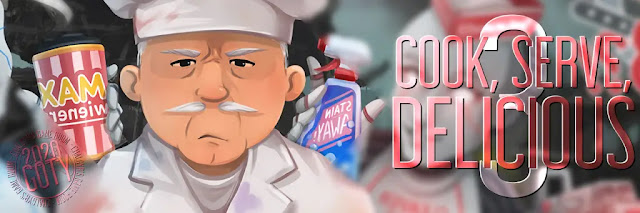
I don’t know how I stumbled across the Cook, Serve, Delicious series but I have two of them. Nope. I’m wrong. I was introduced to this title by a friend of mine. I don’t know why I thought this could be fun. Maybe it’s due to the fact that I have worked in fast food. Perhaps I nabbed the title because I thought it would be an interesting change of pace. Or I wanted to see how it would hold up against Overcooked. Who knows? But what I discovered is that Cook, Serve, Delicious 3 is a highly entertaining and fast paced game. Unlike the previous version where players decorate and upgrade their own kitchen, this new installment takes players out of kitchen and into a food truck! That’s right, players have to prep all their dishes before they reach their destination and I love it. Sometimes other food trucks will try to shoot at you (which is an interesting mechanic.) It is a game that I enjoy playing. Weirdly, I find that it helps me focus on the rush and not real life. Cook, Serve, Delicious 3 is definitely my guilty pleasure of 2020.

Moero Crystal H is a solid dungeon crawler with a huge cast of viable characters, some really good battle music, and a super huge post game as well, there's a lot to like about moero crystal H. Ok, the cast might be almost entirely female...and monster girls (sort of...), and you might have to strip them and rub them to require them, but that isn't so bad...right?
Nick: Langrisser I & II

This updated packaging of the first two Langrisser games was a treat for me. People who have followed the site for years know I am a tremendous fan of Warson (Langrisser I) from the Sega Genesis days. That being said, part two never made it to the US back then, and I had never played it until this release. Updated visuals, improved quality of life, lots of endings and branching story paths made this one a joy for me to get that platinum trophy for.
Pierre-Yves: Zombie Army 4

If there's one game that I've played the absolute living hell out of (heh... didn't even plan that one) this year it would be Rebellion's Zombie Army 4: Dead War. Continuing from where the original Zombie Army Trilogy left off after the defeat of Zombie Hitler, the gameplay was refined, new systems were put into place and now instead of just having access to an array of weapons you now had that AND perks as well as special abilities to be used on top of weapon modifications to suit your own personal playstyle. While Izzy and I have been through the original Trilogy only once, we've been playing through Zombie Army 4 since over and over and while we are only one trophy away from the Platinum which both Richard and my brother Marc are helping out with, we've also enjoyed the hell out of the expansion content that is being added over time through two season passes so far.
Susan N: Cook, Serve, Delicious 3

I don’t know how I stumbled across the Cook, Serve, Delicious series but I have two of them. Nope. I’m wrong. I was introduced to this title by a friend of mine. I don’t know why I thought this could be fun. Maybe it’s due to the fact that I have worked in fast food. Perhaps I nabbed the title because I thought it would be an interesting change of pace. Or I wanted to see how it would hold up against Overcooked. Who knows? But what I discovered is that Cook, Serve, Delicious 3 is a highly entertaining and fast paced game. Unlike the previous version where players decorate and upgrade their own kitchen, this new installment takes players out of kitchen and into a food truck! That’s right, players have to prep all their dishes before they reach their destination and I love it. Sometimes other food trucks will try to shoot at you (which is an interesting mechanic.) It is a game that I enjoy playing. Weirdly, I find that it helps me focus on the rush and not real life. Cook, Serve, Delicious 3 is definitely my guilty pleasure of 2020.
Richard: Moero Crystal H

Moero Crystal H is a solid dungeon crawler with a huge cast of viable characters, some really good battle music, and a super huge post game as well, there's a lot to like about moero crystal H. Ok, the cast might be almost entirely female...and monster girls (sort of...), and you might have to strip them and rub them to require them, but that isn't so bad...right?