Culdcept Begins by developer and publisher Neos Corporation—Nintendo Switch review written by Nick with a copy provided by the publisher.
Estimated reading time: 6 minutes


Culdcept Begins by developer and publisher Neos Corporation—Nintendo Switch review written by Nick with a copy provided by the publisher.
Estimated reading time: 6 minutes
Estimated reading time: 11 minutes

Note: Please be aware that this review contains some spoilers either in the text or in the screenshots taken during gameplay.
For those of you who are familiar with either title, the Rhapsody featured is the original PS1 version, and La Pucelle is the extended / enhanced version of La Pucelle: Tactics. A review covering the PC version written by P-Y for Rhapsody: A Musical Adventure and La Pucelle: Ragnarok can also be found on our site if you're looking for a comparison between ports. If you're familiar with the titles or have read the reviews for the PC port, feel free to skip to the bottom paragraph and summary for my cliff notes on the Switch version.
For those who are unfamiliar, let's dive into these two classic titles!
First up, I want to talk about Rhapsody: A Musical Adventure. Now, some of you may be asking "is this the DS version?", to which I would say "definitely not". The DS version had a simplified combat system, and removed the feature where you were able to recruit monsters to your party. Thankfully NIS has opted to go for the original PS1 version here, much to my delight.
Rhapsody stars a young girl named Cornet who is living with her grandfather after the death of her parents. Cornet dreams of marrying the prince of the Marl Kingdom, who the townspeople have nothing but good things to say about. Unfortunately for her, every girl within a four day trip is also interested in the prince.
Thankfully for Cornet she has something that sets her apart from the crowd: a magic horn. This horn allows her to command puppets, which she can use in battle or in general to help her out. She can also speak with puppets, even if she isn't controlling them through her horn, and is friends with a puppet named Kururu, who tends to give her (somewhat) helpful advice. Needless to say, things don't always go how you hope, and Cornet ends up setting off on an adventure in order to be with the Prince, making both friends and enemies along the way.

Rhapsody is a bit of a toned down version of the NIS SRPG fare, with an interesting take on the adventure and combat. As you explore the world, you will be roaming around maps, talking with townspeople, beating up baddies, and helping puppets fulfill their dreams so that they may be reincarnated. Exploring locales is walking around a map, often consisting of very similar looking passageways, in a 2D top-down-ish style. As you explore you can find chests with items, puppets to recruit, as well as get into random battles.
Combat in Rhapsody is well put together, with enemies and allies being on a grid based map, with the units acting in order of their speed value. These grids are significantly smaller than other NIS titles, and don't feature any of the later title's convoluted panel and stage effects. You can command your units to move and attack along the grids, use special abilities or magic, or simply end the turn in order to guard.
Cornet also participates in combat, using her treasured horn as a weapon. Since Cornet is essentially a puppet master, not only does she participate in combat normally, but she can also use the horn to increase the attack of any dolls fighting with the party as long as they are within range. Doing so also builds up a musical score which can be used for "rewards", which are attacks using desserts, or healing the party members.

Cornet also plays another special role. If Cornet defeats an enemy with her horn attack, there is a chance the enemy monster will ask to join the party, provided they aren't unique or boss type monsters. Monsters can either be used as party members or sold for cash if you're running low. While dolls are usually the better party member options, that doesn't mean the monsters aren't useful. Unfortunately, new units tend to come in at the wonderful level of 1, so they will almost always require a bit of effort to get them up to par.
Thankfully the game is rather basic in a number of functions to help accommodate this. For starters, units you have only wear accessories, no specific weapon types, and are therefore a lot easier to outfit. Also, Rhapsody is pretty easy. No, really, it isn't that challenging, even on the harder difficulty, especially if you use the combat system to its fullest potential. However, in a rare turn of events for me, I actually don't think there is anything wrong with Rhapsody being an easier title. With Rhapsody, you're there for the story, the characters, the adventure, and the music. Sure, combat may be a large part, but it's not where the focus lies.
There are many interesting companions to recruit, and they all have desires which you can fulfill, making for interesting companion quests. Additionally, the characters in Rhapsody have a habit of breaking out into song whenever they have an opportune moment. Sometimes it's a solo, sometimes a duet. Sometimes it's even the bad guy, but hey, what do you expect from a game called "Rhapsody: a Musical Adventure". In fact, I'm pretty sure a character makes a cameo in a later game and questions why nobody breaks out into song.
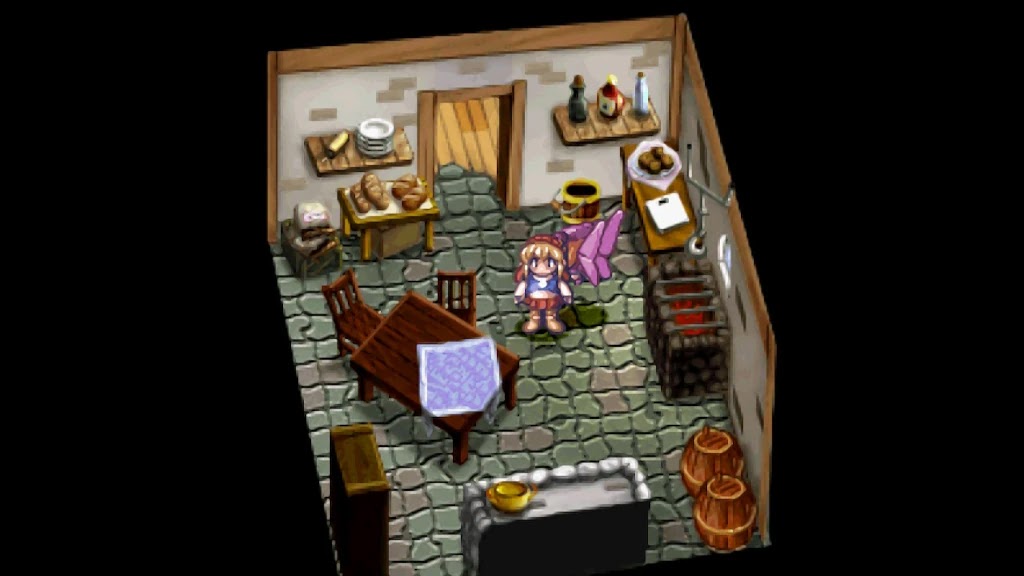
Rhapsody is a game full of heart, and song, and I'm really glad to see the PS1 version get an updated port.
Next up on the list we have La Pucelle: Ragnarok, the enhanced / extended version of La Pucelle: Tactics, which is sitting on my game shelf right next to me.
La Pucelle is around the time where NIS started thinking "let's make this system absolutely ridiculous" and decided to run away with it. La Pucelle is also, arguably, my favourite NIS SRPG. Yes, I do mean including the Disgaea series in that statement. La Pucelle is a story about Prier, a sister working for the church who aims to be the next Maiden of Light, and a professional demon hunter. She's rude and crass, but her heart is in the right place. Or at least it will be if you make the right choices.
That's right, there are multiple endings that are affected by your actions. In fact, one of the gag endings in the original got extended for the Ragnarok version, which is pretty entertaining. Just like with the rest of the game, there are still a bunch of quirky character interactions to witness, mostly involving Prier getting mad at someone. Chapters can have their own endings as well, so pay attention to what people say, and if there is an extra panel of interest on the map, it may be a good idea to check it out.

Much closer in style to Disgaea than Rhapsody, La Pucelle features what has become what some may immediately think of when a NIS or Disgaea title is mentioned: grid-based combat with many units introduced through a base panel. While there are a lot of differences and quirks, the basic premise of La Pucelle is to go shopping in the town and talk to who you want, then head off into a series of stages in a large overarching map.
Each stage is individual, and will generally be cleared either by defeating all the monsters or by walking onto a panel that leads to the next screen. What La Pucelle also has is Dark Portals. Essentially these guys are like the geo panels in Disgaea, except they are tiles you can walk on, and standing on them and facing a direction will send a floor effect in a line. Certain characters can purify the portals, which causes a chain reaction along the floor panels, possibly ending in a damaging or healing miracle, if you fulfill the right conditions.
So, let's talk a bit about how La Pucelle is different from the standard SRPG from NIS nowadays. You more or less have four different base leveling systems at play. I know that sounds like a lot, but hear me out a bit. Two are tied to your character specifically, and two are tied to the gear you have equipped. For character specific, you have a raw level, which increases as you kill enemies and participate in a group killing enemies, and skill levels, which increase with use. The levels tied to your items are item level and attribute levels. Items will gain exp as you purify dark portals, enhancing stats upon leveling. Attribute levels increase as you participate in killing enemies, and increases a characters attribute value. At certain benchmarks, characters will learn new skills, such as minor increases in critical rate or defense.

In addition to this, there is also an item fusion option, where you can have a tamed monster hold at least two items to have their effects added to the first item the monster is holding. Yes, you read that correctly, you can tame monsters here as well. This is done in a manner similar to the Dark Portals, where you purify a creature and then beat it. The more you purify it, the more likely it will be to join you, although more of a similar type of monster means a harder recruitment threshold.
La Pucelle is chock full of interesting characters with some of the best names taken from French words as well. We have Prier (prayer) the hot-headed and violent sister, Culotte (cheeky or knickers), Alouette (Sparrow), Salade (Lettuce) etc. Heck, even the "Goddess Poitreen" is similar to "poitrine". All of the characters have their own personalities and place in the story and are interesting in their own right. Characters are also only as useless as you let them become, so if you feel a character isn't up to snuff, maybe you should reexamine your training regimen for them and what they have equipped.
Now, despite having a little more complicated battle and leveling system, I found the equipment economy to be a lot more user friendly than in the Disgaea titles. Sure the way of leveling and fusing is surprisingly in-depth, but at least you no longer need to run through a 100 floors of annoying enemies, only to get soft-locked on floor 98 by geo panels that give Immortality and No Moving. So dumb that was.

As a port, both Rhapsody and La Pucelle have been done a real service. I can assure you, having broken out the original La Pucelle Tactics a few weeks ago, that playing it on my PS2 looks ugly as all hell on my current TV. The Switch port though? It looks great. Well, it certainly looks and feels old, but it doesn't look bad, and that's the important thing. Plugging the PS2 in it got all stretched and looked wonky, but no more with the Switch release! Whether it is in handheld mode or TV mode, both were appealing. Rhapsody does have a "smooth mode", which I've shown an example of earlier, that I found to be a little ugly looking, but it's an optional toggle! As an added bonus, the runtime was smooth and loading times were fast. Heck, I feel like I got more lag on my PS2 than on the Switch.
Overall, Prinny Presents NIS Classics Vol. 3 is my favourite of the bunch. Rhapsody: A Musical Adventure and La Pucelle: Ragnarock have what I feel is the most heart of all the NIS classic titles.
If you're a fan of the Disgaea series, you can't go wrong with either title, and even those new to the genre have a wonderful entry with Rhapsody. The updated graphic quality from the PS1 and PS2 era is greatly appreciated, and being able to bring these titles with me on the go with the Switch is amazing.
Score: 8.25 / 10
Estimated reading time: 9 minutes
When I started up Dice Legacy with a long history of city builders and colony management games behind me, I thought I was in for another rehash of the same old tropes – build some structures, grow your population, research everything you can, and play the micromanagement game in balancing production to consumption. It quickly became apparent that while those elements are perhaps unavoidably present, Dice Legacy has put a unique and memorable spin on them that kept me off balance and rendered previous experience with city builders irrelevant. There are two elements that Dice Legacy brings us that really stand out from the crowd and make this a game worth buying: action control via dice, and a world that feels reminiscent of a 2d side-scroller while maintaining 3d-like artwork.
In Dice Legacy, the population is represented by classic six-sided dice, each face of which enables it to perform a given type of task. Icons for construction, harvesting, combat, exploration, research and others vary in their type and frequency depending on what type of citizens you have, and only the “top” face when the rolled is usable. The player seems to be hard limited to a maximum of 12 dice in their available-for-assignment tray at a given time, although it is possible to have a greater population than this if you can react fast enough that only 12 are awaiting reassignment at any given moment. React too slowly, and any dice past 12 that try to return to the tray are irrevocably lost – potentially a pricey mistake as higher-tier dice can represent a significant investment.
If the dice faces simply allowed the player to assign that die permanently to a job, we would be back near classic city-builder territory, but here in Dice Legacy these assignments only last for a single action/production cycle. After being used, the die returns to the assignment tray and must be rerolled before it can be used again. The result of this is a situation where the player can’t really plan far ahead – if you need more food or lumber or stone to do something, you just have to hope that your next roll gives you the die faces you need to perform those actions. If you don’t get them, you’ll need to either change your plans on the fly and do whatever you can with what you did get, or reroll your dice – but every reroll brings the dice a step closer to death, so spamming rerolls to get a particular face brings risks and challenges of its own!

The second element that Dice Legacy uses to stand out from the crowd is a world that feels in many respects like a 2d side-scroller. The world map is formed like a ring, with the playing space being on the inside face. Width is quite limited, so you’ll constantly be scrolling “up” and “down” to move through your city, expand your borders and react to the events that the game frequently tosses your way. From bandit invasions that require specific combat-faced dice to repel, to freezing temperature, sickness and unhappiness that you favored one die type over another, Dice Legacy doesn’t really give you time to rest.
Did I mention that this city builder is very RTS-styled? Every action in Dice Legacy takes a certain amount of time – usually less than a minute, and often less than 30 seconds. Events have timers as well, and if the player doesn’t react in time – with the correct die-face action – there can be repercussions like lost resources or destroyed buildings. At the outset of the game when the player is handling only half a dozen dice in a limited area, this feels easily manageable and there are enough times when all the dice are assigned that you can free a hand to grab a drink. By the time you’re an hour into the game with a full tray of twelve dice, the pace feels anything but relaxed as you struggle to keep all the dice working across an expanding city area while bouncing between events that beset your borders!
Visually, Dice Legacy has made good use of contrasting colors and simple, clear iconography that makes the user interface easy to understand, even when playing on the small screen of the Nintendo Switch when used as a handheld. The buildings are visually distinct enough from each other that the player can quickly learn which is which, and there are button reminders on all UI elements in case you forget what does what. If there is a downside here, it is that in making the UI large and clear it can at times feel like it has taken up too much of the play area. Tooltips pop up every time the cursor passes over one of your buildings, and between the UI scale and the size of the tooltips I felt like I was fighting to see what I was doing at times, especially as the city developed and I had multiple buildings in close proximity to each other. While an option to adjust the UI scale manually (or an automatic adjustment when docked) would probably resolve the issue, this wasn’t listed in the game menus on the Nintendo Switch client at review time.

Sound design in the game is also very nicely done, and woven so well into the experience that it simply becomes part of the play experience. Music and the ambient soundscape blend pretty seamlessly, and have enough variety that you won’t find yourself hearing the same few musical phrases over and over. That said, if you’re a fan of hearing catchphrases or humorous reactions when you repeatedly click on your minions, you won’t find it here.
Overall, Dice Legacy is a very fresh and creative entry in a genre that can often feel like every game is just a reskin of another. The use of dice to randomize the actions available and the steady pace of external events changes this from a game of long-term strategy to one of improvisation and reaction. Clean, visually appealing art style wars with a slightly too large UI scale that can obscure much of the play area. Great for people who like to think on their feet and maintain a decent rate of action and excitement for extended periods. Not an at-your-own pace city builder like Cities: Skylines or other descendants of SimCities, however, so look elsewhere if you’re after a quiet, relaxing time.
Score: 8.5 / 10

Estimated reading time: 9 minutes
As the start of something new in order to bring older titles back to the forefront of today's gaming platforms, Nippon Ichi Software has created a new label dubbed "Prinny Presents: NIS Classics". Taking two PS2 era Strategy RPGs, the first of these volumes is also concentrating on a title that is bringing a rather niche title back from almost obscurity with certain gameplay elements that I would like to see again within a NIS strategy RPG. This is Soul Nomad & the World Eaters.
Unlike its counterpart Phantom Brave, until now Soul Nomad & the World Eaters had never seen another release outside of Sony's Playstation 2. There was no PSP or PSVita port and unlike the Disgaea series which continued onto the PS3, PS4 and Nintendo Switch, this crazy adventure had remained hidden in the shadows. Back again for another appearance though, this more hardcore strategy RPG while worth it may end up punching your ticket more than a few times.
Now, getting the biggest issue out of the way first, like Phantom Brave there’s been no graphical upgrade done to the experience. Unlike Phantom Brave that eventually saw widescreen support, Soul Nomad has remained in its original 4:3 format with the ability to stretch it out if you did back in the day find yourselves with one of the first wide screen television sets. In a way though, not having been stretched out in a way did do a bit of a service for the quality of the sprites but I would have liked to have anything to the left and the right of the screen instead of just blank television screen. Ah kids have it so well these days in a world of wide and ultrawide resolutions!

What had me excited for this dual pack is that I’ve never actually got to truly play Soul Nomad & the World Eaters when it was released. Instead, I was doubly cursed with both a PS2 in which had been used to the point of the optical drive dying as well as my first TV that I bought on a payment plan die on me one night while playing Growlanser: Heritage of War that has been released a week prior. Eventually getting a PS3 to replace the dead system, for some reason Soul Nomad remained something unplayed until the last several weeks and I had to wonder a few things. Why had NIS never revisited some of the elements showcased and does it have too high of an entry fee for those not prepared for the realm of SRPGs.
Taking an approach only seen here by NIS, Soul Nomad & the World Eaters stars a nameless protagonist that gets the "honor" of becoming a vessel for a crazy and crazy powerful god-like figure known as Gig. In English voiced by Yuri Lowenthal who really sells just how vicious Gig can be verbally, your protag will soon find out just how vicious Gigs powers are capital IF you decide to use them. Playing the choice game, you can decide whether or not to use godly powers or go about it the good old fashioned way. By grinding experience points.
Where Soul Nomad differs from the other SRPG titles that NIS / NISA have done over the years is that there’s no actual easy way to grind experience and level up your units. Instead, the story follows a path and unless you look into a specific side feature that’s mentioned and then never really mentioned again, you’ll spend plenty of time polishing off just how badass you can be with limited forces until a boss stomps you flat in a totally unfair manner. Really annoying and awful especially if you’ve been at it a few times.

Taking it from the top though, once our nameless protag takes on a sword and becomes a vessel for Gig, the journey to put down Gig’s World Eaters begins. In a way because I really played Compile Heart and Idea Factory International’s Trillion: God of Destruction first, I found some similarities in going up against a foe of immeasurable power knowing that you could easily die in the process. I guess it’s also the same concept as Z.H.P. but that’s another story entirely. To take on these world eaters though, you’re going to need to level up and to build an army from next to nothing and manage your bank account all the while as nothing is free in this world and that includes summoning your troops onto the field.
This in a lot of ways is where I was getting a bit disconnected with Soul Nomad as in order to survive battles, you’re going to need to build up a variety of teams to be summoned to the field. In order to summon teams to the field, you’re going to need money. But you also need money to buy the units to bring them into the field and it goes without saying that level 1 units are fairly useless even two chapters into most SRPGs so what the hell are you supposed to do short of stacking your main force and hope for the best? That’s where a previously mentioned and not really explored upon feature comes into play, Room Inspection.
Taking a few pages out of Intelligent Systems’ Fire Emblem where you can partner up your units for more oomph, Soul Nomad works with this concept by immediately putting units into what are known as rooms with a front, middle, and back row. Random in how the room will be composed as you could have one front spot, nothing in the middle and three back row openings, there will be some mixing, matching, and hoping that a room will give you enough of these slots in order to actually make something worthwhile once summoned to the field as this process is anything but cheap.

So by inspecting rooms, you can go into a series of fights that allow you to level up your current troops much past anything that the main story could allow you to do and also do it for free. While inspecting rooms, any and all squads summoned to the field are free allowing you to finally really let loose and grind monsters for all of the glorious experience points as well as cash, loads of cash, which in turn, will let you finally survive some of those battles “in the real world” as you’ll have both the experience and the bank rolling to pull it off.
The system once you get the hang of it, and like a lot of NIS titles know how to abuse it to make it work in your favor, works but the cost of entry is so damned high especially if you simply read the “hey you can inspect a room” but then never actually looked into it. The other page that is taken out of Fire Emblem is more in the battle in which you get to see whoever is on the right battle whoever is on the left in either a short or long form animation. Archers and mages will shoot arrows and fire spells differently depending on their position while front line warriors will have different approaches whether in the front or the middle lines. There’s a LOT of experimenting to do such as a healer will heal one unit very well while deployed on the middle line but they will also to a reduced capacity heal the entire team if stationed on the back row.
From that standpoint, Soul Nomad is amazing to get to understand as it’s not just a game of numbers at this point where you can say to yourself, I’ve got level 10 knights in front with my protag and a level 8 mage in the back with a level 9 healer. It's an actual game of strategy. You need to worry about how the enemy is composed as just a few mages throwing full column fire spells will easily knock your front line forces out before you’ve even had the chance to heal whoever is hopefully left over.

Only adding in another stress to this whole process is that if a unit designated as the leader is taken out, the whole squad perishes. This makes moves that target leaders so brutally nasty when used against you, but absolutely amazing to hold onto if you do that that ace up your sleeve. It also creates stress especially if the battle has been dragging on as you really have to ask yourself is it worth putting your main unit up? Or do you potentially sacrifice another just to deprive the last unit standing of potentially taking you out in one go?
And it's this level of combat tactics that make Soul Nomad so enticing to lovers of the genre, especially the ones who are constantly seeking tougher challenges. So Catch-22, Souls Nomad's difficulty by this very aspect could also alienate newcomers due to how tough it is, but again, packages with Phantom Brave while also a tougher title in a lot of ways, has a lower barrier of entry to introduce new players to the crazy phase that NIS had with these two titles and Makai Kingdom.
So while Soul Nomad & the World Eaters hasn’t been upgraded from it’s PS2 version and is a direct port over to the Nintendo Switch, it’s an SRPG that I had wished had sat down years ago. As a whole package alongside Phantom Brave though, I wish that the graphics had been polished up in order to better suit the newer platforms. Both are incredible titles offering countless hours of strategy and combat and I look forward to what we can come to expect with Prinny Presents NIS Classics Volume 2.
Fingers crossed for a combination of Makai Kingdom and La Pucelle.
Score for Soul Nomad: 7.5 / 10,
Score of Phantom Brave: Score: 8 / 10,
Total score of Prinny Presents NIS Classics Volume 1: 7.75 / 10

Estimated reading time: 6 minutes
As the start of something new in order to bring older titles back to the forefront of today's gaming platforms, Nippon Ichi Software has created a new label dubbed "Prinny Presents: NIS Classics". Taking two PS2 era Strategy RPGs, the first of these volumes is concentrating on a title that has seen several other ports over the years such as the Nintendo Wii, the PlayStation Portable and the PC. This is Phantom Brave.
Phantom Brave is one of those titles that not only have I played every iteration of, I never seem to get tired of it. Having had the pleasure and for me the honour of reviewing it for the PC several years back, I was excited to see it back again and on a platform style that it should fit well on having both visited the home and portable based console environments.
I'll start off with perhaps my only issue with the package that Nippon Ichi Software has put out for us. Unlike the other iterations of Phantom Brave that had a bit of reworking and upscaling for the platforms that they were targeting, this version looks really great until you look at the sprites themselves. For some reason, while everything else is clean and crisp, the sprites, combat or story in their 2D animated status, are blurry and just don't fit the rest of the world. Bottom line is that they haven't been reworked, just ported in.
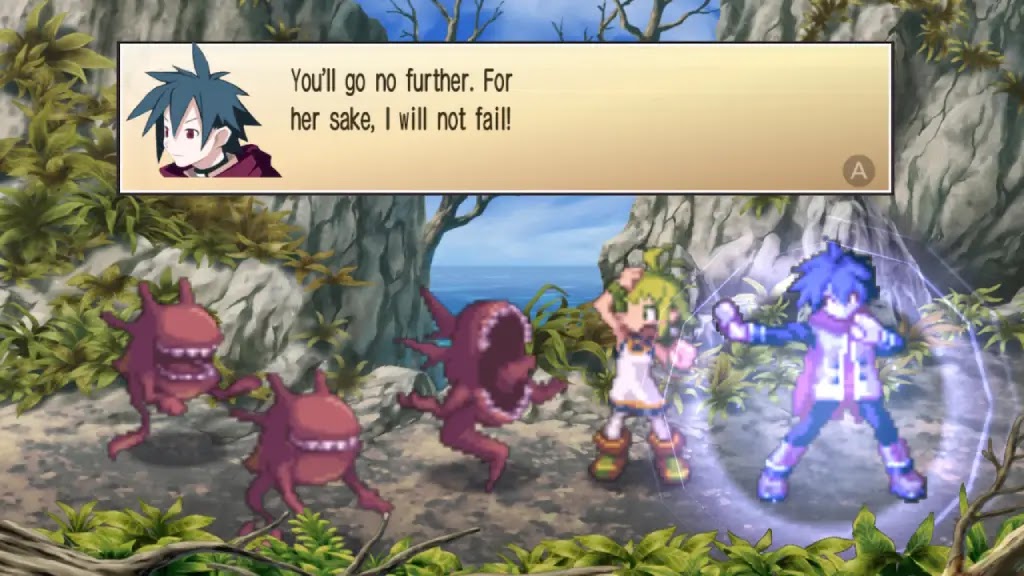
If you can get past this however, there's an incredible strategy RPG to be found. Taking place in the fictional world of Ivoire, Phantom Brave follows the story of a young Chroma (mercenary) named Marona as she works towards saving enough money in order to buy the island that she calls home. Aided by Ash, a phantom that used to be a friend and Chroma alongside Marona’s parents, the two of them will go from job to job and face some rather impossible situations together.
The story, unlike a lot of other entries into the Makai universe such as Disgaea, Makai Kingdom, the attached Soul Nomad & the World Eaters, La Pucelle and more, is a more serious one even if we are dealing with loads of supernatural elements and talking wolves. Unfortunately due to her ability to see those that are still around Marona even in her early teens have lived with a stigma which has resulted in the “normal” people shunning her. In a world that has talking wolves, owls, and other creatures, this was apparently where the line was drawn for the normal folk and the story while well written and paced is hard to stomach at times as you wonder why people are so cruel to someone who just happens to be a little bit different.
It’s this that keeps Phantom Brave both grounded and worth coming back to time and time again because unlike the more slapstick and dark as hell / hilarious humour, jokes will only be funny for so long before they lose their luster. A well written story will continue to be enjoyable for years to come and it’s with this that I was more than happy to sit back down to Phantom Brave yet again on another (PS2), another (Wii), another (PSP), another (PC) platform.

Merging the narrative concepts into gameplay is another area that makes this title stand out just a little bit more. Surrounded by phantoms that can be summoned to the field, Marona who may be the only living person on her team will always have plenty of support as long as objects exist in order to help bind the phantoms into the real world. Rocks, trees, swords, minecarts, bombs and flow pots, each of these can act as a temporary vessel for a phantom but like everything else in existence, there’s a cost.
Depending on the phantom and their power, they can only stay in the real world for a limited time before having to phase back out and rest up a little while. Well rounded, Ash can stick around for five turns while a soldier unit can stick around for seven but they aren’t exactly the most powerful. Fighters, Valkyrie, Witches, Owl Ninjas will range the four to five turn range while other much more powerful beasts may only be able to stick around for two turns but the damage that they can pull off is incredible.
Now where Phantom Brave takes this concept up a notch is that phantoms count as “one” to the total count of what can be summoned to the field but then so do any weapons that they hold. So working generally off of a count of “two”, it doesn’t take long to max out who’s been summoned to the field in order to do battle. A good way to manage this concept is that because anything that a phantom can be bound to can be used as a weapon, over time, you can establish tactics that will have phantoms summoned later in battle summoned into the weapons left behind by the first wave that are no longer present. It adds a level of strategy and it can really help out on stages where the difficulty is already higher due to a lack of objects or due to enemies targeting these objects as soon as they are able.

A bonus to this package is that it contains everything that has been published up to this point from the Nintendo Wii “We Meet Again” to the Sony PSPs “The Hermuda Triangle”. Continuing on the bonus is that Phantom Brave works just as well full screen in the dock attached to a TV as it does comfortably in the palm of your hand. Adding another layer physically (which I’ll be honest that I did order a copy to showcase my support as always to NIS / NISA), there’s an artbook and OST alongside a collector’s box.
So overall, even if the quality of the sprites have not been updated to be as clear and crisp as the rest of the world and the interface, Phantom Brave alone is a worthwhile reason to pick up this package especially if you’ve never sat down to it. With a well written story and a great combat system that has a variety of quirks to master, there’s more than enough strategy here alone before getting into the second half of the package Soul Nomad & the World Eaters.
Score: 8 / 10
Estimated reading time: 8 minutes
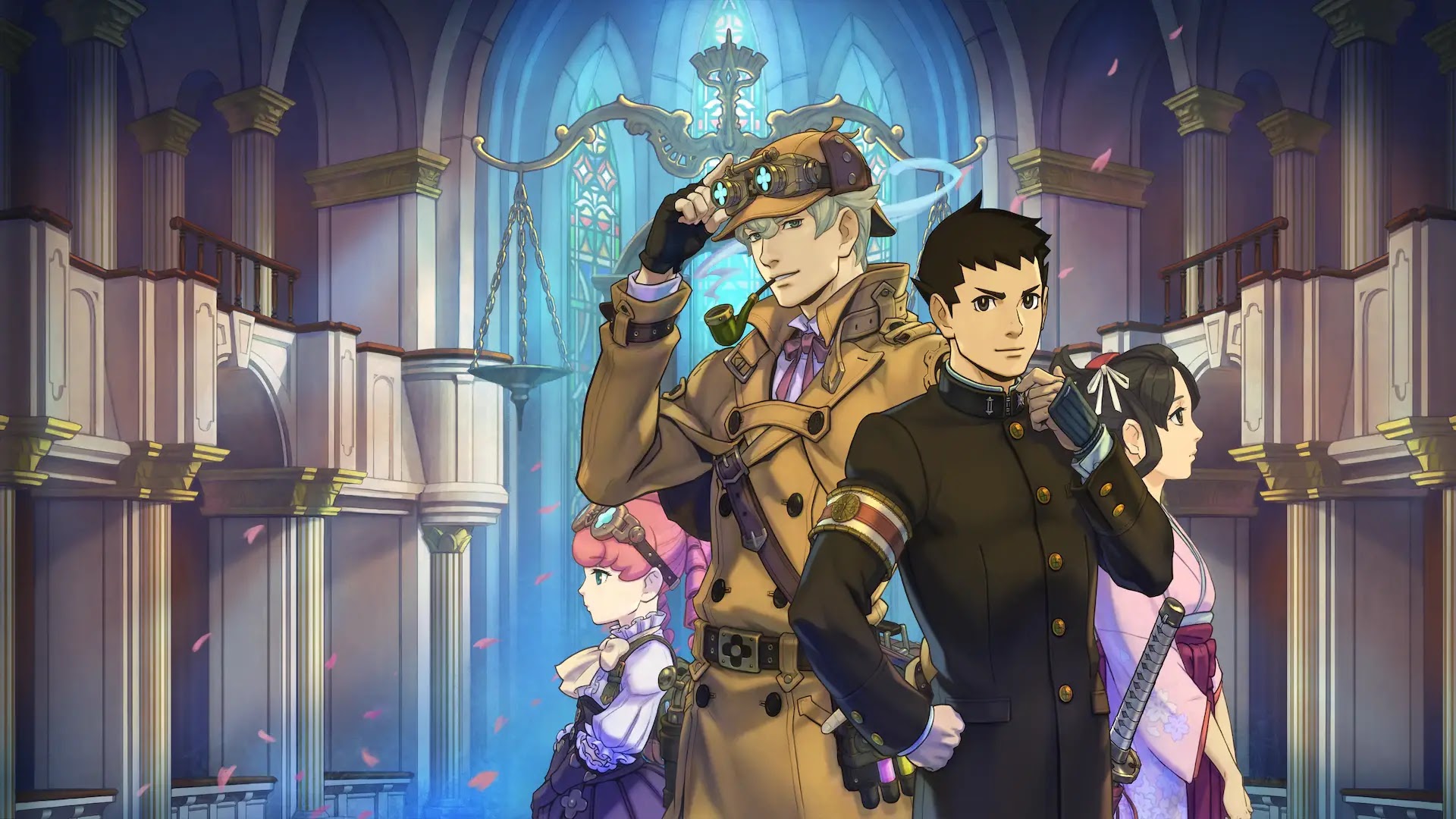
HOLD IT! A new Ace Attorney title? Set in Victorian England? Alongside England's greatest detective? YES! I would like to take on the cases presented! Will the adventures of Ryunosuke Naruhodo be comparable to those of Phoenix Wright? Will the trials be as weird, wacky, and intriguing as the previous games? Well, it's time to take Great Ace Attorney Chronicles to trial!
In the Great Ace Attorney chronicles, we are introduced to the student Ryunosuke Naruhodo: a young shifty-eyed and cold-sweating student who is forced to defend himself in the recently instituted court of law of Japan. Since the case was politically charged due to relations with the British Empire, Japan's new political allies, nobody wanted to defend him. So with the help of his friend and law student Asogi, Ryunosuke starts his career by defending himself at trial. From there he will go on to England to join in on more cases, along with the world famous British detective: Herlock Sholmes. With an overarching plot between two titles, and 10 cases to prevail in, The Great Ace Attorney Chronicles details the sometimes funny, sometimes harrowing cases that Ryunosuke finds himself embroiled in.

If you have any experience with the Ace Attorney series, you'll have a pretty solid idea what you're getting yourself into. albeit with maybe a few changes here and there. GAA Chronicles consists of two titles, but both play the same way and have an overarching plot, all wrapped into one nice little package with a few extra bonuses. The games are split into cases, each of which will generally follow a similar pattern: investigation, then trial. The investigation consists of looking around the crime scene, or any related areas, examining objects, talking with people, and generally just learning more about the case. In the court trial, you will be tasked with listening to witness testimony, pointing out inconsistencies, examining evidence produced for the court, and convincing the jury, if the trial has one, that your defendant is not guilty.
Trials will begin with the prosecutor giving a rundown of the case, as well as presenting any initial evidence they wish to submit. You are free to examine evidence given to you, turning it over, poking at it etc., or read any notes presented, usually a post-mortem report. The prosecutor will then call in a witness, or witnesses, to testify. Normally a witness will give five statements, that you can press them to elaborate on, or present evidence to prove a contradiction between what the witness has stated and how the crime was perpetrated. Be careful though, as the judge will only allow so many mistakes before you get an expedited "guilty" sentence for the person you're trying to defend. Sometimes pressing for more info is the answer, sometimes you need to present evidence. Sometimes you need to go through all the dialogue before your assistant, or someone else in the courtroom, will make a move that will provide you with the answers you need. Yet still at other times, it's the other people in the witness stand that may react to your line of questioning. You can then ask that they say what's on their minds, which may help you out.

If the trial has a jury involved, they may make a decision before the trial has finished. If they do so, you have to pick apart their reasoning for their decisions, pitting the jurors against each other in order to force the trial to continue. As the game progresses, this will gradually get more in-depth, having you present evidence, or pit other jurors against each other before you can get the info required to continue a case. All throughout this, both Ryunosuke and the witnesses will make these grand, exaggerated motions whenever something they say gets picked apart. This is a sort of "core feature" from the Ace Attorney games that was always enjoyable to watch. Each trial is filled both with hilarious hijinks, statements, and reactions, but also contains that element of seriousness that a court case is due. From cross-examining a parrot in the older games, to a witness shooting the judge with a smoke grenade, or Ryunosuke falling against his desk like he just got knocked out, there's a lot of funny interactions.
When not in court, but still on a case, you will be traipsing around the crime scene and areas of interest, collecting evidence and talking to people. Sometimes you will have to present evidence, or discovered items, to people to make them talk here too, much like the court trials. Unlike the court trials though, you don't have a limit to guesses you can make really. Occasionally, Herlock Sholmes will make an appearance, and make a grand reveal about two key points of interest in a brilliant display of "Herlock Sholmes' Logic and Reasoning!"… okay, maybe "brilliant" is pushing it. Most of his "revelations" are way out of line, and it's up to you to fix them. During Sholmes' dramatic reveal, he will be spouting of fanciful lines, while whirling around the area, pointing things out. It then falls to you to pick up on the one word in each of his mini "deduction" segments in order to find out the truth. This is done by looking around the area and selecting an object, item, or clue that would best replace the wrong word in Sholmes' deduction. Using a 3D movable view, you can look around and examine things, which is sometimes required before submitting the new word for replacement.

With the ability to save at almost any point in time, I wouldn't call the cases "difficult" per se. There were a few times I was stumped for a while on how to proceed, and a few times I jumped the gun and presented evidence before I had examined it in-depth or I had pressed the witness enough to make them amend their statement, but overall I found the cases to be quite reasonable. Yes, some of them have some pretty improbable solutions, but they aren't impossible, and the game does a fairly good job of leading you in the right direction. In addition to your court trial and investigations, there are a bunch of little side story type deals you can read, although they may contain spoilers, the game will let you know. There is also a "jukebox", some fancy costumes to change the appearances of Ryunosuke, judicial assistant Susato, and Sholmes, as well as little challenges called "accolades" to interest you as well.
Similar to all the other entries in the series, Great Ace Attorney Chronicles has a really well put together soundtrack. The tunes are more reflective of the time period in question here, with a more Victorian era feel to it. Unlike the original title however, key characters now have 3D models, allowing for a greater range of motion and expression. While the backgrounds are still vibrant 2D landscapes, the people standing on them all have depth, a concept that, interestingly enough, actually comes up if you examine a certain object during one of the cases. Roll all this together and you have a nice package to present itself for your gameplay experience.
There isn't really too much bad to say about Ace Attorney Chronicles. If you're having troubles, there is a "story mode" that turns the game into a pure visual novel instead of a…lawyer? Attorney? Whatever genre this game technically is. The trials, while challenging at times, never have leaps of logic so out of left field you never saw them coming, and the characters are all interesting and unique in their own ways. I liked calling out other witnesses, pitting the jury against each other, and Sholmes' deduction corrections were an interesting way to both deliver info as well as break up the monotony of investigating. That being said, some of Sholmes' deductions are…painful to sit through. They don't really offer enough "options" to be challenging, and replacing a single word is generally pretty simple. We can't forget about the text speed either. Good lord, it's rather slow. Thankfully, if you've already read a line once, you can skip through it a lot faster the next time, regardless of whether it was in story discussion or witness testimony and pressing.

Overall I can say there definitely isn't any OBJECTION to the Great Ace Attorney Chronicles. The characters are endearing, the cases are interesting and pretty well formed, the music is great, and the 2D backgrounds and 3D characters provide a wealth of visual satisfaction. While the text speed may be a little slow for some, there were no real inherent issues to the game that I could find. The Ace Attorney series may be rather niche, but it's also one that's easily enjoyable.
Score: 8.5 / 10

Estimated reading time: 11 minutes
Cris Tales is a beautifully drawn and orchestrated sort of homage to classic JRPGs. A tale of magic, adventure, friendship, and time shenanigans, is Cris Tales a game that will be talked of well into the future, or a game that will be left in the past? Well presently, we're about to find out!
Cris Tales tells the story of Crissbell, a young girl living in an orphanage run by the local head of the church. Life is going as normal for young Crissbell, until she encounters a frog in a top hot that steals her rose! A short time later, and she's embroiled in a war between time mages and saving the world from destruction, as all JRPG protagonists should be. Along the way she meets friends who will help her on her quest, as well as enemies attempting to bar her way. Will Crissbell succeed and save the world, or is the world fated for destruction?
I have to say, playing through Cris Tales was…an interesting experience. Everything is there to make Cris Tales a great game. The cast is diverse without many overlapping character traits, even if they are meant to be the cliché tropes, the art style is gorgeous hand drawn 2-D animations, and the soundtrack is absolutely amazing. That being said, there were also a great deal of technical flaws throughout my experience. It honestly feels like there was little to no play testing actually done, or if there was, it was done poorly.

The game has combat where the enemies either an absolute joke or it feels like the enemies are blatantly cheating, menus are awkward to navigate, the time mechanic is woefully underused, there are some blatant technical issues, the combat mechanics are poorly implemented for about half the fights, and your character feels like they are moving at 75% speed constantly, which unfortunately makes the game feel longer and more drawn out than it should. I wanted to love Cris Tales, I really did. I mean, I certainly still like it, despite its flaws, but the problem right there is the flaws and how many there are, and how often they com into play.
Let's start with an overview of how the game works. As with most traditional JRPGs, you will be walking around a town, field map, or world map, getting into fight, completing side quests for NPCs, purchasing and upgrading equipment, finding chests full of goodies, and acting on the main story line. You'll find yourself running back and forth between areas to complete those side quests, so be prepared for that if you want better results for the towns you visit, as completing side quests will, in fact, affect the future of the town. While in towns, you have this time power activated, where on the left side of the screen you see the past, and on the right you see the future. So let's talk about the first issue I noticed shortly after unlocking the time vision: the frog.
You've got a token mascot character, Matias, who is a talking frog. While the main character cannot go to the past or the future, Matias can. He can collect chests, listen in on conversations, or acquire items for you. Matias has two issues though: he has the attention span of my cat, and he's slow. Matias is supposed to follow you while you're walking around the towns, but he doesn't follow next to you as a tied animation, he has his own sprite that is individual and "tries to make its way to you". This means he you significantly outpace him while walking around, and then need to wait 20 seconds for him to find you, because yes, apparently he needs to be "close enough to Crissbell" to go time hopping. A fact the game will happily open a tutorial window for you every time this happens. The second problem is that Matias moves at a snails pace, either as a tadpole in the past, or an old man frog in the future, so make sure you're almost leaning on what you want him to interact with.

The second major issue is the camera angles. As you explore, you can not only walk left and right, but also into and away from the camera. The camera is supposed to move to accommodate this, but I found that half the time the camera would hide behind a wall, preventing me from seeing where I need to go. As an example, in the first area of the game, where you are first given the freedom to explore the area populated with random encounters, there is a part where you can go through an underpass for a chest. I got into a fight halfway through, and when the battle ended, all I could see was a wall of greenery. I left the underpass, went back under, got in another fight, had the camera wonky again.
This happened a few times throughout the game, but was most notable in the beginning. Speaking of the beginning, the difficulty curve is all over the place. Up until about level 5 or so, it feels like all the enemies you fight are ten levels above you and out for blood. There is a certain enemy type in the first area that can hit the whole party for, at that time, an unreasonable amount of damage. There can be two of these enemies in a fight. In fact, the tutorial-ish area at the beginning was actually the hardest part of the game. The only other times I had issue were when I walked into a boss fight with a quarter of my HP remaining. The rest of the fights were a joke, apart from a few select enemies that just decide to blow up turn one to kamikaze you for a huge chunk of damage.
All of this is punctuated by some pretty harsh load times. You ever played Tales of the Abyss on PS2? Yeah, that type of load times. In towns and for screen transitions it isn't too bad, but out in the field where you have random encounters? Yeah, it's pretty bad. Every random encounter isn't telegraphed, and you don't have a screen effect. You'll literally be walking when BAM: loading screen. For 15 seconds. You get in a fight, there's two enemies, you one-shot each. More loading. It's…rather frustrating. It makes the whole game feel slow and exasperating, not something you'd want. This slow feeling is also translated into your character movement speed. It might just be personal preference, but it really does feel like you're walking a little too slow. It's a little better on the world map, but since areas aren't labeled, be aware that you may have to go find them if you've missed it or though of the area you're looking for as background.

On a more technical note, and what I'd imagine is an issue more for the Switch that I played on, there is a controller vibration you can't turn off. This wouldn't be bad if it were light or infrequent, but the controller vibrates every time you make an action command in battle. Which is a lot. Literally it's almost every turn. Sometimes even more than once per turn depending on character and action. With no option to turn it off, this is a little ridiculous. Another technical issue is the in-game timer on the Switch: it keeps going up even while the Switch is in sleep mode. After 2 hours of gameplay, I had a 10 hour time on my save file.
As far as I can tell, it doesn't really do anything to you, it's just really annoying to look at every time you're in the save menu. A menu you may be seeing a fair bit, especially if the game crashes on you like it did me. There were a few times the game crashed while I was trying to save, most notably after beating one of the earlier bosses. The fight was easy enough for me, but it was quite frustrating. Thankfully it never happened afterwards, but I'm always afraid it will now. The last technical issue is that, occasionally, there will be a cutscene without a screen transition, where the game plays new music overtop of the already playing music.
Now it brings us to the combat section. Combat is set up really well in Cris Tales. The problem is, it just doesn't follow through as well as it should. In battle you will be going with the turn-based method, where speed stat affects turn order, mostly, which is reflected in a bar at the top of the screen. You can select skills, normal attacks, pass your turn (which is handier than you think), guard, and attempt to flee. I would like to point out here that passing pushes the characters turn back one icon on the turn gauge, but has no negative impacts, making it easy to set up combos with other members, or prepare your healer for use after a big attack from an enemy or boss.

When attacking or being attacked, you can hit "A" at the right time to increase damage dealt or reduce damage taken. Fair warning: it feels like the developers made the game in mind around you being able to guard and attack well, so practice those attacks and defends! In addition to all this, the main character, Crissbell, can invoke the past or future on the left and right sides of the screen respectively. This can be used to revert changes, speed up poison damage, cause rust, or speed up timed skill uses. The problem here is that most of the fights you get in, it will be much more efficient to just beat the enemies down instead of playing with the time mechanic. Couple this with the fact that the action command timing only has two types: reasonable and "what the hell", and the combat becomes pretty fast and not very player intensive.
The time manipulation is a great idea, and would have worked well if enemies had more traits that may have required you to change time instances to damage or something similar, but when every enemy can be dispatched easy enough with normal attacks, the time manipulation doesn't see much use. The action commands are also an interesting idea, and games like Legend of the Dragoon did this really well. Unfortunately in Cris Tales, the action command timing is really poorly indicated, with a really subtle black flash around the edge of the screen, that I didn't even notice until about two thirds of the way through the game.
Add to that the fact half the enemies have actions commands between animations, and suddenly thing get a lot more frustrating. Action commands are pretty much required to do any significant damage, and to keep you from dying, so good luck on that. Coupled with the random battle choice, this means you may be fighting enemies every two steps in some cases, and if you get a bunch of the more awful enemies? Bye bye! A bit of a warning as well, but characters outside the immediate party don't earn exp, and if a character leaves, they take the items they have equipped with them. Remember that.

Now all this may seem like I'm tearing into Cris Tales, and honestly, I am. Don't get me wrong, I actually rather like Cris Tales, despite its many faults. The characters, especially those you get later, are all interesting and full of charm. Pretty much every line in the game is voiced over, and with pretty decent voice acting too, the graphics are beautifully hand drawn, the soundtrack is amazing, and despite being trope ridden, on purpose mind you, the characters don't usually fall into those cookie-cutter villains or protagonists, despite seeming like it at first, something I greatly appreciate. The battle set-up is good, although it has poor implementation with the action commands. Every character is a viable party member, even in most boss fights, which is good to see, and the time mechanic is also really interesting. All the groundwork was laid out for what could have been an extremely excellent game, it just fell out in a few places.
Overall, Cris Tales is a game that I can't really recommend outright. For whatever reason it's decently cheaper on the Switch, but with the amount of technical issues and gameplay mechanics that need refining, it would still be best to wait for a sale, or part of a package deal, before I could advise playing. I liked Cris Tales, I really did. It's charming characters, great visuals, outstanding soundtrack, and engaging battle mechanics are all aspects I enjoyed. The poor implementations, long loading times, horrid timing windows, and occasional technical issues however really can't be overlooked. I truly hope the developers take this as a learning opportunity to produce something more refined in the future, as I'll be looking forward to it if the kinks can be ironed out.
Score: 6.75 / 10