Estimated reading time: 4 minutes
Score: N/A

In the early 90s, Coktel Vision (which later became Sierra On-Line) released a quirky point and click adventure game titled Gobliiins which had players bouncing between three different Goblins to find a cure for good King Angoulafre.
Sometimes when you are browsing the internet for information on how to do something, you stumble upon ideas or projects or even games that people might be working on...
What a meow-gnificent evening it is to send your paw-rcels out to those family and friends! Are mew looking to pick up an item or send something out? Well at Cat Mail Co. we can send and receive all your deliveries!
Have you ever grown up feeling like you don't belong? For our Heroine, that's the feeling she lives with everyday in her small farming village. But it's not her only secret...
STARSEEKER: Astroneer Expeditions is just that! Massively co-operative and not an MMO! When you first run the game you are instantly into the tutorial...
Today we’re looking at what has rapidly become an absolute favorite in the open-world RPG genre for me. An interesting story, memorable NPCs, stunning visuals, and a setting absolutely dripping with flavor, Dread Delusion sets its tone immediately and sticks with it.
I enjoy simulation-type games, and I enjoyed the original release of House Flipper, but I never got around to getting the DLC. When the remastered version of the game was released, I figured it would be the best way to experience the DLC while checking out how the base game was upgraded.
GranBlue Fantasy: ReLink released in 2024 bringing the GranBlue universe to an action adventure JRPG format. With a party of up to four members, this band of skyfarers set out for new skies, adventures, and dangers. Two years later, Endless Ragnarok...
70s-Style Robot Anime Geppy-X is a mouthful of a title, but you know what? It’s quite the challenging game to describe as well. At its core, 70s-Style Robot Anime Geppy-X is a shooter...
TOKYO – Mar. 21, 2023 – NeverAwake, the twin-stick shoot’em up set in the world of a young girl’s horrifying dreams from developer Neotro Inc and publisher Phoenixx, continues the nightmare on Xbox consoles in Q2 2023.
Capturing the hearts of critics and fans alike, NeverAwake earned numerous awards including an entry to the Famitsu Golden Hall of Fame in January 2023, the Tokyo Game Show 2022 First Selection designation, best game of BitSummit 2022, and a Metacritic score of 84 overall, securing a spot in the top 40 best reviewed PC games of 2022.
Enter the subconscious realm of unlucky school girl Rem, whose deepest fears become her reality. Unable to awaken from her slumber, face off against the manifestations of her childhood phobias. Fight against monstrous dentists, ghoulish vegetables, evil chihuahuas and other adolescent troubles in a never-ending nightmare.
Shoot and glide through the eerie machinations of her mind in fluid twin-stick SHMUP fashion. Combat Rem’s hallucinations with a surreal arsenal of weaponry. Equip armaments and upgrades to create epic attack patterns, then blast bad dreams while bobbing and weaving through enemy fire including dozens of terrifying bosses.
Navigate through more than 80 levels across a whimsical hand-drawn bullet hell, and unravel a deeply emotional narrative with multiple endings. The release of NeverAwake on Xbox will include the latest 1.1 content update featuring the secret HIMITSU CHALLENGE after clearing world 8, plus six new reality-bending accessories alongside gameplay optimizations and balance adjustments.
Venture into the dark recesses of Rem’s imagination with the official NeverAwake “Nightmare World Art” digital artbook and soundtrack featuring the tranquil melody “AWAKE” by DJ, singer-songwriter, and producer YonYon, streaming on Spotify and Apple Music.
“We knew that NeverAwake was a special title the moment we saw it. It was a dream of ours to release NeverAwake on all consoles, and we are proud to be step closer to achieving that goal by coming to Xbox,” said Azusa Kawamura, Producer at Phoenixx. “The touching narrative and smooth gameplay has received praise from players and reviewers alike, and Xbox users will get to enjoy the latest, most polished version of the game.”
NeverAwake is available now on PC via Steam for $19.99 and on Nintendo Switch, PlayStation 4, and PlayStation 5 for $24.99 with support for English, Japanese, Traditional Chinese, and Simplified Chinese language text. The emotional “Nightmare World Art” digital artbook is also for sale on Steam for $7.99, as well as the NeverAwake soundtrack also for $7.99. A bundle with the game, artbook, and soundtrack is available for a 15% discount.
To learn more, visit the Phoenixx official website, Phoenixx Facebook page, and follow @Phoenixx_inc on Twitter.
Neotro Inc. is a Japanese independent game development company based in Yokohama with a particular affection for arcade games and has previously released the 2D fantasy side-scrolling shooters VRITRA Complete Edition and VRITRA HEXA for exA-Arcadia. By bringing two words “Neo” and “Retro” together, Neotro Inc. chose their name to follow the saying “OnkoShuin”(温故知新, which translates to “learning from the past” and “carrying old wisdom to create new.”
Established in 2019 by industry veterans, Phoenixx aims to support innovative and creative developers from Japan and around the world. Its mission is to inspire and nurture the human spirit – one creator, one game, and one community at a time.
Article by: Susan N.
NeverAwake by developer Neotro Inc. and publisher Phoenixx Inc.—PC (Steam) review written by Richard with a copy provided by the publisher.
Estimated reading time: 6 minutes
NeverAwake tells the story of a girl who is asleep, and her struggle to fight against the nightmares that plague her. An artistic and often grotesque representation of childhood terrors, such as eggplants and vegetables, are just some of the monsters she fights against. As you progress through the nightmarish, but very well designed, stages of the young girl's trauma, you will unlock diary entries as you go, shedding more light on the girl's circumstances.
So let's talk a bit about how NeverAwake functions. The game is split into different Worlds which each have a theme, such as vegetable garden or dog park, and are further split into stages. Stages can be one of two types: normal or boss. During normal stages, your goal is to kill enemies and collect souls in an autoscrolling stage. Once you've collected enough souls, then the stage is clear. Yeah, that's right, you don't need to reach the end of the stage in order to finish it.
Now, you may be wondering "what happens if you do reach the end of a stage without enough souls?". Good question! What happens is that the stage loops every time you hit the end, with enemies getting harder each loop but providing more when you kill them. Well, assuming it isn't a gimmick stage where enemies don't drop souls. Boss stages sort of work in a similar manner, where you don't actually need to fully kill a boss to complete a stage. Each "phase" of a boss completed usually drops a number of souls, so generally you only need to complete 3 phases on a given boss in order to win, with a few exceptions. Loops in boss stages are still a thing, but they occur once you've killed a boss instead of after a set amount of time.
Now, as far as twin stick shooters go, NeverAwake also offers another aspect to draw your attention: accessories and specials. While normally you would fly around a stage with one stick and shoot in a direction with the other, NeverAwake offers the opportunity to do a little more. First up, you have a dash which not only moves you in a direction, but offers some invincibility time. Next there are specials. Those familiar with bullet hells can think of them as bombs, but instead of screen clearing, they usually just have a set area of effect or pattern they follow. There are a wide variety of options, all with unique mechanics, so pick what's best for the situation!
Lastly, NeverAwake offers a suite of customization tools in the form of accessories. Accessories have a bunch of different possible effects, and you can equip as many as you have slots for, although some do cost more than one slot. These accessories can increase defense, collect souls faster, reduce souls collected, and more. It's really fun building a "loadout" for specific stages or boss crushers.
Now some of you may have noticed I mentioned defense and been like "wait a moment, health in a twin-stick/bullet hell???". Well, it's sort of health. The accessory in question gives you an extra hit, instead of the "one-and-done" idea. Really handy during bosses or for the first time running a new stage. The best part? Accessories can be upgraded, although you do have to purchase the upgrades which replace the previous level.
Unlocking upgrades is… something I'm not super sure about, as the in-game hints mentioned new unlocks as you fail stages, but I also unlocked stuff from clearing stages as well. Either way, both special attacks and accessories can be upgraded. Since you keep souls earned on a failed run, and you unlock items from failing stages, repetitive failures in a stage still affords progress. Who knows, the next unlock may be just what you need to complete that stage you were stuck on.
If you're still looking for more, NeverAwake also offers bonus challenges at a certain point. After clearing all the stages in a World, and hitting a certain point for progression, Omoide challenges become available. These are reruns of the same completed stages, both boss and normal loops, and have different requirements. For example, you could be tasked with collecting all the required souls in 1 loop, or defeating a boss without collecting all the required souls.
While normally these aren't too bad, I have to say some of the "complete within 1 loop" challenges were very frustrating, especially if you try them before unlocking certain accessories. The "collect all souls on screen" and "increase soul generation" items would have helped a lot had I not unlocked them only after clearing the one stage I had so much trouble with. For completing the goal however, you do earn album entries, which show a glimpse into the girl's life revolving around the theme of that World. I found them to be a nice bonus challenge that weren't obtusely frustrating.
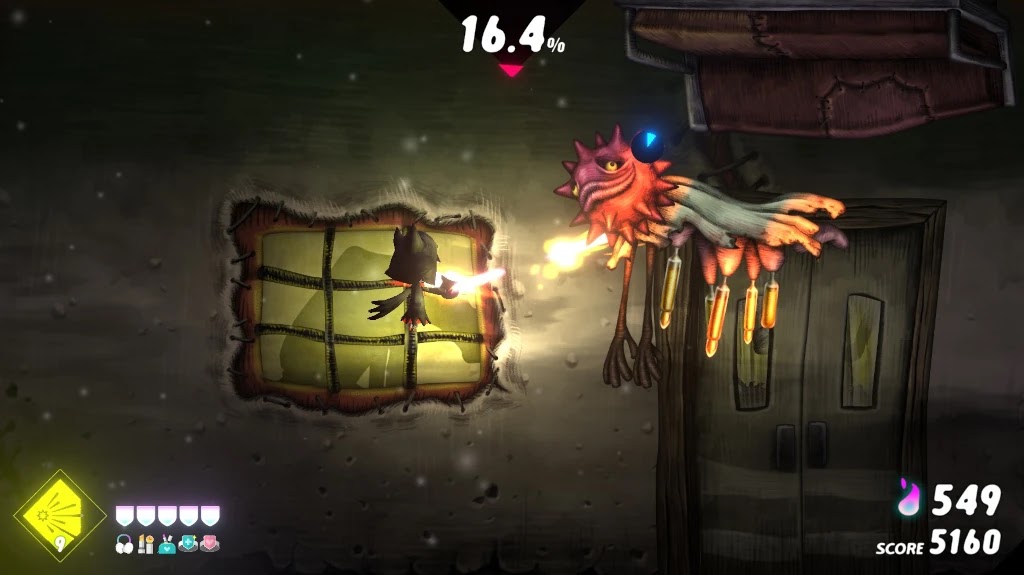
Let's talk a bit about the art style and soundtrack decisions. First off, the art is a wonderfully done mash of "fairytale-esque" and "malformed nursery rhyme". I mean, hopefully you can tell from the screenshots included, but it really hits that good medium between children's book and nightmare fuel. Bosses are also usually a malformed monstrosity based on some form of trauma or dislike, such as the vegetables mentioned earlier. The sound direction is also really well thought out, with both atmospheric tracks in the standard stages and exciting boss music during the boss stages.
Overall, I feel like NeverAwake did a really great job of encapsulating some of the best aspects of twin-stick shooters and bullet hell genres, all while wrapping it up in a nice package that tells a surprisingly meaningful yet dark story about a young girl and her troubles.
The looping mechanic in the non-boss stages and the sheer amount of customization in the form of accessories is a great way to keep the game fresh all the way through. While the game may get tough at some points, there wasn't a time where I thought the stages were particularly cheap. Even when frustration began to set in, clearing the stage made it all the more worth it in the end. Fans of twin-stick shooters and bullet hells alike are sure to get a blast out of NeverAwake.
Score: 8.5 / 10
Kokoro Clover Season 1 by developer ひこてる and publisher Phoenixx Inc.—PC (Steam) review written by Richard with a copy provided by the publisher.
Estimated reading time: 6 minutes
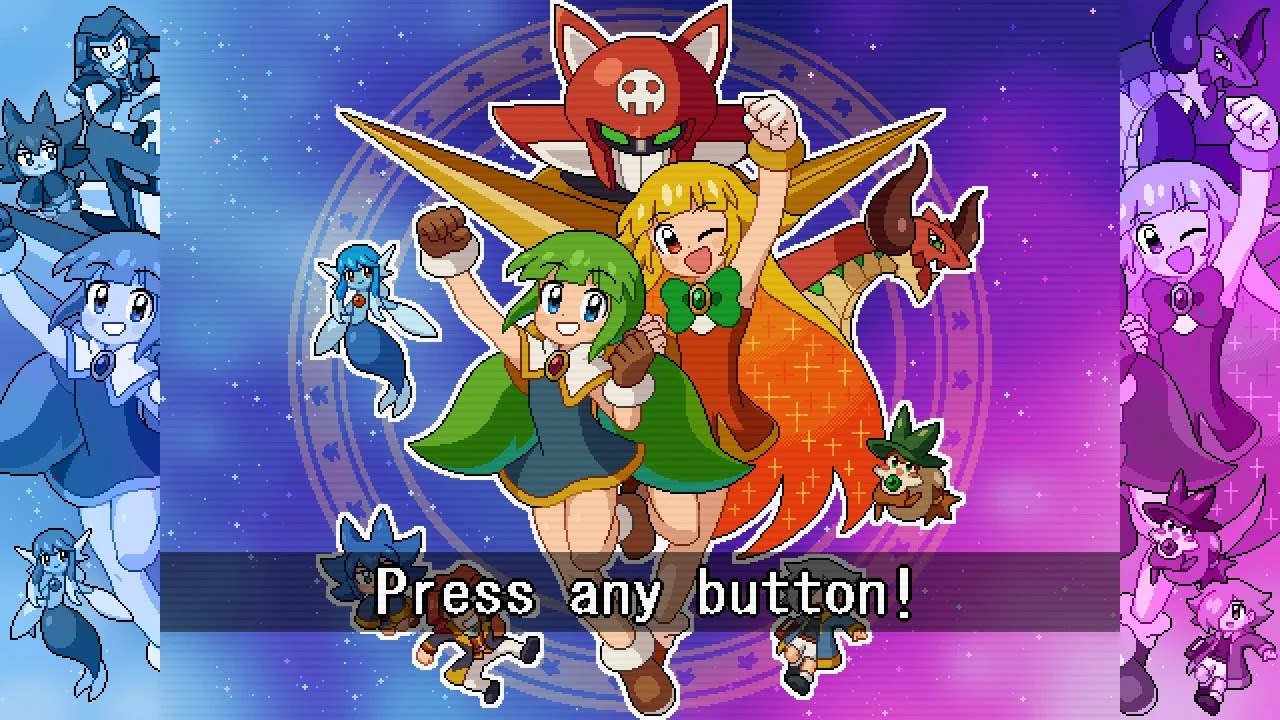
Kokoro Clover tells the tale of a young girl named Treffy, a spirit summoner who has the ability to use the power of spirits. One day she finds a mysterious gem called the Kokoro Clover. Along with her spirits, she sets out on an adventure in order to discover the secrets of the Kokoro Clover, and maybe make some friends along the way? The game is split into a number of chapters, each with both a self contained story tying into an overarching plotline. Remember what I said about it reminding me of Power Rangers? Well each episode is like those "monster of the week" deals.
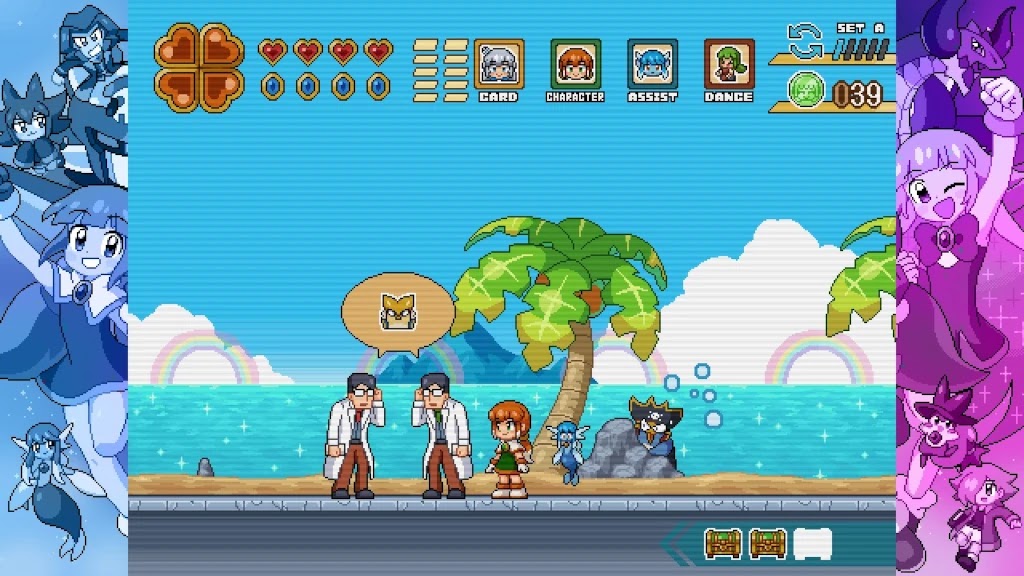
Gameplay for Kokoro Clover is pretty simple 2D action platformer. There are a number of modes to choose from, such as Story Mode, Adventure mode which contains some extra challenges, and a Boss Rush mode. There is also a shop and minigame option. At the shop you can exchange coins you find in stages for stuff you've unlocked the ability to purchase. The minigame mode is the most basic rhythm minigame I've ever seen, but I'll touch on that a bit later. Whenever you start a stage, you will get a cute intro like the beginning of an old cartoon/anime before you start up the stage. Once you get control of Treffy, usually after some exposition, you can run, jump, and attack your way through a stage, picking up items from chests as you go.
I'll say this right now so you don't get the wrong idea, but Kokoro Clover feels like it's intended for a much younger audience, or someone who hasn't played many, if any, video games before. It is incredibly easy, so you won't be seeing much challenge in it, and will probably be picking this up for a younger relative. That being said, it is really cute and fun, so let's take a look at how it plays!
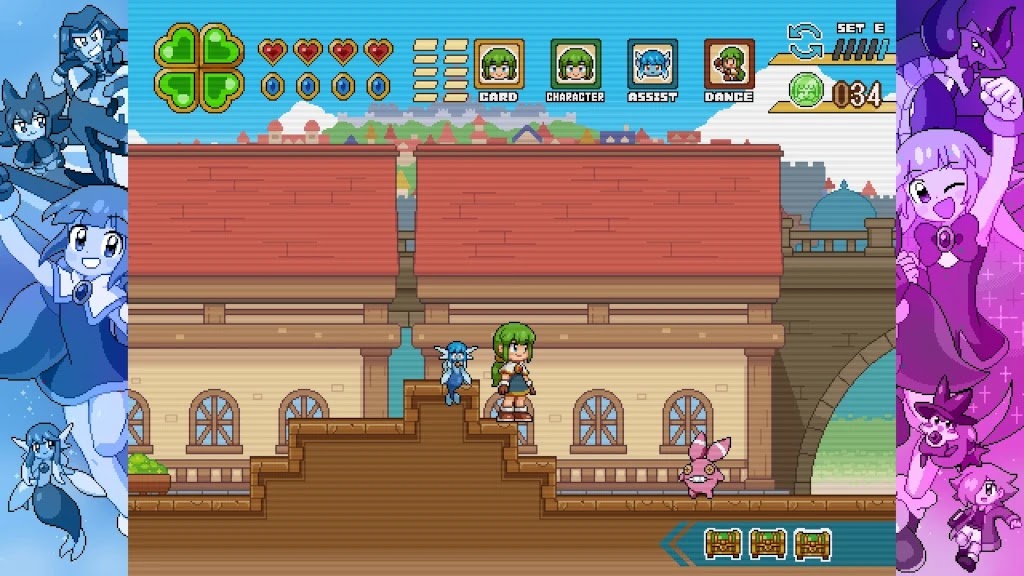
When in control of Treffy, you can walk, jump, attack, and perform many other actions. Treffy not only has the power to shoot magical bullets at monsters, she can also fuse with the spirits she has made friends with, changing her element from the wind she starts as to the element of the spirit she is fused with. This fusion also changes your attack type, allowing you to deal a lot more damage to bosses. Seriously, it's quite noticeable. That's not all the spirits can do though! You can also call them in to assist you in battle! While you start out with Undine, who heals you, and Salamander, who creates a fire attack, you can unlock more assist options along your adventure.
As you spend time in the stage, you will build up a special gauge, which will be used to perform a big attack that hits all enemies on-screen. You can also dance! While it may not seem like much, you are actually invincible while dancing! You can also keep dancing for as long as you want, so you can probably see why I said Kokoro Clover isn't very challenging, since your charges for using assists and your super gauge still fill while dancing. While you can only have one assist equipped at a time, you have 5 loadouts which you can mix and match using different assists, callout cards, and dances before entering a stage. These loadouts can be cycled through while you're in-stage.
As you travel through the world of Kokoro Clover meeting new people and battling new foes, you will also collect cards which can be viewed in a library from the main menu. Each chapter is very short, and also shows you what you get from completion, with a little chest, card, store, or trophy icon indicating monster info in chests in the stage, an earned card, a store unlock, or an in-game achievement respectively. The rhythm minigame will also expand with more characters as the game progresses. Also, after every story segment, you get a small "commentator's corner", where the characters will discuss either something from the "episode", or about the world in general. At the end, you will be given a special saying or password, which you can then use in the store in order to unlock something new. Well, except one which gave the wrong password, but that's part of a larger problem.
While I don't know about the Switch version, I can certainly say the PC version comes with a few…issues, at least for the moment. While none of these are particularly game breaking or anything like that, it certainly does make Kokoro Clover feel a little…amateurish. Also, the game seems intended for Switch to begin with, as controls are much better with a controller, and are referred to by Switch controller scheme. There are also a few instances where there is some cards or monster info that put the character icons partially offscreen. From issues I noticed, probably the biggest one was that while running, if you try to dance, sometimes Treffy will be stuck in the run animation instead of dancing, meaning you will get hit by an attack. You actually need to stop moving briefly first.
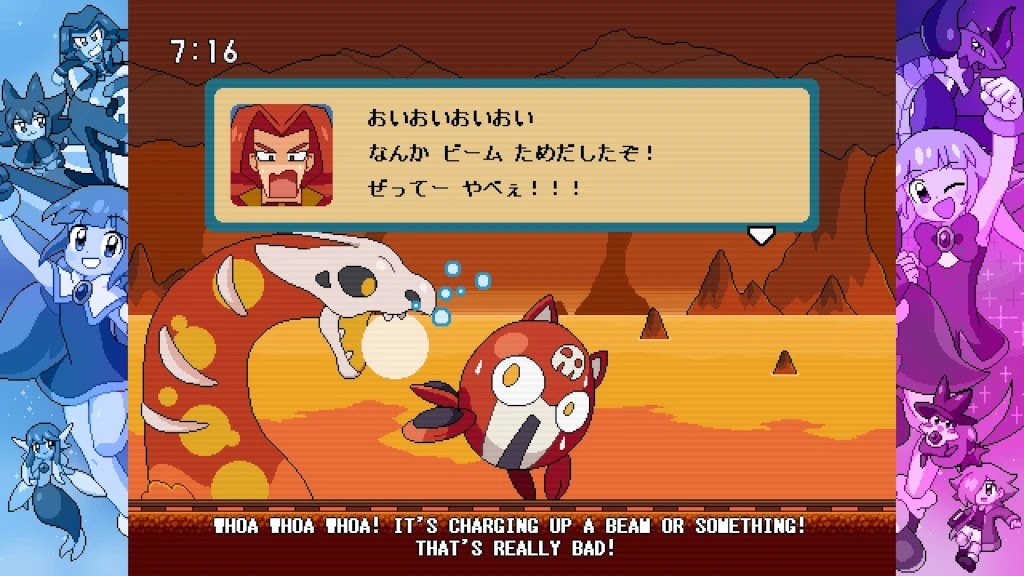
The next issue I had was with the language/textboxes. Basically, all the textboxes will be in Japanese with English subtitles at the bottom of the screen. I don't know whether this was a stylistic choice or not, especially considering it's only voiced in Japanese, but I think it would've been better to just replace the Japanese with English, although this doesn't particularly impact gameplay. The text boxes can also be a bit wonky, as sometimes a character will be talking with a different textbox than what the subtitles indicate, and sometimes certain dialogue boxes just get skipped entirely.
I also had an issue once, and only once, where a sound effect somehow got mapped to a certain button press, namely the jump button, which was amusing at first but quickly got annoying. Thankfully a restart and that fixed itself, and it never happened again. The last thing to note is that if you buy too much in the shop too fast, the money counter messes up and can't keep track correctly. Your actual money value is known, but the in-store display doesn't show it properly.
Despite my gripes, I actually really loved playing through Kokoro Clover Season 1. The characters were all fairly interesting and made me nostalgic for those days as a kid where I'd get up early to watch Power Rangers, Cardcapter Sakura, and Digimon, and the humour in the game is actually really good. Have I mentioned I burst out laughing a few times? The soundtrack is also really well put together, and the cute artstyle and old-school anime type format really suits the game well.
Overall, Kokoro Clover Season 1 is a game with a lot of heart, despite a few setbacks here and there. While definitely more on the easier side, it makes a good launching point for getting a younger audience into gaming, anime, or cartoons while also teaching some lessons.
Kokoro Clover definitely feels like it would be more at home on the Switch, and while I wish that's what I had played it on, the PC version worked fine for me. I highly anticipate the release of Season 2, and I hope you will too after playing Kokoro Clover Season 1.
Score: 7 / 10
https://chalgyr.com/2022/08/news-faultstplightkravte-release/
Wed, 31 Aug 2022 18:00:00 +0000
Born on a fairly successful fruit farm, Khaji refuses to follow in his family's footsteps and dreams of becoming an accomplished artist against his father's wishes. But the Kingdom of Rughzenheide asks each young adult to choose their future professional paths for life, and it turns out Khaji struggles with his chosen career: his heart is there, but his artistic talents are lacking.
Khaji’s trials and tribulations lead him to meet interesting characters, and he becomes embroiled in a world of magic. Shocking revelations lead him to question everything he knew about the world around him. His story intersects with characters introduced in fault - milestone one and fault - milestone two side: above, such as a young Ritona before she became Royal Guardian.
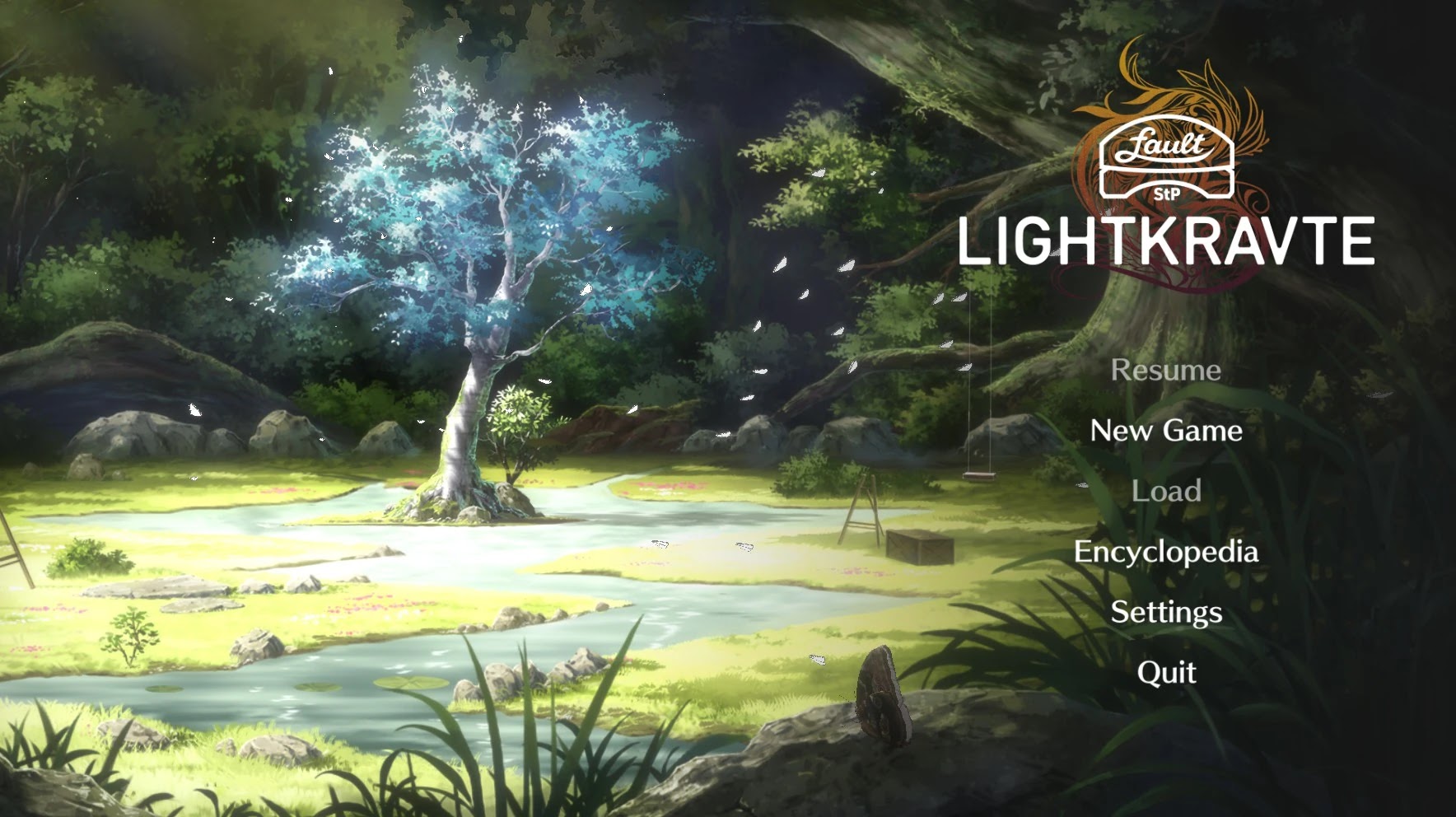
Those unfamiliar with the fault series can dive right in with fault - StP - LIGHTKRAVTE, as the game features a standalone story that newcomers can enjoy. Use the dictionary to learn the ins and outs of referenced events and terminologies of magical science introduced throughout the plot. Meanwhile, the story features plenty of easter eggs for long-time fans, and a new perspective on beloved characters, all setting up for the highly anticipated fault - milestone two side: below, currently in development.
“We were heartened by the response to fault - StP - LIGHTKRAVTE after its PC release earlier this year from both our longtime fans and newcomers,” said Munisix, Director, ALICE IN DISSONANCE. “I know Switch fans are still catching up on the series, and Sept. 18 is the perfect time to get started if you haven’t already!”
fault - StP - LIGHTKRAVTE will be available on Nintendo Switch for $17.99, with support for English, Japanese, and Simplified Chinese language text. Previously released games fault - milestone one and fault - milestone two side: above are also available on the Nintendo eShop.
Established by creative director Munisix, ALICE IN DISSONANCE created the acclaimed cinematic visual novel series fault, selling more than 500,000 copies worldwide to date across four titles. Under the visual art direction of illustrator Hare Konatsu, ALICE IN DISSONANCE focuses on highly immersive visual novels inspired by the shōnen manga genre of Japanese storytelling, utilizing a distinctive cinematic camera work style to bring a movie-like experience to their games.
For more information on ALICE IN DISSONANCE, visit the official fault website, follow ALICE IN DISSONANCE on Twitter, join the official ALICE IN DISSONANCE Discord server, and visit the official ALICE IN DISSONANCE Patreon.
Established in 2019 by industry veterans, Phoenixx aims to support innovative and creative developers from Japan and around the world. Its mission is to inspire and nurture the human spirit – one creator, one game, and one community at a time.
To learn more, visit the Phoenixx official website, Phoenixx Facebook page, and follow @Phoenixx_inc on Twitter.
Estimated Reading Time: 5 minutes.
fault-stp-Lightkravte is a tale of a young boy struggling to make his way in the world. A part of the "fault" series, but working as a stand-alone title, Lightkravte will delve into a story of what it means to chase after your dreams.
Lightkravte gives a look at the boy Khaji Oberg, the son of a fruit farmer in a kingdom where peace along the border is tentative, and refugees are being taken in. During this time, Khaji is more concerned about his future. Instead of looking to take over his father's fruit farm, he wants to be something different: a painter. The quality of his work, however, may leave a bit to be desired. In this Visual Novel, we get to see Khaji's story, and how he hopes to overcome the gap in talent in order to become a painter.
Lightkravte is, 100%, the definition of Visual Novel. What I mean is that there are no choices, no gimmicks, it's 100% text with pictures. No voiceover, either. Needless to say, that makes this more of a "book review" than a game review, really, but hey, it is what it is. Lightkravte takes about, maybe 5 hours or so to get through, reading speed pending, and has some dynamic 2D character models, a few sort of action like scenes, but will largely be characters talking to each other, or Khaji monologuing. On an interesting side note, I have not actually played any of the other fault titles, but Lightkravte has made me want to, although maybe not in the sense you're expecting.
So all in all, without giving away spoilers, the story is…fairly entertaining, for the most part. Most of the characters are pretty interesting, and have a decently fleshed out character personality and backstory, some being more enlightening than others, but they're all there. Unfortunately for me, Khaji himself is one of the two types of characters I distinctly loathe. It isn't until probably the last 5 minutes or so of Lightkravte until his character actually evolved to a point I was content with, although perhaps you may enjoy it a little more. Incidentally, my favourite character was Ritona, who doesn't really get a whole lot of screen time until the end. I didn't know this until after finishing Lightkravte, but apparently she is a main character for the rest of the fault series, and this is more of a spin-off prequel type deal. Go figure.
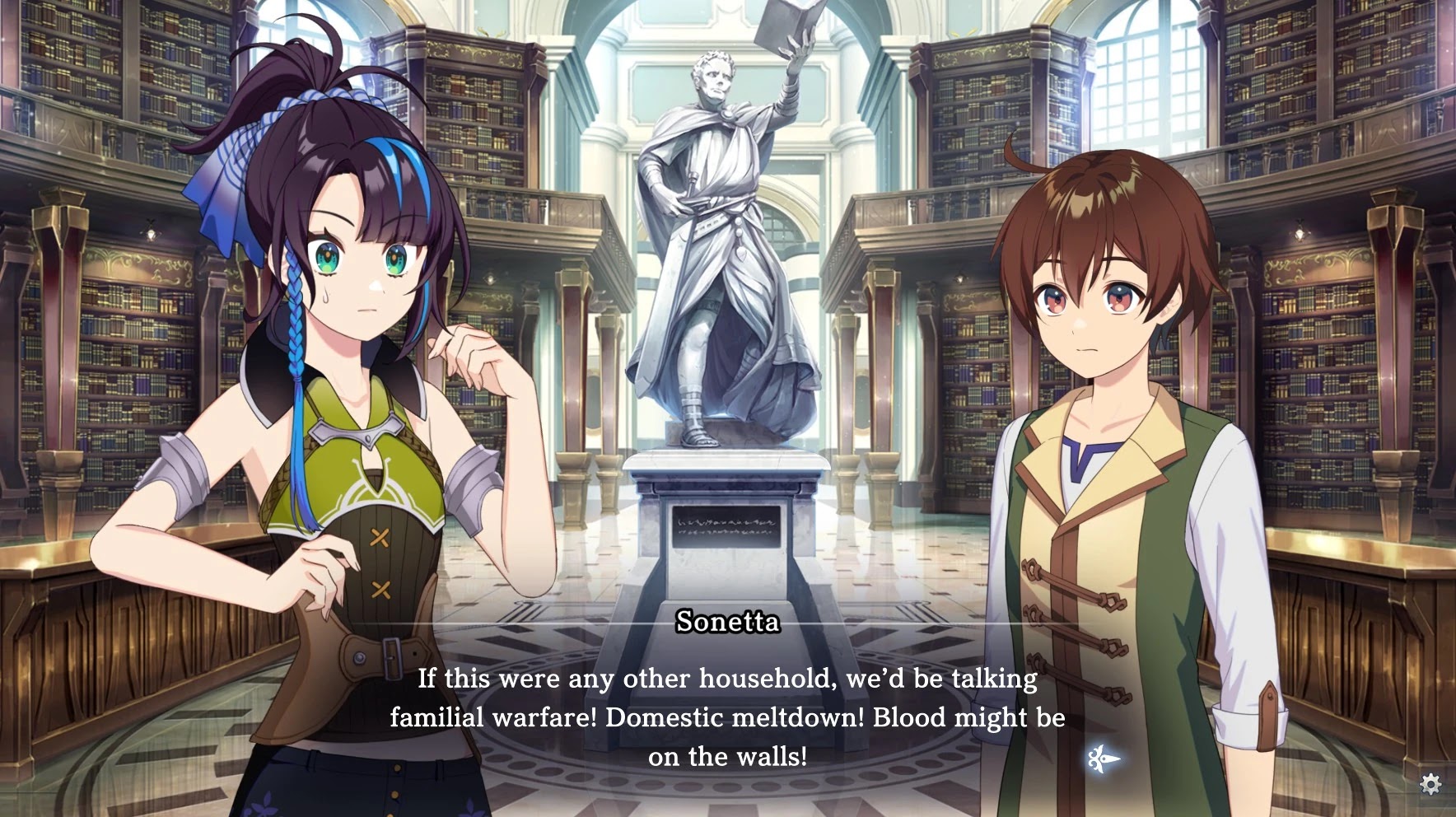
In terms of presentation, I have to say it is rather well done. The backgrounds are pretty and have a lot of depth, the character designs are all pretty neat, and the environments on display are nice to view. The soundtrack does a very good job of being unobtrusive yet matching and emphasizing the tone at the right time, and the character expressions, while a little corny or over emotive at times, do a good job at expressing how the character is feeling. The only real issue I had with Lightkravte is the second time I booted it up, it switched to Japanese language and I had to mess around trying to find the language settings. Annoying, but nothing happened mid…read? Playthrough? that caused any sort of issue.
You know, I do need to hand it to the developer, ALICE IN DISSONANCE, because they've managed to very artistically, and successfully, set up a story that's more or less about "just some guy". No, seriously, despite there being a huge political drama, conflict, and magical background, a lot of it is almost irrelevant to Khaji, as he just wants to focus on his goal of being a painter, often neglecting those around him to do so. There's a wonderful world full of plenty of backstory and tidbits, most of which may be found in an Encyclopedia that is available both from the menu, and when a new world pops up you can click on it to explore the meaning and context. But that conflict and political drama? Pretty much entirely unused with Khaji, that's for the other characters that appear in the other titles in the series. Khaji is, by and large, just some random guy trying to get his life together. It's both endearing and frustrating at the same time.
The fantasy elements are integrated really well too, where people will practice different forms of manakravte, the act of using what is essentially magic to impose their will on the world. This isn't full fantasy either, as the world still has to follow the laws of physics, there is just an extra element added that can interact with the world. It's really neat, and I always enjoy seeing magic and technology integrated well. One of the only complaints I have is that it seems like 90% of the cast is some sort of genius savant in some way or another, which is a little weird, but hard to tell really, because Khaji himself could just be a bit more of a dolt than I thought.
Oddly enough, despite my extreme dislike for the main character, I kept coming back for more, which is a great point towards ALICE IN DISSONANCE for their wonderful storytelling. The visuals are really impressive, character personalities are unique and actually realistic, and despite being a surprisingly fantasy reflection of real world issues, still manages to draw you in, despite how close to home some of the concepts may hit.
fault-StP-Lightkravte has done a really good job of making me want to pick up the entire rest of the series, and maybe you should too.
Score: 8.5 / 10Estimated reading time: 8 minutes
The Touhou series has many spinoff titles: RPGs, shooters, other bullet hell, rhythm, fighting, and now we have a racing title. You ever wondered what happens when you cross Mario Kart Double Dash with F-Zero and slap a Touhou skin on it? Well, you're about to find out with Touhou Gensou Skydrift.
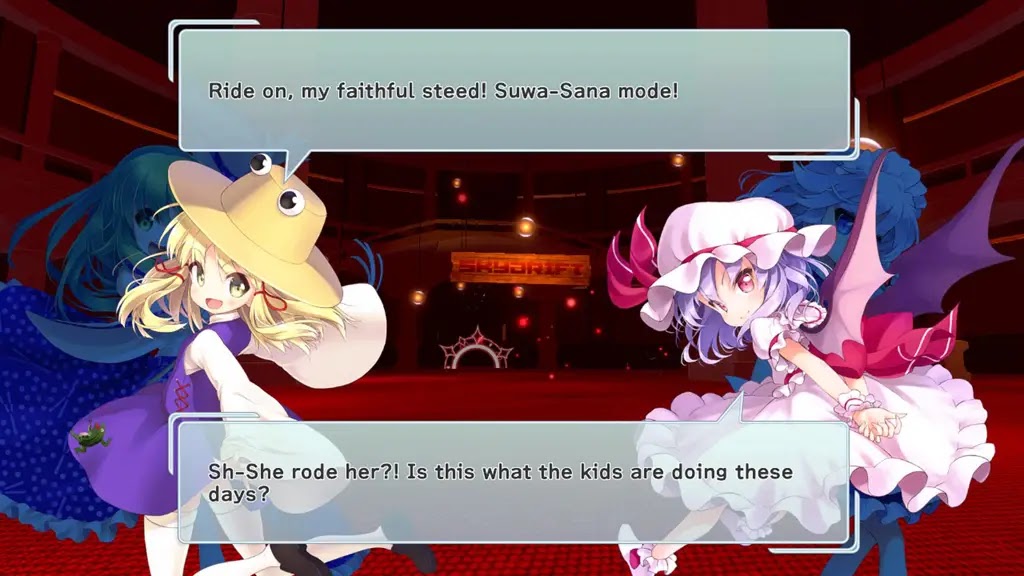
Now right off the bat, instead of going straight into the plot used purely for obligatory purposes, let me mention that the campaign mode actually has a second campaign after you clear the first. Now that's out of the way, what actually is the plot? Well, Marisa (an ordinary magician) is setting up a racetrack in front of a shop, much to the owners chagrin. The shrine maiden Reimu comes by, and lets Marisa know that, for some reason, they are unable to fly because their magical/spiritual power has been weakened, (flying is a common thing in the world of Gensokyou). They see a dark figure dash off, and intending to chase after them, Reimu decides to combine her power with Marisa's, in order to fly. By jumping on her back and riding her like a surfboard through the air.
So, gameplay wise, we get into what really makes Touhou Gensou Skydrift take off. Those from Mario Kart backgrounds will notice a lot of similarities, as well as maybe some differences that could be frustrating at first. Like any good racing game, the goal is to maneuver your way through the course, placing first amongst the participants in order to continue. While there is a free run mode, chances are you will spend most of your time racing others, whether that be human players or computer controlled AIs. You have your “forward” button, a brake/drift, a switch, and a “spell” command, as well as a button you can hold to look behind you.
Now, in Mario Kart when you drift, you don't really lose speed, and you can build up a drift boost. In Skydrift, drifting is braking, and unless you are going through one of the numerous rings dotting the course, you will start to slow down. So why drift then? Well, this is the main reason I said Skydrift is part F-Zero: the stages can be brutally unforgiving. The last stage in the main campaign, I fell off the sides so many times I legitimately stopped counting after 20. While earlier stages are more Mario Kart-esque, later stages feel like some of the harder F-Zero courses, where there is more bottomless pit than racetrack, and you will be driving more on the walls and ceiling than the ground. And the best part? There are some seriously tight turns that are basically mandatory you either slow down or drift around.
Switching and spells, on the other hand, are a little more unique to Skydrift. As you fly through the course, you will notice red and gold magic circles. Flying through these not only boost your speed for a short period, but also charges up a portion of your magic gauge. This magic gauge is then used for both switching and using spells. Upon hitting the spell button the first time, you are randomly(ish) given a spell, similar to how Mario Kart works. You then hit the spell button again to use it. These range from attacks, to boosts, to defensive spells. Your magic gauge also has “tiers”, so you can charge multiple levels. Gaining a magic skill depletes the entire gauge, but generally the usefulness of the item is tied to how full your gauge is. As another handy note, both characters in the tag-team can have a spell at the ready, so if one character has a skill you want to keep, you can switch to the other to effectively “store” the spell.
Switching characters also uses a small part of the magic gauge, but will also provide a small speed boost while doing so. While switching, you are unable to steer though, so switching while going around a corner is rather ill advised. That being the case, apart from the boost and separately stored spells, each character has their own stats, as well as a unique spell. The unique spells can be identified by a picture of the characters face, and are generally really powerful in some way or another. For reference, you can see what each characters stats and special spells are when selecting the character in freeplay mode. Most special spells involve nailing first place with an attack, and/or providing a speed boost for a long time. On the other hand there are spells like Flandre's, which summons Laevateinn for a long time and will let you swing it at other racers every time you hit the spell button.
So how are the different courses? Well, the first couple are pretty basic Mario Kart style courses, but as you progress through the list, they get tougher and tougher. The last course in the first campaign was absolutely brutal, and some of the bonus courses not in the campaign mode are pretty brutal as well. The saving grace is that the computer controlled racers will have just as much trouble as you will. No seriously, the easiest way to beat the hardest computer player is choosing a tough course you've gotten used to, and watch the other racers fall of edges. That being said, the AI is rather good. Normally, upon winning a race, I would only be in first place by less than a second for a majority of the simpler courses, if I even won at all. I recall one course I only won by 80 milliseconds. I'd also like to note that, despite some initial misgivings for some of the tracks, I actually liked the vast majority of them, and there weren't any I hated. Yeah, the final course in the first campaign is super tough, but once you get used to it? One of my favourites.
Now what would a Touhou game be without its music? Skydrift is full of many interesting locations, and many remixed theme songs to go along with it. With a wonderful collaboration work with Akiyama Uni, SOUND HOLIC, and StarDrops, there's a lot of gorgeous soundtrack pieces, all fitted to meet that Mario Kart style racing vibe. Coupled with some well drawn stage backgrounds, and foregrounds, as well as cutely modelled 3D characters, Skydrift is definitely pleasing to both the ears and the eyes. Well, most of the time. Occasionally there are some stages that are a bit “crowded”, and it can be difficult to tell where you're going, especially if you throw in the multicoloured lights from the different spells characters can use, not even counting Marisa's Master Spark laser of “I can't see a bloody thing”. Thankfully, if you can't see anything, your opponents can'r really see anything either.
There is a good number of characters to choose from, with plenty of different stat combinations and unique spells, making each race a little unique in terms of both the characters you use (if you so choose) as well as who your opponents have selected. And yes, there can be duplicates in the opponents. In one race there were about 6 Orin, which I wasn't really expecting, but hey, it was certainly entertaining. The only real complaint I have is that there aren't a whole lot of courses. There are 16 total, or 4 “cups” in Mario Kart terms. While this is a little reminiscent of the older games, the newer titles have many more courses. Other than that though, the online is a little...spotty, I suppose you could say. I couldn't find a single person to play with after trying for about half an hour, but that could just be me being unlucky, or choosing a bad timeslot.
Overall, Touhou Gensou Skydrift is an absolutely great racing game. While combining the feel of both a Mario Kart title with closer to F-Zero style gameplay, challenging yet fun courses, and an amazing soundtrack, Skydrift will definitely meet your racing needs. No prior Touhou world knowledge is needed either, and with a large cast of characters to choose from, it's really fun to figure out what tag-team combo you like the best. Although the number of courses may be on the smaller side, they're all really fun, especially once you've had some time to practice on them. If you're looking for a tide-over between Mario Kart titles, or just want something a little different from them? Touhou Gensou Skydrift is definitely for you.
Score: 9 / 10
Keen: One Girl Army by developer Cat Nigiri and publishers Phoenixx Inc. and 2P Games—Nintendo Switch review written by Richard with a copy provided by the publisher.
Estimated reading time: 6 minutes
Keen: One Girl Army is a weird combination of puzzle game and turn-based combat. A good kind of weird, mind you. A really interesting combination of sliding and fighting that spans multiple screens per stage, Keen certainly lives up to its name.
Raised in a village of warriors with a missing mother and mysteriously absent male figures, Kim, a rather precocious little girl with what appears to be training in the use of a glaive, is the next in line to defend her village from any outside threats or, heaven forbid, EVIL. After some weapons training in the form of a tutorial, Kim goes to prevent an invasion into her village by burning the only connecting bridge. Lo and behold, she ends up on the other side of the bridge. Deciding she wants to try and find out the source of the invasion and cut it off at the source, off she goes to confront EVIL!
Now, puzzle games generally take one of two approaches to gameplay: simple is better or every bell and whistle humanly possible. Keen has decided for the former, but has put all their effort into devising the puzzles for the game. Kim can only move in straight lines in the cardinal directions. I.e. she can only move up, down, left, and right. If she can pass through an enemy, she will deal two damage and stun the enemy. If she hits a wall or is blocked by an enemy, she will stop and attack in all four directions, dealing one damage and also stunning the enemy.
By the way, when I say she can move in four directions, I mean she doesn't STOP moving until she is forced to. You remember those sliding ice puzzles from Pokemon? Or any other games that have you slide in one direction until you hit a wall? Yeah, that's how this works. Your basic goal is to move from room to room, until you reach the end of the stage. There are many a puzzle to be solved, some are simply movement based, figuring out which order of directions will bring you to the room exit, some involve dodging murder lasers while invisible ninjas are trying to attack and pushing a block around so you can reach a breakable block to progress onto the next screen. Yes, I'm slightly bitter about that last one, no, I don't want to talk about it.
Enemies will only move after you've made your move, which is where the "turn-based" combat comes in. Essentially, if you make a move and don't attack an enemy, they will move a tile. If they move within attacking range, they will hit you. While enemies start doing very little damage, later in the game they will do a ridiculous amount of damage, so don't think you can just take the hits all the time. As you progress through Keen, you may come across some hidden temples by exploring the world map, which uses movement in the same way each individual stage does. These temples can give you extra abilities, such as a one hit shield to protect you from a blow, or a cross shaped attack that hits two panels away instead of one. These temples can be opened if you have enough orbs collected.
These orbs can be found either through specific stage rewards, which you will be told about when selecting a stage, or they will be hidden somewhere in the stage, either behind a puzzle or a hidden wall. Sometimes even both. Hidden walls are...reasonable to find, but rather tricky. There will always be an indication that there is a hidden passageway, usually denoted by extra light filtering in, but can be really tough to spot. Thankfully, the game tells you how many bonus orbs are in each stage as well.
As I did get all the orbs before writing this review, I can honestly say that some of the harder hidden wall orbs were in the first few levels, at least for me personally. The bonus objective orbs are generally easier to comply with, such as "collect all orbs" or "Complete the stage", but then there are the challenging ones like "don't take damage". Thankfully every room can be traversed without getting hit, it just takes either careful planning or a lot of trial and error. Extra point go to the devs for letting you restart from checkpoint while keeping the "haven't been hit" state, although you will lose any abilities you've used. A fair tradeoff I think.
The graphics have an animated sort of "cartoony" vibe to them, which rather suits the corny plot line that would be right at home for Saturday morning cartoons. That being said, you meet some rather quirky characters, such as the chief priest of a cult that's basically a scam, and a beaver with nipple rings. Yes, I'm very serious about that second one. His name is Mr. Beaver. He also makes a guest appearance in the credits. The soundtrack is also pretty good as well, giving some nice atmosphere to the different locations, and having a pretty exciting boss fight theme.
While Keen is pretty short, I feel like it's pretty adequate length given the price point. The game is simple, yet requires a lot of strategy and planning, stages are set up really well, and the progression in difficulty is steady and not jarring. Keen also some a few really good lines, such as when Kim mentions a boss has been taken over by EVIL, and their response is "I CAN QUIT WHENEVER I WANT". The "bonus ending" if you collect all the orbs and complete the last temple was also pretty well done. Normally I find gag endings to really fall flat, but Cat Nigiri did a really swell job on that hidden ending. For a group that I'm fairly certain consists of less than ten people, this was done really well.
Overall, Keen: One Girl Army is short, but a lot of fun with some really solid mechanics and well done puzzle building. With some quirky aspects yet simply gameplay, Keen is likely to give you a great puzzle solving, zombie slicing adventure. With plenty of hidden objects and bonus puzzles in the temples, Keen is a really good addition to your puzzle game library.
Score: 8.5 / 10
Touhou: Mechanical Scrollery by developer 巫女さん作法 (Mikosan Saho) and publisher Phoenixx Inc.—PC (Steam) review written by Richard with a copy provided by the publisher.
Estimated reading time: 7 minutes
The Touhou series is an incredibly large base of bullet hell games developed by ZUN, and has spawned many an offshoot, some RPGs, some platforms, a few fighting games, some rhythm games, and I'm pretty sure they're running out of genres to cover, whether through official releases or fan games. Here we have "Touhou Mechanical Scrollery", an interesting take on a 3D bullet hell style.
I've been playing the Touhou series for quite some time now, both the bullet hells as well as a lot of offshoots, such as: Labyrinth of Touhou, Touhoumon, Luna Nights, etc., but I do believe this is the first 3D bullet hell type I've played. Mechanical Scrollery tells a story of Reimu Hakurei, a shrine maiden of Gensokyo, and Marisa Kirisame, and ordinary magician, resolving an incident involving a bunch of mechanical monstrosities. Some backstory if that made no sense to you: basically Gensokyo is like an alternate plane of existence, where the demons and devils of Japanese lore go when they no longer have a place in the "real world". As such, a large chunk (read most) of the population are yokai (Japanese demons).
Mechanical Scrollery centres around Suzunaan, a bookstore run by a human living in Gensokyo. One day Reimu and Marisa go to check out the latest release of a new "totally not Agatha Christie" novel, when they discover robotic creatures infesting the area around the human village. Turns out the local yokai population can't actually perceive the robots, only humans, and moon rabbits, can. Reimu and Marisa discover the robots are coming from a demon book that has wormed its way into the roster of books in Suzunaan, so it's up to Reimu and Marisa to find the cause of these robots and stop it.
Mechanical Scrollery is what I would, maybe generously, describe as a combination of bullet hell and monster hunter? Sort of? You move around with full 3-Dimensional control and you attack the robotic creatures, knocking off parts and hitting them until they die, collecting parts, and use those to craft weapons. You're given some pretty standard tools to accomplish your task of vanquishing the offending steel menace. You have a long range shot, a melee attack, a super move, a dodge, and a dash that handles like a bike three sizes too small with a flat tire.
The general idea is that you have a shot gauge, which fills up either by smacking enemies with your melee, or by narrowly dodging an attack while using they dodge function. Hitting enemies with the shot will increase the special gauge, and once that is full you can unleash your special. You can also enter a sort of sniper mode where you can focus fire at parts of a creature. Enemies will attack back, either by trying to slap you, or by shooting the most colourful death you'll ever have at you.
While the concept behind Mechanical Scrollery is something I can really get behind, the implementation leaves a bit of a sour taste in your mouth. Honestly, it has a lot of sketchy points to it. Most of the time for a mission, you get dropped in a roughly circular arena and follow the radar to find the enemies you need to kill. Occasionally the radar won't actually show all the enemy locations, so you then have to procedurally go through all the enemies till you find the ones you need. A little frustrating if you need to beat two or more bosses within your time limit, but have no idea where the last one is.
Additionally, after you beat an enemy, their parts are left for you to pick up. If they die while in mid air, they make a very harsh drop to the ground, occasionally going right through it. I actually lost the "last boss' " parts like this. A little frustrating is that there aren't any invincibility frames on taking a hit, meaning you could be full health, and then just get pelted by a stream of bullets to find out you died. Hey;th is also a weird sort of stat in Mechanical Scrollery, as I found it was either almost full, or a few pixels left. You can use healing items through the pause menu, which is helpful if you get blindsided by an enemy.
Yes, you will get blindsided. Most of the creatures are content to leave you be, but as soon as one gets poked a little, then they come at you full force. It's too bad some of the special moves are rather...wide area. I can't count the number of times I tried using a special on a boss type enemy, only for another nearby boss to get nicked for 1 damage, and all of a sudden it's a 2v1 not in my favour. On the plus side, you get a full heal from leveling, and destroying parts nets you experience, so you'll probably be able to pull through between that and your healing items. On the subject of special moves, they are tied to your weapon, or upgrade tree of your weapon. My issue with the specials is two-fold, really. First, since the special is tied to weapon, if you want a specific weapon, but not special, you have to decide which one you are going to deal with. Depending on the special, say Marisa's Asteroid Belt which shoots a bunch of bullets, it may get VERY difficult to differentiate your own special bullets from enemy bullets, as they look exactly the same.
Apart from that, the soundtrack is rather good, although there aren't many tracks, and the character animations are...acceptable? The art is pretty good, and there's surprisingly little clipping, especially around the hair, and I'm always pleased to see hair not clipping through a characters body. That being said, the 3D animations feel a little stiff, and the 2D animations have really weird mouth movements, and for whatever reason the parts of a character that "extend" beyond the screen borders get "stuck" there.
Overall, I have to say I had a surprising amount of fun with Touhou Mechanical Scrollery. The stages weren't too long, and the game finishes before it starts wearing on you too badly. Yes, it is rather short at only four chapters with about ten or so missions per chapter, but it was a nice pace. The graphics are decent, and the soundtrack quality isn't bad. You get enough material drops that you won't be farming a stage for six hours trying to get an azure dragonsphire equivalent, although the amount of money you'll need is a little aggravating. Weapon trees are pretty decent with a variety of options, and I didn't have the game crash while playing.
That being said, it's very clunky and could use a lot of refining. As a step away from the standard 2D fare, I'd say it is a nice refreshing step. As a whole however, it falls flat in some key areas, although not to the point that it causes any critical issues.
Score: 6.5 / 10