Fatal Frame II: Crimson Butterfly REMAKE by developer Team Ninja and publisher Koei Tecmo America—Microsoft Xbox Series X review written by Nick with a copy provided by the publisher.
#FatalFrame2 #FatalFrame2Remake
Estimated reading time: 6 minutes


Fatal Frame II: Crimson Butterfly REMAKE by developer Team Ninja and publisher Koei Tecmo America—Microsoft Xbox Series X review written by Nick with a copy provided by the publisher.
#FatalFrame2 #FatalFrame2Remake
Estimated reading time: 6 minutes

Nioh 3 by developer Team Ninja and publisher Koei Tecmo America—Sony PlayStation 5 review written by Pierre-Yves with copy provided by the publisher.
#Nioh3 Nioh 3
Estimated Reading Time: 17 minutes.
Related reading:
● Nioh - PS4 Review
● Nioh 2 - PC Review
● Wo Long: Fallen Dynasty - PS5 Review
● Nioh 3 - Alpha and Pre-release demo Preview
The year is off to a great start.

For those that may not have heard of Nioh before, it is Team Ninja and Koei Tecmo’s Soulslike series. Taking a different direction from the often darker gothic inspired designs that the genre gravitates towards, Nioh instead chose to visit Japan in the 15~1600s. Using historical events as a backdrop allowed for an interesting fantasy adventure of what could have happened if otherworldly power was involved.
This series has also never been afraid to try new things while still keeping its formula intact. Starting with Nioh in 2017, our British protagonist William sets sail for Japan in the very late 1500s. Instead of the more Metroidvania approach that most Soulslikes have adopted with plenty of locked doors, ladders to kick down and other shortcuts to unlock in a single large environment, Nioh instead went in a stage like format. Stages could vary in length but they all finished with an epic boss fight.

Released in 2020, Nioh 2 enhanced the gameplay design of its predecessor. While being named, Hidechiyo, you this time around had the chance to design your own character that would become “half” of Hideyoshi, one of Oda Nobunaga’s retainers. Where you were different from William is that you yourself were half demon. You could harness the powers of the spirit guardians in a different way and instead of seriously imbuing your weapons with power, you yourself changed shape and surged in power. You could also now acquire demon cores for an even greater advantage in battle.
Just released, Nioh 3 takes all of the above, including lessons learned from Wo Long: Fallen Dynasty in 2023, and has dropped the best entry yet. Combining stage-like designs with open world hubs, our latest protagonist and future Shogun Tokugawa Takechiyo is fighting for Japan across the ages starting in the early 1600s, visiting the late 1500s, the late 200s, and mid 1800s for some interesting blends of challenges.
Where the Nioh series has stood apart from the rest of the Soulslikes is in its stage design. While using some of the Metroidvania formula with locked doors, hidden passages and plenty of shortcuts, these were all “bite” sized pieces of the world. This has allowed for a very catered experience that presented a very specific gauntlet to be conquered.
Nioh 3 is the first in this series to move away from the strict stage-like design. Combining the stage-like formula that it's known for with “open world” hubs, the scope is now much grander in what can be done. While the specific stages segments will continue to throw a very catered gauntlet your way, the open nature of the hubs will often allow you to poke and prod at various parts of Japan throughout the years.
There are still plenty of elements to block your path such as locked gates that need a specific key, doors that “don’t open from this side”, and shortcuts to uncover but it works well together. If you can’t move forward right away, that’s often because you don’t yet have the right tools to do so. You can also explore another area if the current area is too hard.
While I personally in general am not a fan of open worlds as I often find them empty and just an excuse to pad the core gameplay design, the open nature of the hubs work for the most part. Rarely did I feel like I was going through yet another empty space as there is enough to do while you’re in each of these areas. Lastly, I appreciated that some of these areas will see multiple uses from the main and secondary quests.

Love them or hate them, Nioh 3 has A LOT of collectibles or actions to be taken on a map for "completion. Back once again are our adorable Kodama that reside in the shrines that act as our safety points. Scattered throughout the world, they need to be guided back and can provide us with bonuses for doing so.
Also returning are treasure chests big and small. Who doesn’t like a good loot box? Available to locate are Chijiko which are flying ferrets that love to be used for target practice. Once shot down they can be pet and will drop you much needed items for character development. Finally, and also returning are the Scampusses which are super adorably round but unlike before, need to be chased down to obtain a reward.
While these may sound like “ugh”, why do I have to do this for a simple item or three, they combine into a grander feature. Each hub is designed in regions that all have a various amounts of items or actions that must be taken. As these lists are completed, you’ll obtain permanent bonuses such as attack, defense or luck increases which can go a very long way as the adventure progresses.
The best part? Once you get to the higher thresholds of completion, you’ll be able to see all the currently missing ones on the map. This makes searching much easier with no need for guides in order to get 100%.

Making a return are the various player's graves that can be interacted with. This is one feature that I’ve enjoyed going back to the original alpha for Nioh. While Demons and Dark Souls introduced a feature to see the last moments of a player’s life before “something” ended it, Nioh instead allows you to fight these revenants.
While controlled by the game’s AI (which goes back decades now with IF / Then statements), revenants can easily differ from one to another as they are a reflection of the player that died. Do they go in for super fast attacks? Use items? Dodge a lot? Try to stay in long range combat? All of these can be easily calculated by the system to give other players a challenge.
Why do this though? Like in the original, you can do it for Glory (more below), or you can do it for cold hard steel. Taking out a revenant gives you the chance to acquire a copy of one or more pieces of gear that they are holding. Sometimes this can be better than what you have, other times it’s useful for materials to help you upgrade.
Introduced in Nioh 2 and making a return is the ability for players to place benevolent grave sites. Like the malevolent graves, they will summon a copy of a player but instead of facing off against them, they’ll stay with you for a period of time giving you a bit of breathing room especially against foes of immense powers like the new Bloodedge Demons.

These will haunt me for a long time.
As tough as I considered some of the boss fights, I would rather do them with increasing difficulty than facing off against one of these four horsemen of the apocalypse. Horseman War here is the accumulation of the hatred of all of the players that died.
If I’m not mistaken on this aspect, the more players that die, the stronger this demon is? They do however level with you, so regardless of if they level up another way, they will always be an insane fight as they are already stronger than they have the right to be. In my almost 70 hours, I’ve honestly only defeated three in total and that is not from a lack of trying. Two in the Beta Demo and one in the main game.
So why go out of your way for this? The loot they dropped changed the entire course of my game. The armor was nice, by the Tonfa they dropped with a VERY high paralyze infusion? I literally used them until the very end of the game through the returning soul level matching available at the blacksmith.
So worth it, but you’re going to have to really work for those victories.

While each Soulslike has its own quirk, the Nioh series continues to push the boundaries of its own from one entry to the next.
Originally combining the martial Samurai arts with both Ninjitsu and Onmyo as support abilities, you could shape William and Hidechiyo into the type of warrior that you wanted.
Unlike our former protagonists, Takechiyo can literally on a moment's notice switch from being a Samurai to a Ninja. Weapon change, armor change, and even appearance change if you want, all of these changes allow for two completely different playstyles without the need to restart your entire character development.
I loved this as it allowed for a much more flexible approach to the various challenges. Being nimble won’t always help you win the day, some days you need to tank the hits. Other times, you need to be fast otherwise you’ll never catch up or be able to avoid certain enemies. The shifting mechanic has removed the compromise in your character setup. Now you can really play as you want to play regardless of the situation.

Playing as a Samurai is everything that we’ve come to know over the course of the series. With multiple different weapons available, we can hold them in a low, medium or high stance which will affect the speed and power. As new weapon abilities are learned, we can modify some of these moves to be stronger and slower, or, add in some elemental damage for good measure.
It still feels just as solid as it has been. Where some players may feel “slighted”, is that not all of the weapons are available for a Samurai loadout, nor a Ninja loadout. Heavier and harder hitting weapons have been reserved keeping this mode feeling powerful. That’s not to say that there aren’t faster hitting weapons like your standard sword, but for Tonfa lovers, me, those are in the Ninja category.
Playing as a Ninja is where things get interesting. Unlike playing as a Samurai that can adjust how they hold their weapon, a Ninja only has one style. To compensate for this, playing as a Ninja allows you to equip several “usable” items that can be recharged for unlimited use. Elemental range attacks, surikens, caltrops, bombs, you name it. The stronger the item, the less uses it will have, but the more efficient it will be.
I abso-freaking-lutely loved this new style of gameplay. You can say that it’s technically already been there, but for people like me who have always preferred a character that can take more than one hit? I’ve avoided it as I just know that I’ll be dodging into an attack instead of out at the worst possible timing. Now being able to have a tank mode and a dodging mode for any occasion? I made very good use of the Ninja’s unlimited items.
To prepare for all of these situations, you’ll be spending a decent amount of time in the equipment menu. Both Samurai and Ninja modes have their own melee weapons, range weapon, armor sets and accessories. Looking through both active and passive abilities will take some time, however it’s worth the investment.

Only adding to what you can do are your spirit guardians. These wonderful beings are back again and even better than before. Each spirit comes with an attack and defense value to increase your character’s baseline. From there, each spirit also has two special attacks that can be used for some pretty epic gameplay.
More than that, however, is that Burst moves from Nioh 2’s demon core abilities have moved into both the switching of the styles mentioned above and the spirit guardian abilities. Those giant red flashing attacks are no longer as scary as they have been as there are multiple ways to now counter them without fear of being taken out in one hit.
I have still been on many occasions taken out in one hit. But it’s a Soulslike, you learn, you adapt, and you run back to your spirit guardian to hopefully not lose all of the amrita that has been accumulated to level up!

Soul cores have also made a return but function “differently” than before. In Nioh 2, these cores were used for Burst attacks to counter the dreaded red attacks from enemies. Having been replaced by the spirit guardians, soul cores now have a Yin and Yang function.
If a core is set into the Yang position, that demon can be summoned however many times is listed to perform an attack against your enemies. The stronger the demon, the less times it can be summoned, but, the stronger the attack. Cores set into the Yang position will also provide an attack and defense boost similar to the Spirit Guardians.
If a core is set into the Yin position, Onmyo talismans can be created for use that are restored every time that you rest at a Kodama Shrine. These abilities range from added elements to your weapons, boosting your attack, your defense, regenerating your health or surrounding yourself in floating elemental orbs for extra damage. Why should the enemies get all of the fun?
I really enjoyed this adjustment to the soul cores from Nioh 2 as it allowed for so much flexibility while keeping the same pieces in play.

So what does everything above have in common? The more you do, the more that you’ll be rewarded for it. Fighting enemies, tackling strong bosses, fighting mid-bosses, chasing down scampusses and guiding Kodama home all reward you in one of two ways.
Guiding our little adorable yokai home has also been beneficial to us. In a stage-like format, these rewards used to be localized to either a stage or set of stages, but now? These bonuses carry through across the ages!
For every Kodama that you guide home, you’ll receive points that can be used to increase healing Elixir drop rates, its efficiency, and if it could boost your attack and defense at the same time. Comparatively, stopping to pray at Jizo statues will net you Jizo Merit that can be used to increase melee damage done in Crucibles, as well as Crucible Elixir drop rate, Life Corrosion and Guardian Spirit Skill recovery in Crucibles.
In both of these cases, these small increases can go a long way to help you out.
For everything else you do, you’ll earn a reputation in a variety of categories that will all allow you to increase the percentage of certain aspects. Increasing the amount of Amrita acquired will allow you to level up faster. You can increase your stealth to sneak around more easily. You can also increase the damage to another Ki which will allow you to perform grapple attacks even faster.
The great thing about all of these decisions are that none of them are permanent, allowing you to easily mix, match and try a variety of different upgrades to see what works best for you.

Clan battles continue to be interesting. This is where all of your glory can be used for a faction of your choice to try to come out on top of others. Glory can be accumulated by defeating revenants summoned through malevolent graves or by having your character summoned through benevolent graves.
What’s it all used for? Primarily, it’s used in a store that allows you to spend glory to buy items, character looks or gestures. What it is also used for is to raise your rank in the clan to increase the passive bonuses that it bestows for your loyalty. If you don’t end up liking these bonuses, you can always move, but this can only be done once every eight hours.
Either that, or move before you’re tired of being on the losing team. There’s no judgement here. I myself while having constantly been on the losing team haven’t moved because the bonuses provided to me made breaking an opponents Ki that much easier.

I think that we can all admit that the above was a lot to go through. Unlike a lot of others in the genre, Nioh continues to have layers to its gameplay that all come together for a very refined experience. Does it always work? “Yes”, but like a lot of others in the genre there are areas that can be a bit rougher than others.
Soulslikes have a high entry point and Nioh 3 is no different. In a way, Nioh 3 may have an even higher entry point as the first boss is damn right savage with most of the game’s features becoming available after that point. That said, I did keep expecting a super high difficulty spike that soulslikes and JRPGs are both known for, and it didn’t happen. Were some areas tougher? Sure, but not so much so that I would die in one hit. I mean… I did, but that’s because I realized that I shouldn’t have been there but conquered the day anyways. I was there and not leaving until I won.
What I think may have offset that difficulty spike are the adjustments to the series core features and the inclusion of being able to shift between a Samurai and Ninja loadout to be the one dictating the fight and not being dictated to.
Where I have a “tiny” bit of disappointment with Nioh 3 compared to its predecessors is with the normal enemies. The variety of yokai seems to be reduced and certain enemies were simply adjusted to meet a new environment. There was also a heavy recycling of previous bosses from Nioh and Nioh 2 for mid-bosses. I would have liked to see more new bosses across each area with the reduction of the stage-like format.
But otherwise, I really enjoyed the move to the new hub like format as I wasn’t sure how the “open world” would work. I’m happy that it wasn’t an actual open world but more of larger catered areas that use most of what’s been placed there.

Team Ninja and Koei Tecmo’s Nioh 3 continues to push the envelope of what this series offers. Moving away from a pure stage-like format and introducing area hubs works really well to divide the adventure’s chapters. Combined with multiple enhancements to the already fast-paced gameplay, and the new ability to instantly switch between Samurai and Ninja like combat, I was hooked solid from start to finish.
Score: 9/10

Nioh 3 by developer Team Ninja and publisher Koei Tecmo America—Sony PlayStation 5 preview written by Pierre-Yves with limited time demos provided on the PSN.
Estimated Reading Time: 8 minutes.

Rise of the Ronin is developed and published by KOEI TECMO Games (originally developed by Team Ninja for the PlayStation 5)—PC review written by Robert with a copy provided by the publisher.
Estimated reading time: 9 minutes
Set in the Bakumatsu-era in Japan, Rise of the Ronin follows the path of a Veiled Edge, a unique paired swordsmen's technique where you play one half of a pair of sword-slinging ronin called Blade Twins. Set on a quest to find your Blade Twin after a mission goes awry, you will embark on a journey that will take you on a journey through 19th-century Yokohama, Edo, and Kyoto. Boasting 8k resolution support, ultrawide resolutions, 120 frames per second, and ray tracing support amongst a littany of upgrades, Rise of the Ronin is sure to bring any modern gaming rig to its knees. Enjoyable, if soulless at times, Rise of the Ronin struggles with defining its identity while scaling back some of the difficulty and excitement found in Team Ninja's flagship franchise, Nioh.
Graphically there are a few standout moments where I had to pause a minute and just take in the surroundings, but for an open world experience in a post Ghost of Tsushima-world, Rise of the Ronin's three major areas feel relatively bland. While they are open, airy, and have plenty of checklist-y items to keep you busy, there is a distinct lack of cinematic quality to the presentation of its areas. It may be that I've been spoiled by the quality of other more experienced open world studios, but there are beautiful vistas throughout Rise of the Ronin that Team Ninja just doesn't show/present to you. Mind you, Rise of the Ronin isn't a bad looking game, not by a long shot; it's a phenomenal attempt by a studio that typically sticks to more curated, narrow maps in their games. The downside is that it really shows that they aren't experienced in the cinematic approach to open world games, almost as if there's an identity crisis happening within Ronin. I say that because the presentation of areas/levels feels like it would be at home in a more concise game (like Nioh 2) rather than in an open world experience.

Performance is going to be where I saw the biggest variation in quality. While there was a day one patch that addressed some of the following issues, I found that on my well-endowed gaming rig, there were still times where running through the three major hub sections would bring my game to its knees. I'm running Rise of the Ronin on a Ryzen 9 5900x, Radeon 7900 XTX, 64 GB of RAM, and off of an M.2 NVMe drive using the "standard" graphics setting, and there were points where the movement was so sluggish that it was almost as if I was running through Jell-O or pudding. Even though my machine should be able to adequately run Rise of the Ronin at 1440p, I was quite taken aback at how poorly it would run. This coming from Nioh and Nioh 2 which were very well-optimized, though in fairness they were originally launched as multi-platform titles as opposed to a console port (as is Rise of the Ronin).
Frustratingly, the performance didn't affect just the framerate, as there is plenty of pop-in (with enemies even popping in on top of you) and input lag. What's worse is that the controller charms that are supposed to show up based on whether you were using a PlayStation controller or an Xbox controller would never be properly set. For example, by default all of the glyphs throughout the game are default set for the X, O, Triangle, and Square and they'll stay that way even if you're using an Xbox controller. However, if you press a button on the Xbox controller, the in-game glyphs will change to the Xbox's A, B, X, and Y charms. It's frustrating and confusing, and even worse, at the time of this article's writing, you couldn't even use keyboard and mouse even though there are glyphs/charms that show things like the Tab or Spacebar as inputs, even though pressing those does nothing. This was a major bummer for me as I was hoping to use my keyboard and mouse to take pictures using the robust photo mode ... unfortunately without the keyboard and mouse working in game, that was a fruitless endeavor as I just couldn't get comfortable in photo mode with the controller.

Rise of the Ronin was a bit of a shock for me with regard to its combat. Coming from the studio behind the bewitchingly-fast and often-unforgiving combat found in Nioh/Nioh 2, I was a bit taken aback with how straightforward combat in Rise of the Ronin is. While fairly simple up front, combat never quite feels as deep and enriching as Team Ninja's other titles, there are some saving graces to combat. For one, as is typical for Team Ninja, there are a whole slew of weapons for you to choose from. From your katana or dual swords to odachi or polearms, longbows and rifles to pistols and shurikens, there's something here for everyone. I myself am a sucker for spears so I was thrilled to see spears as a weapon type that's actually fun to play.
While I tried out every weapon in the game, I gravitated towards the spear and katana and enjoyed them the most. In an attempt to add an additional layer of complexity to combat, every melee weapon has numerous Styles that you will learn throughout the course of the game. As you become more proficient at combat (not very difficult as combat is extremely approachable), switching between the various combat styles for your equipped weapon will be second-nature. In time I began to play around with combat stances and weapons and found that the most enjoyable combat was using wooden weapons (much weaker and they don't kill bad guys, just incapacitate them) and playing entirely defensively. There's quite a bit of forgiveness at times in combat, which is nice because of the magnetic bad guys (the magnetism is strong ... and annoying as hell) but after 30-40 hours of it, combat can become pretty stale.
Combat isn't the only thing that had me scratching my head in its simplicity... Rise of the Ronin has an identity issue. I couldn't help but feel that Team Ninja took a look at some of the more popular titles of the last ten years, took what made them special, then copied those features into their own game. While I don't think that it's bad to take inspiration from other titles, in fact, more studios should do it, but there's this feeling of wanting something more, something unique to Rise of the Ronin and it just doesn't materialize. Take for example, Legend of Zelda Breath of the Wild and how it popularized a hang glider as a means of transportation... It's as if Team Ninja saw that and said, "we need that in our game, irrespective of whether it's useful or not" (hint, it's not). It feels like Rise of the Ronin is an amalgamation of features from other games, but has no soul. A homunculus, if you will. Combat, exploration, RPG leveling mechanics, open world checklisting, item crafting, the absolutely asinine amounts of loot you'll get, etc. all feel like they are in the game because they're simply supposed to be, not because they should be. Removing the silly glider, improving the horse-based locomotion (it's straight out of the early days of Witcher 3), tightening up combat, and making loot more manageable would have been preferred over some of the nonsensical additions. I have 1.5 playthroughs of Rise of the Ronin as of the writing of this article and I could do without the majority of features (I have never, ever needed to craft items ... why craft when you can buy them for a pittance?) in favor of a more concise and curated gaming experience.

Continuing on with its relatively soulless existence, Rise of the Ronin's story, while paced wonderfully, feels empty and without heart. Sure, there is some motivation for the story beats and pacing is actually pretty solid between it's three acts (not including the prologue/tutorial). Set upon your journey by the Bladesmith, the leading member of the Veiled Edge society of ninjas and ronin that your character belongs to, you're tasked with finding your Blade Twin, thought to be lost in the prologue/tutorial mission of the game. Unfortunately the story is about as interesting as a piece of dry toast at times and was only moved along because of the checklist-like nature of the open world.
Moving from one point of interest to the next on the world map was the primary driving force behind each of the story's various acts. Falling into the Ubisoft Trap is pretty simple in Rise of the Ronin and has about as much depth as a modern-day Ubisoft title. That's not to say that the entirety of Rise of the Ronin is bad; there's some solid intrigue spread throughout the game in the form of the Anti-Shogunate and Pro-Shogunate decisions that you'll be able to make. I found that the most engaging part of the story was making choices that I wasn't sold on (such as some of the anti-shogunate choices), but because they were putting me outside of my typical roleplaying comfort zone, I found them if not memorable, then enjoyable. Taka's entire existence as a Geisha and her role in the story is one that I found myself being invested in... maybe it's because I have a romanticized view of the geisha, but still, it was enjoyable. Other characters are less interesting, some even eye-rollingly bad at times (characters just sweeping horrific actions under the rug as a "bygones be bygones" was pretty stupid, in my opinion).
Rise of the Ronin is an interesting beast of a title that I'm not entirely sure how to classify. Contrary to popular belief, it's less Ghost of Tsushima and more like Horizon Zero Dawn. In talking with others here at Chalgyr's Game Room the best way I could describe it is, "To me it feels like Team Ninja took a look at The Witcher 3, Assassin's Creed Origins, Grand Theft Auto V, and Red Dead Redemption, and took what made them technically good games, and technically replicated those things ... but did so without bothering to bring any of their normal weird polish / approach to games," and I stand by those comments. Rise of the Ronin isn't bad, per se, but it is meandering and soulless at times and combine the lack of heart with the simplistic combat and the best that I can say about Rise of the Ronin is, "it's safe." The combat has been dialed back compared to their other titles, the story at times is meandering and unfocused, and the performance is all over the place on a well-powered gaming machine. Is it bad? No, but it's not the quality that I've come to expect from Team Ninja...
Score: 6 out of 10
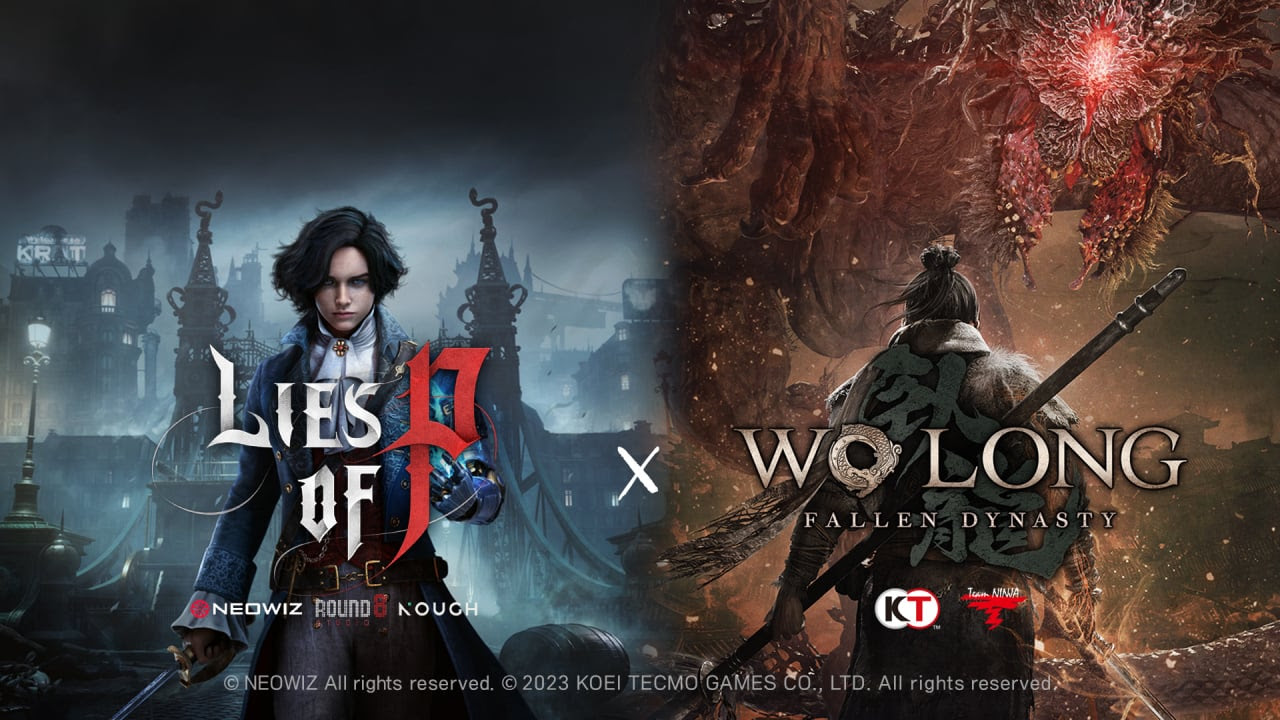
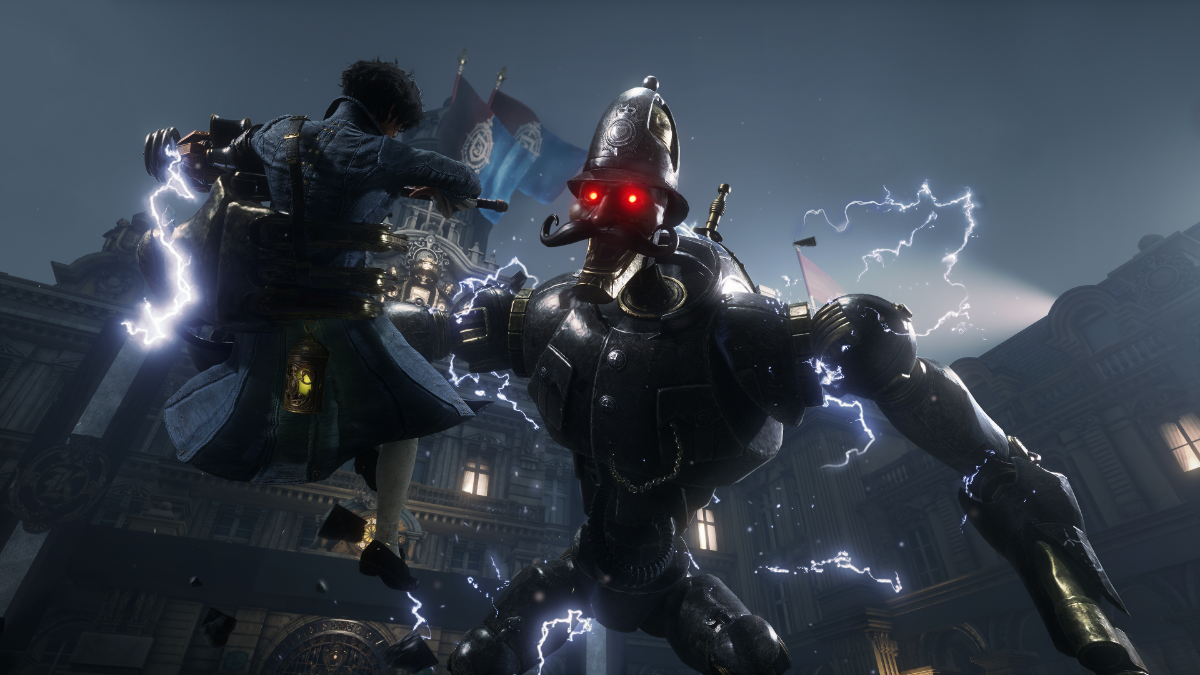
Inspired by
the familiar story of Pinocchio, Lies of P is an action Souls-like game set in
the dark, Belle Époque-inspired city of Krat. Once a beautiful city, Krat has
become a living nightmare as deadly puppets run amok and a plague sweeps the
land. Play as P, a puppet who must fight his way through the city on his
unrelenting journey to find Geppetto and finally become human. Lies of P
presents an elegant world filled with tension, deep combat and character
customization systems, and a gripping story with interesting narrative choices
where the more lies told, the more human P becomes. Just remember: in a world
filled with lies, no one can be trusted…
NEOWIZ will launch Lies of
P on Sept. 19, 2023. The standard and deluxe editions are available for
pre-order for $59.99 and $69.99 respectively, in digital or physical format on
PlayStation®4, PlayStation®5, Xbox One, Xbox Series X|S, and PC via Steam and
participating retailers. This game is rated “M” for Mature by the
ESRB, PEGI 16, and USK 16.
Fans
interested in learning more can follow the game on
Twitter,
Facebook, and
Steam, or join the community on the official
Discord
server.
Established in 1997, NEOWIZ, Inc (KOSDAQ:095660) is a pioneer in social platforms and online games. As one of the leading game companies in Korea, the company has successfully published a wide variety of PC and mobile games since 2003. In recent years, the company has developed and published several wildly successful titles including; Brave Nine, Skul: The Hero Slayer, Lies of P, and DJMAX RESPECT V.
Article by:
Susan N.
Wo Long: Fallen Dynasty by developer Team Ninja and publisher Koei Tecmo—Sony PlayStation 5 review written by Pierre-Yves with a copy provided by the
publisher.
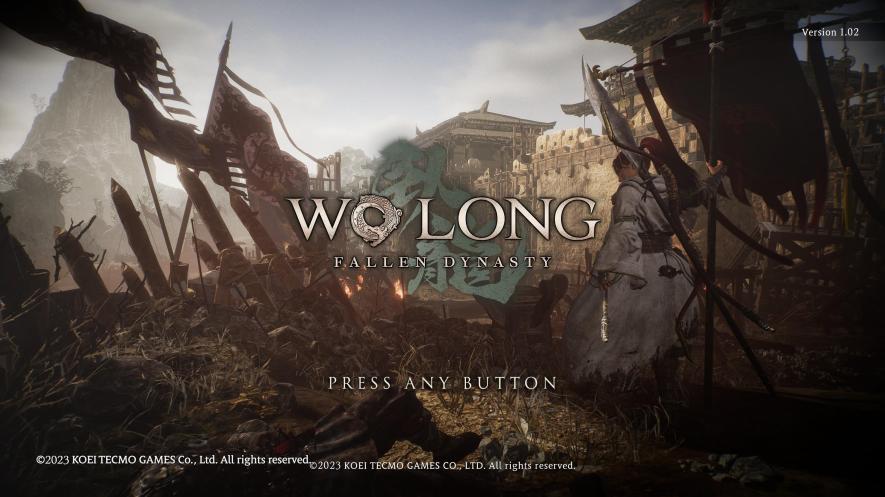
It would be easy to say that Wo Long is a great successor to Nioh / Nioh 2 however I don't think that would be a fair statement. While it may be the same team behind the experience, as well as that of Strangers of Paradise: Final Fantasy Origin, these two couldn't be more different. What makes Wo Long different from its predecessors isn't just the change in historical locations, but a change in the entire system. With a new system promoting a constant pushing forward, there’s an accessibility for new and old players alike that makes the whole experience more approachable and less aggravating than others out there.
Before getting into the actual elements of Wo Long, I think it’s fair to take a quick recap of what Soulslikes are. The core concept behind a Soulslike is easy, there is challenging gameplay and a penalty system in place if, and generally when, you fall in combat. We aren’t talking about game over and restarting from scratch a la old school NES days. Instead, we are generally talking about losing your leveling up currency that was on hand and that had not been used yet. Easing this penalty somewhat in Wo Long, the developers have reduced that loss to half of your current Qi that is on hand, not all of it. Once you make it back to the location of your death, an enemy that was present, the enemy that took you down or the boss room, you get that portion back as long as you don’t die again on your way to get it back.

As part of this system, mastering the core gameplay is fundamental to success and Wo Long nails it. Gone are the stamina bars and in their place is a tug of war system that lets you constantly stay in motion. Whether on the offensive hammering blow after blow at your enemy or on the defensive blocking attacks or dodging out of the way, this system can reward or penalize both you and your enemies alike. Landing successful blows will move your provided combat gauge to the right highlighted in blue. Blocking blows and performing dodges will move the combat gauge to the left highlighted in red. If the gauge makes it all the way to the left and you take a hit? You’ll be stunned and often open to some pretty nasty attacks.
So here is where things get interesting. I suck at parrying. I’m not just saying that, I really suck at parrying so the likes of seeing the credits of Sekiro or Thymesia will forever be outside of my reach. I have however gotten REALLY good at dodging thanks to Bloodborne which was my saving grace in Wo Long. The parry and the dodge button are one in the same, so with the constant flow of gameplay, well timed dodges can act as a parry to the incoming blows. Performing these in succession will move your combat gauge back to the right allowing you to perform more moves and abilities while also chipping away at an enemy’s combat gauge for devastating critical hits known here as Fatal Strikes.
Adding to your normal attacks that will move your gauge to the right, you have both martial arts and spells that will move the gauge to the left. Martial arts come specific to the weapon that you are using, not the weapon type. Moves can include forward motion spinning attacks, backflips, upward thrusts, or windmill attacks depending which weapon is on hand. Not being able to really “select” these makes changing for a more powerful version an actual decision instead of a no brainer as while one may have less abilities than the other? It may not suit your combat style as much.

What I really appreciated with the weapons in general however is that, putting martial arts aside, the weapon that you get is the weapon that you get. Ranked from 1-5 star, the better the grade the more bonuses that are attached. But combat rating? That stays the same and each can be upgraded with the same materials from +1 to +9. It creates less oh well I just picked up a better version which is a higher level, maybe I should swap this out… not saying you may not pick up a 4 star rank at +5 with better abilities at that point in time, but short of those abilities, a 4 star is a 4 star and the base stats are the same simplifying the math.
To the side of your martial arts is the ability to equip up to four spells for casting. Like martial arts, they'll move your gauge negatively to the left so timing of when to use these is another key to victory. Within your spells you have access to a variety of single targets and areas of effect for both you and your enemies. Lightning strikes, extra armor, higher defense within a circle, life leech, fire swords, etc. each has a time and a place to use it best under the schools of Wood, Fire, Earth, Metal and Water.
Where these two extra options differ however boils into your morale and your fortitude. Morale, like any great bard song, can rouse even the lowliest of foes into a devastating frenzy. Falling along similar lines, character and enemy morale will dictate just how effective you are against them, and them against you. The higher your morale, the easiest a level and a boss can be. If you die however, your morale will take a hit bringing it back down. Getting back to the boss will bring it back up a bit, but it will still have taken a hit.
So it’s a good thing that alongside your morale you have your fortitude which will raise the minimum possible amount of morale that you can have. This can be done by exploring the level and placing Battle Flags and Making Flags which are Wo Long’s equivalent to Bonfires and Shrines. Marking Flags are neat and sometimes more craftily hidden while the Battle Flags tend to be out in the open and guarded by a few more fearsome foes. Resting at a Battle Flag will also allow you to level up, buy new items like arrows and crossbow bolts, change your divine beast or “travel” to another location.

This is perhaps the last feature of Wo Long that I really enjoyed. Throughout most of the story, you’ll be accompanied by an NPC or two your first time through a stage. If you only have one NPC, you can easily summon a second, or another actual player which had worked out really well when I had played the original demo. Sadly over the course of the review, the only time that I actually went to summon help, help sadly did not come and I was forced to truly “Git Gud” with perhaps the hardest boss of Wo Long: Fallen Dynasty. Of that, I’ll let you use your imagination because if we are talking about “The Romance of the Three Kingdoms”? You guessed it right, and it’s a hell of a fight that had me cheering once I finished it!
It was fights like this that brought everything together. How your character moves, fights, dodges and parries. How you use your Divine Beasts and the ability to travel to and from your hub to upgrade gear. Finally, it’s how you go about using NPCs to the fullest or, if they’ll come to your call, other players in order to seize victory! And once you've completed the final battle, a new difficulty unlocks. This new challenge not only provides replay value, but increases the enemy's maximum morale rank and makes it easier to obtain rare five star items and equipment. I liked how they were called rare as over the course of my thirty plus hours I hadn't seen a single piece of five star, only four stars.
So
overall, I absolutely loved my time with Koei Tecmo and Team Ninja’s Wo Long:
Fallen Dynasty. The change in approach to the Soulslike formula was fantastic
and even if I could find myself occasionally getting frustrated, there are
plenty of ways around that frustration as well as the enemies that lay between
you, and victory!
Score: 9 / 10

Wo Long: Fallen Dynasty features a storyline set in the Later Han Dynasty of the Three Kingdoms, with the combat and cut scenes supervised by the game’s Cinematics Director, Kenji Tanigaki, the famed action director of the popular “Rurouni Kenshin” movie series. These powerful action scenes are at the center of KOEI TECMO’s latest trailer, showcasing the game’s dramatic storyline. The original story follows a nameless militia soldier who confronts a conspiracy surrounding a potent elixir with mysterious powers. Along the way, the soldier not only confronts countless demons and monsters, but famous warlords and military masterminds from history, including Liu Bei, Cao Cao, and Sun Jian.
In addition to the new trailer, KOEI TECMO also recently revealed that those who purchase either the physical or digital version of Wo Long: Fallen Dynasty by March 16 will receive special “Baihu Armor”, while those who pre-order the game digitally will receive both the early purchase bonus along with the pre-order bonus: “Zhuque Armor”.
A limited-edition SteelBook version of Wo Long: Fallen Dynasty will also be available at launch. The SteelBook Launch Edition includes an exclusive collectible case along with bonus DLC items “Crown of Zhurong” and “Crown of Gonggong”.
For more information on Wo Long: Fallen Dynasty, visit the official site, Like us on Facebook www.facebook.com/koeitecmous and Follow us on Twitter @WoLongOfficial and @koeitecmoUS.
ABOUT KOEI TECMO AMERICA CORP.
Article by: Susan N.
Wo Long: Fallen Dynasty by developer Team Ninja and publisher Koei Tecmo America—Sony PlayStation 5 demo preview written by Pierre-Yves with a copy downloaded from the PSN.
Estimated reading time: 10 minutes

For those that have followed my trek through the Nioh series, you know that I love a good demo trial. Nioh alpha demo, Nioh beta demo, Nioh last chance trial, Nioh 2 alpha demo, Nioh 2 open beta demo, and my reviews of both in the paragraph above. I’ve sunk a lot of time into each of these and not because I’m good at them, I wish, but because I enjoy the challenges that they bring. Each had its unique twist and Wo Long: Fallen Dynasty is no exception. Ditching some of the more “staple” elements of a Soulslike, it may have made itself even more so as a result.
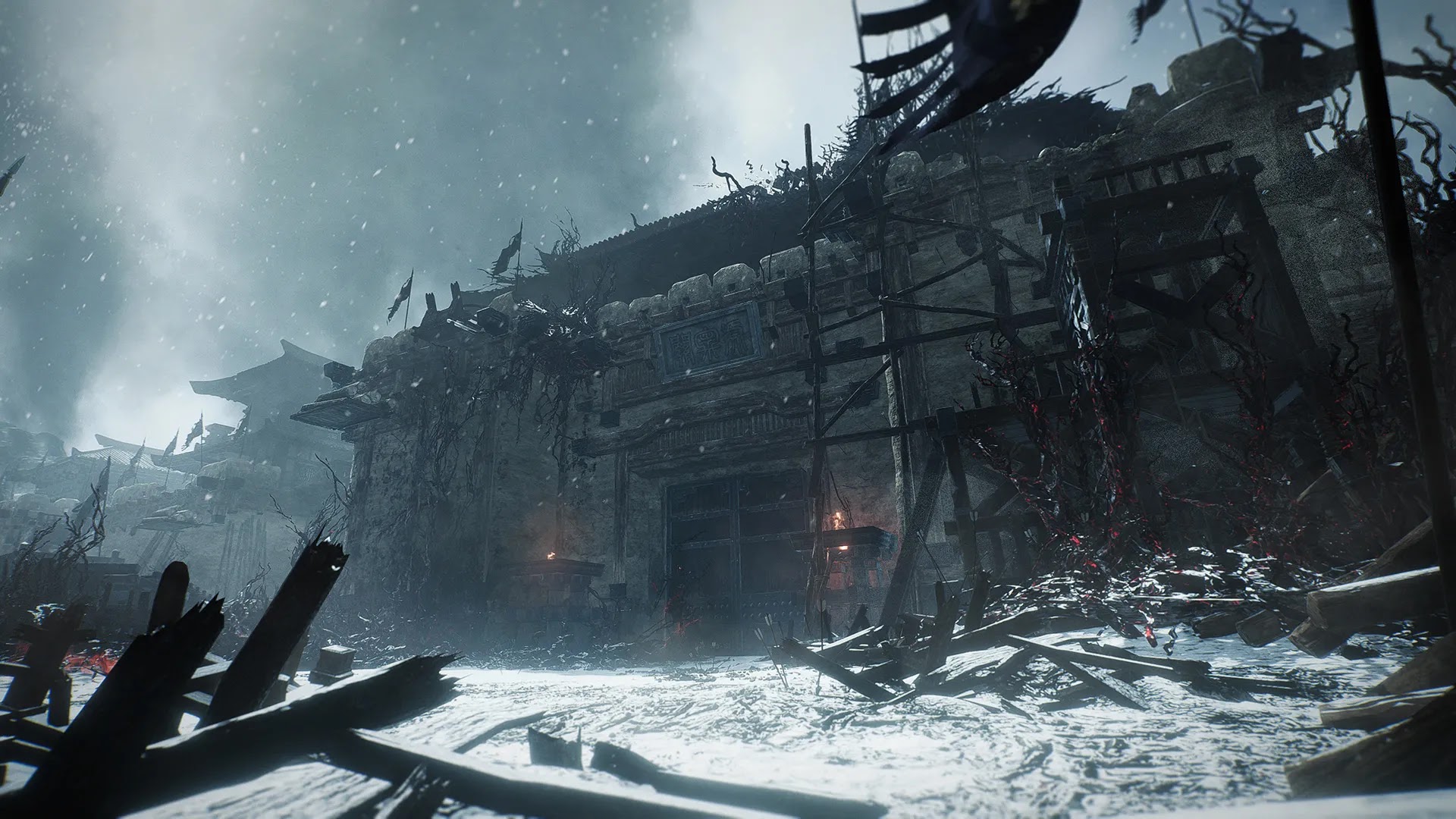
Other than being super smooth, and I mean, SUPER smooth, Wo Long starts you off in this demo in a cliffside region filled with both human and monstrous enemies. To fight these enemies you’ll have access to your normal attack and a stronger attack which are par for the course. From there, Wo Long has a new magic and guardian system from Nioh’s in which once the gauge is filled, you can summon them for attack, or, you can summon them to help out your teammates if you’ve summoned anyone. Alongside your guardian is a magic system in which four spells can be equipped each with their own gauge costs.
Finally, la piece de resistance is that Wo Long does not have a stamina bar. This threw me for a while as you think to yourself, ok, I can dodge “X” amount of times or swing “X” amount of times before I need to back up. Not here. Here you’ll instead have a whole new system to worry about and I also hope you’re good at parrying as blocking isn’t exactly an option. Thankfully I learned to dodge in Bloodborne / The Old Hunters because my parrying sucks…

This really changes how you approach this system but in some ways feels more “natural”. The reason that I say this is because when you’re in the moment and not looking at your stamina bar, things can get messy. Here, with the spirit bar, it’s right in front of you at all times and if you’re not swinging as much as you thought you would, stop. If you’re not dodging as much as you thought you should be, stop. If you’re really good at parrying? Do it! There are only upsides to performing a parry, as long as you can. I really need to get better at it…

Your character’s morale can go up or down depending on your actions. Taking a critical blow for example will bring yours down by one. Performing a fatal strike, a coup de gras, a visceral attack or just the shiny triangle button, will decrease your enemy’s morale and increase yours. The tricky part here is that, if you die, your morale will not only drop, but the morale of the enemy that killed you will increase, making them even tougher the next time. Not only that, but taking a slightly different page from what was done with Nioh, Wo Long will see a return of player graves but in a different format. Now, instead of being able to fight NCPs of fallen players for better equipment or a challenge, these graves will be boosting certain enemies on the field instead.

Between your melee attacks, your ranged attacks, your magic attacks, and your martial arts alongside both spirit bar and morale systems, you’ll be able to summon two types of help. The first type of help is in the form of an NPC who will fight alongside you for as long as they can until their hit points are depleted. The second type of help is in the form of another real player. In both cases, these forms of help can alleviate aggro in order to heal, can help pincer attack, can add more damage than you yourself can do, and above all else, THANK YOU Stranger of Paradise: Final Fantasy Origin, can pick you up if you fall.
Falling in battle while in actual co-op is not a death sentence. If you can pick up the other player, or they you, the fight can continue and it doesn’t just “stop” there. This alone was one of Stranger of Paradise’s shinier aspects in co-op, but the application in a real soulslike is a game changer. Not having to worry about things just being over because someone else had an unlucky dodge brings the level of stress down just a notch. Not completely, but just a notch and with how tough some of the normal enemies already seem to be? It’s a welcomed addition!

So overall, I absolutely loved my time with Team Ninja’s Wo Long: Fallen Dynasty’s Demo. Super smooth on the PS5 whether in solo or co-op, while there’s going to be a lot to adjust to in terms of gameplay, I cannot wait for either a new demo trial or the full version as this may be once again setting a new bar in this genre of Soulslikes.
Score: N/A
Estimated reading time: 7 minutes.

Having streamed the first two thirds of Stranger of Paradise in co-op with Louis, I ended up both finishing the adventure and getting the Platinum post stream. Having fought side by side with a real person, and then side by side with nothing more than an AI waiting for me to tell them when was a good time to act, Strangers of Paradise felt like two separate titles. This is partly why I needed some time to think about it as while on one-hand I really enjoyed it, did I enjoy it because I was playing with a friend? Or did I enjoy it for what was being presented?
So attempting to avoid spoilers, and I'll probably fail at some point, Stranger of Paradise: Final Fantasy Origin is the prequel to the title that started it all those years ago on the original NES. With darkness brewing in the lands it's up to The Heroes of Light to restore the balance and save the people from calamity. Though while the prophecy states four heroes, our journey starts off with only three...
Yup, you called it, foreshadowing!
Getting into the adventure itself, you'll be starting off with our protagonist Jack "Garland", Jet and Ash as they walk into the Shrine of Chaos to prove themselves as the Warriors of light. Filled with monsters, traps and ambushes, it doesn't take long for the Soulslike fangs to come out. That said, I'm almost hard pressed to even call this a Soulslite as while the difficulty is there, the rest of the elements are more of an action based RPG.
Other than the difficulty and interwoven stage designs, the reason that Stranger of Paradise maybe isn't even Souls-lite is that there are no real penalties for dying. The penalty is just having to walk back into the boss room, in shame of course, but other than that? You don't lose accumulated or unspent experience. Instead, you lose max MP bars and potions above the basic threshold which can easily be gained back by performing a few good counters for one, and slaying a few roaming monsters for the other.
Always in control of Jack, you can have up to two partners in the form of NPCs known as Jed, Ash, and later on Neon and Sophia. These partners will move around and fight autonomously unless you need them to pull out the big moves which can be done through the D-Pad. These abilities are only mentioned in a brief introduction but can be costly if you've missed it. Hours down the line and you're wondering just what is the point in leveling up an NPC's class if you're not going to sling spells!? Oops... Missed that part and while negligible in co-op it's damned near killer in single player.

That slight mishap on my part aside, you can replace these NPCs with a real player who will get to take full control of the character all while using their own Jack’s unlocked classes, skills and equipment. Now there are a few differences here. The first is purely cosmetic but kind of sucks for the person tagging along the adventure. Once in control of a chosen NPC, the other player cannot change their appearance as the appearance is set to the gear loadout you last selected for that NPC. This isn’t a game breaker, but for someone who’s going to be tagging along for the long haul? It’s a small thing that should have been thought of. Either that or replace the model with the other player’s Jack.
The second difference is the game changer. In solo play, if Jack falls, that’s that. One wrong decision, one bad dodge, one unlucky hit, that’s it, game over. In co-op mode however the party has access to three Phoenix Downs in order to get the other player back up on their feet. It’s amazing and it honestly should have been something set into the core single player experience. You can get NPCs back up with potions, but they can’t do the same for you. This changes a lot especially for some of the crazy boss fights that are present down the line. Finally, the last difference is that the players are not tied to each other. If one wants to go explore a random area away from the first to cover more ground? They can. The only issue with this is that if you are only two, the NPC will follow the leader. If you’re three, then there’s no real issue as you are all toast if mistakes have been made!
*Slight spoilers*
For the areas themselves, Stranger of Paradise is a love letter to Final Fantasy and I’m almost ashamed that it took me so long to piece together the “Dimension” numbers that are mentioned in pieces of lore and the load screens. Each stage has been designed as an homage to one of the Final Fantasy titles over the years whether from back on the NES and SNES or the PS1-2-3-4. Until I finally clued in, there was a bit of gnawing in the back of my brain telling me that I was missing something, but I just couldn’t figure it out. It was only after seeing a particular homage later in the game combined with the music that I honestly facepalmed and then applauded the design direction for real.
*End of slight spoilers*

Otherwise, the stage design for gameplay is pretty on point. Channeling the Metroidvania aspects that the Soulslike tend to use, there are often a couple ways forward and several shortcuts to unlock and areas to explore. Within these areas there are a fair amount of enemies to fight off which is where the character class system also gets to shine. Always in possession of two classes, how you go about the adventure is entirely up to you. Double melee? Might and magic? Double magic? There’s no wrong decision especially as you obtain new gear for the ride that while stat wise can make you more powerful, the bonuses applied to the character classes can make you a monster.
But was it enough? That’s where I found myself after pouring 50 hours into the Platinum Trophy after what had just been a good 68 hours into Elden Ring’s own Platinum Trophy. Completely different styles to be sure, mission based structure versus a whole wide open world, but how did it compare to something like Nioh 2 that Team Ninja had designed before it? Honestly? I think it fell short but not completely because of the gameplay elements.
Do I think that there should have been more punishment for dying like in other Soulslikes? Yes, I do as that ups the need to really learn from your mistakes. That said, I was also happy to see lighter difficulty modes for those that would want to experience the story if they so chose to. The story though is where I probably had the biggest issues. This story could have shined as there was nothing done at this prior point to the original Final Fantasy. There were tons of nods forward, sure, but the characters, and Jack specifically? He was an ass and oftentimes all you wanted to do was yell at him to stop being such a complete asshat and that's generally what the cutscenes were. I would have loved for more anything as the character writing wasn’t enough to support the rest of the storytelling which was mostly being told through the adventure's gameplay.

Overall though, I think Stranger of Paradise: Final Fantasy Origin was a decent adventure. Did it live up to what I had hoped it would be? Not quite, but it was still fun to play alone and even better with a partner as some of the harder fight sequences are leveraged by being able to lend a hand instead of instantly being defeated. Would I look forward to another such adventure? Definitely. In the meantime though, this prequel chapter is closed.
Score: 7 / 10