• Gobliiins Collection - Switch Review

    In the early 90s, Coktel Vision (which later became Sierra On-Line) released a quirky point and click adventure game titled Gobliiins which had players bouncing between three different Goblins to find a cure for good King Angoulafre.

  • The Core - PC Preview

    Sometimes when you are browsing the internet for information on how to do something, you stumble upon ideas or projects or even games that people might be working on...

  • Cat Mail Co. - PC Review

    What a meow-gnificent evening it is to send your paw-rcels out to those family and friends! Are mew looking to pick up an item or send something out? Well at Cat Mail Co. we can send and receive all your deliveries!

  • Volontes - Nintendo Switch Review

    Have you ever grown up feeling like you don't belong? For our Heroine, that's the feeling she lives with everyday in her small farming village. But it's not her only secret...

  • STARSEEKER: Astroneer Expeditions - PC Preview

    STARSEEKER: Astroneer Expeditions is just that! Massively co-operative and not an MMO! When you first run the game you are instantly into the tutorial...

  • Dread Delusion - Xbox Series X|S Review

    Today we’re looking at what has rapidly become an absolute favorite in the open-world RPG genre for me. An interesting story, memorable NPCs, stunning visuals, and a setting absolutely dripping with flavor, Dread Delusion sets its tone immediately and sticks with it.

  • House Flipper Remastered Collection - PC Review

    I enjoy simulation-type games, and I enjoyed the original release of House Flipper, but I never got around to getting the DLC. When the remastered version of the game was released, I figured it would be the best way to experience the DLC while checking out how the base game was upgraded.

  • GranBlue Fantasy: ReLink Endless Ragnarok - PS5 Review

    GranBlue Fantasy: ReLink released in 2024 bringing the GranBlue universe to an action adventure JRPG format. With a party of up to four members, this band of skyfarers set out for new skies, adventures, and dangers. Two years later, Endless Ragnarok...

  • 70s-Style Robot Anime Geppy-X - PS5 Review

    70s-Style Robot Anime Geppy-X is a mouthful of a title, but you know what? It’s quite the challenging game to describe as well. At its core, 70s-Style Robot Anime Geppy-X is a shooter...

Showing posts with label Strategy RPG. Show all posts

Adventure Academia: The Fractured Continent

Adventure Academia: The Fractured Continent by developer Acquire and publisher PQube—Sony PlayStation 4 review written by Richard with a copy provided by the publisher.


Adventure Academia: The Fractured Continent is an interesting active strategy RPG set in the world from Class of Heroes. Taking cues from both traditional turn based strategy games while implementing them in a more real-time fashion. Will this be enough for you to unite the continent of Pedra, or will the system be as fractured as the continent? It's time to find out.

Adventure Academia follows the story of Alex, a young boy who is the son of the principal of the local school, who's dad has disappeared on an adventure. One day he inherits the Ruler Orb, a sort of staff that allows him to command units as if he were playing a board game. Unfortunately, the previous owner was his father, which means something bad has happened to him! Hence Alex sets off with his childhood friend Citrin and the shut-in researcher who is supposed to be his advisor Lazuli in order to figure out what happened to his father. Unfortunately for everyone involved, strange things are happening on the continent, and it's up to you to solve the mysteries.

Adventure Academia has a pretty unique system in place, one that I found rather enjoyable for the most part. Or at least fresh enough to keep me entertained. The game story is told in pre and post battle snippets and interactions that will happen everytime you choose a stage. Beating a stage unlocks the next subsequent one. A pretty simple setup, with only a few side missions here and there. Note however that the story will play every time you do a stage, not just the first time. Either way, once you begin a stage, you will usually be given the task of "Destroy the target", which is generally a crystal or specific unit, but there are a few bosses.

In combat you have a square grid-based map, with the only default unit being Alex. If you've played any grid-based tactics games, then you will probably realize rather fast that Alex acts as a sort of mobile base camp. Alex can summon units from his party roster of 6 companions to drop onto the field, although not all at once to start.

See, Alex can only drop two units to start, but can be "ranked up" in order to drop more. Alex will generate MP, which is a bit of a global resource for Adventure Academia, where you can use MP to increase your rank when you build up enough, or to cast spells or special actions with. When you rank up a unit, they will get an increase in stats. For Alex, this will increase his maximum MP value, MP generation rate, and number of units that can be set. At Rank 5 you will max out. Other units Rank up similarly, and will gain access to their special skill at Rank 1, which is 5 MP as the baseline.

Something interesting to note is that Alex himself cannot attack. He can move around, be attacked, and use a special buff/healing skill, but otherwise doesn't offer much. What he can do is move and command units. While on a battle map, any time you set a location for Alex to travel to, or pick up/set down a unit, the game will "pause" while you are making a decision. Once the units are down and your location determined, your units will follow Alex along towards his goal, attacking any enemies that come within range on their own. If you have enough MP, you can also get your units to use their specialty skills. Be careful though, as if you take too long or if Alex dies, you lose the stage.

Thankfully, death is not the end. Well, not really. For Alex, it means restarting the stage. For any other unit however, they will simply be unavailable for a period of time and probably lose one Rank, but then you can throw them right back into the action again. In my experience, the time factor isn't much of a concern on story stages, and is only remotely worrying on some of the side quest stages, even if you spend the first few minutes just ranking up Alex and your units. Thankfully the developer included a "speed up time" button, which speeds up the clock, but also hastens all units. You can toggle this on or off at will. This is really handy if you're looking for treasure chests in stages as well, as it lets you zoom around the stage without it being too much of a slog.

As you move around the map, you can grab units from anywhere on the field, but can only place them within a set range from Alex by pinching them and moving them around. This allows for some interesting strategy, as you can wander into an area after setting your units on a group of enemies, then have them moved over to you, or you can box in an enemy with some of your units. Definitely a neat idea. Well, as long as the AI is functioning. See, you don't actually give your units any instructions. You just plop them down and expect them to do what they need to.

While generally this works fine, I did have a few issues with some of my units. For whatever reason, one of my front line units always headed straight behind Alex, away from the action. Not exactly useful in his role, unless I literally dropped him almost right next to the enemies. Another back line unit never engaged unless I forced them too. On the opposite end of the spectrum, my Diabolos unit, a mage-like type, always ran headfirst into the combat. While that...worked sort of, they are a little less healthy than the frontline units, so that could be a little annoying.

So, let's talk about the units you can summon. Each unit has a species, gender, and character traits, as well as unique classes to that species. All units start out as freshman, but will eventually be able to change classes to higher rated options. For example, a human can go through Freshman > Swordsman > Samurai > Sovereign in order of unlocking. Each class has a different unique ability, as well as unit abilities that apply to that unit regardless of current class once unlocked. Unit abilities, and the first time changing to a new class, requires SP which you can earn from clearing stages. You will also earn exp for your units other than Alex, money, and equipment from clearing stages.

Equipment is rather interesting in Adventure Academia. You basically have four stats on your battle units: health, power, action speed, and movement speed. Equipment can either be bought at the store, or found in stages either by clearing them or by opening chests. Equipment earned in a stage has a chance to have an added ability to it, such as a Power boost, that has multiple possible tiers to it. Good luck getting any specifics though, as the "info" about the skill can be very vague.

For instance, the GRD. Power+ skill says "Tier1 GRD PWR boost". Super useful that. If you didn't know what GRD (guard, I think) is, well too bad I guess? The abilities attached to equipment is interesting though, as it means you may favor a lower ranking piece over a higher ranking piece if the skill is good enough. Keep in mind that the units also have levels, and leveling up will also increase your stats.

If you think you've got a nice reserve of cash floating around, you can also head on over to the Lab, where you can enhance equipment up to +9 by shelling out some cash. This only upgrades whatever the basic equipment stat is though, so if you're upgrading a weapon you get Power, not Health for example, regardless of attached skill. By the way, you better remember this stuff either now, or if you play the game when it tells you, because there isn't anywhere you can check the instructions out again. Seriously.

So, let's mention two more gameplay elements before we move into the visual/audio aspects. First up, stages may have hidden switches. These hidden switches become noticeable either by looking at different coloured tiles on the map, or when Alex comes within one panel range of them. The game says you activate them by stepping on them, but what it means is by dropping a unit on them. It's actually a pretty interesting mechanic for exploring and expanding maps.

The second thing I need to mention is the difficulty curve. Or more like, difficulty EKG. You'll notice that each stage has a level suggestion, where bosses and "academy fight" stages have a big jump, and then the difficulty goes back down again. Even when the level suggestion starts going up after these fights, the normal stages still feel a lot easier. When some of the bosses can 2-hit Alex and constantly target him? It's an absolute pain.

On the plus side, the artstyle is rather cute. While the story mode is done in a standard "storyboard JRPG anime cutout" style, in battle you have a more board game like style to the art, where all the units are symbolized with little cardboard drawings on little plastic stands. It really does make it feel really boardgame like. The soundtrack is pretty decent as well, although none of the tracks really make me want to take the game seriously. Coupled with the rather corny and not overly interesting storyline though, this actually makes it seem a lot better, so a positive there.


As a bit of a wrap-up, I would like to mention how incredibly short the game is. Seriously though, there aren't a lot of main stages, and there are few bonus stages. Each stage will take probably somewhere between 3 to 10 minutes to beat, so you aren't looking at anything too lengthy, even if you take time out to over level your units. On the positive side, this means the game doesn't really overstay its welcome. Yeah, it does give some frustration that it really shouldn't.

Summary


Overall, Adventure Academia: The Fractured Continent is a bit of a fractured game itself. With a storyline that isn't particularly gripping, a lack of main content, some frustrating game design choices, and vague instructions and descriptions of how things work at some points, I doubt this title is making any headlines.

That being said, I did actually rather enjoy my time with it. Yes, it definitely could've been a lot better, but it also isn't the worst thing I've ever seen. If you want a fresh take on the turn based tactics, maybe you'll also get some enjoyment here.

Score: 6.5 / 10


Share:

Fantasy School RPG ‘Adventure Academia: The Fractured Continent’ is Coming to PlayStation 4, Nintendo Switch, and Steam

PQube (London, UK) – 29th July 2022 – PQube is excited to announce Adventure Acadamia: The Fractured Continent will be releasing on Nintendo Switch, PlayStation 4, and Steam later this year!

Adventure Academia: The Fractured Continent is a fully-fledged strategy RPG with a unique ‘pinch, drag and drop’ real-time battle mechanic. Customize your own party of students in a fantasy realm with over 10 different races such as Elves, Dwarfs, and Diabolos! Manage their armor, weapons, and accessories as you tactically guide them to victory against the monster hordes.

  • Explore a charming strategy RPG with fun, lovable protagonists of many different races from the cat-like Felpurr to the angelic Celestia!
  • Pinch, drag, and drop your team to victory with a uniquely intuitive real-time battle system.
  • Build an A+ dream team of students, and manage their stats, weapons, and abilities!
  • A charming narrative guides you along the way, with optional side quests to help unlock even better gear!
  • Traverse a range of distinct environments with gargantuan monster bosses to fight at the end of each level!
  • Releasing on Nintendo Switch, PlayStation 4, and PC later this year!

JOIN ALEX AND HIS FRIENDS IN A GRIPPING NARRATIVE ADVENTURE!

The Continent of Pedra is in the midst of a serious crisis. The entire nation is slowly transforming into a labyrinthine dungeon with monsters roaming the lands. When Alex’s father – principal of their school, ‘Obsidian High’ – goes missing, it’s up to Alex and his party of academy friends to track him down!

Take command and forge your way forward in order to learn the truth of the fractured continent. Meet unique characters along your journey and take part in side quests to aid those that request your help!

DRAG, DROP, AND BATTLE, IN REAL-TIME!

Strategically guide your team to victory on a grid-based, real-time movement system. Pick up and reorder your party to protect the main character, Alex, as you traverse around the map. Your team dives into battle whenever they get close to an enemy – so make sure you’re constantly in formation!

MEET TEN UNIQUE RACES!

Recruit up to 6 students for your party! Give them names, choose their gender, manage their equipment, and customize their stats to suit your play style!

There are 10 different races available: Human, Khaluz, Felpurr, Bahamoon, Gnome, Diabolos, Fairy, Celestia, Dwarf, and Elf!

FACE GARGANTUAN MONSTER BOSSES!

Each stage features gargantuan boss monsters with varying abilities and attacks! You’ll have to guide your party properly… or face being wiped out completely!

EQUIP, UPGRADE & MANAGE YOUR PARTY

Manage and customize weapons, armor, and accessory slots for each of your teammates. Save up enough gold by completing levels and taking weapons down to the laboratory for special, custom enhancements!

For more information and the latest news, follow us on Twitter, Facebook, Twitch, Instagram, and our official website: http://pqube.co.uk/


About PQube

PQube is a leading international creator, publisher, and distributor of interactive entertainment. The company’s teams worldwide are committed to publishing games they love by working closely with development partners and reaching consumers globally on all major gaming platforms. PQube manages a rich portfolio of brands including Kitaria Fables, Tormented Souls, Cat Quest, New Super Lucky’s Tale, BlazBlue, Gal*Gun, White Day, Kill La Kill, Nexomon: Extinction, Guilty Gear, and many more. Visit: pqube.co.uk to find out more.


Article by: Susan N.


Share:

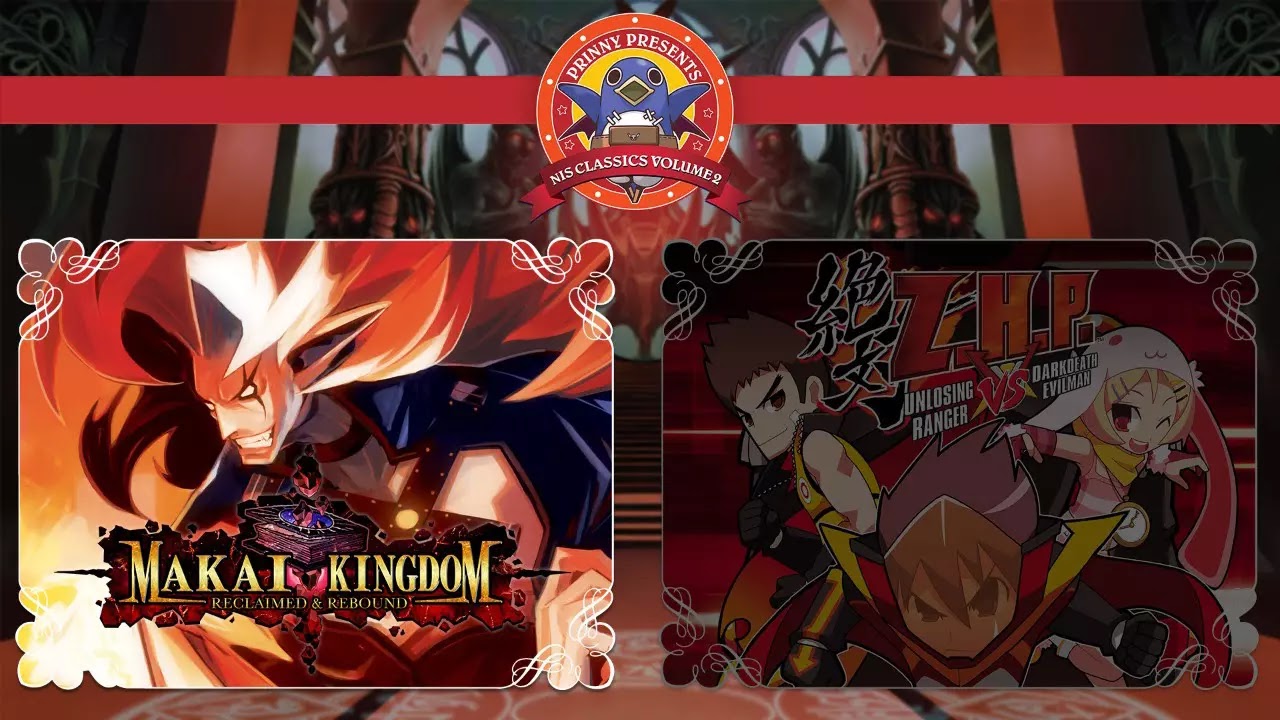
Prinny Presents NIS Classics Volume 2: Makai Kingdom: Reclaimed and Rebound Review


Prinny Presents NIS Classics Volume 2: Makai Kingdom: Reclaimed and Rebound
by developer Nippon Ichi Software and publisher NIS America Inc.Nintendo Switch review written by Pierre-Yves with a copy provided by the publisher.

Estimated reading time: 10 minutes


Prinny Presents NIS Classics Volume 2: Makai Kingdom: Reclaimed and Rebound / ZHP: Unlosing Ranger vs. Darkdeath Evilman is the second of the two volumes to bring back PS2 and PSP era titles to the Nintendo Switch. Starting off with Makai Kingdom, welcome back to one of the craziest titles to come out of the Netherworld.

The first half of this collection, Makai Kingdom: Reclaimed and Rebound, contains previously unreleased Japanese-only content from the 2011 PSP port that followed six years after the initial release of the PS2 edition in 2005. Containing both the original version where we follow along Lord Zetta, the biggest and baddest overlord that you'll ever piss off, the alternate mode similar to the Etna (Disgaea 1), Axel (Disgaea 2), and Beryl (Disgaea 3) modes contains the Petta Mode titled "Papa is the Strongest Overlord in the Universe" starring Zetta's daughter Petta who apparently comes from the future.

Starting with the core mode, Makai Kingdom: Chronicles of the Sacred Tome, Zetta starts the ball rolling for what could only be the biggest mistake that he could have ever made. Torching the Sacred Tome after it called him stupid, Zetta would bind his soul to the tome in order to try to prevent both his and his Netherworld's destruction complete destruction. While binding his soul to the Sacred Tome worked, the rest of the plan didn’t and his netherworld was wiped from existence. Queue the ensuing shenanigans!

Both body and netherworld-less, Zetta is found floating in space by the Oracle Pram who doesn't take long to start making literary jokes. Telling Zetta that she would help him out however, Pram sends out a call for aid to some of the other overlords who are basically frenemies to write in a wish to the Sacred Tome along with their own power to create new lands filled with enemies to defeat in order to restore Zetta to his former glory.

From this point forward, while Zetta creates the first member of his new army to be his arms and legs as he no longer has any, the rest is up to you. Given a new castle to rule in the form of a dog house, this small, yet robust, "facility" will serve as part of your base of operations in the field alongside a shop and a hospital. Once your first few minions have been created, Makai Kingdom plays out like a lot of other Nippon Ichi titles. Broken down between chapters and stages, each stage will have enemies that you need to tactically defeat in order to move on. What's different with Makai Kingdom however is how you move onto the next stage.

Unlike the core Disgaea Series, or other of Nippon Ichi’s SRPG entries, Makai Kingdom followed up on another unique spin to the turned-based Strategy RPG style. Staying in a more 3D environment like its predecessor Phantom Brave, instead of binding phantoms to objects on a map, here, you could either summon a unit or a facility that you've assigned them to in order to deploy them for combat. Bonus? If your enemies are close enough to Zetta's starting location you could summon the facility right on top of them mwahahahaha.


From this point the rest plays out in a "your turn their turn" approach. Always starting off on your turn, you'll sometimes have the chance to eliminate the enemy from the board. This all depends however on the size of the maps that you'll be fighting on which is another feature unique to Makai Kingdom. Instead of set maps that you could essentially build strategies around, here they are procedurally generated so you're never quite sure what you're in for.

Another aspect that makes Makak Kingdom unpredictable is that in order to complete a stage you either need to decimate absolutely everyone, or, reach a score of 1,000. Sometimes hitting the 1k mark is super easy as enemy units could be worth a few hundred each, other times though, there'll be a horde of enemies and they are worth next to nothing as they wipe your forces from the map. You basically always have to be ready for anything.

The rest though is pretty standard for the netherworld craziness where you can level up your characters to obscene levels all while accumulating Mana that can be used for wishes (new facilities, dungeons, Prinnies) and re-incarnation. Another twist on this is that unlike Disgaea where you simply go for re-incarnation, in Makai Kingdom a character has to be sacrificed first by spending their mana on something and only then could their soul be re-bound into a worldly object to bring them back. The better the item, the better the stat bonus! You just have to hope that you do find something good to bring back while out on the field of battle.

Now that’s the core mode and while these aspects all apply to the Petta Mode titled "Papa is the Strongest Overlord in the Universe", the story like the Axel, Etna and Beryl Modes is a whole new adventure in which if you’ve never played, like me, you’re in for a brand new experience. Starting at the same point as the core game, things take a whole different turn as Zetta bites his tongue and fails to properly bind himself to the tome costing him a thousand years to recover. As a lot can change in a thousand years, the playing field has changed and Zetta is going to have to really step up his game if he’s going to return to the title as the strongest freakin overlord.

This new content should also, unless you’re really, really, REALLY good at what you do, should not be attempted until after you’ve finished the core game at least once as the starting levels of the enemies is just under where the end levels of the main story leave off. Just be warned that once a story is started, it has to be finished and the clear data saved in order to switch back.

If there are some elements to Makai Kingdom that I wish were a bit better it would be in some of the smaller details. The pathfinding at times can be pretty bad making you wonder just what the hell the AI is thinking as it’s generally easier to move your characters on your own and then perform a move than hope that it’ll be taken care of on its own. The other element is a toss up.

Like Phantom Brave, weapons are items that can be carried by your units and thrown around if need be. If the item is tossed off the map though it’s gone and you won’t be getting it back. Early game this is BAD, late game is manageable but oftentimes a map won’t have any items to throw off in order to expand to where you need to go so the only thing left are your shiny awesome gear… unless you throw your own units overboard.

The very last thing applies to both Makai Kingdom and ZHP, but the issue I had with how out of place the sprites felt in Phantom Brave wasn’t as much of an issue here. They blended together a lot better and felt like they belonged instead of having rich textured backgrounds and then very pixelated sprites. It helped the adventures along!

Summary

Overall though, I was very pleased with Prinny Presents NIS Classics Volume 2: Makai Kingdom: Reclaimed and Rebound. Like with Vol 1, these titles have been ported forward and run very well on the Switch. While I do still wish there had been some work done to touch up the quality of the sprites, the gameplay speaks for itself and Makai Kingdom is still as much fun as it used to be.

Score: 8 / 10


Share:

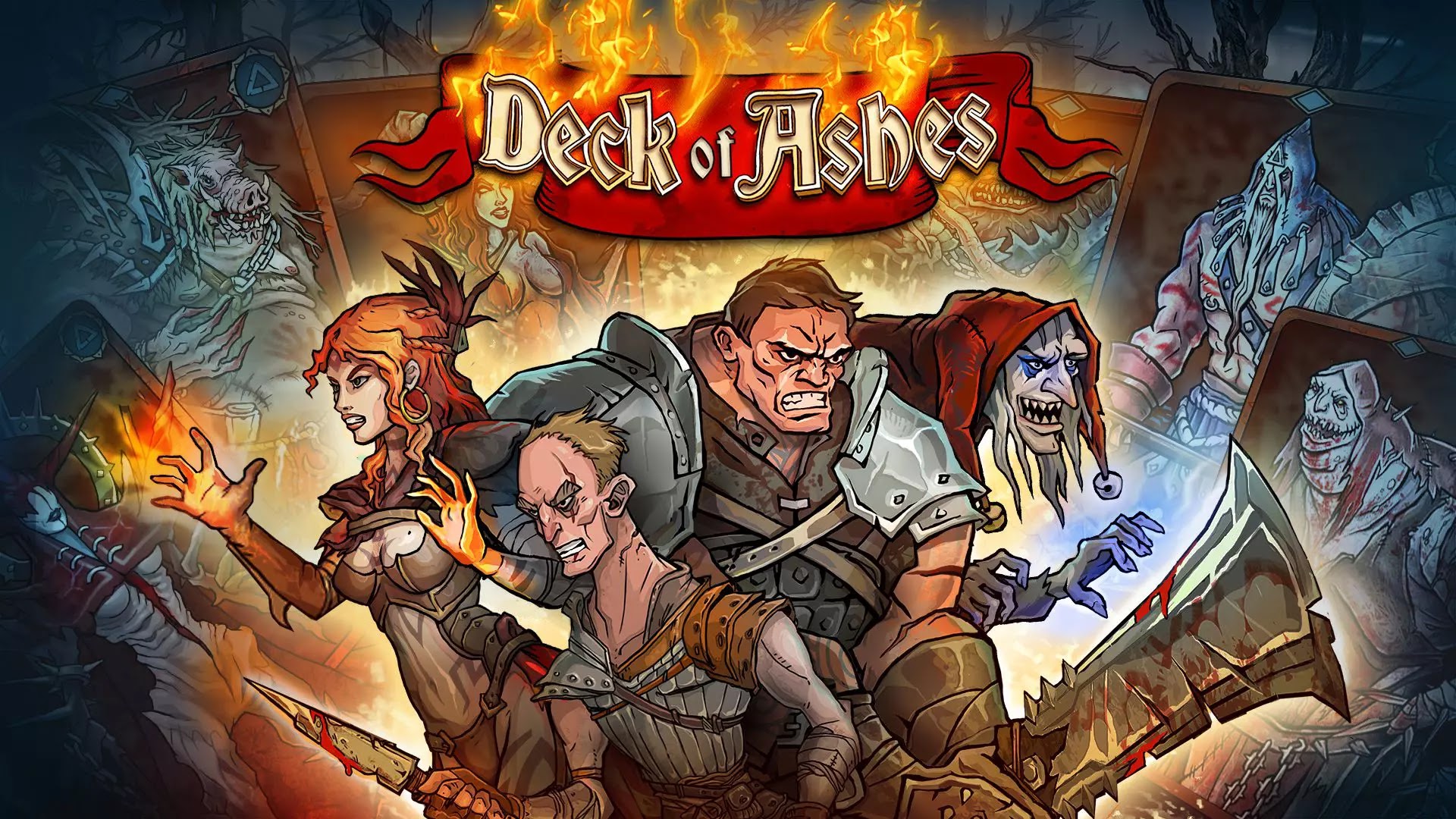
Deck of Ashes: Complete Edition Review


Deck of Ashes: Complete Edition
by developer AY Games and publisher Buka EntertainmentMicrosoft Xbox One review written by Nick with a copy provided by the publisher.

Estimated reading time: 7 minutes


Deck of Ashes: Complete Edition is an addicting mix of strategy, RPG and card collecting mechanics tossed into a moderately forgiving roguelike that gets a lot of things right. Some technical hiccups however, create some rough edges that diminished my enjoyment along the way.

Turn-based card battling roguelikes have really hit a stride over the last couple of years or so with titles like Slay the Spire helping to pave the way. Some of them like Roguebook are exceptionally well-balanced and bring some new ideas to the table, while others like Nowhere Prophet struggles with balance and polish. Deck of Ashes falls somewhere in between those two polar opposites.

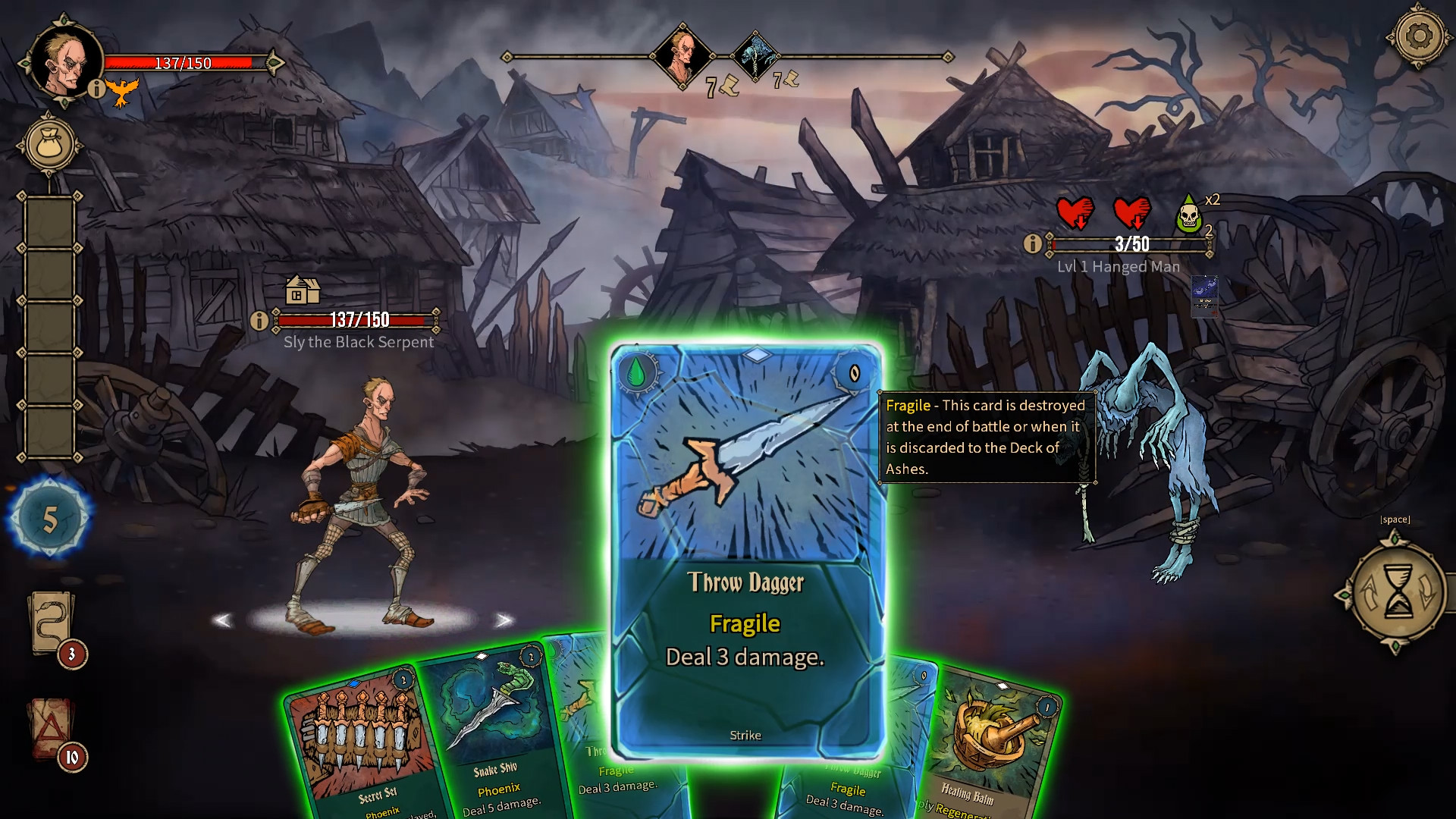
There are quite a few things that Deck of Ashes gets right. I enjoy the unique concept of how cards are ‘burned’ – or used up. It creates a bit of a seesaw back and forth between what to use and not – especially since ‘refreshing’ the cards can cause your character to lose life. In a lot of these deck battling games, having a large library of cards actually can hurt you as opposed to having a finely honed set of really strong cards. The way your cards get ‘used up’ in Deck of Ashes makes the case for larger decks.

The different characters you can use build their decks up in unique and interesting ways. These decks are not always the most approachable – some of the strategies take a bit of time to fully surface themselves, but once I got the hang of them? The end result was incredibly satisfying, especially when my decks were really humming through more challenging battles. Deck of Ashes doesn’t start off as the most approachable game in the genre, but the difficulty options and fewer spikes in enemy stats makes for one of the better balanced difficulty curves I’ve seen out of these types of games.

The visuals are well-drawn, if lightly animated, and the music suits the theme and tone of the game without being overly memorable but still pleasant. It’s a solid enough presentation, especially with some voice acting thrown into the story to boot. The tutorial was basic enough to learn how the core mechanics work, even if it left plenty of room to learn through trial and error later when playing the core game.

At its best, Deck of Ashes was wholly engrossing for me. I spent my first night playing until about four in the morning. However, I started stumbling onto some technical difficulties along the way that had me questioning how the port was handled.

There are some finicky controls at play here as well. The two most glaring examples really started to wear on me by the end of the third chapter of my second character playthrough. Firstly, selecting nodes on the map is often unresponsive. I’m not sure why – it shouldn’t be so hard to just press the left stick in a direction and have it select – but the longer I play, the less often it works. There are times where I am just ‘stuck’, unable to select the node right next to me until I quit and come back. Then the action works just fine… for a while. After twenty or so minutes, it stops working again. Now, I have found a workaround for it sometimes, by pressing the left button to move the 'cursor' to the left item bar and then back again, seeming to refocus it on where it should go - most of the time. Still, there are some times when you should be able to move in multiple directions (the cursor moves between larger and smaller to indicate that it is an option on the map), but no matter what I try, sometimes I simply cannot choose a direction unless I move off of my current node and back again. And then it mysteriously works.

The other issue I saw was in the card management / refreshing burned cards. Some playstyles and cards favor keeping a card burned, so you don’t want to spend your camp points refreshing those ones. But if you pile up too many cards in your deck, the middle rows are not selectable. I can select the top two rows and the bottom two rows, but if I acquire enough burned cards that there are five or more rows, I simply can’t select and refresh any of those middle rows. I’ve got video of the two above instances, as they became so frustrating to deal with.

My last quibble is just a questionable UI decision. Often times during combat, when you move over to a card in your hand, it balloons up so you can view the text. That in and of itself makes sense, but it can obscure enemies to the right side of the screen and make it challenging / impossible to see which one you are looking to target with a spell. This combined with the other issues I encountered hold Deck of Ashes back from reaching its full potential for me.

Summary

Deck of Ashes: Complete Edition is a mixed experience for me right now. The core experience was engaging and one that I enjoyed – when things worked the way I expected them to. Unfortunately, I ran into enough technical hurdles that I stopped my second playthrough and have only picked it up once since then (three days ago to see if the issue with not being able to refresh middle rows of cards was still happening – it is).

It’s a shame, as things currently stand - but thankfully with a few tweaks to polish up some of the rough edges and make the most of the core experience.

Score: 7 / 10


Share:

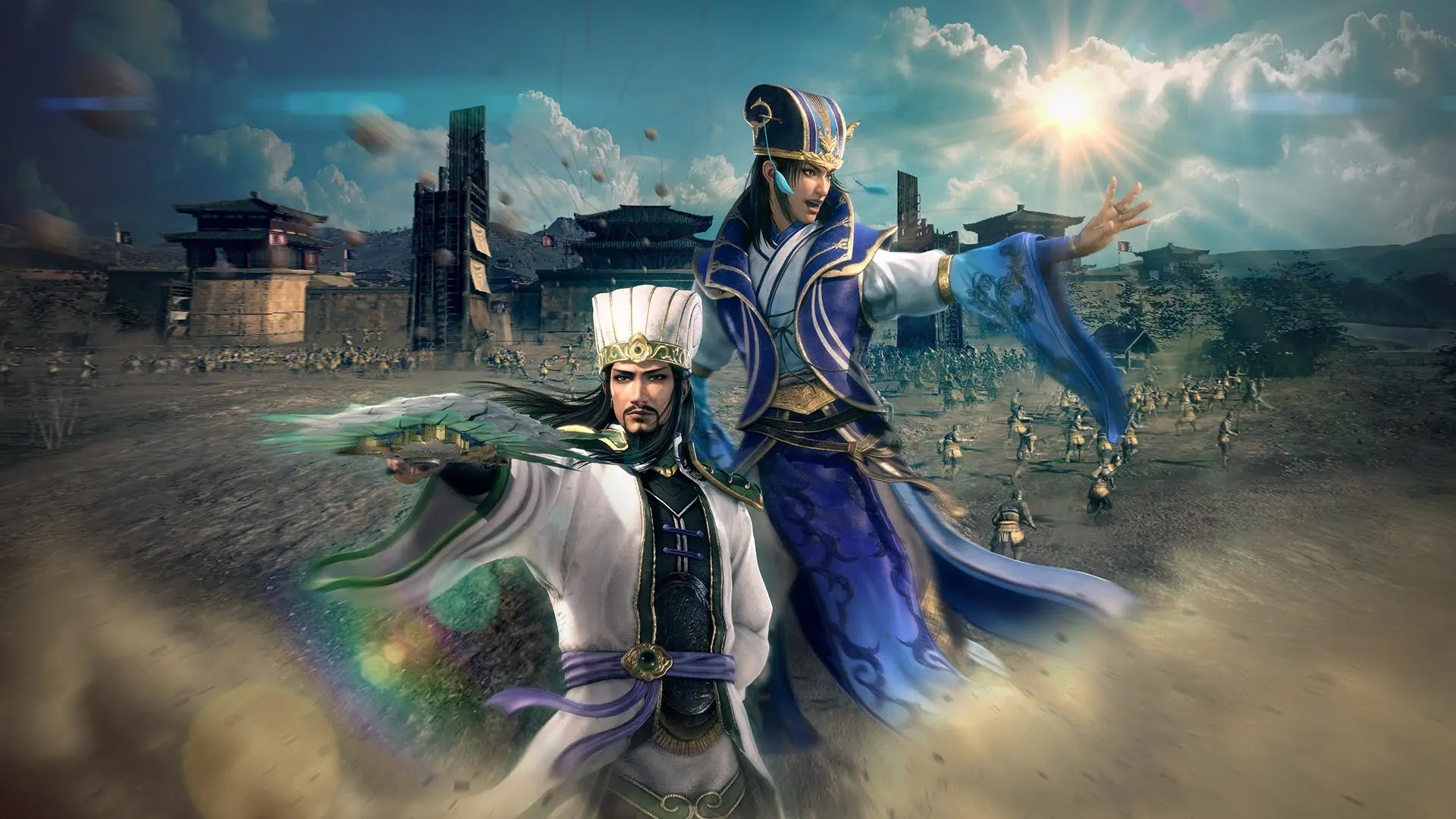
Dynasty Warriors 9 Empires - PS5 Review


Dynasty Warriors 9 Empires
by developer and publisher Koei Tecmo GamesSony PlayStation 5 review written by Nick with a copy provided by the publisher.

Estimated reading time: 5 minutes 


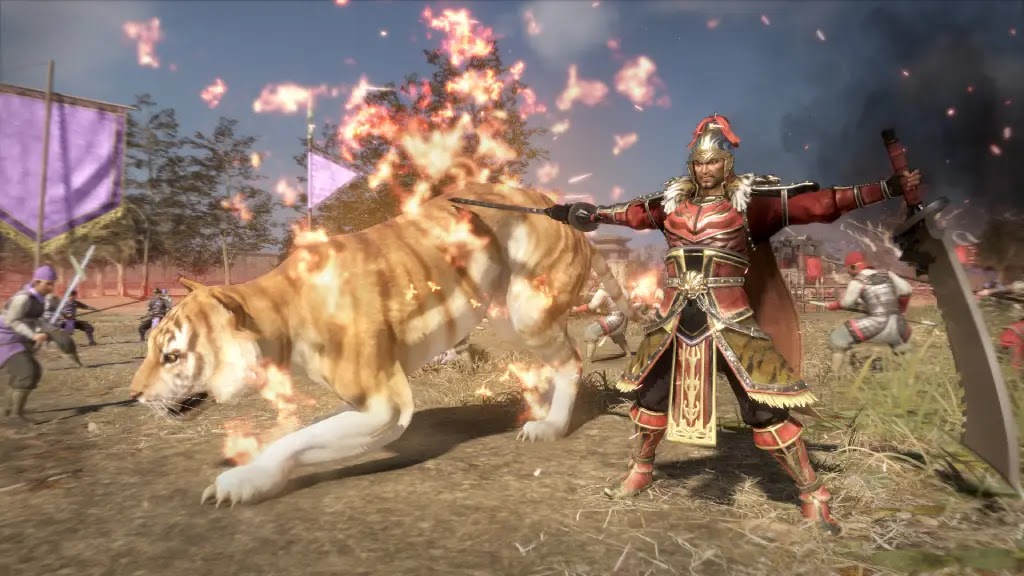
By now the Warriors games are pretty familiar to most gamers, even if their combat-heavy style of gameplay is not for everyone. The Empires titles are a more strategic take on the series. Thankfully the story of the Three Kingdoms is still an engaging one for me, making Dynasty Warriors 9 Empires a largely enjoyable return to the series for me.

Dynasty Warriors 9 was a divisive entry in the series. When you’re talking about nearly a dozen games where the primary narrative doesn’t change a lot, it’s hard to fault the developers for trying to come up with some new hook to keep fans coming back for more. The big play in Dynasty Warrior 9 was an open world that I liked more often than not, but probably looked better on paper than it did in its actual execution.

I have always preferred the Empires games to the mainline series. Not that I don’t enjoy the one versus many approach of the core Warriors titles, but the Empires games add a nice layer of strategy to the proceedings. Your established character can be a leader or a top officer who has to focus on a variety of different tasks outside of simply combat. There is relationships to build (primarily managed through the ‘stroll’ option – a friendly walk that enables you to find warriors and chat with commanders), war councils to plan upcoming activities, fundraising, scouting… the sort of thing you see in a lot of strategy titles where you have more options than time to do it all, so you need to prioritize against your current situation.

However, we still have the core combat that takes place as well in tried and true Warriors fashion. One of the things I was somewhat surprised by was a return to the series’ roots. While I appreciated the way Dynasty Warriors 9 tried to make the world seem more alive with its open world approach to things, it was often lacking in direction. There is something comfortable and familiar with the more structured arenas generally found in the series, and despite the ‘9’ moniker here, open world has been traded in for the more scripted, confined stages that the series is known for.

To that end, the combat is flashy and fun, but not terribly deep. Most of the time you’ll be pressing one or two buttons in rapid succession, stringing together lots of hits while sprinkling in some more powerful special attacks now and again. If you are familiar with Musou gameplay, you have a pretty good idea what to expect here as your character is considerably overpowered for about 99% of the enemies he or she will encounter. One of the cooler elements are the plans / strategy options that can be unlocked and dictate how your troops approach the battle.

They’re a nice touch when layered onto a combat system that by now, you either like or love. There is not a lot of middle ground for most people, in my experience. By nature, I’m a grinder. I grind in RPGs, sporting titles and I actually enjoy the general sense of progress that comes with items and experience and makes the combat rewarding. That being said, I know there is a segment of the population that finds the combat to be repetitive. That being said, this is one instance of the Dynasty Warriors 9 heritage working against this game, as I enjoyed the combat of Samurai Warriors 5 far more.

I enjoy the amount of control I have not just with creating my character, but how the actions taken feel as though they are carving out a unique slice of narrative that is part of a much larger, long-established story within the Three Kingdoms. While this part of the overall presentation works well, there is a second aspect of how being built upon Dynasty Warriors 9 works against Empires here. Visually this title underperforms in almost all aspects.

This is based on an engine built for a game released a couple of years ago now, before the PlayStation 5 was really a thing. I don’t feel that Dynasty Warriors 9 Empires is making great use of the hardware, as textures pop in somewhat weirdly and there are times where the character animations feel far stiffer than they should. Also, it just feels like loading screens are more prevalent than I would have expected. Again, it seems like a lack of optimization.

Those are some unfortunate warts, but the addictive quality of the Warriors games – and this Empires branch – are too much for me to ignore. The gameplay loop is still very satisfying and the strategy elements add a welcome layer of depth that was missing in the last Dynasty Warriors release. I can pick at this title’s various faults, but in the end? I still played it a lot and generally enjoyed it despite its flaws.

Summary

Dynasty Warriors 9 Empires is an improvement on the last Dynasty Warriors game, but that has more to do with my love of strategy and management than anything else. Given the divisive reception to the last mainline game, I understand why they moved away from the open world, but it does leave this entertaining game with oodles of potential in something of an identity crisis as well.

What’s here is fun, and I am always up for some Three Kingdoms strategy and combat, but I can’t help but look forward to the next iteration that is built specifically with the PS5 hardware in mind.

Score: 7.75 / 10


Share:

Crusader Kings III Taking Over Territory on Xbox Series X|S and PlayStation 5


STOCKHOLM - 26 January 2022
- The noble pageantry of medieval grand strategy is coming soon to Xbox Series X|S and PlayStation 5 consoles. Paradox Interactive’s celebrated strategy role-playing experience Crusader Kings III will be available for consoles on 29 March 2022, giving an entirely new group of players a chance to build a legendary dynasty in the quintessential historical strategy game.

In partnership with the development team at Lab42, Paradox has adapted the dynamic and ever-changing gameplay of Crusader Kings III to a new environment, taking advantage of the unique characteristics of console play. Few other games have as rich a tapestry of strategic options, with political marriages to bind noble houses, brutal wars to enforce quasi-legal claims, personal relationships to unite a fractured realm, and even subtle scheming to undermine or eliminate rivals.

Crusader Kings III on console features an adapted interface and control scheme specifically tailored to larger screens and console gamepads. The all-new control map lets players quickly and easily navigate the game’s menus via triggers, bumpers, and quick flicks of the analog stick. The console edition also utilizes the key capabilities of the Xbox Series X|S and PlayStation 5, like super-fast load times for a seamless gameplay experience as well as Haptic and Adaptive Trigger controller feedback. Players will be able to switch between gameplay and other applications, like YouTube, using Quick Resume, where they can consult a tutorial on how to quell a peasant revolt.

PlayStation 5 users will experience the game’s stress mechanics themselves, as their DualSense controllers physically react to in-game events as they unfold. The more stress a character has accrued, the more resistance will be applied to the DualSense controller’s Adaptive Triggers, for instance. The PS5’s Activities and Game Help also provide a platform to assist new players as they take their first steps in the world of Crusader Kings.

Features of Crusader Kings III include:

     Character Focused Gameplay: Every character you play or interact with has their own unique personality. Events and options in the game are largely determined by the type of person you are.

     Infinite Possibilities: Play as any noble house from Iceland to India, Finland to Central Africa, over five centuries. Interact with wandering guests, stubborn children, devious spymasters, and saintly holy men in an elaborate tapestry of medieval life.

     Waging War: Rally your vassals and raise your men-at-arms to besiege enemy castles or put down rebellions. Personal prowess on the battlefield can win you great honor, but strategic planning is the path to victory.

     Royal Marriages: Spread your dynastic DNA throughout the world, stamping your royal seal on the crests of kingdoms and duchies far and wide. Marry for power and raise children to press claims on new lands.

     Saints and Sinners: Keep faith with your religious leaders or perform great crimes in the interest of the state. When the going gets tough, you can always embrace a heresy or craft a new religion more in line with your character’s priorities.

The console edition of Crusader Kings III can now be pre-ordered on both Xbox Series X|S and PlayStation 5. For more information, please visit www.crusaderkings.com.

About Paradox Interactive

Paradox Interactive is a leading global publisher of strategy games for PC and console. The company has developed and published a world-renowned catalog stretching back to 1999, with players hailing from all around the world.

The publisher’s steadily-growing portfolio includes firmly established franchises such as the critically acclaimed Europa Universalis, Crusader Kings, Hearts of Iron, and Stellaris series created by Paradox Development Studio, the Age of Wonders series created by Triumph Studios, as well as award-winning titles such as Cities: Skylines, Pillars of Eternity, and more from a network of partner studios. Paradox is the owner of the World of Darkness IPs and is publishing Vampire: The Masquerade - Bloodlines 2. Today, over four million people play a Paradox game each month, and the number of registered Paradox users is over twelve million.

Paradox’s head offices are located in Stockholm, Sweden. Our development studios are located in Stockholm, Malmö, and Umeå, Sweden, in Delft, The Netherlands, in Seattle, Washington, and in Berkeley, California. We share a passion for gaming and gamers, and our goal is to provide deep and challenging games with hours of gameplay and endless variety to our ever-growing community.

For more information, please visit our forums and follow us on Facebook, Twitter, and Instagram.

Comet sighted!

Article by: Susan N.

Share:

Monster Rancher 1 & 2 DX - Switch Review


Monster Rancher 1 & 2 DX
by developer Koei Tecmo and publisher KOEI TECMO AMERICA CorporationNintendo Switch review written by Richard with a copy provided by the publisher.

Estimated reading time: 7 minutes


Monster Rancher is one of those old games that really hits me right in the nostalgia. Back from the old era of the PS1, we got this nifty title gifted to us by our friends at Tecmo called "Monster Rancher". Now here we are, with Monster Rancher 1 and 2 DX available as a nice little package on the Nintendo Switch, hopefully fulfilling that empty pocket of nostalgia or retro desire in your heart.

Both Monster Rancher titles play similar to each other, with mostly small balance adjustments or tweaks to certain aspects, so I will be discussing Monster Rancher 1 and 2 as a package deal here. In both games, you take the role of a newly inducted Monster Rancher, essentially what a Pokémon breeder would be if they actually trained their monsters in the more literal sense. You're given an assistant, and off you go to get your first monster! You can pick one up either at the market or the shrine, and then your Ranching truly begins!

Taking your newly minted monster back home, you start up a training plan. Or, well, if you have any experience in the series you do. Newcomers will probably flail a bit until they find out what works. Your monster can do a series of different jobs, all of which affect their stats. The game takes place in year long periods where each week you can give your monster a different job/training task. There are also month long excursions to train certain stats as well, which may have your monster learn new skills or find items for you. Once you've trained up your monster a bit, it's time to enter it into a tournament battle! You can choose either an official battle or unofficial, and while the main goal is to win all the official tournaments to increase your rancher rank, the unofficial battles will be a solid source of income.

So now you've trained your monster up, you've spent a number of in-game years with them, seen them grow and blossom into a creature of legend, you're sitting at a B ranking, two steps from the top. Then you get an old age warning. Yup, that's right, your monsters can grow old and die. So you take your beloved companion and take them to the lab to freeze them in cryogenic sleep. and then you start again, this time with more knowledge, a better training plan, more items! But for some reason, the stat growth just isn't the same. Where you would earn 5 power and 4 Tec with your previous monster, now you're earning 2 power and 6 Tec. But why? Well, it turns out each monster has their own stat gain modifier, so now you get to revamp your training selections in order to make your new monster blossom.

Once again though, you get that dreaded old age warning, so now you have two frozen monsters. But what's this? You can combine them? For better starting stats? Yes please! And so off you go, once again training a new monster, and so is the Monster Rancher way. I'd like to take this moment to point out that Monster Rancher really gets you invested in your creatures. Unlike in Pokémon where you can just go out and catch a whole lot, level them, and then resign them to a box for a lifetime, in Monster Rancher you can only ever have one monster out at a time, although you can have a few frozen. If you also take into account how you manually train up your monster's stats, you start to build a connection to your little buddy in a way I've never had in other games in the same vein.

Now, before I get into how the battles actually work, I'd like to bring attention to the most unique feature Monster Rancher had when it came out on the PS1: the Shrine will produce a Monster from other discs. Yes, that's right, you could go to the Shrine, slap in a music CD, other PS1 game, heck, any CD really, and the game will produce a monster for you based on the CD. Some even had special monster types depending on what CD you put in! For instance, putting the Monster Rancher CD in for Monster Rancher 2 would give you a special typed creature. Unfortunately that system is no longer possible, although there is now a large database, where you can either pull from at random, or manually type in your CD info and see what pops up. Some of the old info still works (yes, I've tried it), while some may have been altered or adjusted for this release, but it's still an interesting system nonetheless.

Once you've trained up your monster, it's time to enter it in a battle competition! This is done through an interesting sort of minigame style combat. You can get up to 4 skills based on distance from the enemy, provided your monster has learned a skill to fill that distance slot, and you can get others to use as special attacks to replace the basic attacks. Each attack has a "Will" rating that's required to attack, and your Will will regenerate slowly during battle. It's an interesting struggle between trying to go for the big moves with a high Will requirement, or a bunch of smaller moves. If the combat isn't really your thing, you can tell your monster to do what it wants, which NORMALLY works alright.

Monster Rancher is full of the little aspects that make you fall in love with it, from the cute animations of having your monster work, to the way the monsters can run away if they get too stressed out, fail a task, or not listen to you in battle if the loyalty is too low. There are also Monster types that you need to unlock, either through fusing a type first, or completing little mini side-quests. Monster Rancher isn't without its faults, as it can be frustrating if your Monster fails too often, and in battles hit rates will probably be pretty low, so if the enemy gets a few lucky hits and you get nothing, it can be frustrating. Yes, I may have missed 5 times in a row on a 68% hit rate, and the enemy hit me 4 times on a 20% hit rate. No, I'm not salty about that. Shut up. Monster Rancher 1 and 2 also haven't really been improved a whole lot since their initial release. I really would have liked to see a bit more improvement for this release, but I am still glad I can play these games again after losing my discs so long ago.

Overall, Monster Rancher 1 and 2 DX is a great package with a bunch of nostalgia. While the disc system isn't really intact anymore, it does still provide a large range of options and a bunch of creature combinations. Monster Rancher is a series that you really feel yourself getting invested in, whether it be the ranching, the battling, or even just watching the animations.

Summary

Monster Rancher is easy to pick up, put down, and really starts to take off when you start experimenting with different ways to customize your monsters. If you have any nostalgia for the titles, or are looking for something a little more old-school, Monster Rancher will be sure to pique your curiosity.

Score: 8 / 10


Share:

Soul Nomad & the World Eaters - PC Review


Soul Nomad & the World Eaters
developed by Nippon Ichi Software, codeglue and published by  NIS America Inc.PC review by Richard with a copy provided by the publisher.

 Estimated reading time: 11 minutes


Soul Nomad and the World Eaters is a classic NIS title that really hits home to my nostalgia. One of the NIS titles that shows a bit of a darker foray into the storytelling zone, and a title I put 80+ hours into back in the day. Now no longer only a PS2 title released back in 2007, Soul Nomad is now available for PC. Has it held up well, or have the ravages of time crushed what was a really intriguing title? It's time to find out.

First thing first before we get into the gameplay, at the time of writing this review there are some…technical issues with the title on PC. Some people have an issue where the screen shows black on start-up, but you can still interact with the game, see the cursor, and hear the audio. There are workarounds available on the Steam discussion page, so hopefully those work for most people. Unfortunately, apparently I don't fall into this category. It took about 6 hours, and me having to get a friend to log into my account, boot up the game, change the config options to a working resolution, and then my friend had to send me the config file.

So what about the game itself? Well, in Soul Nomad we delve into a world ravaged by giant monsters called "World Eaters", led by a man named Gig, the Master of Death. After a great battle, Gig is defeated, but the World Eaters remain, albeit in a dormant state. After 200 years, the protagonist is adopted into a hidden village, and tasked with being a protector. The leader of the village elects the protagonist to finish the job of their forefathers, and defeat the World Eaters so that the world will know peace once again. And so the protagonist is forced into a contract with the Master of Death himself, Gig, in a bid to try and use his powers to eliminate the World Eaters without succumbing to his influence.

If you've played a grid based tactic title before, you'll have a good basis for how Soul Nomad works. You have a world map that travel around, and you visit key locations of interest to progress the story and get into fights. In fights you have the power to summon units at the cost of "Gig points", and command them following a turn order on a grid. The grid has different tiles that will affect your units, perhaps increasing evasion or defense. If you get close enough to an enemy unit and attack, your whole squad goes in with you.

That's right, you get a whole squad. Each "unit" actually comprises multiple individuals in a "room" that can provide different bonuses. These squads act together when in combat and will all take their actions together. After taking action, the opponent has an opportunity to counter attack. Each squad will have a leader that inherits a portion of the stats of the other members as well, although if a leader is defeated, the squad will be considered defeated as well.

In addition to basic combat, squads also have a stamina bar that will decrease when performing actions such as moving or attacking. If the stamina gauge is is below 80% you can use special moves based on the units in your squad. But be careful, because as your stamina decreases, so do your stats. You also have the option to use "tactics" or "Gig Edicts" on the battle field map, which are skills and items respectively. Skills will replace taking an action, such as attacking, but can give a buff, a debuff, or cast a spell at an enemy, as examples. These tactics gain exp when used, and can level up, but have a limited amount of uses per battle.

So how do you set up a squad? Well, first thing is you need a room for them. Rooms can be swapped out, or locked in place to keep the rooms you want from changing, but are pretty random in terms of what you get. Each room consists of a 3x3 grid, with a front, middle, and rear setting. Not all of these positions may be available though, as you could get a room with only two middle and two rear positions, or you could get a room with a lot more open slots. Once you have a room you like, you can then purchase and assign units to that room. The abilities and moves a unit can perform are based on their location in the room. As an example, putting a swordsman in the front will have a melee combo, but putting them in the middle will have them shoot out a shockwave. As you progress through the game, you will also learn about décor items that come with the rooms, and how you can upgrade them.

Room inspection is Soul Nomad's version of the item world from Disgaea, where you can jump into a room, and fight your way through levels in order to upgrade the effects and the room. While in a room inspection, summoning squads doesn't cost points, and clearing floors will improve your room. Now, the game mentions this as a sort of throw away line, but is pretty much the only way you're going to be able to grind exp and points, so think about popping in once every so often, even if it's in a room you aren't using, just to get some exp.

Now, one of the major reasons I liked Soul Nomad as a kid was because of the Demon Path, which is an alternate "evil" side to the story you can unlock after clearing the game. It was also the first time I had seen the trope for "even evil has standards", and hoo boy, was that an experience. There are a bunch of different dialogue options presented to you throughout the game, and answering differently may lead to alternate endings, which is a pretty fun facet.

Now, while the music is still quite good, let's be honest about the graphics: they're dated. Apart from a little text refurbishing, everything is just as it was back in the day, for better or for worse. Unfortunately this means you still get the old PS2 early days graphics, just stretched to fit your monitor, if it happens to be larger than your TV was back in the day. Thankfully, while the graphics may have aged like a miscellany of cheese, the gameplay has aged like wine.

There's a lot going on in Soul Nomad, from the squad match-up bonuses, to the stat distribution, to some really weird units that have some pretty funky attacks. Tactics that change based on squad composition, combo moves available between units of specific types, and janky squad builds that work surprisingly well, there's a lot more depth to Soul Nomad than it lets on. While you don't need to know, or remember, a lot of these functions, as I cleared the game with minimal delving into the mechanics the first time I played, doing so will add a whole new level of gameplay. Couple this with the fact you can beat up random citizens for stuff, and Soul Nomad was certainly ambitious in all the right ways.

Summary

Overall, I have to say I still love Soul Nomad and the World Eaters, even more than ten years later. The gameplay is still really fun, the storyline is great, and I love all the little aspects that come together to make Soul Nomad what it is. That being said, there is no graphical update, and the "black screen of death" that you may experience on start-up may put newer players off. As with most retro titles, Soul Nomad doesn't pull its punches either. It's tough, and it isn't afraid to let you know it. All-in-all, a patch to solve the blackscreen issue would do wonders, and while I wish there were an update to the graphics, everything about this title I loved is still there.

Score: 7.5 / 10


Share:

Random posts

Our Streamers

Susan "Jagtress" N.


S.M. Carrière

Aldren


Affiliates

JenEricDesigns – Coffee that ships to the US and Canada

JenEricDesigns – Coffee that ships to the US and Canada
Light, Medium and Dark Roast Coffee available.

Blog Archive

Labels