• Culdcept the First - Xbox Review

    Culdcept the First (also attributed as Culdcept the First Saturn Tribute) is a very fun game, that does show its age. This is basically a re-issue of the 1997 Sega Saturn game that mashes together deckbuilding (think Magic: The Gathering) and boardgames (such as Monopoly).

  • NBA 2K27 - PlayStation 5 Review

    With these annual seasonal renewals of the sports season comes the related video games as well, and the question reviewers such as myself always face is this: Is this year’s game worth purchasing one year after the last one? My answer? Yes, absolutely. NBA fans are going to almost certainly enjoy NBA 2K27.

  • Midnight Moments - PC Steam Review

    Midnight Moments is a cozy cyberpunk diorama-building game that is stunning. Unlike games that require you to complete quests or take out assailants or even solve challenging puzzles, this one only requires one thing: imagination.

  • Isle of Reveries - PC Review

    Isle of Reveries is a top down 2D action adventure game that made my nostalgia for old school Zelda games flare up really hard. A good blending of puzzle, exploration, and combat, Isle of Reveries is a wonderful title to experience inside and out.

  • Outbound - PC Review

    Let me tell you about this cozy game my daughter and I are playing together called Outbound. Now, I've been following this game from the initial Kickstarter back in April 2025 to its full release in May 2026. The best Mother's Day gift for myself and my first ever collector's edition in a physical copy!

  • OVER REQUIEMZ - Nintendo Switch Review

    In OVER REQUIEMZ Yuhiru is thrown into the castle of Oz and is immediately accused of trying to assassinate the King and shoved into the dungeon. Not only is she treated like a criminal...

  • Dread Delusion - Xbox Series X|S Review

    Today we’re looking at what has rapidly become an absolute favorite in the open-world RPG genre for me. An interesting story, memorable NPCs, stunning visuals, and a setting absolutely dripping with flavor, Dread Delusion sets its tone immediately and sticks with it.

  • NHL 27 - PS5 Review

    ...and I have been playing NHL games since. It didn't matter whether it was EA or another game like 2K in the 2000s; I loved hockey games and still do, but is NHL 27 a step in the right direction?

  • Asdivine Knot - PS5 Review

    Asdivine Knot is the latest title in the Kemco JRPG library. Following protagonist Verselio, who's on the run from the church that they once served, he'll be accompanied by an odd selection of party members as they all find a reason to band together…

  • STEINS;GATE RE:BOOT - PC Review

    Our story begins in Akihabra, Tokyo Japan. The protagonist Okarin… Or rather Rintaro Okabe, (Voiced by Mamoru Minyano) is a recent high school graduate who rents an apartment with his best friend and resident computer hacker, Itaru ‘Daru’ Hashida (Voiced by Tomokazu Seki) during the summer of 2010.

Showing posts with label PSVR. Show all posts

Song in the Smoke - PSVR Review


Song in the Smoke
by developer and publisher 17-Bit—Sony PlayStation VR review written by Nick with a copy provided by the publisher.


Song in the Smoke is an interesting tightrope act that blends different gaming elements together quite effectively. Exploration is a major component, and the survival aspects are well-balanced, creating an immersive if occasionally unpolished experience.

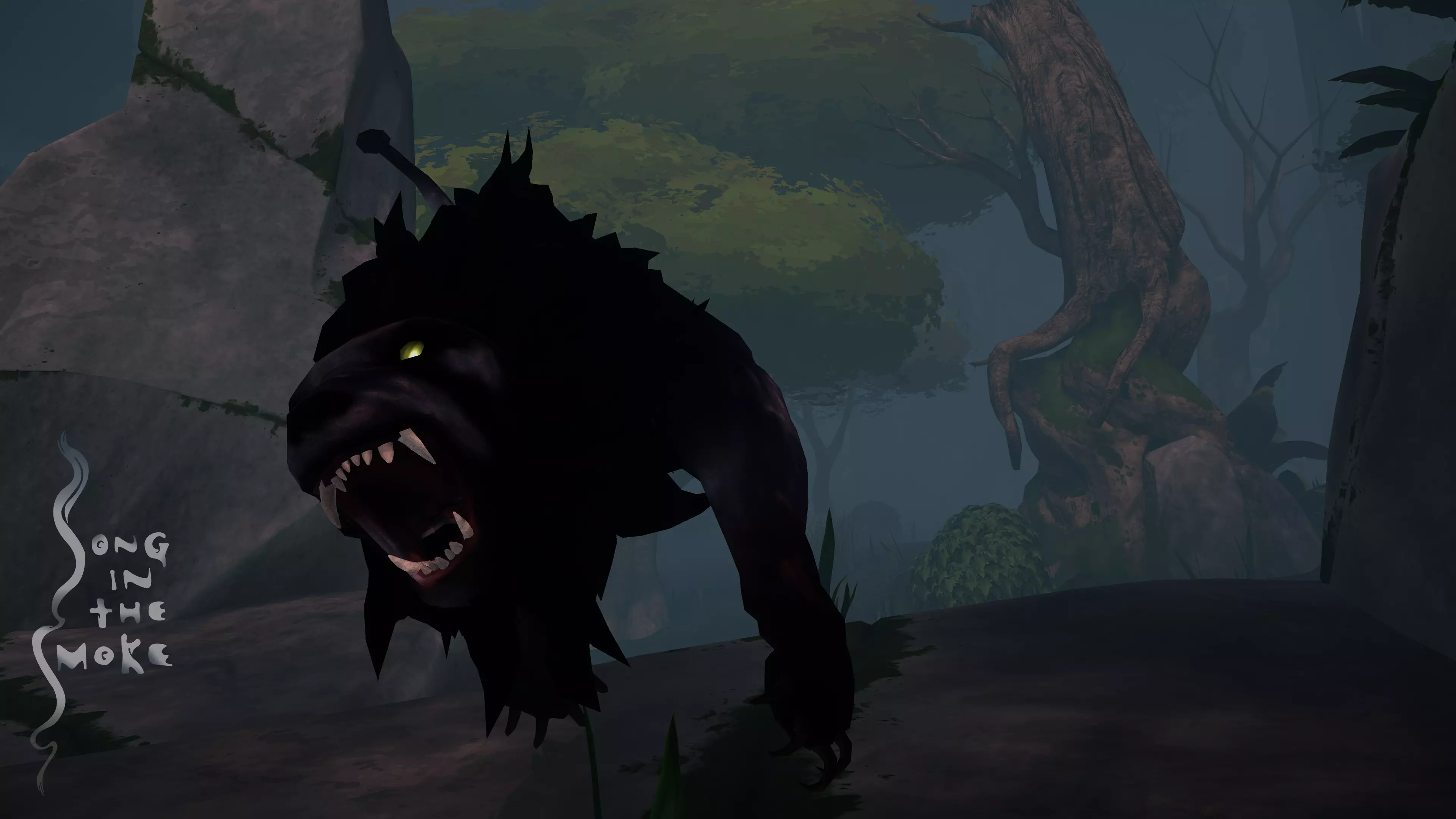
Right off of the bat, the prehistorical setting is one that resonated with me. It’s not quite fantasy in the typical sense (there are some odd creatures), but it has a primitive nature that lends itself to the lush vegetative visuals. Like many virtual reality titles, it’s best to take the visuals with a bit of a grain of salt. Look too closely and you start to see muddied textures and faux walls that limit truly open exploration, but if you’re willing to operate from a couple of steps back and take in the visual style, Song in the Smoke is engaging.

At its core, Song in the Smoke is a survival game. The crafting system is what drives most of the titles in this genre, and Song in the Smoke is no different. It’s not the most complicated system I’ve come into contact with, but that’s not necessarily a bad thing. Those who really love intricate crafting systems with a ton of depth might come away feeling slightly disappointed, but at least for my enjoyment it was just about perfect. You have a loop of finding things, making things, eating and sleeping while exploring stages for three Song Stones that are used to summon the boss beasts that are your gateway to the next level.

Because the crafting system is more about the number of items that can be made and not necessarily a series of “make item A, then use that and another made item to create item C, which then is used as a component to item W”… the pacing is assisted by not really having to worry about these deep, laddered crafting systems. That said, one of the cooler aspects of the crafting system is how it makes use of virtual reality to make things a bit more hands-on, from sharpening sticks or crushing herbs. However, this is a survival game at its heart and one of the biggest challenges you face has less to do with the actual tasks as your limited inventory. Keeping a camp fire going at night is not all that hard in and of itself – there’s plenty of viable wood about, but your limited inventory means you’re not carrying three dead trees on your back as you make camp.
The hunting, gathering and sleeping mechanic is a careful act to balance, because in these types of games I can often feel myself feeling frustrated with how artificially cheap the limited resources can feel at times. That was seldom the case for me in Song in the Smoke. While admittedly the survival genre is not my favorite, the fact that I enjoyed Song in the Smoke as much as I did attests to how I found the systems challenging, but fair the majority of the time. It helps that there’s no hard timer pushing you through the stage each day. This can lend a bit of a grindy element to the overall loop by the time you hit some of the game’s later stages, but I appreciated that I seldom felt rushed. I tend to be thorough in my games (I’m a grinder in JRPGs, personally), and I appreciated that Song in the Smoke allowed me time to really improve my camps. There’s a lot of repetition here, but because I was enjoying my time, I was alright with that.

While the sound effects were pretty solid all round, the music was largely forgettable. Visually the presentation is interesting, as I mentioned earlier. Character models can look a bit rough at times, with animals like panthers and wild boars moving a bit stiffly, but setting up camp on a high cliff and looking around the environment was pretty exciting most of the time. The rough edges aren’t just found in the presentation though, as the lack of checkpoints will have you manual saving often (or suffering the consequences). Hunting animals is another exercise that while fun, really puts a drain on your time and resources and while it’s obviously important, feels just slightly out of balance with the rest of the game’s tug-of-war as well. It doesn’t help that the combat feels a bit rough around the edges as well, with animals moving in strange, sometimes jittery fashion. The actual number of stages is rather modest, but given that I had a tendency to fully explore them all, that was not a real concern for me.

Summary

Song in the Smoke is an excellent survival game that creates a genuine sense of dread as you manage your resources and explore often unforgiving environments. The setting is interesting, and while the visual textures can suffer a bit at times and the actual combat was a bit off for me, the sense of discovery while exploring new places was an immersive thrill.

Score: 7 / 10
Share:

Synth Riders - PSVR Review


Synth Riders
by developer and publisher Kluge Interactive—Sony PlayStation VR review written by Nick Herber with a copy provided by the publisher.

Estimated reading time: 4 minutes


Synth Riders has been out on PC for some time, but it finally brings its entertaining blend of virtual reality and music to the PlayStation VR. The end result? One of the best PSVR titles to date that fans of rhythm games owe it to themselves to play.

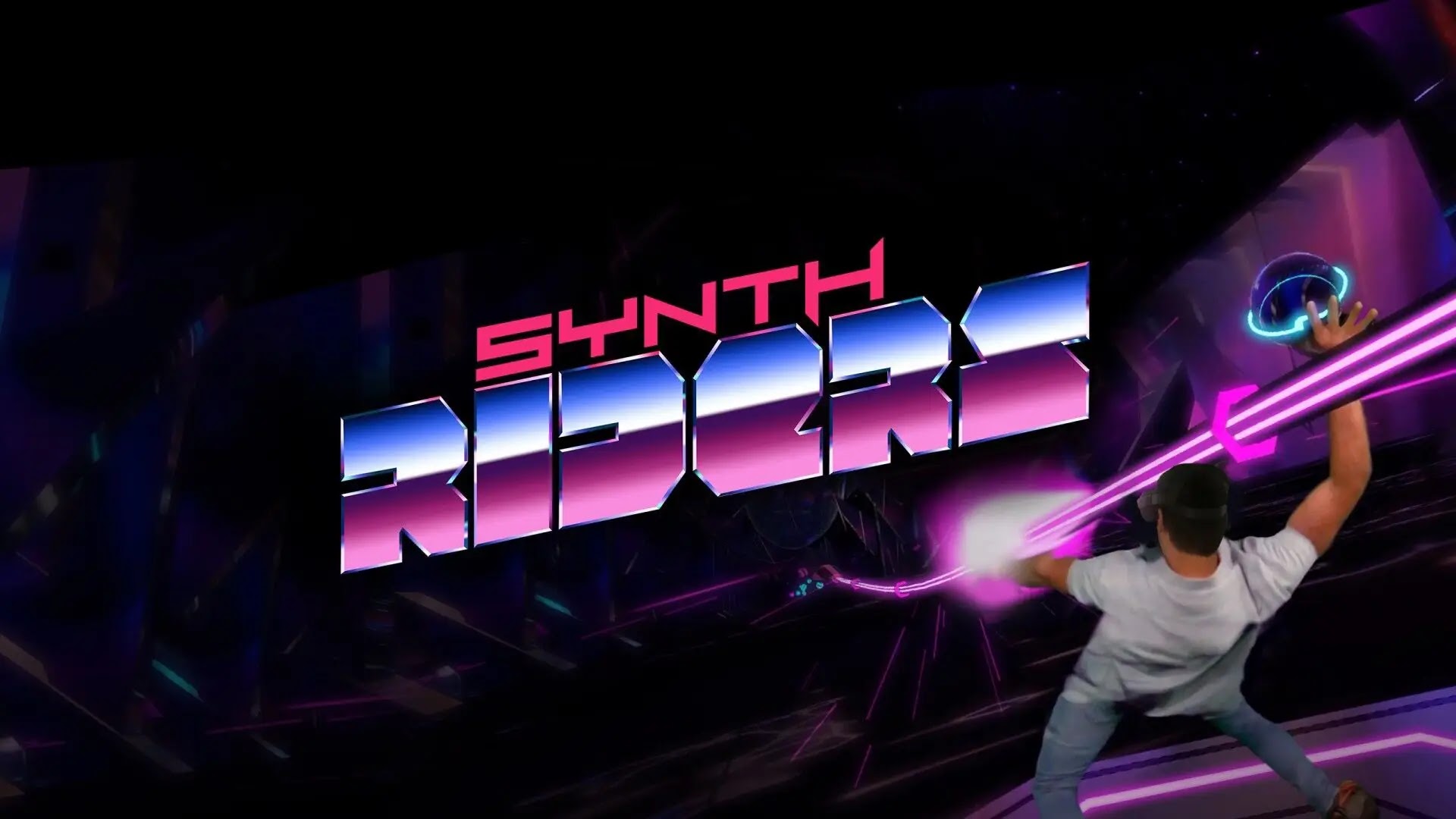
The comparisons to the super popular Beat Saber are obvious, though they have a different kind of style to their musical rhythm action. The basic gameplay has that easy-to-learn quality that makes Synth Riders a quick game to get into. You play this with your Move controllers that become your hands in this VR world. Notes dart across the screen, and your job is to try and hit them with the correct hand in time to the music. As easy as that sounds, a flawless run is difficult to come by given just how fast the beat notes can come flying at you. There’s some additional nuance in there as well, where your hands have to sometimes be close together or chaining special orbs along the way.

In terms of the presentation, it’s a wonderful combination of neon-soaked visuals and synth music that reminds me of the 80’s in the best possible way (but well – I grew up in the 80’s, so I’ll take it). With something like a virtual reality headset, there’s obviously a ton of focus on the immersion aspect, and Synth Riders nails this. It’s not tricking you into some photo-realistic fantasy world or the like, but the sights and sounds are incredibly encompassing and I found the first hour or two had flown by without me really being aware.

It helps that the game comes with a handful of different modes and a pretty deep and excellent list of songs. The library of music certainly helps to keep things fresh regardless of the mode you play, and I frequently found myself repeating the same songs a few times. This was often just because I dug the tune, but also because Synth Riders has that excellent ‘one more try, we’ll do it better this time’ kind of quality to it. Rhythm mode feels like the most accessible, while Force Mode is meant to ramp things up and increase the overall challenge. Both have elements of timing as the core mechanic, but Force has you ‘hitting the notes’ harder to add an extra element of effort and difficulty.

There’s also a Spin mode with a wrinkle towards turning from side to side, and involves a bit more of your body into the mix. There are also difficulty modifiers you can apply, so it’s as relaxing or challenging as you like. There is also a party mode that was a fun way to hand things off to others in the house, though adjusting the headset for a different person each time is a bit less wieldy than just passing a controller over when you’re both sitting on a couch. Also, I tend to sweat a lot and that’s probably not ideal for the next person in line either. One thing that felt missing in a lockdown / pandemic world is the lack of online multiplayer.

Speaking of the library, it’s worth noting that while there’s a few dozen or so tracks that the game ships with, Synth Riders does have some music packs (like so many of the other rhythm games out there do) with more notable (at least to me) brands such as Muse or The Offspring. Most of what comes with the standard list is really good, and obviously preference is subjective, but naturally not all of the songs were hits for me. Whether it was their pacing or just their overall vibe, they didn’t all stick the landing personally – but most of them were really solid.

Summary

Synth Riders is an excellent rhythm game, with a strong selection of songs and fantastic visuals that really drew me into the experience. The variety of modes and difficulty customizations make this the kind of game that is easy for people to pick up and play, but also provides a gameplay loop that keeps you coming back for improved performances. The lack of online multiplayer is one of the few bummers here, but the overall package is too good to pass up on.

Score: 8.5 / 10


Share:

ALTDEUS: Beyond Chronos - PSVR Review

ALTDEUS: Beyond Chronos by developer and publisher MyDearest—Sony PlayStation VR review written by Nick with a copy provided by the publisher.

Estimated reading time: 6 minutes


ALTDEUS: Beyond Chronos is one of the best-received VR games to have been released on PC, so it arrival on PSVR is certainly welcome. A sci-fi narrative told mostly as a visual novel presented in virtual reality, its pacing is not going to be for everyone – but I thoroughly enjoyed my adventure.

So many VR games feel like little more than tech demos, but one of the strongest takeaways I had from ALTDEUS: Beyond Chronos was just how much meat there is to this title. Visual novels (I almost want to dub this as Virtual Novel since it takes place with VR tech) tend to have branching paths and that holds true in ALTDEUS: Beyond Chronos as well, giving the title some solid replay value. The first playthrough only lasted a few hours or so, but there’s enough reason to go back and experience alternate paths that add up to more than a dozen of hours of story to be told. I appreciated that ALTDEUS: Beyond Chronos came with a sort of storyboard / graph that charts where the story branched. This is something the recently re-released Langrisser games did too, and it streamlined the replays and I felt that my time was being respected by the developers due to this design choice. It would have been easy to unnecessarily pad the playtime by not including it, so I appreciate this feature’s inclusion.


The science fiction trappings are somewhat familiar ones, with the story being set well into the future (2280), with Humanity on its last legs in a location called Augmented Tokyo, with a reliance on mechs to protect them from massive aliens called Meteora. We assume the role of Chloe, who fights on these front lines to protect humanity from this extraterrestrial threat. The stakes are high right off of the bat with this narrative, but some additional weight is provided by the story’s starting point, which is shortly after the death of Chloe’s best friend Coco.

So many VR titles are first person adventures with a focus on exploration (RPGs or shooters), but the visual novel genre has struck me as a missed opportunity in VR so far. They are usually light on animation and don’t have to construct fully realized worlds – but the ability to control specific scenes and completely sculpt what the player experiences feels almost made for VR. In terms of gameplay, while most of the time is spent experiencing the story and dialog, but there are points along the way that help change up the pacing.


Visual novels are not for everyone however, and if you aren’t entertained by lots and lots (and lots and lots more) words being spoken with sometimes minimal direct interaction, ALTDEUS: Beyond Chronos is unlikely to convert you to the genre. You are regularly a spectator here, but there are moments where you get to explore the environment a bit more and interact with some of the people and objects, and that helps to break the narrative up a bit. There are also the moments you get to occupy Chloe’s mech and battle the giant alien Meteoras. These are hardly arcade style battles and more often generally prompts to interact with your mechs (so shiny quick time events), but man – these moments are fantastic. The VR is put to great effect and made these scenes my high points. Still, the number of opportunities to have meaningful interactions are somewhat limited, as is often the case with the visual novel genre.

The overall package is an appealing one. The spectacular Meteora battles aside, there are many visually appealing environments to be taken in. Character art is generally attractive and it was not difficult to become immersed visually, especially given the nature of VR. The voice acting is appreciated as I am not a fan of ‘reading’ in VR more than I have to, even if the actual performances are a bit hit and miss for me. With Chloe getting so much time at the center of the story, I wish I enjoyed her character’s voice work a bit more. That is a shame, because I actually liked the character, so I was generally able to overlook that something about her voice actor just didn’t quite click for me. The soundtrack is a lively J-Pop mixed with some truly epic music that plays during the big fight scenes. I had goosebumps at times, all without experiencing the least bit of VR motion sickness.


The VR could certainly be seen as a gimmick though, since the core of any good visual novel is the story. Given all of the dialog in this genre, if the story is not interesting – the motivation to continue playing can suffer as a result. In the beginning, things were a bit on the dry side for me. There’s a lot of world-building happening here, but most of the characters really felt flat during the beginning. Then as they became a bit more interesting as the narrative begins branching more, though sometimes you don’t get the full view of the character and their thoughts and motivations until subsequent playthroughs. There were certainly times when I felt like I was missing something – only to experience the scene from a slightly different perspective later only to realize… I was in fact missing something. Those ah-ha moments were generally pretty fun.

ALTDEUS: Beyond Chronos is a fun adventure and a really interesting use of virtual reality. That being said, the visual novel genre and its notoriously slow pacing is not going to be for everyone. For better or for worse, the genre has a bit of a stigma with gamers for not necessarily being much of an actual game and ALTDEUS: Beyond Chronos won’t do anything to change that perspective. Thankfully though, the branching paths and generally interesting narrative add plenty of reason for fans of the genre to give this science fiction adventure a go and experience it with the twist that the PSVR provides.

Score: 8 / 10


Share:

Swords of Gargantua - PS4 / PSVR Review

Swords of Gargantua by developer Thirdverse Inc and publisher gumi Inc.—Sony PlayStation VR review written by Nick with a copy provided by the publisher.

Estimated reading time: 5 minutes


Swords of Gargantua is one of those games I was holding out a lot of hope for, because if there’s a single activity in VR that I get excited about – it’s anything to do with swords. I’m a big fan of fantasy, so I’ll take a sword over a gun in gaming almost every time. It is one of those experiences that has a ton of potential in VR, but the premise still needs to be executed on well and put into an engaging game. Swords of Gargantua manages to get parts of this right, but the whole just never really came together for me.

Things kick off rather well, with a rather lengthy narrative introduction. The story that is teased had potential, as it details a god-like arena putting you against a variety of different creatures. There is some excellent imagery in the beginning, but most of it dissipates once you actually start to play. The story never really goes anywhere from there, and instead you’re left in what amounts to an arena / horde / wave game where you take on numerous enemies without really looping back to that initial teased narrative.


The actual gameplay mostly sees you walking around a large arena, engaging in enemies as they appear to challenge you. The idea of blocking, swinging – all of this plays into the game’s visuals and surprisingly solid control scheme. The weapons at times seem a bit floaty, but honestly this is not meant to be an authentic sword fighting simulation as it has several elements such as powering up your weapon over time and temporarily boost it. The tracking however, was sometimes literally hit and miss for me. There were times I clearly felt like there should have been a collision of weapons / shield / body that did not occur.

Thankfully this was more the exception than the rule, but it was sometimes frustration when it happened. It should also be noted that you need a decent bit of room to play as well as you will be swinging your arms about. One nice design choice by the devs that I want to call out is the way they dim / blacken the edges of the screen when you’re moving. It helps to reduce the potential for motion sickness, which is not something I normally get – but you can turn that option off and I did to try it out. I found myself not necessarily nauseous – but it was more comfortable leaving it on, at least for myself.


There is a decent variety of enemies, some of which are more interesting and challenging to engage with than others, but they do help to keep combat somewhat fresh. During stages, there are basically a couple of modes of play. You either have to find and eliminate all of your enemies in the stage or there is a defend the tower variant as well. A few more modes / objectives (perhaps capture-the-flag-like, or something involving resources and construction) would have added more to the actual gameplay and sense of progression. Instead the initially entertaining gameplay gives way to a good deal of repetition after a couple of hours.

There are different weapons that can be earned throughout the game, and while there is a solid visual variety. I would have liked to have seen more, or some sort of an experience / upgrade system to provide a slightly better carrot to dangle as part of the progression to stay engaged. One-handed, two-handed, shields, sword, mace - there are some option here. In the end though, the actual weapons seldom felt all that different from one another when in use, and it came away feeling more cosmetic than impactful.


There is a multiplayer component that lets you work with others in the arena. I don’t tend to lean into multiplayer a lot, but even so struggled to find others to play with during my time with the game. They are out there, and mechanically speaking it is all fine with voice chat that allows you to communicate effectively while you hack your way through the enemy legions.

Lastly, the presentation is solid if unspectacular. Music and sound effects are generally fitting, if not overly memorable. Visually the different weapons and enemies are well represented, but the environments are someone lacking. I suppose that should be expected given the nature of the arena setting, and I suppose this gets back to the beginning where I thought the development team did a pretty good job setting the stage with its initial scenes, but gave me little else in terms of variety for both the story and the visuals.

Summary

Swords of Gargantua is one of those games that feels like a missed opportunity. There is some solid potential to have an interesting story, but the narrative bits never really develop. I am a pretty easy sell on the idea of a VR melee combat game, and to its credit Swords of Gargantua handles pretty well the majority of the time, but there just is not much reason to continue playing after awhile. Progression is shallow and the gameplay really never develops in a meaningful way.

Swords of Gargantua is a perfectly adequate game without a lot of incentive to keep coming back for more. It's a perfectly average VR experience, but I had hoped for a bit more.

Score: 5.5 / 10


Share:

Rhythm of the Universe Launching on Oculus Quest, PSVR, and PC VR in 2021

BOSTON — Dec. 2, 2020 — IONIA, the first title in the Rhythm of the Universe adventure series about preserving the environment with the power of music theory from ROTU Entertainment, will create a magnificent symphony as a native Oculus Quest app and for PSVR alongside previously announced PC VR headsets in Q2 2021. Two percent of proceeds from the Cannes XR Development Showcase 2020 award-winner and Raindance film festival nominee will benefit environmental non-profit Wildlife Warriors.

Established in 2002 by Steve and Terri Irwin, Wildlife Warriors continues Steve Irwin's legacy of protecting injured, threatened, or endangered wildlife, be it an individual animal or an entire species. Its mission is closely aligned with that of ROTU Entertainment, and the Irwin family supports Rhythm of the Universe: IONIA’s goal of raising awareness for environmental protection issues through immersive entertainment.

As the first of seven games, each with a distinct look and feel, IONIA will introduce an otherworldly forest filled with instrument-inspired flora and fauna. The world is alive with the sounds of music as hands-on interactions between VR controllers and denizens of the woods send sharp drum beats, soft bell tones, and other good vibrations humming through the air. Carve a path into a jungle teeming with life to save the Harpa, a mythical being facing peril.

Rescuing the Harpa while exploring the mysterious forest and its looming ruins is no small task. Climb trees, zipline across trenches, collect supplies, and solve puzzles using music-based magic to push back the vines hiding a mystical narrative and lively ecosystem all designed around the Rhythm of the Universe. Reveal hidden areas, unlock the power of tonal tablets, and most importantly, heal the forest through the power of song.

"We’ve made the decision to delay our musical theory puzzle adventure so we can bring it to Quest and PSVR players at the same time," says Jason Parks, ROTU CEO. "We want everyone with a VR headset to be able to explore the gorgeous world we’ve created from our experiences working extensively with international musicians and documenting the deforestation of the Amazon.”

Rhythm of the Universe: IONIA will be available for Oculus Quest natively as well as through Oculus Link, PSVR, Valve Index, Oculus Rift S, HTC Vive, Vive Pro, and HP Reverb G2 with English, Spanish, French, and German language support. IONIA is rated E for Everyone and equivalent in regions around the world.

For more information about Rhythm of the Universe: IONIA, please visit the official website, follow the game on Twitter, Instagram, and Facebook, and join the official community on Discord.

About ROTU Entertainment

Based in Boston, Massachusetts, ROTU Entertainment is an immersive entertainment studio striving to define the future of storytelling. A fully-remote, ever-evolving network of artists, entrepreneurs, and industry leaders provides ROTU Entertainment with unparalleled access to talent, creativity, and innovation. The team comprises developers with experience working at Valve and Capcom, as well as on renowned games such as Hot Dogs, Horseshoes & Hand Grenades, and République.

Learn more about ROTU Entertainment and its upcoming title Rhythm of the Universe: IONIA by visiting the company website or reading an interview on UnrealEngine.com.


Article by: Susan N.


Share:

Ski Jumping Pro VR - PSVR Review


To its credit, Ski Jumping Pro VR is actually an entertaining game that works pretty well as a virtual reality sport. However, as refined as the gameplay is, the relative lack of content does make bring into question the value of the overall offering.

Share:

VR Ping Pong Pro - PSVR Review


Ping Pong is one of those games that should feel like a natural virtual reality title, and by and large VR Ping Pong Pro nails the aesthetics of the sport, but it let down in the end by its inconsistent physics and lackluster multiplayer options.

Share:

Doctor Who: The Edge Of Time - PSVR Review


Doctor Who: The Edge Of Time plays it a little safe, but it provides a perfectly good virtual reality adventure game that plays out like a decent episode of the series. Those looking for either a bit of VR exploration or who are just fans of the series should find things to like about this game, even if it is a somewhat by the numbers experience.

Share:

New Moss Expansion called "Twilight Garden" Releasing


SEATTLE – May 14, 2019 – To celebrate the release of Oculus Quest, Polyarc will introduce new content for Moss, making it even harder to put down the game that’s captivated players around the world. One of the top-rated VR games of all time with more than 80 global industry awards and nominations, Moss brings to life a compelling, fantastical story in a way never before possible. And on May 21, with the release of Oculus Quest, players on the platform will be able to unlock and explore the Twilight Garden, a brand-new chapter of Moss. The content delivers a complimentary experience to existing gameplay, bringing additional environments, challenges, and storytelling to players. PlayStation VR, Oculus Rift/S, HTC Vive, and Windows MR platforms will receive the update this June.

“The Quest is a game changer for the VR industry, and something we’ve been eagerly anticipating as developers specializing in VR content. Its wireless head and hand tracking technology allows full immersion in another world, simply by picking up and putting on a headset, regardless of where you are,” said Josh Stiksma, principal designer, Polyarc. “Now you can explore the whimsical fairytale from home or on the go as you travel, commute, and visit friends or family. In addition, to make this experience even more magical, we’ve updated the game. Players may now discover and explore new content hidden within the world of Moss.”

In Moss, players guide a young mouse hero named Quill, while also manipulating the field of play as their own character. Together you embark on an epic journey to save Quill’s uncle. Along the way, you can now discover portals to the strange and vibrant Twilight Garden. Here you’re tested in new ways as a mysterious presence prepares you for the dangers ahead. You’ll explore vast chambers, discover unique weaponry, and face a new realm of puzzles and enemies. Success will require mastery from you both, but if achieved, could change what’s believed possible for a partnership of your kind…

Moss for Oculus Quest will launch on May 21. Moss is currently available for download through Steam, PSVR, Oculus Rift, and HTC Viveport stores for £23.79 GBP MSRP. The free update announced today will automatically update when available on other supported platforms this June. Moss is rated E10+ by the ESRB. For more information, visit our website and follow the official Polyarc channels Facebook, Twitter, YouTube, and Instagram.

© 2018 Polyarc, Inc. All rights reserved. Moss is a trademark of Polyarc, Inc.


About Polyarc

Polyarc, located in Seattle, was founded in 2015 to explore the energizing and momentous possibilities of virtual reality, and to champion a culture where deep collaboration, creative expression, and high player value are at the forefront of every innovation. Polyarc’s team is made up of talented developers with deep experience working on well-known, AAA franchises such as Destiny, Halo 3: ODST, Halo: Reach, Red Dead Redemption, and Guild Wars 2. https://www.polyarcgames.com/


Article by Susan N.
Share:

The Wizards - Enhanced Edition - PS4 / PSVR Review


Probably the best compliment I can pay to The Wizards - Enhanced Edition, is that it feels like a fully fleshed out game, and not just a quick VR experiment like so many other action games on the platform are. The Wizards has some lofty goals in its design, and while it does not hit all of them - it does achieve most of what it sets out to accomplish.

Share:

Ivanovich Games Announces New Challenges in Beat Blaster


Barcelona, 29th Mar 2019 - Ivanovich Games is proud to reveal Beat Blaster, the original VR game of shooting, running and dodging where everything happens to the beat of the music. An original mix of styles where each game will offer you a new challenge.

Beat Blaster will release in PSVR next 5th April.

30 SONGS

Each level introduces a novelty and all the games are different thanks to the intelligent generation of levels.

4 WAYS TO CONVERT THE MOVEMENT

You can choose between the classic VR controller, the new 3dRudder, tilting the head or the intuitive and original control based on the displacement of the head.


NO WAITING TIMES

There are no loading screens, complicated menus or eternal waiting. Beat Blaster is direct fun without complications.

3DRUDDER AND AIM CONTROLLER

This game has been designed to take full advantage of the characteristics of the 3dRudder. If you also have an Aim Controller the experience is incredible.

NO MOTION SICKNESS

Beat Blaster is a VR game with a high-speed component. But all moves in the game are designed without rotating the player, thus minimizing the probability of motion sickness.

EASY RULES

To clear a level, you must reach the end of the song without dying.
Sounds easy, doesn't it? You have a Blaster with infinite ammunition and a single life to dodge or kill all the enemies that will appear to the rhythm of the music.

Beat Blaster will be released in PlayStationVR, SteamVR, Oculus Store and Viveport Store next 5th April at $19.99.

Check out the Steam page here!

About Ivanovich Games

Ivanovich Games are focused on the creation of original video games with a special focus in VR. Creators of Operation Warcade and Final Soccer. For more information visit their website, Twitter, and Facebook pages.


Article by Susan N.
Share:

Dick Wilde 2 - PS4 / PSVR Review


Dick Wilde 2 has a target audience (pun intended) with its wave / rail shooter design that works really well with the PlayStation VR headset. It checks all of the boxes of 'improvement' that you would want from a sequel, without really doing anything revolutionary along the way.

Share:

MOSS - PSVR Physical Disc and Big Update Available Now - News


After the wonderful review from Nick earlier this morning, we have some good news for you! Having originally released on the PSVR before the PC and the Oculus Rift, Moss is both getting a physical edition and an update!

--

 (MOSS) - PSVR Physical Disc and Big Update Available Now

Moss is now available as a physical disc for PSVR in EU territories. The game has also been fully localised into Spanish and Italian!

With this physical release, even more VR gamers can enjoy Moss, the highest rated PSVR game of the last year. The game is available now from retailers such as GAME, Xtralife, Smyths Toys, Media Markt, Amazon and many more.

Along with the retail availability, the game has also received an update today that features save slots, localisation and special features for PS4 Pro owners. Here’s a bit more detail on the update:
  • Save slots (3) – Players can now share Moss with others without having to interrupt their own progress
  • Additional localisation support for:
    • Japanese - VO
    • Spanish - subtitles and UI
    • Italian - subtitles and UI
    • Chinese (Traditional and Simplified) - subtitles and UI
  • PS4 Pro support – Experience increased graphical fidelity with the latest Moss Update, specifically:
    • Enhanced water quality with player interactivity and planar reflections throughout entire game
    • High definition rendering for in-book sequences
    • Best render resolution throughout all environments


Article by Pierre-Yves
Share:

Moss PSVR - News


Now while a portion of the team own a couple of Oculus Rift, none of us actually own a PSVR which is sad because this looks like a lot of fun. Why are we showing it off then? Hopes that it comes to the PC and because it looks pretty!

Here's the trailer to said pretty game!


Article by Pierre-Yves
Share:

Random posts

Our Streamers

Susan "Jagtress" N.


S.M. Carrière

Aldren


Affiliates

JenEricDesigns – Coffee that ships to the US and Canada

JenEricDesigns – Coffee that ships to the US and Canada
Light, Medium and Dark Roast Coffee available.

Blog Archive

Labels