• Blue Reflection Quartet - PS5 Review

    The Blue Reflection series by Gust is a high school slice of life with apocalyptic level situations and magical girls. With the world on the brink of destruction, it'll be up to a select few to tackle those that wish to destroy it, all while managing the emotions of their friends, fellow students, and themselves…

  • Gobliiins Collection - Switch Review

    In the early 90s, Coktel Vision (which later became Sierra On-Line) released a quirky point and click adventure game titled Gobliiins which had players bouncing between three different Goblins to find a cure for good King Angoulafre.

  • Cat Mail Co. - PC Review

    What a meow-gnificent evening it is to send your paw-rcels out to those family and friends! Are mew looking to pick up an item or send something out? Well at Cat Mail Co. we can send and receive all your deliveries!

  • Volontes - Nintendo Switch Review

    Have you ever grown up feeling like you don't belong? For our Heroine, that's the feeling she lives with everyday in her small farming village. But it's not her only secret...

  • STARSEEKER: Astroneer Expeditions - PC Preview

    STARSEEKER: Astroneer Expeditions is just that! Massively co-operative and not an MMO! When you first run the game you are instantly into the tutorial...

  • Dread Delusion - Xbox Series X|S Review

    Today we’re looking at what has rapidly become an absolute favorite in the open-world RPG genre for me. An interesting story, memorable NPCs, stunning visuals, and a setting absolutely dripping with flavor, Dread Delusion sets its tone immediately and sticks with it.

  • House Flipper Remastered Collection - PC Review

    I enjoy simulation-type games, and I enjoyed the original release of House Flipper, but I never got around to getting the DLC. When the remastered version of the game was released, I figured it would be the best way to experience the DLC while checking out how the base game was upgraded.

  • GranBlue Fantasy: ReLink Endless Ragnarok - PS5 Review

    GranBlue Fantasy: ReLink released in 2024 bringing the GranBlue universe to an action adventure JRPG format. With a party of up to four members, this band of skyfarers set out for new skies, adventures, and dangers. Two years later, Endless Ragnarok...

  • 70s-Style Robot Anime Geppy-X - PS5 Review

    70s-Style Robot Anime Geppy-X is a mouthful of a title, but you know what? It’s quite the challenging game to describe as well. At its core, 70s-Style Robot Anime Geppy-X is a shooter...

  • Gunvolt Chronicles: Luminous Avenger iX 1+2 Dual Collection - PS5 Review

    Are you ready for the package deal for the Azure Striker spin-offs before the third title in the spinoff series drops? Do you love the Megaman X games but want something fresh and musical? Do you wanna feel totally inadequate when you get a crappy score rating after beating what you thought was a tough fight?

Showing posts with label Monster Hunter. Show all posts

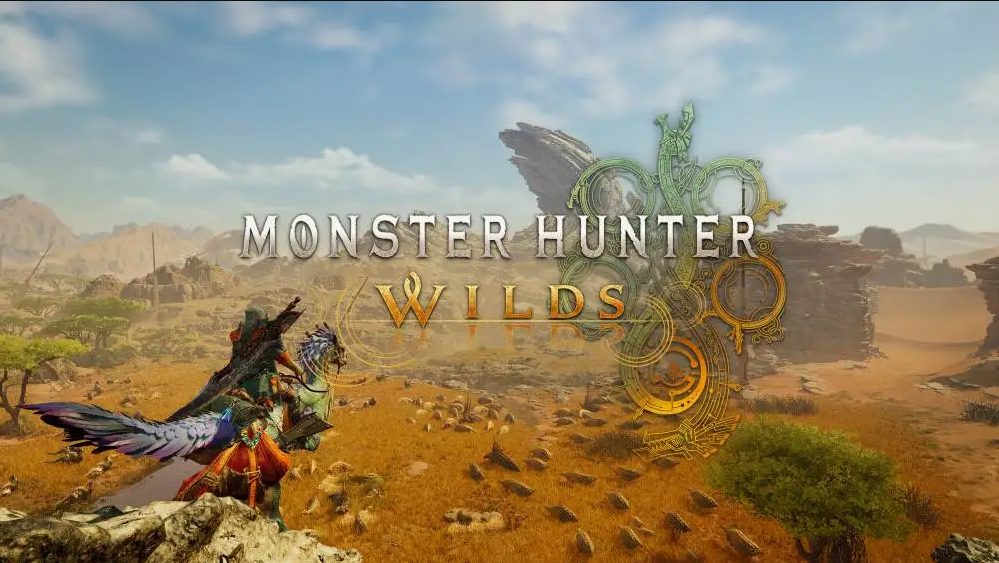
Announcing Monster Hunter Wilds for PlayStation, Xbox, and PC in 2025!

LOS ANGELES – Dec. 7, 2023 – At The Game Awards 2023, Capcom, a leading worldwide developer and publisher of video games, announced Monster Hunter Wilds™. This brand-new entry in the award-winning Monster Hunter™ series is now in development and is gearing up to release in 2025 for PlayStation®5, Xbox Series X|S, and PC via Steam.

“We’re thrilled to announce Monster Hunter Wilds today and reveal the newest entry in the Monster Hunter series to fans all over the world,” said Monster Hunter series producer Ryozo Tsujimoto. “Our team is working passionately to create the greatest Monster Hunter experience yet, and we’re eager to play the game with everyone when it launches in 2025. Until then, please look forward to summer 2024, when we’ll have more information to share.”
The Monster Hunter series is now celebrating its 20th anniversary. Since 2004, the beloved co-op action RPGs have sold over 95 million units worldwide. In the games, players hunt larger-than-life foes across expansive natural environments. Each monster poses a unique challenge, so players must plan carefully, form hunting parties with friends, and utilize everything at their disposal to survive these thrilling set-piece quests. As a reward for overcoming their quarry, hunters can harvest the remains to craft equipment and upgrade their customizable arsenal for the challenges ahead.
 
Everyone looking forward to the upcoming title can start their journey today by picking up Monster Hunter: World™ at a great discount. The highly acclaimed game is on sale now for $9.99 USD on digital storefronts. Monster Hunter World: Iceborne™ and its Master Edition are also currently available for $14.99 USD and $19.99 USD, respectively.


ABOUT CAPCOM

Capcom is a leading worldwide developer, publisher, and distributor of interactive entertainment for game consoles, PCs, handheld, and wireless devices. Founded in 1983, the company has created hundreds of games, including groundbreaking franchises Resident Evil™Monster HunterStreet Fighter™Mega Man™Devil May Cry™, and Ace Attorney™. Capcom maintains operations in the U.S., U.K., Germany, France, Hong Kong, Taiwan, and Tokyo, with corporate headquarters located in Osaka, Japan. More information about Capcom and its products can be found at www.capcom.com or news.capcomusa.com.
 
Capcom and the Capcom logo are registered trademarks of Capcom Co., Ltd. in the U.S. or other countries. Ace Attorney, Devil May Cry, Mega Man, Monster Hunter, Resident Evil, and Street Fighter are trademarks and/or registered trademarks of Capcom Co., Ltd. and/or its subsidiaries, in the U.S. and/or other countries. All other trademarks and trade names are the property of their respective owners.
    Article by: Susan N.

    Share:

    Monster Hunter Stories 2: Wings of Ruin - Switch Review


    Monster Hunter Stories 2: Wings of Ruin by developers Capcom, Marvelous and Publisher CapcomNintendo Switch review by Richard with a copy provided by the publisher.

    Estimated reading time: 13 minutes


    Monster Hunter Stories, a spinoff that originally came out in 2016, now has a sequel as Monster Hunter Stories 2: Wings of Ruin. Derived from the fact that people were complaining of no story in the Monster Hunter franchise, you can be certain that this spinoff installment, which is more turn-based RPG than action like the main series, will have that focus on worldbuilding you may have felt lacking in the main series.

    MHS2:WoR tells the tale of a young and upcoming Monster Rider, which is a sort of counterpart to the Monster Hunters, and their induction as a Rider on Hakolo island. A Monster Rider is someone who forms a bond with a monster and rides them into battle. That's right , you can ride the monsters. Unfortunately, mysterious happenings, a great red light, and all the rathalos leaving the island means that you need to step up to the plate. As the grandchild of a famous rider, you have some pretty big shoes to fill.

    MHS2 acts much like a more traditional RPG, featuring turn-based battles, monster collection and training, leveling through earning exp, and exploring around the field map picking up items. Let's start with the exploration aspect. You can bring five monster companions along with you to explore the world. Later in the game you can unlock a sixth slot. Every monster you can acquire can be ridden, and each monster has a riding action. The actions can be as basic as "discovering harvestable plants", or something like "climb ivy". You can hop on your monster companion and swap out your lead monster easily on the field map in case you want a different ride or riding skill. While exploring around the different locales you come across, there are a number of things to note.

    First of all, monsters will be roaming around that you can get in fights with. Second thing you'll probably notice are grey or golden caves dotting the landscape. You may also notice ground burrows or jump pads, as well as possibly herbs, berries, bugs, and honey around. You can pick up those last few by the way, which will be useful in crafting items, a function that you can use when not in battle to stock up on handy items. The ground burrows and jump pads are riding skills that you will require a certain monster to use. Riding skills are shared across monsters, and each monster will always have the same riding skill. For instance, a Velocidrome gets the jump ability. Zinogre will also get the jump ability.

    I'd like to point out that there are a ton of ridable monsters in the game. Excluding the DLC monsters, there are more than 80 collectible monsters to ride and bring into battle. You can collect monster eggs to hatch in one of two ways: dens or forcing a retreat. Those grey and golden caves dotting the landscape? Those are randomly spawned monster dens. Inside you will find a usually short area with a nest at the end. You can collect an egg from the nest. The eggs obtained this way are random, although you can tell what you'll get from the pattern on the egg.

    You can only take one egg out with you, but you can keep trying until the nest runs out of eggs. The other option is to defeat a monster and hope that it runs away. There are special actions you can take in battle to boost retreat rate that are dependent on monster, or you can throw a paintball which will give a 55% chance assuming the monster can be ridden. If the monster runs away, a new den will appear on the map, and marked for your convenience, and when you collect from there the only eggs you get will be those of the monster that retreated.

    As you collect eggs, they may produce a yellow or rainbow glow. This is an indicator of a monsters gene pool. That's right, you wouldn't expect a monster collection game without something like this, right? Each monster has a 3 x 3 grid of genes that are randomly allocated to locations on the grid, and randomly decided. There are some genes that always com attached to a monster. For example, a Zinogre will always have Thunderbug Strike. A zinogre could, however, have a Thunder attack increase gene, or it may not.

    For the grid, some of the nodes on the grid may be locked. These can be either unlocked through leveling the monster, or through using a "ritual item". Fun fact, despite the appearance of the menu option, it is always available once you can channel a monster, and doesn't require unlocking. Channeling allows you to transfer genes from one monster to another. This gets rid of the monster you are transferring from, but lets you put the gene in a new monster. If you line up a row, column, or diagonal of same types in the grid, you get a bingo bonus for that typing. More lines mean more bonuses.

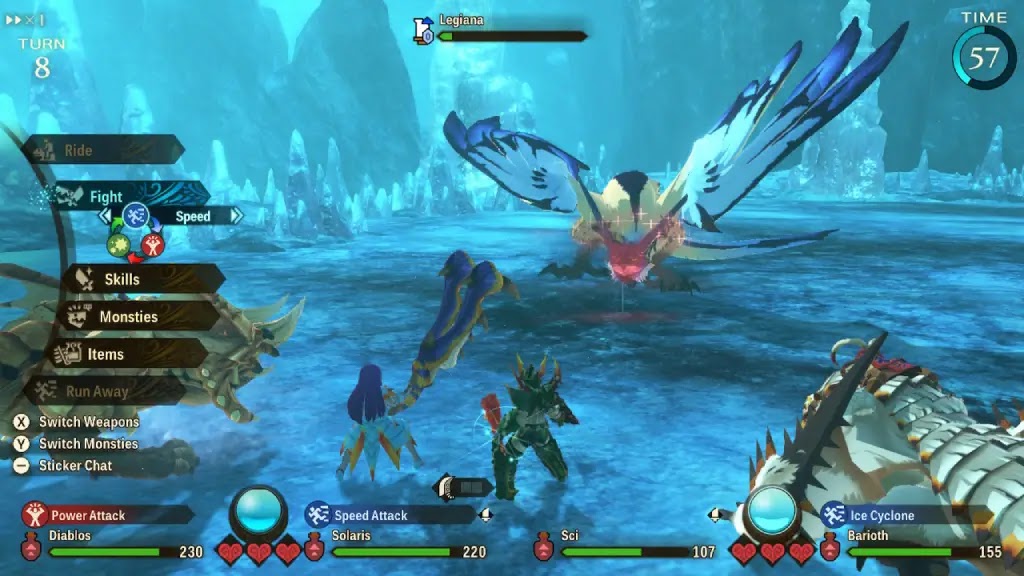
    So now that we've gone over the breeding process, let's talk about the actual fights. As mentioned earlier, fights are turn based where you and your opponents choose attacks. This plays out fairly traditionally, but with a couple of neat aspects. First up is that you and your monster companion share three hearts. Each time one of you get knocked out you lose a heart. Lose all three and you get taken back to town. Combat itself is performed by selecting either an attack type or skill. Now, those of you familiar with monster hunter are probably aware of the three damage types: slash, pierce, and blunt. Enemies have different parts that can be broken, and each body part and monster will have different resistances and weaknesses to certain damage types.

    Monsters will also have elemental affinities, both in attack and weakness. You can forge weapons and armour out of monsters to give skill effects and elements for combat. In addition to this, MHStories has a sort of rock-paper-scissors aspect in the form of: speed, tech, and power moves. If you and your opponent use a move and you use the type that beats it, you'll do more damage and they will do less. If both you and your monster use the same type of attack and beat your opponents attack, you use a combination move that deals heavy damage and cancels the opponents attack. As you and your monster attack, you build up a kinship gauge. This gauge allows you to use skills, command your monster, and when it's full you can ride your monster and unleash a devastating attack.

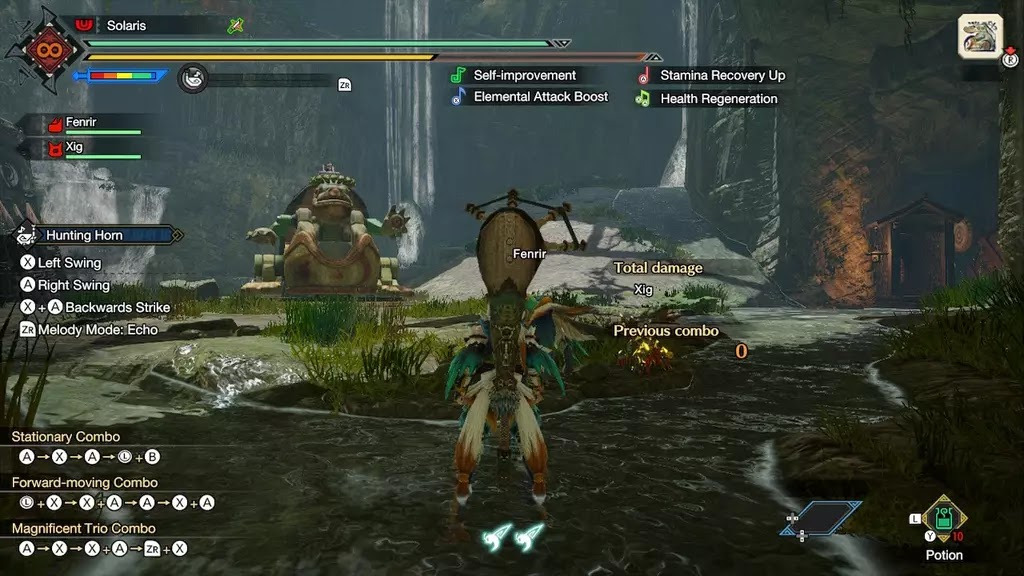
    A very large aspect of MHS2 is being able to hit your enemies for damage types that they are weak to. There are six weapon types, and there are two each per damage type. Great Sword and Sword and Shield are slashing, Hunting Horn and Hammer are Blunt, and Bow and Gunlance are pierce. You can equip up to three weapons at once that can be used in battle. The weapons you bring along can be swapped between once per turn, just like your monsties (monster companions). These are free actions too, meaning you can swap monstie, swap weapon, and still attack in the same turn, but only once. Throughout the course of the game you may also have buddies assisting you in battle. You can combo with other riders monsties, and they can combo with yours. Fair warning though, while this does result in increased damage output, sometimes your ally AI can be really dumb. And I do mean REALLY dumb. Always attacking with the losing attack type, always using skills that aren't effective, attacking body parts that are resistant to the damage type. Hoo boy.

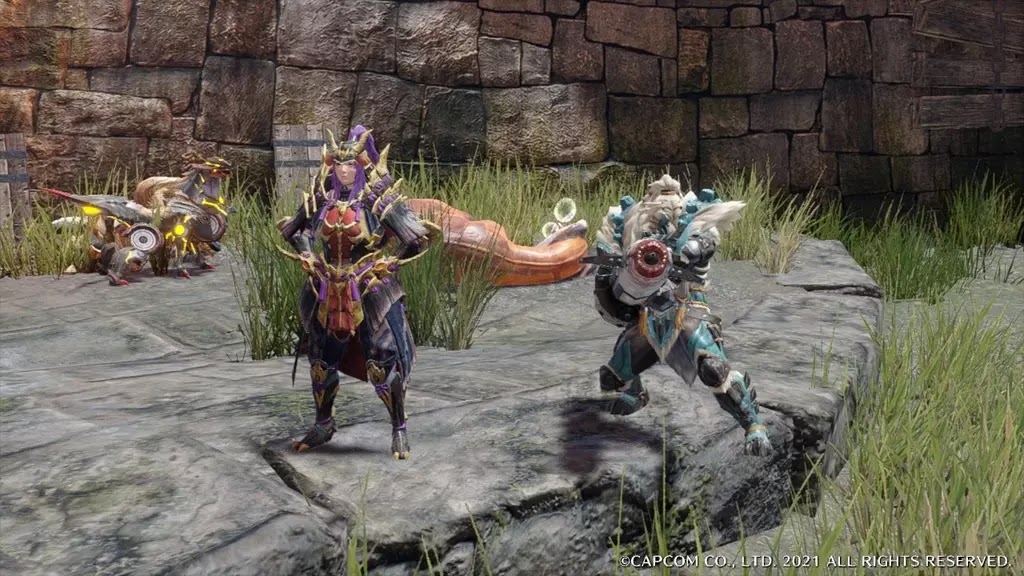
    As you beat up the affronting creatures, you will collect with which you can forge weapons and armour. This gear can then be upgraded to do more damage or defense. You can also purchase some gear from the Melynx merchant for bottlecaps. These items can be found in everdens, through completing sidequests, and from participating in online multiplayer battles. Let me just say this: the multiplayer is surprisingly great. I tried out the multiplayer with a friend and fellow hunter, and managed to do some science, just for you guys and girls, so let me tell you about what I've learned. In multiplayer mode you can only bring three monsties along, and so can a friend. You have two option for multiplayer content: PvP and questing. PvP is pretty self explanatory, as you have to finish a rider battle before you unlock multiplayer. You can adjust the rules slightly, but it's pretty much the same fare. During your questing, you are generally tasked with defeating a monster or exploring a den.

    The synchronization between the two players is really good with this. Once you and your friend are in, you can explore the area together or individually. If one of you enters a fight, a red circle will appear, and if the other player runs into the red circle, they will join the fight, even if that is halfway through the fight. Two handy facts we noticed: weakness is shared, and you can do your partners head to head for them. What I mean on the first point is that if you target an enemy with a damage type, the game will record whether the damage type is effective or not and show you when targeting. In multiplayer, your teammate can see the damage type ratings you reveal and vice versa. The head to head are sort of like mini commands, such as mashing the A button. In multiplayer you can give input as well as your friend. Not sure if this is intended or not, but right now it's a thing. The game will also tell you what moves your buddy is using, helping you to adjust your strategy. Once you and your buddy have reached a nest, you can harvest an egg. Neat fact, you can see each others eggs. Once one, or both, of you have finished the quest requirements, you are returned to the quest board.

    In true monster hunter tradition, the soundtrack is amazing again. Never have I been disappointed in a Monster Hunter soundtrack, and I don't think I ever will be. The area and village themes are both thematic and well orchestra'ed, and the battle themes get you pumped up for a fight. The graphics are also a really fitting style, as the game focuses more on riding sized monsters instead of the murderous beasts of the main franchise, opting for a bit of a softer tone maybe, but one that fits the style and narrative quite well.

    Before wrapping up, I'd also like to go over a few miscellaneous notes that I've picked up on through my play time. The main game is fairly lengthy, as I was sitting at about 63 hours of play time. We'll start with the positive notes. There is also the post game content to consider as well, making MHS2 a fairly lengthy game. There are tons of available monsters in the game, with over 80 as a base that you can ride. There are plenty to get, train, and find the ones you like the best. Everdens, which will probably be a big source of bottlecaps, will be labeled as "cleared den" on the map when you have opened all the chests in them. The kinship skills are usually quite cool, and I really enjoyed watching all of them, although the subspecies don't really get a new skill.

    The rock-paper-scissors format, while usually overdone and a little basic, fit really well in this case when coupled with both the damage types and elemental affinities. It added that depth that simple rock-paper-scissors style combat doesn't normally afford, making combat feel a lot smoother and more enjoyable. If you are high enough level, you can also quick kill enemies when you get in a fight, provided you have beaten them at least once before. This is great for farming materials for weapons and armor. Since you will be constantly getting new eggs, the developers have also introduced a system where any monster in your party under your player level gets bonus exp until they hit your level. The amount varies depending on level difference, but this makes it incredibly easier to train a new monster late game up to equivalent level.

    This great title isn't without its faults however. First and foremost, the ally AI tends to be unconscionably stupid. It's…manageable to an extent but sometimes it was migraine inducing how dumb it can be. The field monster collision hitboxes are way too small for monster size, which really broke the immersion for me something fierce. Monsters will have a typing, and will tend to obey that typing. I.e. a Tigrex is a speed monster, and should usually use speed moves. Unfortunately the game has occasional droughts of certain typings. Nominally speed types early game and tech types later. Tons of power types though. You also have a silent ish protagonist, relegating all your decisions to Navirou, a rather annoying Felyne who speaks for you, even if undesired. My biggest gripe may be the amount of reused assets though. Every non major area is a combination of the same rooms just mashed into a larger zone. You will notice this really fast, and it made me significantly less inclined to explore anything, had there not been new randomly generated chests in the dens each time.

    As some non attributed asides, there are a few hidden aspects the game doesn't particularly tell you, like surviving at 1 HP if riding and taking enough damage to knock out. At least I don't recall it mentioning that. Also. the ritual option under channeling appears locked but it isn't. The explanation of Navirou's "egg appraisal" is also fairly vague. Since your character is custom created, the developers though it would be good to make flashback scenes of your grandpa have the same eyes. This can lead to some hilarious moments.

    Summary

    Overall, I have to say that Monster Hunter Stories 2: Wings of Ruin of a wonderful experience. With a well done battle system, plenty of monsters to collect, tons of gear to make, and some great music to match, there's not a lot to complain about. The multiplayer is extremely well put together for a turn-based system, and there were a bunch of little aspects, like unique egg coloring and the ability to see what other coop players eggs are that show just how much attention went in to the title.

    While it may suffer from some reused assets and questionable AI choices, most complaints are fairly surface level in nature. Monster Hunter Stories 2: Wings of Ruin shouldn't be treated as "just a spin-off", but has earned a right to its place amongst the powerhouses of the franchise.

    Score: 9.5 / 10


    Share:

    Monster Hunter Rise - Beginner's Guide


    Monster Hunter Rise
    by developer and publisher CapcomNintendo Switch Beginner's Guide written by Richard.

    Estimated reading time: 20 minutes


    Hello aspiring Hunters, are you here for the classroom portion of your hunting test? Well thanks for swinging by! With the recent release of Monster Hunter Rise, we thought it would be a good idea to put together a little Beginner's Guide to Monster Hunter. My credentials? Over 4,000 hours and about 16 years of familiarity with the franchise. Don't let that worry you though, this is more of a lite introduction on how the game works, so that experience isn't needed to get into Rise. If you haven't already, feel free to check out my review for Rise.

    Now, let's get into it!

    What is Monster Hunter?

    How does Monster Hunter work? In a nutshell, you will be embarking on quests from the guild to deal with the local overgrown wildlife, do some pest control, or collect items for those not tough enough to brave the wilds. The main focus is dealing with the large and dangerous creatures that roam the wilds outside town. Hunting the titular Monsters, as it were. Thanks to a slew of quality-of-life improvements debuting in Rise, there is little hassle regarding quest details. If you're starting now, you definitely picked a good time! Quest progression will follow a fairly simple pattern: select a quest, choose a weapon, eat for status increase, depart on quest, hunt the Monster, and then collect your sweet rewards. Pretty simple, right? Let's start by taking a look at what weapon to bring along.

    Weapon Type

    When you start up a new game, you will be equipped with a default weapon. In Rise this is a Long Sword. Immediately after gaining control of your hunter, you’ll see you have one of every weapon type available in your equipment box. Which weapon should you bring? There's no real right or wrong answer to this question; it is entirely personal preference. Every weapon is just as viable as the next, so there is no real wrong choice. What weapon you should bring is what weapon you WANT to bring. As a new hunter in Rise, you will want to head to the training area accessed for the first time through the town’s Buddy Plaza. There you’ll find an equipment box to change weapons. In the training area, the game will display the weapon’s button controls and some combos to help familiarize you with the system.

    You can also check all the moves for a weapon in your hunter notes, so you don't need to worry about forgetting the weapon combos before you learn them. It is important to note that the attack value listed is raw damage value, and NOT a DPS value. Choosing a weapon simply because it has a high number usually doesn't end well.

    There are a few different categories that each of the 14 weapon types slot into: heavy, light, ranged, and defensive. This is more of a loose terminology, since some weapons cover multiple categories.

         Heavy weapons are slow to wield, but deal higher damage per swing. The Hammer, Great Sword, Switch Axe and Hunting Horn are your big heavies. They require commitment to any given attack, taking the time to learn the Monster’s patterns to deliver massive damage when the window presents itself.

         Light weapons are quicker to swing, but deal less damage per hit. Getting more hits in allows for more opportunity to build up status and elemental damage, depending on the properties of the weapon. Sword & Shield, Dual Blades, Insect Glaive and Long Sword are your main light weapons.

         Ranged weapons allow you to hit a Monster from further away using a variety of ammunition type. The Heavy Bowgun, Light Bowgun and Bow are your ranged options.

         Defensive weapons allow you to stand your ground against Monster attacks and then retaliate. Lance, Gunlance and Charge Blade all use shields to let you know they’re your defensive picks.

    You’ll be able to find a variety of in-depth weapon tutorial videos, but when you’re trying to learn, they can get overwhelming. Once you've done a number of quests and grown accustomed to your weapon, you can check out the tutorials to learn more of nuance available with each weapon.

    Weapon Selection for your Quest

    In order to choose a weapon that's right for the quest, it's important to know what the monster is weak to so you can bring a weapon that takes advantage of that weakness. Taking a look at weapon stats can provide an example of what you want to consider. The key take-aways are:

         Attack

         Sharpness

         Affinity

         Element or Status damage

    Weapon attack is exactly what you expect: raw damage value. Bigger doesn't always mean better, but is generally desired for most weapon types. Sharpness is represented as a gauge with different colors (red, orange, yellow, green, blue, white) and provides a damage modifier for each hit you make. Sharpness also allows you to bypass some of a Monster’s defense, so your attacks don’t bounce off their hides causing your Hunter to flinch. If your Sharpness gets too low, you will need to sharpen your weapon with a Whetstone. Affinity is your weapon’s critical hit chance. A critical hit will deal more damage on that hit, and be accentuated with a red/pink effect on the screen. If your weapon has a negative Affinity, you have a chance to deal less damage on a hit, which will be accompanied by a purple/black screen effect. Element or status on some weapons allow for bonus damage or status effects on each attack. Some weapons won’t have any element or status effect, while some rare weapons can have both.

    Element values are damage of that type applied to a Monster. Some Monsters are weak to certain elements and resistant to others. As you craft more weapons with different elements, you'll want to pay more attention to this stat. Most of the heavy weapon types, such as the Hammer, Hunting Horn, or Great Sword, don't rely on element damage, whereas Light weapons like the Dual Blades or Sword & Shield are able to rack up elemental damage quickly. Because of this, you’ll want to match your Light weapon’s element attack to a Monster’s weakness while a Heavy weapon won’t notice much of an impact to damage numbers. Once you’ve defeated a monster once, you’ll be able to check its elemental resistances in your Hunter’s Notes and exploit the weaknesses on future hunts!

    Status damage works like elemental damage in that it provides a bonus effect to each hit and has a weakness/resistance system per Monster. Hits from a weapon with a Status value will fill an invisible meter. Once it reaches the peak, the Monster is affected by the Status effect. Each Monster has its own weaknesses and strengths to each of the available Status effects, and some Monsters will try to use these Status effects on you! A poison-using Monster like the Great Wroggi can still be affected by poison, but the effect won’t last as long as it would on one weak to poison. There are more aspects to weapons that will unlock as you progress into the game, but for your first hunts, this is what you should be concerned with. Bringing a thunder element weapon to a Rathian fight for instance is a good idea. Bringing a fire weapon? Not so much.

    Food

    You’ve gotta eat to live, and Monster Hunter shows why this is true. Eating has always been an integral part in the franchise, and Rise has simplified the matter. Whenever you go to eat at the Dango store, you will get a boost to your maximum health and stamina, as well as the possibility of gaining the effects associated with the Dango you chose. Never hunt on an empty stomach! New to Rise, a symbol will pop up next to your quest description after accepting, indicating if you've eaten. If you forget to eat before embarking on a quest, you can still eat in the field, thankfully. I remember the good old days when me and the lads got prepped to fight a Monster and then had to immediately abandon the quest because someone forgot to eat.

    Item Loadouts

    In Monster Hunter you have a wide variety of items you can take with you into battle. Everyone will have a different role they like to play, so your item loadout will differ from person to person. I've included a shot of my personal loadout for reference, but you don't need to follow that if you don't want to. What should you almost always have with you? First up are Potions and Mega-Potions. These are your main healing, and can be made really easy. Herbs can be crafted into Potions (they are also available in the town shop), and mixing Honey with a Potion in the crafting menu makes a Mega-Potion. The next items are the stamina-increasing Rations and Well-done Steak. These increase your available stamina up to the maximum limit. During a quest, your maximum stamina will decrease over time, and you’ll need to eat to regain the maximum. The lost stamina is indicated by a red empty bar behind your stamina gauge. Eating Dango before a hunt will increase your maximum stamina a little, remember, but you can raise it even more with Rations! Antidotes are a great item to bring with you when Hunting a Monster with Poison attacks!

    Traps aren't required on all Hunts (unless the quest goal is to Capture the Monster), but are handy for new and experienced Hunters alike because they provide an opportunity to either catch a weakened Monster to end the quest, or provide some free time to wail on a Monster with all you've got. The Tranq Bombs are for capturing a trapped Monster, which will be covered in the Combat Tips section of this Guide. The last two items you see are Powercharm and Armorcharm, and provide an increase in attack and defense ratings, respectively. These will be purchasable from the shop after certain in-game progression has been met. Other optional items to take could include: Flash Bombs for blinding monsters or dropping them out of the air, Nulberries to get rid of any blights you may get, Lifepowder to heal teammates if you're playing online, and Bombs for blowing up monsters if they are asleep or in a trap. In addition to the items you bring, you can also grab temporary items from the supply box at the beginning camp when you start a quest. There isn't any reason not to take these, so go right ahead, but anything with “EZ” or the First Aid Med will be returned at the end of the quest. If you're playing online, don't take all the items unless your friends or teammates offer. Don't be that guy.

    Know the Area

    Monster Hunter Rise offers large open maps for you to explore and Hunt in, and knowing how to get around easily in the area will benefit you more and more as time goes on. Your map will make note of any environmental hazards, locations of Herbs, Honey, Endemic Life, Ore deposits and other key harvestables, but it helps to learn how to find these in a pinch as well. This is even more important now that Rise has introduced vertical movement, since the in-game Map isn’t the best at showing elevation at a glance. Remember to put down Great Wire Bugs on Jewel Lilies and explore to make future hunts easier. Know how to get back up to areas if you get knocked off a cliff or down a pit, and where there is any handy Endemic Life nearby. Vigorwasps are bugs with a floating green sack and provide a burst of healing when attacked or activated. Wirebugs give you a temporary extra Wirebug charge. Thankfully the days where you had to track the Monster, throw a paintball at it, and then hope the tracking paint doesn't wear off while the Monster is running away are long gone. Your map will track known Large Monster position. Some monsters also change the elements on their attacks based on where you fight. For instance, monsters that throw rocks will have elements attached to the rocks based on locale.

    Combat Tips/Capturing

    Fighting style will vary from weapon to weapon, and based on personal preference, so let me just give a few tips and pointers here. Have you noticed your attacks are bouncing off a Monster’s hide and causing you to flinch? Remember to keep your Sharpness up by using a Whetstone while the Monster is changing areas, fatigued, or focused on another Hunter. Monsters will enter an enraged state at certain thresholds. During this time, the Monster will typically be more aggressive and hit much harder. The enraged state typically begins with a loud roar, and some monsters will change their appearance slightly. After a time in this state, a Monster will calm down and return to normal. Don't be scared to run away from a Monster. If you're at low health or a Monster is enraged, it's perfectly fine to book it to a safe location to heal and take stock of yourself. A good example of a monster you should do this with is the Tigrex. When it gets angry, it hurts and just won't stop.

    Capturing a Monster is a good way to end a Hunt without needing to completely drain a Monster’s health. When a Monster can be captured, a blue icon will appear under the Monster’s photo in the top right of the screen. You may also see the Monster limping away if it tries to change locations while capture-able. Normally a limping Monster will head off to its nest to sleep. During this time, you can drop a trap and throw two Tranq Bombs at the creature to capture it. When should you capture versus slay though? Drop rates for different parts vary based on hunting method. Some parts you can only carve off of a slain Monster, and some are only available from capture rewards. Check the Large Monster section of the Hunter’s Notes for drop tables if you need a reference.

    Learning a Monster’s attack animation tells can help you to avoid attacks. If you’re swinging wildly and not watching the Monster, don’t expect things to always turn out in your favor. If you’re using a weapon with longer animations, be sure to time them so you won't get knocked upside the face for your attempt. The new Wirefall is a move that can help get you back up and either away from a Monster or back into a fight, but can lead you to getting hit multiple times by an attack since it cancels your invulnerability time. Sometimes after getting hit, it can be best to stay on the ground a moment while a Monster’s attack finishes. Once you have some experience under your belt, you can style on the Monster and use the Switch’s video capture to save the memory.

    Know your positioning in a fight. Monsters will take different damage on different body parts. Some parts take more damage from Cutting weapons like a Monster’s tail, while the head is more vulnerable to Blunt damage. Each Monster’s entry in the Hunter’s Notes has a chart which tracks which body parts are more durable, which parts take more elemental damage, and which parts can be broken or severed. Part breaks cause a Monster to flinch and provide more rewards at the end of the quest! When playing online with others, typical etiquette is to have Blunt damage weapons like the Hammer attack the head, while Cutting type weapons focus on the tail. This way you can get KOs, part breaks and not hit your allies with your attacks. While you can’t damage a teammate with your attacks, you can make them flinch.

    Crafting Gear

    Now that you've successfully Hunted some creatures, it's time to turn them into pants! I've done a brief summary of weapons statistics, so let's take a look at armor. Armour is easier to understand, as it has a raw defense value, elemental resistance value, and skills attached to each piece of armor. Yes, you can mix and match, but I suggest sticking to a full set until you’re more comfortable with the game. In Rise, having multiple pieces from the same armor set equipped offers a small increase to all of your elemental resistances. The defense rating is your main area of concern, but it helps to be aware of your elemental weaknesses and resistances. If your current equipped set has a negative to fire resistance, you’re going to take more damage from a fireball attack.

    On the flip side, if you have a high enough elemental resistance, you can take less damage and even gain immunity to some blight side effects. Your armor’s skills are what you are here for after defense. These skills provide in-battle bonuses for the Hunter. Most sets are geared for a specific playstyle, so just because that armor set looks fancy and has good defense, doesn't mean you want all those Bowgun skills when you're using the Dual Blades. Skills shouldn't take precedence over defense for new Hunters, but they can help to form your play style. Crafting armor at the Smithy takes a number of Monster parts and cash, so you may need to hunt a number of Monsters before you can craft your gear. Upgrading and forging weapons works on a similar basis. Don't forget that you can upgrade armor, which you should do if you have the resources. Upgrading increasing an armor piece’s defense stat.

    Exploring Kamura Village

    In Rise, there's a bunch of stuff to do in town and you shouldn't be neglecting it. Be sure to talk to everybody. People will give you quests that will generally result in something useful for you, such as better Dango effects or more Great Wirebugs. If you open the fast travel menu, if an area has someone who wants to talk to you, there will be an icon on the list. Next, in the Buddy Plaza, there is a tree you can climb with a nest at the top. Your Cohoot will collect an item after each quest and store up to five quests worth in the nest. Be sure to take advantage of the facilities in the Buddy Plaza. The Meowcenaries allows you to send idle Palicoes and Palimutes on their own side adventure to collect various items for you. Some items used in crafting can only be found using this system (indicated in Rise with sparkles in the Meowcenaries menu).

    When crafter gear for your Hunter, don’t forget your Palico and Palimute! While I haven't really mentioned your furry friends too much, they require weapon and armor as well. Don't neglect them! Go visit the Buddy Smithy to get them geared up! Dressing up your cat and dog are one of the main draws of the series. Lastly, be sure to visit the Merchant often. Sometimes they will have a sale, cutting the price of goods in half and open up the Merchant’s Lottery for some more free items. This will be indicated by a music change and a nearby Felyne doing advertising.

    General Tips

    A few things hunters should know to make life easier.

    1. You can cook Raw Meat and turn it into Well-done Steak by using the BBQ. There is both a visual colour change, as well as a song to note when to finish cooking. Well-done steak is useful for restoring stamina. The Motley Mix in the Dango Shop for turning any Raw Meat into Well-Done Steaks in bulk, which can save time as well.
    2. Village quests are easier than Gathering Hub quests. Be prepared for stuff to be tougher in the Hub missions. While High Rank is exclusive to the Hub quests, it is a good idea to familiarize yourself using the Village quests first.
    3. Don't make a weapon/armor just because you have the materials. This is a good way to run out of money fast. Not to mention those parts might be needed for other weapons or armor. Think before you make.
    4. Endemic Life and Hunting Helpers are there for your benefit. Use them, simple as that. They can help turn the tide of battle in your favor!
    5. Your Palico and Palimute are your lifelines in the early game, and can really make a difference late game. The dogs are for mobility, the cats are for support and skills. I highly suggest to bring one of each along. When playing online with others you only get one instead of two, and while it's hard to beat the mobility of the Palimute, don't be scared to try the Palico. Once you have more of the map unlocked and explored, you can travel faster without needing to ride your Palimute.
    6. If a Monster is asleep, it takes double damage from the hit that wakes it up. Use bombs or a powerful blow when a Monster is sleeping for major damage. It can help to stack bombs, even if that isn’t the damage you want to be doubled. The Monster isn’t moving while it’s asleep and this is prime time to use that to your advantage.
    7. Check the in-game notes and tips. They're there to help. While they may be a little overwhelming for the newcomers, a lot of what you need is right there in the manual.
    8. If you're hurting for money, go on a harvest tour via the expeditions, collect a bunch of stuff, preferably rocks, and sell them. You probably won't need this in low rank, but harvest locations respawn approximately every four minutes, so getting money isn't too hard.
    9. Don't be afraid to abandon a quest. If you have two faints in under two minutes, chances are the hunt isn't going well. You can choose to abandon from the start menu, and all your consumed items will be returned to you. There is nothing shameful in backing out to try again. Even I still do this if a Monster is just being particularly awful, or things just are going too poorly.
    10. Remember your hunting etiquette for online play: Don't attack those who are carving, know your location to attack, don't run off to mine and leave your teammates to do all the work, send your teammates likes if they did a good job (you get free items for lots of likes), and don't use your teammates as lures unless they're your friends and are ok with it.

    Wrap-up

    That's it for the beginner's guide. While there is a bunch I haven't talked about, this is stuff that will usually come around either in High Rank, where you'll no longer be a newbie, or is more advanced than what you should be concerned about at the moment. If you have any questions, throw them down in the comments section and I'll try and answer them when I’m able to! Hope this makes your first Hunting experience a little better than mine way back in the day.

    Happy Hunting!


    Share:

    Monster Hunter Rise - Switch Review


    Monster Hunter Rise
    by developer and publisher CapcomNintendo Switch review written by Richard with a copy provided by the publisher.

    Estimated reading time: 16 minutes


    Hey there Hunter, it's time for another round of hunting! After the success of Monster Hunter World, we now get to experience Monster Hunter Rise on the Nintendo Switch. Is it better, is it worse, how does it stack up against World or previous titles? Well, now you'll have a chance to find out.

    Following in the same vein as World, we get a storyline in this title, although it's still rather lacking if compared to major title games. You are a new and aspiring hunter for Kamura village, and your job is to fend off the monsters that are congregating the same as the event 50 years ago that is “The Rampage”. But what is the reason behind the rampage? Can you, a fresh new hunter, do what the last hunters could not? Only time will tell!

    For those of you well versed in Monster Hunter gameplay, this next bit is more so a recap of what you know. As a hunter, it is your job to take requests from the local guild representative, and go out and complete them. Technically this could involve gathering certain materials, or killing smaller monsters, but the bulk will focus on hunting the large monsters that inhabit the world, and are teeming right outside the village walls. So it falls to you to take up one of the many available weapons, all with different playstyles, and head out with your dog and cat friends to beat the creatures into submission. Each weapon has its own strengths and weaknesses, and finding the right one to fit your playstyle can be just as challenging as fighting some of the monsters.
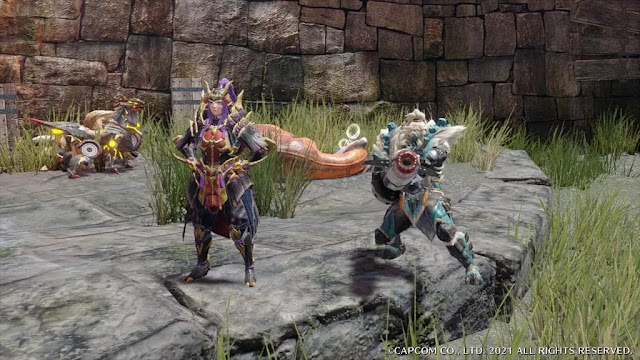
    You get some really nice tutorial quests that explain exactly what you need to know in-game, as well as a training area that shows you combos for your weapon of choice and indicates damage levels. As a quick summary of how hunting works, you have a large map to explore, now with enhanced vertical options, and must go find the monster you're tracking. You have an HP and stamina gauge, which can be restored through item use or environmental aspects, and all fights are “live”. Different actions will deplete the stamina gauge, such as running and dodging, and losing all your health will cause you to faint, or “cart” as we in the community call it. Generally speaking, 3 carts or running out of time and you fail the quest. There are also free expeditions you can go on that are unlimited time and faints.

    So what's new from World or older titles? Well, a lot. Like, a lot a lot. First up, the clutch claw from world is gone and replaced with a wirebug. These little fellas carry two charges and allow you to use a sort of “dash” to move around. But wait, there's more! They can also be used when climbing mountains, riding monsters, and using powerful moves! Yes, climbing mountains. You can now climb virtually anything in-bounds on the map, something so removed from standard monster hunter titles I was floored by the fact I was saying “there's so much to explore in this Monster Hunter”.

    Your hunter is basically a ninja, being able to run along walls and throw an infinite amount of kunai held in some pocket dimension. Wall running depletes stamina fast, but can be useful for mounting arial attacks, running from monsters, or just getting over a wall separating you and your prey. The wirebugs also allow you to mount monsters when they've built up enough mounting damage, and you can ride and control them like puppets. Clunky puppets yes, but I'd like to see you do better when moving something 20 times your size using only six wires. You can attack with the monster, ram them into other monsters or walls, and if you land enough hits, you can unleash a powerful finisher move.
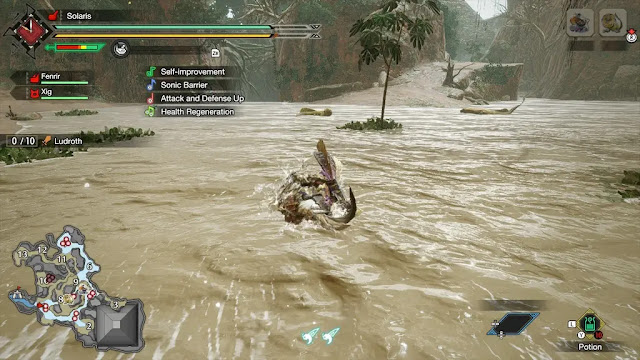
    Also new to Rise are elemental blight attacks. You say those have always been a thing? For the hunters yes, but now you can inflict monsters with blights as well! There are also new status, such as hellfire blight, and old status inflictions may have different effects than you are used to. You'll see many returning monsters from World and previous titles, such as the Tobi-kodachi, Rathalos, and Mizitsune, just to name a few, as well as new introductions, such as the Magnamalo or Boss Harag. I'm pleased to note that enemy hitboxes have been refined even more than they were in World, and there were a lot less instances of me yelling at my screen that I shouldn't have been hit. Another neat little feature added is the Petalace, a sort of necklace thing that will collect energy from Spiribirds you find while out on a quest to confer you permanent buffs for the duration of the quest, up to a certain point. Each petalace has a different focus and stat cap, so check them out.

    Now, let's give some love to your friends and mine: Palicoes and Palamutes, or the Felynes and Canynes. Essentially, like in World, you can bring a cat partner into battle with you. Now, in Rise, you can also bring along a doggo! And hoo boy, let me just say, this dog is great. The doggo is essentially a free taxi service that will also climb walls, allow you to sharpen your weapon/drink potions on, is faster than normal running, won't run out of stamina, and can drift like you're playing freaking Mario Kart. A buddy of mine and I literally laid out different “circuits” in each of the five areas quests usually occur in, and we had races around the map.

    These dogs are one of the three best changes/additions that have been made to the franchise, and I honestly have no idea how I'd survive without them. This isn't to say the cats don't have a place at the table. Each cat still has a different roll, and unlike world where you could just change the role, now we are back to hiring different companions like we did in Generations. The cats have role skills and are incredibly useful as partners in hunts. Train a few of these fellas up and watch them drop healing plants for you, steal monster materials, or place traps to help you fight your targets.

    Speaking of large monsters, and just monsters in general, let's set aside a space to talk about the amount of data you are given, both on in-quest maps and in your notes. Let's start with the maps. You are now able to bring up a detailed map and select different materials/endemic life on the map. While this doesn't apply itself to the minimap, it is still insanely useful for finding specific ore deposits or endemic life. And why is the endemic life so important? Well, you can now pick them up to bring them with you and use them on monsters. That's right, endemic life now has a very real and useful application. Except the gust crab. Whichever butthead decided to put those in clearly didn't think anyone you hunt with would misuse those at all. No way. Either way, the map is now really useful when going on harvesting runs. Couple this with the fact you can now gather/mine/harvest everything while on your dog or in one move or even while running by? Absolutely glorious. One tink of a pickaxe and I have 6 ores? Hawawawawa. But the map isn't the most detailed item. No no, that honour goes to the Large Monster hunter notes. After beating a large monster, its data is added, allowing you to see full weakness charts and drop tables. You now have a personal in-game wiki for monsters.

    New to Rise we are also introduced to “Rampage Quests”. These quests function like tower defence submissions, where you need to protect the gate at the end of a path by setting up installations to help defend against the monsters that come in. You can set up manual, automatic, or special installations to help fend off the horde of monsters. You start with only some basic equipment, but as you fulfill submissions and fend off monsters, your installation level increases, allowing you access to better equipment, as well as mechanisms such as the dragonators scattered around the field. During the rampage quests, you can have a lot of enemies at once on screen, so be prepared to have things get dicey, especially if you get a bunch of the same type.

    There are three types: aerial/ranged, targeted, and gate crashers. The targeted type monsters will make it their mission to see you K.O.'d, while the aerial/ranged monsters tend to sit in the back and lob shots at you when you aren't looking. The gate crashers will completely ignore you and head straight for the gate you're trying to protect. These should be your primary focus, as you can have lots of enemies at once, meaning if you get a lot of gate crashers rolling in, you're in for a bad time. Three Khezu at once made me want to cry. Thankfully, you have two ways to win a Rampage: either defend until the timer runs out, or defeat the boss of the horde. Thankfully, you don't have a faint limit, so you can keep on going until either the gate falls or you win. The installations available for you to personally use start with only ballistae, but you gain more options, as well as upgrade the installations, as the level of your gate increases. The level is per quest, so your level will reset after the quest. I personally found the rampage quests to be most fun as a group with my friends. The more people there was, the more fun I had, so go out there and convince all your friends to play with you.

    There are a bunch of quality of life upgrades that have been made, and while I could spend a few hours talking about each and every one, I'll just list a few here as examples. First off is the ability to fast travel around the village. It's super speedy, super handy, and if somebody wants to talk to you, it's indicated on the fast travel menu. This is also available during online mode, which I will get into in a bit. Mining and gathering is now done extremely fast and is super convenient, being able to grab items on the go. Additionally, it feels like the harvesting locations respawn a lot faster now than they used to. Stocking up on select items is also simpler now, as you can buy pretty much anything a standard hunter would need, provided you have the money. I've already mentioned the doggo travel system, but let me just emphasize how convenient that is. The food system has also been optimized and it is now much easier to get the effects you are looking for.

    In the area of “nice to have but not really impacting gameplay”, Rise clearly separates what is expected from a new hunter to a veteran hunter. Village quests are for the newbie hunters for the most part. The monsters felt really scaled down to what I was expecting, and fight generally lasted between 3 to 7 minutes depending on how much health the thing was and how often it ran away. The hub side of things usually had 10 to 15 minute hunts, which is more in line with my G Rank hunt times from other titles. While I personally found the village quests to be less challenging than I'd like, it certainly is useful to introducing the newer players. On a neat side, the hunters now have voiced lines! They're a little cliche and campy, but overall not too bad. Having your hunter yell out “Here comes a big attack” or “It's going after you” is really cool to hear. If you aren't a fan of the hunter talking, you can adjust it in settings and change the language of the hunter. You can select between English, Japanese, or “Monster Hunter Language”, so you can always swap it if you start cringing too hard. It's really nice to see the weapon appearance variety in Rise. One of my biggest complaints about World was that most of the weapons all looked similar, just small changes or palette swaps. No longer is this the case, as the weapons are full of unique appearances once more. The crafting system now also feels much easier and better to navigate, and everything is separated nicely.

    A few aspects that I am personally fond of, although probably won't matter to most, involve the unlocking progression, guild card achievements, intro scenes for monsters and locales, and the photo opportunities. Starting from the top, there is a fairly clear and natural progression order for unlocking aspects of the game. For instance, some aspects, such as decorations, only unlock when you start high rank, which makes sense on two fronts. Most players who are only for Low Rank quests won't or don't need to worry about them, and they are only applicable to High Rank armour anyways. For the guild card achievements, as far as I can tell, there are no rewards for crown farming. Any of you who do this know that pain, and I can honestly say that I consider any guild cards complete if they have everything except the crown achievements.
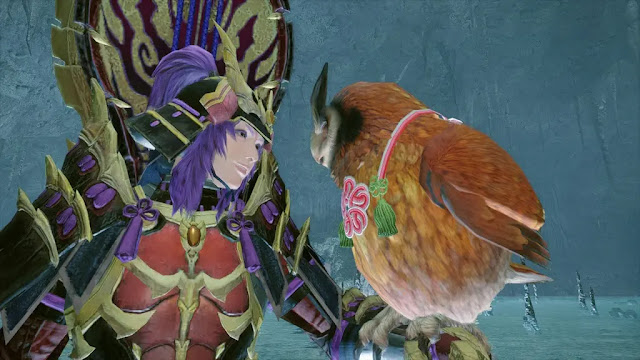
    After 126 Jade Barroth from Tri Ultimate and no gold crown small or large, I just got too frustrated. The guild card achievements don't actually do anything, they're more of a bragging rights deal. Keeping with the motif of the very Japanese themed village, every time you encounter a new monster or locale, you get an introduction cutscene in a sort of “Japanese style poetry” type deal. Even my friend who isn't a fan of the Japanese culture motif liked them. The photo opportunities are great as well. You get a pet owl, or Cohoot as it were, that can take pictures while you're out on an adventure (although you do this manually). Whenever you take out the camera, there's a little space in the top right that will tell you the name of the creature featured in the shot, if applicable. These pictures can then actually be used in the Hunter's Notes to replace the existing pictures. My current goal is to fill the Large Monster notes with pictures of the monster, with my friend and I in the picture, cooking steak, and the monster can't be asleep. We are replacing all existing pictures with these.

    Now let's talk a bit about the online functionality. I am super excited to say that playing online together has never felt easier. It's faster, smoother, you're allowed to do more, and it's altogether a really enjoyable experience. So first up let me preface by saying that only Hub quests can be run in online multiplayer with other people, and they do scale to number of people. Fancy new change, there is no “online specific” area, whoever joins your room visits your village. You can literally run around outside the gathering hub and see your friends, the fast travel on the map still works, and you can still access any shop or function you need to. Quest loading times are loads faster, and you now have a hot command that will let you access quests anywhere.

    Essentially, if you are off somewhere and someone posts a quest, you can tap up on the D-Pad on the quest indicator, and join and ready for departure from anywhere. This is super handy and I love it. While the maximum number of hunters per lobby has reduced to 4, this is perfectly fine with me, as you rarely get a large group that's super cohesive in what is being hunted, and it makes it easier to join in on quests with only four people per lobby. One of the best parts though? Rise will recognize if you have been booted from a quest and rejoin the lobby/quest. I was having some internet trouble while playing with my friends so I got dropped from the lobby. I rejoined and went back out on the quest, and it started me at the base camp with the items I took from the supply box still in my inventory. This is genius, good job developers.
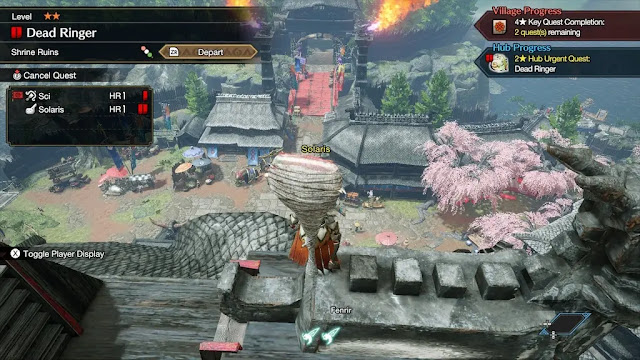
    While there is a lot to love about Rise, there are some aspects that could have used a little bit more work. For instance, there is a distinct lack of elder dragons in Rise. The elder dragons have always been some of my favourite fight (except the Kirin), so it was a little disappointing to see so few. It also feels like there is less content than other monster hunter titles. While I realize that a lot of quests in previous titles were “same monster, different location”, when some star levels don't even have two full pages of quests, it does feel a little...lacking. I know there is free content update, including story content from what I've heard, but that feels like something that should've been included from the get go. On a more personal note, I'm sad to see there aren't any Event Quests in Rise, at least not yet. I'd like to see more “Phantom Urugaan” style quests or special reward quests.

    Good news for all those fans of the monster hunter soundtracks (myself included), the soundtrack for Rise is exactly what I've come to expect from a monster hunter title: awesome orchestral pieces and spicy monster themes. The graphic quality when using the Switch dock is also really good, although the handheld mode is, obviously, quite toned down. Each area you visit: Shrine Ruins, Frozen Islands, Sandy Plains, Flooded Forest, and Lava Caves have soundtracks and visuals to match their location themes, and it really feels like a lot of work was put into planning out the locations in detail.

    Summary

    Overall, Monster Hunter Rise is a stellar addition to the franchise, introducing quality of life improvements, some really great new monsters, doggos, and a really well functioning online mode. The new Rampage Quests are pretty neat, and are really fun as a group, but can get a little frustrating depending on how many and what type of monsters are introduced at the same time.

    While Rise definitely feels “short” in comparison to other titles, there is a lot to love about the direction Rise has taken. As a veteran player, there are some mechanics that have been simplified or removed, like hot and cold drinks, that I feel bitter about seeing gone or “oversimplified”, but looking back on it, it's pretty much all stuff I would constantly complain about anyway. The takeaway is that Monster Hunter Rise is a great title in the franchise, hands down.

    Score: 8.75 / 10


    Share:

    Random posts

    Our Streamers

    Susan "Jagtress" N.


    S.M. Carrière

    Aldren


    Affiliates

    JenEricDesigns – Coffee that ships to the US and Canada

    JenEricDesigns – Coffee that ships to the US and Canada
    Light, Medium and Dark Roast Coffee available.

    Blog Archive

    Labels