EA Sports College Football 27 by developer EA Tiburon and publisher Electronic Arts—Sony PlayStation 5 review written by Nick with a copy provided by the publisher.
Estimated reading time: 10 minutes


EA Sports College Football 27 by developer EA Tiburon and publisher Electronic Arts—Sony PlayStation 5 review written by Nick with a copy provided by the publisher.
Estimated reading time: 10 minutes

EA Sports UFC 6 by developer EA Sports and publisher Electronic Arts—PlayStation 5 review written by Nick with a copy provided by the publisher.
Estimated reading time: 7 minutes

Madden NFL 26 is developed by EA Tiburon and published by Electronic Arts—Sony PlayStation 5 review written by Nick with a copy provided by the publisher.
Estimated reading time: 10 minutes.

EA Sports College Football 26 by developer EA Tiburon and publisher Electronic Arts—Sony PlayStation 5 review written by Nick with a copy provided by the publisher.
Estimated reading time: 11 minutes.

EA Sports College Football 25 by developer and publisher Electronic Arts—Sony PlayStation 5 review written by Nick with a copy provided by the publisher.
Estimated reading time: 8 minutes
Another year, another Madden. Is it more of the same or something new and exciting? It’s the yearly question, and your mileage may vary depending on the aspects of the game that matter most. For my money though, Madden NFL 25 brings enough new to the table this year to warrant a good, long look.
Not every new year of Madden is a win. Sometimes they introduce a new mechanic that sounded better on paper than execution (we’re looking at you old QB passing cone or fumble minigames), or even take steps backwards in the presentation (audio glitches or crazy physics bugs). It feels however, that Madden NFL 25 has settled quite comfortably into this generation console technology and ironed out many of the wrinkles.
The initial first impression for me is a good one. Menus are easier to navigate, visuals are crisp, modes load quickly. If there’s a grumble, it’s how the game seems to want to funnel me into the Madden Money Making Mode… erm, Madden Ultimate Team (MUT) mode. For those unfamiliar with that mode (which likely means you haven’t played any sports games in the last decade), it’s a mash-up of sports card collecting, fantasy football and a wide variety of challenges. This all leads into a very grindy gameplay loop of beat challenge, get a small amount of currency, someday get enough currency to purchase another item or pack of cards, incrementally improve your roster and then do it all over again. There’s a very slow lather, rinse and repeat vibe to MUT. I don’t really care for it myself, but it’s popular and it offers micro-transactions that allow the progression loop to be sped up artificially.

There are other modes including some quick play options, but the real meaty ones are Franchise and Career modes. The former is structured very similar to years past (and that’s reflected even in the game’s trophies / achievements, which haven’t seen a meaningful update in years now). The gist is that you are a coach or owner who tries to manage the weekly operations of the football team. At the owner level you’re setting prices and worrying about the quality of the stadium, while the coach is more focused on the X’s and O’s and game strategy. Both are basically slightly different skinned approaches to the same core engine where you try to improve your team and live out a fantasy football world.
Franchise is easily where I spend the majority of my time in Madden, both this year and the releases of the past. It’s just the most rewarding experience overall as I enjoy so many of the team management aspects. The offseason feels a bit better this year, especially the draft aspects. It’s not exactly a major reinvention of the wheel though, and I feel like there’s room to do something ‘more’ with a narrative or elements of league-wide chaos: players holding out mid-contract, or teammates not getting along, or players beefing with one another from different squads, etc. I don’t really know, but as fun as Franchise is, it could use a little more ‘texture’ for lack of a better way to phrase it.
It's impossible not to reference the recent EA Sports CollegeFootball 25 game. There’s a lot of elements that have made their way from that game from a couple of months ago into this new Madden NFL 25. The Dynasty mode of College is the parallel to Madden’s Franchise, but they are very different animals. I will say that I am disappointed that there’s no draft class export from the college game to the Madden one. I imagine it’s more of a licensing limitation than a technical one, as we had that option way back on the PlayStation 2, but I hope it’s a hurdle that can be overcome next year as this was something of a major disappointment for myself and some of my football loving friends.

Now, one area where the College game transitions well into the Madden series is the created player mode. Your can import your graduated college player into the pro game and it will give you a slightly accelerated start into the process, pulling in your physical choices, numbers preference, things like that. It’s a fun way to keep the journey going. I really enjoyed this year’s Career mode. There is a lack of story / narrative told here, as your player just sort of graduates from college into the NFL and gets to go through the combine which culminates into a clumsy hug with the NFL commissioner after a team selects your player.
I do think it would be cool if you could create a bit of a backstory for your player (or import one from College football, such as the blue chip vs underdog starting points), but there’s numerous objectives sprinkled into Career mode. These dangling carrots are generally enjoyable targets as you level up your player and sink points and earned skills into him. There’s a lot of opportunity to put your own personal spin on the player in interviews / conversations, though the impacts feel very short-lived. Again, I think those choices could be interesting if woven into some sort of story or ongoing narrative (not even a super firm story, but just more than a +5 boost to stiff arms next week).
It's also interesting to me how College football put training wheels on your created player in the form of limited play calling impact while Madden lets your player (in my case, the very same halfback) have total control of the playbook. It seems a weird approach that swings too wildly from one extreme to the other. There is also the online-ish (there’s offline challenges too) sub-mode called Showcase where you play a much faster, simpler, more arcade-like game of football. It’s interesting, but hard for me to invest as much time into than the core NFL career of my player.

All of these modes and menus are well and good, but Madden NFL 25 seems to be at its best when you’re playing the actual game of football. The visuals are better than ever, which is to be expected. I appreciate the better variety in the announcers in the game. The primary commentators are still Brandin Gaudin and Charles Davis, who are just fine – but they’ve been growing a bit stale over the last few years. EA has injected Greg Olsin and Mike Tirico as well as Kate Scott and Brock Huard. It’s a welcome bit of variety that’s been well overdue and the presentation benefits from it.
It's interesting to note that in many ways, Madden NFL 25 feels slower to me than the College game. I'd love to know if that’s a reality of the engine, or maybe just a matter of perception on my part. Maybe there’s more parity in the pro players and therefore you don’t feel breakaway speed the way I did playing the college game where players might have much larger physical gaps? Either way, even with that impression, Madden’s collisions are fantastic, and that’s no small matter.
In a sport where you have two teams of eleven banging into one another all of the time, the tech behind these collisions is kind of a big deal. This year introduces what the team at EA has dubbed Boom physics. There are still some goofy animations here and there that occur, but nothing like some of the wonkiness of years past where a small player could chuck aside a behemoth twice his size, or a football kicked through the stadium roof. Instead everything feels much more grounded in reality when players hit one another. Actually, there’s moments before and after the hit as well where you see a player’s body shift to brace for a big hit stick tackle across the middle, or when they put their hand on the ground to stand up slowly after getting shmucked by a linebacker.

It's not always perfect, but by and large the limbs and bodies flail and thud in convincing fashion and blockers engage and disengage in a realistic way, but the ball has physics too. The ball can sit on the ground as a player bumps into it and knocks it around, but not like vacuumed right into their chest. Ditto balls bounced around as they can deflect off of hands (or backs or legs) in ways that it didn’t used to back in the day when the PS3 Madden passes would just laser into a person’s hands.
Madden NFL 25 is an excellent sports title, and though many of the improvements are incremental, they are numerous enough to be noteworthy. It’s far more than a roster update, but there’s still room to add some flavor to the various modes, and I’d like to see a stronger connection between the two EA football titles in the future. That being said, there’s more than enough quality football to be had here to keep NFL fans entertained for quite some time.
Score: 7.5 / 10

EA Sports UFC 5 by developer EA Vancouver and publisher ElectronicArts—Sony PlayStation 5 review written by Nick with a copy provided by the
publisher.
Estimated reading time: 7 minutes
EA Sports UFC 5 finds its way to the current gaming console generation
and makes good use of the improved technology. The formula is tweaked, not
overhauled, but it still creates a satisfying fighting game. Those looking for
massive changes from UFC 4, however, may be disappointed that more chances
weren’t taken with this iteration of the series, but overall, EA Sports UFC 5
is an excellent game.
I’ve been a long-time fan of both the UFC and Fight Night
games (they have some similar DNA in how they work, despite being very
different games and experiences), and I’ve been excited to see where things
would go using the new hardware. Most of these changes and improvements show up
during the actual gameplay. For me, the meat and potatoes of the series is always
found in the career mode.
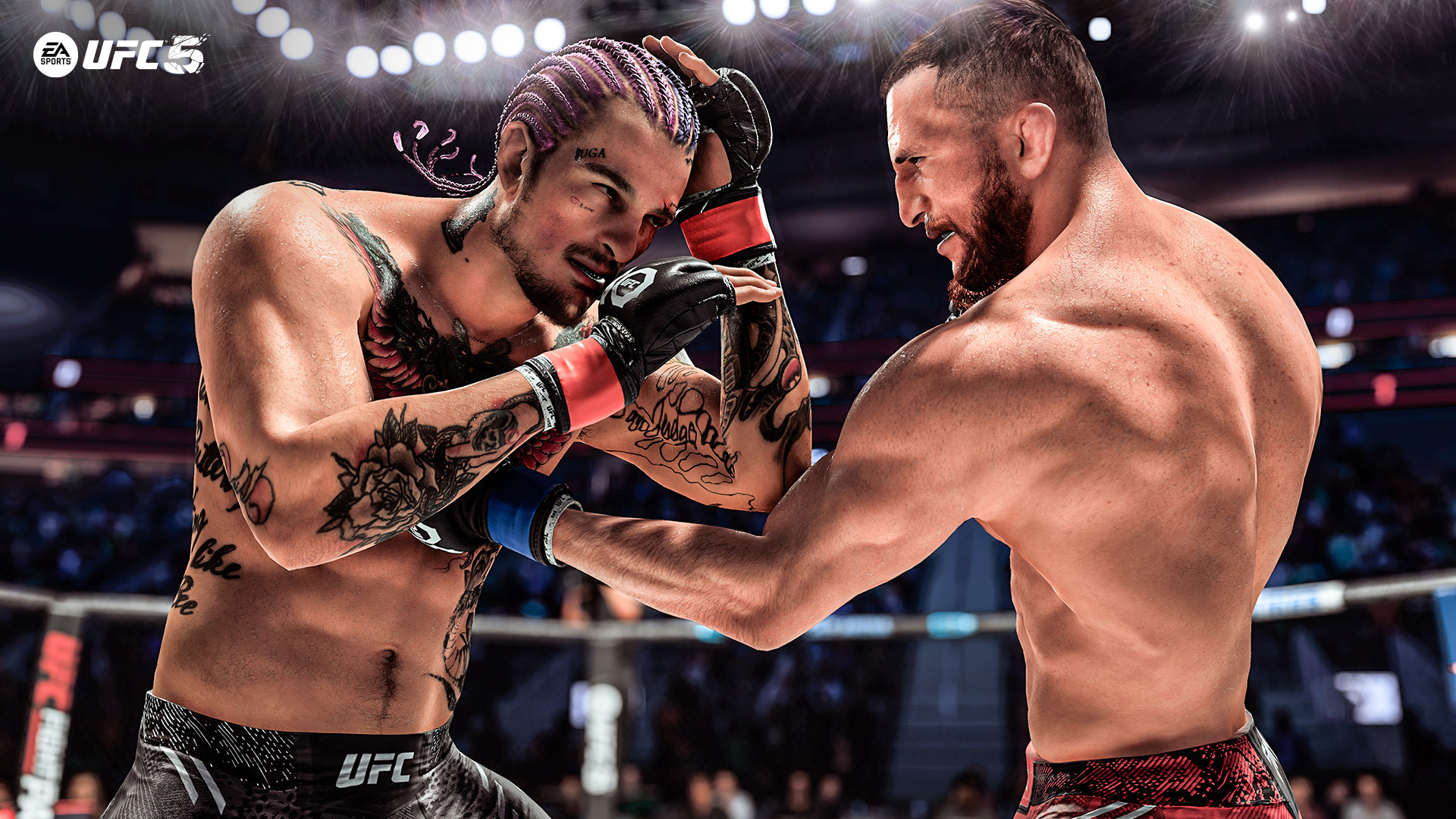
Here you create a fighter (with both male and female
options). There is a pretty robust set of options available at this stage of
things, which is great for making fighters that are different from one another.
Once the character is created, your character finds themselves in a backyard
battle with a relatively no-talent opponent that gives your character a bit of
a social media buzz as people recorded it and shared the fight enough that the
UFC takes notice of your character. Early on, the proceedings are a bit more
story-heavy, which I found quite welcome. I enjoy your coach’s interactions,
and the early stages do a great job of teaching you the basics. Frankly, I’d
recommend starting up in career mode if you’re new to the series, if only
because those early stages will teach you pretty much everything you need to
know about the gameplay.
However, once you get through the story nuggets during the
early segments, the career mode becomes a pretty standard gameplay loop of sign a
contract with incentives, pick an opponent to fight, enter a training camp for
a handful of weeks, improve your character’s skills, fight your opponent and
then lather, rinse and repeat numerous times. This allows you to carry on a
career arc from backyard fighting nobody to future hall of fame champion.
Additional modes including Fight Now (basically, set up a
quick match, including a Bloodsport / Kumite style endurance match), Contract
matches (generated battles that you can complete for bonus rewards) and an
online career mode. This one’s an interesting take on multiplayer with the
progression elements found in career mode. If you have a good internet
connection, this can actually be a lot of fun. Even at higher difficulties, the
AI tends to be pretty predictable, but human opponents? They have a way of
keeping things fresh.

Where EA Sports UFC 5 might frustrate fans is in how little
of the framework has changed. I was a big fan of UFC 4 when I reviewed it, and
by and large the way career mode advances, the way you build your characters up
and so on hasn’t changed a whole lot. Given that this title isn’t subject to
the same yearly release cycle that games like Madden, FIFA and NHL are, it would
have been nice to see a few more chances taken here. Some old annoyances are
still around from before, like trying to learn a new skill without realizing
you don’t have the base skill without any kind of a warning that you are about
to waste your time and points. Also for some reason there were numerous
instances of me trying a match or training session and the camera inexplicably
would pan back just a bit, outside of the ring, putting the fencing of the octagon
between the camera and fighters. This was really distracting when it happened,
and it happened about a third of the time I did a fight retry. Still, most of
what made the last UFC game so enjoyable is still here and with enough polish
that I still enjoyed what EA Sports UFC 5 had to offer.
Where this iteration really shines is in the actual gameplay.
For starters, the visuals have received a tremendous boost on a handful of
fronts. Bringing EA Sports UFC 5 into Frostbite engine has made for some
fascinating moments during the game. There’s always been a sense of risk versus
reward when playing, as going in for strong blows can leave your fighter tired
faster or even exposed to a powerful counter attack that ends the match
prematurely. These physicals and collisions are well represented in the
Frostbite engine.

I really appreciate the new cut system. You won’t get much
out of this if you have the difficulty set low and you’re just pounding your
way through opponents in the first round, but for those who have an appropriate
challenger that goes multiple rounds? The hundreds of variations of bruises and
cuts a fighter can receive is truly impressive. The variety of injuries that
can show up, and the way they can continue to worsen throughout the match while
impacting your fighter’s health feels very authentic. There’s even a cut doctor
who can come in once in a while to make sure that the fighter’s good to go
after sustaining too much damage to the face.
Not everything has worked out perfectly in the transition to
the Frostbite engine, however. It’s not incredibly common, but every now and
again you get some really kind of goofy limb animations. Not so much during the
fighting itself as in the aftermath. There’s a fantastically cinematic replay
that happens at the end of matches that really show off the engine’s visuals.
You get a slow motion look from multiple angles that show the last blow of the
match. These feel appropriately weighty and devastating. However, there are
times when the player lands in a decidedly unrealistic way when they ragdoll to
the mat. The most egregious example that comes to mind was when I put an
opponent out on their back, and somehow their arms both folded up under his
back. It looked really weird and I’m pretty sure shoulders don’t move like that
without getting ripped out of their sockets first. It was a strange ending to
what had been a satisfying flying knee to the face that ended the match.
Another area where EA Sports UFC 5 feels improved is the ground
game. The controls are more streamlined and reactive, and feel less like a
button mashing mini-game that always seemed out of place within the rest of the
fighting. Upright clinching could probably use more love, as there’s not a
whole lot of depth to it, but I really appreciated how much better the ground
grappling felt. One more slight tweak from before is how the spin attacks work,
using two buttons to start a spinning motion and then the right sequence of
follow-up button presses to pull off the move. It makes sense to me that they
would make this aspect of the gameplay a bit more challenging to pull off, as
everyone seemed to love those flashy, powerful spinning kicks and backfists in
the prior game and they felt a bit overpowered as a result.
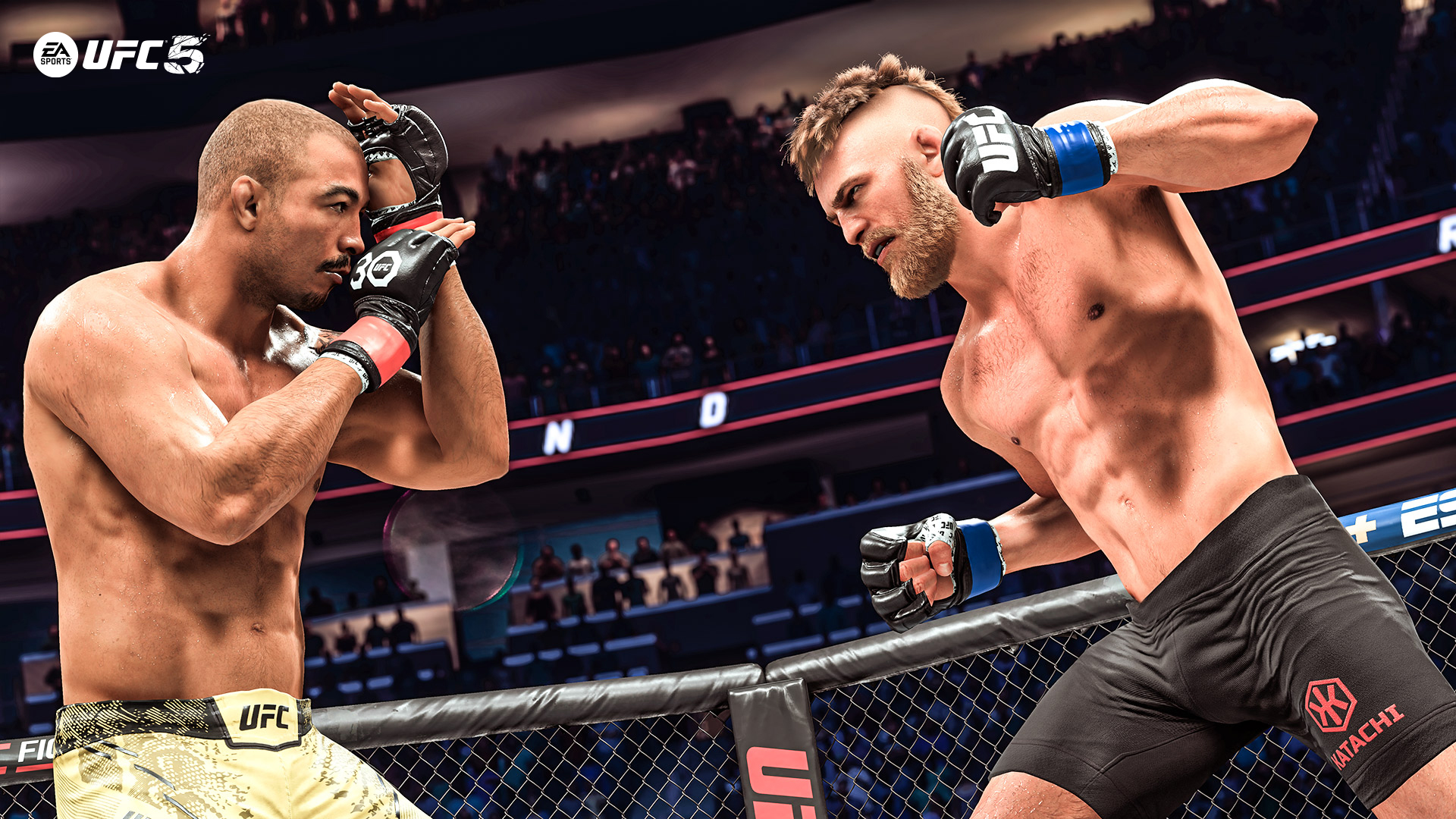
The good news for fight fans, is that EA Sports UFC 5 is the
best sports combat game on the market, and it’s not even close. It’s benefitted
from the improved tech of the current consoles and both the gameplay and
presentation are improved in multiple areas. However, it would be nice if this
felt a bit less like a next generation update of UFC 4. Sure, that was also a
really good game, but I would have enjoyed seeing a bit more done with some of
the modes, especially the career one. Maybe there’s some actual storytelling
that could be done with the Kumite battles, some decisions to be made along the
way, I don’t know. It just felt as though the story got off to a fairly strong
start and then sort of evaporated in favor of the contract, train and then
fight gameplay loop that hasn’t changed much from the last release. Those
quibbles aside, EA Sports UFC 5 is an easy game to spend a lot of time with, as
the core fight gameplay is truly enjoyable and has me lowkey holding out some
hope that we get a new Fight Night in the somewhat near future as well.
Score: 8 / 10

Madden NFL 24 by developer EA Tiburon and publisher ElectronicArts—Microsoft Xbox Series X review written by Nick with a copy provided by the
publisher.
Estimated reading time: 6 minutes
Fall is around the corner, which means the NFL is nearly
here – and that means Madden NFL 24 has arrived. Those now are inclined to hate
the series due to its yearly release cycle are going to probably continue to do
so. However, for those such as myself who enjoy this time of the year and the
formula that Madden provides, it’s an entertaining game that is also probably
the most complete iteration in the series since the Xbox Series X released.
I’ve probably played more Madden titles than any other
series of video games released during my lifetime. Of course, it comes out
every year and I’ve been playing since its release on the Sega Genesis decades
ago. This annual cycle makes sense as EA wants to tie it into the excitement of
each new season. It’s the nature of sports in general. It’s all very cyclical (some
would say cynical, declaring the cadence a money grab), but I don’t see this release
pattern going away. Enthusiasm for a sport is at its highest near the start of
a season. It’s a world of possibility for fans who follow their favorite teams
and hope that ‘this is their year’.

The obvious downside of this cycle is that the Madden
franchise doesn’t get a great deal of time to innovate. It’s about tweaks and
polish, picking a few headline options to add because of the very strict
release schedule. The good news is, Madden NFL 24 is a very solid release.
There’s a bunch of newly named features such as Sapien AI and FieldSENSE that
are really just fancy ways of saying that the team has put a focus on trying to
make the gameplay as authentic as possible. It’s a tough task, given that there’s
two teams of 11 on the field shoving, sprinting, jumping and tackling one
another on every play.
The end result is a positive one. There’s probably always going
to be some small bouts of weirdness that happens, but after playing very
heavily (a couple of dozen hours and counting), I haven’t seen any of the
really odd issues that have crept up in the past. There have been years where
the ball or player physics were not overly realistic and there have been rare
but exceptional moments where they’ve been straight up anime-levels of unrealistic
and clearly broken. I never had any of
that here. On any given play you have linemen engaged in blocking, quarterbacks
and running backs with the ball in their hands as they try to make would-be
tacklers miss, wide receivers trying to create separation from the secondary to
make sometimes spectacular catches, and the presentation does a good job of
nailing these aspects of the game.

Speaking of the presentation, I was pleasantly surprised by
the audio. The on-field sounds have been quite solid for some time, lending to
the authenticity of the game’s action. However, as recently as a year or two
ago, I grumbled about the color commentary becoming a bit long in the tooth. I
still think that we’ve heard the same voices for long enough that it’s worth
considering a change there, but in recent years there were a handful of strange
issues where the commentary did not align well with the action. I didn’t hear
nearly as much of that in this year’s release. It’s a subtle thing, but hearing
them correctly state whether a ruling on the field was overturned, or having
them talk about a player’s number of rushing touchdowns (when it was in fact a
receiving touchdown) and more just doesn’t seem to be happening at this point.
Simply put: the on-field action is fun and it’s dressed up
in a pretty presentation. Since that is where I spend most of my time with this
game, it’s a good foundation to build off of.
It probably helps that my favorite modes have gotten some new
features added. Okay, there’s an argument to be made that some of them are just
old features that had been pruned off of the series in years past and are
getting reintroduced, but they’re still welcome additions. By far I spend most
of my time in the Franchise mode. This has numerous RPG-like elements and the
player and franchise progressions have been the dangling carrot on the stick
for me that I can’t help but chase. Training camp mini-games, deeper player
scouting and improved commissioner controls are the highlights here, but it’s a
deep mode that I readily sunk a lot of hours into.

The Superstar mode is back, and it continues to create a
sort of structured story for your created player (who can be any one of several
positions like quarterback, wide receiver and linebacker for example), but it’s
not as narratively heavy as Face of the Franchise has been in the past. It’s
basically Madden’s attempt to answer what we see in NBA 2K’s career mode, and
it does a pretty good job. I would make a character, see him through the
combine, get drafted and proceed to play games and go through drills to improve
my player. It’s like a more centralized version of the franchise mode, focused on
the player and not the team. You can jump online and play some more arcade-like
backyard style games (called Showdown now). Again this feels like good growth
to try and emulate what we’ve seen in other sports games over the years, and it’s
a lot of fun.
I will touch on the Madden Ultimate Team (MUT) briefly, as
it’s a mode EA highlights a lot (which makes sense, since it’s microtransaction-heavy
and generates additional income for them). It’s an interesting hybrid of
fantasy football and card collecting (two hobbies of mine) that has you opening
packs to better your team and complete various challenges to earn currency and
players to help better your team. It’s a very clear progression loop that some
people absolutely adore. I think it’s made some nice strides over the last few
years, with a bit more variance in the activities and the way you can develop
your roster, but this is just the least interesting of the modes for me
personally. I still spent some time in it, but the random nature of the packs
and cards you pull make progress feel less about my skill as a player or team
builder.

Madden NFL 24 is never going to fully shake the online
discourse about it being a money grab due to the MUT and yearly release cycle,
but as a diehard NFL fan? I had more fun with this year’s iteration than I have
in years. The modes I enjoy most have continued to gain depth and polish, and
the overall package is incredibly well done. We’ll likely never see a Madden
game make improvements by leaps and bounds over the prior year, but incremental
improvements to an already strong foundation are enough for me to enjoy the
start of the NFL with this title.
Score: 8 / 10
Estimated reading time: 3 minutes


Every game, no matter how perfect, has its issues and the player, his/her qualms. The game’s main issue lied in its tight controls and one-sided originality. You could see love went to its puzzle sections and the layout of the levels, but even then, they bore too many similarities to other games that had me thinking that somewhere down the line, the developers had become lazy. The introductory level is the same as the first level in Braid. Going to the tight controls, sometimes Henry would get all awkward and wouldn’t turn, while the knight’s sword would rain down upon him... killing him.
Also, the speaking parts are hilarious in the fact that they don’t contain any actual vocals; just screaming, yelping, and odd sounds from the throat. When Henry’s assistant ‘talked’, it seemed as if he was voiced by Link. But these are minor problems and nothing worth losing sleep over. I just wish they hadn’t existed or had some thought gone behind it.
The boss battles were very reminiscent of Megaman 2: The Power Fighters. The battles weren’t too impressive and had in them the same old “hit-once-and-dodge/duck” mentality that is witnessed in a-many other games, especially Mega Man Zero and its sequels.
In conclusion, Henry Hatsworth in the Puzzling Adventure was a pure joy and satisfying in every level. It is likable, has considerable challenge and will provide old-school 80’s platform action with a modern touch to anyone wishing to give it a try. Like they say, there’s nothing like a good tea can’t fix. Henry Hatsworth knows that. And by the time you call it a day, you too will be craving for a cup of the greatest beverage the world has ever seen.
Note: Screenshots from all platforms that were available at the time can be found here at Moby Games.
Score: 9.0 / 10
Estimated reading time: 6 minutes


Mass Effect Legendary Edition is developed by BioWare and
published by Electronic Arts. Space Dust IPA is made by Elysian Brewing Company. Article by Nick.

I’ll begin this by pointing out the obvious to anyone who is
familiar with the Mass Effect games: clearly this one beer did not come
anywhere close to being the only one I drank during my time with this game.
Why? Because it’s actually a collection of three games that each can take about
forty hours to play through. I started to replay these back on Game Pass some
months ago, and have been thoroughly enjoying my time with the trilogy again as
I near the conclusion of the third game.
So, with a trio of games that have been getting played for
months, I found myself trying to figure out which beer I wanted to associated
with these games, and rather quickly settled on the Elysia Space Dust IPA for
obvious thematic reasons. Simply put ‘space dust’ is a fun tie-in to a science
fiction game set out in space. That being said? It’s also a damn tasty IPA that
I had the fortune of drinking very recently.
Odds are if you’re a gamer, you’ve at least heard something
about the Mass Effect games, both good and bad. The first game’s combination of
action / shooter gameplay mixed with meaningful choices throughout the story
thrilled fans. Mass Effect 2 was a critical and commercial success that ranks
atop many ‘all time’ lists from that era. Mass Effect 3 brought the story to a
head and combined it with the best visuals and action gameplay yet, but a
conclusion that certainly raised controversy. Oh, and Andromeda was pretty meh,
and I am not touching that spin-off title again any time soon.

Hard to believe that the first Mass Effect game came out over fifteen years ago now. It was a title I had a bit of trouble getting into originally (more on that in a future article). Conversely firing it up in the Legendary Edition, it fit like an old glove. Given how long ago I played it, I was surprised at how much I still remembered about the game. Not just the major plot points, but many of the smaller details along the way as well. It was comfortable and familiar. Along the way you make numerous choices that impact how the story plays out, and both those small nods and larger plot points serve the series well as it feels like it is your story.
I’ve had Elysian’s Space Dust IPA in the past several times.
I think the first time was several years ago now. It’s not one I get my hands
on regularly. IPAs aren’t my go-to year-round, but I certainly enjoy a good
one. I wouldn’t say it is a great one – but better than average. To my nose it's
sort of floral sweet scent that leads into the first sip. It’s an interesting
IPA that has some citrus sweetness right off the back, but that piney, hoppy bitterness
shows up on the backend and lingers on the back of the tongue. It’s not a hazy
/ New England IPA, but there’s a hint of haziness to the initial pour. It’s
worth noting that at 8.2% ABV, it’s a little stronger than the average IPA, but
not quite up there with a double IPA either. There is a bit of complexity where
the malts come through as it warms a bit, but I still prefer this one cold. In
general, I prefer my IPAs colder than not, unlike some of the heavier stouts
and porters that I sip on as I allow them to draw closer to room temperatures.

I specifically had this beer while working through Mass Effect 2. In particular while I was on the Citadel. Fans of the game no doubt are familiar with the options that your protagonist (Shepard) can leverage to get discounts at shops if he does an advertisement with them. My brain couldn’t shake the idea of him walking around going: I’m Commander Shepard, and this is my favorite beer on the Citadel!
If you know, you know.
One of the really interesting things about playing these
games through the Legendary Edition was the DLC. Because I was somewhat late to
the game with the original Mass Effect, the DLC was already out. I picked it up and
experienced it. Of note: the Pinnacle Station DLC from the first Mass Effect is not included in the Legendary Edition, because the source code was written by another developer who said it was now corrupted. That was not the case with Mass Effect 2 and 3. I played both
games immediately upon release, and I never picked up and played the DLC that
came later. As such, there were characters, missions and story elements that I
missed out on the first time around. This of course includes the updated endings for Mass Effect 3, which just adds greater sense of completion and closure than the as-released ending had.
I mentioned above how one of the key elements to this series was how decisions I made along the way. Many of them quite difficult with no 'right answer' but more of a 'making the best of a bad situation' feel to them. There was a feeling that the choices Shepard made throughout the game really didn't have enough of an impact on the ending. I can see that perspective, I don't necessarily agree with it. I think in the end the writers for the series had a story to tell. They began it and ended it (with some variation in the end sequence based on a final choice made) the way they wanted, and allowed us as players a bit of room to color within those lines along the way.

My only real grumble about this collection is the lack of
multiplayer mode. It was a pretty big part of Mass Effect 3, and it was a survive
multiple waves spin-off. I enjoyed the snot out of that mode back in the day. I played it almost every weekend for months. They regularly had weekend events that I kept track of and participated in as I tried to get the most out of the game's rewards. I get that not supporting an online
mode likely made this rerelease faster and cheaper for EA, but I was still
somewhat bummed by its omission.
The Legendary Edition of these games saw several improvements
to visuals, gameplay mechanics, the aforementioned DLC – so it really is a
fantastic collection of titles that will span many hours if you play them
through from start to finish. While I had several other beers along the way, I
felt like Space Dust IPA was probably the most thematically aligned, if not the
best of the bunch I had along the way. It’s a good beer, but hardly one of the
most memorable I’ve had to date. Conversely the Mass Effect trilogy is among my
favorite video game series ever.
Score dropping time.

Mass Effect Legendary Edition: 9/10
Space Dust IPA: 7/10
Estimated reading time: 9 minutes
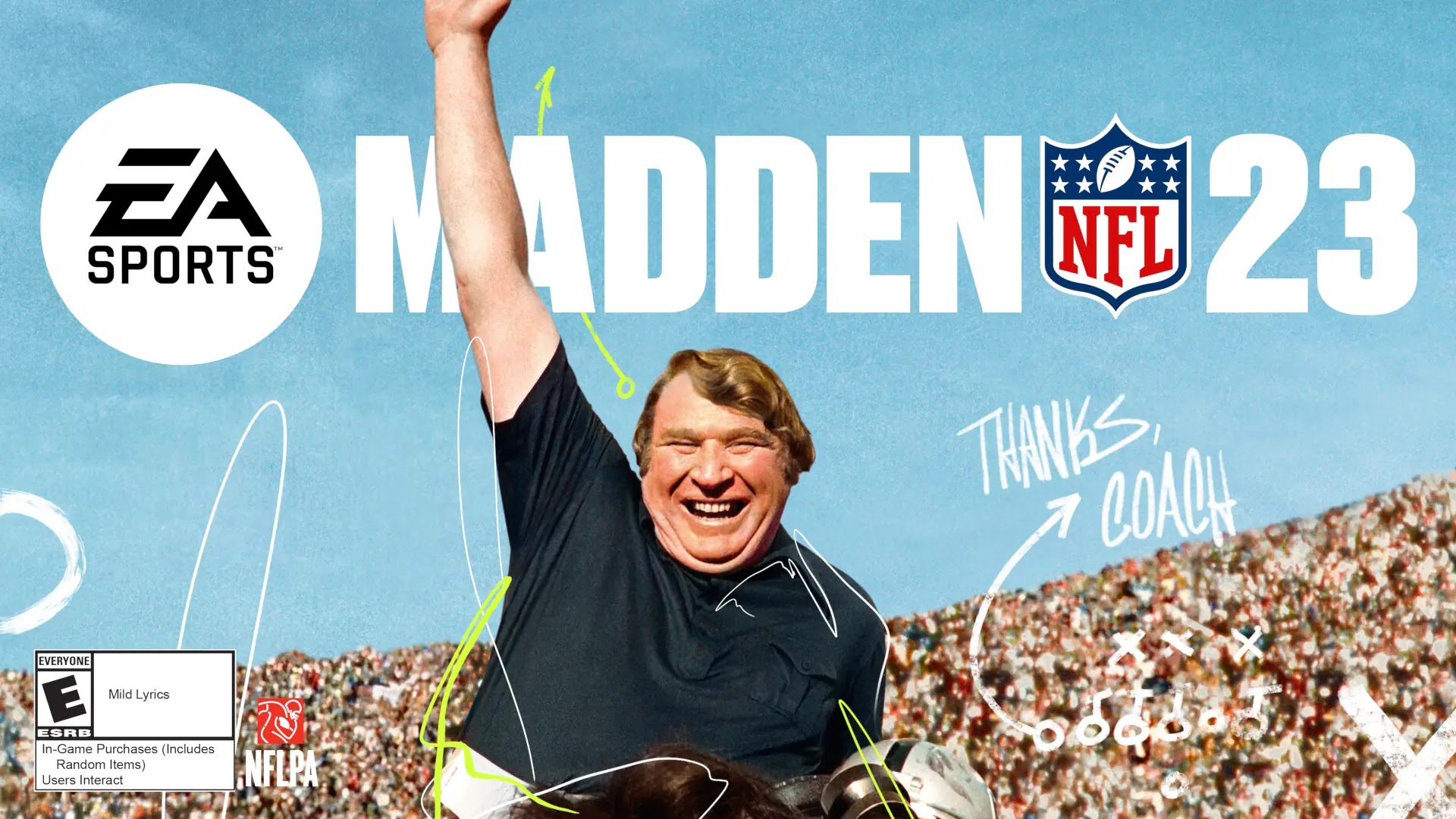
Of course, credit to the team here for hitting me in the nostalgia right off of the bat. For those who follow the NFL, they know that John Madden passed away on Dec 28, 2021. An NFL Hall of Fame coach and one of the most colorful sports broadcasters ever, John Madden was one of those ever-present personalities as I was growing up, and this football video game franchise with his name on it had a lot to do with my love for the sport at a young age.
So it is only fitting that the game kicks off with a screenshot of John Madden in his younger years, and the ‘game loading’ video is a mash-up of modern and throwback Madden titles, with the tagline: Thanks, Coach. We then rolled into the Madden Legacy Game that features many of his favorite players from over the years. These aren’t necessarily ‘best player’ studs like Tom Brady, but workhorse players like Mike Vrabel as well. Add in the various commentary pieces that extoll not just the players, but John Madden’s career as well, and this felt like a really fitting way to open things up.

Given that this is a series I started playing when the Sega Genesis came out and was a weekly staple with my friends and I throughout our college years. It was also a means for us to play franchises together and stay in touch as we ‘grew up and moved away’. There’s a lot of sentiment I carry for this series. All of that said however, I wanted to take an objective look at what Madden NFL 23 brings to the table this year, and overall? I’m really happy with most of it.
First and foremost are the tweaks to the actual gameplay. Over the years, the devs have tried to tweak the passing game the most. Some of those things (like the ability to change velocity on your throws) worked better than others (looking at you ill-fated passing cone of yesteryear), but we haven’t really seen a lot of improvements over the last few years now. This introduces a new skill-based system that gives you a lot more control – and complication – over the passing game. Accuracy and power are big parts of this, but also the ability to lead your receiver.
This more open and free method of passing takes some time to get used to. As someone who has spent years just pressing the button harder to throw bullets and hope the odds favor me, I struggled with these controls for the first few games. Stick with it. I promise you – once you get the hang of it? It’s so worth it. If you have a speedy receiver who can take the top off of the defense? This is a much better way to leverage that assuming your quarterback has the arm power to see the throw through. This change greatly reduced the feeling that defenders were just glued to the ball’s trajectory for knockdowns or interceptions compared to years past.

Defense got a bit of love this year as well, with stand-up tackles that are a bigger part of the running game (especially with a bruising back like Derrick Henry) trying to bust free. Running backs have a little more control over their cuts as well, making for some truly fantastic moments if you have a quick, agile running back (and some truly embarrassing moments if I try that with a slower guy who feels like he has his cleats in cement). Still, the focus feels like it went primarily into the passing game, which honestly makes a ton of sense given that the real NFL product has become much more pass-heavy in recent years.
Beyond the gameplay itself, we still have the top-notch presentation. Not that there is a wealth of improvement to be had here. Some newly popular or just new players (shoutout to Aidan Hutchinson as a Detroit Lions fan here) get some nice face scans and accurate representations of their physiques out on the field. Uniforms can become visibly wrinkled at times throughout the game. There are some cool new on-field animations, particularly in those wide receivers versus defensive back duels where there is a lot of jockeying for position on routes, especially near the line of scrimmage. The arenas, the way stats are presented, the color commentators and more all do an excellent job of recreating the NFL experience, even if this is one area that hasn’t seen much change overall.
Speaking of modes that didn’t get much love this year, there are a couple. With Madden NFL 23 being the latest in what is a franchise with annual releases, I don’t go into it expecting that there will be huge changes to every mode – my hope is that the improvements come to the modes I play most, and am fine of cobwebs that form around the ones I play least. For me The Yard and Madden Ultimate Team are probably the least interesting modes, and they’re the two that gathered a bit of dust from last season.

For those new to the series, or if you just haven’t played in some time, The Yard is basically a backyard six on six arcade style of game that leverages your Face of the Franchise as the only real reason to give it a go. Madden Ultimate Team seems like it should interest me more. I love fantasy football and I collect sports cards. So the idea of building a fantasy team out of packs of cards you earn should be a hoot for me, but the returns are only so-so. It’s incredibly grindy, but that’s intentional as it hopes to get you to spend more money on virtual packs of cards. This has become pretty common in a lot of sports games, but I don’t love it as a philosophy and this mode hasn’t really seen any growth in the last couple of years.
Where Madden NFL 23 has seen some change is the relatively recently added (a few years ago) Face of the Franchise mode. This has become EA’s answer to games like NBA 2K that have gained a ton of popularity around the idea of creating a superstar that then has a somewhat narrative-based career arc. The story itself has gotten a bit less cinematic than in years past, where you played a character through their high school or college years to make the pros – often as some sort of an underdog story.
Here it is a bit different as you are a fifth year player who everyone agrees has loads of potential – but it hasn’t quite clicked yet at previous stops. So now you get to pick a team to sign with, and to play more positions than ever (QB, WR, LB, CB and HB) as you develop your player and try to carve out a legendary career for yourself. Because of its aforementioned ties to The Yard, there’s a bit of connective tissue here that makes this mode a bit more relevant than it might be on its own. It feels like there’s still room to grow here, but I enjoyed my time with Face of the Franchise all the same.
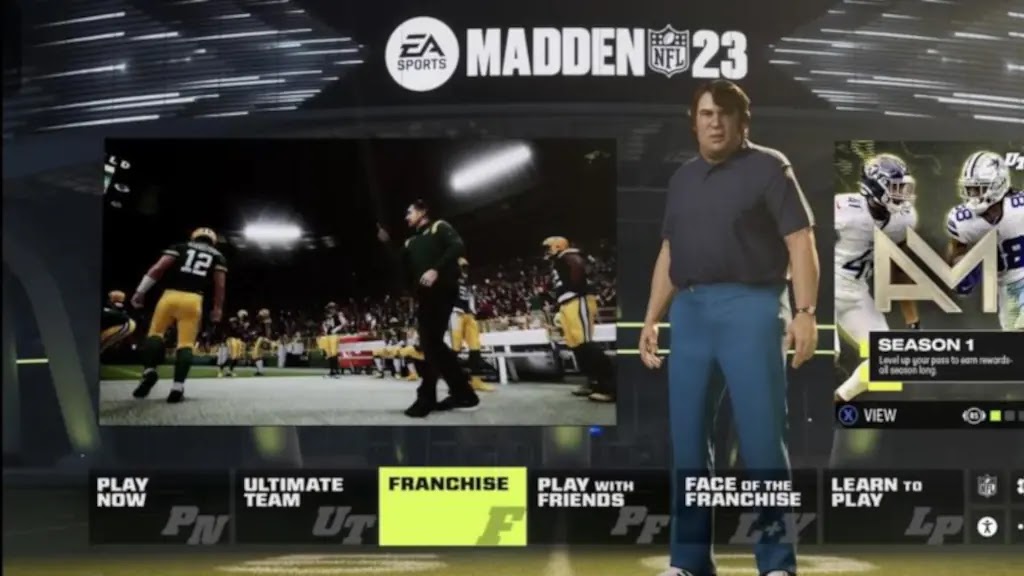
However, the primary carrot dangled in this mode is the overall sense of progression. Play your games, meet certain goals, watch your players improve and do what you can to help your team improve too. That can be through internal player development, scouting for the best upcoming rookies, making major trades or free agent signings and more. There were some great changes made to how staffing and scouting worked last season, and those have been carried over here.
Madden NFL 23 drills down deeper into the players though, assigning them motivations that can impact their progression, but also how they feel about their relationship with the team. This is most notable in how it impacts things like contract negotiations. If the player doesn’t feel like you’ve done right by them, it’s going to be much harder to get them to come back on a reasonable salary, which in turn depletes the amount of money you have to field the best team you can.

If the gameplay simply stunk, none of the above would matter – but the football action is still a blast. Are there odd AI behaviors that pop up? Sure – there’s 22 players on the field all trying to work independently of one another and exploitable to outright odd things can happen in zone coverage for example. But by and large the way the lines mash against one another, the way wide receivers try to shed jams at the line of scrimmage, the way running backs try to eek out a few more yards and more all just feels good. Add to it the momentum meters and objectives during the game that might give one team an advantage over the other (for example during Lions home games, they can receive a slight acceleration boost if things break their way), and there was a lot that I enjoyed.
Madden NFL 23 continues to make improvements, and for those thinking it is just a roster update? Give it a go first and you’ll see that it’s a lot more. This is especially true of Franchise Mode, which is where I tend to spend the majority of my time. There’s still some rough edges here and there and room for improvement with some of the languishing modes, but by and large Madden NFL 23 is a great tribute to the series’ namesake and an entertaining game of football.
Score: 8.5 / 10
Estimated reading time: 8 minutes
Battlefield 2042 is an ambitious title that steps away from the last few historical titles and takes us to a future where we see plenty of those massive scale battles filled with epic Battlefield moments. That being said, there are some changes to the normal formula that may frustrate purists and there are some launch issues that are holding the release back from its full potential.
The focus here is on the massive scale battles that can support up to 128 players. That is just a mind boggling number, and it can make the most active points of the battlefield a chaotic joy to dive into. My personal style tends to be of the low kill / low death rate of a sniper who skirts the fringes of the active areas using a drone to scout the area and tag enemies for your teammates to see. Anyone who has read my other reviews of various shooters know that I prefer this ranged, strategic style of gameplay. Battlefield titles tend to do this far better than the more claustrophobic shooters like Call of Duty where you might have a map or two or a mode or two that sets snipers up for success, but the majority of the environments tend to be very sniper unfriendly. That is not the case here.

There are two design choices that are likely to be most controversial to veterans of the series. The first is that there is no single player campaign mode. The focus here is on the multiplayer (though you can do single player with bots as well), and while there’s a loose narrative around who the two teams were and the backdrop for their conflicts, that’s clearly not the priority here. That being said, if you’re hoping for a gripping story with one of those short-lived but bombastic storylines… you’ll be disappointed. I almost always play these campaign modes, but I have plenty of friends who never touch them and just jump right into the multiplayer component.

In terms of the actual modes, the two major modes of Conquest and Breakthrough remain. I tend to gravitate towards Conquest myself, with its strategic take on capturing zones to more quickly bleed off enemy reinforcements. One of the more interesting aspects of the game are the major storms that can show up and wreak havoc on certain maps (reminding me of the storms from Battlefield 4 that I still remember so fondly to this day) – especially in Hazard Zone. There is a mode with far fewer players (32) where the squads attempt to collect as many drives from crashed satellites. There are a couple of extraction moments in each of these matches, and you don’t want to miss those as you are trying to collect as much as you can… while still getting away.

It’s worth calling out that there are some graphical oddities. I’ve seen clipping through the bottoms of maps on kill cams, weird flickering / lighting effects gone wild and some of the destructible environments behaving weirdly (such as taller structures falling oddly when they start to topple). They are particularly jarring because this is very clearly a AAA title with graphics that lend themselves to some jaw-dropping moments and excellent audio design. I imagine these will get ironed out sooner than later – the Battlefield games have something of a recent track record of releasing with issues like this and seeing them get smoothed out over the next month or two.

Score: 7.75 / 10