• Kingdom's Return: Time-Eating Fruit and the Ancient Monster - PS5 Review

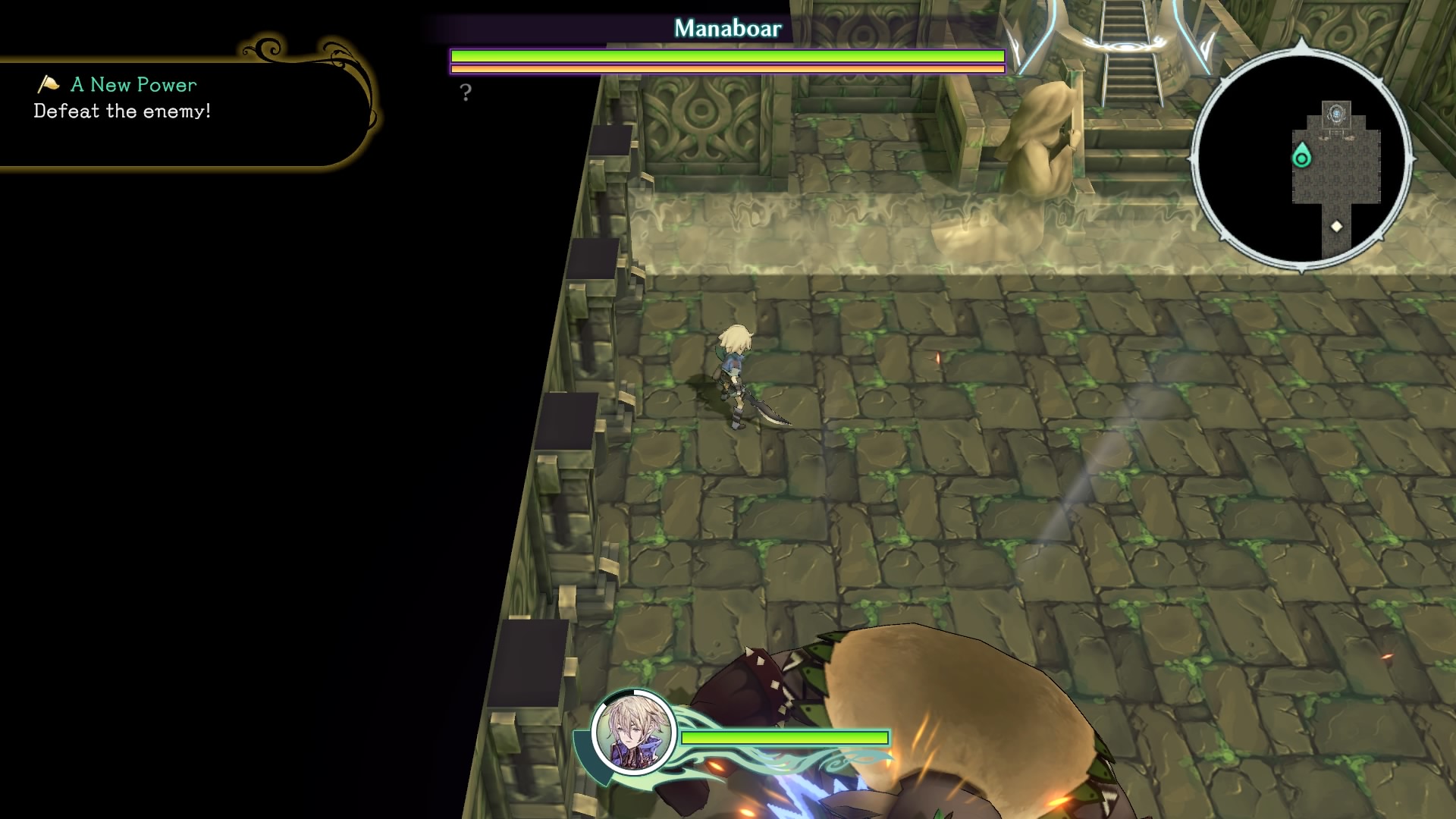
    Kingdom's Return: Time-Eating Fruit and the Ancient Monster is Inti Creates latest project. Blending 2D side-scrolling and town building simulation, you'll be venturing through a small interesting world as you try to restore a kingdom whose time has been stolen from it.

  • Minos - PC (Steam) Review

    The tower defense genre is one that doesn't tend to innovate much with static maps, various traps, and its simple to grasp gameplay loops. At least, that is until Minos with a mighty laugh to prove you wrong.

  • Decollate Decoration - PS5 Review

    Hello everyone and welcome to a new KEMCO title! But wait a moment, this one is different to the retro JRPGs that you’re probably expecting when you hear KEMCO from me by this point. Instead what we have is a sort of point-and-click style visual novel! Something a little new and fresh coming out here!

  • Volontes - Nintendo Switch Review

    Have you ever grown up feeling like you don't belong? For our Heroine, that's the feeling she lives with everyday in her small farming village. But it's not her only secret...

  • John Carpenter's Toxic Commando - PC Review

    Toxic Commando harkens back to video games years ago when they were fun and innovative while giving the player freedom to explore among the waves of enemies in a 4 player chaotic onslaught of combat and driving mechanics.

  • Dread Delusion - Xbox Series X|S Review

    Today we’re looking at what has rapidly become an absolute favorite in the open-world RPG genre for me. An interesting story, memorable NPCs, stunning visuals, and a setting absolutely dripping with flavor, Dread Delusion sets its tone immediately and sticks with it.

  • People of Note - PS5 Review

    ...I love music in general. After playing the People of Note demo, I knew I had to play the full game.

  • Valor of Man - PC (Steam) Review

    Valor of Man, by Legacy Forge and Numskull Games, is a turn-based roguelite RPG where you guide a party of four through ever increasing difficult situations. Achieving victory is never assured and the randomness of the roguelite nature will either be your best friend or your worst enemy.

  • Starship Troopers: Ultimate Bug War - XBXS Review

    Are you ready to do your part for the United Federation and join in the most realistic depiction of war ever created? Today we join General Johnny Rico and Major Samantha Dietz as they present the first ever game created under supervision by FedDev for the enjoyment of those on the path to citizenship. Ultimate Bug War follows the path of Dietz during the First Bug War 25 years ago.

  • Soulmask - PC Review

    Soulmask enters the increasingly crowded world of multiplayer-capable survival crafting games with a launch that has bundled its first DLC pack as a free download for anyone buying it within the first month. Featuring some striking Egyptian-style graphics...

Showing posts with label Marvelous USA. Show all posts

Story of Seasons: Grand Bazaar - Switch Review

Story of Seasons: Grand Bazaar by developer Marvelous Games and publisher Marvelous USANintendo Switch review written by Izzy with commentary by Pierre-Yves on a copy provided by the publisher. 

Estimated Reading Time: 8 minutes

Share:

It’s a Grand Opening! Marvelous USA Launches STORY OF SEASONS: Grand Bazaar, Bringing Breezy Living to Nintendo Switch™ 2, Nintendo Switch™, and PC

Explore the Charms of Zephyr Town and the Thrill of the Bazaar with the Expanded Reimagining of the Handheld Classic in the Latest Entry in the Cozy Farming/Life Sim Series


TORRANCE, Calif. — Aug. 27, 2025 Now open for business! Marvelous USA today announced the launch of STORY OF SEASONS: Grand Bazaar, the next installment in the beloved farming/life sim series. The title is available through the Marvelous USA Online Store and participating retailers on Nintendo Switch™ and Nintendo Switch™ 2 in a standard physical edition and a physical Premium Edition; the Nintendo Switch™ 2 Edition features the full game on cartridge. The title is also available digitally in standard, Deluxe, and Super Digital Deluxe editions on Nintendo Switch and PC. The Nintendo Switch™ 2 standard digital version can be upgraded with separate DLC that delivers the same content. An Upgrade Pack is also available to upgrade the Nintendo Switch version to the Nintendo Switch™ 2 version.
 

Grand Bazaar is very dear to many of us on the development team, and we’re excited to introduce a new generation of gamers to Zephyr Town,” said STORY OF SEASONS Series Manager Hikaru Nakano. “To our longtime fans - we are very pleased to offer you a classic STORY OF SEASONS experience with modern enhancements. As we continue moving the series forward we hope our longtime fans continue to enjoy their time living in the charming worlds we create!


Traverse Zephyr Town in new ways thanks to the ability to glide across the skies and soak in the updated visuals highlighting all the town’s unique charms, including the delightfully diverse residents that players can befriend as they begin to set down roots in their new home. Days of rewarding farmwork, relaxing exploration and socializing, along with an abundance of leisure activities and festivals await, all culminating in the most important day of the week—bazaar day! Players can look forward to the thrill of the sale each week, customizing their stall to attract more patrons and honing their sales tactics to grow their business alongside their farm.
 

STORY OF SEASONS: Grand Bazaar Launch Trailer


About STORY OF SEASONS: Grand Bazaar

Zephyr Town’s bazaar was once one of the grandest in the world, drawing customers and peddlers from all four corners of the globe. These days, though, the bazaar has more tumbleweeds than customers. It’s up to Zephyr Town’s newest resident to turn its fortunes around! Players will raise animals, harvest crops, craft rare delicacies, then sell wares at their very own stall in the bazaar. As the bazaar business grows, new goods and services will arrive, which players can use to improve their farm. Help return prosperity to the bazaar, settle down for a cozy life and start a family, and Zephyr Town is sure to thrive once again!
 

Inspired by the classic handheld title, the new STORY OF SEASONS: Grand Bazaar builds up and improves on the original in every conceivable way. The world is bigger and more alive than ever thanks to incredible new visuals, new characters, an expanded story, and full character voice work in story events—a series first. Take advantage of Zephyr Town’s unique weather, using the wind to make travel and farm tasks a breeze! The winds of change are coming to deliver a new life in STORY OF SEASONS: Grand Bazaar.

STORY OF SEASONS: Grand Bazaar Key Features:

 
Cozy Living Reaches New Heights: The magnificent beauty of Zephyr Town shines with gorgeous graphics while a richly voiced story carries the player on a rewarding journey of farming, friendship, and renewal.
 
Take the Leap: Harness the power of the wind! Use windmills to create new products to sell, and effortlessly travel across the town on a glider. Use new jumping skills on the farm, or when exploring the town. You never know what you’ll find!
 
Ring the Bell and Sell, Sell, Sell: Your farm’s produce and goods take on additional importance as the heart of the business at the lively weekly bazaar. Customize the stall and take charge of sales to build up buzz and power up profits.
 
A Beautifully Cozy Life: Enjoy a rich life amongst a colorful community of characters, from friendly townsfolk to magical Nature Sprites. Build a home, grow relationships, and even find love and start a family.


Physical editions of STORY OF SEASONS: Grand Bazaar are available on Nintendo Switch™ and Nintendo Switch™ 2 through participating retailers and via the Marvelous USA Online Store. The title is available in a standard physical edition for an MSRP of $49.99/$59.99, and a physical Premium Edition including a copy of the game on your preferred platform, an adorable plush Suffolk sheep, a cloth poster, a physical art book with over 115 pages of cozy art, and a two-disc CD soundtrack, for an MSRP of $69.99/$79.99.
 
STORY OF SEASONS: Grand Bazaar is also available digitally on Nintendo eShop for Nintendo Switch and PC for $49.99, and the Nintendo eShop for Nintendo Switch 2 for $59.99. The Digital Deluxe Edition is available on Nintendo Switch and PC for $59.98; while the Super Digital Deluxe edition is available for $69.98. Players can also purchase the “Trunk of Transformation Bundle” DLC separately for $9.99.
 
Nintendo Switch™ 2 players can also upgrade their Nintendo Switch™ 2 standard edition with the “Trunk of Transformation Bundle” DLC for $9.99, or a “Super Digital Deluxe” DLC set for $19.99.
 
The Nintendo Switch™ 2 Edition Upgrade Pack is also available for $10 for anyone that owns either the physical or digital Nintendo Switch version of STORY OF SEASONS: Grand Bazaar. The full details of each digital edition are available below.
 
STORY OF SEASONS: Grand Bazaar Digital Standard Edition (Nintendo Switch, Nintendo Switch 2; PC):

  •     STORY OF SEASONS: Grand Bazaar base game
  •     “Cow Set” cosmetic DLC: Cow Costume, Cow Headwear, Cow Glider

 
STORY OF SEASONS: Grand Bazaar Digital Deluxe Edition (Nintendo Switch; PC):

  •     STORY OF SEASONS: Grand Bazaar base game
  •     “Cow Set” cosmetic DLC: Cow Costume, Cow Headwear, Cow Glider
  •     “Trunk of Transformation” cosmetic DLC: Chick Costume (Yellow), Chick Headwear (Yellow), Chick Costume (Black), Chick Headwear (Black), Alpaca Costume (White), Alpaca Headwear (White), Alpaca Costume (Brown), Alpaca Headwear (Brown), Ninja Outfit, Ninja Glider, Ninja Bazaar Set, Braid & Flowers, Cat Ear Buns with Highlights, Short Perm, Side Part with Highlights

 
STORY OF SEASONS: Grand Bazaar Super Digital Deluxe Edition (Nintendo Switch; PC):

  •     Includes the contents of the Digital Deluxe Edition, plus:
  •     STORY OF SEASONS: Grand Bazaar digital soundtrack
  •     STORY OF SEASONS: Grand Bazaar digital art book

 
STORY OF SEASONS: Grand Bazaar “Trunk of Transformation Bundle” DLC (Nintendo Switch, Nintendo Switch 2, PC):

  •     “Trunk of Transformation” cosmetic DLC: Chick Costume (Yellow), Chick Headwear (Yellow), Chick Costume (Black), Chick Headwear (Black), Alpaca Costume (White), Alpaca Headwear (White), Alpaca Costume (Brown), Alpaca Headwear (Brown), Ninja Outfit, Ninja Glider, Ninja Bazaar Set, Braid & Flowers, Cat Ear Buns with Highlights, Short Perm, Side Part with Highlights

 
STORY OF SEASONS: Grand Bazaar “Super Digital Deluxe DLC” Set (Nintendo Switch, Nintendo Switch 2, PC):

  •     Includes the “Trunk of Transformation Bundle” DLC, plus:
  •     STORY OF SEASONS: Grand Bazaar digital soundtrack
  •     STORY OF SEASONS: Grand Bazaar digital art book


Developed by Marvelous and published in the Americas by Marvelous USA, STORY OF SEASONS: Grand Bazaar launched for the Nintendo Switch™ 2, Nintendo Switch™, and Windows PC via Steam on Aug. 27, 2025. The title is published in Asia by Marvelous Inc., and in Europe by Marvelous Europe. This title is rated “E for Everyone” by the ESRB.
 
For more information about STORY OF SEASONS: Grand Bazaar, visit the official site at www.storyofseasons.com/grandbazaar, and follow the series on X and Bluesky.
 
Information about Marvelous USA’s products can be found at www.marvelous-usa.com. Fans can also check out the latest videos from the Marvelous family of titles on YouTube and get updates by following on Facebook, X, Instagram, and Bluesky.
 

###

About Marvelous USA

Marvelous USA, Inc., is a wholly owned subsidiary of Marvelous Inc., which is a publicly traded company listed in the Prime Market of the Tokyo Stock Exchange. Headquartered in Torrance, California, Marvelous USA publishes PC and console titles from its parent company including the renowned STORY OF SEASONS, Rune Factory, and DAEMON X MACHINA series. Additionally, Marvelous USA provides operations and marketing support for the organization’s growing arcade business unit in the West.
 
Nintendo Switch is a trademark of Nintendo


Article by: Susan N.


Share:

Rune Factory: Guardians of Azuma - Switch Review

Rune Factory: Guardians of Azuma by developer Marvelous Games and publisher Marvelous USA (XSEED)Nintendo Switch review written by Pierre-Yves with a copy provided by the publisher.

Estimated Reading Time: 7 minutes. 

Share:

Trinity Trigger-PS4 Review


Trinity Trigger by developer Furyu Corporation and publishers XSEED Games, Marvelous Games—Playstation 4 review written by Richard with a copy provided by the publisher.

Estimated reading time: 7 minutes
Trinity Trigger is a dive into the nostalgic past of JRPGs. A nostalgic dive done really well while also being modernized enough to keep it up to par in today's market. So let's dive into the review and see just what Trinity Trigger has to offer.

Trinity Trigger stars, surprise, three characters from different walks of life who come together through divine intervention. Quite literally, actually. You'll first be introduced to Cyan, a young man living with his sister after his parents have passed away. He makes a living as a Scavenger, someone who explores the local Arma to collect materials and defeat the monsters within. Well, he also happens to have a sigil in his eye, so there's that too. One day a girl named Elise stops by and tells him she can help him figure out the details about the sigil. It isn't too long before you meet Zantis and your trio is complete.


Trinity Trigger has a really interesting storyline and crafted world going on for it. In an age where the Gods of Order and Chaos have long since stopped battling between themselves for supremacy, the broken weapons of the Gods have fallen to the ground, forever altering the landscape in accordance with what the God presides over. These weapons, or Arma, are home to many mysteries, and monsters alike. Scavengers are those who make it their mission to explore the Arma in order to collect mechanisms or materials. Trinity Trigger is set in a continent with a vast array of different landscapes all caused by the descent of the Arma and the impact they have on the land around them, which is why you can have an ice filled mountain right next to an arid desert.

In terms of gameplay, Trinity Trigger takes on a bit of an old-school flavour. You have a top-down 3-D style where you explore areas, beat up enemies, break objects for materials, and solve puzzles. For combat, you have a range of options, consisting of three characters to swap between (if you aren't playing multiplayer), 8 different weapon types to unlock, as well as customizable combo options. That seems like a little much maybe, so let's break it down a little more for you. When you first start playing you'll be limited to what weapons you can use, and may have to swap between other characters who have different weapons. Each weapon type has its own benefits and demerits, as well as effectiveness against different types of creatures or bosses. As you continue through the game you will start unlocking more weapon types.

Now, with these weapon types you can swap on the fly in the middle of battle, but you can also equip different combo moves. Each weapon has a three hit combo that consumes stamina to use each hit. If you run out of stamina you can still attack, but your damage is SEVERELY reduced. Each hit in the combo you can select one of two different moves, some are lower damage ratings but have effects attached, such as small health regen on hit. Your combo moves can be upgraded with TP that you can acquire from defeating enemies. As you attack and get attacked, you also build up two different gauges: an aura and a trinity attack. The trinity attack will hit all enemies on-screen for large (but capped) damage, and the aura changes based on the equipped weapon, but can be anything from a boost to attack damage to a temporary health regen. There is also a weapon skill that recharges over time, and is like a special move for the weapon you have equipped.


In combat you also have a dodge, which is a fairly integral part for fighting, especially the later in the game you get. Dodging just before an attack hits will nullify any damage, as well as refill a chunk of your stamina gauge. At this point, I'd like to talk a bit about your teammates. GENERALLY, your teammates are rather competent. They will dodge, attack, and usually position themselves well based on the weapon they are using. What they won't do is use weapon skills or auras, or swap weapons, you'll need to swap over to them to do that yourself. The AI on deciding how to dodge is also fairly...temperamental. Thankfully your AI controlled teammates take reduced damage. Where the AI really falls apart though is in the late/post game of the primary storyline. Your buddies have very little grasp about the concept of sustained attacks or the introduction of lingering effects. For example, there is a boss that has a fire breath, and can also drop puddles of burning fire. At the time of writing this (not sure if this'll get patched), your allies will dodge the first hit, and then not care about sitting in the damage zone until they die.

Now, I'd like to point out right now that all these big attacks are VERY well telegraphed, either by a big wind-up from the enemy, or a glowing zone on the floor you want to get away from. These attacks hurt. Like, really bad. Late into the post game, there are some enemies that could 2 shot me easily with big moves. It's actually really fun, because the focus is on learning attacks and how best to avoid them and using good judgement. While you can carry around a small house equivalent of healing items, you'll find as the game progresses you'll be using more and more of those on your allies, leaving none left for you. Legitimately, some of the optional bonus bosses I just left my allies dead because it was less wasteful. Did this make the fight three times longer? Oh definitely, but it wasn't quite as frustrating. Luckily you could just play with friends, and get mad at them instead! Up to three people, which is really nice.

In relation to what I said above, there is more than just the...main, I suppose, storyline. After "clearing the game", a multitude of new sidequests appear, which you map will indicate to you if a sidequest is available in an area. As you clear these sidequests you get to unlock more things, gain access to new areas, and fight more bosses, as well as start new storylines. I'm inclined to say the game is probably twice as long as the first time you view the credits, if you want it to be.


Now, let's talk about another integral function to Trinity Trigger: crafting. While weapons are static and power increases come from unlocks and TP to increase stats, both items and manatite can be crafted once you get a recipe to what you want to make. Items are pretty self explanatory, so let's talk about manatite. Manatite can be slotted into weapons as both offensive and defensive options. Only one type of each manatite can be attached at a time, and depending on the rating and quality, can have multiple or increased effects. For example, a higher rated attack stone could increase damage by 30%, very useful for healthier bosses. You can craft manatite to slot in at any crafting store once you unlock the option.

I think that pretty much covers what you need to know about combat related things, so let's talk about the art-style and soundtrack decisions. If you've played Alliance Alive, that's a good basis for the art-style. Outside of the hand-drawn character portraits from some of the dialogue scenes, you have 3D characters in a sort of chalk-y pastel chibi like style in a really well-crafted world. It really brings that old-school nostalgia but with graphics that wouldn't be put down by today's standards. The soundtrack is also pretty good, doing a nice job of catching the themes and concepts associated with both area themes and the battle themes.


Overall, I have to say I really enjoyed Trinity Trigger. Even though the ally AI can get frustrating the later into the game you get, there is a lot to enjoy. The combat is fun, the customization is easy enough to deal with if you don't want to delve too deep, but is also expansive enough when combined with the weapon combos where you can really get into it. There are plenty of interesting sidequests and optional content to tackle, and the wide array of weapons really keeps things fresh. Whether you're looking for something to meet that nostalgic feeling you need filled or a new player to retro style themed games, Trinity Trigger is a great addition to your library.

Score: 8.5 / 10
Share:

Neptunia x Senran Kagura: Ninja Wars - PS4 Review


Neptunia x Senran Kagura: Ninja Wars
by developers Idea Factory, Compile Heart, and Tamsoft and publisher Idea Factory InternationalSony PlayStation 4 review by Richard with a copy provided by publisher.

Estimated reading time: 7 minutes


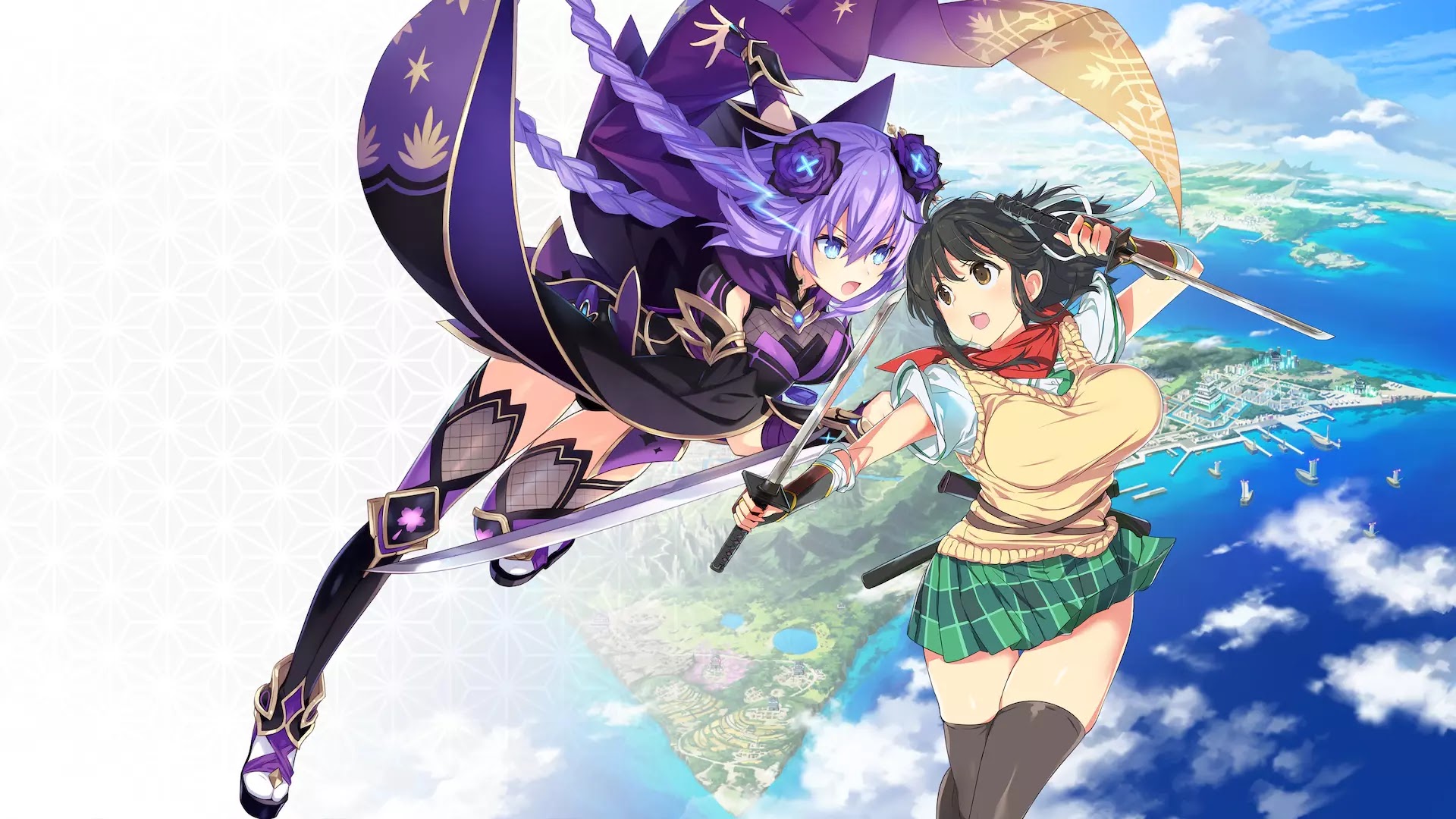
Nin nin. Nin nin. Toki- hold up, I'm getting my references mixed up. Either way, it's time for another collaboration spin-off title from the Neptunia franchise, this time it's ninja themed with Senran Kagura! With all of the fourth wall breaking jokes of the Neptunia franchise, combined with the ninja "physics" of Senran Kagura, it's time to bounce on in to a world of shinobi in Neptunia x Senran Kagura: Ninja Wars.

In Neptunia x Senran Kagura the four Ninja Goddesses, or Neptune and her fellow goddesses, are the four strongest ninjas of the Compa style ninja arts, fighting for Heartland (Compile Heart) against the ninjas of Marveland (Marvelous) who are the four lead ninjas of each primary faction in the Senran Kagura titles. Every night it's a 4v4 battle as the Senran Girls attempt to destroy Heartlands share crystal. All this changes however when one day a mysterious flying ship bombards them as they're fighting on top of a roof. Mechanical NINJAs then descend, and Heartland and Marveland are beset by the Steeme Legion led by Yoh Gamer and Tetsuko.
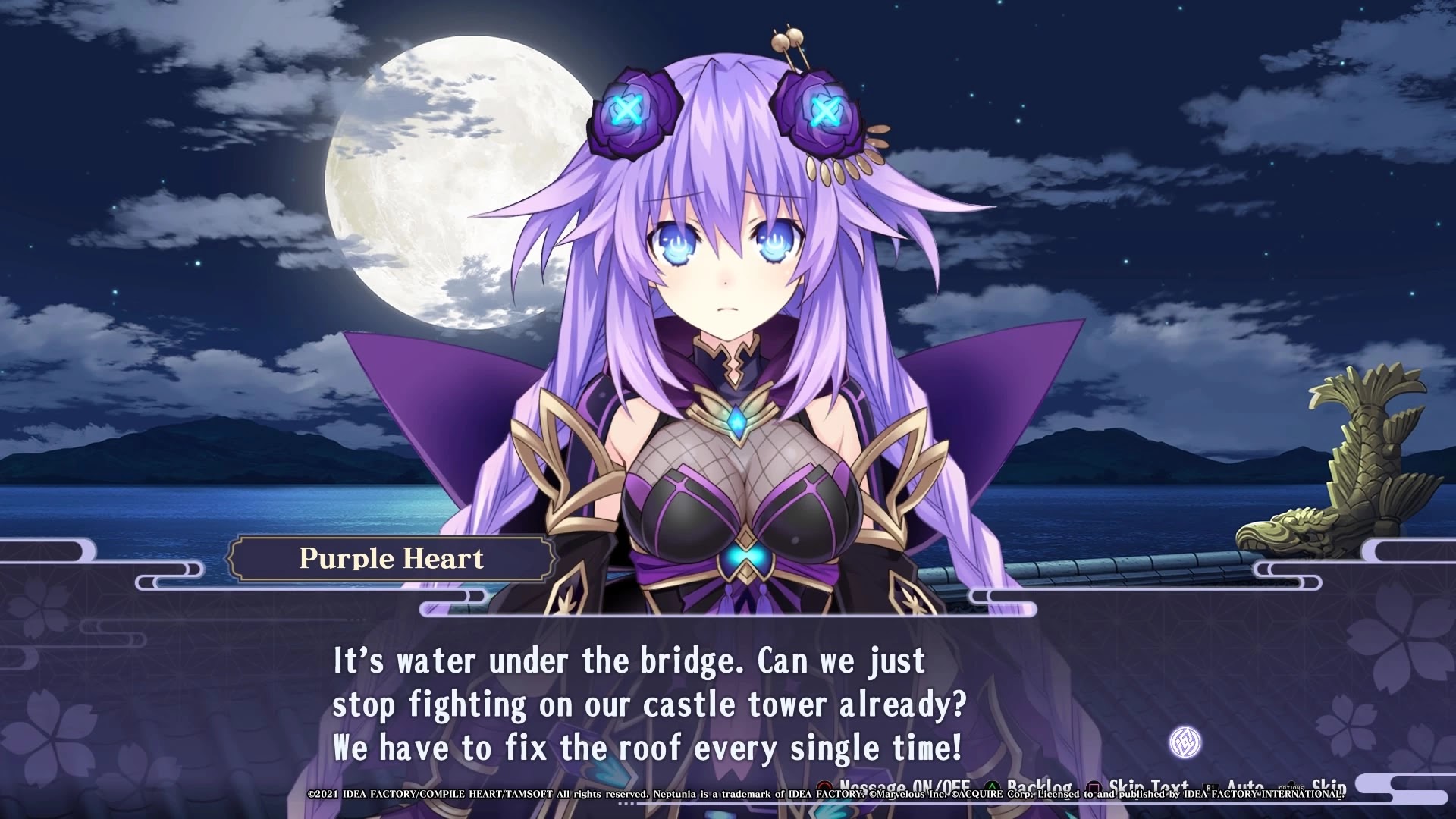
In terms of gameplay, Ninja Warriors is closer to Senran Kagura than Neptunia. You can bum around in town, browsing the market for equipment and items, managing your equipment, chatting up the townsfolk etc. Once you are prepared, you head into the field by selecting a stage from the world map. You will then begin combat in a 3D action style gameplay. Off you go to run around the field with a partner you can switch between, defeating enemies to open magical barriers, collecting treasure chests, and maybe fighting a boss at the end of the stage. You'll earn exp from defeating enemies, and will level up increasing your stats.

Each character has a standard attack combo, four ninja arte slots, as well as ranged weapons, kunais and shuriken. You can dodge, block, jump, and run, although most of those will use your stamina gauge. The stamina gauge will deplete as you perform actions, and will regenerate slowly over time, by attacking enemies, or in large chunks if you get a perfect guard off. Using ninja artes will take a set number of bars from the stamina gauge, and can be chained in a combo of up to four. Characters also have access to a super move if you can fill the gauge up, as well as an "elemental drive" mode, which can be activated for a set period of time, but provides benefits such as health regen or not flinching.

Something that may be of interest to any of you is that ranged weapons can actually be extremely powerful in certain scenarios, so don't neglect them. They have a set ammo capacity, but will recharge fairly quickly over time. Also, for those familiar with the Neptunia franchise, you may notice that apart from Neptune, the other three goddesses are using different weapons than you may be used to (Editor's Note below). As you're playing through the game, you will collect spirit gems and talismans. Talismans can be equipped as accessories, and spirit gems can be placed in a grid to give passive bonuses, such as periodic healing or increased damage output. The spirit gems come in different levels, and if you get two of the same you can combine them into a higher level gem. The gems can be put into a grid where certain arrangements will provide bonuses.

After you've completed a stage, you can return from the world map to explore, earn more exp, and collect any chests you may have missed. As you progress a little into the game, you unlock a minigame called "Peaches and Cream Meditation" where you use the controller motion sensor to balance on a giant peach. Succeeding gives a stat bonus for the next three stages to you and your partner. It's an interesting minigame that has three difficulty options with better bonuses the harder the difficulty. You can also accept requests from the local shrine, where you be sent straight into the field when you accept the request. Some requests can only be unlocked by talking with the townspeople.

After you manage to finish the game, you get to unlock "Yomi Training". This is a pack of 8 sets of 3 stages each that have set restrictions on the stages, and you have to go through all three in one go, where your health and drive uses carry over between the stages. Completing all 8 unlocks a final challenge for you to face. Pro tip, the challenge in the top right is probably the easiest. These stages give a nice post game challenge, and while some of them, one in particular, made me almost throw something for real, they tend to be a good test of skill.

I am pleased to announce that Ninja Wars combines both the musical styling of Neptunia and the Senran Kagura franchise, in a wonderful combination of traditional Japanese themes and newer electric guitar. The characters also have new 2D models that are well illustrated, although the Senran cast does look a little off, especially Homura who looks cross-eyed half the time.

Ninja Wars is a pretty solid game all around, although it does come with a few…quirks, let's say, that can be rather frustrating. Enemies can, and will, attack you off screen and flinch-lock you given the opportunity. The evade has… mixed usefulness, and it is generally better to guard most attacks, especially since perfect guarding negates damage taken. The game did lag at times, although it happened rarely, and surprisingly not when there were a bunch of enemies on-screen. Fair warning as well: the game is short. It only took me about 10 hours to finish 90% of the quests and the main storyline. There is a little more due to the post game content, but it is purely optional. Combat will get a little repetitive, so you may want to play periodically, but the game is short enough that you don't really notice it. There also aren't a whole lot of enemy variations, as there are largely just a bunch of palette swaps for more enemies.


Editor's Note - PY

Overall while fun to play, I did have a discussion with Richard about the weapons chosen for the four Goddesses of Gamninjustry. For Neptune, hands down worked as it is literally her usual weapon type of a Japanese Katana. For Noire, while her usual Western European rapier blade would have been out of place, her dual Sai were well designed and she had a great move set to go along with that weapon type. Where I found things not working as well were with Blanc and my favorite Goddess Vert. I found that their weapons didn't quite jive with their characters as a hammer or a Kanabo would have been great and in theme for Blanc and a spear or a Naginata for Vert. I eventually settled in with NepNep and Asuka for the rest of the adventure after having tried everyone as a partner to Neptune.


Overall, Neptunia X Senran Kagura: Ninja Wars is a pretty fun game. The combat largely takes after Senran Kagura with Neptunia themes and felt really smooth. The plot is fairly cliché, more than I was expecting for a collaboration spin-off, the side scenarios were pretty funny, and it was all in character. The illustrations are nice, the music is all great, and the stages don't take too long to finish, so it doesn't start to wear on you too bad. While the game is incredibly short, the post game content is a nice challenge.

Fans of either Senran or Neptunia will be able to get a kick out of Neptunia X Senran Kagura: Ninja Wars.

Score: 8 / 10


Share:

Akiba’s Trip: Hellbound & Debriefed - PS4 Review


Akiba’s Trip: Hellbound & Debriefed by developer Acquire Corp. and publishers Marvelous and XSEED GamesPlayStation 4 review written by Pierre-Yves with a copy provided by the publisher.

Estimated reading time: 5 minutes


Akihabara, Akiba for short, is considered by many to be the centre of modern Japanese popular culture and a major shopping district for video games, anime, manga, electronics and computer-related goods. Icons from popular anime and manga are displayed prominently on the shops in the area, and numerous maid cafés and some arcades are found throughout the district (Wikipedia). So with all of that as a potential setting for vampires, otakus, cross dressing and stripping techniques, good luck explaining what you're playing to a normal person!

I want to start this off by mentioning that both me and Richard had no idea that "this" title even existed. I own the sequel that we thought was the first Akiba's Trip, Undead and Undressed for the PS3, PS4 and the Vita as well as Akiba's Beat, but Hellbound & Debriefed? It only clued in that this was not new content about fifteen minutes in as I wasn't seeing the same elements that I expected to find.

So with that, I had a little bit of a dilemma while trying to figure out exactly how to review this original entry into the series. Originally released solely in Japan for the Sony PSP this is the first time that it's seeing a localization but as it's coming after its sequel, and years after that mind you, there constantly felt like there were elements lacking BUT, knowing that it came first and that it was going to be the first, seeing the roadmap and having a better idea of how the elements of the sequel came to be was interesting.

So the big question. Worth playing? Yes but more for the novelty than anything else. The reason for this is that if you've played the sequel, one, twice, three times depending on the platform and PSNow, you've essentially played what will feel like a less complete version of Undead and Undressed. Where things may be interesting is that while it is the first title and while it may feel like the same story, there are a few small interesting spins on the content which were nice to experience.

Breaking into the nitty gritty though, Akiba's Trip, probably better known and pronounced as Akiba Strip, is the story about quasi vampires invading Akihabara and the only thing truly standing between the humans and their demise, is you. An Otaku of varying amounts depending on your dialog choices, you'll soon be leveling up as you learn a few moves to help you brawl your way through the back streets all while removing the clothes off anyone that gets in your way.

So due to the quasi nature of these vampires, and you now finding yourself as one, you can like Marvel's Blade walk out in the sun as long as you've covered up. Lose your clothes and you die as the light of the sun will burn you alive. Applying to your enemies just as much, you'll have to learn your high, medium and low attack patterns to be able to either shred the clothes off of your opponent or be able to move easily, pull it off and potentially use it yourself.

There's no avoiding it, glossing over it, or even hiding behind something else against it, it's ridiculous. It's also not really something most people will want to play around other people as you are stripping them down to their underwear so generally playing in the living room is out depending on the household composition. It's not "bad" per say and there's no real gratuity, but you are tearing the clothes off of other people while running around Akiba so you may just want to pay attention to who's around or where your TV is pointing. Unless you want to traumatize your neighbors!

Mechanically, Hellbound & Debriefed does feel a bit clunky at times when you're trying to move around or shift to better attack your opponents. Launching attacks to grab can also just not work or work when you want them too as they are all mapped to your actual attack buttons and often you'll find yourself swinging a punch instead of launching a grab. After the sequel, there's also the issue with trying to pick fights with some people that you are never told that if you haven't bought the manual on how to strip them down, because who doesn't like a classy suit? You need to buy a book first!

Graphically though, it's made a decent tradition over to the PS4. The text is easily to read, the type of models are easy to distinguish, but following on the clunkymess are that the menu interfaces that don't allow you to either change clothes or save while in a map. They have to be done on the world map but there's never a prompt to tell you this so that took a while to figure out as my "closet" was only getting bigger. It's a bit of a pain down the line as you would like to be able to more easily swap out, sell, or upgrade certain prices while doing away with others without having to go back to the main map.

Summary

So overall, Akiba's Trip: Hellbound & Debriefed is going to most likely find itself as more of a novelty experience than one that draws new fans to the series being the precursor to Akiba's Trip: Undead and Undressed. It's not a bad brawler or beat 'em up, but it does show its age in its mechanics especially when compared to its sequel that we've had our hands on for much longer.

Score: 6 / 10


Share:

Uppers - PC Review

Uppers by developer Bullets and publishers XSEED Games and Marvelous USAPC (Steam) review written by Pierre-Yves with a copy provided by the publisher.

Estimated reading time: 5 minutes


If there’s one thing that I can state by this point in time, it’s that if you want to make a brawler, it’s going to have to stand out especially with the tough competition out there. Coming to us from developer Bullets and publishers XSEED and Marvelous, Uppers is the story of two tough guys on an island that recognizes strength above all else and if you want that girl to notice you? You’d better be tougher than the rest!

Very much upfront, if you’re looking for something serious, you won’t find it here. That said, if you’re looking for something fun and easy enough to settle into for several hours? You’re in the right place. Uppers is mainly the story of Ranma and Michiru and their journey to beat the crap out of everyone stronger than them on the island known as Last Resort which prides itself on being a paradise for the strong. For Michiru, it’s about being the toughest. For Ramna? Michiru may or may not have lit a fire under him by telling him if he really wants to find love, well ‘round these parts? Girls only look at the strongest. Fire lit for the sake of love, Ramna finally gives into Michiru and hilarity and unrealistic situations ensue.


Now for the big thing. Uppers walks a very fine line, but it works. From a gameplay perspective, there isn’t that much that you actually do. From the main “hub”, you can buy a few outfits for Ramna, Michiru and your “Princesses” (more on this later), view a collection gallery, or start the next mission. In the missions, you can easily replay any already completed ones to get a better rank which you’ll want to do as without it, certain chapters will remain locked to you basically forcing you to get better if you want to see the end. In combat, you can light attack, heavy attack, throw, dodge, block, and swap characters. That’s it.

From a basic perspective Uppers uses a very, very simple system which was even more apparent to me having recently come from the Yakuza Series which is probably at this point a King in the brawler realm on multiple fronts. How Uppers gets around being so basic but still working very well though is that the stages are not very long and there’s a fair amount of environmental interactions to do other moves such as throwing people at neon signs, kicking a bunch of missiles over, knocking out classroom walls or slamming enemies through basketball hoops. It’s fun and it’s only amped up by a weird system which works because of what Last Paradise represents.

In every fight there’ll be a crowd of girls watching those fighting and demanding to be satisfied and entertained. Calls from doing light attacks, to comboed light and heavy, to breaking a wall, knocking a car over, or just throwing someone. Each of these actions will increase how much energy they are throwing your way and if you do really well, you get love letters and, having played the Senran Kagura series and not being surprised by much anymore, a panty slot machine. As you do these actions, the slot machine can come into play and if you get three matches, that set of panties is added into the available “catalogue” for your Princess to wear.
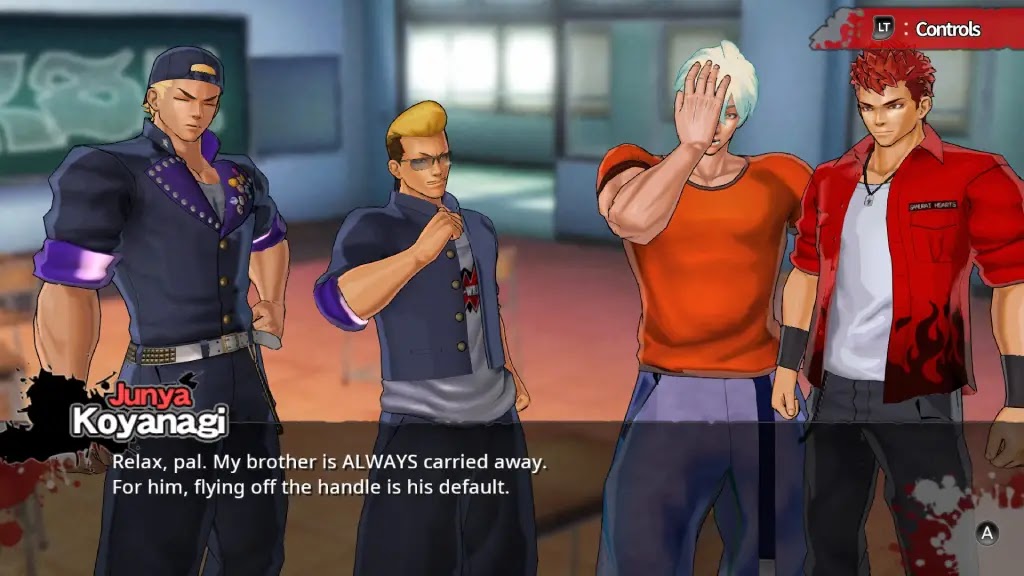

Princesses, unlike the rest of the fangirls just waiting for fights to spark around the island, are women who follow you into battle while granting you bonuses. As you fight and defeat more enemies, your chosen Princess at that time will level up granting you more bonuses such as more attack power for light and heavy attacks. There are a few to suit playstyles, but, with the playstyle being limited to mostly just light and heavy attacks or throwing for the most part, it really comes down to what aspect you want upgraded for yourself.

Otherwise, that’s all there really is to it. Uppers is simple, but it works. The only complaint I would have is that it often felt slow as in the combat and general movement could have been sped up a bit. The speed of gameplay makes even short and sweet stages take some time if only because you have to “run” over to the next batch of enemies and they feel so far away even if they logistically aren’t. 

Summary

So if you’ve been looking for a simple Brawler to take up some time and are in the mood for a few laughs as there is a fair amount of comedy along with the fighting, Uppers by Bullets and XSEED Games and Marvelous isn’t a bad choice.

Score: 7.25 / 10


Share:

Story of Seasons: Friends of Mineral Town - Switch Review

Story of Seasons: Friends of Mineral Town by developer Natsume Inc. and publisher Marvelous Entertainment, XSEED GamesNintendo Switch review written by Jim with a copy provided by the publisher.

Estimated reading time: 8 minutes


STORY OF SEASONS: Friends of Mineral Town is a remake of a GameBoy Advance game called Harvest Moon: Friends of Mineral Town, which is itself a remake of Harvest Moon: Back to Nature, which was one of my favorite games in the series so I was excited to try this new remake on the Switch. For anyone who doesn't know, Harvest Moon and Story of Seasons were the same series until 2014 when Marvelous took over localizing the games under the Story of Seasons name while Natsume kept the Harvest Moon name and developed their games under it. I don't know what it is that I love about the simple gameplay of these farming sim games, but ever since I played Harvest Moon: Back to Nature on the original PlayStation, I have loved almost all of them.

The game starts with asking if you would like to play as a boy or girl and then you get to both name them and pick their birthday. One new thing added was the option to pick from an Easy or Normal mode in which playing on Easy starts you off with more money and you earn more money when your produce ships. The game is already a fairly laid-back experience and easy in its own right so I don't see the need for this, but it’s there for anyone who wants it. The story itself is just as I remembered it: you inherit your grandfather's farm after he passes away in which you have memories of visiting once when you were a child. Now? Now you own it.

The farm is a bit of a mess to start with. There are rocks, logs, stumps, and weeds all over the place. You can clear up the weeds by picking them up and shipping them though you don't get much money for them or you can use your sickle to cut them. Logs can be cut with an axe and rocks can be smashed with a hammer but you will have to upgrade them to get rid of the bigger ones. Once you clean a bit of space you can use the little bit of money you start with to buy seeds at the shop and plant them and water them. Using tools will earn you experience with that tool and once you level up you can upgrade that tool at the forge for some money and the right ore.


You can get ore by mining and the deeper you go in the mine, the rarer the ore you will find. At first, it will be hard to go very far as you only have so much stamina and fatigue before you collapse and have to spend a day at the clinic. You can restore stamina and fatigue by using the hot spring and or by eating food that you have on hand. To further help with this, you can upgrade your house so you'll have a kitchen to cook in and make your own food but you could always visit the inn and have a bite to eat there too. In a pinch you can also eat your foods raw, but it gives less than if you ate something that was cooked.

Like the other games in the franchise, you can also raise animals such as chickens that can lay eggs every day as long as you keep them happy and healthy by feeding them and talking to them. There are cows you can milk, sheep that you can shear for wool, and plenty of others like alpacas and Angora rabbits! You are also given a young horse near the beginning of the game that you can raise into adulthood unless you've taken bad care of it. If you didn't take care of it then you may lose it, but if you do a good job in taking care of the horse, you will be able to keep it and ride it around town! You also get to name all the animals on your farm making you feel a little more attached to the animals you care for.

There are other things to do besides farming, you can make friends with the townsfolk and as you get to know them better, events will trigger telling you a bit of their story. For the bachelors & bachelorettes out there, you can fall in love with and it doesn't matter if you’re playing a boy or a girl, there is same-sex marriage in this game for the first time in the series. There are six girls and six boys to fall for each with their own personalities.


Another thing you can do is participate in holiday festivals; every month has its own holidays and you can play mini-games while doing it. One of the spring festivals was a horse race you can gamble on or win prizes from, and if you have an adult horse on your farm, you can even race! Each month is a season so there are only four months in a year in the game Spring, Summer, Fall, and Winter. Besides the festivals, every town's person has a birthday and you can give them a gift if you wish. You can cook once you have a kitchen, go fishing, gather resources like wood and stone to upgrade your house, coop, or barn to hold more animals. You can even watch TV!

By watching TV I actually mean read the TV as Friends of Mineral Town only shows text of what the show is saying and doing, but there are four channels to pick from. You have a Weather channel that tells you the weather the next day, Education channel that gives tips on playing the game, a News channel that tells you what's happening that month and lastly, the Entertainment channel that gives you a show each day (one day is a cooking show that will teach you new recipes to a show where a boy and girl with the same name swap bodies). Each episode doesn't take too long to read so it’s fun to see what these shows are about.

There are multiple shops and places to go in town each with their own hours and days they are closed, so planning is a must if you need more seeds from the general store, or if you need feed for your animals or such; luckily the map makes it super easy to see when a store is opened or closed. The farm map also helps you with seeing where your animals are and what each crop is that you planted. Animals can be put outside to graze and you won't have to feed them, just don't put them out on rainy days. The game automatically puts the animals back where they belong at 8 pm each day and this is super helpful as I remember it being a bit of a pain in the original game trying to put your animals back in the barn.


If you get tired of doing all the work on the farm yourself you can befriend nature sprites and have them work on your farm. They can not only water, harvest and ship crops, but they can take care of animals for you as well! As they work they will get better at the things you have them do. There is just so much to see and do in the game and like in real life there is not enough time in a day to do it all, and with what is all packed into STORY OF SEASONS: Friends of Mineral Town, a game day goes by fast (though time does stop when you are inside buildings, so that’s nice).

Summary

STORY OF SEASONS: Friends of Mineral Town, being a remake of my favorite game in the series, is one I had high hopes for it and I’m thrilled to say that it did not disappoint! I have loved every second I have played of this wonderful title and the few negative things I can find about it are that in today's day and age, it could have benefitted greatly with voice actors in addition to wishing you could set up your own market as you could in Harvest Moon: A Wonderful Life for the GameCube.

Beyond that, I really like this remake as it brought back so many memories of when I was a kid playing Back to Nature on the PlayStation. Even the music in this new game seems to be remixes of the original! If you like relaxing laid-back games then give this game a try!

Score: 9 / 10


Share:

Wizardry: Labyrinth of Lost Souls - PC Review

Wizardry: Labyrinth of Lost Souls by developer ACQUIRE Corp. and publishers XSEED Games, Marvelous USA, Inc.PC (Steam) review written by Richard with a copy provided by the publisher.

Estimated reading time: 7 minutes


Wizardy: Labyrinth of Lost Souls, or Wiz LOLS, is a dungeon crawler that takes a step back from the new age style of gaming for something a little more retro. Like, Windows 92 level retro. So join me as we take a look at this dungeon crawler.

The plot for Wiz LOLS is pretty simple, you arrive in a town housing a series of dungeons in an attempt to make a name for yourself. So off you go to the guild, getting teammates to join you so you can explore the depths of the dungeons. As you perform more quests for the townsfolk you get to learn more about the town, and the dungeons beneath them.

Let’s talk a bit about gameplay. Wiz LOLS is a very standard fare dungeon crawler. While not necessarily a bad choice, especially for newcomers to the genre, there is definitely a lot to be desired here. Essentially you get a party of up to six characters, of job classes and alignments of your choosing, within certain character stat restrictions, and you need to explore the dungeons. Dungeon exploration is done on a tile-by-tile movement in a grid-like dungeon floor. You must find the stairs, and generally a switch to open the door to the stairs, in order to progress down further levels.


There are also traps strewn throughout the dungeon, which the game promptly does not really explain. This also goes for character classes and spells as well. Any class that learns spells will learn up to four different spells per level, but spells are also earned as “per use” as opposed to a blunt “mana cost” that is normally used. The reason I mention this now is because the mage gets a spell that allows you to hover, rendering a lot of the traps useless, which is really nice, but I only know about it because of how many dungeon crawlers I’ve played before.

There is also very little in the way of scenery in the dungeons, as it’s almost entirely dark and the same walls and torches for a number of floors before it changes. Additionally, there is no music in the dungeons, just blowing wind sound effects, which drove me up the wall. When you have to spend a lot of time filling in a map by walking over the unseen tiles in order to find where the stairs down are, this gets really annoying really fast for anybody who relies on a solid soundtrack to keep them from going minorly insane. But apart from all this, the game isn’t really all that poorly constructed for the dungeon delving. While the game is pretty easy as long as you don’t get too far into a floor you probably shouldn’t be on, or head straight into the depths, it isn’t too bad. No, the real kick in the pants for me was how the majority of this game is dependant on luck, and I don’t mean the stat.

Like most games that deal with exp and levelling, you earn stat points on levelling, such as VIT, STR and INT. Similar to Fire Emblem, the stats you earn on levelling are random. As an example, the first level my warrior, who can’t learn magic, got was an increase in INT and PIE, which affect spells from the mage and priest class types. Not particularly useful. Thankfully you can save pretty much anywhere, and I implore you to do so to “save scum” in case you get a bad level.


Now, as most people who know me are aware, my luck is atrocious, but I still generally wouldn’t promote save scumming unless it’s intended or gets really bad. In this case though, I will, for the reason that you can lose stats. Oh yes, I’m serious. I got a level once that was quite literally the following notifications: Warrior levelled up! Lost STR. Gained INT. Gained PIE. Lost VIT. Lost AGI. WHAT AM I GONNA DO WITH THAT RUBBISH?!?

But I digress, well, mostly. Turnsout the resurrection skill has a chance to fail. Guess who turned their party member to ash on the first use? This guy right here. And don’t even get me started on the item drops for quests. The first one was collecting dirty daggers from goblins. Took me almost an hour. The second one for the circlets? Five hours later and I had zero. That’s right, none. I can’t even figure out if there was something missing or if my luck was just awful. Now that I think about it, I didn’t get any hat or glove gear drops either… Hmm. Well, that brings us to our next point: equipping yourself.

As you progress through the dungeon, you will encounter locked chests that can be opened and examined for traps, that also have a chance at having nothing in them, and either in those chests, or after battle, you may receive unidentified equipment. You may bring this back to the item shop guy to identify them for the same cost as it takes to sell them, but only after they’ve been identified. This makes it rather annoying if you know the price bracket you have won’t give you what you want, or need, but still need to identify them to get rid of them.


Now, I’ve played a lot of dungeon crawlers. Heck, I’m even playing one right now in my free time, and I can honestly say pretty much all of them are better. I’ve played titles that were based mostly on gimmicks, titles that kept more to the standard formula, titles that were tough as nails (I’m looking at you Touhou Labyrinth. Dying on the first random encounter my ass). Out of all of the dungeon crawlers I’ve played, WIZ LOLS has to be the one I was most disappointed with. Want a title where the map building is more engaging? Etrian Odyssey.

Want a challenge with some hints of puzzle design and an interesting gear acquisition system? Demon Gaze. A title that will make you cry about how unfair life is? Stranger in Sword City or Touhou Labyrinth. How about a title with a bunch of interesting gimmicks without being super overdone, as well as interesting character design and fairly solid dungeons? Mary Skelter. But if you want something bog standard and what is essentially a test of luck, Wizardry: Labyrinth of Lost Souls is what you’re looking for, I suppose. Honestly, I’d much sooner suggest Operation Abyss, as it uses the exact same system, it just has more plot, better explanations, and actual music.

Overall Wizardy: Labyrinth of Lost Souls isn’t a bad game per se, it just doesn’t really have enough going for it. The dungeons and plot are somewhat bland, the need for real life luck can be infuriating, and the lack of dungeon music was disappointing. While the game certainly has that retro feel, it also has the look and the control feel. Movement feels clunky, combat is handled poorly since you can’t choose a specific target, only a row and hope your characters attack smart, and no real explanations for many of the aspects are given, just assumed for the most part. Labyrinth of Lost Souls definitely wouldn’t be my first suggestion for someone either new to dungeon crawlers or a veteran, but I’d probably lean more towards getting someone used to the genre before getting them on a different title, unless you really have a dungeon crawler hole you need to fill.


Score: 6.5 / 10


Share:

Corpse Party 2: Dead Patient - PC Review


Coming off of the recent PC release for Corpse Party Blood Drive comes the sequel installment of Corpse Party: “Dead Patient”. Set in a hospital and not the well known Heavenly Host school, join Ayame in her trek through a seemingly abandoned hospital, soon discovering that she only wishes it were abandoned.

For those of you who know Corpse Party, or maybe have played Blood Drive before coming to this, first up you should know this is only for chapter 1, and chapter EX1, and that this isn’t really a “direct” sequel. Gone are the days of creeping through a school full of murderous ghosts, now you trek through a hospital full of murderous zombies. While some characters from the previous series make an appearance, Corpse Party 2 is focused on a completely different cast of characters, with the lead role being given to Ayame, a high school girl that awakens strapped to an operating table with no memory of what was going on prior to her waking up. As you guide Ayame through the hospital, looking for a way out, you quickly discover that the hospital is overrun with zombie-like creatures.

While the story may be standalone from its predecessors, the gameplay remains quite similar. As you explore the hospital, you will come across items to gather, and collectibles to find. Unlike in the previous installments, items are “equipped” instead of used through opening the item menu, although you can still do so for healing items. Also in a step away from the last series, I felt that there was more of a focus on the puzzle solving aspect rather than the exploration/survival, but that may only be because it currently only consists of one main chapter.


Puzzles are, for the most part, intuitive, if not easy, so you shouldn’t be pulling your hair out too bad, and backtracking is stated in-game, giving you a sense of direction when trying to find out where to go. With handy notes indicating your current goal, generally a destination, no longer will you spend an hour looking for a key to the science lab only to find out that the ghost you just talked to before the one you’re currently talking to had it, and just didn’t give it to you. Yes I’m bitter about Blood Drive, go away.

The art style as well is similar yet different, still going with the 3D isometric and chibi characters, but with a different, and very noticeable, difference after coming from Blood Drive. The music is also pretty well done, giving that spooky atmosphere that you’ve come to love and expect, just with a different flavour. I particularly liked the credits theme during the true end. Those new to the Corpse Party franchise may not understand when I compare to Blood Drive, but let me tell you that enemies in Blood Drive were relentless little pricks. Dead Patient sees enemies more as an… ascended nuisance, of sorts.

Yeah you can only take three hits, but most of the enemies are ridiculously slow, and the most common ones can watch you hide in a closet and will basically just shake it a few times and then waltz off. And no, they don’t follow you through doors anymore. What they do have is what basically amounts to stealth mode when the lights are out, and a sheer swathe of compatriots ready to chew you to bits. Thankfully stamina isn’t really a thing other than a sound effect, at least that I was able to figure out from playing normally, and it can be quite amusing to throw a can and distract the presumably undead hordes.


What isn’t so entertaining is that the game may take an hour for you to start playing, depending on your usual set-up. For whatever reason I could only get Dead Patient to run while steam was in Big Picture Mode while Dead Patient itself was windowed. Also, despite having exclusively controller based input directions, I couldn’t get a controller to work, instead having to rely on the ‘Z’, ‘X’, ‘C’, and ‘S’ buttons for actions and Esc for the pause menu. Interestingly enough, if you go to throw a can and then use the menu to cancel out, there will be a permanent white circle indicating where your throw would have been attached to the same “coordinates” of wherever it was when you cancelled out. I.e. if the circle was on tile X:3, Y:4, it would be on that same coordinate on the next screen.

Corpse Party 2: Dead Patient shows a lot of promise, and while I did really enjoy it, it only really took off towards the very end. Overall, Dead Patient is just too short with only one main chapter to really give it a true rating, although I found it quite enjoyable. While chapter 2 onward has been in development limbo for far too long, I would really like to see the continuation of this series. If you’re looking for something a little longer to tide you over after the last Corpse Party, unfortunately Dead Patient isn’t going to take long, as I clocked in at just barely over an hour and only missed a single collectible, but at least I had fun doing it, and hopefully you will too.

Game Information

Platform:
PC
Developer(s):
GrisGris
Publisher(s):
XSEED Games, Marvelous USA
Genre(s):
Horror
Mode(s):
Single Player
Other Platform(s):
INSERT

Source:
Provided by Publisher


Article by Richard
Share:

Senran Kagura: Burst Re:Newal - PC Review


Busty ninjas abound (and bounce) in the latest (re)instalment of Senran Kagura. As a 3D remake of the 2D Senran Kagura Burst, there’s a lot that has been updated, some for the better, some not so much. So jump into the world of the shinobi, and let’s see what the improbably female cast of Senran Kagura have to offer in this instalment.

Burst Re:Newal is a Re:furbishment on the Senran Kagura Burst title that came out on the 3DS some time ago. While the general plot remains the same, there have been a few tweaks here and there. In fact, the game somewhat retcons itself at times, depending on which storyline you follow, but the basic principle is still there.

The two storylines you can choose from are: Hanzō academy or Hebijo academy. Each Academy is basically a highschool for shinobi, with Hanzō academy being for “good” shinobi that are government sponsored and do “above board” work. Hebijo on the other hand, is for “evil” shinobi, that take part in subterfuge, assassination and the like. Choosing Hanzō academy will focus on the lives of the main characters of Senran Kagura: Asuka, Ikaruga, Yagyū, and Katsuragi. And Hibari.


These five girls are part of the secret shinobi class, along with a mysterious upperclasswoman, who could, in fact, probably punch out a building with relative ease. Unfortunately, she decides not to help out when the school is attacked by a group of girls from Hebijo, who are insistent on either engaging the Hanzō students in a duel to the death, or to steal the Hanzō super secret ninja…secrets… Unfortunately for Asuka and the rest, the Hebijo girls have plot armor, even if you soundly beat them in battle. So Asuka and the rest must stand up and fight for their friends *cough, Ike, cough*.

If you decide on seeing what Hebijo has to offer, you get to play as the “antagonists” of Asuka’s story: Homura, Mirai, Yomi, Hikage, and Haruka. You get to see Hebijo shinobi life, as there is no “real” highschool with a secret shinobi class, Hebijo is entirely devoted to extreme training of evil shinobi. Regardless of which school you start off with, you can switch back and forth pretty much whenever you want, so don’t feel worried about being locked into one storyline or the other, as you can do both, even at the same time if you want to.

Gameplay in Senran Kagura, in general, is of a more “beat-em-up” style, similar to the “musou” games, or dynasty warriors if you’re more familiar with that. There are generally a multitude of rather weak enemies, and you have to clear them out by beating them unconscious, or dead. The game is a little lax on whether you actually kill your enemies or simply knock them out. Originally this was done in a side-scrolling-type manner, but now you’ve got a “3D arena” to beat people up in. You’ve got the standard light and heavy attacks, a short dash (which does surprisingly less than you’d expect), a jump, and some special moves. You can use a “shinobi transformation” which will turn the character into their “ninja mode”, which fully heals you, changes your moveset up a bit, and gives you some boosts.


My general strategy during tougher levels was to wait until I was almost dead, and then pop the transformation. Or you could use it as soon as it’s available, whatever you enjoy more. In addition, there’s a “frantic” mode, where you quite literally strip at the beginning of the stage. Your defense takes a super huge hit, but you have an infinite combo and do a lot more damage. Seriously though, try not to get hit if you use it. While in either mode, you can use special ninja moves by consuming part of your ninja art gauge, which fills up when hitting or getting hit. After progressing far enough through the game, you unlock a Super Ninja Art, and I am not embarrassed to say it took me a really long time to figure out how to use it first time I played a Senran Kagura title. Thankfully, the method of use hasn’t changed, you hold the transformation button and hit the dash button, but the game isn’t particularly forthcoming about that information.

Unlike past installments of the series, where I was generally able to just mash away and be decently competent at completing the stages, a lot of the “one-on-one” fights against the opposing school’s characters tended to take a bit more skill or strategy. For example, the counter function will be one of your best friends in later fights. When you guard just before an attack hits, not only does it flinch back your opponent, but it also stuns them, allowing you to get full combos in, which is even more useful if you connect with the final hit which sends your opponent flying, who you can then chase to continue your combo. This is repeatable if the enemy tries to attack you while in the air. Your other alternative is the “burst” skill, which gives you a boost in stats until it runs out, at which point you can use a powerful wide-range attack.

The updated visuals, refurbished gameplay, and solid soundtrack really helped the “Re” part of Re:Newal. It was also nice to see a more accurate combo counter, with an actual gauge on it so you could tell how long you had between losing your combo. When you pause in-stage you get a retro style pixelated screen which was pretty cool, and the introduction voices and facial expressions of the characters at the introduction to the missions and between missions in the “hub” area change depending on the story tone, which was a nice little touch. The game isn’t without its issues, however, as there is a problem where the text during the story modes will just blow right past without giving you a chance to read it. Also, who decided on the annoying flashback filter they have? It’s ok as an intro, but having it throughout the scene is actually really annoying. The camera could also use a bit of work, as I found it getting stuck in corners or behind objects way too often.


Overall, I have to say I really enjoyed my time with Senran Kagura: Burst Re:Newal. While it certainly felt “slower” than its predecessors, it also felt like there was a lot more attention drawn to the combat. The “plank hair” is still a prevalent issue, but you probably won’t be focusing on that too often during gameplay. It was definitely interesting to see how they changed up some of the characters, for example Mirai used to be the character I found the easiest to beat in the previous titles, and in Burst Re:Newal she’s turned into the character I go “GRAARGGH” while fighting. I do want to know who’s in charge of the difficulty scaling though, because the game isn’t too hard, and then you hit the last boss and wonder what you’ve done in your past life to deserve such a thorough beat down. Not to mention the one man gauntlet that is the “bonus boss” mission after the main storyline.

While Senran Kagura: Burst Re:Newal probably isn’t winning any “publicly playable” awards, it definitely isn’t something to cross off your list just for that. So why not give it a try, or at least listen to the awesome soundtrack, and sacrifice yourself to the will of the dance.

Game Information

Platform:
PC
Developer(s):
Tamsoft
Publisher(s):
XSEED Games
Marvelous
Genre(s):
Action
Beat 'Em Up
Mode(s):
Single Player
Other Platform(s):
Sony PlayStation 4

Source:
Provided by Publisher


Article by Richard
Share:

Random posts

Our Streamers

Susan "Jagtress" N.


S.M. Carrière

Aldren


Affiliates

JenEricDesigns – Coffee that ships to the US and Canada

JenEricDesigns – Coffee that ships to the US and Canada
Light, Medium and Dark Roast Coffee available.

Blog Archive

Labels