Moonlight Peaks by developer Little Chicken Game Company and publisher XSEED Games and Marvelous—PC (Steam) review written by Pierre-Yves with a copy provided by the publisher.
Estimated Reading Time: 6 minutes.


Moonlight Peaks by developer Little Chicken Game Company and publisher XSEED Games and Marvelous—PC (Steam) review written by Pierre-Yves with a copy provided by the publisher.
Estimated Reading Time: 6 minutes.

Echo Isle by developer and publisher Josh Koenig Games—PC (Steam) review written by Richard with a copy provided by the publisher.
Estimated reading time: 4 minutes
Hello everyone and welcome to Echo Isle! A land with a mysterious lighthouse, monsters prowling the woods, and a wonderful throwback to some classic games I enjoyed in my childhood. Are you prepared to reignite the lighthouse and restore the island in this 2D adventure game? I sure hope you are!
The story of Echo Isle centers around a lighthouse that has been guarding the peace of the island. Unfortunately the lighthouse has gone out and monsters have returned to terrorize the neighbourhood. Luckily for the inhabitants, the Astral Knight Aster has been summoned to the island to resolve the crisis! Can Aster find the Echo Stones needed to bring light back to the island? Only you can help answer that question!

Echo Isle is a short but sweet adventure title that made me immediately think of the Legend of Zelda game Link’s Awakening. No, not the 3D remake, I mean the original Gameboy/Gameboy Colour version. The 2D top down style. Echo Isle takes the hero Aster around the island locating dungeons with Echo Stones in them, solving the puzzles inside, beating the boss monsters, and then claiming the stones. You start off with nothing but your name, but are quickly pointed towards a cave where you can grab a sword. From here you embark, earning new tools to help you explore and fight in each new dungeon. Collect lucky clovers to boost your health, and uncover secret stones to get a hidden reward!
If you’ve ever played a top-down Zelda title, even if it is the Link’s Awakening remake, you have a good idea of the style the game is going for. Once you pick up your sword, you have an action of either using the sword or whatever tool you have equipped. You can swap between tools pretty easily, and you aren’t constricted by ammo which is fairly handy. As you explore the island you will find the game is separated into “screens”. On the island, each “screen” is a block on the map, meanwhile inside a dungeon each “screen” is like it’s own self contained area. The fact I need to describe this for younger audiences makes me feel old though, I have to say. Nowadays you can load a full dungeon instance, but back in the day it was done one screen at a time.
Echo Isle at it’s core feels like a love letter to older games, particularly the Zelda franchise, and I love what it’s offering. While not very long, clocking in at around an hour or a little more, Echo Isle left me wanting to see more. While it wrapped up well enough in it’s own way, I would love to see another title from this developer with a longer game. There’s definitely the potential here, and the way Echo Isle was done leaves me hopeful for potential future releases.

In terms of the aesthetic direction, Echo Isle draws heavy inspiration from retro titles, utilizing a bit-like style that would feel at home on a Gameboy Colour, and a musical suite that matches the aesthetic. More than once I sat back in nostalgia remembering my childhood days struggling through dungeons looking for Owl Beaks, or that one key I was missing in the Tower dungeon because screw that place.
There was only one real glitch that I found, and that was when I accidentally blew myself up with a bomb when I was collecting an Echo Stone. I could move around during the scene that played, but as soon as it was over everything went back to normal, so it’s not a big deal. In terms of dungeon design itself, I’m happy to say that the dungeons are a reasonable length and size, and make good design choices to lead you into getting the new tool within and teaching you to make use of it. While I wouldn’t call the game particularly difficult by any means, that doesn’t mean it isn’t fun. I only died once during the last boss fight, but if you haven’t been searching for the optional hidden things, it may be a lot more difficult for you.

Overall I have to say that Echo Isle is an absolutely wonderful title full of retro nostalgia done right. I highly recommend picking up Echo Isle. It might be a little short but it’s also cheap, so no worry about breaking the wallet. With a fluid control system, some neat dungeon design, and an absolutely wonderful aesthetic, Echo Isle is certain to give you that nostalgic kick you’re looking for.
Score: 9 / 10


Yuppie Psycho: Executive Edition by developer Baroque Decay and publisher Neon Doctrine—PC (Steam) review written by Natasha with a purchased copy.
Estimated reading time: 8 minutes
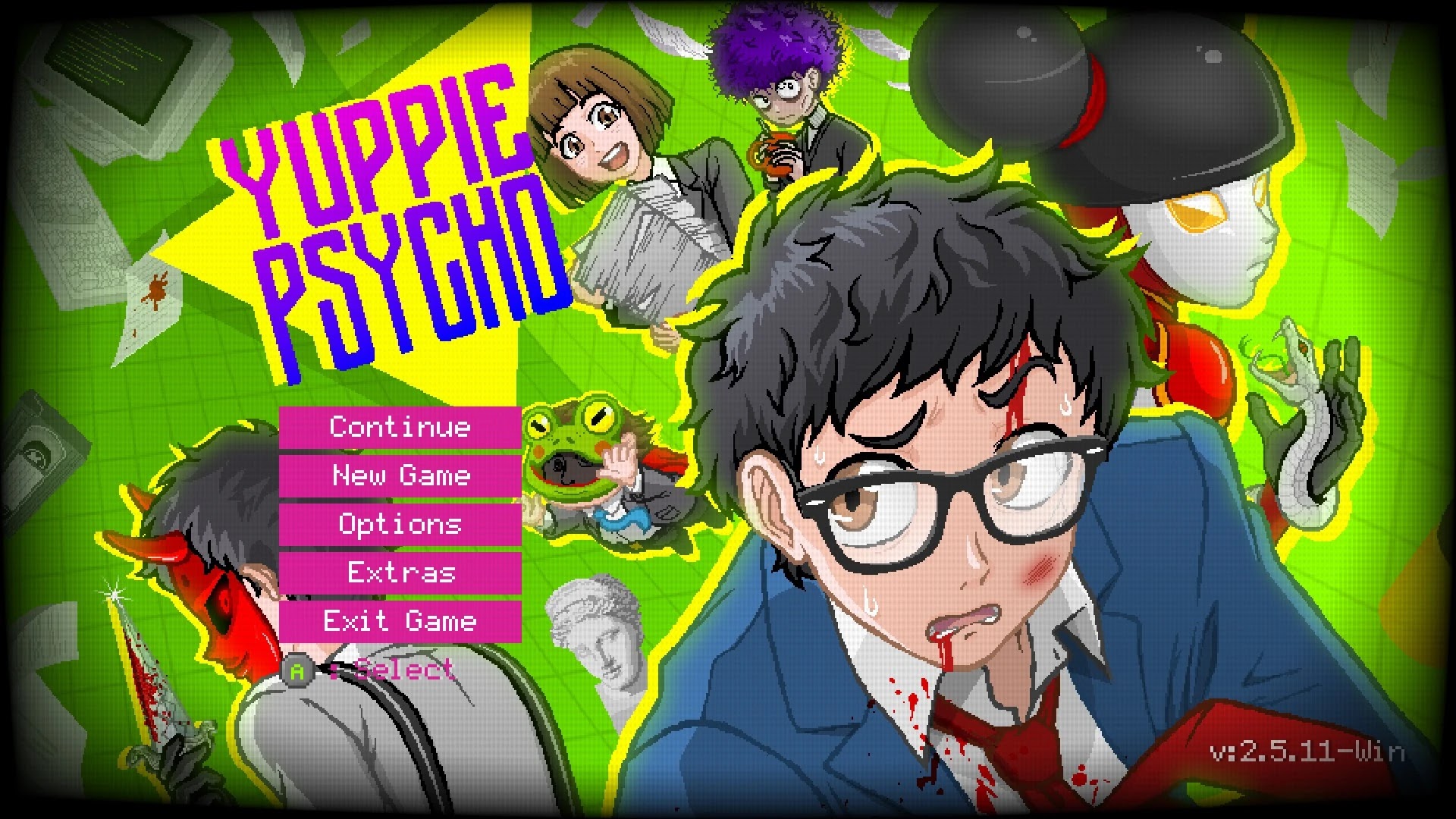
It's incredible when something so simple can turn into something so magical. What? Never heard of Yuppie Psycho? It's this niche little 2D, pixel graphic, survival horror, exploration and adventure game that I found buried under the flood of triple A horror games.
You might be asking yourself why I bothered dusting off this budget looking game. Easy. Because I noticed a diamond in the rough. A psychological masterpiece that somehow took horror at it's core and squeezed it's lifeblood into this title. Interested? Then take my hand, because the witching hour is about to begin.
And don't forget to leave your name by the front door...
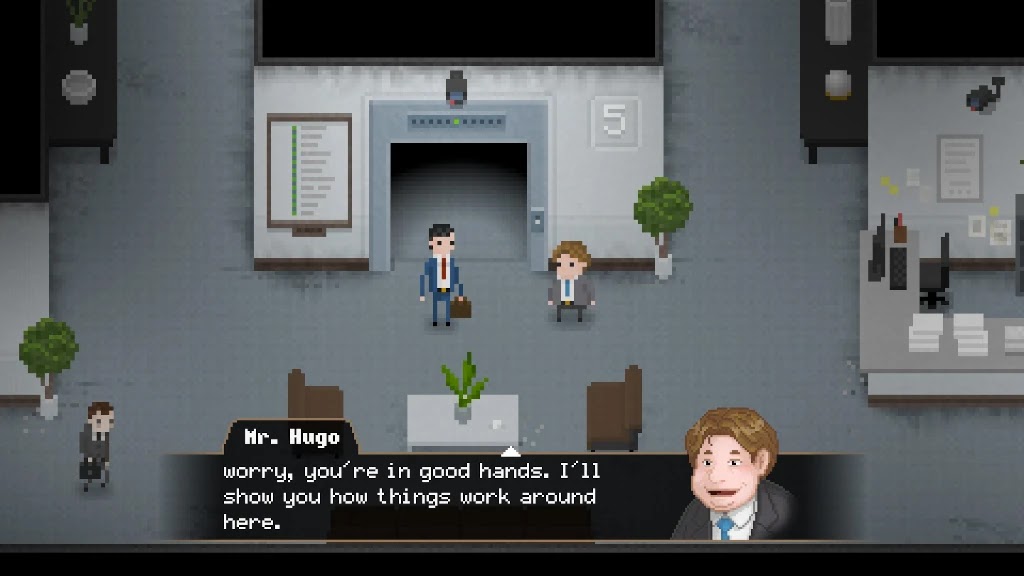
Our tale begins with a young man named Brian Pasternack, who just recently got hired at the biggest company in the city, Sintracorp. Nervous and a little under qualified, Brian isn't sure if he'll even make it through the first day. With the help of a few unlikely coworkers, Brian becomes aware that there is more to this corporation then meets the eye. An eye that seems to be driving him into the deepest and darkest recesses of this building's mad history. Brian must change his profession from simple office worker to witch hunter in order to take down the hag that seems to be feasting on people who become a little too nosy. As a pig-tailed girl in ruby slippers once quoted “Witches and robots and devils. Oh my!” Wait... that doesn't sound right?
I hope you brought a fresh pair of underwear in that briefcase, because this game will make you run... from traps, monsters and brain dead employees. There are many puzzles to solve and sometimes it might just kill ya. Some traps are obvious, while others tend to jump out at you when you least expect it, which may cause you to throw up that grilled cheese sandwich you plucked out of the garbage earlier. Hey, a man's gotta do, what a man's gotta do to survive corporate hell... literally!

If you manage to work hard and persevere through the trying trials before you you'll be rewarded with many collectibles and pieces of evidence that does a nice job of telling you the story hidden under the story. These clues could also help unlock other areas and endings that may just surprise you.
You'll also need to gather resources and supplies to keep poor Brian from keeling over. These items can be found or prepared throughout the level. A bit of water will heal the minimum, while a whole pizza will put the pep back in your step. Healing items won't always be available, instead you'll have to collect and piece together consumable food like cup noodles, which the ingredients can be found by searching places like filing cabinets, bookshelves, trash cans and water coolers.
In order to save your progress in Yuppie Psycho you'll need a working photocopier. You will also need to search for paper that'll be scattered throughout the building, as well as ink cartridges. It's always a hoot and a holler when the main character has to photocopy his squished face. But be warned, you'll have a limited amount of these items throughout the story, so collect and use them wisely to save your content. Especially for those who love to rapid save, this game could be your worst nightmare.

There are a cornucopia of characters in the game that will strap you down in a roller coaster and take you for a ride. No one, and I mean no one, is normal in this high rise of a company. One of Brian's biggest secrets is helping Sintra, an AI being, finding and slaying the witch of the building, and absolutely no one is allowed to know. Not your boss, your cubicle mate, the cute girl you met in the lobby. Zilch! Nada! Because anyone could be the witch or her children, so choosing to trust in your coworkers could get you killed.
But everyone has two sides to them and going around and getting to know each and every one of them could be beneficial to problems down the roads. Yes, even that blond rich boy who called you a nobody.
Yuppie Psycho can somehow make a cutesy pixel adventure feel like The Witch's House, going from 0 to 100 in mere seconds. The feeling of dread is a constant companion and it is exquisite. It keeps me on my toes in anticipation for what might just be waiting behind that next door. What also brings these thrilling moments to light is the musical score. From wacky moments to intense horror, this chip-tune score gets a thumpin' thumbs up in my department.
If you ever walk into a room with no sound... run!
To conclude, I had the pleasure of playing Yuppie Psycho: Executive Edition, which is an upgraded version of the original game with extra areas to explore, new bosses, and additional new endings to the game. This makes the play time longer than before and the whole experience ended up being a crazy pixelated adventure that I continued to hunger for.
With the engaging storytelling and memorable characters I couldn't wait to finish the game, only to replay it again to achieve a different scenario. A 2D experience that had me shaking in my slippers with just how engrossing the universe was.
If you're prepared to be swept away by the twisted horrors that happen in this game then Yuppie Psycho is for you. I'm giving this title, hands down, a 10 out of 10. Believe me, it's that good. Now then... What did you say your name was again?
Score: 10 / 10

Estimated reading time: 2 minutes
Having been in Early Access for some time, 10tons' open world survival Dysmantle recently saw a full release. Having covered it back in April, what I had seen was already a very solid experience making me wonder what exactly was left to be done.
And the answer to that question was in their roadmap which was to refine what had already been done and then finish up the rest of the world to be explored while potentially also adding in new twists. This left me with one thing on my mind as I picked up version 1.0. What do I even say? Generally moving from a preview to a review there are loads to say but in this case I would honestly do two things. The first is to tell you to read said preview linked above and the second would be to do yourself a favour and pick up a copy. It's worth it.
Combining a relaxed pace of open world survival with a destructible element within a post-apocalyptic setting, Dysmantle is a perfect title to sit down and relax in either short bursts or long sessions as either works well. It’s because of this that it’s an easy recommendation to make and I’m happy to have been able to sit back down to it and restart the adventure in a fresh save file.
Summary
So overall, if you’re looking for an open world survival adventure, 10tons’ Dysmantle would be a good place to look regardless if you prefer to be hunched over with a keyboard and mouse or with your feet up on the coffee table with a controller in hand. Both work great in order to explore this post-apocalyptic world that you’ll find yourself within.
Score: 8 / 10

Estimated reading time: 8 minutes
Back for the final release of Owlcat’s newest interpretation of an Adventure Path by Paizo Publishing for their game Pathfinder, called Wrath of the Righteous, and I am excited to have had my hands on this. I play a smattering of these tabletop systems, and Pathfinder’s first edition (with some tweaks, admittedly) has been my home for over a decade now. I’ve even got a play-by-post campaign I’ve been running with one other friend over Discord almost as long as Discord has been the gaming go-to. It’s a system that works in a lot of mediums, can be adjusted for a lot of settings, and holds a cornucopia-world setting that doesn’t feel too forced. These are all true for other rulesets, other settings, but while we can list wonderfully crafted CRPGs that hold true to their world, how many truly capture that feeling of the source material? I’ve only got one hand worth of fingers for my answer to that question, and Owlcat crafted two of them.
I already talked about how the game opens and the first chapter or so’s story overview in general in my beta preview article, so we’re not gonna rehash the story, since they didn’t change any of it. Here, we’ll be talking primarily about mechanics and design choices, limitations, comparisons with Kingmaker, which I also reviewed, as well as the revival of both isometric adventure computer RPGs and tabletops. If you’d like to see where Owlcat came from, or more context for the plot than you get here, check those out. In Wrath of the Righteous, you’re the Commander of the Fifth Crusade against the invading demon hordes of the Worldwound.

My biggest gripe with the game brings down one of my otherwise favorite parts, the narrative choice. Just like Kingmaker, this game is interspersed with scenes framed as if taken out of a book written by a bard you’ll meet. Unlike Kingmaker, this bard is a side character, not involved with the party, and I didn’t meet at all that I remember until Act 2. Wrath also seems to want to force an extreme out of the character outside of situations that don’t directly impact your alignment. At one point, I came across a Hellknight, an order allied to the Crusades, unarmed, unarmored, bruised and battered, looking as though he’d swum the abyss-plagued river to reach us, to tell me of his squad, under attack and outmatched by the ambush.
Your choices are binary: You can either ride out to save them immediately or, and I quote, “Throw him out.” instructing your guards to just eject a wounded ally from the camp. No middle ground, no chance to help him another way. I’m Chaotic Good, and while the game does a decent job of making sure your alignment can shine through, the fact that I just didn’t have time to backtrack my entire army two days to save his squad kinda felt like something Kingmaker’s final form would have at least had some option in the middle attitude wise, if not leaving the whole thing open as an issue for the Baron themself to solve as a choice. Pretty minor complaint, but one that stuck out to me.

Switching gears, I’m a huge fan of the characters in this one. Irabeth and Anevia Tirabade are paizo creations, the dynamic of a half-orc Paladin and a human rogue who leads a Crusader spy network, married and stomping demons together, but their personality and voice are all the work of Owlcat writers and the fantastic voice actors slotted into these roles. Companions too, Woljif holding steady as my favorite so far, we've got a pretty solid and intriguing cast that has me wanting to know more, from the Life Oracle with a taste for the cruel to the odd elf girl with the new Witch archetype.
Here’s another thing Owlcat has nailed this time around, the variety. Increased classes, races, and archetypes to choose from, backgrounds that affect your skills and proficiencies, it’s all golden to bring out that feeling of the Pathfinder RPG. Along with the standard Paizo fare (with all Unchained classes being represented instead of the CRB versions), Owlcat has created a few archetypes (and all of the background traits) of their own. Some are interesting, some are simple, all fit the way official Pathfinder RPG archetypes interact with their classes. The Arcanist has a "Nature Mage" archetype that didn't exist whose only purpose is to give an otherwise unaltered Arcanist class the Druid spell list instead of the usual one, the Witch has one that shifts the class to function more akin to an Oracle, gaining a curse and a Charisma casting ability score instead of the Intelligence and a Patron, they get to keep the familiar though, which is golden. Arcane Enforcer is a Slayer archetype that replaces Slayer Talents with Arcanist Exploits, allowing me to make a martially capable assassin character with full Base attack bonus and a telephone ability to ignore obstacles and Attacks of Opportunity keeping me from my sneak attack. I enjoyed this archetype so much that I converted it to work in the tabletop and have it currently in use in a game.

While Kenabres kinda hurt to get around in its limitations, the real overworld opens up into a dual-map system with wide open roads like we remember from the Stolen Lands. The default map is your party travel, it works essentially the same as Kingmaker’s did. You travel based on your party’s average speed, settings to determine if encumbrance slows, rest to avoid fatigue, the whole drill. Wrath of the Righteous adds to it though. Two new feats, which each come with their own camp task, and a third camp task. With the same six-member party, you’ll have to divide responsibilities a little more carefully, and prioritize what you need. Brewing Potions and cooking a meal for a camp benefit take the same task slot, for example. Scribe Scroll is the other new feat, taking its execution at camp rest as well. these two are party-savers in the core difficulty, especially the stronger my Cleric and Wizard get.
The final new camp task is a ritual to prevent corruption. This entire game takes place in a land called simply the Worldwound. Once a mighty Kellid kingdom of Shamans and Witches, it is now a festering wound profusely bleeding, demons directly from the abyss flooding the land and everything from the soil to the weather corrupting to hostile, toxic, barren waste, and the longer you spend there, the worse it gets. Wrath includes three stages, and each one comes with significant stat penalties. You get a view of the corruption level every chance to rest, and your army’s Camp is a consistent safe place to get that cleaned out.

The map comes with a secondary layer though, the Crusade Map. Shifted near the overworld’s clock, the new map shows your armies, which have limited movement each day, while those movements don’t take up your party’s clock time. As you win battles, your morale will increase, and your armies will gain levels and resources. Spending these resources is as important as earning them, as improving and recruiting more armies will keep you making progress in the Worldwound, the game actually leaving you unable to progress unless you can take the fort before the next city, Drezen, using your armies instead of your party. These battles play out on a grid, with most units not really having abilities, and I couldn’t find myself engaged by them. Staying true to their tendency toward a customizable experience, I simply turned off the automatic decision to fight these battles. I still get the option when I move my armies over them, but for the most part, I just take what happens based on a dice roll and move on.
Kingmaker’s release was painful, I love the game and I think most would agree. Wrath of the Righteous is not. While there are some issues here and there, mostly odd interactions between effects, Owlcat is on it and has released a couple patches already since release. Both issues I had noted to bring up in here were known bugs by the team, and don’t exist at all now, so if you’re weary of the game that direction, feel secure knowing that the lesson was learned.

While not a perfect one-to-one of the tabletop experience, it might be as close as you can get. Bringing the best of both RPG worlds it stands firmly planted in, a whole stack of options and sliders to adjust which one of those worlds you play in, and the return of the on-the-fly toggling between turn-based and real-time-with-pause, Owlcat’s Pathfinder: Wrath of the Righteous is an exciting, attention-snatching, replayable role-playing experience you’ll spend dozens, if not hundreds of hours in. Whether you play it now on PC, or after it releases on consoles March 22nd, welcome to the Fifth Mendevian Crusade.
Score: 9 / 10

Estimated reading time: 7 minutes
This has been a long journey for me but even longer for the devs behind their brilliantly designed roguelite. Having seen several versions from the original Prologue to its Early Access debut, Afterburner Studio's Dreamscaper is both now finished and its final format bringing about an even more pleasant experience than anything having led up to it.
The premise is a fairly simple one though the execution however is much more complex and will engage and challenge you to continuously push further. Our protagonist Cassidy is a lucid dreamer and in their dreams they fight against monsters both big and small trying to reach something just over the next battle. With plenty of environments strewn with their own sets of challenges, there are more than enough weapons and abilities to help in this fight. If Cassidy falls in battle though, then it's game over, they wake up, and you get to start it all over again the next night.
For the three versions that I've dreamt my way through, this is how it starts. Cassidy goes to sleep and then falls into a realm far different from our own. Every night they find themselves with different weapons (melee and ranged) but the constant is their special ability and dodge style which remain the same until new ones are picked up. From there, the layouts of the environment are randomized from placement to enemies and items. Your goal is to make it to the boss of that realm, defeat them, and then move on. As time goes on however, Cassidy can unlock gear to start with so that you at least always have an edge at the start of the first realm.

It's simple, it's effective, but it's a roguelite so the journey will be anything but an easy one. So it's for this reason that each environment can contain upgrades to your current gear if you either find them or have enough accumulated sand to pay for them. What some people may not find working well for them is honestly a part of the challenge and even while I didn't like it at times, it's something to deal with and that is the actual weapons that you pick up. Each one of these has a different style from the amount of damage they can do per second (DPS) to their speeds and ease of use. Being behind a wall that needs to be created, Cloud’s Buster Sword is stupid powerful but slow in Cassidy’s hands while Lloyd’s Twin-Blades are stupid fast but don’t do as much damage. Add in wolf head gauntlets, bare fists, and a variety of other bladed weapons and those of higher DPS may not always be your cup of tea. But like I said, this is a roguelite and with roguelites / likes, there’s always a challenge factor and this is part of Dreamscaper’s.
Upfront this may sound like a lot to get adjusted to but in practice, you start to barely notice it as time goes on due to the fact that on average a realm can take you about ten minutes to clear based off of how many rooms you actually want to go through versus how many rooms it takes to find the boss. From the beginning though, there’s been an ease of use or accessibility with Dreamscaper as it’s instantly possible to teleport between any room that has been visited. Making that even easier at times is that the boss room can be entered and then exited as long as you haven’t “touched the big shiny object” that will lead you to fights of epic proportions.
Between all of this though is perhaps my favorite addition to Dreamscaper that came about at the beginning of its Early Access, Cassidy’s real life. Before going to sleep every night, Cassidy can explore the city that she’s living in. The book store, coffee shop, the bar, the park, the record store, each of these areas add a bit more to see outside of the dream realms. In Early Access, perhaps my one issue with the real world was that you had to do well in the dream world in order to not be tired enough the next day “after work” in order to explore the town and get to know the people. Gone from that version is requiring having to do well and keeping an accumulation of sand which acts as your currency. Now? Now you get to explore the town with a few new twists added into the mix.

Now being able to use sand to hearts content in the dream world to upgrade and buy new weapons, the real world will see you using a few other things that you picked up in order to help both the real and dream worlds explorations. From Cassidy’s room, you can craft gifts to give to people in order to increase their relationships which lead into dialog scenes. It’s a bit in the Persona vein but it does more than add a bit of slice of life as for every level increase of Cassidy’s relationships, Cassidy can use those as a bonus in the dream world such as extra armor, higher ranged attack, etc. From there, Cassidy can also meditate in the park to raise attributes such as max health or damage to bosses, go to the cafe to sketch new items to appear, or go to the bar to daydream new elements to show up within the dream realm.
A lot of these features are new to the full release, or new in that they are now their own thing and can be goals to strive towards. That said, I like how this progression has been structured and that Cassidy can now view all of these places and potentially interact with all of the other NPCs instead of just select ones depending on the amount of time that was available after a successful or semi-successful run. It feels more natural and less punishing than the other way around that was being rewarded for having done well, but not every run will go well. Just last week I went on a fresh run to try something out and I aced the first two floors and their bosses only to die stupidly to a combination of lightning strikes and getting cornered by a bad dodge. That’s all it took to wipe out and game over for that night. So with how brutal things can get, it was nice to have some of the other elements soften up.
Now here are my two big things with Dreamscaper. First, it has gorgeous artwork that makes it easy to look at for hours on end. The second, the background audio regardless of the volume level never gets boring or stagnant, it just works. I guess third, the loading times were amazing and when in either the realm or the dream realm, going from location to location takes seconds and there’s never a wait time, it’s just done. Everything just felt right and properly optimized to the points that the CPU fans never even kicked in as they didn’t need to while other titles have thrown the damn thing into overdrive making me wonder how what I was looking at could even come close to taxing a RTX 3080.

So from the Prologue to Early Access and then to full release, Afterbuner Studios’ Dreamscaper has been an amazing adventure. With multiple easy to use systems, an intuitive combat system and plenty of upgrades to be discovered and unlocked, there’s more than enough dungeon crawling and rogueliting to keep anyone busy for a long while. If it gets too easy? Just add in some extra modifiers and see if you’re still swinging the same tune or getting kicked out of the record store for not knowing what Math Rock was.
Score: 8.75 / 10
Estimated reading time: 9 minutes
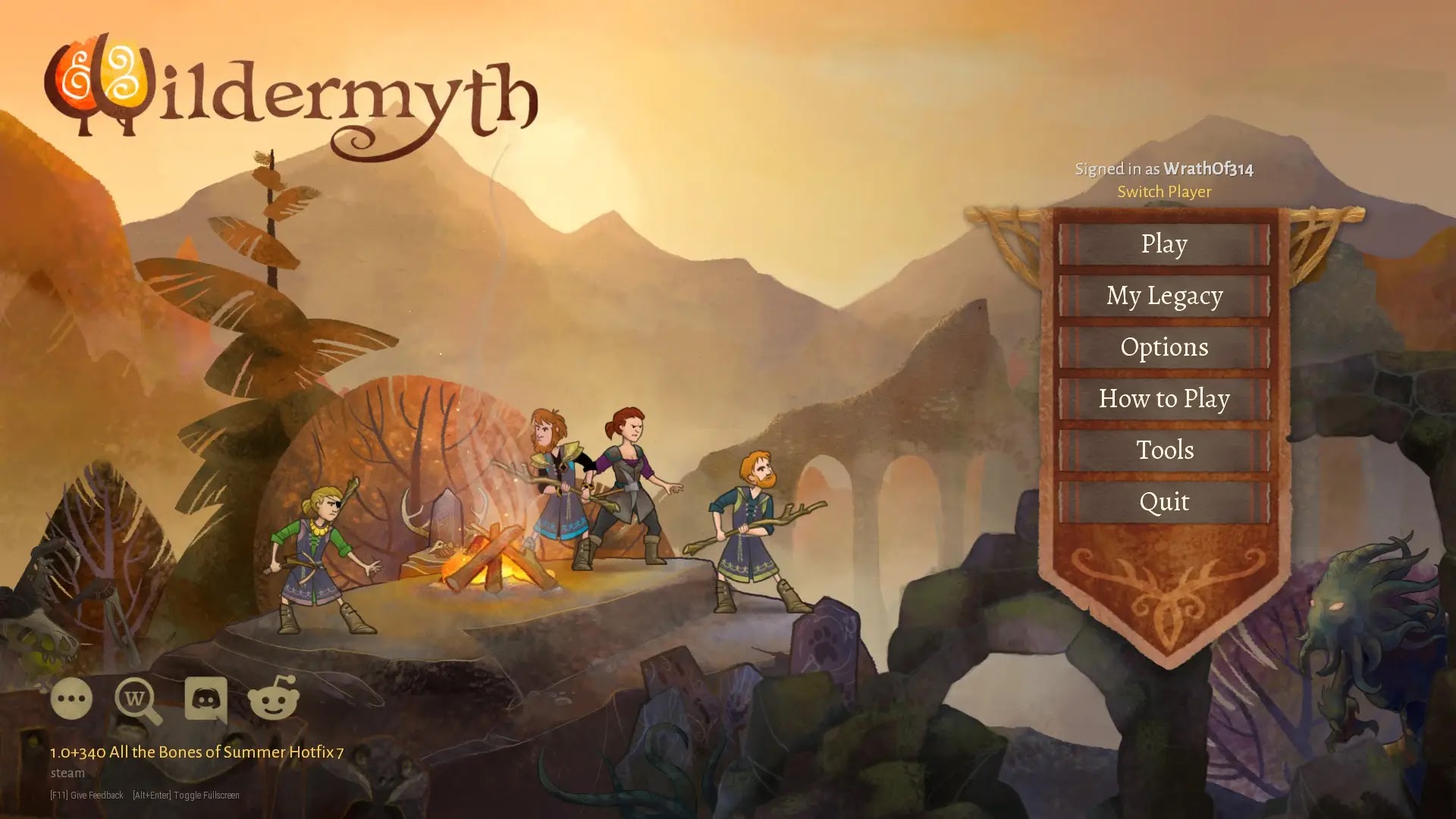
There are some formulas that just go together like peanut butter and jam or pineapples on pizza. They just work. Wildermyth by Worldwalker Games is one such title that just works so well as it blends turn-based tactics and procedural storytelling in a vibrant visual 2D pop up style presentation.
Starting things off like any good roleplaying adventure, you get to create a character. Choosing what they look like, what they sound like and what you want then to be addressed as (he / his, her / hers, they / them), you then move onto the next one. Starting off with three, you'll very soon get to see how they relate to one another and from even this early on, control of how they relate to one another is entirely up to you. The stage is set, you just need to act.
This is perhaps Wildermyth's biggest draw, its storytelling. Starting off at the beginning before things start to go to hell and mysterious monsters or otherworldly beings start to rain on your parades, your would-be adventurers have a lot to learn if they are going to survive. Do they get along? Do they fall in love? Do they sacrifice limbs to restore robots or turn into werewolves? Do they perform the ultimate sacrifice so that their friends can live another day to protect the people that they swore to? Or finally, do they fall before the adventure even begins as all three have to escape a cave with an unseeingly ending number of monsters that stand between them and the exit.

Each one of these choices helps to shape your overall adventures or end it before it even begins. While luck has a little bit to do with it, Wildermyth is just as much about skills and planning out what you're going to hopefully do as turn-based tactics never go according to plan. Doubly so when you can't see half the map at times because of lines of sights and fogs of war. This is the other major draw of the adventure, the thrill of testing your might with the would be mortal heroes against the hordes of enemies that would wipe them from history.
Starting off at a beginning, each adventure will have its own way to transition you into the story whether or not there is a main antagonist to go up against. Taking the the very first campaign titled the Age of Ulstryx which is designed to teach you the ropes, most of the following is based off of that experience even if I had plenty of fun trying out the others.
Spread out in a series of territories, the overall "world map" sets the main stage which can be moved around through yet another fog of war that has to be scouted out in order to know what's there. Once that's done you can choose to either clear out any enemies that reside there, build a resource outpost, build a bridge to more quickly travel to another territory or fortify it with defenses and trained militia. None of these are bad choices and if there's one thing that I was taught over the course of my first failed adventure falling in the very last battle as I failed to deal the final blow as my last remaining adventure's arrow clinked off the big bad's armor, it's that sacrifices are going to have to be made at all levels. Wildermyth plays for keeps and doesn't allow for many mistakes to be made. Heroes can fall once per chapter which is known as being maimed and once that's happened, any subsequent fall will be fatal. This isn't anything new per say, *glares at The Stranger of Sword City*, but it does come with some interesting elements to spice up the mix.

Any lost or modified limbs which can happen over the course of your adventures are replaced so that adventures will always have two arms and two legs, but it could affect how they use weapons. My main archer for example, after she became a werewolf, at first it was just the head and the fur, the rest was still human. Over time your character can morph those parts if you want which will affect your stats and when I refused the leg because it would reduce their evasion, I said yes to the arm. That upgrade removed their ability to use bows, but at least there are crossbows and I have her a pretty nifty power story based spear to make up for it. Other adventurers could lose an arm and get a hook in its place adding yet another potential attack, but also removes the ability for two-handed weapons.
To get to these points however, you're going to have to plan for battle. Are you attacking a point to free it from those that currently roam around it? Or are you running to the aid of the territory that is currently under attack? In either case, you'll have a choice to make before the battle even starts as your group approaches the situation. Charge right in, wait until the last minute, try something crazy like going in with only two or three troops or wait until nightfall. Succeed and your group of adventures will receive bonuses or the enemies will lose theirs. Fail? And you'll be fighting off at a disadvantage.
Once you're in battle everything becomes up to what your team of up to five can do versus the hordes that you'll often be fighting against. Based on a Dungeons & Dragons like rule set, every character as a base has two actions. You can move and attack, you can move twice, attack twice if you're not moving, you can use free actions, or you can wait and do nothing depending on the situation. Obviously with leveling up and gaining perks these can be modified as standard actions can become free and you can definitely learn to really make use of attacks of opportunity and level those up, but you’ll still want to be careful as who you have is generally all you have.

Otherwise though, combat is really fun as you move your adventurers through similar enough maps depending on the terrain with plenty of environmental “props” to help you out. Giant rocks can be hidden behind, mystics (the wizards) can use the terrain to sling spells around such as sucking fire from a source and putting it in as an obstacle, and if things are in your way? Simply destroy them to more easily get to your enemy that can do the same things that you can. As a final note, if your character falls in battle, the first or the second time, there are options depending on what the situation is. Do they use the last of their strength to stick it to the enemy? Or do they take the time in order to temporarily or permanently buff one of their allies, family, friends or lovers, before they die?
All of these have to be decided on the fly and to raise the stakes one more time, for every enemy that you fight, they’ll get a permanent upgrade for the rest of the campaign. So the stronger your adventurers get, the stronger the enemy gets. Adding to that stress, there are two other timers to worry about. The first is when the next rampage will kick off making you either need to get defenses in place or move to where they are rampaging as soon as possible. The second is more of an evolution counter. Once this counter hits zero, there are four “cards” that are drawn either making your enemies stronger or adding in new enemies to the mix. This can be countered with Legacy Points (LP) that can be acquired through various means, but sometimes it’s better to allow a few of these so that you can use your LP when it counts.

If there was one potential complaint, it would be that your characters can die easily enough even if they’ve been upgraded due to the unnatural amount of enemies thrown at you at times. Like the first of my final fights mentioned above, every turn there were more and more enemies and I couldn't even properly get to the boss that could slither away easily enough and then pound my adventures from a distance. You learn to live and learn but always having to start back at basically “zero” makes it tough especially when you're a good way through the story as without a full team? You’re generally not going to make it with how much the numbers are stacked against you.
But it works.
It works very well and the dialog between all of these characters, family, friends, rivals, people that just live to annoy you, all of them bring something to the table making you want more. It makes you want to keep these people alive until they are old enough to retire and die in their beds instead of sacrificing it all on one last gamble far from home making them wonder if you raise a monument to them there, or if you bring them home and hurry them with their family.
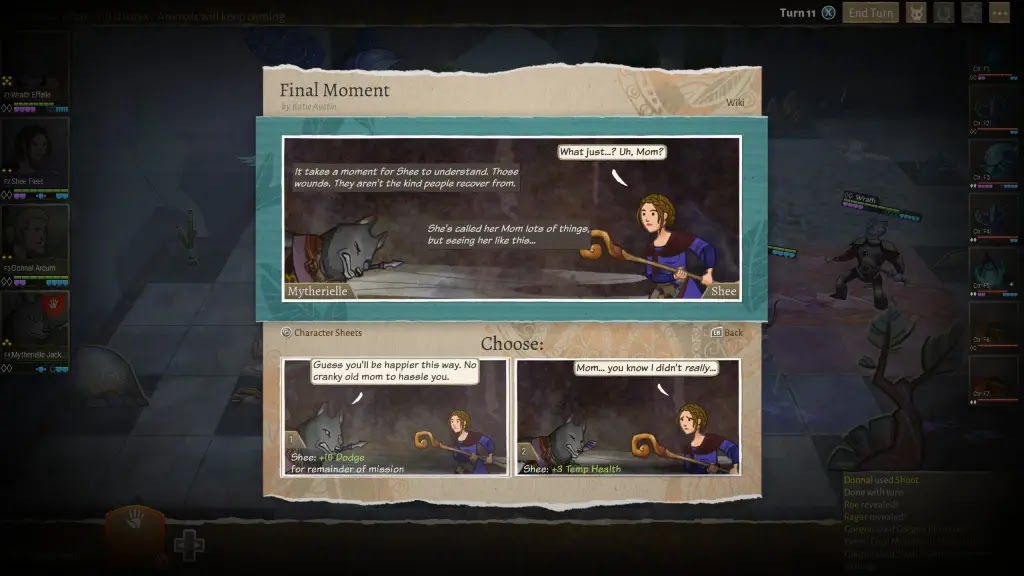
Overall though Wildermyth was amazing. The visual presentations mixed in with a procedural storytelling that adapts to your characters choices as well as your newer characters that join up was just brilliant. Add in a very well done combat system and there’s more than enough here to keep anyone occupied for a good long time as no two playthroughs should be the same.
Score: 9 / 10