Fatal Frame II: Crimson Butterfly REMAKE by developer Team Ninja and publisher Koei Tecmo America—Microsoft Xbox Series X review written by Nick with a copy provided by the publisher.
#FatalFrame2 #FatalFrame2Remake
Estimated reading time: 6 minutes


Fatal Frame II: Crimson Butterfly REMAKE by developer Team Ninja and publisher Koei Tecmo America—Microsoft Xbox Series X review written by Nick with a copy provided by the publisher.
#FatalFrame2 #FatalFrame2Remake
Estimated reading time: 6 minutes

Dungeons & Dragons Neverwinter Nights 2: Enhanced Edition is developed and published by Aspyr—Microsoft Xbox Series X review written by Nick with a copy provided by the publisher.
Estimated reading time: 4 minutes.
Dungeons & Dragons Neverwinter Nights 2: Enhanced Edition is a valiant attempt at resurrecting what was a fantastic game from nearly two decades ago, but the actual enhancements feel somewhat spartan at times. There’s a handful of welcome updates, but this title seems to miss the mark, as I think it will at times frustrate original fans of the title while doing little to pull in new fans as well.
The original Neverwinter Nights was one of the most memorable games I have experienced in my four-plus decades of video gaming. I was in love with the story, the soundtrack continues to be one of my favorites even today and I spent oodles of time scratching my creative itch playing in its module community back in the day. Oddly enough, the sequel and I never quite developed that same relationship. I thoroughly enjoyed it but never quite completed the story. I am a bit foggy on the details (as it’s been nineteen years), but I believe that I picked it up right about the time I took a new job and moved to a different part of the state. So my guess is ‘real life happened’ and something else caught my attention once things settled down again.


That being said, there’s certainly an audience for this game and I’m part of it. I enjoyed my time with Dungeons & Dragons Neverwinter Nights 2: Enhanced Edition. It’s an earnest re-release of an already very good game with a ton of content. It is dated, and its age shows time and again with minor bugs and gameplay mechanics that can be somewhat unflattering when compared to the quality of life options found in modern RPGs. However, the story is rich, and the gameplay itself can be quite varied depending on your characters and how you tune your party. The amount of agency you have with the detailed character customization and progression is a hallmark of Dungeons & Dragons games and Neverwinter Nights 2 does not disappoint. With well over one hundred hours of content, Neverwinter Nights 2 is an excellent value, assuming you enjoy the gameplay itself and don’t mind the minor issues that persist. I feel as though console players will get more out of this than PC ones.
Score: 6.5 / 10

Knock on the Coffin Lid: Complete Edition by developer and publisher Redboon—Microsoft Xbox Series X review written by Nick with a copy provided by the publisher.
Estimated reading time: 4 minutes.
Knock on the Coffin Lid: Complete Edition is the console release of the game that originally came out on Steam in summer of 2024, complete with the optional DLCs. As for the game itself? It’s a gritty, turn-based roguelike that expects you to fail, but also anticipates that you’ll enjoy it enough to keep coming back for more. By and large, I’d say that the formula worked well for me, creating a generally enjoyable experience despite a couple of rough edges here and there.
The title of this game is a nod to the start of the story, which sees your protagonist waking up far from home without any memories. Oh, and he died and is getting out of a coffin. It’s a rather interesting premise and a well-told story that hangs its hat primarily on this solid narrative and pleasant art style that makes it rather unique despite so many familiar mechanics in the gameplay. The story’s not going to rival those told by JRPGs, but compared to many of the deckbuilding roguelikes out there, I actually found myself more interested in Knock on the Coffin Lid’s story more than most of its peers in the genre.

For those who are familiar with the genre and enjoy what titles like Slay the Spire or Nowhere Prophet, Knock on the Coffin Lid provides a similar structure. Combat is turn-based, and you draw cards that dictate your available attacks, skills and defensive tactics. I appreciated the variety that came from the options to have differing companions and play styles each run, but it does take some time for them to really start to differentiate themselves. That is because like many similar titles in the genre like Roguebook, you unlock new abilities with your repeated playthroughs. It can take a decent number of attempts to unlock these other cards that make different builds and playstyles feel truly unique from one another.
I will say that one card mechanic that I enjoyed was the equipment cards. Those are starting to become a bit more common in the genre (the recently released Monster Train 2 has equipment as well), but it does add a nice layer of strategy to the game’s tactics. All these elements are woven into the primary story, which sees your character going back in time when he fails a run. The premise is that you can make different decisions by taking different paths that might make your run unique from the last one.
By and large this works, because the variety of cards and how the core systems weave into the narrative is engaging. That being said, after a dozen or so runs, repetition starts to settle in. This is due to a couple of factors, one of which is the uneven (almost unfair near the end) spikes in difficulty. There are difficulty adjustments in the options, but I wouldn't call any of them easy. Secondly the lack procedurally generated maps (there's three of them) lacks some of the randomness normally associated with the roguelike genre. You can take different paths across the maps to try and make runs somewhat unique from prior ones, but a sense of 'been there, done that' started to set in sooner than I liked. I was still invested enough to want to see it through until the very end - though I found the final boss to be annoyingly frustrating.


Peglin by developer Red Nexus Games Inc. and publisher BlitWorks—Microsoft Xbox Series X review written by Nick with a copy provided by the publisher.
Estimated reading time: 5 minutes

Lunar Remastered Collection by developer and publisher GungHo—Microsoft Xbox Series X review written by Nick with a copy provided by the publisher.
Estimated reading time: 5 minutes

WWE 2K25
by developer Visual
Concepts and publisher 2K Games—Microsoft Xbox Series X review written by Nick with a copy
provided by the publisher.
Estimated reading time: 7 minutes
To be frank: this is what you hope to see in an annually released game. More features and improvements across the board combine to make it better than ever. WWE 2K25 is exactly that – bigger and better than ever.
Bigger really stands out right off of the bat. There’s numerous modes to choose from – including a new one called The Island. Much more to talk about there in a bit, but it’s also worth calling out that the roster is absolutely massive with wrestlers both past and present in the mix. There’s so much variety in the different types of wrestlers that the roster alone could keep someone busy just figuring out what styles appeal to them the most.

Then we move into the menu’s many modes of mayhem (try saying that ten times fast). There’s the traditional quick play where you just go in and fire up a quick match with the wrestlers and rules of your choice. It’s a great way to try some different types of wrestlers out before sinking time into creating your own wrestlers. You’ll eventually be doing just that though, as you create a wrestler for the MyRise and The Island modes. MyRise is what it has been for years now, a story-driven mode with some RPG elements like progression and choices to make through either a male or female wrestler’s story as you seek to become the face of a new era in WWE. All of the usual hijinks and betrayals are here and it’s brought together quite well between the overall presentation, especially the audio.
Now, the Island is another thing altogether – and frankly one that is likely to be a bit controversial. Years ago, I remarked that I was surprised WWE hadn’t yet created the kind of experience NBA 2K had, where they blended a story line with online play. Why? Well, my thinking was twofold. First, MyCareer in NBA 2K is by far the game’s most popular mode. It boasts a new story each year where players can compete with one another or stick to just single player content while incrementally improving their custom player. The second reason I figured a mode like this would eventually come along comes down to VC (Virtual Currency). It’s the microtransaction currency used by 2K, and it presumably makes the company a ton of money over and above the base game sales. In the past, WWE only had one use for VC – buying packs of cards in MyFaction. MyFaction is a mode that combines elements of card collecting and improving your roster through these wrestlers you collect.

To be honest? This is probably my least favorite WWE mode. It is an okay diversion, but I enjoy this mode far more in the NBA 2K games. Still, it’s a long-running mode that will likely stick around in the WWE series indefinitely because I’m sure they make money off of the VC bought and used in it. Now there’s a use for it in The Island. Like NBA 2K, in WWE 2K25 you can use VC to level up your character’s abilities. You can earn more VC by playing the game in this mode as well, so it doesn’t all have to be purchased. Time will tell what the grind / improvement curve looks like. Being a new mode, there’s likely to be some imbalance there.
So, what is The Island actually like to play? Well, if you can get past the slightly grimy-feeling microtransaction part of it? I had fun with it. There’s a new story separate of MyArise that basically puts you and everyone on this Island of Relevancy to try and earn the good graces of Roman Reigns. It’s a silly premise, but does the job and sets the stage. The things that work? The Island is pretty vibrant-looking, I appreciate a second story – even if it doesn’t feel as fleshed out as MyArise. There’s lots of quest-like objectives, and many of them are actually quite fun to try and complete. The progression elements like improving stats and badges are an effective carrot to dangle.
What maybe doesn’t work quite as well? Well, the first is how expensive VC is, especially when buying cosmetics for your wrestler. There’s no map, which feels like a bit of an oversight as I got so used to using it in NBA 2K. Luckily The Island is not too large and unwieldy, the layout is logical and it isn’t too hard to get the hang of where thigs are. One guardrail missing that’s in NBA 2K is that you can dump all the VC you want into your character right out of the gates. I saw several people running around at a 100 overall on day one. In NBA 2K, there’s a system that unlocks the next stage in a rising cap as you play. That limits how fast you can upgrade your player that’s lacking here in WWE 2K25.

I spent a lot of time in both The Island and MyArise modes, and it wouldn’t surprise me if they somehow became blended together in the future the way MyCareer has in NBA 2K. Universe mode is basically a giant sandbox mode. It’s fun to fool around with, but the lack of structured objectives doesn’t make it where I tend to spend my time. I will say that MyGM mode is looking better than it has in over a decade. It took some time off, came back a few years ago, and of all the returning modes, MyGM has received the most love it seems. It’s a season long campaign broken up over a couple of dozen weeks where you take a brand and create a stable of wrestlers to compete against one another. At its core, it’s a simulation mode that you can go hands-on with during matches if you’d like. Add to it that your created superstars can participate too, and there’s a lot of fun to be had here.
Lastly, there’s the Showcase mode. Usually this mode follows a specific wrestler through some of the biggest fights of their career, interspersed with interviews and live footage from their actual matches. In WWE 2K25, the focus is spread out a bit and follows The Bloodline, which is in-line with all of the Roman Reigns in the presentation. It feels a little less forced / scripted in trying to make you authentically recreate the matches of old (and there’s a sort of ‘what if this happened?’ mode as well that’s made up of imaginary scenarios), which is appreciated. I always liked this mode, but often felt like the objectives were a bit too restrictive at times. They made sense, but still had me frustrated. There was less of that this time around. The mode does feel a bit more accessible, though a few of the imposed time limits do seem a little harsh. Completing these scenarios however, is a lot of fun. You get some cool looks at WWE’s past and generally some good unlockable rewards too.

None of this would matter much if the in-ring action didn’t
hold up its end of the bargain, but the good news is that WWE 2K25 delivers
here as well. I mentioned earlier that the presentation was fantastic, and it
really is. Authentic commentary, fluid animations and a variety of distinctive
playstyles depending on your wrestler of choice and opponent make every match
feel like an event. Thankfully the combat aspect has been solid for years and this
year’s is more minor polish and tweaks. Controls are responsive, you can tweak
numerous single-player settings to make the gameplay a bit more attuned to your
preferences. I really appreciated how much different a massive, hulking tank
of a wrestler played versus a quick, agile high-flying sort. One tweak is the
return of ‘chain wrestling’, which is like a minigame within the match that
just adds a layer to the already existing action.
Simply put, WWE 2K25 is the best wrestling game on the
market. The developers manage to make smart improvements to existing modes,
roll out an entirely new mode and continue to make the action in the ring look
and feel authentic. While the whiff of increased microtransactions is going to
bother some, I do appreciate that the series isn’t resting on its laurels and
gave us a game that continues to justify its annual release.
Score: 8.5 / 10

Indiana Jones and the Great Circle by developer MachineGames and publisher Bethesda Softworks—Microsoft Xbox Series X Review written by Nick with a purchased copy.
Estimated reading time: 8 minutes

Dynasty Warriors: Origins by developer Omega Force and publisher Koei Tecmo Games—Microsoft Xbox Series X Review written by Nick with a copy provided by the publisher.
Reading time: 8 minutes

NBA 2K25 by developer Visual Concepts and publisher 2K Games—Xbox Series X review written by Nick with a copy provided by the publisher.
Estimated reading time: 8 minutes
I can almost hear the naysayers with this latest release of NBA 2K25: “Another year, another sports title update, another roster update with nothing substantial added”. Well guess what? They’re very, very wrong. NBA 2K25 is the best annual update the series has seen in some time. I’d go so far as to say NBA 2K25 is the best sports video game release we have seen in years.
I wouldn’t want the unenviable job of trying to develop new features, while trying to figure out what worked from last year’s game and keep it going, while balancing that against wanting to freshen things up, all on a limited timeframe because of the yearly cycle of major sports leagues. It’s a tightrope act that can often earn more jeers than cheers from fans who lament the cycle as a roster update cash grab.
NBA 2K25 doesn’t completely reinvent the wheel here, but it doesn’t have to. This is a franchise that didn’t get exclusive NBA rights like Madden did with the NFL; they simply put out the best basketball game year after year until the would-be competition picked its ball up and went home. Since then the series has been good, but seldom great. Last season was a bit of a bust in my opinion, so I was unsure what to expect from this year’s release. And right off of the bat? I had a somewhat odd feeling because things felt off. Different. Uneven. Loose. There were a lot of descriptors going through my head as I figured up a quick match and just wanted to get a feel for the game itself without working through the tutorial.

Shots don’t just swish or bank in, they roll around the rim, ricocheting off of the backboard in unexpected ways. An errant pass doesn’t just sail out of bounds, but sometimes bounces off of a foot or a hand. One time it bounced off of the back of a player’s head, only to be snatched out of the air by a nearby defender who put the ball on the floor to advance, making contact with a teammate, nearly losing their balance before pressing on up the court. Such a simple set of events, but this is by far the most realistic representation of player movement I’ve seen yet.
Sure, this engine looks great in general. Well-known players look like themselves. The really great ones don’t just look like themselves, but are animated to move like themselves. Little nuances from free throw form, to how they handle a crossover to how they chew on their mouth guard. There’s a level of authenticity here that NBA diehards are bound to eat up, and all of it translates to the best basketball playing experience I’ve had yet.

The presentation doesn’t stop there, as there’s an excellent soundtrack of music that plays in the background, tons of voiced dialogue in the MyCAREER mode, tons of authentic filters and commentary both for the modern game and some of the older eras for those throwback games. There’s still times where I recognize bits of audio commentary that’s been used in the last game or two, but the repetition’s down this year, with more audio than ever it seems like. There’s still room to expand – maybe have some more commentators or something, similar to Madden introducing more teams this year, but I know that’s likely a lot of work and a few bucks to bring those crews in – but it’s an area that could be improved.
Speaking of improvement, there’s aspects of the UI that I don’t love. Maybe I’m just being an old fuddy, but I preferred the last couple of shot meters to the ones presented here. It was a bit of a surprise to see what it looked like this year when I pulled up for my first shot. It bricked. There’s something about navigating the MyTEAM mode that took more time to get used to than usual as well. Just something about the menu UI didn’t click with me for a while.
Last but not least, since I’m airing grievances? I might as well bring up how much I have Virtual Currency. The microtransactions are strong with this series, and they have been for many years. They want too much of the VC (virtual currency) for the packs in MyTEAM, which is a sort of fantasy sports meets card collection mode that wants you to open your wallet. Still, you can choose to spend or not, and outside of the VC I start with for the version of the game I reviewed, I never buy any more. I’m just not a big microtransaction person in any game, so I tend to grind in games to avoid paying more. The good news is, compared to last year’s NBA 2K24? This year’s MyCAREER didn’t feel nearly as grindy. In fact I was earning VC at a good rate and enjoying my time doing so far better.

That being said – I do have a request 2K: Could we stop with the pop-up windows when the game starts? Instead of defaulting to having them open, maybe have a banner with a button to be pressed to bring them up. It’s annoying to fire up the game (which takes a bit to load in the first place), then see a menu and attempt to pick your game mode only to have a window pop up trying to get you to upgrade your purchase. And sometimes if you close that, a second window with a different offer pops up. It’s annoying, and it keeps me from getting right into the action.
There’s plenty of other modes to be had here outside of MyCAREER and MyTEAM as well. MyNBA is all about running a franchise. I love that there are different eras represented here (including the new ‘Curry Era’. I went back to the 80s to live out the early and later stages of my Detroit Pistons Bad Boys era in two different franchise files. There’s a ton to sink your teeth into here, and I lost a lot of hours to it. There’s also a MyGM mode that’s more of an RPG-lite management experience set with the current era as you also take the reigns of a franchise, but with a bit more story behind it. The story’s writing feels a bit stilted at times, but it’s still a lot of fun.
I was really happy to see The W get more love this year as well. Whether you follow the WNBA or not, it’s impossible to be more aware of the league with the arrival of some of this year’s top rookies, Caitlin Clark and Angel Reese. But it’s more about these new faces to the league. There’s more of an effort to make this mode more fully fleshed out than years past, including some storyline elements that don’t quite make it equal with MyCAREER, but a worthwhile endeavor all the same. And it’s worth noting that you get a set amount of VC for completing games in these other modes. I’ve seen some people grumbling that the requirement for ‘always connected’ could one day render these offline modes unplayable, but in reality I like that I’m getting VC for playing games, regardless of where (though MyTEAM does have a second currency in there. Frankly I think they should do away with that and just unify everything through VC.

Even with all of these modes? The vast majority of my time is spent with MyCAREER mode. I went with a different build than recent years for my first one, and I’m having a blast with it. The actual storyline’s not as interesting as a some of the prior years have been, but the voice acting is solid and the progression elements have been a lot of fun. I’ve been up entirely too late at night since installing NBA 2K25, and it’s usually because of this roleplay-lite mode.
Simply put, NBA 2K25 is the best release this series has
seen in years, and it’s probably my favorite sports game right now. This series
has a knack for being my guilty pleasure, in that I play it more than almost
anything else each year, and that’s very likely to be the case here once again.
The package isn’t a flawless one, but there’s undeniable progress throughout NBA
2K25, and fans of the NBA owe it to themselves to play it.
Score: 8.75 / 10

WWE 2K24 by developer Visual Concepts and publisher 2KGames—Microsoft Xbox Series X review written by Nick with a copy provided by the publisher.
Estimated reading time: 5 minutes
Last year was a return to form for the long-running WWE 2K
series, and I’m happy to say that WWE 2K24 puts on another great performance.
A few years ago, the 2K series had a sort of midlife crisis,
with a couple of lackluster releases that had fans wondering where things had
gone wrong. Thankfully though, last year the studio managed to right the ship
and deliver an entertaining, hard-hitting experience that I thoroughly enjoyed.
For starters, the sheer amount of content here is
incredible. The modes include both online and single-player, scripted stories
and lots of freedom to create your own WWE landscape. From the more structured
standpoint, the Showcase mode is better than ever. Generally these follow a
person through the highs and lows of their career, but here wrestling fans get
a trip down memory lane with some of the biggest names and matches in history.
Here you wind up with a series of objectives to complete in each match. Sure,
you can roll out and just try to win, but the idea is to authentically recreate
how the match went, with highlights and specific moves that can sometimes
frustrate due to those requirements, but often thrill as well.

As great and nostalgic as the Showcase mode was, I spent a
ton of time in the MyRise mode. This is 2K’s heavily story-based mode (similar
to what we see in NBA 2K games), where you can take a male and female wrestler
of your creation through branching stories that lean into fictional ‘what if
WWE universes. While the scenarios are made up and deviate from the reality of
where the WWE is at now, the narrative still leans in heavily to the
established characters and histories that have occurred and makes the whole
experience more immersive. There’s some decent replay value to be had here too,
as you can make choices along the way that veer the story one way or the other.
It was also fun seeing past MyRise characters pop up (again, similar to NBA 2K)
that again just sort of added some familiar texture to the tale.
MyFaction is another matter altogether. It’s the microtransaction
part of the game (the 2K games tend to lean into these), and the format is the
familiar combination of ‘fantasy card collection’ and objectives-based gameplay
that serves as a play, collect, improve gameplay loop. This is never really my
favorite mode, but there’s some fun to be had there as you build up and collect
better versions of wrestlers here. I am not one to spend actual money on the
virtual packs of cards, but I know this mode has its fans.
MyGM feels a lot like last season structurally, but some of
the quality-of-life updates are appreciated and this feeling of trying to build
your own roster to create a better brand than your competitors is entertaining.
There’s still a decent amount of administrative grind to be had here, but
improvements to how contracts are handled and roster tweaking is certainly
welcomed.

Universe Mode returns as well (lacking the My naming
convention), and man – this is fun. It’s such a massive sandbox of options as
you create all sorts of insane scenarios using both real and created / imported
wrestlers, both past and present. This is a mode that’s incredibly easy to lose
hours of your life into, though it perhaps has seen the least amount of change
from last year’s release. There’s some new cutscenes and I enjoyed the new ‘Special
Referee’ sub-mode (which shows up in some other places as well), but there’s
still a lot to do here.
So outside of all of these modes, how does the game play?
Pretty well overall. I mean, the presentation is pretty top-notch with
authentic voicing and commentary and generally excellent visuals (though
clothing and long hair can get a bit floppy and weird at times). Most of the core
gameplay is the same as last year (which is a good thing given how much better
it was than the prior couple of years), with strikes and slams feeling
authentic and appropriately weighty. There’s loads of accessibility options that
let you rapidly press buttons or hold on, choose mashing versus timing-based
mini-games to break out of pins or escape submission attempts.
That’s not to say there’s nothing new sprinkled into the gameplay itself. There’s the aforementioned Guest Referee that may favor one player versus the other (until they tip their hand too many times and get yanked from the match), a new mini-game where you are trading strikes with your opponent that feels like something you’d see out of an actual match and the ability to store up three finishes for a sort of ‘super attack’ that launches all of the finishers back-to-back to try and close down the match. There’s even a new type of match, which is really just an alternate version of a submission or out of the ring game, but the coffin match that characters like Kane and the Undertaker made famous has been introduced.

There were a few unfortunate crashes, a couple of times where servers were unavailable (which kicked me mid-game to boot), some glitchy fine detail visuals and a handful of frustrating match objectives that sometimes took the shine off of WWE 2K24. These however, were few and far between and certainly the overall package is an impressive one that fight and wrestling fans should enjoy for many hours of play.
Score: 8.5 / 10

Howl by developer Mi'pu'mi Games and publisher astragon—MicrosoftXbox Series X review written by Nick with a copy provided by the publisher.
Estimated reading time: 5 minutes
Howl is an interesting title that I admittedly needed some
time to warm up to. It wasn’t reaally what I was expecting initially, but as I
grew to understand the gameplay better, I also came to appreciate the rest of
the package more.
To start, Howl calls itself a turn-based tactical game,
which is accurate if not exactly how I expected things to play out. Essentially,
you occupy a map with squares you move about on, with a handful of abilities
that help you traverse from entry point to exit as you attempt to survive the
monsters also on the map. While you make decisions in turn-by-turn fashion, you
and your opponents execute them at the same time. That puts emphasis on
learning their behaviors (though there are settings to make the experience a
bit easier and permit you to see what the monsters will do on that turn). The
entire thing has sort of a see-sawing trial and error element that makes Howl
feel much more like a puzzle game than a true tactics game.

Perhaps that is a distinction that is splitting hairs, but I
have to admit I found it a little offputting initially. Progression is also
handled quite differently than the typical strategy game, with no emphasis on
things like experience points, but instead currency in the form of skulls (from
killing enemies) and confidence (from beating the stage in or under a
predetermned number of turns, again adding that sense of ‘puzzle’ to the experience).
You can however, unlock additional or upgraded skills as you progress through
the game, giving you more robust opportunities to deal with the stages and
deepending the gameplay experience in meaningful ways.
It's all wrapped up in a charming presentation. I’ve always
had a fondness for the sort of ‘hand drawn’ style of art used here for the
visuals. It’s bright, it’s pretty easy to distinguish things on the maps that
look like old parchment. The audio didn’t tickle my fancy quite as much, but it’s
still pleasant enough. The music and sound are fitting, and the narrator’s voice
has a certain warmth that does the tale justice, even if the story itself felt
a bit thin to me by the game’s midpoint. The premise of how your protagonist
the prophet is deaf and therefore able to resist the howling sound that curses
people into becoming monsters has a nice folklore feel to it that unfortunately
fell a bit flat for me by the game’s ending.

Speaking of the ending, Howl is not a terribly long game,
but maybe that’s to its benefit. The primary story can be completed in about
four hours, and if you really want to clean up everything and be a completionist,
it probably takes about another three hours or so to achieve. Given the indie
nature of the game, that’s probably enough content and keeps Howl from overstaying
its welcome.
If you like trial and error (with a heavy emphasis on error
and trying again), Howl’s formula will be pretty appealing. It wasn’t quite the
game I was expecting when I fired it up, but that doesn’t mean it was a bad
game by any means. In fact I’d go so far as to say it was a pleasant experience
worth trying out, even with a few frustrations and flaws along the way.
Score: 7 out of 10

Pinball M by developer and publisher Zen Studios—MicrosoftXbox Series X review written by Nick with a copy provided by the publisher.
Estimated reading time: 6 minutes
Pinball M is an interesting new property by the masters of
digital pinball, Zen Studios. At first I thought maybe this was just another
reskin of their better known Pinball FX series, but there’s actually plenty of
new things going on with Pinball M that warrant a look for fans of pinball games.
Now, I’ll be honest: I have no idea what the naming
convention here is. Is the “M” for Mature? That seems to be the initial take
given the largely horror-themed stable of tables at play here, though the
Pinball FX stuff had a few more mature themed tables in the past like their
Jaws one as well. Anyway, Pinball M is similar in structure to how a lot of
these pinball games are set up to play. There is a free table you can gain
access to with the framework, and then if you want you can purchase additional
tables as well.
Wrath of the Elder Gods: Director’s Cut is a pretty lengthy
name for the default table that gets packed in here, but it’s a really solid
entry point to the series. It has a solid layout with some fun visuals and
sound effects (even if the latter can get a bit repetitive, but I suppose that’s
true to life of most pinball machines in general). I will say that there’s a
brooding element to the presentation, with clever use of shadows and lighting to
make the tables themselves nice and creepy. That goes for the included game and
the additional tables you can pick up.

In terms of the actual gameplay, it’s pretty much what I’ve
come to expect from digital pinball at this point, especially the Zen Studios
product. Your trigger buttons activate flippers on either side of the table,
you use a button to launch the ball at the beginning of play (including aiming
for those tricky but entertaining potential skill shots that require precise timing
to garner oodles of extra points) and you can ‘tilt’ the machine a bit using
the thumb sticks. However, be careful not to overdo it or the game will end
and you’ll get nothing to show for that round as you default. That being said,
the perfect tap of tilt at the right time can be the difference between a saved
ball or a big shot and a more mundane result. Additionally, you have the ball
physics here, and I’d love to see a more expert player give their thoughts
between the more traditional FX product and this one. To me the ball seems just
a smidge faster here in Pinball M, but maybe that’s just my reflexes letting me
down at times as it nears the flippers as I definitely took a bit longer to
find my groove on these tables than most of the FX ones I’ve played in the
past.
That’s not to say I wasn’t enjoying myself as I learned the
mechanics of the various tables. I did get a chance to play them all. Beyond
the Elder Gods table, you can also purchase Chucky’s Killer Pinball (yup, based
on the angriest redheaded doll in horror history), Duke Nukem’s Big Shot
Pinball (which was focused on fighting aliens and felt the most thematically ‘off’
of the tables), Dead by Deadlight Pinball and The Thing Pinball. That last one
is probably my favorite, both in design and theme. The Thing was one of the
earlier horror movies I ever watched and it’s always been a favorite of mine,
but it was also probably the most open of the tables. One thing I always have
to give Zen Studios credit for is how varied their table designs are, and The
Thing has that open, vertical-heavy style that I really enjoy most.

Dead by Daylight has a bit going on in the middle with lanes
off to the right and left for accessing the more vertical aspects of the table.
The Chucky table felt a bit more squat and horizontal by nature, with a lot of
precise shots needed to access its various ramps and other interactive
features. The Duke Nukem table is the one that came across as the ‘busiest’ of
them to me, with a lot of things you can hit in its somewhat centralized middle
location, including access to a platform in the upper right corner of the
table. All of these tables are a lot of fun, but everyone’s favorite theme and
style of play means that your mileage my vary. I found myself going back to The
Thing the most overall, but I spent hours with each table trying out a variety
of game modes.
That’s another aspect to Pinball M that kept me coming back
for more. There’s daily challenges where you can see how you stack up to the
rest of the community, and you only get so many cracks per day at it. These
challenges assign you a table with a specific type of game mode, such as
acquiring all of the points you can within a certain time, or getting as many
points on a single ball as you can, or seeing how many points you can rack up before
the ball has travelled a specified distance. These are all engaging alternate
ways to play the game, besides the more traditional play until you run out of
balls in pinball mode. There is also a campaign mode for each table, which is just
a more guided version of the various modes above, encouraging you to experience
the tables in a variety of ways while giving you goals to achieve.

As you play the game, you unlock some digital currency you
can use to help customize your experience. Each table has a sort of carved away
space in your digital play room, choosing alternate table skins or changing
lighting options, things of that nature. It’s
a nice touch that gives you some minor tangible rewards for the time you’ve
spent on the tables, each of which I had fun with.
Pinball M feels like a natural evolution or refinement of
the prior Zen Studios Pinball FX games. On the one hand, it’s not a wholesale
change from what’s come before, but it is the most enjoyable version of their
digital pinball to date. The presentation is excellent, the tables are
well-designed and I’m looking forward to seeing what comes next for this new
collection of tables.
Score: 8 / 10
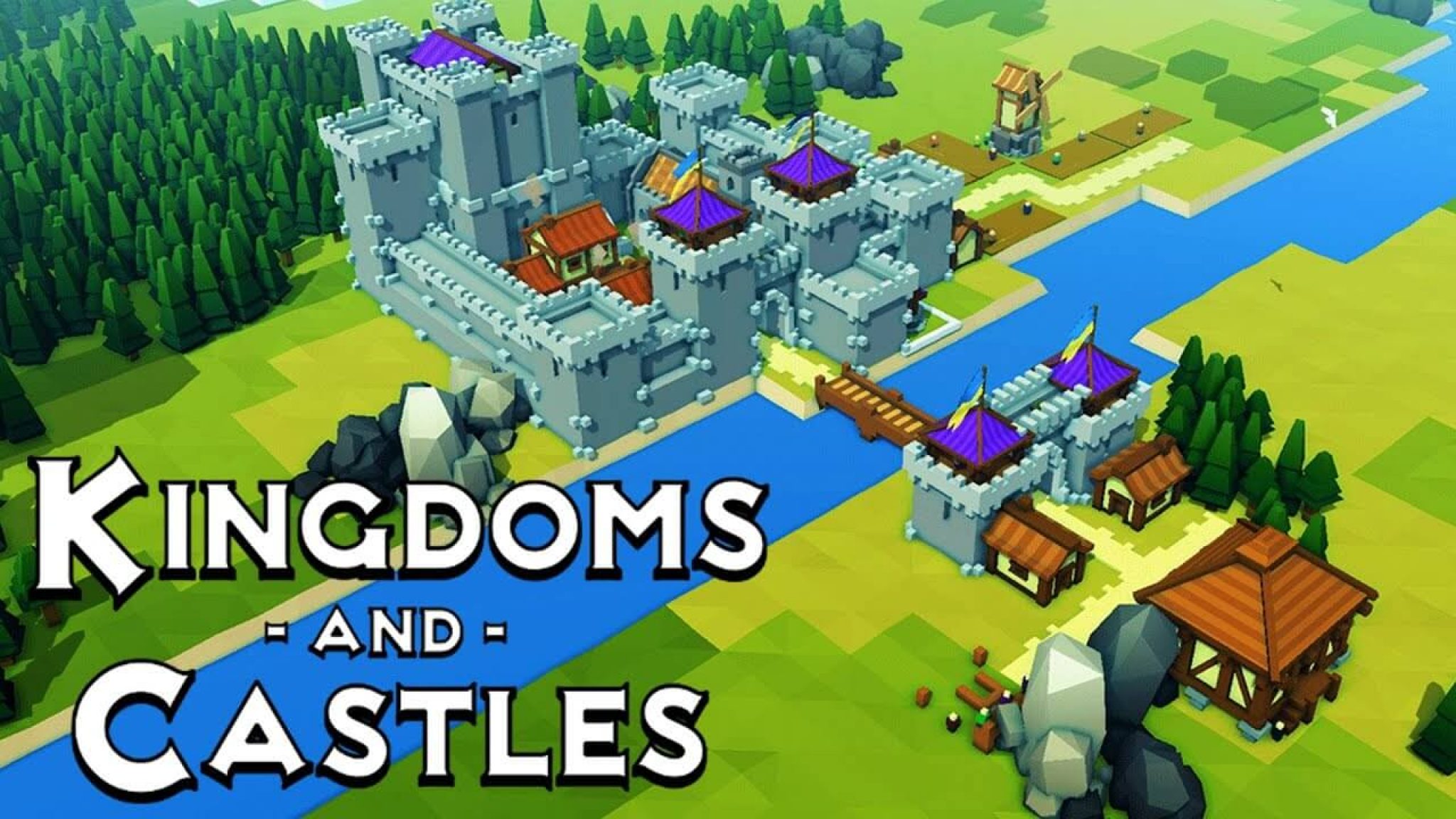
Kingdoms and Castles by developer and publisher Lion Shield,LLC—Microsoft Xbox Series X review written by Nick with a copy provided by the
publisher.
Estimated reading time: 4 minutes
Kingdoms and Castles is one of those titles I hadn’t heard
much about but has turned out to be a very pleasant surprise as what I can only
describe as a sort of laid-back city building simulation experience. It took me
a bit of time to wrap my head around a few of the mechanics, but once I got
going with it, Kingdoms and Castles was a smooth, enjoyable experience.
Right off of the bat, it’s clear that the devs give you a
decent amount of control over your experience. You can choose how big your map
is, how many opponents you want and even if you want aggressive opponents or
not. While it’s somewhat standard stuff in a lot of games like this, it’s still
handled well and frankly I appreciated having the opportunity to learn the game’s
mechanics without the stressors of competition right out of the gates.

That was probably the right call for me as well, as
initially I didn’t really know what I was doing. There’s brief bits of tutorial
that pop up here and there, but Kingdoms and Castles didn’t go holding my hand
through the early rounds of gameplay. I chose where to create my castle and
then highlighted a big chunk of woods and watched my people go about chopping
it down. Once I had lumber, I started to lay out buildings that I wanted and
grew at least a little puzzled as one process began and the other seemed to
halt. I then found the menu that allowed me to prioritize which kinds of work
my people were doing, and to control how many of them went into a particular
area of focus. For example, I can send the entirety of my kingdom off to chop
down trees, but then who is going to build the homes, tend the orchards and
perform other tasks as needed?
Kingdoms and Castles is similar to other city builders in
that resource management is key, but there’s an additional layer of resource
management in your people management as well. It felt a bit finicky early on as
I had a handful of bad experiences: flooding took out some farming plots, a
fire ruined some buildings off at one end of the land and I couldn’t seem to
get my people focused on the things I wanted to prioritize – at first.
Because I had chosen the enemy-less route right off of the
bat, I learned how to balance things pretty well… or so I thought. Admittedly
though, things began to run a bit stale as my only real obstacle seemed to be
citizens who were never really content. Give them a home, and then they want
food. Feed them and then they want churches and festival grounds and a variety
of other things that I gained access to as I steadily ramped up the number of
people I had doing different things, unlocking new types of technology and
structures along the way. I then decided it was time to spin this up again,
with some proper antagonists. I won’t go into great detail, but I’ll say that
the gist of it is: I had plenty more to learn.

The thing is, I kept playing. I wanted to learn how to do
more. Kingdoms and Castles is nowhere near as densely designed and complicated
as some of the city builders out there like Civilization 5, and that’s okay.
There’s a simplicity to the visuals, music and interface that compliments the gameplay
and creates a sort of pleasant harmony throughout the experience. It doesn’t
have the tactical depth of a lot of other titles in the genre, but in a way,
this was perfect for me during my vacation time because it was easier to learn
without some of the frustrations that can come with the genre during the
earlier learning periods. I screwed up early on, but seldom felt frustrated or
that the experience was cheap and unfair.
Kingdoms and Castles does have some room to grow. The AI is very
artificial but seldom very intelligent. Over a handful of different games, it
felt like the same patterns emerged both in how they interacted with me and how
they went about building up their own kingdoms. There’s a behind the scenes
script at play here that the computer generally sticks to. That’s not a bad
thing necessarily as it seems well-balanced and makes the gameplay experience
enjoyable, but it does tease into that concern that long-term, Kingdoms and
Castles might feel somewhat shallow compared to its contemporaries and the shelf
life of the title could be shorter than them.
If I had to sum this title up in a word, I'd go with: Charming. Kingdoms and Castles is a fun experience
that works surprisingly well with a controller on a console. There’s plenty to
do and learn, and while the depth of systems and presentation didn’t blow me
away, the key here was that I by and large enjoyed my time with the title.
There’s a somewhat more relaxed pace to be had here, and that suited me just
fine as I found hours melting away rather effortlessly.
Score: 7 / 10

NBA 2K24 by developer Visual Concepts and publisher 2K Games—Microsoft Xbox Series X review written by Nick with a copy provided by the publisher.
Estimated reading time: 11
minutes
NBA 2K24 in many ways represents the best of sports video
gaming. However, NBA 2K24 also represents some of the worst aspects of the
video game industry as well. It is a shame, because NBA 2K24 is a fantastic
game when you take into account its presentation and the fun to be had in playing
the title itself. However, the gaming industry’s need to squeeze as much money
out of its customers as possible rears its head here in a way that is impossible
to completely ignore as well, which is unfortunate.
As a lifelong fan of the NBA who has been playing the 2K
basketball franchise since it first released on the Dreamcast just before the
turn of the century, I am the target audience for this release. I love
basketball. I have been playing it since I was a kid, I grew up watching the
Detroit Bad Boys era and have numerous collectibles spanning decades of fandom.
I’ve experienced the growth and change in the 2K series over its 25 years, from
a more fast-paced, arcade style of play to the more deliberate, simulation
style of play that the series has become known for over the last several years.
I say all of this to explain why I love this series, and was
able to enjoy so much of what NBA 2K24 brings to the table this year. The
presentation is better than it has ever been. This is in some part simply due
to the evolution of technology and time as developers continue to improve upon
their craft and find new ways to leverage hardware. One of the most notable
aspects of this is in the new PROPlay technology that Visual Concepts has
rolled out. For quite some time now, this series used motion capture on a
handful of specific players to help create authentic gameplay movements. NBA
2K24 is now leveraging this new technology to incorporate actual game footage
instead, opening up a wealth of shots, dribble moves and realistic collisions
to make the on-court gameplay look and feel more authentic than ever.

That is no small accomplishment. Unlike hockey or football
where players have a lot of bulky equipment to sort of mask their body physics,
the NBA has players out there in shirts and shorts jockeying for post position,
colliding into one another mid-air and diving across the floor for loose balls.
The types of tangled interactions are virtually endless and the 2K series has
done a remarkable job capturing the athleticism and physicality found in the
NBA. If the gameplay is the most important part of most video games (and I
believe it is), then updates like this help to make the experience better. This title looks and sounds the part.
This translates into a thoroughly entertaining representation
of basketball through a variety of modes such as MyCareer (create a player and
put them through this hybrid single-player / online experience), MyTeam (think
fantasy basketball mixed with card collecting), MyNBA (basically, a franchise
mode where you run a team, not just a single player), MyWNBA (basically a stripped
down version of MyCareer, but with a focus on the WNBA). Last year also saw the
reintroduction of Jordan Challenges, and this year swapped in Mamba Moments. This
is focused on highlights of Kobe Bryant’s career, where you try to emulate them
through some targeted challenges. All in all, it’s a nice celebration of Kobe’s
career for the 25th anniversary of the NBA 2K series.
There are some notable changes in other areas as well. The
interface is easier to get around, with more information in it than previous
years. I like that the Seasons that occur every so many weeks are now shared
across the MyTEAM and MyCAREER modes as opposed to being separate and making me
feel like I have to budget how I spend my time between those two most popular
modes of play. The AI has seen improvements as well, especially on the
defensive side of the ball. I loved playing the three-on-three mode in MyTEAM and
no longer seeing the opposing team abuse backdoor cuts on almost every other
possession. I didn’t realize how twitchy that part of the gameplay had made me
until I caught myself needlessly shading my defender that way out of habit from
last year’s release, but instead found myself pleasantly surprised to see my
defenders preventing that and some other relatively cheap tactics / angles taken
to the hoop.

Of the aforementioned modes, the MyWNBA has received a few
small tweaks to the formula they have been using the last couple of years, but
nothing substantial. It makes sense that this is not where the devs would put
most of their time as it’s been a nice inclusion for fans of the game, but I’m
sure there’s data somewhere that shows that this mode is not as heavily played
as some of the other ones. I appreciate that the MyNBA mode has received a ‘Lite’
mode that strips out some of the more complicated systems for those who want to
run a franchise, but desire more time on the court and less in the menus
micromanaging things between games. I for one really enjoy the depth of this
franchise mode and don’t feel like I get much out of the ‘Lite’ option – but at
the same time, I think it’s a nice design choice for those who don’t feel the
same way. In addition to this streamlined functionality, we see the return of
the ‘Eras’ option we saw last year, with an additional one representing Lebron’s
time in the league. These five eras are fun to play with, though I’d like to
see even older ones get represented at some point, and create a fun alternative
to simply rolling out a franchise set in the current time.
However, the two modes fans are most likely to spend their
time with are the MyTEAM and MyCAREER ones, and that is where the business
practices of 2K Games starts to get in the way of the fun. MyTEAM is the best
version of this ‘pack of cards’ collection modes we see in other sports titles
like Madden, WWE, The Show and more. Additional options such as a more restrictive
but rewarding Salary Cap Mode to help keep games a bit more balanced between
players, or the addition of an option to buy specific cards you are looking for
to complete collections are welcome. The core gameplay loop of complete tasks,
gain cards and currency, then add to your collection and build out new teams to
tackle new challenges is actually pretty fun most of the time, and largely
unchanged from prior years.
That being said, the gameplay loop can be pretty grindy,
with the rewards for completing tasks and playing games being fairly
incremental. That is fine in and of itself I suppose, if it was a level playing
field for all and this was just sort of ‘padding’ to keep people playing longer
to reach their goals as opposed to feeling like they have nothing more to do.
The issue is that you can spend real money on VC (Virtual Currency) that allows
players to buy more packs or specific players. This gives those who purchase these
funds an obvious advantage over those who spend time grinding for these same
rewards. If that pace of progression wasn’t disconcerting enough, the new ‘buy
whomever you want’ shop feels like a grab at getting players to spend more
currency as well. On top of that, there is now a battle pass in the mix. That’s
right, if you spend more money during the ‘seasons’, you can get more virtual
rewards for the time you put in.

This same problem rears its head in the primary mode, MyCAREER.
For the record, none of this is new. This has been standard operating procedure
for the NBA 2K24 series for years now, and it’s often been viewed as a sort of
gross set of microtransactions. However, something about it seems every more
pronounced this year than the last few. Progress in MyCAREER just feels very
slow. With my review copy, I got a 100,000 VC head start that got my player
into… the mid 70’s in terms of their overall score. A dozen hours or so later,
I was in the low 80’s. Again, I get wanting to set a pace that is somewhat
slow, so players are still enjoying the game weeks or even months from now, but
for those willing to spend potentially hundreds of dollars to skip the grin and
suddenly have the best stats? Well, the actual experience is likely to be far
less frustrating.
There is certainly an element of ‘get good’ here, as an
incredibly skilled player can likely make up the difference between a character
who is a 75 overall and a 90 overall. However, the vast majority of people will
simply be doomed to lose against those higher-rated opponents. Of course, no
one makes you play the multiplayer component, but MyCAREER certainly wants you
to do so, as well as explore the new beachfront city it has established this
year. The setting is more enjoyable than last year’s more cluttered, less
visually appealing city, but with shops around every corner and numerous reminders
that your character could be more competitive if only they had a better rating,
there’s a stronger sense that NBA 2K24 is more reliant on VC than ever before.
It’s a shame really, because the actual career mode is still
the strongest part of the overall experience for me. Admittedly, I miss the
slightly more structured narrative focused on some sort of a plucky underdog or
resilient comeback story like we’ve seen in prior games. Here you are seen as
the next great player, perhaps even capable of becoming the GOAT (Greatest of all
Time). There is still a story here, but it feels heavily stripped down in favor
of getting the player into the game and not the ‘extra stuff’. That’s going to
be hit and miss depending on the audience. I have a couple of friends who just
like to roll out and play, and NBA 2K24 makes it easier to do that than years
prior. However, I’ve generally enjoyed these narratives and missed some of that
storytelling found in years past.

I will say that I thought one particularly cool new idea is
in how NBA 2K24 approaches your career arc. Instead of feeling like you have to
play each and every game in a season to get your stats up and instead gives you
the option to play ‘key games’. This can be your first game as a pro, or
against a key all-star at your position, or a pivotal matchup with another
great team also vying for the championship. These games ‘mean’ more in terms of
developing your character, and you can simulate the game in-between, and the
system does a really nice job of keeping those simulated results in-line with
how you played during actual games. The idea is to get you deeper into your
career, more seasons into the career arc, so you can experience more of that
rise to greatness.
Frankly, I think the above is a great idea. I’m someone who
probably spends dozens (if not 100+) hours a year with every installment of the
NBA 2K series and almost never make it more than one or two seasons into my
career. By skipping the more mundane or ‘filler’ games along the way, I got to
delve deeper into my created character’s career than ever before. This is
especially cool, as I tend to make two or three different kinds of characters
each year, just to try out the different playstyles available. There is still
plenty to do between games, with numerous quests and objectives that give this
beachfront city a sort of MMO-type vibe that works nicely with the RPG elements
in character progression.
So where do I stand on NBA 2K24? This is one of the hardest
reviews I’ve had to write in some time. I love the game itself, and have spent
a ton of time with it so far and have no doubt that I will continue to this
year. It’s still the best sports game out there. However, there is an
ever-present grindy-ness to this year’s iteration that gave me the feeling I
was swatting 2K’s hand away from my wallet as well. Will I still be playing in
a couple of months, like I usually do, because I want to reach great heights
with my characters? Or will the microtransaction-heavy nature of 2K’s business
practices wear me down and cause me to move onto something else sooner than normal?
It’s tough to say right now, but that’s the mixed nature of this year’s
release in a nutshell.