Rune Factory: Guardians of Azuma by developer Marvelous Games and publisher Marvelous USA (XSEED)—Nintendo Switch review written by Pierre-Yves with a copy provided by the publisher.
Estimated Reading Time: 7 minutes.


Rune Factory: Guardians of Azuma by developer Marvelous Games and publisher Marvelous USA (XSEED)—Nintendo Switch review written by Pierre-Yves with a copy provided by the publisher.
Estimated Reading Time: 7 minutes.

TORRANCE, Calif. — Late 2023 — XSEED
Games, the independent-minded publishing brand of Marvelous USA, Inc.,
today confirmed publishing rights for the physical editions of Granblue Fantasy: Relink in North America for PlayStation®5 and PlayStation®4. The action-RPG from the popular Granblue Fantasy series
will launch on Feb. 1, 2024, with three physical versions on
PlayStation®5 — a Standard Edition for an MSRP of $59.99, a Deluxe
Edition for an MSRP of $99.99, and a Collector’s Edition for $179.99. A
Standard Edition for PlayStation®4 will be available for an MSRP of
$59.99.
The physical Granblue Fantasy: Relink –
Standard Edition will include the game on disc and a key to redeem the
Granblue Special Item Set “Relink pack” within the original Granblue Fantasy
game, which will be limited to the first print run. The Deluxe Edition
will add an artbook, a soundtrack CD, a set of postcards, and in-game
DLC including Starter Item Pack, Character Color Packs 1-3, and the
weapon ‘False Sword of the Apocalypse.’ The Collector’s Edition will
include everything within the Deluxe Edition while adding a ‘Sword of
Eos’ keychain and a ‘Proto Bahamut’ statue figure.


In celebration of the Granblue Fantasy Relink announcement, a new trailer debuted at gamescom: Opening Night Live 2023:
Fans looking forward to Cygames’ latest fantasy adventure will have the opportunity to experience the thrilling action at the XSEED Games booth (North Hall #1325) during PAX West at the Seattle Convention Center, from Sept. 1-4.
About Granblue Fantasy: Relink
Granblue Fantasy takes place in the Sky
Realm, a world where myriad islands float in a great blue expanse. Take
your role as captain of a skyfaring crew, joined by a scrappy little
dragon named Vyrn and a young girl with mysterious powers named Lyria.
Together you sail with a colorful cast of crewmates, including kings and
misfits alike, for Estalucia, a fabled island beyond the end of the
skies.
In the Zegagrande Skydom, islands are guarded by powerful creatures
known as primal beasts and winds carry tales of a secretive organization
known as the Church of Avia. Unveil a web of intrigue reaching far
beyond the borders of Zegagrande and engage in a battle for the fate of
the Sky Realm itself.
Game Features:
Granblue Fantasy: Relink is developed by Cygames, and XSEED Games will publish and distribute the physical editions in North America starting on Feb 1, 2024. More information on the upcoming pre-order to be made available soon by XSEED Games. This title has been rated "T for Teen" by the ESRB.
More information about XSEED Games’ products can be found at www.xseedgames.com. Fans can also follow XSEED Games on Facebook, Twitter, Instagram, Twitch, get in depth info from their developer blog, and join the discussion on their Discord server at:http://discord.gg/XSEEDGames. #GBRL
About XSEED Games
XSEED Games is the independent-minded publishing brand of Marvelous USA, Inc., a wholly owned subsidiary of Marvelous Inc., which is a publicly traded company listed in the First Section of the Tokyo Stock Exchange. Formed in 2004 by a small group of industry veterans, XSEED Games is headquartered in Torrance, California and publishes video games on PC and consoles in North America. The publisher's diverse portfolio of over 100 titles includes releases from Marvelous Inc. including STORY OF SEASONS (Bokujo Monogatari), Rune Factory, and DAEMON X MACHINA, titles from third-party partners including AKIBA’S TRIP, Corpse Party, and Granblue Fantasy: Versus, and titles from independent developers including Sakuna: Of Rice and Ruin, Potionomics and Cuisineer. XSEED Games has grown its reputation among global gamers with its critically acclaimed localizations and commitment to fans, remaining ever dedicated to its “indie spirit, player-first” approach for quality games.
Article by: Susan N.

Rune Factory 3 Special by developer Marvelous Inc. and publisher Marvelous, XSEED Games—Nintendo Switch review written by Jim with a copy provided by the publisher.
Estimated Reading Time: 6 minutes
We here at Chalgyr really like the Rune Factory games. Just go check out Pierre-Yves's Switch review of Rune Factory 5, Natasha's PC review, and Nick's Rune Factory 4 Special Xbox One review. I haven't actually played a Rune Factory game since Tides of Destiny on the PS3 but being a fan of Story of Seasons and other such games, I was really excited to try this remake out.
When starting the game like most of these games I have to pick a name for the character, I went with the default Micah. There is no option to play as a female in this game, so for some that may be a bummer. After picking a name I had to put a birthday in for Micah and away I went. Micah is an amnesiac who also happens to be half monster. One of the villagers named Shara finds Micah while he is in monster form and hurt outside. Micah is part Wooly, a sheep-type monster, who is one of the cutest monsters in the games. Shara decided to bring Micah inside and nurse him back to health. Micah wakes up shortly after as a human while no one is around and leaves Shara's house. Shara ends up seeing human Micah and asks if he is a traveler. After explaining he can't remember anything other than his name she and the village elder, Shara's grandfather let Micah stay in the village.
Micah is given a home inside the Sharance Tree and under the tree is a field for farming. After the game goes through all the tutorials on how to farm Micah will have his first fight using a hoe to attack. After beating the first few monsters who attack Micah will be given a choice of a few different kinds of weapons. I went for the two-handed sword but found out it wasn't for me as it was just too slow. I later switched to dual swords and they are much faster and stuck with them for the rest of the game.
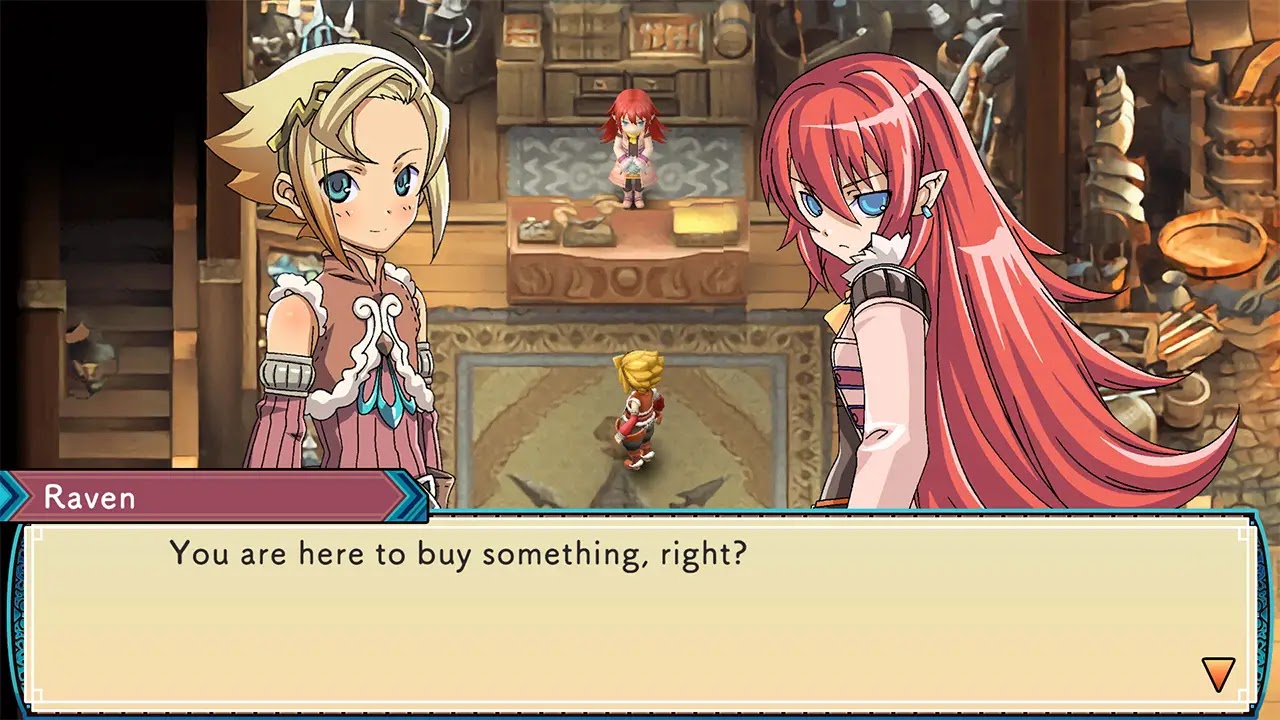
There are four different dungeons in the game. One for each season and each with its own boss who after beating Micah gets some of his memories back. After beating the first boss Micah will be able to switch back and forth from his human and wooly forms. Micah must still keep the fact that he is a half-monster a secret so he must make sure he doesn't transform in front of anyone.
While trying to get his memories back Micah also can farm. Micah will be given the tools needed to start farming and from there he can buy seeds from the store in the village or find a few hidden under grasses and weeds that grow in the fields. Micah can grow veggies, fruits, and flowers. Micah can keep, sell, or craft with these. Everything you grow will have a level. The higher the level the better the crop is. There are items Micah can buy or craft to help raise the levels of crops. Micah can eventually buy a kitchen and kitchen tools to cook, a furnace to make and upgrade weapons and farming tools, an apothecary set to make potions and healing items, and a crafting table to make accessories that Micah can wear to boost stats. Micah will need items he finds from defeating monsters, farming, and mining to use for these.
Once Micah has a barn he can become friends with monsters by giving them food. A home-cooked meal works best and by doing this Micah can get byproducts from them like milk, eggs, wool, and other things needed for crafting. Micah can also find these by fighting monsters and they will sometimes drop the item but raising them himself can give you a better quality item.

The rate Micah can get money from selling things seemed to be just right as the pacing of the game seemed just right for me. It is an RPG so there was enough to do as Micah will get requests from the villagers through a bulletin board, Micah's mailbox, and later an owl. Finishing these quests will get you closer to the villagers and Micah will sometimes get a reward from items to money. It's a good idea to take on quests for the girl you like best as there are eleven bachelorettes. All of the characters are charming, even the non-bachelorettes. I enjoyed each one's story from the secrets one might have to just the silly moments you can have with them.
Everything Micah does in the game has a level and as his levels go up the better he will be at things or the more health or RP he will have. Lots of things cost RP: using tools, weapons, and magic. It all takes RP so leveling up lots of things is a good idea. It is easy enough to do though as there really is a level for everything in this game such as sleeping, eating, using tools, crafting, cooking, fishing, you name it there is probably a way to raise the level of it by doing it.
Every in-game month is a season and each lasts thirty days. In that season there will be birthdays that Micah will learn as he speaks and becomes friends with the villagers. Giving someone a gift that they like on their birthday will greatly raise the level of friendship with that person. There are also multiple festivals in a season from fishing, and harvest festivals, to ones with mini-games. These give a nice break from normal farming and adventuring. Winning one of the festivals will reward Micah with items though it always seemed to be cooking bread. Buying or earning recipe bread is how Micah learns new crafting or cooking recipes if his level is high enough.
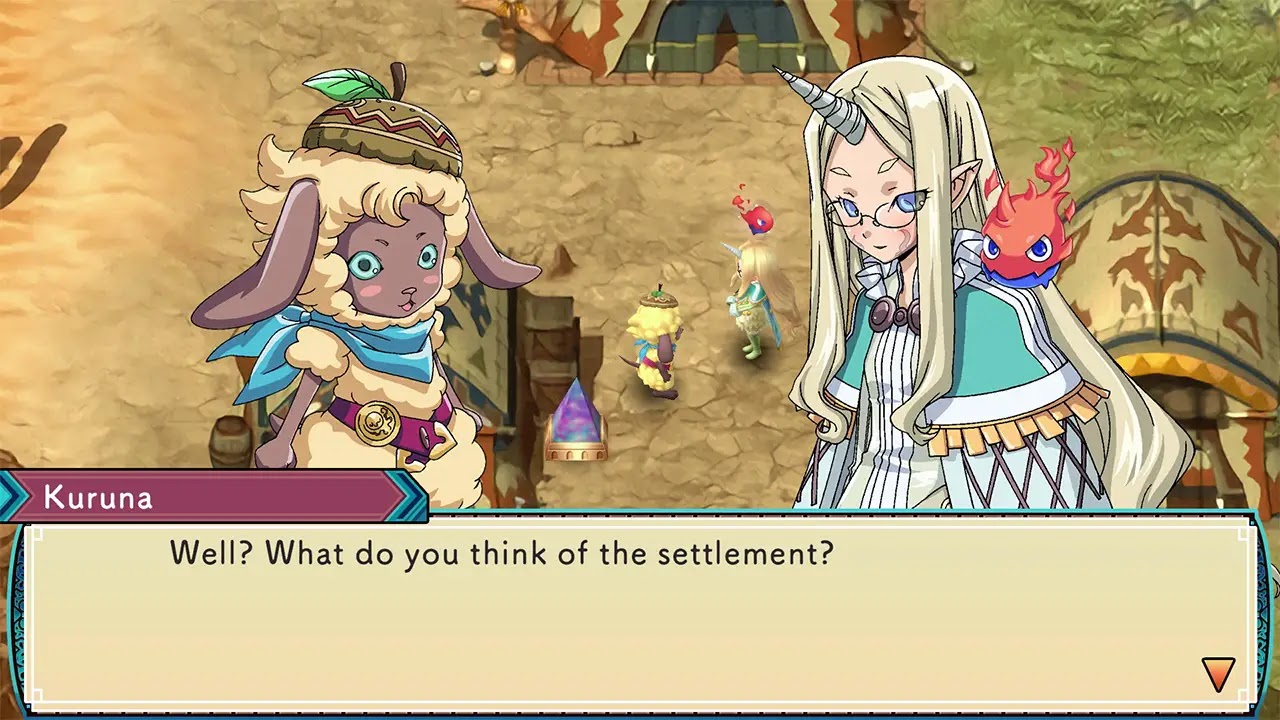
Once Micah picks the woman he loves he can propose to her and then Micah will be on his last quest. Even after this quest and the credits roll the game doesn't end. There will just be no more story content after. Micah will have a wife living with him and can continue to farm, adventure, and finish any requests from the villagers. The quest on the bulletin board will be random daily. Micah can only do one request at a time and only one type of each request. So, Micah can do one bulletin, one mailbox, and one owl request per day.
One of the things Micah can do is go on what the game calls adventures. There will be a list to pick where Micah should go and each with a recommended level. Micah can get some decent loot from doing these but they can be challenging as the level layouts are always random and if Micah isn't at a high enough level he can get beat easily. Every adventure ends with a tough boss fight. These adventures do nothing to advance a story but they are fun to try out.
Micah can bring along a monster friend or a human friend to help out when you go out. They will level up as you and they defeat enemies. I got around to beating the game without them but you can also invite one of the ladies you like on a date and bring them to one of four romantic locations.

The gameplay is smooth but there are some frame rate drops in certain areas mostly in the fields. For me, there were a few spots that did it and since this is a remake of a Nintendo DS game I think the Switch would be strong enough to handle the game. Other than that one issue I really enjoyed the rest of the game. The music was good, the graphics were good when there were no frame rate issues, the real-time fighting was fun, and the characters were all unique. I loved learning about each one and then had a hard time picking a girl for Micah.
Once the game is beaten, the newlywed mode will be unlocked. This gives you a short story with each one of the bachelorettes after Micah gets married to them. They are short but fun little side stories but they end way too fast. I beat one of them in less than an hour though there are eleven of them and they all unlock no matter who Micah married in the main game. I also thought it was funny when in newlywed mode I picked the wife Micah married in my main game and some of the other female characters were asking if she and Micah had done anything 'kinky.' I wasn't expecting that from this game!
Overall I loved Rune Factory 3 Special and I am not sure how I missed out on it on the DS. I am glad it was remade on the Switch and even though I beat the story I will keep playing. It was a truly charming story with good pacing and fun to play. It felt like the length of the game was just right, long enough to feel like an RPG but not so long that it takes a lifetime to beat. The frame rate issue was the only annoyance but even with that I really liked this game.
Score: 8.75 / 10

Story of Seasons: A Wonderful Life by developer Marvelous Inc. and publisher Marvelous Inc. & XSEED Games—Nintendo Switch review written by Jim with a copy provided by the publisher.
Estimated Reading Time: 6 minutes.


Oddly enough the game never told me how to do this but by memory luckily I found the spot. Here you can pick a few items to sell and villagers will come and stand in front or to the side of your little stall. You talk to them and they will ask about an item that you can sell for full price or give a discount. Every villager will only buy a certain number of items. Three for most so talk to them more than once. Some will only buy one or two items and some will only buy if you discount it. You can sell just about anything this way but takes it takes time and sometimes villagers won't walk by for some time. There is another way to sell your unwanted items. Every four days a man named Van will stop by the village and set up his stall where you can sell just about anything. Also you can buy special items from him like upgraded tools. The only things you can buy at any time in town are seeds and food to eat right away at the cafe.


Once you get married at the start of your second year you will get a child who starts as a toddler. You can pick if it's a boy, a girl, or either for a random choice. I picked either and got a son who I named Aiden. You can interact with your child and carry them, snuggle, toss and catch them, or sing them a lullaby. You will also be able to buy some toys for your child from Van once he has them in stock. Your wife will also help out with watering the crops a few times and this does come in handy as the second year picks up a bit where you can buy a third and even better field.
By this time you might have more than one type of cow on the farm each with their own milk type, ducks, chickens, sheep, and goats. So even though things started slowly you may be having more to do once the second year comes up. You will have to watch your stamina, energy, and fullness. By doing things like watering crops your stamina will lower at first. The only way to make this go back up is to eat which will also raise your fullness. Run out and you will pass out for a few hours. After the first year however your home will have a shower and that will restore your stamina. I couldn't figure out what energy was, but it did lower and I could raise it by buying an item from Van.

Score: 8.5 / 10



Estimated Reading Time: 5 minutes.
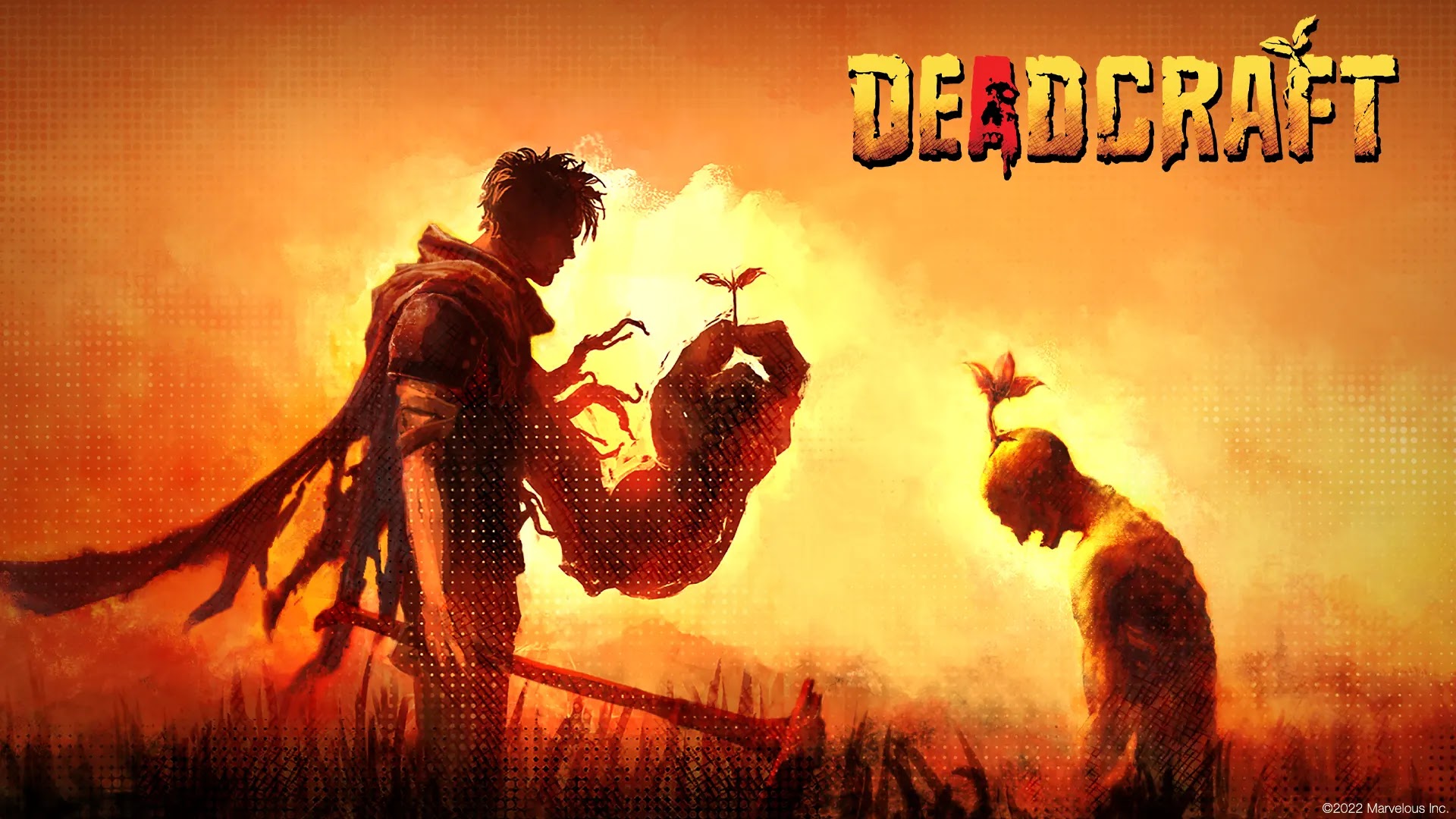
Deadcraft isn’t shy about what it is, and brings the player into an action-rpg world filled with, well, crafting using the dead. As the title implies, the hook of this game is that the player can both craft using zombie parts as materials as well as crafting zombies themselves. That is not to say that the player can only craft using rotted corpses - no, there is a full slate of regular crafting available here too.

Deadcraft throws the player into a world inhabited by zombies, gangs, crackpot mad scientists and various people just trying to scrape by. Unlike the trends on TV, however, this is not a world of drab dark colors - no, things here are bright and almost flamboyant. Character dialogue is often a bit over the top, but this is well supported by the color palette and art style of the game. Of all the things that are dead in this post-apocalyptic world, fashion and color theory are certainly alive and well.
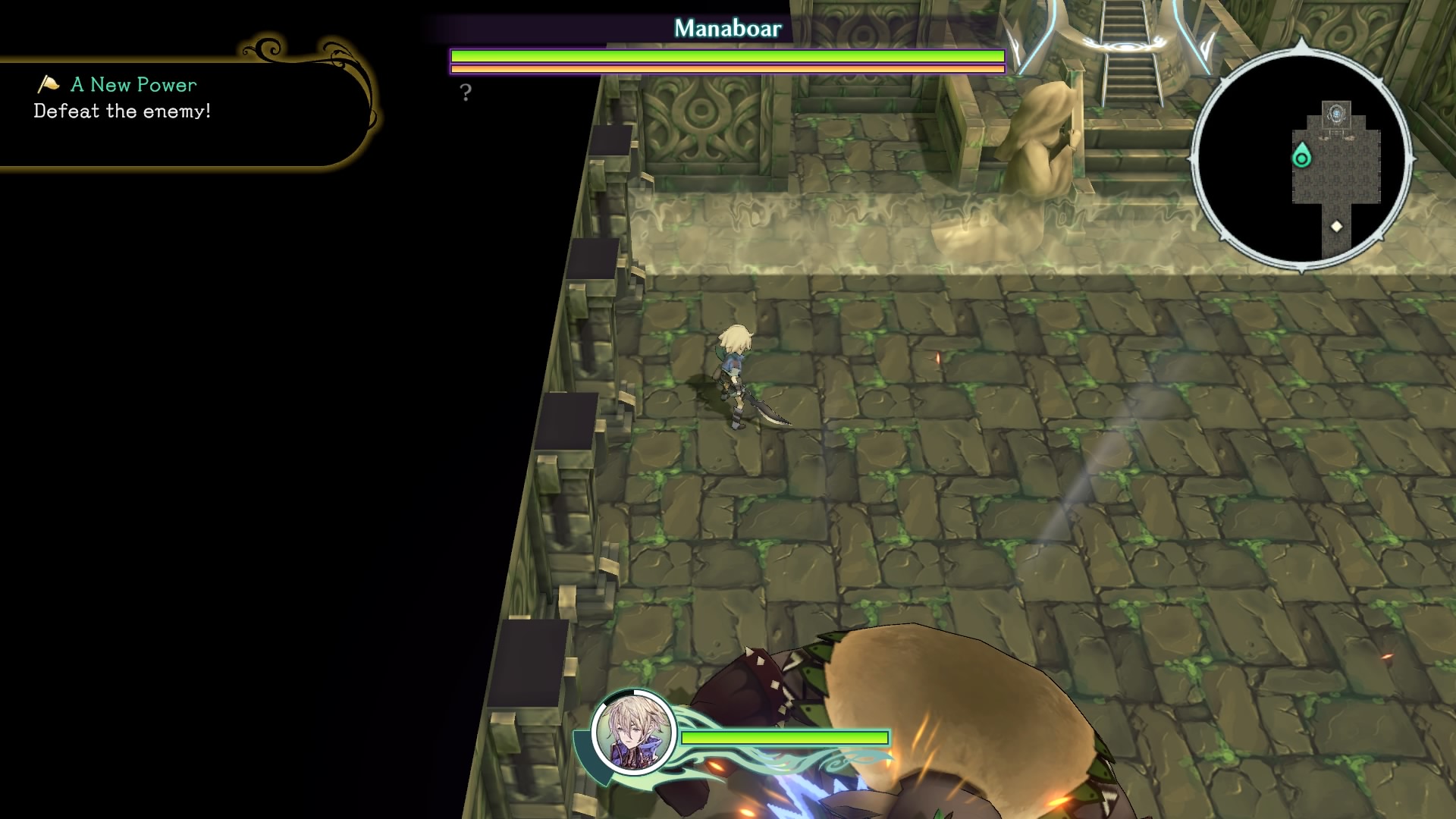
From the outset, Deadcraft throws the player into combat against the dead and living alike. Movement and targeting are surprisingly intuitive, with either freeform slash/shoot-where-you-face or an easy to use lock-on-target system. The camera in Deadcraft is always centered on the player, but the in-game map function allows the player to anticipate where enemies are so that the limited on-screen visual range isn’t much of a drawback.
Playing into the crafting with dead things schtick, the player character in Deadcraft is half-zombie, born to an infected mother before she could turn. This unique nature gives an opportunity for the player to choose their playstyle by influencing which aspect - zombie or human - is dominant at a given moment. Eat corrupted foods or specially-made zombie power drinks and your corrupted side will be visibly dominant. Townsfolk get scared, your attacks get more powerful…and like a dumb zombie you forget how to defend yourself.
Eat and drink untainted items, or use your zombie powers too much and you’ll tend towards human in appearance and action. Townsfolk are more easy to talk to, you are far better at dodging attacks, but your raw power will take a hit. Finding a happy medium - or learning how to bounce between states on demand - is key to success, and a fun challenge.
Deadcraft has an extensive, two-sided crafting system. Initially, the player can craft various normal, human-survival items. From purified water to farming vegetables, cooking meat or building storage sheds, your standard survival-game crafting staples are all here. Weapons too can be crafted if you have the right knowledge and ingredients, from knives to guns to roadsign-bats.
Through the story the player quickly learns how to craft for their zombie side too, however, and this is where Deadcraft sets itself apart. From hybrid vegetables to zombie power-drinks and even making your own zombie minions from corpses, Deadcraft embraces the gore. By the time you’ve finished crafting and seen a disembodied zombie hand give you a thumbs-up for your efforts, you’ll know whether or not Deadcraft’s style of humor suits you.

Deadcraft has launched on a number of platforms simultaneously, and that means control and menu layouts that work on all systems. As a primarily PC gamer, this means that the console-style menu and control system was fairly obvious from the outset. As is the case with many games that release first or simultaneously on console, menus in particular seem overly nested, and there aren’t many hotkeys introduced that would shortcut directly to menus you want to see.
This is often an indication of a UI designed to support the lower available button count on controllers. PC-centric UI design in contrast will often use the extensive keyboard options to make shortcuts directly to key submenus, saving time and clicks every time the player wants to access the information.
Deadcraft’s setting is post-apocalyptic, and so the early game focuses on resources. Beyond just scrabbling for the items you need to craft the things you want, the player will spend time trying to find and consume food and water. Early on, even finding food and water clean enough that it doesn’t inflict health damage when you consume it can be difficult. At the same time, Deadcraft links the amount of health and energy (used to power every swing of your sword) recovered at night to your level of hunger and thirst. If you’re parched and hungry you’re not going to sleep well, so it might be worth taking the health damage now and eating some cook-the-rot-away rat with a side of dirty sludge-water in the hopes of recovering more than it cost you to consume.
My impression of this mechanic is mixed, however. While the mechanic drives home the struggle to survive in a blasted wasteland, I found that it severely limited my early game progress. I probably spent more time in the early stages trying to figure out a steady source of food and water than trying to progress the main plotline.

Deadcraft is a visually beautiful (if at times cartoonishly gorey) game that plays quite smoothly. Effective in-game tutorials support the game’s signature dual-natured crafting and combat systems. Quick action and a well-constructed UI keep the player engaged with minimal overhead. Nested menu systems and a lack of hotkeys make it apparent this game was built with consoles in mind, but are easy enough to navigate that this is a design choice that shouldn’t cost much goodwill from PC-only players. A focus on getting adequate food and water slows down the early game, but also emphasizes the harsh environment the game is set in very effectively.
Overall, Deadcraft is a well-constructed action IsoRPG, and fans of the genre would do well to grab it on the platform of their choice.
Score: 9 / 10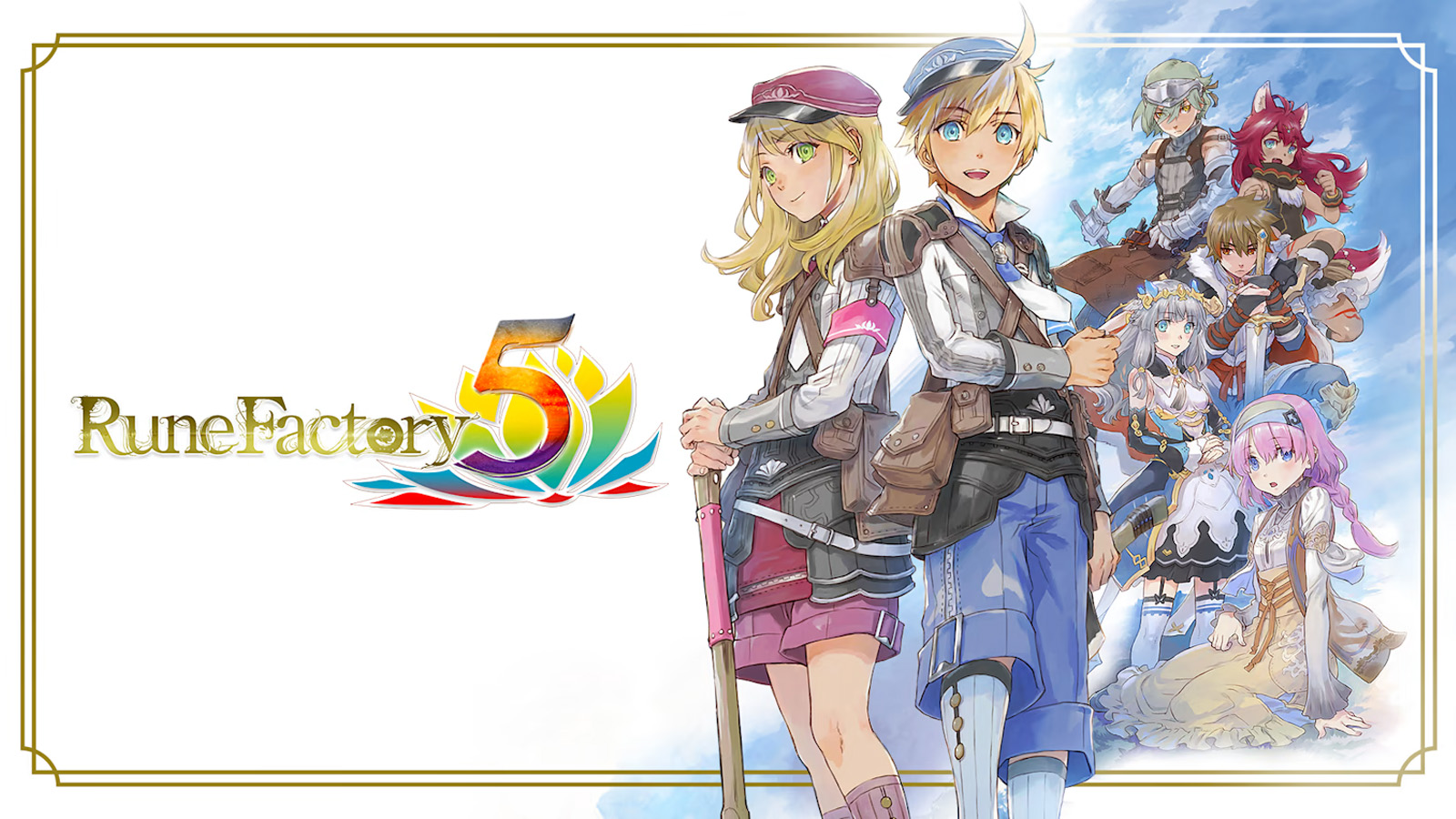
Estimated reading time: 11 minutes
The latest in the Rune Factory series is finally here and it was worth the wait. Combining elements that would seemingly contradict one another, a casual farming experience alongside an action adventure RPG, that couldn't be further from the truth. Well married together in terms of style, it's up to you to figure out if you stay single or get married while taking care of this small town's problems while raising crops across the seasons.
The previous entry of Rune Factory 4 was a lesson to people outside of video game development that even if you do everything right, a studio may still have to close its doors. Acquired by XSEED Games sometime later, there would be a bit of a happy continuation as the Rune Factory series would see new life with Rune Factory 4 Special on the Nintendo Switch (Pierre-Yves’ Switch review and Nick's XB1 review). This was great for both longtime fans and a new generation of gamers growing up with the Switch and the story of the series now continues with a brand new entry.

Moving onto the reason that you’re here, Rune Factory 5 is both fun and relaxing which is funny when you consider the hard labor of farming and the perils of adventuring into the wilds. Starting off with a classic trope of an amnesiac protagonist, you can select their binary gender which, while not affecting much overall in the story, will affect your marriage candidates if you choose to pursue that path. If not, there’s nothing wrong with staying single as there’s still plenty to do both at home and out in the wild!
Starting off with your at home activities, while not remembering who you are may put a dent in remembering what you were up to in life, the town of Rigbarth that you find yourself in was more than hospitable in giving you the second floor of the local SEED headquarters. SEED are an organization that can be considered protectors of the people that patrol borders, towns, keep people safe and take care of more dangerous missions especially when dealing with monsters. It also just so happens that with this room and board, SEED is also your new employer.
While giving you a place to stay, a job which serves to move the main story along and a quest board to help out the local townspeople with small things, you are also given a plot of land in the back of the headquarters which has definitely seen better days. Once it’s been cleaned up however, it’s a fair sized plot of land in order to plant vegetables to sell for profit as long as you keep up with your daily duties of watering your crops and harvesting them once they are ready.

Now perhaps my favorite feature, and I hope to see this more down the line, were the more accessible options while farming. Instead of the usual, plow one square, move to the next, plow that one, move to the next, etc., etc., etc., you can plow, sow seeds or water a field by simply hitting the action buttons and your character will automatically move to the next square available for that action. While using the same amount of stamina to do it, it speeds up the process allowing you to get to everything else so much faster. The same can be said for your crops that you can pick up in batches and while targeting your bin, shoot for a three pointer and not even have to walk all the way over there. It sounds a bit “lazy” when saying it out loud but it was amazing to have and the time it saves can be spent doing whatever else inside or outside of town.
I really enjoyed that the farming in Rune Factory 5 is integrated into the gameplay and more like what you could find within the Story of Seasons series. While not to that same level, as there are plenty of other elements like adventuring to do here, it felt part of the day to day activities and not simply some patch of land that I would often completely forget about because I was out questing. Here, I definitely cared for not only my plot of land behind headquarters, but of the various other farmlands that you can unlock over the course of the story off the backs of flying dragons. This is a fantasy setting afterall and why not have giant flying farm dragons?
Like your plot of land behind your headquarters, the land on the backs of the giant flying farm dragons also need to be cleaned and maintained if you’re going to see a proper yield of your crops. Cleaning out stumps and boulders while pulling out weeds and grass is a must otherwise it’ll get overrun in the matter of days. You really have to wonder where most of this stuff comes from at times! While this can sound like a lot to deal with, and it can be depending on your current in-game character skill levels of each task, you can get help from tamed monsters as long as you can truly befriend them after giving them a place to stay and food every day.
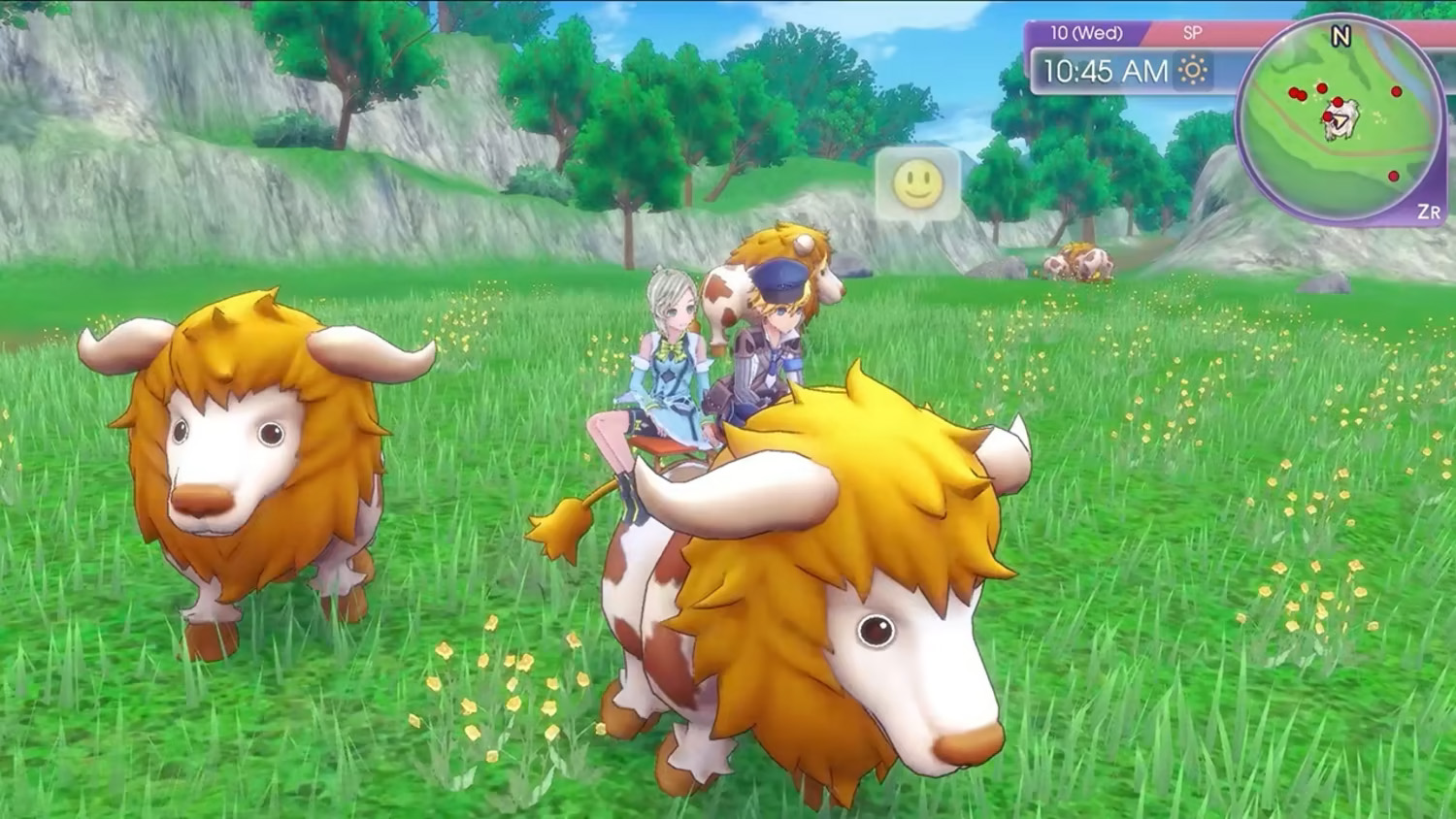
It may seem a bit odd to need to tame monsters in order to get farm hands, but it works and they do a good enough job once you’ve raised their friendship levels high enough to assign them chores. I mean who doesn’t want some help while needing to tend to multiple different fields? Otherwise, in order to get to that point, you’ll need to not only tame them while out adventuring, but you’ll also want to give them gifts, brush them and take them with you while out and about in order to strengthen your bonds.
This second half of the Rune Factory 5 experience is where I oftentimes found that the pacing was perfect. It would let me concentrate on my farming, on my fishing, or on my cooking. On the other hand though, for those tiny other times, I felt like the pacing could be a bit too slow as new main story events could take a while to come around and without them, you’ll be stuck to the area(s) that you’ve already unlocked as there’s no way to branch further without these stories.
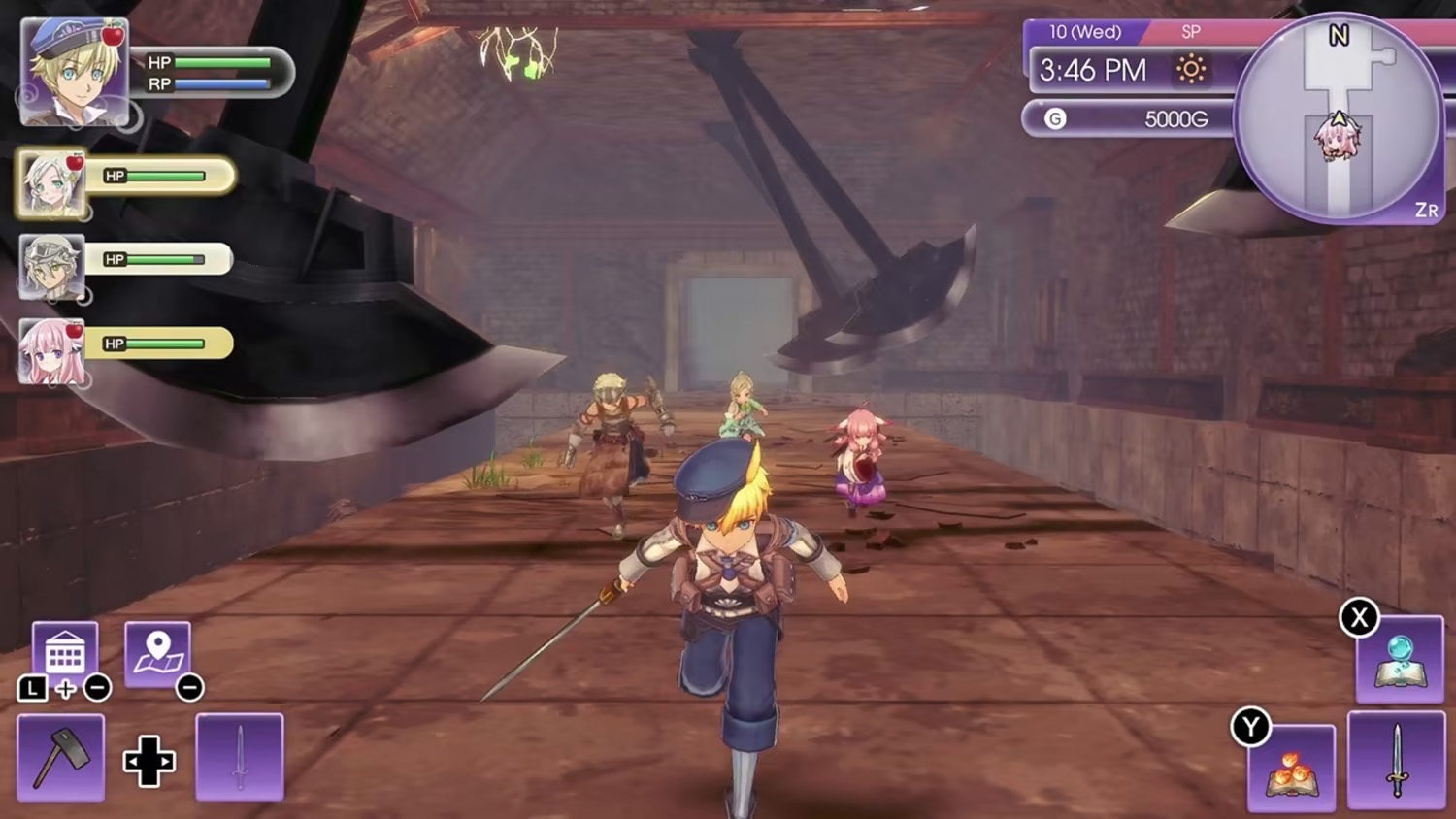
These mini adventures help to kick things into gear and really get out of town and do what an adventurer does best. Adventure! Level up! Perfect existing skills! Acquire new skills! Survive boss fights! The list goes on and it’s a fun distraction from your day to day chores as the exploration and the combat is easy to adjust to. Exploring is rather simple with simply moving around a map and checking out what kinds of monsters are roaming about or what kinds of materials can be picked up.

When it comes to defending yourself while exploring however, you’ll have plenty of options from short shorts and long swords to axes, lances, staves or even your farming tools if you’re brave enough. The combat is never really complicated following some rather basic routines. To spice things up though there are new end pattern combos that can be learned by repeatedly using those weapons and multiple spells and special abilities to be cast. There’s nothing overly indepth to the system but it does change the pace up a bit while out and about after a few days of farming and checking out any events that could have popped up around town.
Otherwise, between the farming and the adventuring, you’ll have time that you’ll want to better your other skills. Cooking food, making potions or creating and strengthening gear. Some of these will need a license while others can be started on right away either through the use of some of the existing shops, or if you’ve made enough money, right from your very own second floor bedroom! This is really one of the reasons to get into farming early on as to do this from your own room you’ll need to buy “furniture” and it isn’t cheap. While not cheap however, working out of your second floor bedroom is pretty sweet and saves a lot of time especially when you can set up everything you need: fridges, stoves, knife blocks, alchemy sets and weapon avils.
What I didn’t quite like about this aspect is that you are very limited as to how you can place your furniture and in those limitations, it just doesn’t look right. Taking the space of about two floorboards is about as close as you can get from each piece as well as the back wall so a lot of these features just look like they are standing in the middle of the room instead of being neat and tidy like the first floor or anyone else’s house. Furthermore, there’s no locking grid and you have to fiddle around with how close you can get each piece to each other as you only have so much space before shelling out 10K per upstairs renovation.

Finally though, making a return for some fun and games is the ability to host festivals by the use of SEED points which are replacing Rune Factory 4’s Royalty Points. With these SEED points you can do a variety of things such as get licenses for cooking and mixing medicinal elements through a series of easy enough to answer questions. Otherwise, you can also throw festivals for fishing, be on the receiving end of some form of bullet hell berry throwing contest, these people are weird, and finally expand your inventory space of your main inventory, dresser and fridge spaces!
Getting these points is fairly easy as there are more than enough quests that will appear on the above mentioned quest board and finding other events will certainly help the process. Just make sure to save up and spend it on what you really want instead of creating a whoops-like scenario and host a festival instead of unlocking a license you need to finish a quest which would give you the points for the festival.
If I were to have perhaps one real complaint of my adventure with Rune Factory 5, it would be more mechanical in nature but one that I hope will be fixed in time. Rune Factory 5 runs rather well until you leave the inside of a building for outdoors. The first few seconds are stiff before everything smooths out and into place while in town. While not on the sale scale, there's also a bit of this when monsters load up once you leave town for a bit of exploration and combat. Is it enough to make it unplayable? Not at all, but until you get used to it and adjust as to when you can start moving around? It's a bit tedious for an otherwise wonderful experience.
Overall Rune Factory 5 was fantastic once you put the small issues like frame rates and furniture placement aside. Whether spending just a bit of time to clear a day out of your in-game calendar or sitting down and clearing out a day of your real world calendar, there’s just something magical about the farming simulation of both these and the Story of Seasons series. Want to do something more than farming? Rune Factory has you covered with plenty to explore and challenge yourself while out in the field against the local monsters and eventual boss fights!
Score: 7.75 / 10

Estimated reading time: 5 minutes
Akihabara, Akiba for short, is considered by many to be the centre of modern Japanese popular culture and a major shopping district for video games, anime, manga, electronics and computer-related goods. Icons from popular anime and manga are displayed prominently on the shops in the area, and numerous maid cafés and some arcades are found throughout the district (Wikipedia). So with all of that as a potential setting for vampires, otakus, cross dressing and stripping techniques, good luck explaining what you're playing to a normal person!
I want to start this off by mentioning that both me and Richard had no idea that "this" title even existed. I own the sequel that we thought was the first Akiba's Trip, Undead and Undressed for the PS3, PS4 and the Vita as well as Akiba's Beat, but Hellbound & Debriefed? It only clued in that this was not new content about fifteen minutes in as I wasn't seeing the same elements that I expected to find.
So with that, I had a little bit of a dilemma while trying to figure out exactly how to review this original entry into the series. Originally released solely in Japan for the Sony PSP this is the first time that it's seeing a localization but as it's coming after its sequel, and years after that mind you, there constantly felt like there were elements lacking BUT, knowing that it came first and that it was going to be the first, seeing the roadmap and having a better idea of how the elements of the sequel came to be was interesting.

So the big question. Worth playing? Yes but more for the novelty than anything else. The reason for this is that if you've played the sequel, one, twice, three times depending on the platform and PSNow, you've essentially played what will feel like a less complete version of Undead and Undressed. Where things may be interesting is that while it is the first title and while it may feel like the same story, there are a few small interesting spins on the content which were nice to experience.
Breaking into the nitty gritty though, Akiba's Trip, probably better known and pronounced as Akiba Strip, is the story about quasi vampires invading Akihabara and the only thing truly standing between the humans and their demise, is you. An Otaku of varying amounts depending on your dialog choices, you'll soon be leveling up as you learn a few moves to help you brawl your way through the back streets all while removing the clothes off anyone that gets in your way.
So due to the quasi nature of these vampires, and you now finding yourself as one, you can like Marvel's Blade walk out in the sun as long as you've covered up. Lose your clothes and you die as the light of the sun will burn you alive. Applying to your enemies just as much, you'll have to learn your high, medium and low attack patterns to be able to either shred the clothes off of your opponent or be able to move easily, pull it off and potentially use it yourself.

There's no avoiding it, glossing over it, or even hiding behind something else against it, it's ridiculous. It's also not really something most people will want to play around other people as you are stripping them down to their underwear so generally playing in the living room is out depending on the household composition. It's not "bad" per say and there's no real gratuity, but you are tearing the clothes off of other people while running around Akiba so you may just want to pay attention to who's around or where your TV is pointing. Unless you want to traumatize your neighbors!
Mechanically, Hellbound & Debriefed does feel a bit clunky at times when you're trying to move around or shift to better attack your opponents. Launching attacks to grab can also just not work or work when you want them too as they are all mapped to your actual attack buttons and often you'll find yourself swinging a punch instead of launching a grab. After the sequel, there's also the issue with trying to pick fights with some people that you are never told that if you haven't bought the manual on how to strip them down, because who doesn't like a classy suit? You need to buy a book first!
Graphically though, it's made a decent tradition over to the PS4. The text is easily to read, the type of models are easy to distinguish, but following on the clunkymess are that the menu interfaces that don't allow you to either change clothes or save while in a map. They have to be done on the world map but there's never a prompt to tell you this so that took a while to figure out as my "closet" was only getting bigger. It's a bit of a pain down the line as you would like to be able to more easily swap out, sell, or upgrade certain prices while doing away with others without having to go back to the main map.

So overall, Akiba's Trip: Hellbound & Debriefed is going to most likely find itself as more of a novelty experience than one that draws new fans to the series being the precursor to Akiba's Trip: Undead and Undressed. It's not a bad brawler or beat 'em up, but it does show its age in its mechanics especially when compared to its sequel that we've had our hands on for much longer.
Score: 6 / 10