• Gobliiins Collection - Switch Review

    In the early 90s, Coktel Vision (which later became Sierra On-Line) released a quirky point and click adventure game titled Gobliiins which had players bouncing between three different Goblins to find a cure for good King Angoulafre.

  • The Core - PC Preview

    Sometimes when you are browsing the internet for information on how to do something, you stumble upon ideas or projects or even games that people might be working on...

  • Cat Mail Co. - PC Review

    What a meow-gnificent evening it is to send your paw-rcels out to those family and friends! Are mew looking to pick up an item or send something out? Well at Cat Mail Co. we can send and receive all your deliveries!

  • Volontes - Nintendo Switch Review

    Have you ever grown up feeling like you don't belong? For our Heroine, that's the feeling she lives with everyday in her small farming village. But it's not her only secret...

  • STARSEEKER: Astroneer Expeditions - PC Preview

    STARSEEKER: Astroneer Expeditions is just that! Massively co-operative and not an MMO! When you first run the game you are instantly into the tutorial...

  • Dread Delusion - Xbox Series X|S Review

    Today we’re looking at what has rapidly become an absolute favorite in the open-world RPG genre for me. An interesting story, memorable NPCs, stunning visuals, and a setting absolutely dripping with flavor, Dread Delusion sets its tone immediately and sticks with it.

  • House Flipper Remastered Collection - PC Review

    I enjoy simulation-type games, and I enjoyed the original release of House Flipper, but I never got around to getting the DLC. When the remastered version of the game was released, I figured it would be the best way to experience the DLC while checking out how the base game was upgraded.

  • GranBlue Fantasy: ReLink Endless Ragnarok - PS5 Review

    GranBlue Fantasy: ReLink released in 2024 bringing the GranBlue universe to an action adventure JRPG format. With a party of up to four members, this band of skyfarers set out for new skies, adventures, and dangers. Two years later, Endless Ragnarok...

  • 70s-Style Robot Anime Geppy-X - PS5 Review

    70s-Style Robot Anime Geppy-X is a mouthful of a title, but you know what? It’s quite the challenging game to describe as well. At its core, 70s-Style Robot Anime Geppy-X is a shooter...

Showing posts with label Turned Based Strategy. Show all posts

Disciples: Liberation - PS5 Review


Disciples: Liberation
by developer Frima Studio and publisher Kalypso MediaSony PlayStation 5 review written by Nick with a copy provided by the publisher.

Estimated reading time: 5 minutes


Disciples: Liberation is the latest entry in the long-running series and has thankfully made its way onto consoles as well as PC (check out Pierre-Yves' preview). It is the type of strategy / RPG hybrid that I find it incredibly easy to sink oodles of hours into, and thankfully Disciples: Liberation makes that an enjoyable experience for multiple reasons.

The story starts off in rather typical fashion, following our heroine Avyanna from her relatively nondescript beginnings to becoming the focal character in a dark fantasy story that touches on a variety of different themes. Those familiar with the prior Disciples games will recognize some names mentioned here and there, but this is a standalone title simply set in that world. However, the beginning was a little rough for me, as I’m not a seasoned veteran of the series and the early focus was on the characters and less the world building. There’s always that fine line to straddle between too much exposition and helping new players not to be confused, and admittedly during the first few hours I fell mostly into the latter category.

It helps however, that the characters are interesting and I like that this is not a linear game. Your choices do have an impact on the story and your related characters, and that greatly helps the replay value here. Interacting with your companions can impact romantic storylines as well as unlocking new abilities. It makes investing in the characters worthwhile both form a narrative standpoint as well as a gameplay one.

Speaking of the gameplay, it's an interesting mix of elements. Exploration is handled in real-time, where you come across some light puzzle elements here and there (throw this switch to open that gate, those kinds of things), encountering roaming patrols and so on as you seek out your quest endpoint. Combat is a turn-based affair, on a hex grid where you have to spend action points to move around and issue attack commands.

Sometimes there are elements on the battlefield that do things like heal characters, but mostly the focus is on baiting enemies into terrible positioning. Avyanna’s best friend Orion is key to this during the early stages as she assumes the role of tank to draw people in, while he is a rogue who can go invisible and get behind an unsuspecting opponent. Once you have an enemy pinched, you can deal much more effective damage.

Early on these battles are pretty challenging, and as you get new characters with different abilities than you’re used to, there is a bit of a learning curve to be had there as well. Given the turn-based nature of the tactical combat, the pacing of the game can be quite slow. Thankfully as your group becomes stronger, if you encounter easier battles there is an insta-win Conquer option that I was grateful for. As you gain more characters and once Avyanna starts to grow in power (except for her, each character only uses one piece of equipment. She can be fully decked out though as well as learning spells), the battles become more manageable. One of the areas of focus with Avyanna is her skill trees, which there are three flavors of. That leads to trying to decide between heavily specializing or being a jack of all trades.

One of the other aspects of progression that I really enjoyed is the city of Ylliana. You discover blueprints along the way and start to harvest from several different types of resources. Just like the storyline and developing Avyanna, Ylliana can also be grown in a variety of different ways. These will impact the types of troops you can recruit and your ranking within different factions can impact their efficacy. The four legions are the undead, the damned, the empire and the elves. Similar to Avyanna, you can choose to be specialized or broad, leaving you to decide between stronger units of one type or more variety to handle a wider range of challenges.

In terms of the presentation, the visuals are solid if not always spectacular. In typical fantasy fashion, you have some attractive character portraits and some notable landscapes along the way. The musical score is fitting if not the most memorable I have ever heard, but the songs compliment the sound effects and visual nicely and create a convincing package. I often found the characters more interesting than the world. I’m not sure if that’s necessarily the writing – which was adequate but seldom struck me as great – or just my inexperience with the series. 

Summary

Disciples: Liberation is a very enjoyable fantasy game that mixes turn-based combat with real-time exploration and a smidge of simulation / city-building. It can be a risk trying to balance these different elements, but kudos to the development team for striking a satisfactory balance. I really enjoyed my time with this game and it is pretty easy to sink a few dozen or so hours into it. Fans of strategy / RPG titles will find a lot to like here and should definitely give Disciples: Liberation a look.

Score: 8 / 10

Share:

Soul Nomad & the World Eaters - PC Review


Soul Nomad & the World Eaters
developed by Nippon Ichi Software, codeglue and published by  NIS America Inc.PC review by Richard with a copy provided by the publisher.

 Estimated reading time: 11 minutes


Soul Nomad and the World Eaters is a classic NIS title that really hits home to my nostalgia. One of the NIS titles that shows a bit of a darker foray into the storytelling zone, and a title I put 80+ hours into back in the day. Now no longer only a PS2 title released back in 2007, Soul Nomad is now available for PC. Has it held up well, or have the ravages of time crushed what was a really intriguing title? It's time to find out.

First thing first before we get into the gameplay, at the time of writing this review there are some…technical issues with the title on PC. Some people have an issue where the screen shows black on start-up, but you can still interact with the game, see the cursor, and hear the audio. There are workarounds available on the Steam discussion page, so hopefully those work for most people. Unfortunately, apparently I don't fall into this category. It took about 6 hours, and me having to get a friend to log into my account, boot up the game, change the config options to a working resolution, and then my friend had to send me the config file.

So what about the game itself? Well, in Soul Nomad we delve into a world ravaged by giant monsters called "World Eaters", led by a man named Gig, the Master of Death. After a great battle, Gig is defeated, but the World Eaters remain, albeit in a dormant state. After 200 years, the protagonist is adopted into a hidden village, and tasked with being a protector. The leader of the village elects the protagonist to finish the job of their forefathers, and defeat the World Eaters so that the world will know peace once again. And so the protagonist is forced into a contract with the Master of Death himself, Gig, in a bid to try and use his powers to eliminate the World Eaters without succumbing to his influence.

If you've played a grid based tactic title before, you'll have a good basis for how Soul Nomad works. You have a world map that travel around, and you visit key locations of interest to progress the story and get into fights. In fights you have the power to summon units at the cost of "Gig points", and command them following a turn order on a grid. The grid has different tiles that will affect your units, perhaps increasing evasion or defense. If you get close enough to an enemy unit and attack, your whole squad goes in with you.

That's right, you get a whole squad. Each "unit" actually comprises multiple individuals in a "room" that can provide different bonuses. These squads act together when in combat and will all take their actions together. After taking action, the opponent has an opportunity to counter attack. Each squad will have a leader that inherits a portion of the stats of the other members as well, although if a leader is defeated, the squad will be considered defeated as well.

In addition to basic combat, squads also have a stamina bar that will decrease when performing actions such as moving or attacking. If the stamina gauge is is below 80% you can use special moves based on the units in your squad. But be careful, because as your stamina decreases, so do your stats. You also have the option to use "tactics" or "Gig Edicts" on the battle field map, which are skills and items respectively. Skills will replace taking an action, such as attacking, but can give a buff, a debuff, or cast a spell at an enemy, as examples. These tactics gain exp when used, and can level up, but have a limited amount of uses per battle.

So how do you set up a squad? Well, first thing is you need a room for them. Rooms can be swapped out, or locked in place to keep the rooms you want from changing, but are pretty random in terms of what you get. Each room consists of a 3x3 grid, with a front, middle, and rear setting. Not all of these positions may be available though, as you could get a room with only two middle and two rear positions, or you could get a room with a lot more open slots. Once you have a room you like, you can then purchase and assign units to that room. The abilities and moves a unit can perform are based on their location in the room. As an example, putting a swordsman in the front will have a melee combo, but putting them in the middle will have them shoot out a shockwave. As you progress through the game, you will also learn about décor items that come with the rooms, and how you can upgrade them.

Room inspection is Soul Nomad's version of the item world from Disgaea, where you can jump into a room, and fight your way through levels in order to upgrade the effects and the room. While in a room inspection, summoning squads doesn't cost points, and clearing floors will improve your room. Now, the game mentions this as a sort of throw away line, but is pretty much the only way you're going to be able to grind exp and points, so think about popping in once every so often, even if it's in a room you aren't using, just to get some exp.

Now, one of the major reasons I liked Soul Nomad as a kid was because of the Demon Path, which is an alternate "evil" side to the story you can unlock after clearing the game. It was also the first time I had seen the trope for "even evil has standards", and hoo boy, was that an experience. There are a bunch of different dialogue options presented to you throughout the game, and answering differently may lead to alternate endings, which is a pretty fun facet.

Now, while the music is still quite good, let's be honest about the graphics: they're dated. Apart from a little text refurbishing, everything is just as it was back in the day, for better or for worse. Unfortunately this means you still get the old PS2 early days graphics, just stretched to fit your monitor, if it happens to be larger than your TV was back in the day. Thankfully, while the graphics may have aged like a miscellany of cheese, the gameplay has aged like wine.

There's a lot going on in Soul Nomad, from the squad match-up bonuses, to the stat distribution, to some really weird units that have some pretty funky attacks. Tactics that change based on squad composition, combo moves available between units of specific types, and janky squad builds that work surprisingly well, there's a lot more depth to Soul Nomad than it lets on. While you don't need to know, or remember, a lot of these functions, as I cleared the game with minimal delving into the mechanics the first time I played, doing so will add a whole new level of gameplay. Couple this with the fact you can beat up random citizens for stuff, and Soul Nomad was certainly ambitious in all the right ways.

Summary

Overall, I have to say I still love Soul Nomad and the World Eaters, even more than ten years later. The gameplay is still really fun, the storyline is great, and I love all the little aspects that come together to make Soul Nomad what it is. That being said, there is no graphical update, and the "black screen of death" that you may experience on start-up may put newer players off. As with most retro titles, Soul Nomad doesn't pull its punches either. It's tough, and it isn't afraid to let you know it. All-in-all, a patch to solve the blackscreen issue would do wonders, and while I wish there were an update to the graphics, everything about this title I loved is still there.

Score: 7.5 / 10


Share:

Disciples: Liberation - PC Preview


Disciples: Liberation
by developer Frima Studio and publisher Kalypso MediaPC preview written by Pierre-Yves with a copy provided by the publisher.

Estimated reading time: 9 minutes


The Disciples series, originally designed by Strategy First, is back again with its fourth entry currently within Early Access by developer Frima Studios and returning publisher Kalypso Media. Taking a turn towards something new in this turned based building strategy compared to its predecessors, I've easily sunk over a dozen hours and can honestly say that I'm sure I've barely begun to scrape the top.

Now unlike the much more known Heroes of Might & Magic series started by 3DO and then picked up by Ubisoft for HoMM V and on, Disciples fell into a more niche category that unless you knew someone who played it or took a chance at picking up the box on a shelf? You could have easily missed it. What made this series different is that instead of gathering resources for giant armies, you raised the strength of individual units to fight for you. This brought more of a "personal" touch to the experience as you really didn't want to lose anyone unless it really was a tough battle and then perhaps cried a bit even in victory.

Not having played the series in quite some time, I re-loaded Disciples II: Gallean's Return (Dark Prophecy / Guardians of the Light / Servants of the Dark), Disciples II: Rise of the Elves and Disciples III: Renaissance. Having gone back through where the series has come from allowed for quite a comparison of how far the series has come. No longer the series that I used to spend entire weekends playing the campaign or going head to head with a few friends, gone are most of the turn-based elements of the world of exploration in favor of a real-time faster paced experience.

This move was perhaps one of the biggest changes to get used to. A lot of this series and those like it have relied for so long on the fact that units could only move so far per turn allowing you to deviously calculate your next move or frantically scramble to defend your main base. These elements are both actually now gone as our protagonist Avyanna moves around the world in real time conquering ore mines, wood mills and other resource sources as needed. Or at least, as what’s possible within her current army strength and your own strategic mind.

Along with this turn to a more real-time experience, Disciples: Liberation has also moved into a more RPG like direction with choices and consequences. Now instead of having a campaign based on scenarios, the campaign is based in chapters with your choices forming your path forward as well as your relationships with your allies. Are you friendly? Cruel? Power hungry? That’s up to you but just be sure to prepare for the consequences as some people will really not have the tolerance for your wit even if you yourself found what you said quite funny.

This was perhaps my favorite part of the shift in direction for the series. Falling more in line with the likes of BlackIsles, Interplay, Bioware, Obsidian Entertainment, Bethesda and more, the adventure that you find yourself within is a lot more hands on than simply moving an army or a force to be reckoned with across the map and then winning battles against crazy odds. Where do you want to start? What do you want to do while you’re there? How much do you actually want to do while you’re there? These choices are all yours as this adventure is all about how Avyanna is building up a force of her own with elements from returning factions such as Legion of the Damned, the Undead Hordes, the Elven Alliance and the Empire (basically humans).

Continuing on the twists of the series, Avyanna does have a home base in order to build new buildings and research new spells, but it doesn’t exist in any of the areas that you are exploring. Instead, your base of operations exists somewhere that can at all times be teleported to as long as you're in the outside world and not diving underground or inside into a dungeon-like area. This base of operations lets you build structures in order to hire new units that can be leveled up and upgraded over time to be more useful to you.

Now there are three elements that I really enjoyed with this feature. The first, is that because Avyanna leads her own faction, you get to pick which buildings are put into place. Want a hybrid set of undead, demons and elves? Go for it! There’s nothing stopping you from doing this. The second element is that as there is limited space, you aren’t bound by early game decisions. Once you run out of place and want to switch things up, all you need to do is phase out what you don’t want and either phase something in or build it from scratch. It keeps with the level of customization and it doesn’t punish you for trying new things out down the line.

The third element that I really enjoyed is that unlike the previous entries into the series, if you lose your minions you don’t need to cry (as much) as long as you’re not deep deep within a dungeon. The reason is that because of the more open ended approach to the adventure, there are elements in place that allow you to hire new units and then train them up to Avyanna’s level as needed. This not only avoids having to try to keep new units alive while at low levels, but it also lets you catch up units that you may be keeping in reserve in case something does happen.

Combining the hirable units with Avyanna herself, and there’s one more element to take into account before heading into battle. Alongside the hirable units, any companion of Avyanna’s can join her in battle. Each of these units are much more powerful, contain incredible abilities and unlike hirable units, if they are downed in combat, they’ll come right back once the curtain has fallen on the corpses of your enemies.

With the real-time shift of the rest of the adventure, this latest in the series takes the hex based combat put into place by Disciples: Renaissance and refines it. This switch from the your forces on one side and the enemy on the other offered up a much higher stakes tactical game as you now had to worry about where all your forces were at all times such as with others in this vein like Black Guards (2) and Gloomhaven. Now instead of worrying about Avyanna’s level, her companions levels and her hired units levels, you also have to worry about where everyone is standing on the field so to both maximize your force’s capabilities and minimize your casualties.

Set up in an initiative order, battle takes place in rounds that give every unit the ability to act at least once per round short of counter-attacks and attacks of opportunity. Unlike your traditional experience though, characters, companions and hirable units all have two mana modules of differing or matching colours. What these mana modules do is allow any and all characters to move and to act. What the change in colours do however is allow for certain units to attack twice if they have the same colour of mana as long as they don’t move. It’s an extra layer in the strategy as it applies as much to your forces as it does to your enemies.

The rest of combat is “pretty easy”. Set up on a hexagonal board, each unit can move a certain amount of spaces per their turn and then either attack an enemy or perform a supportive action such as healing or increasing their attack or defense. From there, as it’s a hex based grid, you’ll have to be careful on how you line your units up as some spaces will not allow you to attack at a range as you will no longer be line of sight, while other positions can land you into the perfect flanking positions or the worst ones.

What I loved / hated about flanking is that you can technically flank a unit three times because of how the hex grid is designed. This allows for some rather neat “ambushes'' if you hold your initiative for just a little while or if you play your cards just right and get lucky that the enemy moved right where you wanted them to. There’s a learning curve to get it right depending on your unit setup and which faction you decided to go and see first as it’s an open choice and I have no regrets having seen the Elven Alliance first. The hate would be sometimes you think something is going to be great only to find yourself double flanked and potentially rather dead.

If there’s one thing that I would have a complaint about it would be the speed of combat. Just about the rest works rather well from moving around the main map, teleporting to and from the main base, checking out your unit formations and equipment loadouts, but combat takes a long time especially against archer units that keep running away all of the time. I would like the ability to speed it up either to 2x or to 4x the normal speed as the increase in speed would not detract from the thrill of winning or losing. It would simply make things a bit smoother especially when there are almost twenty people on the field and each and every one gets at least one action.

Finally, a quick note for multiplayer, as it currently stands the option was disabled to try so we’ll try to take a closer look at that on full release as I’m quite curious how this new style will affect the player versus player approach that is listed.

     Will Disciples: Liberation include multiplayer? Yes. You can battle with a friend in two-player online skirmishes

Summary

So overall, even with the shift of the Disciples series with Disciples: Liberation to a more real-time and turn-based tactics RPG than the older entries of “player versus player” styles, it’s in good shape. The shift isn’t a bad one but as mentioned above, a few small tweaks could definitely help to polish this off even further regardless of if you decide to drop into this dark and intriguing world on the PC or on the consoles at the beginning of next month.

Score: N/A


Share:

Prinny Presents NIS Classics Volume 1: Soul Nomad & the World Eaters - Switch Review


Prinny Presents NIS Classics Volume 1:  Soul Nomad & the World Eaters
by developer Nippon Ichi Software and publisher NIS America Inc.Nintendo Switch review written by Pierre-Yves with a copy provided by the publisher.

Estimated reading time: 9 minutes


As the start of something new in order to bring older titles back to the forefront of today's gaming platforms, Nippon Ichi Software has created a new label dubbed "Prinny Presents: NIS Classics". Taking two PS2 era Strategy RPGs, the first of these volumes is also concentrating on a title that is bringing a rather niche title back from almost obscurity with certain gameplay elements that I would like to see again within a NIS strategy RPG. This is Soul Nomad & the World Eaters.

Unlike its counterpart Phantom Brave, until now Soul Nomad & the World Eaters had never seen another release outside of Sony's Playstation 2. There was no PSP or PSVita port and unlike the Disgaea series which continued onto the PS3, PS4 and Nintendo Switch, this crazy adventure had remained hidden in the shadows. Back again for another appearance though, this more hardcore strategy RPG while worth it may end up punching your ticket more than a few times.

Now, getting the biggest issue out of the way first, like Phantom Brave there’s been no graphical upgrade done to the experience. Unlike Phantom Brave that eventually saw widescreen support, Soul Nomad has remained in its original 4:3 format with the ability to stretch it out if you did back in the day find yourselves with one of the first wide screen television sets. In a way though, not having been stretched out in a way did do a bit of a service for the quality of the sprites but I would have liked to have anything to the left and the right of the screen instead of just blank television screen. Ah kids have it so well these days in a world of wide and ultrawide resolutions!

What had me excited for this dual pack is that I’ve never actually got to truly play Soul Nomad & the World Eaters when it was released. Instead, I was doubly cursed with both a PS2 in which had been used to the point of the optical drive dying as well as my first TV that I bought on a payment plan die on me one night while playing Growlanser: Heritage of War that has been released a week prior. Eventually getting a PS3 to replace the dead system, for some reason Soul Nomad remained something unplayed until the last several weeks and I had to wonder a few things. Why had NIS never revisited some of the elements showcased and does it have too high of an entry fee for those not prepared for the realm of SRPGs.

Taking an approach only seen here by NIS, Soul Nomad & the World Eaters stars a nameless protagonist that gets the "honor" of becoming a vessel for a crazy and crazy powerful god-like figure known as Gig. In English voiced by Yuri Lowenthal who really sells just how vicious Gig can be verbally, your protag will soon find out just how vicious Gigs powers are capital IF you decide to use them. Playing the choice game, you can decide whether or not to use godly powers or go about it the good old fashioned way. By grinding experience points.

Where Soul Nomad differs from the other SRPG titles that NIS / NISA have done over the years is that there’s no actual easy way to grind experience and level up your units. Instead, the story follows a path and unless you look into a specific side feature that’s mentioned and then never really mentioned again, you’ll spend plenty of time polishing off just how badass you can be with limited forces until a boss stomps you flat in a totally unfair manner. Really annoying and awful especially if you’ve been at it a few times.

Taking it from the top though, once our nameless protag takes on a sword and becomes a vessel for Gig, the journey to put down Gig’s World Eaters begins. In a way because I really played Compile Heart and Idea Factory International’s Trillion: God of Destruction first, I found some similarities in going up against a foe of immeasurable power knowing that you could easily die in the process. I guess it’s also the same concept as Z.H.P. but that’s another story entirely. To take on these world eaters though, you’re going to need to level up and to build an army from next to nothing and manage your bank account all the while as nothing is free in this world and that includes summoning your troops onto the field.

This in a lot of ways is where I was getting a bit disconnected with Soul Nomad as in order to survive battles, you’re going to need to build up a variety of teams to be summoned to the field. In order to summon teams to the field, you’re going to need money. But you also need money to buy the units to bring them into the field and it goes without saying that level 1 units are fairly useless even two chapters into most SRPGs so what the hell are you supposed to do short of stacking your main force and hope for the best? That’s where a previously mentioned and not really explored upon feature comes into play, Room Inspection.

Taking a few pages out of Intelligent Systems’ Fire Emblem where you can partner up your units for more oomph, Soul Nomad works with this concept by immediately putting units into what are known as rooms with a front, middle, and back row. Random in how the room will be composed as you could have one front spot, nothing in the middle and three back row openings, there will be some mixing, matching, and hoping that a room will give you enough of these slots in order to actually make something worthwhile once summoned to the field as this process is anything but cheap.

So by inspecting rooms, you can go into a series of fights that allow you to level up your current troops much past anything that the main story could allow you to do and also do it for free. While inspecting rooms, any and all squads summoned to the field are free allowing you to finally really let loose and grind monsters for all of the glorious experience points as well as cash, loads of cash, which in turn, will let you finally survive some of those battles “in the real world” as you’ll have both the experience and the bank rolling to pull it off.

The system once you get the hang of it, and like a lot of NIS titles know how to abuse it to make it work in your favor, works but the cost of entry is so damned high especially if you simply read the “hey you can inspect a room” but then never actually looked into it. The other page that is taken out of Fire Emblem is more in the battle in which you get to see whoever is on the right battle whoever is on the left in either a short or long form animation. Archers and mages will shoot arrows and fire spells differently depending on their position while front line warriors will have different approaches whether in the front or the middle lines. There’s a LOT of experimenting to do such as a healer will heal one unit very well while deployed on the middle line but they will also to a reduced capacity heal the entire team if stationed on the back row.

From that standpoint, Soul Nomad is amazing to get to understand as it’s not just a game of numbers at this point where you can say to yourself, I’ve got level 10 knights in front with my protag and a level 8 mage in the back with a level 9 healer. It's an actual game of strategy. You need to worry about how the enemy is composed as just a few mages throwing full column fire spells will easily knock your front line forces out before you’ve even had the chance to heal whoever is hopefully left over.

Only adding in another stress to this whole process is that if a unit designated as the leader is taken out, the whole squad perishes. This makes moves that target leaders so brutally nasty when used against you, but absolutely amazing to hold onto if you do that that ace up your sleeve. It also creates stress especially if the battle has been dragging on as you really have to ask yourself is it worth putting your main unit up? Or do you potentially sacrifice another just to deprive the last unit standing of potentially taking you out in one go?

And it's this level of combat tactics that make Soul Nomad so enticing to lovers of the genre, especially the ones who are constantly seeking tougher challenges. So Catch-22, Souls Nomad's difficulty by this very aspect could also alienate newcomers due to how tough it is, but again, packages with Phantom Brave while also a tougher title in a lot of ways, has a lower barrier of entry to introduce new players to the crazy phase that NIS had with these two titles and Makai Kingdom. 

Summary

So while Soul Nomad & the World Eaters hasn’t been upgraded from it’s PS2 version and is a direct port over to the Nintendo Switch, it’s an SRPG that I had wished had sat down years ago. As a whole package alongside Phantom Brave though, I wish that the graphics had been polished up in order to better suit the newer platforms. Both are incredible titles offering countless hours of strategy and combat and I look forward to what we can come to expect with Prinny Presents NIS Classics Volume 2.

Fingers crossed for a combination of Makai Kingdom and La Pucelle.

Score for Soul Nomad: 7.5 / 10,

Score of Phantom Brave: Score: 8 / 10,

Total score of Prinny Presents NIS Classics Volume 1: 7.75 / 10


Share:

Prinny Presents NIS Classics Volume 1: Phantom Brave: The Hermuda Triangle Remastered - Switch Review


Prinny Presents NIS Classics Volume 1: Phantom Brave: The Hermuda Triangle Remastered
by developer Nippon Ichi Software and publisher NIS America Inc.Nintendo Switch review written by Pierre-Yves with a copy provided by the publisher.

Estimated reading time: 6 minutes


As the start of something new in order to bring older titles back to the forefront of today's gaming platforms, Nippon Ichi Software has created a new label dubbed "Prinny Presents: NIS Classics". Taking two PS2 era Strategy RPGs, the first of these volumes is concentrating on a title that has seen several other ports over the years such as the Nintendo Wii, the PlayStation Portable and the PC. This is Phantom Brave.

Phantom Brave is one of those titles that not only have I played every iteration of, I never seem to get tired of it. Having had the pleasure and for me the honour of reviewing it for the PC several years back, I was excited to see it back again and on a platform style that it should fit well on having both visited the home and portable based console environments.

I'll start off with perhaps my only issue with the package that Nippon Ichi Software has put out for us. Unlike the other iterations of Phantom Brave that had a bit of reworking and upscaling for the platforms that they were targeting, this version looks really great until you look at the sprites themselves. For some reason, while everything else is clean and crisp, the sprites, combat or story in their 2D animated status, are blurry and just don't fit the rest of the world. Bottom line is that they haven't been reworked, just ported in.

If you can get past this however, there's an incredible strategy RPG to be found. Taking place in the fictional world of Ivoire, Phantom Brave follows the story of a young Chroma (mercenary) named Marona as she works towards saving enough money in order to buy the island that she calls home. Aided by Ash, a phantom that used to be a friend and Chroma alongside Marona’s parents, the two of them will go from job to job and face some rather impossible situations together.

The story, unlike a lot of other entries into the Makai universe such as Disgaea, Makai Kingdom, the attached Soul Nomad & the World Eaters, La Pucelle and more, is a more serious one even if we are dealing with loads of supernatural elements and talking wolves. Unfortunately due to her ability to see those that are still around Marona even in her early teens have lived with a stigma which has resulted in the “normal” people shunning her. In a world that has talking wolves, owls, and other creatures, this was apparently where the line was drawn for the normal folk and the story while well written and paced is hard to stomach at times as you wonder why people are so cruel to someone who just happens to be a little bit different.

It’s this that keeps Phantom Brave both grounded and worth coming back to time and time again because unlike the more slapstick and dark as hell / hilarious humour, jokes will only be funny for so long before they lose their luster. A well written story will continue to be enjoyable for years to come and it’s with this that I was more than happy to sit back down to Phantom Brave yet again on another (PS2), another (Wii), another (PSP), another (PC) platform.

Merging the narrative concepts into gameplay is another area that makes this title stand out just a little bit more. Surrounded by phantoms that can be summoned to the field, Marona who may be the only living person on her team will always have plenty of support as long as objects exist in order to help bind the phantoms into the real world. Rocks, trees, swords, minecarts, bombs and flow pots, each of these can act as a temporary vessel for a phantom but like everything else in existence, there’s a cost.

Depending on the phantom and their power, they can only stay in the real world for a limited time before having to phase back out and rest up a little while. Well rounded, Ash can stick around for five turns while a soldier unit can stick around for seven but they aren’t exactly the most powerful. Fighters, Valkyrie, Witches, Owl Ninjas will range the four to five turn range while other much more powerful beasts may only be able to stick around for two turns but the damage that they can pull off is incredible.

Now where Phantom Brave takes this concept up a notch is that phantoms count as “one” to the total count of what can be summoned to the field but then so do any weapons that they hold. So working generally off of a count of “two”, it doesn’t take long to max out who’s been summoned to the field in order to do battle. A good way to manage this concept is that because anything that a phantom can be bound to can be used as a weapon, over time, you can establish tactics that will have phantoms summoned later in battle summoned into the weapons left behind by the first wave that are no longer present. It adds a level of strategy and it can really help out on stages where the difficulty is already higher due to a lack of objects or due to enemies targeting these objects as soon as they are able.

A bonus to this package is that it contains everything that has been published up to this point from the Nintendo Wii “We Meet Again” to the Sony PSPs “The Hermuda Triangle”. Continuing on the bonus is that Phantom Brave works just as well full screen in the dock attached to a TV as it does comfortably in the palm of your hand. Adding another layer physically (which I’ll be honest that I did order a copy to showcase my support as always to NIS / NISA), there’s an artbook and OST alongside a collector’s box.

Summary

So overall, even if the quality of the sprites have not been updated to be as clear and crisp as the rest of the world and the interface, Phantom Brave alone is a worthwhile reason to pick up this package especially if you’ve never sat down to it. With a well written story and a great combat system that has a variety of quirks to master, there’s more than enough strategy here alone before getting into the second half of the package Soul Nomad & the World Eaters.

Score: 8 / 10


Share:

Fort Triumph - XB1 Review


Fort Triumph
by developer CookieByte Entertainment and publisher All in! GamesMicrosoft Xbox One review written by Nick with a copy provided by the publisher.

Estimated reading time: 6 minutes


Fort Triumph stands out as a rather unique entry into the strategy genre. It’s a bit like if XCOM had a really irreverent baby with Dungeons & Dragons. There’s a lot to like here, despite some rough edges in a few places.

What is Fort Triumph? Well, at its heart, it’s a turn-based tactics game with some heavy RPG elements sprinkled in. You have action points that dictate how far you can move or what your chosen character can do in any turn. You will encounter enemies along the way that need to get beaten up, and then you gain experience and loot to further feed the gameplay cycle as your characters (should they survive) get stronger. There is also a city upgrade feature that has become a bit more common of late in titles like this, but certainly appeals to me and feeds into this loop nicely.

It’s actually a pretty solid formula, though the tactics component may not quite be for everyone. There is a lot less direct conflict with your opponents than something akin to Fire Emblem. Sure, your warrior can run up and hit something, and your ranger is going to use a bow and arrow to plink at them from range. However, cover is a huge component here, as standing near something in the environment can make a character much more difficult to hit from range (which is what most of the game’s attacks seem focused on). Of course, getting the right angle can certainly help those percentages go up as well.

One notable wrinkle in the combat however, is the use of physics and how they impact the environment. Your warrior can punt an enemy into another enemy to stun them. Your magic-user can summon a gusting wind to knock over a stone pillar and have it fall on the enemy hiding behind it. There is certainly a good deal of thought that goes into how both your and the enemy’s teams move about. It might seem like a great idea to knock over a tree onto the goblin at the front of their group, because it stuns him, does damage and makes him easier to hit. But if you continue to advance forward, you now don’t have the tree to hide behind yourself. There’s a bit of risk and reward to tearing up the battlefield that I found really interesting.

It took me a bit of time to figure out the controls (this was originally a PC game, and I sort of wonder if it was meant to be mouse and keyboard first or not, but the controller works okay once you get used to it), and being a strategy game there is a lot of time spent in menus both big and small as you select characters, abilities, items and more. That being said, the UI is not always very friendly. There were times where I had to interact with a stage item (like a cage to free someone) with no clear ‘action’ to take nor prompts that had me wasting a few turns figuring out just what the game wanted me to do. Also sometimes the ‘tip boxes’ on skills cover so much of the screen chat actually clicking the enemy or environmental object I am trying to interact with gets obscured.

The ‘items and more’ part above is one of the better hooks in Fort Triumph, as I enjoyed picking up new items (many of which have a ‘can be used X number of times per battle, if they’re not consumables) and learning skills for my characters. One quirk that I didn’t love was the character permadeath. In general I’m not a fan of it, as I tend to get attached to characters, and it’s pretty easy to die here if you’re not being careful. All well and fine, but it’s a little oddly implemented as well.

Why do I say that? Well, the narrative focuses on the original characters. Even after they’ve died – they get speaking parts between stages. The story was already a bit hit and miss for me (the writing tries to be funny, throwing everything they can think of against the wall. Not a lot of it stuck for me though), and this just seemed like a strange inconsistency that bugged me when it occurred. It was like the story was reminding me that I screwed up every time someone I liked was well – dead but not. The presentation is a little rough around the edges too. I think visually, things are clean and effective. This isn’t a AAA studio and the fantasy trappings appealed to me. The sound effects and music lacked variety though, and I found myself boring of the soundtrack relatively quickly. Things just got repetitious sooner than I would have liked. I liked the music well enough, but given the slow pace of gameplay and the length of time spent on stages, more variety would have been appreciated.

In terms of the stage structure, Fort Triumph is not a terribly long game, but the procedurally generated stages provide lots of replay value. That keeps things fresh, especially if you are looking to leverage the multiplayer mode. There are different difficulty settings that can be applied, and there’s a decently sized overworld map to explore. For someone like me who enjoys digging into nooks and crannies, I generally found exploration to be rewarding.

Summary

Fort Triumph is a solid strategy game that should appeal to fans of the XCOM series. I can’t think of anything else quite like it with a fantasy setting, making it a rather unique game. The overall package is generally fairly enjoyable, even if the wrapping (sound effects, narration, uneven humor) has some rough edges to it. Fans of the genre should find enough here to enjoy though.

Score: 7 / 10


Share:

Wildermyth - PC Review


Wildermyth
by developers Worldwalker Games LLC and publishers Worldwalker Games and WhisperGamesPC review written by Pierre-Yves with a copy provided by the publisher.

Estimated reading time: 9 minutes


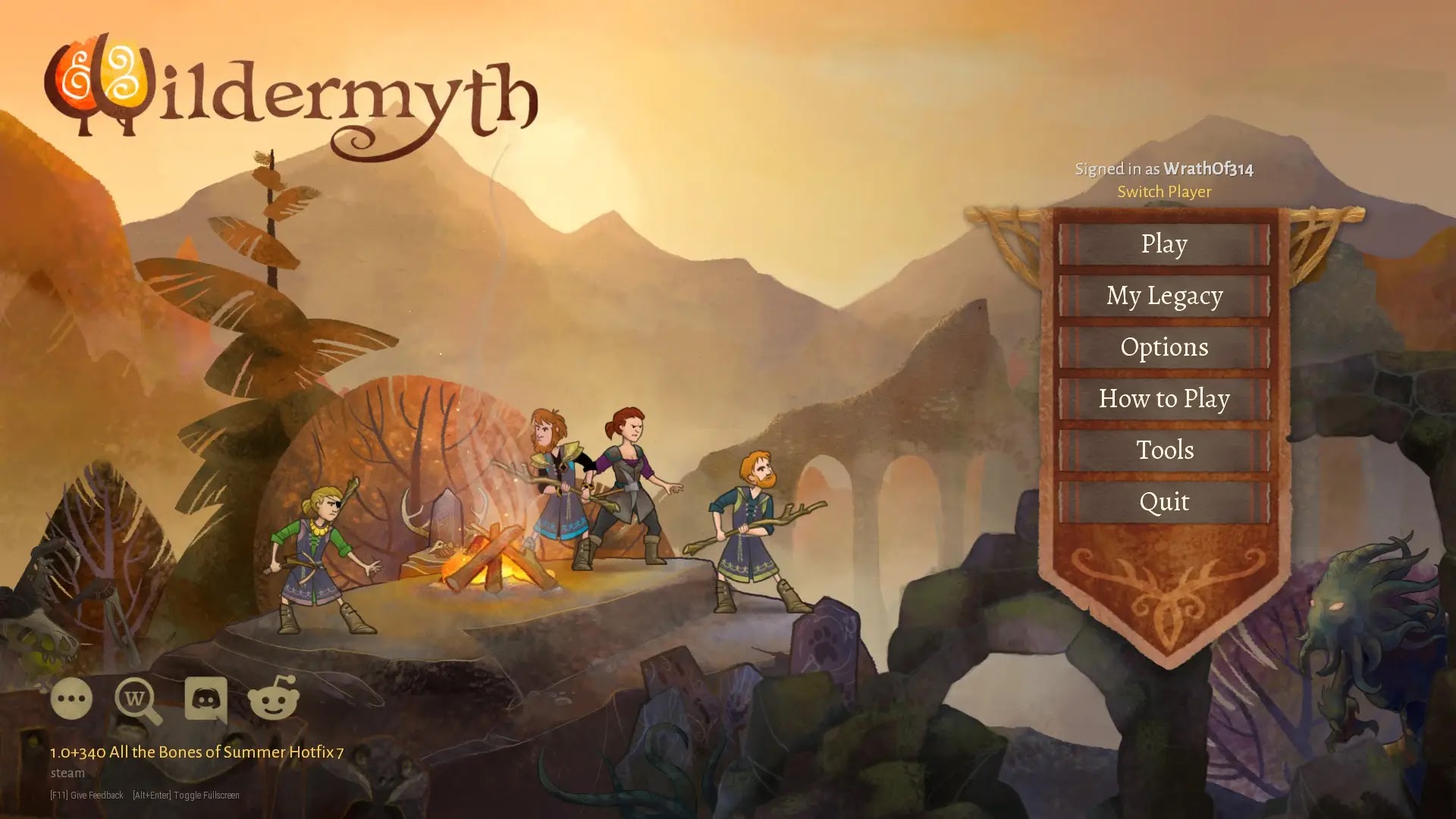
There are some formulas that just go together like peanut butter and jam or pineapples on pizza. They just work. Wildermyth by Worldwalker Games is one such title that just works so well as it blends turn-based tactics and procedural storytelling in a vibrant visual 2D pop up style presentation.

Starting things off like any good roleplaying adventure, you get to create a character. Choosing what they look like, what they sound like and what you want then to be addressed as (he / his, her / hers, they / them), you then move onto the next one. Starting off with three, you'll very soon get to see how they relate to one another and from even this early on, control of how they relate to one another is entirely up to you. The stage is set, you just need to act.

This is perhaps Wildermyth's biggest draw, its storytelling. Starting off at the beginning before things start to go to hell and mysterious monsters or otherworldly beings start to rain on your parades, your would-be adventurers have a lot to learn if they are going to survive. Do they get along? Do they fall in love? Do they sacrifice limbs to restore robots or turn into werewolves? Do they perform the ultimate sacrifice so that their friends can live another day to protect the people that they swore to? Or finally, do they fall before the adventure even begins as all three have to escape a cave with an unseeingly ending number of monsters that stand between them and the exit.

Each one of these choices helps to shape your overall adventures or end it before it even begins. While luck has a little bit to do with it, Wildermyth is just as much about skills and planning out what you're going to hopefully do as turn-based tactics never go according to plan. Doubly so when you can't see half the map at times because of lines of sights and fogs of war. This is the other major draw of the adventure, the thrill of testing your might with the would be mortal heroes against the hordes of enemies that would wipe them from history.

Starting off at a beginning, each adventure will have its own way to transition you into the story whether or not there is a main antagonist to go up against. Taking the the very first campaign titled the Age of Ulstryx which is designed to teach you the ropes, most of the following is based off of that experience even if I had plenty of fun trying out the others.

Spread out in a series of territories, the overall "world map" sets the main stage which can be moved around through yet another fog of war that has to be scouted out in order to know what's there. Once that's done you can choose to either clear out any enemies that reside there, build a resource outpost, build a bridge to more quickly travel to another territory or fortify it with defenses and trained militia. None of these are bad choices and if there's one thing that I was taught over the course of my first failed adventure falling in the very last battle as I failed to deal the final blow as my last remaining adventure's arrow clinked off the big bad's armor, it's that sacrifices are going to have to be made at all levels. Wildermyth plays for keeps and doesn't allow for many mistakes to be made. Heroes can fall once per chapter which is known as being maimed and once that's happened, any subsequent fall will be fatal. This isn't anything new per say, *glares at The Stranger of Sword City*, but it does come with some interesting elements to spice up the mix. 

Any lost or modified limbs which can happen over the course of your adventures are replaced so that adventures will always have two arms and two legs, but it could affect how they use weapons. My main archer for example, after she became a werewolf, at first it was just the head and the fur, the rest was still human. Over time your character can morph those parts if you want which will affect your stats and when I refused the leg because it would reduce their evasion, I said yes to the arm. That upgrade removed their ability to use bows, but at least there are crossbows and I have her a pretty nifty power story based spear to make up for it. Other adventurers could lose an arm and get a hook in its place adding yet another potential attack, but also removes the ability for two-handed weapons.

To get to these points however, you're going to have to plan for battle. Are you attacking a point to free it from those that currently roam around it? Or are you running to the aid of the territory that is currently under attack? In either case, you'll have a choice to make before the battle even starts as your group approaches the situation. Charge right in, wait until the last minute, try something crazy like going in with only two or three troops or wait until nightfall. Succeed and your group of adventures will receive bonuses or the enemies will lose theirs. Fail? And you'll be fighting off at a disadvantage.

Once you're in battle everything becomes up to what your team of up to five can do versus the hordes that you'll often be fighting against. Based on a Dungeons & Dragons like rule set, every character as a base has two actions. You can move and attack, you can move twice, attack twice if you're not moving, you can use free actions, or you can wait and do nothing depending on the situation. Obviously with leveling up and gaining perks these can be modified as standard actions can become free and you can definitely learn to really make use of attacks of opportunity and level those up, but you’ll still want to be careful as who you have is generally all you have.

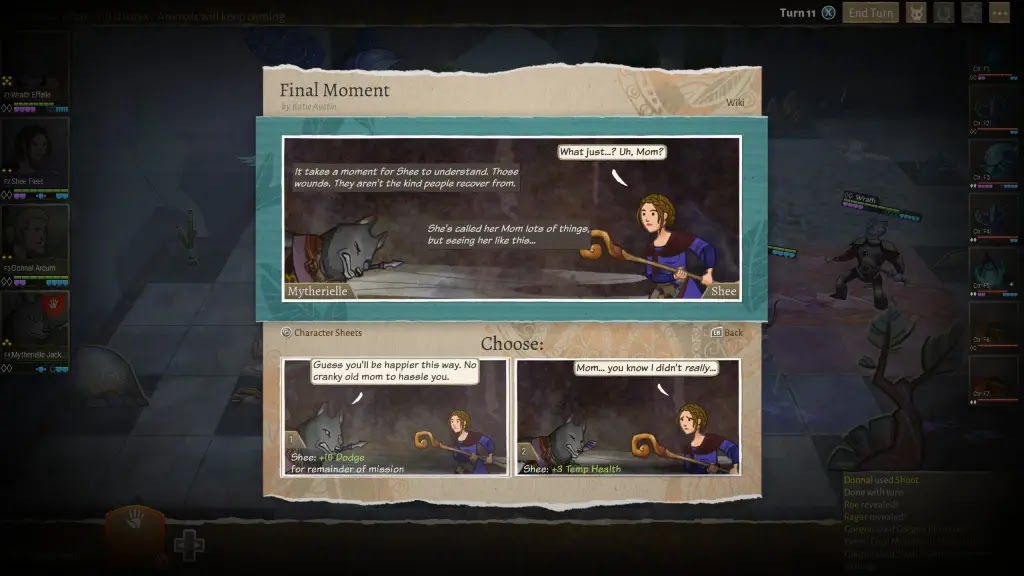
Otherwise though, combat is really fun as you move your adventurers through similar enough maps depending on the terrain with plenty of environmental “props” to help you out. Giant rocks can be hidden behind, mystics (the wizards) can use the terrain to sling spells around such as sucking fire from a source and putting it in as an obstacle, and if things are in your way? Simply destroy them to more easily get to your enemy that can do the same things that you can. As a final note, if your character falls in battle, the first or the second time, there are options depending on what the situation is. Do they use the last of their strength to stick it to the enemy? Or do they take the time in order to temporarily or permanently buff one of their allies, family, friends or lovers, before they die?

All of these have to be decided on the fly and to raise the stakes one more time, for every enemy that you fight, they’ll get a permanent upgrade for the rest of the campaign. So the stronger your adventurers get, the stronger the enemy gets. Adding to that stress, there are two other timers to worry about. The first is when the next rampage will kick off making you either need to get defenses in place or move to where they are rampaging as soon as possible. The second is more of an evolution counter. Once this counter hits zero, there are four “cards” that are drawn either making your enemies stronger or adding in new enemies to the mix. This can be countered with Legacy Points (LP) that can be acquired through various means, but sometimes it’s better to allow a few of these so that you can use your LP when it counts.

If there was one potential complaint, it would be that your characters can die easily enough even if they’ve been upgraded due to the unnatural amount of enemies thrown at you at times. Like the first of my final fights mentioned above, every turn there were more and more enemies and I couldn't even properly get to the boss that could slither away easily enough and then pound my adventures from a distance. You learn to live and learn but always having to start back at basically “zero” makes it tough especially when you're a good way through the story as without a full team? You’re generally not going to make it with how much the numbers are stacked against you.

But it works.

It works very well and the dialog between all of these characters, family, friends, rivals, people that just live to annoy you, all of them bring something to the table making you want more. It makes you want to keep these people alive until they are old enough to retire and die in their beds instead of sacrificing it all on one last gamble far from home making them wonder if you raise a monument to them there, or if you bring them home and hurry them with their family.


Summary

Overall though Wildermyth was amazing. The visual presentations mixed in with a procedural storytelling that adapts to your characters choices as well as your newer characters that join up was just brilliant. Add in a very well done combat system and there’s more than enough here to keep anyone occupied for a good long time as no two playthroughs should be the same.

Score: 9 / 10


Share:

Random posts

Our Streamers

Susan "Jagtress" N.


S.M. Carrière

Aldren


Affiliates

JenEricDesigns – Coffee that ships to the US and Canada

JenEricDesigns – Coffee that ships to the US and Canada
Light, Medium and Dark Roast Coffee available.

Blog Archive

Labels