Gobliiins Collection by developer and publisher Red Art Games—Nintendo Switch review written by Susan N., with copy provided by the publisher.
Estimated reading time: 13 minutes


Net.Attack() by developer ByteRocker’s Games and published by ByteRocker’s Games and Gamersky Games - PC (Steam) review written by Hayden with a copy provided by the publisher.
Estimated reading time: 5 minutes
Net.Attack() is dangerously fun. From thinking that I could dip my toe into the tutorial during a lunch break to having put more hours into the game on my first day with it than I did my full-time job, Net.Attack() smoothly pulled me into a ‘just one more level’ mindset. This top-down programmable shooter is definitely not my usual cup of tea - you’ll find me building things more often than destroying them - but the way that the game steadily ramps up the difficulty while letting you tinker is a gold mine. At its core, Net.Attack() is about figuring out how to chain together nodes in its simple-looking programming interface to create new and more powerful attacks while you dodge enemies and run out a timer on each level. The way that ByteRocker’s has woven that into fields of gratifying explosions and endless waves of enemies, however, has really elevated this from ‘neat’ to ‘WOW’.

Net.Attack() centers progression around three collectible currencies: ByteCoins (experience used to level up your character), Data (used to purchase nodes to program with), and DarkBits (used to purchase upgrades between sessions). In true roguelite fashion, each session you play will try to conquer a single region with multiple layers (levels) to progress through. Win or lose, the DarkBits you collect can be used to purchase incremental upgrades that apply for all future attempts. ByteCoins and Data, however, are used only within a single run, and do not carry over. That said, without ByteCoins to level up and Data to buy programming nodes with, you’re not going to get very far!
The playing field within Net.Attack() is a relatively simple top-down field, with floating icons to represent your character and enemies within the area. Since you’re playing as a hacker here, this makes sense - you’re looking at a visualization of what you are doing, you’re not physically present yourself. By default, every hacker character (and there are many to choose from) starts with at least one program node that provides an attack. Early on, enemies are sparse and weak, allowing you to carefully pick off enough to get an initial level or two and afford a couple of programming nodes. This is where the game starts to take off, and where my inner nerd rejoices.

Programming in Net.Attack() is done in a dedicated coding screen that pauses the run-and-gun action. Every character starts with a selection of Root nodes, which automatically trigger anything attached to them on a cycle based on their speed in milliseconds (ms). Every node you earn or purchase chains off one of these recurring triggers, and has its own speed value that slows down the whole chain. Sure, you might find a node that drops a veritable nuke on a section of the screen, but anything you have in the same action chain will be crippled by the extra time it takes to run! On the other hand, highly upgraded characters might be able to get some nodes to a point that they actually speed up the chains they’re in, so maybe you can figure out a way to pull it off?

Net.Attack() also makes players think when putting chains of nodes together in the way that those effects are centered. Root nodes always originate from the character, but many attack nodes change the origin of the next node in the chain to be the object it just hit. If that sentence makes you perk up and think ‘chained attacks?’ you’re absolutely correct, and you’ve just hit on a core concept of the game. By using sequences of nodes, you can turn a single initial ping of damage into a screen-clearing cascade of attacks and an explosion, each attack turning its hapless target into the engine of its comrade’s destruction. With single- and multi-target attacks, area of effect actions, FOR-loops, IF nodes and even placable mines that can merge for greater effects, Net.Attack() has a huge degree of replayability within a deceptively simple appearance.

For all the complexity I just raved about, Net.Attack()’s interface is clean and easy to understand, and the in-game documentation walks players through all the concepts on how things interact. The programming itself is easy to manipulate, as players just have to drag a node onto the programming field and then mouse-drag connections for inputs and output to chain them together. No missing semi-colons or frustrating typos here, this is visual programming at its most accessible.
Sound and story here are basic, but that suits the genre well. One does not (normally) endlessly replay the same level in a roguelite hoping to sit through the same cutscene or lore dump for the umpteenth time, so the lack of a deep story isn’t missed. We’re here for action, explosions and creative node programming after all, not dialogue and narration worthy of Shakespeare.
If challenging the normal sets of levels is wearing thin, Net.Attack() also offers daily challenge levels and a sandbox mode to satisfy your explosion-based cravings. To level the playing field though, the daily community-wide challenges strip you of all your between-run purchases, letting every player tackle the challenge from an equal baseline. It's a pleasant change, and can even let you try playing additional characters that you may not yet have unlocked with your post-run rewards. [Side note: these are all earned and purchased using in-game currency from what I saw. No predatory pay-to-win real-money microtransactions here.]

Overall, Net.Attack() is a simple-looking game that will invite you to test the waters, and then let you fight your way back to the desktop hours later wondering where your day went. The node-based programming is absolutely genius, and really takes the game from feeling like a powerup-driven top down shooter into something really unique and engaging. There is tons of replayability here, with the special attributes of each character changing your best options for programs, and the layers themselves are big enough to feel expansive while playing. There is very little that you could ask for that Net.Attack() doesn’t already deliver, and I strongly recommend picking it up. Even better, this isn’t going to set you back AAA pricing - the price point on Steam is roughly $11 Cdn at time of writing, and the game is even on further discount as part of the 2026 Steam Bullet Fest until June 15, 2026.
Score: 9.5 / 10


Estimated reading time: 3 minutes
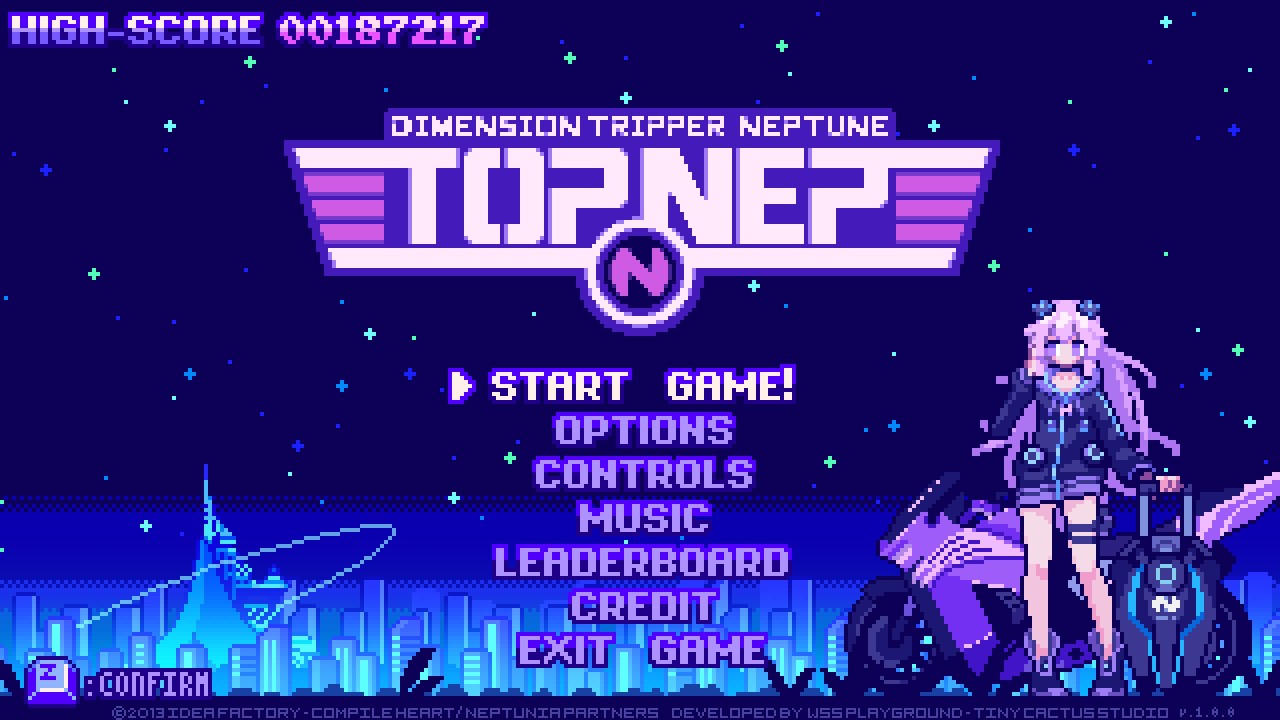
We're back again with another Neptunia spin-off! This time we're taking a look at a 2D isometric rail shooter. Buckle up all you Neptune fans, cuz it's time to take a look at Dimension Tripper Neptune: TOP NEP.
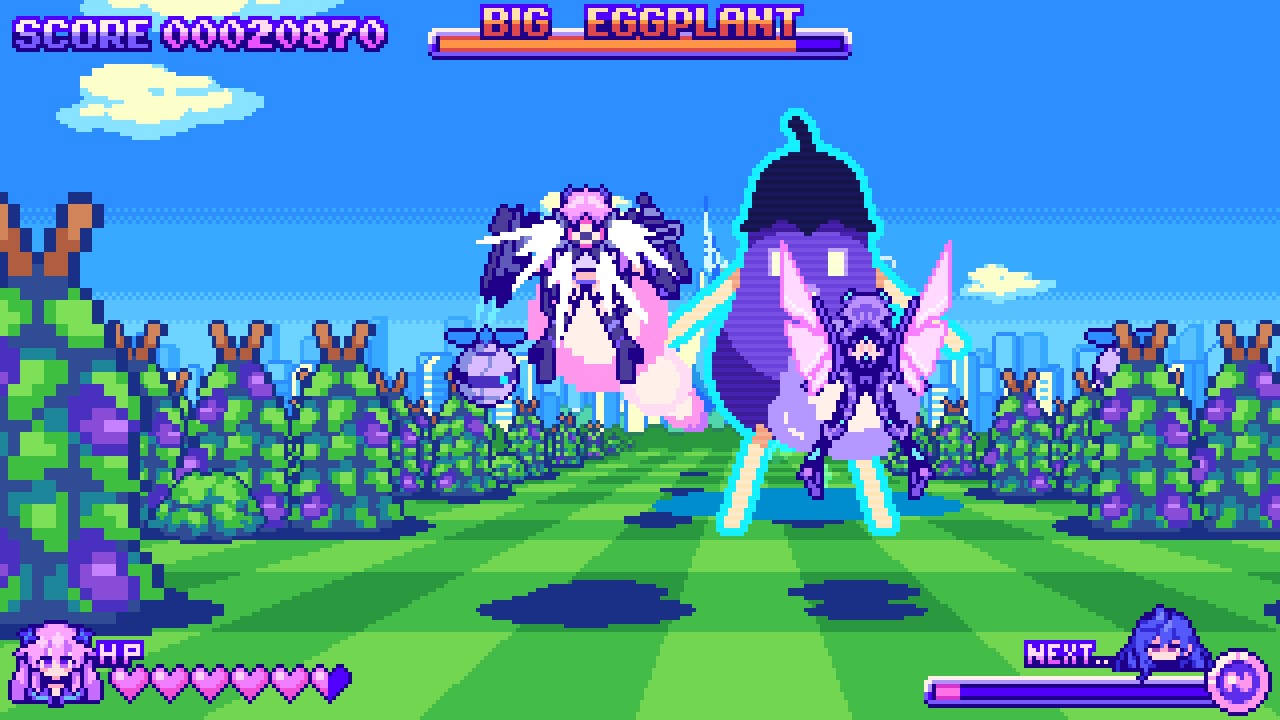
Just so you are aware, TOP NEP isn't very large, or long, consisting of five stages that you can clear in about 15 minutes. That said, there isn't really any plot either. Basically, you play as older Neptune, with some sort of flight gear, and you go around shooting and slashing down enemies of Gamindustri. There are also coins dispersed throughout the stages, and collecting them will add a helper to shoot at things with you for awhile.

Playstyle is pretty basic, with a shot attack, and a slash that will also act as a sort of counter move if enemies get too close. Basically, most of the time you'll want to shoot at enemies, but if they get too close, or charge at you, you can use the sword attack to beat them back. You can also swing to clear bullets. Stages will progress through enemy waves, followed by a boss.
Visually, Top Nep has a retro style reminiscent of old SNES or NES titles, with a remixed soundtrack to match. The soundtrack takes existing Neptunia tracks and remasters them with a more chiptune sort of feel. Top Nep is quite fun, but it's also really short and pretty easy. You have two different game modes, one where you can exchange score for lives if you die, and one where you can't. I never ended up below half health, even on my first run, so it isn't all that difficult, and like I mentioned earlier it's really short, only taking about 15 minutes per run.
Overall, I have to say I really liked this Nep-Nep spin-off. While Dimension Tripper Neptune: TOP NEP might not be long, it's definitely a really fun rail-shooter. It's also pretty cheap, so it doesn't feel like you're losing out really either. The soundtrack is good, the gameplay is smooth, and while it is rather short, you can always aim to beat your high score on subsequent runs. Top Nep gets 8 puddings out of 10.
Score: 8 / 10 puddings

Wishlair by developer and publisher Chronogears—PC
Review written by Susan N. with a copy provided by the
publisher.
Estimated reading time: 5 minutes
Wishlair is an RPG adventure game that brings players back to the early days of video games. We’re talking about an RPG that is 2D, top-down and made with exclusively ASCII characters. It is filled with nostalgia and charm as players traverse the Wishlair through more than a hundred different levels in search of 1000 shards. Once they obtain these shards, players will be able to wish their way out of the accursed depths.
Wishlair is a fantastic throwback to a simpler time in video games where developers created entire worlds with ASCII characters and 8-bit music that make us remember the beginning days.
We begin our journey of Wishlair in search of our father who has summoned us. In order to find him, and the entrance to the place, we have to traverse the Old Kingdom and the Underrealm that holds useful items which will assist us in this quest. At first, the journey is tough since there are a number of obstacles and creatures that will prevent progression. And once players find the map, the game becomes a bit easier to navigate. I had quite a fun time going back and forth through the areas in search of the next item or shards I may have missed. Once I started to recognize which characters were likely harmful and which were not, going through some of the sections became easier.
Quite early on I discovered that there are large chasms that can’t be crossed, ice that directs your movement based on where you step on it, and creatures that will fling magic circular spells that do damage. Some of those creatures are ghosts that can walk through walls. If they get to you, they will do damage. And if for some reason you die, your character is placed back at the entrance point of the level which allows you to get those items again - hopefully without being killed.
For an old-style ASCII game from the DOS days, Wishlair was a pleasant surprise. Not only does the game stick to classic gaming principles, but it also provides a nice challenge to the player. There is no restriction on lives, save-scumming, nor hand-holding in Wishlair. It is focused on perception, decent reflexes, and deduction of concepts. I, for one, love a good call back to the simpler gaming days once in a while, and Wishlair definitely gives it to me.

Let’s talk about the ASCII graphics in Wishlair. The game's visual presentation, in my opinion, was a deliberate choice by Jean-Francois Bilodeau. Today’s game development is advanced compared to the video games offered in the ’70s. For those unfamiliar, during the ’70s people were first exposed to Dungeons and Dragons and Lord of the Rings. These two franchises inspired the RPG genre (Check out this video for more information about the history of RPGs). And the video games offered around that time were games like the RPG Moria, the arcade game Pong, and the text-based adventure game Zork. Each of these titles was created with ASCII graphics and text boxes that described situations or items. Wishlair relies on these two elements to bring us back to the days of old.
Then there is the audio which I both love and hate at the same time. I love it because it adds to the classic video game feel which triggers our nostalgia factor. Players can choose to enable the footsteps audio or not. They can also choose to have the music playing, but that is where my issue lies.
I would love to listen to the music in this game more than I did. See, I discovered quickly that the volume of the audio cannot be adjusted at all. Even turning down my computer volume didn’t help because it would overtake anything I had running in the background. Furthermore, a couple of minor patches went live which actually screwed up the music! On the main menu, music would automatically play. (Other video games also have full volume on load up, so this isn't a unique problem.) If a player clicks the checkbox to turn off the music and back on (I misclicked), the music would superimpose itself. This is very unpleasant and I would not recommend doing this. Basically, having volume sliders would be a great addition so that players can listen to the audio. Fixing this superimposed music problem would be fantastic.

Wishlair is a mindless fun adventure that doesn’t overcomplicate gameplay. It is simple in that players have a set objective and only arrow keys to move. There is no worrying about keybinds or specific classes. There’s no worrying about graphics card compatibility. There is only the player and the dungeon which is filled with objects and creatures. Thus, Wishlair is a wonderful nostalgic RPG game that I highly recommend to gamers and I give it a solid 9 out of 10.
Score: 9 / 10
Max and the Book of Chaos by developer and publisher Orenji Games Entertainment—Nintendo Switch review written by Richard with a copy provided by the publisher.
Estimated reading time: 5 minutes

Max and the Book of Chaos is a 2D sort of "run and gun" kind of game about the dangers of reading books. As a game, it did what it set out to be, but that's really kind of it.
Max and the Book of Chaos is about a summer school adventure for Max Raccoon, a kid who has the same IQ as your houseplants, and is for some reason the only kid not captured or turned into a pelican face by an evil book that the janitor hid in the library of the summer school. Turns out the book is an evil dimension rifting book that is hidden away by generation after generation of guardian, with the janitor being the current guardian. But apparently, with his new pelican head, he can't fight back against the unleashed evil, so he gives Max a gun to blast away foes. Genius.
Gameplay consists of completing timed stages, which are essentially mini arenas where you have to fend off enemies and rescue the other kids that have been put in cages before time is up. You can get power up drops and shot type temporary drops from enemies or periodically to change the firing type of the gun, but ultimately every stage is a single themed location/enemy set and three cages with Max's summer school friends stuck in them, with the occasional boss fight.

Yes there's a store, but the upgrades are spotty at best, sometimes don't even work, and it's almost impossible to tell what the price of an item is before you have enough to buy one, because the text is pretty much the same as the background for the "not enough to buy" colour. To compound that, the upgrades don't always actually work. For instance, the "invincible while dashing" upgrade worked for me about half the time, the other half I had a face full of evil minion. You can also only equip one at a time.
The humour is kind of hit and miss in the cutscenes you get, with a big focus on the "miss" part. There were a few gags that were ok, but the rest were bad, even by my standards. Also, it clearly shows that English is not the first language. There are tons of grammar gaffes and horribly translated lines interspersed in the coherent dialogue, and at times felt like the writing was aimed at a very much younger audience, which probably wouldn't go over well given the surprising difficulty. There's also some graphical issues and running issues as well, as the game will spawn lots of enemies, and will then start to lag. The graphics themselves also glitch out, as a few times the kids in cages kept flashing between lack of shoes and "shoed", or legs and no legs.

Max and the Book of Chaos is also really short. There are only really three "worlds" with six stages each (that are supposed to be increasing difficulty) with two that are purely boss fights. Each stage can give up to three stars depending on how many students you save, and you need ten out of eighteen to challenge the boss. I was honestly finished the full game, every stage full star rating, in a little under an hour, so don't expect particularly long play sessions out of this.
While the core gameplay is passable, if not a little spotty at times, the boss fights feel a little eclectic, which can be a good thing in a game like this, but isn't really implemented as best as it could be here. Especially the last boss fight. I mean, I'm ok with platforming, in fact I quite enjoy it, but throwing one of the worst platforming sequences I've seen in at least 3 years at the end of a game that is essentially isolated rooms of clearing enemy waves makes you question some decisions. AND WHY THE HECK WOULD YOU MAKE THE PLATFORMS BOUNCE FROM THE PERIODIC LASERS?!? WHO THOUGH THAT WAS A GOOD IDEA?!? Combine that with occasionally falling straight through the platforms, and the final sequence was a bit of a nightmare.
Ultimately this feels like something you would find off of Newgrounds a few years ago, just a little longer than normal. As a game, it certainly functions, although not particularly well or with much depth. Did I have fun? Surprisingly yes. I've played worse. I've played a lot worse. Unfortunately, that doesn't particularly allow me to call this "good". It functions as a game, and it accomplished the main reason for existing, but it doesn't swing too much in any other direction, whether good or bad. It is very short, the humor is childish most of the time, purchased abilities have the tendency to glitch out occasionally, and stages tend to feel more frustrating than challenging.
That being said, if all you want is some short contra/metal slug style single room stages, Max and the Book of Chaos will certainly deliver, although maybe not to the best of its ability.
Score: 4 / 10