• Gobliiins Collection - Switch Review

    In the early 90s, Coktel Vision (which later became Sierra On-Line) released a quirky point and click adventure game titled Gobliiins which had players bouncing between three different Goblins to find a cure for good King Angoulafre.

  • The Core - PC Preview

    Sometimes when you are browsing the internet for information on how to do something, you stumble upon ideas or projects or even games that people might be working on...

  • Cat Mail Co. - PC Review

    What a meow-gnificent evening it is to send your paw-rcels out to those family and friends! Are mew looking to pick up an item or send something out? Well at Cat Mail Co. we can send and receive all your deliveries!

  • Volontes - Nintendo Switch Review

    Have you ever grown up feeling like you don't belong? For our Heroine, that's the feeling she lives with everyday in her small farming village. But it's not her only secret...

  • STARSEEKER: Astroneer Expeditions - PC Preview

    STARSEEKER: Astroneer Expeditions is just that! Massively co-operative and not an MMO! When you first run the game you are instantly into the tutorial...

  • Dread Delusion - Xbox Series X|S Review

    Today we’re looking at what has rapidly become an absolute favorite in the open-world RPG genre for me. An interesting story, memorable NPCs, stunning visuals, and a setting absolutely dripping with flavor, Dread Delusion sets its tone immediately and sticks with it.

  • House Flipper Remastered Collection - PC Review

    I enjoy simulation-type games, and I enjoyed the original release of House Flipper, but I never got around to getting the DLC. When the remastered version of the game was released, I figured it would be the best way to experience the DLC while checking out how the base game was upgraded.

  • GranBlue Fantasy: ReLink Endless Ragnarok - PS5 Review

    GranBlue Fantasy: ReLink released in 2024 bringing the GranBlue universe to an action adventure JRPG format. With a party of up to four members, this band of skyfarers set out for new skies, adventures, and dangers. Two years later, Endless Ragnarok...

  • 70s-Style Robot Anime Geppy-X - PS5 Review

    70s-Style Robot Anime Geppy-X is a mouthful of a title, but you know what? It’s quite the challenging game to describe as well. At its core, 70s-Style Robot Anime Geppy-X is a shooter...

Showing posts with label WhisperGames. Show all posts

The Wandering Village Preview

The Wandering Village by developer Stray Fawn Studio and publisher WhisperGamesPC (Steam) preview written by Hayden with a copy provided by the publisher.

Estimated reading time: 5 minutes 


The Wandering Village by developer Stray Fawn Studio and publisher WhisperGames is a beautiful new entry into the colony sim genre. Taking control of a small group of nomads who are fleeing the slow corruption of their land by toxic spores, you climb aboard a giant creature known as Onbu to make your home as it slowly plods across the land. As you build your home, you must be mindful of the limited resources within reach as you travel. You will need to balance not just the familiar needs of your village, but those of Onbu as well. You will need to watch for poisoned air affecting your people, toxic plants taking root near your village, and even ailments affecting the Onbu on which you live.


Climb aboard Onbu, make your village and see the world. Just hold on tight when it flops down to sleep for the night!

The Basics

Like most colony sims, The Wandering Village has the player balancing the resources available to the settlement. Food production, housing, happiness and various construction materials are familiar territory for players. As has become more frequently seen in titles lately, there is also a focus in the game on scarcity and interaction with your environment. In this case, the Onbu that carries your village around is the personification of that (more on that later). The resources available to the player on Onbu’s back are inherently limited to what can be found within that limited area. Only so many trees and rocks are on Onbu’s back, and the creature’s size creates a limit to how far your village can sprawl.


For being on the back of a giant Onbu, this happy, thriving village looks like it would fit into any number of colony sims.

The Twist

As the player is traveling on the back of Onbu, there are opportunities to investigate and scavenge the environments as you pass through. Certain buildings will allow the player to send out teams to investigate points of interest nearby: forests, quarries, mines, ruined settlements, and the list continues. Depending on how far away from Onbu the teams have to travel, their total job time will vary. Investigating something just ahead of Onbu’s line of travel is quick, while investigating things far off to the sides or already behind Onbu take considerably more time. Your investigation options are also limited to a specific area around Onbu that you can see - once you’ve moved past a location, it is hidden and inaccessible to you.


What you see is what your scavenging teams can reach. Once you've passed it by, it's gone....forever?

The other part of The Wandering Village is your relationship with the creature Onbu itself. Onbu needs to eat and sleep, has its own health and sickness (poison) pools, and needs to decide where and when to wander. The player has access to various buildings that can interact with Onbu directly, from trebuchets to feed Onbu to doctors and dung collectors (hey, its massive amounts of free fertilizer!). The darker side of this is that the player can also choose to do things that hurt Onbu - extracting blood and minerals to fuel the village, feeding it medicated foods to alter its metabolism and so forth. Onbu will react to this by altering its trust in the player, making it less likely to heed the player’s suggestions on when and where to move. Lose enough trust, and you might find Onbu wandering into a desert full of storms that will wreck your buildings!


Onbu's health and condition is a constant presence in your village stats in the top right corner. And Onbu itself is hard to miss too!

Excellent Extras

The Wandering Village includes a few nice touches that help it stand out. For example, players will find on the main settings menu that Twitch integration is built in. In The Wandering Village, this allows the game to pick up the names of people in stream chat and use those as the names of the villagers. Don’t like the jokes that PookyPie423 is making in chat? Maybe a stint manning the dung collector is in order!

The way that The Wandering Village uses variations in biomes is a great touch as well - moving from forest to plains to desert to frozen tundra forces the player to adapt. Different crops, different methods of obtaining water, and even different job priorities can be appropriate depending on the local climate. This variety really gives The Wandering Village a nice leg up on other colony sims that try to use weather and seasons to influence play, by breaking the predictable cycle of seasons that players are used to.

Moving to Full Release

The Wandering Village just launched into Early Access on September 14, 2022 and developer Stray Fawn Studio has been very open with their plans on how to move through Early Access. The developer speaks to this directly on the Steam store page, and gives about as much certainty as could be reasonably expected at this stage:

How is the full version planned to differ from the Early Access version?

The full version will have a bigger set of features and more content. We plan to add new building types, new biomes, new events/missions and expand the background story of the game. It will also be more polished, having gone through lots of testing and QA. We are also planning to add controller support to the game alongside other Steam features such as trading cards and achievements. And finally, we're sure players will have lots of interesting ideas during Early Access which we will consider implementing as well.”

Summary

The Wandering Village is a solid, well-balanced colony sim with a broad enough feature set at the point it has entered Early Access to keep many players happy for quite a chunk of play time.

Consistent, high-quality graphics and animations make both the village and the giant creature Onbu come alive, and a relaxing sound score manages to not become repetitive or intrusive even after hours of play. Variations in biomes as you travel and build keep play fresh and challenging, avoiding the stagnation of a single “ideal” build style that other games sometimes create. This is a great entry for colony sim and management sim players, and definitely worth wish-listing if you can’t buy it right away.

Score: N/A


Share:

Wildermyth - PC Review


Wildermyth
by developers Worldwalker Games LLC and publishers Worldwalker Games and WhisperGamesPC review written by Pierre-Yves with a copy provided by the publisher.

Estimated reading time: 9 minutes


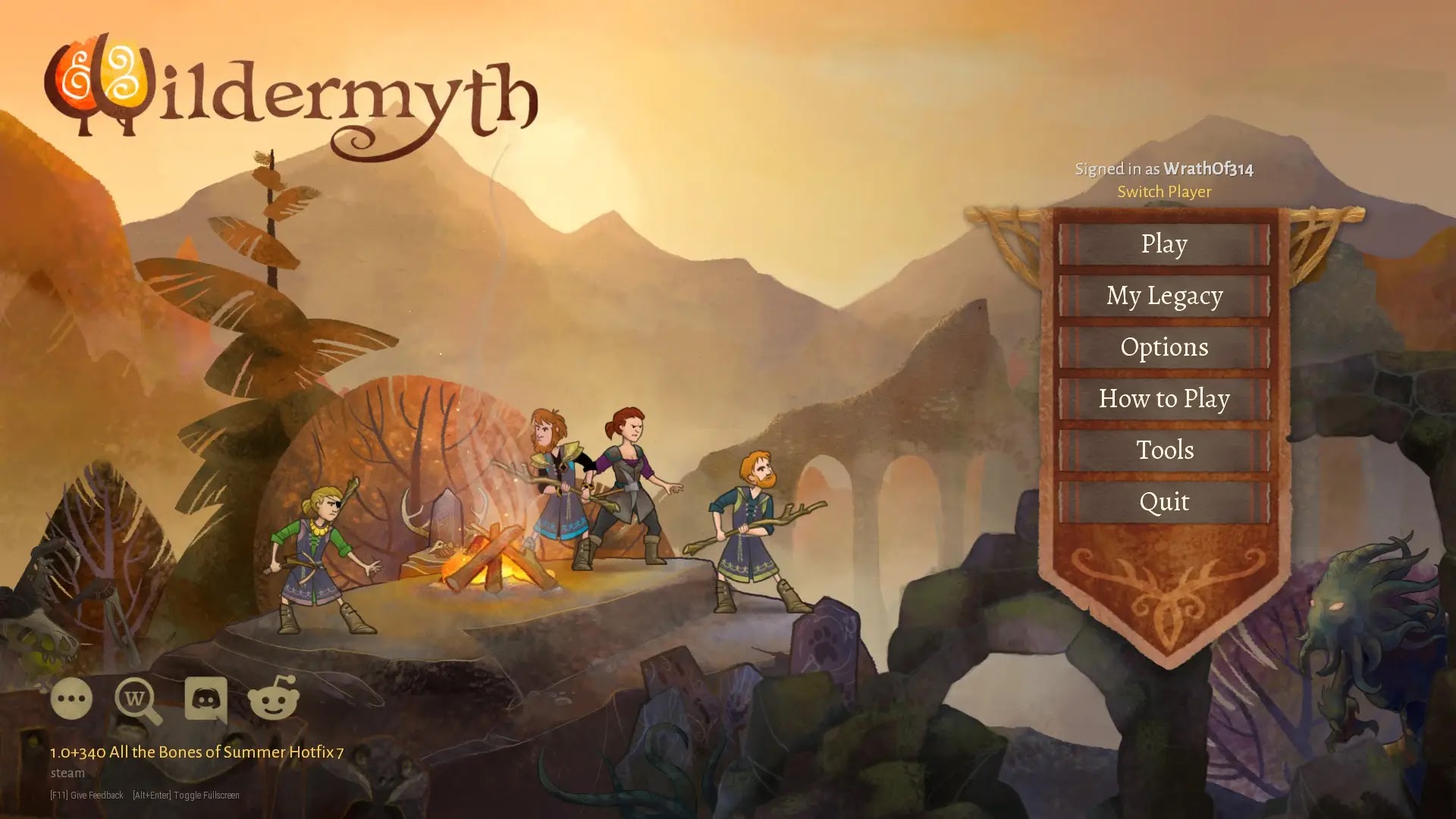
There are some formulas that just go together like peanut butter and jam or pineapples on pizza. They just work. Wildermyth by Worldwalker Games is one such title that just works so well as it blends turn-based tactics and procedural storytelling in a vibrant visual 2D pop up style presentation.

Starting things off like any good roleplaying adventure, you get to create a character. Choosing what they look like, what they sound like and what you want then to be addressed as (he / his, her / hers, they / them), you then move onto the next one. Starting off with three, you'll very soon get to see how they relate to one another and from even this early on, control of how they relate to one another is entirely up to you. The stage is set, you just need to act.

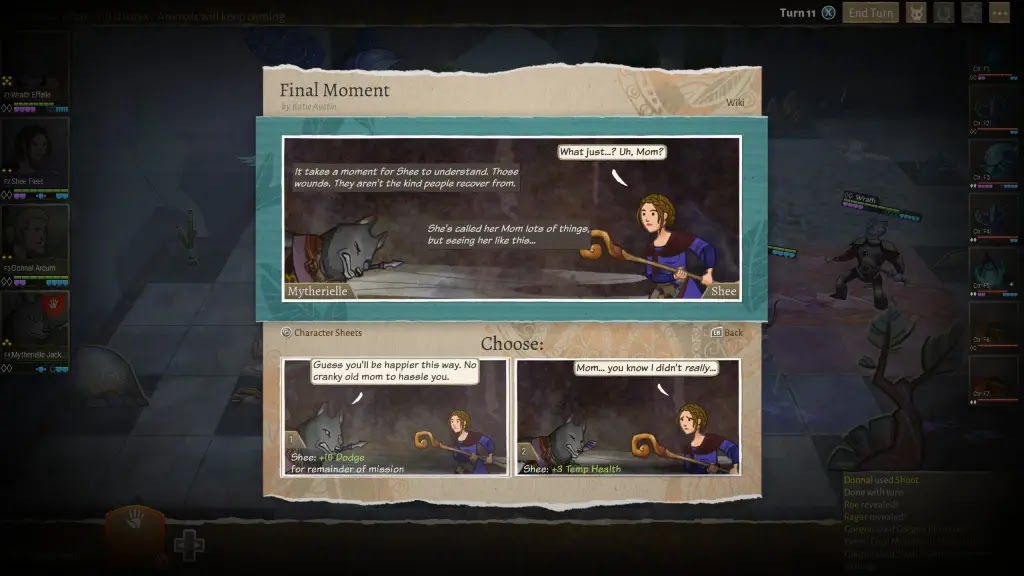
This is perhaps Wildermyth's biggest draw, its storytelling. Starting off at the beginning before things start to go to hell and mysterious monsters or otherworldly beings start to rain on your parades, your would-be adventurers have a lot to learn if they are going to survive. Do they get along? Do they fall in love? Do they sacrifice limbs to restore robots or turn into werewolves? Do they perform the ultimate sacrifice so that their friends can live another day to protect the people that they swore to? Or finally, do they fall before the adventure even begins as all three have to escape a cave with an unseeingly ending number of monsters that stand between them and the exit.

Each one of these choices helps to shape your overall adventures or end it before it even begins. While luck has a little bit to do with it, Wildermyth is just as much about skills and planning out what you're going to hopefully do as turn-based tactics never go according to plan. Doubly so when you can't see half the map at times because of lines of sights and fogs of war. This is the other major draw of the adventure, the thrill of testing your might with the would be mortal heroes against the hordes of enemies that would wipe them from history.

Starting off at a beginning, each adventure will have its own way to transition you into the story whether or not there is a main antagonist to go up against. Taking the the very first campaign titled the Age of Ulstryx which is designed to teach you the ropes, most of the following is based off of that experience even if I had plenty of fun trying out the others.

Spread out in a series of territories, the overall "world map" sets the main stage which can be moved around through yet another fog of war that has to be scouted out in order to know what's there. Once that's done you can choose to either clear out any enemies that reside there, build a resource outpost, build a bridge to more quickly travel to another territory or fortify it with defenses and trained militia. None of these are bad choices and if there's one thing that I was taught over the course of my first failed adventure falling in the very last battle as I failed to deal the final blow as my last remaining adventure's arrow clinked off the big bad's armor, it's that sacrifices are going to have to be made at all levels. Wildermyth plays for keeps and doesn't allow for many mistakes to be made. Heroes can fall once per chapter which is known as being maimed and once that's happened, any subsequent fall will be fatal. This isn't anything new per say, *glares at The Stranger of Sword City*, but it does come with some interesting elements to spice up the mix. 

Any lost or modified limbs which can happen over the course of your adventures are replaced so that adventures will always have two arms and two legs, but it could affect how they use weapons. My main archer for example, after she became a werewolf, at first it was just the head and the fur, the rest was still human. Over time your character can morph those parts if you want which will affect your stats and when I refused the leg because it would reduce their evasion, I said yes to the arm. That upgrade removed their ability to use bows, but at least there are crossbows and I have her a pretty nifty power story based spear to make up for it. Other adventurers could lose an arm and get a hook in its place adding yet another potential attack, but also removes the ability for two-handed weapons.

To get to these points however, you're going to have to plan for battle. Are you attacking a point to free it from those that currently roam around it? Or are you running to the aid of the territory that is currently under attack? In either case, you'll have a choice to make before the battle even starts as your group approaches the situation. Charge right in, wait until the last minute, try something crazy like going in with only two or three troops or wait until nightfall. Succeed and your group of adventures will receive bonuses or the enemies will lose theirs. Fail? And you'll be fighting off at a disadvantage.

Once you're in battle everything becomes up to what your team of up to five can do versus the hordes that you'll often be fighting against. Based on a Dungeons & Dragons like rule set, every character as a base has two actions. You can move and attack, you can move twice, attack twice if you're not moving, you can use free actions, or you can wait and do nothing depending on the situation. Obviously with leveling up and gaining perks these can be modified as standard actions can become free and you can definitely learn to really make use of attacks of opportunity and level those up, but you’ll still want to be careful as who you have is generally all you have.

Otherwise though, combat is really fun as you move your adventurers through similar enough maps depending on the terrain with plenty of environmental “props” to help you out. Giant rocks can be hidden behind, mystics (the wizards) can use the terrain to sling spells around such as sucking fire from a source and putting it in as an obstacle, and if things are in your way? Simply destroy them to more easily get to your enemy that can do the same things that you can. As a final note, if your character falls in battle, the first or the second time, there are options depending on what the situation is. Do they use the last of their strength to stick it to the enemy? Or do they take the time in order to temporarily or permanently buff one of their allies, family, friends or lovers, before they die?

All of these have to be decided on the fly and to raise the stakes one more time, for every enemy that you fight, they’ll get a permanent upgrade for the rest of the campaign. So the stronger your adventurers get, the stronger the enemy gets. Adding to that stress, there are two other timers to worry about. The first is when the next rampage will kick off making you either need to get defenses in place or move to where they are rampaging as soon as possible. The second is more of an evolution counter. Once this counter hits zero, there are four “cards” that are drawn either making your enemies stronger or adding in new enemies to the mix. This can be countered with Legacy Points (LP) that can be acquired through various means, but sometimes it’s better to allow a few of these so that you can use your LP when it counts.

If there was one potential complaint, it would be that your characters can die easily enough even if they’ve been upgraded due to the unnatural amount of enemies thrown at you at times. Like the first of my final fights mentioned above, every turn there were more and more enemies and I couldn't even properly get to the boss that could slither away easily enough and then pound my adventures from a distance. You learn to live and learn but always having to start back at basically “zero” makes it tough especially when you're a good way through the story as without a full team? You’re generally not going to make it with how much the numbers are stacked against you.

But it works.

It works very well and the dialog between all of these characters, family, friends, rivals, people that just live to annoy you, all of them bring something to the table making you want more. It makes you want to keep these people alive until they are old enough to retire and die in their beds instead of sacrificing it all on one last gamble far from home making them wonder if you raise a monument to them there, or if you bring them home and hurry them with their family.


Summary

Overall though Wildermyth was amazing. The visual presentations mixed in with a procedural storytelling that adapts to your characters choices as well as your newer characters that join up was just brilliant. Add in a very well done combat system and there’s more than enough here to keep anyone occupied for a good long time as no two playthroughs should be the same.

Score: 9 / 10


Share:

Wartile - XB1 Review

Wartile by developer Playwood Project Aps and publishers WhisperGames and Deck13 InteractiveMicrosoft Xbox One review written by Nick with a copy provided by the publisher.

Estimated reading time: 5 minutes


Wartile mixes a gorgeous visual presentation with a solid if unspectacular gameplay system. There are some really cool ideas here, and people like me who grew up on board games using physical pieces like this will no doubt be tickled by the aesthetic, but there is not a ton of meat on these bones eithers.

Right off of the bat, Wartile wows with its visuals. There is just something absolutely alluring to its 3D set pieces that eel like they would be right at home on your coffee table surrounded by your friends. Sloped landscapes cut off dramatically, there is a true sense of verticality to the presentation, the board has a very tactile feel to it and it is all touched off with some nice additional effects like snow here and there. I honestly can’t think of anything quite like it visually, and this is all complimented by fantastic audio. The sound effects are varied and engaging and the music here is the type of soundtrack I would listen to on repeat if I was writing one of my fantasy short stories.

This game is absolutely gorgeous.

Where things get somewhat more muddled is in the actual gameplay, which tries very hard to merge turn-based combat with real-time mechanics. The results are decidedly uneven. How does that work? Well, there is a sort of cool-down system churning away in the background, so you can stack things like your movements up on one another, but it takes a bit of time for them to execute. Enemies move about within that structure as well, creating a sort of synchronized system of tactics that generally works well. Thankfully you do have the option to slow down time so you can think somewhat more strategically. This mostly boils down to unit location and whether or not to trigger a special ability (tied to a card in your inventory, giving it a very light collectible card game flavor).

The biggest issue with this however, is that the actual tactics gameplay is somewhat shallow. Positioning is key, and using ability cards is often very important, but in terms of executing the attacks? You mostly just position pieces and let them go at it. One early battle saw my two characters flanking a particularly cantankerous opponent and they had both very recently used their skill cards. This meant that I just sort of sat there, watching the hacking and slashing happen without any real input. Whatever backend dice rolling was happening seemed to be a lot of critical failures, because it seemed like forever until the battle ended. That is not to say there is no strategy involved, but it has more to do with taking advantage of your environment (and in particular chokepoints if you are looking to lure your enemies to their death while being mindful of your combat range) than any actual actions or decisions you make during the actual combat.

One of the areas of strength in Wartile is that continuing boardgame feel, where you can collect new pieces and equip them with gear or skills. These modifications are nice, and I dig the sense of progression that comes with gaining experience and unlocking better options for each character. These RPG elements are fairly light, but they are a relatively effective carrot to dangle throughout the story. Characters tend to fall into one of three archetypes: tank, melee dps and ranged. That is not to say some of the characters do not straddle the lines in between, but there is a significant way in how the sword and board fighter plays when compared to the rangers. This is where spacing is more important than actions, because a common strategy I found myself employing was luring people out to fight against my tankier character while letting the ranged one whittle away at them from a safe distance. It certainly scratches the strategy itch, but never really delved quite as deep as I had hoped.

In terms of the gameplay, what you are looking at here is a campaign broken up into several missions. You then pick your characters and go about trying to meet the objectives. Early on these could be as mundane as picking up a specific item and interacting with a specified region on the board, but later can include more aggressive goals such as complete obliteration of enemy forces. All of this has been done before, but it is undeniably more charming with this particular boardgame style presentation. Each stage is presented in a way that touches on the overarching story, and gives you a sense of purpose, though it would be a bit of a stretch to call it roleplaying as there are really no decisions to be made along the way. Once you complete the stage, your performance is graded and you are bonused accordingly.

Another missed opportunity for Wartile is the lack of scenario creation. I realize making user-friendly tools that can do this sort of thing is no small task, but I can’t help but think that having the opportunity to make and share stages with your friends or a larger community could breathe a lot of life into this game. The campaign is by and large entertaining, but beatable in under a dozen hours and there just really is not a whole lot to do after that. Some sort of editing / creation tools, especially with those who like boardgames, really could have sparked some cool, imaginative stages I think.

Wartile’s a good game, with an interesting if somewhat flawed gameplay system that is supported nicely by a fantastic presentation. The progression system is good enough to sustain interest until the end of the campaign, but the sights and sounds are gorgeous and unique.


Score: 7 / 10


Share:

CrossCode - PC Review


CrossCode may be my biggest surprise of the year. Following along with Lea, an amnesiac currently living inside of a fully immersive MMO, you'll follow along her adventures through a amazingly 16-bit inspired wonder filled world that feels as alive as Ara Fell did.

Having fully released on September 20th after a good seven years of development, in which half of it was spent in early access, I've had a good deal of time with it both before and after its release. The gameplay is absolutely solid and even now I'm hard pressed to say anything negative about it. Because there isn't anything negative to say.

Radical Fish Games have not only designed a retro looking world that would look amazing on a Super Nintendo, but they've created an experience that is solid by today's standards. Load times are almost non-existent, combat is extremely smooth, there are different sets of menu options for how little you need to do or how much customization needs to be done. They've even gone as far as to allow the switching of a controller's visuals from that of an Xbox's to that of a PlayStation's for it to feel more natural depending on your controller.


After what is essentially a super brief tutorial, the game starts in earnest in which you are slowly showed the ropes to the world that you'll be interacting with. CrossCode, like .Hack or Sword Art Online, simulate an MMO while still being at their core a single player and offline experience. Also, like the two mentioned, you are given a class instead of being allowed to choose your own path as you are playing a specific character and not a being of your own design. And you know what? I couldn't have been happier about this choice because of how it was done.

Being an RPG, you run around, follow story lines, complete quests, complete side quests and level up. As you level up, your base stats not only increase, but you are given points to use on a grid in order to customize Lea as you see fit. Do you want to be stronger? Tougher? More accurate as there's a blend of elements in the mix. Not only do you get to run around with a variety of melee attacks, you also have access to a system for ranged ones that aren't just tacked on, but are there as an actual combative option. You don't even need to hit anything in melee if you don't want to as the ranged system is just as powerful and often required to make your life easier.

Instead of simply using a twin-stick style to move and aim, aiming properly takes a few seconds to "calibrate". Once calibrated a powerful shot can be unleashed and this shot not only has knockback properties, but when an enemy is glowing red, it has the chance to "break" them allowing you to cause more damage. Once the elemental systems come into play more versatility is added as weaknesses can truly start to be exploited and your enemies set aflame for much more damage than you standard non-elemental weapons would do.


This is honestly just the tip of the iceberg. These systems play a role in the overall but the true performance goes into how the world is put together. Each "region" is seperated up into areas that are somewhat linear but often have pathways both in and out in which if you see something that you cannot get to? It's because you need to keep going and then find your way back. The world isn't flat either. Lea will be working with various elevations on her adventure hopping up and down hills and cliffs in order to get where she's going.

While exploring this is where you'll see enemies to fight, flora to smack in order to farm for materials and quests to pick up for a bit more experience and money. During these explorations though, Lea can hop from one surface over to another in order to make it further. This is done automatically but takes into account how fast she's moving. Move to fast? You may overshoot and lose HP to the fall whether it be an abyss or just a pond as she is teleported back onto the last solid surface. It can take some time in order to properly gauge how fast you should move but once you do, the world becomes a lot easier to navigate!

These ideas carry through into dungeons that will make any fan of the Legend of Zelda feel right at home with puzzles to solve, keys to find and doors to unlock. Using both of Lea's melee and ranged abilities is a must and often you may have to stop and think about something because it feels like it should be easy, but looks really hard, and turns out that it really was easy, but because of the design, you'll be overthinking it and over complicating it. Battles are thrown into the mix to spice things up a bit before often stellar giant boss battles that are always a lot of fun.


In regards to moving around the world though, CrossCode has a teleportations system that slowly unlocked as you move through and find points to teleport to. Basically your typical quick travel system to points of interest but the thing is that it's fast. By the time that the short animation is over, you're already in the next zone ready to move.


Throughout all of this though, and in the neat little details, is not only how fast that this is done, but that at the same time with monsters in the field, and petals or leaves floating around, other avatars are running around in parties or sitting around making the world feel alive. It makes it feel more than simply a bunch of landscapes to zoom through and in certain cases? Following these others could lead to figuring out how to get to a platform either to unlock a new area or to unlock one of these teleporters to make your future life easier.

Probably what I loved the most about CrossCode wasn't that Lea is an amnesiac and that she's exploring this virtual world brand newly, and for the "first time", but it's that her speech module is busted. So not only is she "damaged" because of some trauma, she also has other obstacles to get over and it's through the people that she meets on this journey that allow her to grow and open up even with a limited vocabulary that is slowly expanded by being hard coded into her digital avatar. Because of this, the dialog is very well written and the 2D avatars are extremely expressive carrying over the character's emotions whether they be sad, happy or reminiscing about the past through side dialog in the corner of the screen as you explore. It ties everything together, and it does it well without ever sacrificing another element to do so.


The last thing that I want to highlight are the nods to, everything. Avatar the Last Airbender and Sonic are two that I'll mention in particular to not super spoil anything but there are hedgehog enemies that made me think Sonic. Then eventually if you explore enough you'll encounter a blue one, that's a boss with a giant HP bar and once defeated? You get a chili cheese dog. Hell yes! So on top of a stellar unique world, there's also plenty of nods and pokes at other things to make the geek inside happy.

I've always been a huge fan of .Hack because it let me play an MMO in my solo single player style, offline, and, on my own time. CrossCode I feel has taken this a good notch higher and between the dialog, the dungeons, the exploration, the customizations, the puzzles and the visuals? It knocks it all out of the park for a hell of an experience that shows that the developers truly used their seven years to create something incredible.

Game Information

Platform:
PC
Developer(s):
Radical Fish Games
Publisher(s):
Deck13
WhisperGames
DANGEN Entertainment
Mayflower Entertainment   
Genre(s):
Action
Adventure
RPG
Mode(s):
Single Player
Other Platform(s):
Sony PlayStation 4

Source:
Provided by Publisher


Article by Pierre-Yves
Share:

Random posts

Our Streamers

Susan "Jagtress" N.


S.M. Carrière

Aldren


Affiliates

JenEricDesigns – Coffee that ships to the US and Canada

JenEricDesigns – Coffee that ships to the US and Canada
Light, Medium and Dark Roast Coffee available.

Blog Archive

Labels