• Culdcept the First - Xbox Review

    Culdcept the First (also attributed as Culdcept the First Saturn Tribute) is a very fun game, that does show its age. This is basically a re-issue of the 1997 Sega Saturn game that mashes together deckbuilding (think Magic: The Gathering) and boardgames (such as Monopoly).

  • NBA 2K27 - PlayStation 5 Review

    With these annual seasonal renewals of the sports season comes the related video games as well, and the question reviewers such as myself always face is this: Is this year’s game worth purchasing one year after the last one? My answer? Yes, absolutely. NBA fans are going to almost certainly enjoy NBA 2K27.

  • Midnight Moments - PC Steam Review

    Midnight Moments is a cozy cyberpunk diorama-building game that is stunning. Unlike games that require you to complete quests or take out assailants or even solve challenging puzzles, this one only requires one thing: imagination.

  • Isle of Reveries - PC Review

    Isle of Reveries is a top down 2D action adventure game that made my nostalgia for old school Zelda games flare up really hard. A good blending of puzzle, exploration, and combat, Isle of Reveries is a wonderful title to experience inside and out.

  • Outbound - PC Review

    Let me tell you about this cozy game my daughter and I are playing together called Outbound. Now, I've been following this game from the initial Kickstarter back in April 2025 to its full release in May 2026. The best Mother's Day gift for myself and my first ever collector's edition in a physical copy!

  • OVER REQUIEMZ - Nintendo Switch Review

    In OVER REQUIEMZ Yuhiru is thrown into the castle of Oz and is immediately accused of trying to assassinate the King and shoved into the dungeon. Not only is she treated like a criminal...

  • Dread Delusion - Xbox Series X|S Review

    Today we’re looking at what has rapidly become an absolute favorite in the open-world RPG genre for me. An interesting story, memorable NPCs, stunning visuals, and a setting absolutely dripping with flavor, Dread Delusion sets its tone immediately and sticks with it.

  • NHL 27 - PS5 Review

    ...and I have been playing NHL games since. It didn't matter whether it was EA or another game like 2K in the 2000s; I loved hockey games and still do, but is NHL 27 a step in the right direction?

  • Asdivine Knot - PS5 Review

    Asdivine Knot is the latest title in the Kemco JRPG library. Following protagonist Verselio, who's on the run from the church that they once served, he'll be accompanied by an odd selection of party members as they all find a reason to band together…

  • STEINS;GATE RE:BOOT - PC Review

    Our story begins in Akihabra, Tokyo Japan. The protagonist Okarin… Or rather Rintaro Okabe, (Voiced by Mamoru Minyano) is a recent high school graduate who rents an apartment with his best friend and resident computer hacker, Itaru ‘Daru’ Hashida (Voiced by Tomokazu Seki) during the summer of 2010.

Showing posts with label TBT. Show all posts

End of. N+ - Retro Reflections - TBT


End of. N+ by developers SilverBirch Studios, Metanet Software and publisher Atari—Nintendo DS Throwback Thursday review written by Hamza. 2008.

Estimated reading time: 3 minutes


Not only is N+ difficult, but sarcastic as well. It’s Queen Elizabeth with tight-lipped irony. When you misjudge a jump, fall from a great height, or get struck down by a laser or bullet; the message reads “nice one.” Ported to the handheld, this version, PSP, and console Xbox, from the Adobe flash-powered game, simply titled N, it should not surprise or shock anyone by its feel and touch of an online-game. When you play other games on the aforementioned handhelds and console, they feel ‘real’, genuine – they were made for playing. N+, however, feels like an anti-game, just like how the other online, or casual, games are. You may be offended, o’ reader, but this is the impression they give me.
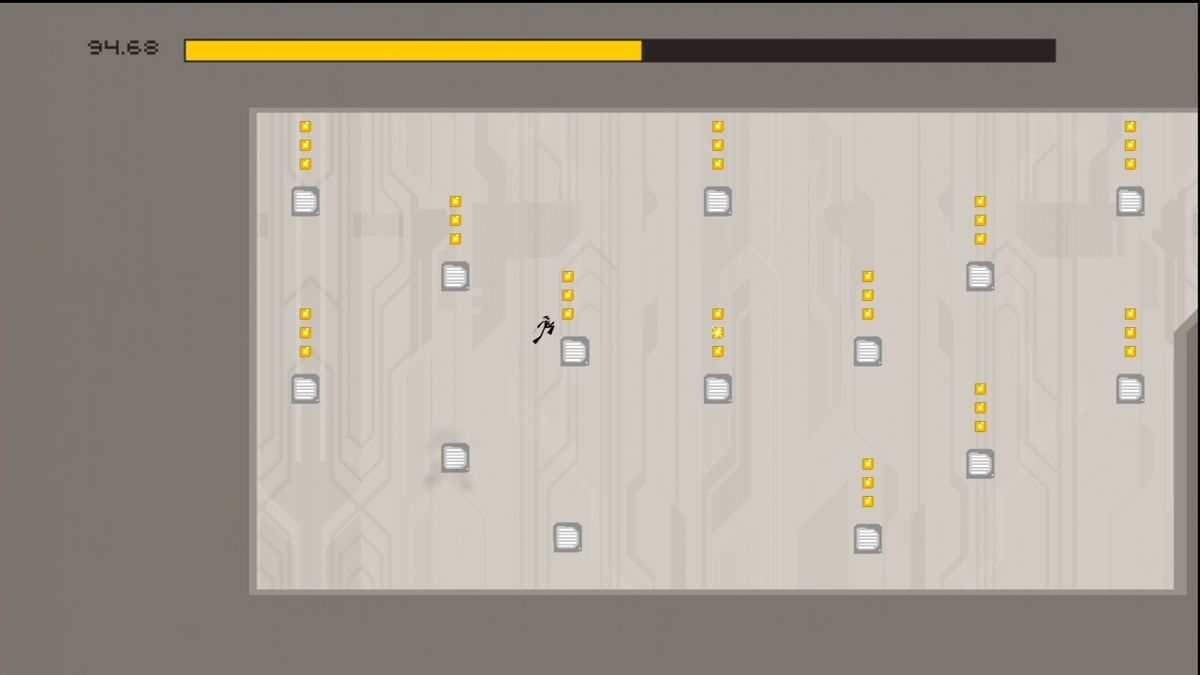

With nary an originality to boast of, N+ has a wickedly simple premise, but a devilishly difficult gameplay. You control a ninja, initially black, but new costumes are unlocked the more you progress. The new costumes don’t bring power-ups or speed, but style and respite from monotony. Your goal is simple; unlock the door and get to it to finish off the level. If this game were that simple, then it would’ve effectively been the opposite of what games are supposed to be about. You see, scattered throughout the levels are pieces of gold and a myth goes that the ninja you control has a short metabolism and a craving for gold. Though this game doesn’t have a timer, the closest it has to one is the ever-decreasing ‘health’ of the ninja. The more gold you collect, the more it will increase. Me thinks someone took the definition of ‘gold fever’ a little too literally.

With parkourmovements, you character can jump very high and scale walls. If Ninja Five-O were a physics-based game, then it would be this. The physics are very loose and the control of the character is very floaty. If you let go of the movement button, the ninja won’t stop immediately, but will slide a little more; just how Mario did in the GBC port of Super Mario Bros. This will result in unfair deaths or a snakes-and-ladders moment. Whether intentional or not, I did not thoroughly enjoy this effect and at many points in the game made me flare up in anger.

As I said before, this game isn’t original and long-time gamers will know it is a mixture of bygone platform and puzzle games, with chances being it was inspired by the names that immediately come to your head. Not that it is a complaint, but since I’d already played similar games with similar difficulty, N+ did not immediately strike a chord with me. Come to think about it now, it still doesn’t altogether strike a chord with me. This game’s other silhouette-heavy and minimal-in-heart cousins, Canabaltand Vector, struck the Hendrix Chord with me.


But I enjoyed what the game offered, and its borderline-intense challenge was a relief to me personally because I had lately been playing easy, casual games. With more than 200 levels and each level having 4 parts, N+ kept me muttering to myself, “just one more try. Just one more”; and though it rewarded me with merely a color change and some new animations, I was satisfied with what I got. Playing N+ was as if I was playing Char Studio’s Flow all over again. Both of these games hardly reward you, but you feel great when you clear a level!
While N+ does take good use of the the handheld’s dual-screen – one shows the action, the other the map – and has enough clever and intricate levels to give even the cast and crew of Inception a run for their money.

This game was indeed fun, and even with added features that come later the more you progress,N+ doesn’t reach to the level of addiction or cool. It’s a fun game, but only just. So, I guess what I’m trying to say isNinja Five-O’s protagonistis still the best ninja on a handheld!


Note: Screenshots from all platforms that were available at the time can be found here at Moby Games.
 

Score: 7.5 / 10

Share:

Meat Boy - Retro Reflections - TBT

Meat Boy by developer and publisher Jonathan Mcentee, Edmund McMillen—Windows PC Throwback Thursday review written by Hamza. 2008.

Estimated reading time: 3 minutes

After watching the excellent Indie Game: the Movie by Swirsky & Pajot, I got a craving for meat... Meat Boy!!! Yea... *sigh*. Anyway, this flash platformer is universally over-shadowed by its more detailed and ‘meaty’ successor Super Meat Boy; and rightly so. This game is traditional platformer in the truest sense but is also unfinished and flawed, something the developers later rectified in its Super successor. Meat Boy’s roots go all the way back to when challenging platform games weren’t something to be taken for granted; but at the same time its soul is firmly in the present. And because of this, this little title will serve as a great connector between the bygone era of gaming and the current, fresh one. Meat Boy is challenging and fast but also full of charm and with that intangible groovy vibe to it. This game will transport the playerback to a time before platformers were taken for granted and will act as a great reminder that though the genre has had been tampered with countless times, its one aspect, difficulty, hasn’t rusted one bit. And that is precisely what this game excels in.

The story, reminiscent of fairy tales and folklore, sees Dr. Fetus kidnapping Bandaid Girl, who happens to be the lover of Meat Boy – the protagonist. Thus, Meat Boy has to brave danger – bullets, salt, Hell – and rescue his girlfriend... only to be kidnapped by the doctor every-time. The love story between a boy with no skin and a girl who is seemingly made up of bandages is one of modern games most cute and they indeed make a lovable couple... in that odd, bizarre way of course! There’s a certain 80’s game I want to mention, but I’m not going to, because by this time the name should be on the tip of your tongue. If not... *sigh*.


The levels are divided into two categories; static levels and scrolling levels. The static levels I can manage, but the scrolling ones I have to have nimble fingers, something I’m still working on. With the core of the gameplay still the same and the execution different, Meat Boy is simultaneously similar and distinct from its contemporaries and influences. Except for the scrolling levels, the other levels either see you descending down and rescuing your girlfriend; or ascending. The well structured levels are a recurring pattern throughout the game. And just when you’re thinking it will rehash one of its own designs, it surprises you by either an unprecedented childishly simple one or a devilishly timely one.

I must admit – I was quite intimidated by Meat Boy’s unabashed difficulty, but somehow, with its offbeat charm and likability, it won me over and seemed to whisper in my ear, “Look, I may be difficult, but once the tough exterior is penetrated, the interior is like an oyster bed, ya’ hear?” Going back to the game, I truly am glad of the fact that it had no timer whatsoever... and unlimited lives... and non-linear completion.

The ability to complete the game or a chapter in a non-linear fashion pleased me very much. There are a few levels which still I cannot finish, but I have made it to the end of the game. I was afraid of this game pulling a SkyRoads over me; and my fears were confirmed. Now, as surprising as it may sound, considering how many times I’ve mentioned the difficulty factor, but I found myself dying more often due to the sensitive nature of the controls than the dangers that plagued the levels throughout.


The controls are very sensitive, very reminiscent of an earlier game I reviewed, N+ on the NDS. Honestly, the sensitivity frustrated me. Over time I began to fear the handling more than the missiles and pouring salt. Yea. You heard that correctly! I saw this as unprofessional and an unnecessary banging of the nail on the coffin, seeing Meat Boy is difficult enough as it is. But through countless trial-and-error and blood and sweat, I managed to work my around the sensivitiy by slowing down my computer just enough so that the game was almost running in slow motion. Call me chicken, but that’s what you’d’ve done!

In conclusion, Super Meat Boy may be widely loved, but its unfinished and flawed little brother in the shadows, Meat Boy, is deserving of near-equal praise because of its accessibility and endless replay value. Seeing it is both free to play online and offline, everyone should take time off and play it. I recommend it!


Note: Screenshots from all platforms that were available at the time can be found here at Moby Games.
 

Score: 9.0 / 10

Share:

OutRun 2006: Coast 2 Coast - Retro Reflections - TBT


OutRun 2006: Coast 2 Coast by developer Sumo Digital and publisher Sega AM2—PSP Throwback Thursday review written by Hamza. 2006.

Estimated reading time: 3 minutes.


Designed as a racer but advertised and marketed as a driving experience, the original OutRun won the hearts of contemporary gamers and became a perennial classic over time – even acquiring the status of an unofficial synecdoche for racing games. Flash-forward a few good years, some major technical and graphical advancement later, and you get OutRun 2006: Coast 2 Coast– one of the most beautiful racing/driving games ever made… and still hold up to this day.


Everything about the game is care-free and relaxing... that is until you get into the later stages of the races. The sound of the rushing sea that greets you in the menu system is too blissful for words. The Hawaiian-reminiscent atmosphere that permeates the game provokes a sonorous feeling, an absolutely unheard of thing in a racing game. The truly resplendent production of the game halted me from frustrating myself silly every time I lost a race or failed to reach the specified target. Speaking of which, one of the missions is called Heart Attack Mode, in which you have to keep your girlfriend happy by adhering to her bizarre demands that often border on Symphorophilia.

If you're wanting an example to convince you, well one of the many things she asks you to do is ram into as many vehicles as possible. The more vehicles you comically collide into, the more happy she becomes. Next she will ask you to drift. With that done, she will then ask you to dribble a gigantic beach ball with your car until the end comes in sight... or hit as many ghosts as possible... or keep overtaking a long line of convoy!

This is exactly why I sometimes love games that relish in their silliness. Typing of the Dead - another Sega masterpiece - is not only borderline absurd; but almost a masterpiece in what it aims to be, and a serious contender in my book for the most entertaining video game ever made. Coast 2 Coast takes the improbability of an arcade racer and gives it a charm all of its own.


Most racing games, especially the modern ones, let you control and finetune several technical and cosmetic aspects of your vehicle. That much is standard. But hardly any racer lets you pick your own passenger, choose which track to burn rubber on mid-race, and which one music to listen to in the background. OK fine, maybe the latter is a standard feature in many racing games, but none of them contain the insanely irresistible, perfect-for-long-drives Magical Sound Shower.

It's surprising how I made it this far into the review without even mentioning Ferrari anywhere. The OutRun series have always stood out from the rest due to their licensed, and sublime, use of Ferraris as the player's only mode of transport. The original OutRun did for Ferrari Testarossa what Goldfinger did for the Aston Martin DB5. Just as how 007 made the DB5 synonymous with espionage and gadgetry, OutRun created an icon out of the Testarossa, and the poster car for all that is exotic, scenic, and gorgeous. I swear I could look at a Testarossa in real life and just watch the world of Coast 2 Coast whizz by in the car's windows. Other vehicles that are included in the game, but not limited to; the aggressive Enzo, the vintage Dino 260 GTS, the stylish 250 GTO, and the perennial world-wide favourite, the F50.


In conclusion, Coast 2 Coast is a very attractive racing game and a splendid title on the handheld. While it certainly has its shortcomings, namely the questionable collision detection and occasional flicker and lag, the overall product is a thing of undeniable beauty.


Score: 9 / 10

Note: Screenshots from all platforms that were available at the time can be found here at Moby Games.

Share:

Ninja Five-O - Retro Reflections - TBT

Ninja Five-O by developer Hudson Soft and publisher Konami—Game Boy Advance (GBA) Throwback Thursday review written by Hamza. 2003.

Estimated reading time: 4 minutes


Without any hesitation whatsoever, Ninja Five-O should be among the first names to recommend if someone were to ask you of any worthy GBA games. This game truly deserves to be called one of the best, if not the best. This nifty handheld is home to a-great many side-scrollers and platformers-  namely MegaMan Zero, Lady Sia, and Castlevania: Aria of Sorrow - but Ninja Five-O in my view is probably the best of them all.

The gist is the terrorists and rogue-ninjas have taken over and captured hostages all over the map. The story is minimal and the objective simple: Rescue all the hostages, kill all the terrorists, go one-on-one with the rogue-ninjas, collect keys, exit. Rinse and repeat. This is not to imply the gameplay is repetitive: You never know when the enemy ninja is going to appear onscreen; you never know when a terrorist might turn their hostage in your direction the moment you send flying your shuriken or other projectile, thus resulting in an accidental killing of said hostage.


The aforementioned chief objective is given another layer: If a speech bubble appears over the hostage’s head exclaiming “Don’t shoot”, then you really want to listen, because there’s a chance you might end up accidentally killing them. The game will mark this as ‘rescued’ and won’t deduct any points. However, it is still better to finish a stage without any casualties. If not for the fact that you’re a morally decent human being who believes in doing the right thing, then at-least do it for the cute way they shout “thank you” and run away.

With only a few levels to crab-walk through and with each broken down into small sections, the fun of Ninja Five-O will last for about an hour. Thirty-five minutes if the player is super experienced. But since Ninja Five-O is quality over quantity, the game doesn’t overstay its welcome. Scattered throughout the levels are bolts that the player can pick-up. They serve as power-ups.

Throughout the levels our ninja can collect colour-spectrum-cycling bolts which can further enhance his powers and give him cool projectiles, like multi-shot flames. Obtained either through a box or fallen enemy – usually the rogue-ninjas – these bolts will change the colour of your costume and that’s how you will know what upgrade level you’re currently in. But the thing that sucks is one shot or strike from a sword eliminates that power and you’re pushed back to the previous one. During boss battles this is hardly a thing of concern, but before one I want my ninja to be well stocked, with that special lightning-speed ability and not a rookie with a saber.

Speaking of which, your attacks are basic. You get to perform a single slash with your sword that proves, er, handy in hand-to-hand combats and opening suitcases and crates. Your character can jump but I think he’s struck with the same disease of Cannotjumpititisthat afflicted Bionic Commando from the NES title of the same name. Luckily, the ninja has with him his trusty kaginawa, a type of grappling hook used by ninjas. He can use that to perform acrobatic-themed stunts and raid on the foes like lightning. The last part may not be true, but who the hell cares, this is Ninja Five-O!

In conclusion, Ninja Five-O is a solid title on the GBA and no, it’s not a ninja-version of Hawaii Five-O, but however despite its similarities to other platform games, I deduced that this game has more in common with Virtua Cop than anything else. Why don’t you give it a try and decide for yourself?

Score: 8.5 / 10

 
Note: Screenshots from all platforms that were available at the time can be found here at Moby Games.


Share:

Mario Tennis - Retro Reflections - TBT

Mario Tennis by developer Capcom Co., Ltd. and publisher Capcom Entertainment, Inc.—GBC (Game Boy Color) Throwback Thursday review written by Hamza. 2001.  

Estimated reading time: 4 minutes


On such a primitive handheld as the Game Boy Color, I did not expect such a fluid and wildly entertaining game as Mario Tennis. I say primitive because I’m looking at the handheld from a modern perspective. The consoles which we call superior today will too be primitive tomorrow, i.e: 15 years. Our descendents are going to be the death of us!

Coming back to the game, playing Mario Tennis was such an invigorating experience, given the titles I’d played on the handheld till that point: a rather well done third-person Perfect Dark, the superior RPG Daikatana, and a very weird port of Pong.

A third-person Perfect Dark, an RPG-Daikatana, and a very weird port of Pong; yes, Mario Tennis was indeed a fresh experience. Mario over the years has had more occupations than Kirk Gleason. And seeing that those said jobs have included being a doctor, a referee and a go-kart racer, it seemed only natural that Mario would pick up a racket and go one-on-one with either Donkey Kong or Luigi. But that’s the problem. In the GBC version that’s being reviewed here, it’s not Mario who appears, but instead Baby Mario. Yes, that helpless infant with the grating cry from Super Mario World 2: Yoshi’s Island. The inclusion of Baby Mario surprised me, as it raised some impossible questions; the chief being how can a baby play professional tennis... but who am I to question video game logic?


The game starts off with a badly sunburnt boy and a Bella-esque girl playing tennis. After they're introduced, a group of ugly characters are then presented next. When that’s over, a fully grown Mario is revealed as the greatest player ever. Though the cutscene is nowhere as cute or likable as Mario Party’s, the menu music that follows next is easily one of the best from the Mario games. In fact, I’m ready to say probably in the top 5. Not since the original game and Yoshi’s Island have I thoroughly enjoyed the music more than the game itself.

With initially only Baby Mario, Luigi, Donkey Kong and 3 other human characters to choose from, the start of Mario Tennis isn’t that flawless; so they say. Though the N64 version has all but 2 characters already unlocked, you have to go through an RPG-type experience in this GBC version to unlock a majority of the characters. Honestly, having only a few characters to choose from suited me just fine. Do I really, desperately need Wario and Luigi competing against each other? If I ever feel the need to play as Yoshi or Wario, I play the N64 version, which is, in my opinion, quite inferior – if compared to the GBC version. True, the N64 has better graphics, 3D and more to observe – but it sorely lacks in charm and character. I guess this one time handheld outwins console.

When I played Activision’s Tennis for the Atari 2600, I was taken back by its fluid movement and how smart it looked in front of its peers. I got a déjà vu of that feeling while playing Mario Tennis. It has in it enough smooth movements and animation to make you rub your eyes to make sure you’re not dreaming. But not everything is gold, and unfortunately Mario Tennis suffers from setbacks.


Sometimes your character abruptly stops while running; and the ball goes out of court. Other times – and this is attributed with the computer player – you can clearly see the racket is far away from the ball, but yet they manage to hit it. There’s another; when you try to activate the special shot, it doesn’t always activate... and you’re left holding your head and wondering what went wrong!

In conclusion, Mario Tennis indeed has a lot to offer, like create your own player, career mode, a dictionary to learn the terms and choose from different courts. But just as how it is with other games, everything boils down to whether or not the end result is satisfactory and fun. Mario Tennis excels in both and proves to be more! It’s a solid, fun little game that is bound to see you as Baby Mario competing against Luigi for hours on end!

Note: Screenshots from all platforms that were available at the time can be found here at Moby Games.

Score: 10 / 10

Share:

Marvel vs. Capcom: Clash of the Super Heroes - Retro Reflections - TBT

Marvel vs. Capcom: Clash of the Super Heroes by developer Capcom Co., Ltd. and publisher Capcom Entertainment, Inc.—PS1 Throwback Thursday review written by Hamza. 1999.

Estimated reading time: 3 minutes.


Marvel vs. Capcom: Clash of the Super Heroes is a superb crossover fighting and one of the finest from 90’s gaming. As the name implies, familiar characters from the more famous titles of Capcom and the Marvel universe clash and collide – and occasionally join forces as allies. Each character is beautifully animated.

Characters like Hulk and Venom are wonderfully detailed; their sinews and popping veins standing out like no other. When the green rage-monster moves, aggression and force can be felt at every step; likewise with the symbiote, whose slimy nature is fluid and precise. The energetic, detailed sprites not only give life and energy to the characters, but also to the whole “I’m just here to win” attitude that is so prevalent with such fighters. I haven’t played a more energetic, electrifying and awesome game as Clash of the Super Heroes.


Instead of continuing on with a traditional review praising the highs and lamenting on the lows of the game, I’ll instead put forth a very memorable memory that I have associated with the game. Without further ado:

Back in 2003 when I was in the 4th grade in Oman, my school held a fundraiser for the hurricane victims in Sri Lanka. Since there were no limitations as to what one could do to participate and donate, I and a couple of my friends decided that we would use my TV and PlayStation (since I lived practically next door to the school) to accept donations. Our idea was to charge a small fee per game for a limited play-time (500 baisa for 30 minutes; 1 riyal for 60 minutes); with the money incurred going to the fundraiser. At the end of the day, we managed to accumulate around 15 riyals (roughly $40). Though this wasn’t very much – even at the time – it was a major effort for a couple of ten year olds.


When the fundraiser time was drawing to a close, and with the crowd thinning every passing hour, my friends and I decided to stick around and play games to our liking. The one game we all agreed on was Clash of the Super Heroes: a favourite across the classroom. For the next couple of hours or so – well into midnight – I and four of my friends took turns to whip the virtual asses out of each other. No alliances mind you, only enemies. At every successful victory, the victorious would retain his position, while the defeated would get rotated to the other person, and so on. What makes this particular memory such a happy one, is it was the first time I was engaging in a multiplayer co-operative style of playing I had only heard about in magazines and online forums.

Our playful, hushed swearing, attempts at distracting the other player, and screeching reminders to use the combo attack are all what stick vividly in my mind. Anyone who has ever engaged in multiplayer combat with their friends – especially when it gets loud and chaotic – will know the feeling. It’s one of those memories that etches itself permanently in your brain. Though I’m not at all close to my classmates now, and it’s been decades since I last touched my PlayStation, this particular highlight stands out among the rest when I think back to school. Whenever I’m having an off day or just want to think about a time where innocence reigned supreme, I often invariably go back to this moment… a moment where we acted good for a cause and kicked each other’s asses.

Note: Screenshots from all platforms that were available at the time can be found here at Moby Games.
Score: 9.5 / 10 


Share:

Tank Racer - Retro Reflections - TBT

Tank Racer by developers Glass Ghost, Simis and publishers Grolier Interactive, R & P Electronic Media—PC Throwback Thursday retro reflection written by Hamza. 1999.

Estimated reading time: 3 minutes


They say great surprises come unexpectedly and often in small packages. How true this axiom proved to be with Tank Racer for Windows.

Developed by Simis and published by Grolier Interactive (known for their interactive encyclopaedias which I’ve personally used two), Tank Racer is a hidden gem, bursting with wonderful and satisfying surprises. Not since BattleTanx and the tank from Grand Theft Auto: Vice City have I enjoyed controlling a tank so much. Just like in BattleTanx, the environment in Tank Racer is pretty much destructible. That means the Cadillac that’s parked in front of the Church can be flattened and converted into a makeshift path, so that the next time you pass that area you get more elbow room and thus, a better chance of gaining the lead. Fences can be broken through, camp sites can be crushed under the rollers, road signs can be uprooted; this is the most enjoyable form of destruction you can take part in without being scolded by your parents.


Tank Racer is a fully 3D vehicular combat racer with a bright and colourful presentation. For a game released in 1999, it still holds up pretty well to this day. The primary premise of the game is basic enough: be first and destroy some enemy tanks along the way. Ranging from offensive to defensive to upgrades, the weapons and power-ups you get are pretty standard fare, though they’re indeed enjoyable to use. What adds more spice to the combat is the turrets are capable of turning a full 360 degrees. This means if you happened to pick-up a homing missile but overtook your opponent, instead of slowing down and letting him pass you, you can turn the turret in his general direction and blast him off to oblivion.

Going back to the graphics, they are well done and very easy to the eye. The attention to military-themed details is also commendable. Several fighter jets fly above you at whizz speeds; army trucks wait around the corner just waiting to be flattened; and oddly enough, livestock are included too – though for what reason I do not know. You can mow down the livestock (no gore I can assure you of that) and all they do is give out their respective sounds.


In conclusion, Tank Racer is probably the first (thus far) racing game I’ve played which literally invites you to carve your own path by going through fences, caves, roadblocks et al. Genuine shortcuts are indeed present, but the point Tank Racer is trying to emphasise is you can create your own, at totally no expense. You won’t end up the wrong way, and you may not get the lead, but you might acquire a weapon that will increase your chances of moving up one or two spots in the rank. With a little less than an hour of full gameplay, I thoroughly enjoyed Tank Racer and left almost nothing to be desired. A wonderful surprise in a small packaging indeed!


Score: 9 / 10

Note: Screenshots from all platforms that were available at the time can be found here at Moby Games.

Share:

Half-Life - Retro Reflections - TBT

Half-Life by developer Valve Corporation and publisher Sierra Studios—PC Throwback Thursday retro reflection written by Hamza. 1990.

Estimated reading time: 4 minutes.


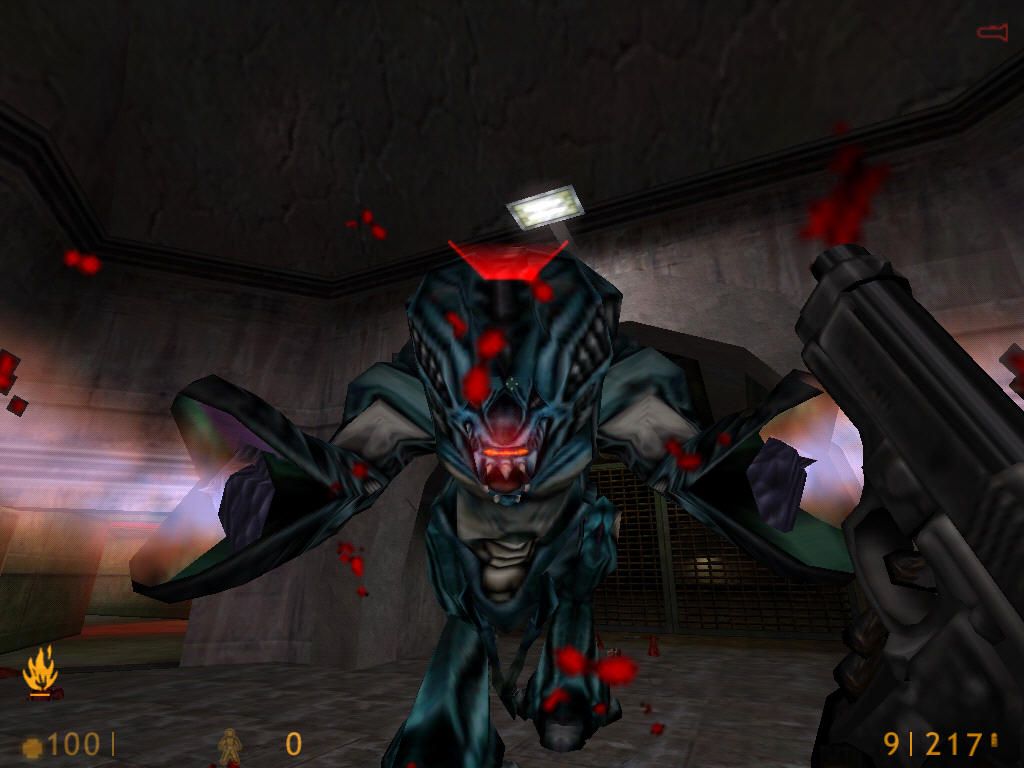
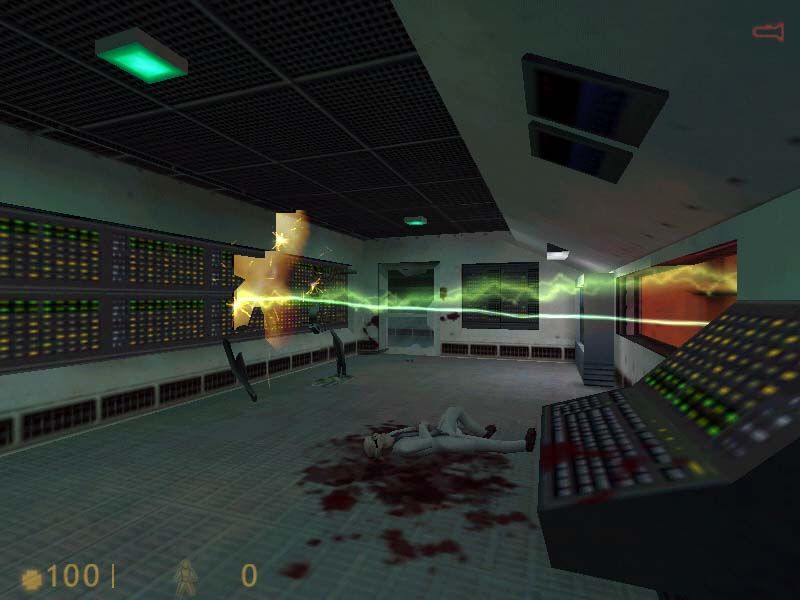
Calling Half-Life great is a gross understatement. It is The Godfather of video games. In the same way how the film forever changed the face of crime and gangster movies, Half-Life set an everlasting benchmark for anything first-person shooter.

Originality is rarely seen in every video game, even less when it’s your debut in the medium: but a couple of ex-Microsoft employees with a borrowed game engine raised the bar by which all future fps’ were judged. When programmer Mike Abrash left Microsoft to work on the Quake title at id Software, Gabe Newell and Mike Harrington followed suit and founded Valve Corporation. In 1998, they released Half-Life.

Half-Life’s release on the PC caused waves of gigantic proportions across the world. Never had anyone seen anything like it. Never had anyone felt so immersed in a first-person shooter ever before.  The introductory three-minute long train ride with a cool female voice addressing various issues and updates to the player is easily among the greatest intros in video gaming, with it also being an example of a cinematic experience in video games. In a scripted-manner, the various robots, helicopters, scientists and guards go about their jobs, often coming in the way of the train, causing it to slow down a little or come to a complete halt. This feeling of a grandiose environment quickly tells the player that Half-Life is not just about the character; but also the world at large and that they play an equally important role in the in-universe as you.


When the ride’s over, the still-impressive facial movements and motions are witnessed. Though a majority of them have only a few lines and really don’t seem to be doing anything other than going through some rote animations, the atmosphere is that of a living, breathing, realistic world. As realistic as a world soon-to-be-populated-with-aliens anyway.

Officially, the actual storyline gets triggered when you trigger the resonance cascade. Unofficially, when Gordon Freeman picks up the crowbar. What follows after is an onslaught of headcrabs, Vortigaunts, houndeyes, zombies, bull squids, and effectively eerie cameo appearances of the G-Man. When I first saw him standing on the top platform just when the first houndeye appeared, I was terrified beyond words. So emphatically spooky was his first appearance that the houndeye killed me and I had to restart the game.

What separated Half-Life from the rest back in the day was its omitting of cut-scenes entirely, thus resulting in a flowing narrative. You walked from one chapter into another without even realising it. In Doom, for example, you had to reach a checkpoint to clear that chapter, then your achievements would be tallied up on a separate screen. There’s no such score keeping in Half-Life. Apart from a few chapters closing with a fade to black, there’s practically no loading screen either. The game never rests, just slows down occasionally and for justifiable reasons.


The story is strictly seen through Gordon Freeman’s eyes. Although the scientists and security guards have scripted dialogues that they keep repeating over, a few of them have ‘special’ lines that reveal more about the backstory of the current chapter. In the Questionable Ethics chapter, for example, a group of fellow scientists are trapped and cornered by headcrabs, houndeyes, and the rogue assault team. When you clear the area of them, one of the scientists will tell you everything that happened offscreen. This mechanic constantly serves as a reminder that whatever that’s happening in out-of-reach areas or ‘on the other side of the fence’ are equal to whatever that’s happening in your line of sight, and are equally as ‘real’ and ‘happening’. It also further reinforces the philosophically larger-than-life vibe of the game perfectly.

The one thing Half-Life excels in is the memorable scenes. The three-minute long introduction perfectly sets the mood and character of the game, but it’s just a taste for all the wonderful things to come. The first real bite granted to you I believe is when you’re in the first-quarter of the Unforeseen Circumstances - roughly 20 minutes into the game. There’s a part where you have to take a freight elevator to a lower level. Fans of the Akira manga know exactly what I’m talking about. As you’re slowly descending, a seemingly endless horde of headcrabs rain upon you. In my initial playthrough I had no bullets, so I had to fend for myself with the crowbar. To say I was all sweaty would be an understatement.

In conclusion, Half-Life is a sublime product by a superb, dedicated team. The spectacular level designs, then-rich textures and graphics, and an unusually steady balance of slow, quiet moments and quick one-off bloody battles all contribute to a rich and satisfying experience.

Note: Screenshots from all platforms that were available at the time can be found here at Moby Games.


Score: 10 / 10


Share:

System Shock - Retro Reflections - TBT

System Shock by developer and publisher Broderbund—MS-DOS Throwback Thursday retro reflection written by Hamza. 1990.

Estimated reading time: 6 minutes.


Let’s face it, System Shock has the worst on-screen font in gaming history. It’s almost unreadable and proves to be a pain when you have to play the game with the volume turned off. The tracking between the words is too little and the font is just ugly. I’m glad System Shock is not a text-adventure game because then it would’ve been a true abstract representation of an insect panting and sweating down SHODAN’s corridors.

Released in 1996, at a time when the first-person shooter as a genre was gaining shape, System Shock was one of the more clever shooters on the market that boasted an actual, intelligent storytelling. Unsurprisingly, the game’s rather outdated now, but it nevertheless remains a solid experience every FPS fan must go through at-least one - preferably at a slow, methodical pace. When you play it methodically and don’t use any keyboard shortcuts, it is quite excruciating at first to get used to the pacing and interface; but this tedious patience, If adopted, gets reciprocated by its rich and rewarding gameplay and unique execution.


With the action from a first-person perspective, the screen is barricaded more by the menus and pop-ups than the actual contents of whatever room or corridor you’re in. Of course, the menus can be turned off and/or one can go into full-screen mode any-time, a-lot of the charm and originality gets lost in the process. Trust me when I say it, the game is best experienced with all the menus turned on.

With a rather impressive opening cut-scene, it brings the player to the core of the story. An unnamed hacker hacks into private files of the Citadel Station. Just mere minutes into his business, he is discovered and apprehended on the spot. Willing to give the young man a chance, the corrupt vice-president, Edward Diego, assigns the hacker to hack into SHODAN, the A.I. in charge of Citadel Station. The hacker frees her from her restraints and goes into a six month long coma. When he comes to, SHODAN has all but gone ultimate crazy with a peculiar attitude, turning all the inhabitants either into her robotic slaves or zombiefied mutants. On paper this story sounds like an intro to a futuristic zombie shooter, but in execution it isn’t. It is equal parts steampunk, sci-fi, and maze/puzzle - or muzzle, if you will.

What makes System Shock extra great is the game literally allows you to play it your way: don’t want to fight tough enemies but want to solve intricate puzzles? You can filter the options to reflect that. Don’t want to dwell too much into the story but want the cyberspace to pack a mean wallop? Go for it. With this “choose-your-own-adventure” in check, freedom is granted to you even before the game has started properly.

Where System Shock shines is in its level designs. True, many say the vocals and music is what gives the game its souls, unfortunately I happened to download the ‘silent’ version, so I was restricted to playing it in silence and squinting at the ugly font that asked for more than three re-reads. As I was saying, the level designs were swift in their delivery  and strong in their presence. Similar as they may look, they refused to follow a certain pattern, though of course many fell into a one-minded mess of dead-ends and Star Trek replicated rooms and small areas. With fully realized texture mapping and advanced (for its time) graphics and display, System Shock not only pats on its own back by its subtle yet effective placing of certain objects such as CCTV cameras, boxes, ladders and corpses, but also by its frightening graffiti that’s apparantly done by blood. 


Phrases such as “Get away” and “Die” truly gave off a spooky atmosphere and increased your fear/respect of SHODAN. How evil must she be that the poor victims were driven to paint words of doom on the walls with their own blood?

And that’s precisely what makes SHODAN so damn memorable and evil. Throughout the game she keeps taunting you in that megalomaniacal way of hers, with the sentences more or less ending with her referring to you as insect. In a role-playing badroom fantasy, I wouldn’t have minded this as much, but here, especially when the stress of puzzles is getting to you and enemies are appearing dime a dozen, her chaotic voice with wild prophecies and promises of unspeakable terrror is enough to make any sane man insane! It’s a shame I couldn’t get sound on the file I had. 

As frightening and damn memorable my outing with SHODAN was, I still think AM the Supercomputer from I Have No Mouth & I Must Scream is the top mad world-conquering, self-god A.I. in video games. He may be overshadowed, but this Harlan Ellison mankind-hater is the best, as well as the craziest and merciless.
In conclusion, System Shock is an engrossing experience that will make the hours go pass if one plays it attentively. The professional and well-defined character + engine of the game may not have aged well, but will provide an excellent distraction to gamers who have previously whet their appetite with easy to control fps’s like Doom, Medal of Honor and No-One Lives Forever. They may not be in the same orbit, but out of all System Shock is definitely outta there!


Score: 9.5 / 10


Note: Screenshots from all platforms that were available at the time can be found here at Moby Games.

Share:

Dr. Robotnik’s Mean Bean Machine - Retro Reflections - TBT

Dr. Robotnik’s Mean Bean Machine by developer Compile Corporation and publisher SEGA—SNES Throwback Thursday retro reflection written by Hamza. 1993.

Estimated reading time: 5 minutes


One of the many reasons why I love me some puzzle games is because of the ability to cause a chain reaction. Yes, I love chain reactions in what ever game that carries it. There’s something orgasmic about it, something inexplainably seductive about watching many things blow or disappear in a continous succession. Take Boomshinefor example. That game is nothing but12 levels of majestic chain reaction. You do nothing except hope that the reaction you started manages to explode the required bubbles on-screen to progress to the next round. Other such examples are Bangai O-Spirits and Henry Hatsworth. Both on the NDS and both worth checking out.Though Columns on the SNES is my current love for the moment, I believe I can make a big space in my heart for Dr. Robotnik’s Mean Bean Machine – a Genesis “match-and-disappear” classic that’s as long and funny as its title. It is simply too good a game to miss and too addictive to put down under fifteen minutes.

Dr. Robotnik as you all know is the main villain of the Sonic the Hedgehog universe. As one of the few titles not to include the blue blur, Dr. Robotnik takes center stage and stars boldly in his own game in his own spotlight, with no restraints or regrets. On the surface, Mean Bean plays similarly to the other titles in the genre, and you’re instantly forgiven if you were reminded of other identical games. So what if you replace blocks with beans? So what if you eschew specifically-tailored characters for world-wide recognizable ones?

Little do simple-minded people know, and as every able-minded person knows, that these subtle variations make all the difference. If you take the same mentality to (especially) scrollers and platformers, you will notice that no two platform or scrolling games will be the same in design-or-character-wise, but one will undeniably be a doppelganger to the other; whether in terms of the aforementioned or execution or story, that can be discovered and discussed later.


Mean Bean Machine apparently has a story that I couldn’t bother to worry about in the least bit. The gameplay was all I was interested in, and thus directed all my attention to that only. You go head-to-head against a villain character, whose visage with brilliantly animated expressions rests in the middle of the screen. Anytime you see him giving a mischevious grin or smiling like a maniac, you know you’re in trouble and that he’s winning. If he’s frowning or crying or praying, then you’re in the lead and that his “game over” is just around the corner. But there lies a catch. If you decide to lay back and go easy around this time, then there’s a good chance the villain can catch up and turn the tables on you. I’m not sure if this is a genuine game mechanic but I’ve fallen pray to my own over-confidence one too many times, due to the game’s assurance that the enemy is losing and that I’m winning. If it isn’t, then I enjoyed it all the same anyhow.

Fans of the genre know the drill to “match-and-disappear” games; or as I like to call them “Now you see them... ha, ha, ha... Now you don’t”. Anyway, your aim is to combine a set number of blocks to make them disappear and possibly, start a chain reaction, and in general rake up high points and survive longer than your opponent. In this game, the blocks are replaced by beans and fall in pairs vertically. You have to combine 4 or more beans of the same color to make them successfully disappear. You can only change the position of one bean according to your, er, taste. When the cute little anthropomorphic beans meet their colored match, they link themselves together, forming a living chain. Somehow this all sounded better in my head, yet now it seems as if I’m writing a synopsis of a rascist prison film.

Continuing on with the gameplay, if one’s screen fills up completely with beans, they lose. When one causes a big enough chain reaction, the disappeared beans become refugee beans, or “has-beans”, and start falling on the other’s screen. These refugee beans act as flaks, and instead of shielding you from enemy fire, they prevent you from achieving your M.A.D. goal. They cannot be taken out in the normal way. The only way to do that is to match up four adjacent beans, and any nearby refugee bean will disappear along with it. Apart from making you rework your strategy or improvise, refugee beans really only obstruct a perfectly good game.


And one game can go from five to ten minutes easily, even more in the harder levels. Ten minutes equals to almost nine-to-fourteen chain reactions and I can live with that. But don’t let the time scare you; if you’re experienced enough, it might end early for you. The game, I mean!

In conclusion, Dr. Robotnik’s Mean Bean Machine didn’t quite give me a craving for beans but it did re-ignite my love for puzzle games, and you can bet I’ll be playing more of them in this year... and the year next... and the year third!


Note: Screenshots from all platforms that were available at the time can be found here at Moby Games.


Score: 9 / 10

Share:

Andre Agassi Tennis - Retro Reflections - TBT

Andre Agassi Tennis by developer TecMagik and publisher Lance Investments—SEGA Game Gear Throwback Thursday retro reflection written by Hamza. 1992.

Estimated reading time: 4 minutes.


Why are tennis video games sharply divided into very good and very bad? Why is there no in-between? Why can’t one pick a game, play it and say “hmm, this game was good, but adequate.” I guess this is true for all sports games, and maybe this is why I don’t enjoy them as much. Sure, once in a while they impress me, like the excellent Mario Tennis on the GBC and Tennis on the 2600; but at other times they infuriate me to no end, like Andre Agassi Tennis did on the Game Gear.

A video game featuring a recognizable sportsman’s name in the title has been done to death, and while most become everyday household names, like Tony Hawk, the unfortunate others never cross from real life to digital that successfully, and are thus known for real-life achievements only. Considered as one of the greatest tennis players alive, Agassi before his retirement was known for his charisma and energy. This game is the complete opposite of that.

I was introduced to this game by YouTube’s only worthy video-game reviewer, Stan Burdman, the funniest Jew since Mel Brooks. He is known for his dead-on, accurate reviews and constant swearing and shouting, which has kinda softened down a bit in his latest reviews. Watching him play this game made me think this guy is being harsh and unfair. It was only when I played a few minutes of the GG port, which is similar to the Genesis one that was reviewed by Stan, that I now stand fully by him in calling Andre Agassi Tennis as simply one of the worst sports games ever made. It’s too awful that it’s unreal.

The picture of the famed player on the menu is the first sign of doom, and probably the game’s most worrying feature. Is it just me or does he resemble Jazz Jackrabbit? The intrepreting from real life to pixels was a job very badly done. Since the Game Gear is a handheld and naturally has a smaller screen than the TV that the Genesis is hooked into, the screen is not static. It moves in accordance to the ball. To put it this way, the camera moves more than the players and the ball combined. Mario Tennis on the GBC adopted the same feature but Camelot – the developers – executed it exceptionally brilliant and thus resulted in an exciting and rewarding gameplay, despite its non-realistic approach. Come on, a baby going one-on-one with an ape? Anyway I digress -Agassi Tennis should have at-least gotten the camera right, maybe top-down view or something, because the camera moves in a blocky fashion that bogs down the already unexciting gameplay.


Fluidity is something this game has a fear of, because everything, from the clapping to the player movements to the serve, is robotic and horrendous. Let’s say I want to move left. Now I’d expect my player to take one step to the left, right? Well, with that expectation in mind, imagine the horror when the player took nearly three steps to the left in the most robotic fashion ever possible. It’s as if he’s suffering from rheumatism. The stiff movements, ugly camerawork, uninspired gameplay and total lack of genuine excitement all make up for one really bad sports game that doesn’t fulfill its basic requirements correctly.

The music, in heavy contrast, is actually hearable. Honestly, I think its more suitable in any Atari 2600 title than a Game Gear one. It has in it a loose-funky atmosphere with faint touches of goth-music and RPG-scores. Very unusual, considering the genre of the game.

Anyway, in conclusion, Andre Agassi Tennis is easily one of the worst sports games I’ve played due to its failure to meet the basic requirements and expectations like, you know, real authentic gameplay. This game sucks! and don’t be telling me otherwise...


Note: Screenshots from all platforms that were available at the time can be found here at Moby Games.


Score: 2 / 10


Share:

Where in the World is Carmen Sandiego - Retro Reflections - TBT

Where in the World is Carmen Sandiego by developer and publisher Broderbund—MS-DOS Throwback Thursday retro reflection written by Hamza. 1985.

Estimated reading time: 4 minutes


It’s that puzzle-adventure edutainment time of the month again, and this time Carmen Sandiego has gone missing! The first in the long-running Where in... series, the series sees the titular thief committing crimes that are oftentimes comical in nature.

The game starts with an ancient typewriter asking you for your name - or status, as it so bluntly puts it. Here is where the game’s subtle attention to detail first impresses you. If you type in Carmen Sandiego or any of her henchmen/women’ name, the company, Interpol, will reject you on the grounds of your criminal past. It’s a small but neat touch. You take on the role of a rookie tasked to apprehend the criminal mastermind. If you aren’t too well-versed in your geography, you won’t be making much progress - so it’s rather vital you hit the local library first before booting up the game.


Preceding each level is a news-flash that tells you about the new felony by V.I.L.E - Ms. Sandiego’s villainous organisation. After being notified of the stolen item, you are then transported to the city where the V.I.L.E lightning struck. On the left side of the screen is an image of a famous landmark of the city you’re currently in; on the right is where the various activities take place. On the bottom you will find four icons. The first will display the cities you can visit; the second will take you to the map; the third will open a sub-window in which you can enter three different places and interrogate people; and lastly in the fourth, if you pay attention to what the civilians are saying, you can enter the information and issue an arrest warrant, but only if it successfully matches with the description of the villain you’re chasing. If it doesn’t, it will keep rejecting it until you’ve got it right or if the villain escapes. Then it’s game over!

When you’re sent to capture them, you’re usually given till 5pm on Sunday to do it. In game time it means a week. This brings me to a question; if the dossiers of the villains are true in detailing that they’re experts in their field, then how is it that a rookie (meaning you) is able to nab them in a week? But who am I to question game logic?


As I mentioned before, you need to be smarter than a fifth grader, because the civilians only talk in enigmatic-tongues: often dropping useful hints which you can enter in the data icon below. For example, the oft-repeated clue will go something like this: “I saw him leave in a car and it had a blue flag with a white cross on it”. Of course, he is clearly describing the flag of Norway – your next destination. Resorting to Google only gives you this crushing acknowledgement about your pitiful know-how about the world you inhabit. Tut! Tut!

When you travel city to city, and when you land on the right one, a short animation of a sneaky yet harmless robber in the classic get-up will pop-up in the ‘action’ screen. This indicates you’re indeed on the right track. Whenever a civilian says “they’re in town nearby”, this means you have reached the end of your detective hunt and that you can finally apprehend them - provided you correctly entered the data and received a warrant for arrest. A short, smooth animation will start; showing the villain being chased by a trio of policemen. An off-screen scuffle ensues, and if there was no warrant for arrest, then a lone policeman will shuffle back to his police-station, alone, defeated. This brings me to another question; is he sad because he failed to capture the villain, or because two of his friends were killed in the scuffle... that’s something I want to know!

In conclusion, Where in the World is Carmen Sandiego is one of MS-DOS’s best games. Very entertaining, humoristic and surprisingly brain-challenging. For those who want an enjoyable game to pass time by or to recommend to their children, then Where in the World is Carmen Sandiego is the perfect choice.

Note: Screenshots from all platforms that were available at the time can be found here at Moby Games.
 

Score: 9 / 10


Share:

H.E.R.O - Retro Reflections - TBT

H.E.R.O. by developer and publisher Activision—Atari 2600 Throwback Thursday retro reflection written by Hamza. 1984.

Estimated reading time: 3 minutes


Being an acronym for Helicopter Emergency Rescue Operation, this title is easily one of Atari 2600’s best, if not the best. Unlike most others while trial-and-error works wonders, and where points are all that matter, H.E.R.O calls for something more. It calls for primitive strategy, pin-point precision and good fun where you get to be an 8-bit Alex Ryder or James Bond – or any action hero of your choice. But this assuming is rather unnecessary because the hero has a name, Roderick Hero, or R. Hero... a pun on “our hero”. Geddit?

Designed by John van Ryzinfor the 2600, and released in 1984, H.E.R.O was and is a pretty advanced and detailed game on the console. Every now and then I play a very impressive 2600 game, and I’m talking Enduro, Pitfall! & Demon Attack, but this game really tested my expectations. I thought it would be like Elevator Action set underground; or something like Commando or Ikari Warriors; but H.E.R.O. is in its own class and more entertaining than the aforementioned.


With almost no graphical or interactivity achievements to boast and to compliment, its color scheme, the movements of the protagonist and the creatures are enough to make H.E.R.O. a satisfactory and working game that’s indeed playable for long moments. Coming back to the color schemes, they’re warm, rich colors that keep with the theme of underground mines and it was a relief they weren’t as glaringly eye-sore-like as I witnessed in Duke Nukum. Pink and yellow? Get the hell out...

Taking control of “our hero”, the player has to rescue trapped miners – one per level. I made it to level 7 before losing all my lives, so if there are multiple miners to rescue in level, then I’m unaware of it. Equipped with an backpack-mounted helicopter unit, a lazer-shooting helmet and limited number of dynamites, the player must strategically blast away the cave-ins, shoot creatures, – both known and unknown –, be careful not to accidentally destroy lamps and rescue the hapless miner.
 

Though the premise is simple and one that has been mercilessly revamped to the top difficulty level in succeeding games, even the most experienced gamer will find H.E.R.O. to be an engagingly challenging experience, and the end result to be a polished, satisfactory title for the legendary console. Although I concur that there are far better games than this one, like Tapper, Adventure and Activision’s Tennis... but H.E.R.O. doesn’t disappoint and should be reason enough to back you up when you’re trying to convince someone that Atari 2600 games do not suck!

In conclusion, H.E.R.O. is a fun, challenging game that should make the 2600 lovers love the console all over again; and newcomers a reason to stick around a bit more and give the console and its games a further try. Besides this, I highly recommend the above titles as your starting point!


Note: Screenshots from all platforms that were available at the time can be found here at Moby Games.

Score: 8 / 10


Share:

Pac-Mania - Retro Reflections


I would like to introduce our first Throwback Thursday review of PacMania. An arcade game all the way back from 1987.

Estimated reading time: 3 minutes


Article by: Hamza 

Pac-Man... but with differences. The first and foremost is that it’s in isometric view that boasts pseudo 3D-graphics. With this one particular camera view that I love in video games, it was only natural that Pac-Mania was not restricted to one screen. The maps may be limited in number but are twice the size of the maps in Pac-Man and take nearly about twice the amount of time to finish them, too. The second noticable feature is that there are more ghosts here than probably in any other Pac-Man game – bar Pac-Land. Though Pac-Mania retains the basic formula of the original games and plays exactly like them albeit from a different perspective, the cool new feature is that the titular yellow dot can also jump. Unfortunately, so can the ghosts!

But first, I’m pretty sure many of you are thinking, “why improve, modify or re-create a bonafide classic?” I thought the same, too, until I played Ms. Pac-Man, Pac-Land and Pac-Man 2: The New Adventures – all ofwhich surfed on the giant waves the original had caused. Since I loved all of them and was confident that any yellow dot related game or spin-off would not be a disappointment, I tried out this game and left with a smile on my face. Once again a Pac-Man-related experience that has left me rightly satisfied.


The gameplay is simple and familiar to those who have played the original. With now the ability to jump, the yellow dot must collect/eat/chomp/chew all similarly colored pellets. But of course a gamer’s main aim is to gain the highest score possible and not lose all three lives in the process. When one map is completed, the player proceeds to the next one. The big pellets temporarily turn the ghosts into edible phantomswhich the protagonist can then gobble them up for further points. The phantoms then become floating eyes and float all the way back to the pen, where they immediately become ghosts again. In this version, the protagonist seems to give them a small nibble, and there’s a considerable distance between him and the ghost. This faulty programming, in reverse, often results in unfair deaths. You can clearly see there’s a good distance between the two inhabitants, yet Pacmanloses a life.

This version is not as big as the others and really not at all polished or graphically defined. The outlines are quite-fuzzy and give off a chromatic aberration effect. But the movements – jumping and all – are very smooth and responsive. Never once did the controls suddenly decide to become stubborn and refuse to obey me. They worked perfectly and all the deaths witnessed were partly my fault. I say partly because apparantly cats and toddlers find it irresistible to start randomly typing away on my keyboard as if they will become the next Hemingway by doing so.


Coming back, Pac-Mania is a simple little game good enough incentive to come back for more. The level designs themselves are worth the replay. The first is simply made up of Lego blocks; the following one has neon walls and crazy corners. Though not wildly inventive or catchy, they are fun to wander in for long periods. But despite anything and everything, I just cannot see Pac-Mania fall under the ‘great games’ banner. It lacks that certain unspeakable charm, an intangible quality. It’s worth the time, yes totally, but not worth the adulation in a praising compilation or category.


Score: 8.5 / 10


Share:

Random posts

Our Streamers

Susan "Jagtress" N.


S.M. Carrière

Aldren


Affiliates

JenEricDesigns – Coffee that ships to the US and Canada

JenEricDesigns – Coffee that ships to the US and Canada
Light, Medium and Dark Roast Coffee available.

Blog Archive

Labels