• STARSEEKER: Astroneer Expeditions - PC Preview

    STARSEEKER: Astroneer Expeditions is just that! Massively co-operative and not an MMO! When you first run the game you are instantly into the tutorial...

  • The Core - PC Preview

    Sometimes when you are browsing the internet for information on how to do something, you stumble upon ideas or projects or even games that people might be working on...

  • Cat Mail Co. - PC Review

    What a meow-gnificent evening it is to send your paw-rcels out to those family and friends! Are mew looking to pick up an item or send something out? Well at Cat Mail Co. we can send and receive all your deliveries!

  • Volontes - Nintendo Switch Review

    Have you ever grown up feeling like you don't belong? For our Heroine, that's the feeling she lives with everyday in her small farming village. But it's not her only secret...

  • Astro Colony - PC Review

    Astro Colony is a space base building game with three modes: survival, construction, and sandbox. From the intro cinematic right into...

  • Dread Delusion - Xbox Series X|S Review

    Today we’re looking at what has rapidly become an absolute favorite in the open-world RPG genre for me. An interesting story, memorable NPCs, stunning visuals, and a setting absolutely dripping with flavor, Dread Delusion sets its tone immediately and sticks with it.

  • House Flipper Remastered Collection - PC Review

    I enjoy simulation-type games, and I enjoyed the original release of House Flipper, but I never got around to getting the DLC. When the remastered version of the game was released, I figured it would be the best way to experience the DLC while checking out how the base game was upgraded.

  • GranBlue Fantasy: ReLink Endless Ragnarok - PS5 Review

    GranBlue Fantasy: ReLink released in 2024 bringing the GranBlue universe to an action adventure JRPG format. With a party of up to four members, this band of skyfarers set out for new skies, adventures, and dangers. Two years later, Endless Ragnarok...

  • 70s-Style Robot Anime Geppy-X - PS5 Review

    70s-Style Robot Anime Geppy-X is a mouthful of a title, but you know what? It’s quite the challenging game to describe as well. At its core, 70s-Style Robot Anime Geppy-X is a shooter...

  • Net.Attack() - PC Review

    Net.Attack() is dangerously fun. From thinking that I could dip my toe into the tutorial during a lunch break to having put more hours into the game on my first day with it than I did my full-time job, Net.Attack() smoothly pulled me into a ‘just one more level’ mindset.

Showing posts with label Interview. Show all posts

Interview with the creative minds behind Eiyuden Chronicle: Hundred Heroes

Chalgyr's Game Room's manager Pierre-Yves' interview with the creative minds behind Eiyuden Chronicle: Hundred Heroes.

Estimated reading time: 7 minutes

Hello and thank you so much for taking the time to chat with us.

Before even getting into our first question, I need to tell you that I just about fell out of my chair cheering the moment that I saw the news for your Kickstarter campaign. I’ve been a huge fan of the series and every year I’ve kept holding out for a Suikoden VI announcement. So the moment that I saw the news for Eiyuden Chronicle: Hundred Heroes, I knew that while there are only one-hundred heroes, the stars of destiny are back!

Eiyuden Chronicle’s story will be handled by Suikoden I and II veteran scenario writer Murayama (Suikoden I, Suikoden II, The Alliance Alive), with character design by Kawano (Suikoden I, IV, Arca Last), system design and direction by Komuta (Suikoden Tierkreis, Suikoden Tactics, Arca Last), and art direction and production by Murakami (Castlevania: Aria of Sorrow, OZ). The game’s soundtrack will feature compositions by famed RPG composers Michiko Naruke (Wild Arms series), Motoi Sakuraba (Tales series), among other artists.

Because nothing happens overnight, how long has the team been planning Eiyuden Chronicle?

Murayama: The four core members being planning over a year ago. However, fixing on the direction that is now Eiyuden Chronicle and beginning the prototype was around this spring.

There are several Suikoden fans on the team—in fact a few of us were just discussing our desire for a "Suikoden VI" a few days ago.

With everything going on in the world right now, all we wanted was something good to look forward to and the news about Eiyuden Chronicle arrived on cue. What made you decide that "now" was the perfect time for this announcement? And thank you, because this announcement personally made my year.

Murayama: We talked about the timing over and over. Especially with all the terrible things happening around the world this year. Ultimately, it was seeing the fans positivity even through the hard times that was the right push we needed to be brave and announce the Kickstarter.

With the upcoming Kickstarter focusing on the PC first and stretch goal for the consoles, what made you go with the PC over the consoles as a launch point?

Murayama: We are first developing the game on PC. Also, Kickstarter’s demographic is more PC than consoles so we wanted to list that first.


Are there any concerns about having to use Kickstarter in order to fund Eiyuden Chronicle?

Murayama: Of course using Kickstarter is a gamble but we are at that point where we can’t be afraid of risks. Rather than taking the safe path, we need to take the path that will allow us to make the game we feel the fans will want.

Aside from getting the financial side of things taken care of (and here's hoping a successful Kickstarter campaign helps with that) - is there a single biggest challenge or concern facing the team at this point?

Komuta: That would probably be having to create 100 unique and deep characters that all stand on their own. We have already shown the high-quality art style that we have chosen for the game but that means a lot of different research to find the blend between 2D and 3D and there have been a lot of challenges already. And there are still going to be other technical headaches to come.

Obviously, you're in the early stages, but there's lessons learned with any game release. Are there any specific lessons the team is taking from the Suikoden games and hoping to apply to Eiyuden Chronicle?

Murayama: Being able to connect with the fans on a variety of platforms so that we really hear what they want and that can shape some of the design. That’s something we really want to focus on in Eiyuden Chronicle.


Outside of the Suikoden series, are there any other major inspirations fueling your work on Eiyuden Chronicle?

Murayama: The goal is to make Eiyuden Chronicle the most interesting and fun game we can. Fortunately, we have a lot of industry veterans working on the game together and their collected experiences working on their previous titles will definitely come into play. If I was going to say one other thing it would be seeing Octopath Traveler was a big inspiration for us

The 2.5D graphical style looks amazing, as it refines the classic RPG look. It's not a style that is used very often and can sometimes be a challenge to pull off effectively. What made you decide to take this route?

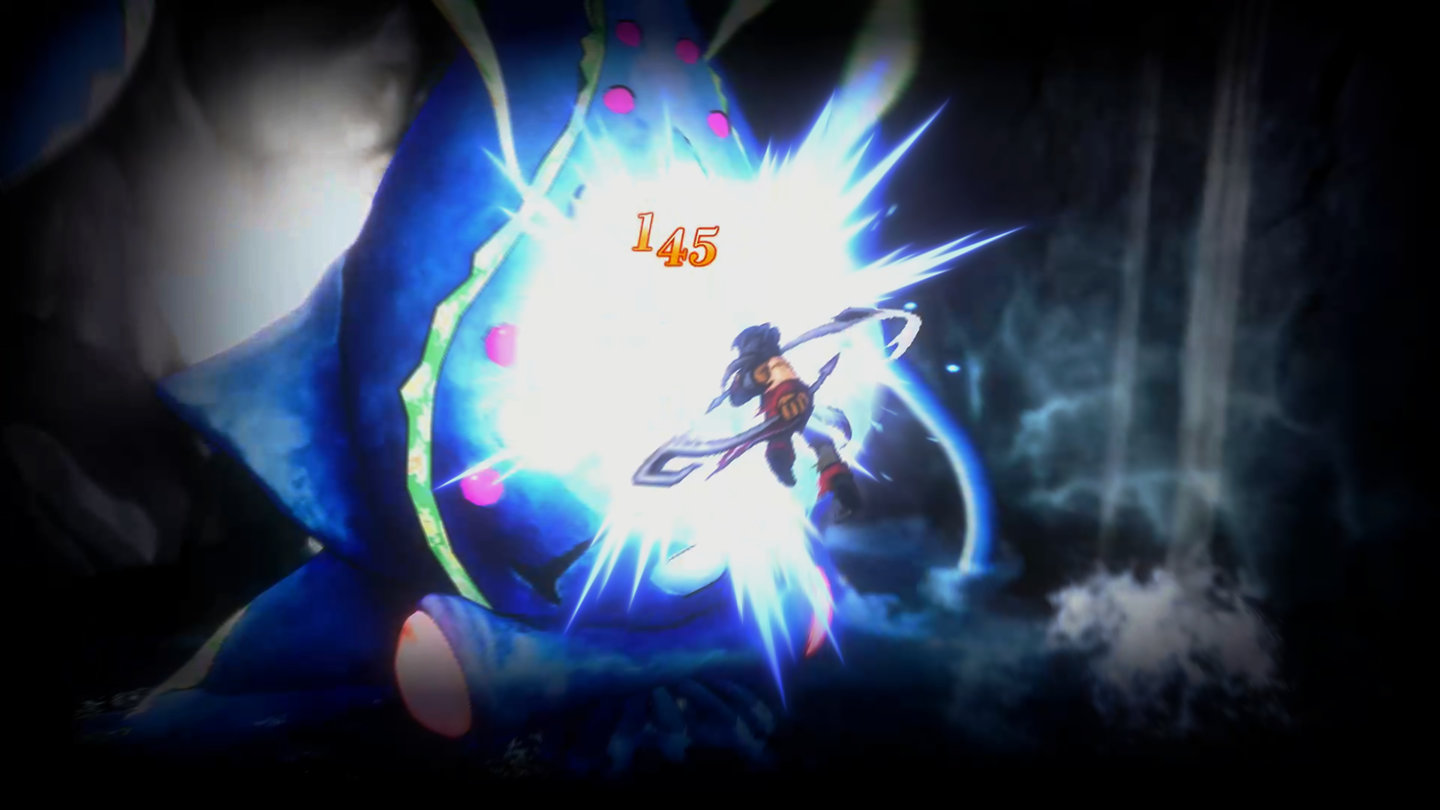
Murayama: We knew we wanted to use pixels to capture the detailed facial nuances and give depth to the emotions the characters show. However, we didn’t just want to make a retro game. We wanted to make something modern that stands out. So we looked into new lighting techniques, modern shaders, and reflections that can really add a new layer of depth to the backdrops. This also allowed us to add dynamic camerawork which is another element we really wanted to add from the beginning.

With the talent behind the creation of the world and the visual design already well-known, what kind of musical approach is Eiyuden Chronicle looking at? Are there some big names that you can potentially mention working on the musical scores?

Right now we can only talk about the composers we’ve already announced but we may be announcing others in the future. Please check the Kickstarter page.


This next one may be a bit hard to answer, but are there any plans or hopes to make Eiyuden Chronicle into a series down the road, or is the current focus to concentrate solely on this title and worry about what comes next after launch?

Murayama: We don’t want to put the cart before the horse so we first need to make sure Eiyuden Chronicle is the best game it can be but once I fall in love with a game world, I really like to expand the lore and history. By being able to control the IP through a successful Kickstarter, if Eiyuden Chronicle is financially successful as a game there really is nothing stopping us from doing sequels.

How's the team feeling now that the secret is out of the bag and public reception has been so positive about the news? I imagine it creates a lot of excitement, but pressure as well.

Murayama: Just really, really happy. Of course there have been a lot of people sending their requests and hopes for the game so we want to carefully consider those. This isn’t about the game I, Murayama, wants to make… It’s about the game I can make WITH the fans.

Last but not least, what have you and the team been playing lately? Often times what we play, watch or listen to most recently can have an influence on what we do next, so we are a bit curious as to what you're playing for fun.

Murayama: I watch a lot of US dramas. I really like Better Call Saul and The Good Place.

Komuta: I was playing Fire Emblem Three Houses. As far as foreign TV shows go, I Like IP Man, Game of Thrones, and Better Call Saul.

Kawano: I love watching movies at the movie theater and did so almost weekly. But with Corona, I have been stuck at home which has sucked. I really hope I can get back to watching movies at the movie theater again some day soon.

Murakami: I’ve been working a lot more from home due to the Covid-19 situation. I subscribe to multiple streaming services and I kind of just leave them running as a sort of background music. I’m watching a lot of Western TV shows. One of the more interesting concepts I’ve enjoyed was The Boys and I can’t wait for the next season. Another one that I tried out and found interesting was The Head.

Thank you all again so much for having taken the time to chat with us and we both wish you a successful Kickstarter and cannot wait to see more of Eiyuden Chronicle: Hundred Heroes!


Share:

Interview with Atemly Game's Paige Marincak, lead developer for Gataela, a Victorian Steampunk RPG


Chalgyr's Game Room's manager Pierre-Yves' interview of lead developer Paige Marincak for the Victorian Steampunk RPG Gataela.

Estimated reading time: 7 minutes


Hello everyone!

I recently had the chance to sit back down to another Sunday Bites edition with Gataela, a Victorian Steampunk RPG. For those that haven't been following our coverage, Gataela, a Victorian Steampunk RPG is an Indie RPG being developed out of Canada's National Capital Ottawa.

Want to know more about it? So did I and what better way to find out more about it than from the source? I couldn't think of one so here's what the lead developer of Atemly Games, Paige Marincak, had to say about their title!

Hi Paige, thank you for taking the time to chat with us. Getting the ball rolling, want to tell us a bit about your current project?

Gataela is a Victorian Steampunk RPG where saving the Kingdom requires more than just brains and brawn: you also need to talk to people! It features a debate battle system, where you talk, debate, convince and negotiate with NPCs in order to save the country.


So what got you into video game development and onto the path to creating Gataela?

Ever since I was old enough to pick up a controller I’ve always wanted to create games. I bounced around a lot about “what I wanted to do when I grew up” and I always somehow came back to it. While I was in university taking Com Sci, I was working on a Pokemon fan game. (It was very early days, I only had character movement!) My father suggested that maybe I make my own game instead, and - since tablets were popular/emerging at the time - to put it on the Playbook.

You've been working on Gataela for years now, was it always going to be a Victorian Steampunked inspired RPG? Or was there another direction that you originally thought of?

Oddly enough Gataela is still largely the same as when I first envisioned it almost 8 years ago now. It was always going to be Victorian Steampunk, and always going to have the debate battle system in it. I think the biggest changes have been narrative-based and general “feel” of the game, if that makes any sense. I was originally going to have a separate protagonist that was more like a joke character who becomes a protagonist by chance. Like a secret one. But tossed that out pretty early on. Another thing I changed was making the game feel much more “at your own pace” than any sense of immediate forbidding doom.


If I remember correctly from a post on Twitter from a few years back, Gataela is being developed through custom source code? Is there a reason you wanted to go in this direction instead of having part of the load in either a Game or RPG Maker? For the record, it looks great.

Thanks ☺ It’s quite often I hear that Gataela is using a custom engine of sorts. It’s probably because I was originally coding it in C++. I am currently using GameMaker Studio 2 for the engine. In the past – the time period you’re probably referencing – I was using Cocos2dx. It is quite common though to take an engine and build a layer on top for your own purposes and systems. So even with GameMaker I have that going on.

One of the things that I've probably enjoyed the most is that the dialog has feeling with words being visually exagerated on screen in almost an anime like fashion. Other that it obviously looking great, how did you get to that point instead of just the standard flow of words on a screen that most people will default to.

Gataela is a very text heavy game, and I don’t have the luxury of having voice actors, so there becomes the question of how do you express tone through dialogue and other verbal clues. You can put actions like sighing into asterisks (ex. *sigh*) but it just feels… very THERE. You don’t really feel like the character is sighing. I can tell you a character talks really fast, but you can also just see them doing that too. Likewise for talking slow. It’s a blessing of the medium that I have the ability to do that, unlike for printed media. As for the effects themselves, I took a lot of inspiration from Paper Mario TTYD.


Is there anything you've learnt over time that you wish you had known when you started?

Probably the importance of developer workflow & timing yourself. It’s something that I learn more and more about every day that your workflow as a creator is one of the most important things to being productive.

For example, very early on in Gataela I was working on the maps: I would design the maps in Photoshop, then cut them up and remake them in Tiled, which would be imported into the game. I would then have to manually add the objects in code. This whole process took about 8 hours, which doesn’t sound TOO bad when your maps are as large as mine. But then I multiplied that time by the number of large maps in the game: 960 hours. Not including time to rework maps, or more detailed ones or add NPCs and events. It wasn’t scalable. I was only able to figure this out by timing myself. Once I figured this out, I made a few simple changes and then it was taking 2 hours to add a map.

So learning how long it takes you to do something, figuring out if you can remove the tedious bits, and making it so you get faster to gameplay design and content adding than coming up with basic building blocks is very important! I’m glad it’s something I figured out earlier on in development.


Because working all day can get really long, what have you been doing on your downtime to relax?

Well, given I have a day job and come home to work on Gataela each night… working on Gataela is really what I do. But I also have a variety of projects - lots of game prototypes I work on for fun, a novel I’m writing, I play FF14 with my friends when I can, and in the summer I garden. Sometimes I read books, or manga, or watch anime but game development is my hobby right now.

Before getting to our last question, I've got to ask if only because now adays, about half the team is Canadian and live in or around Ottawa. How do you love the Bermuda Triangle of weather that can bring us from -40 Celcius to +2 within days before dumping 15-20cm of snow on our heads!

Any chance of this crazyness making its way into Gataela?

Haha it is quite an experience. I’ve lived in Ottawa for almost all my life and it’s really just something I’m used to now. Although, it would be nice if that fight or flight response while sliding on snow while driving didn’t occur as often as it does. I don’t think any of it will be making its way into Gataela, but who knows ;)


Finally, is there anything else you would want to share with us before we say goodbye? Like... maybe a possible release date? *smily face*

Maybe sometime in the near future! In the meantime, Gataela is available for wishlist on Steam, and we have a 3-5 hour demo available on Steam, Itch.io and Gamejolt!

We want to give a big thank you to Paige for taking the time to chat with us and we'll be back down the road with another look at Atemly Game's Victorian Steampunk RPG Gataela.

Have a great weekend everyone!

Where you can find the game:

Demo on Gamejolt

Demo on Itch.ic

Wishlist and Demo on Steam

Main Website


Share:

Critical's Josh Hallaran on 8-Bit Adventures and Tales Across Time - Interview


After recently taking a first look at 8-Bit Adventures 2, we had a chance to talk to Critical Games on what they've done up to now and where they plan to go.
----

Hi Joshua, thanks for taking the time to chat with us! To get this ball rolling, what made you jump into the wonderful world of video game development?

My pleasure – thanks for asking me to chat! I’ve actually wanted to be a video game developer since I was about 5 or 6 years old, thanks to games like Mario 64 and Zelda Ocarina of Time. I specifically remember running around the lobby of Peach’s Castle for the hundredth time, and suddenly noticing that the walls were decorated with painted on clouds (from the original Super Mario Bros.). I asked my Mum who’d painted them there, and she said it would’ve been the people who made the game. That was the first time I realised that there are people who actually *create* video games as a job – and that’s what I’ve wanted to do ever since! Nowadays, though, my motivation is pretty simple: I want to make people happy, and create games that connect with them in the same way that so many classic games have connected with me.

The original 8-Bit Adventures was just about as retro at it gets. How hard did you find it to keep to that style?

As I imagine Jerram (artist on 8-Bit Adventures 2) or any other pixel artist would tell you, I did a pretty abysmal job of keeping to the 8-bit style in the first game haha. Originally, I did all of the artwork for that game – and I’m not an artist, so it looked pretty terrible. I didn’t have much money, but I was able to hire Jerram to create new character sprites for all of the various people in the game. I also found a lot of free-to-use assets with an 8-bit aesthetic. However to make those assets fit appropriately into the game, I often needed to manipulate their sizes, which gives a lot of objects completely different line widths. And even after all of that, there was still plenty of my own artwork in the game, such as the monsters and several tiles (although I did my best to improve them).

So my biggest regret with 8-Bit Adventures 1 is the visual presentation. However, the fact that you’ve asked that question means that it at least evoked the spirit of classic 8-Bit games, and that was ultimately what I was trying to convey...so thank you! And we did get some things right – I used the NES colour palette on all assets, and all of the music and sound effects were NES-accurate!

With 8-Bit Adventures 2, we were really inspired by Shovel Knight’s approach – which captures the spirit of NES games, but isn’t bound by all of their limitations. So we’ve taken a much more accurate approach this time, and there are set rules I try to follow (regarding colour palette, pixel alignment, transparency, etc.). Although it sometimes requires a lot of extra work to stay within those rules – more than I would’ve thought, actually!

On the subject of your original title, what spawned the idea of the pure RGB? Not only did you visually style everything with those three colours but also designed the combat elements around it.

Funnily enough, 8-Bit Adventures 1 didn’t originate as an 8-bit game – or even necessarily an RPG! I was thinking about a concept for a game where all colour was drained from the world, and the player had to restore it. While it started off with a weird Mario 64-style structure (a hub world had lost its colour, and you’d restore it over time by travelling to different colour-themed levels via ‘doorways’), I thought a lot about how to make the colour restoration effect happen, and reasoned that a more limited colour palette would help with that. So I ended up deciding to use the NES colour palette, and from there came the decision to make an 8-bit game. I’d been playing several NES RPGs around that time, and given my familiarity with that genre, I decided it was the way to go. Of course, restoring colour is only a small part of the final game (mainly because I didn’t think the black and white looked very good haha). But it ended up having a massive effect on the combat, as you said; forming a very Pokemon-esque element system that was (relatively) easy to remember and prevented the player from button mashing their way through every encounter. Which was *mostly* a positive thing!

While I was very happy with the direction and style that you took with your second title Tales Across Time, what made you go that direction instead of a sequel to 8-Bit Adventures?

Well, thank you! 8-Bit Adventures 2 was actually already in pre-production before I even considered making Tales Across Time. I wanted 8-Bit Adventures 2 to be a much bigger and better game than its predecessor. However, it takes time to build up a pool of assets near the start of development (and we were still finding our ‘look’), so while Jerram was working on some graphics, I decided to use this time as constructively as I could. Tales Across Time was made because 1) a palette cleanser is always good when you’re working in a creative medium and 2) I needed more money to fund 8-Bit Adventures 2. At the time, there was an indie game competition being held, where you had to make a game in a month. So Tales Across Time was my entry - developed in just under 4 weeks. In fact, the entire 2nd and 3rd chapters of that original version were only made in the last 4 days of development! While it didn’t win the prize money, I thought the concept of designing a game as a series of short stories was a worthwhile idea, so I took the foundation and built upon it for several months leading up to the final release.

Tales Across Time was well paced but "unfortunately short", my words in the review as I wanted more with it clocking in at three-ish hours. That said, any longer than that and the experience would not have been what it was. How hard was it to write three individual "non-connected" stories that systematically built upon one another?

That was honestly the hardest thing about it. You have very little time to introduce, develop, and conclude your characters (especially when you add gameplay into the mix), and that means you have to make several concessions in your writing of those characters – which is the most common criticism I’ve seen of the game. I tried to incorporate the traditional RPG cycle of ‘Town > Dungeon > Town’, so that provided a semblance of structure for the story as a ‘game’. But I knew that, in addition to the individual characters’ stories, I needed some sort of side-narrative which could tie all of the eras together and give the player a pay-off in the end – rather than just concluding each story separately. So once I figured that out, it helped a lot of things fall into place.

Just in general, the animated series Samurai Jack was a big inspiration for that game, because it is excellent at telling very stand-alone, separate stories in a very stylistic way, and in a very short amount of time – while also having a central narrative thread through the protagonist and his mission. While I couldn’t do much in the way of subtle facial expressions or unusual camera angles, it teaches some universal lessons about framing, timing, using music, building tension, and choreographing action. The battles and action scenes were very heavily inspired by it (for example, the silhouette battle in the desert at the end of the first story).

When you reached out to us about 8-Bit Adventures 2 I remember telling you that I had been wondering when we would be seeing something new. How long has your sequel been in the works? Had this always been the plan or did you think of something else first?

Yes, I’m sorry it’s taken so long! 8-Bit Adventures 2 started pre-production a couple of months after 8-Bit Adventures 1 released on Steam – so probably around May 2015. I already had a basic concept before the first game’s release, but I never thought I’d get to use it. However, the positive response I got after releasing the game really made me think it could be worth pursuing. So I turned that basic concept into a full outline for the game (story ideas, environments, character progressions, new characters, the new battle system, etc.) and did some early tests using assets from the first game. Then I contacted Jerram Fahey about doing the artwork, Carfonu about returning to compose a new soundtrack, and programmer Doctor “ibolt” Dhoom about bringing the battle system to life. As I said, I then spent several months on Tales Across Time, but since May 2016, I’ve been working full time on 8-Bit Adventures 2.

Like most developers, I have ideas all the time – most of which sound really good on paper, but don’t pan out when you start thinking about them haha. One of my pie-in-the-sky ideas while working on 8-Bit Adventures 1 was to work on a Doctor Who RPG – because that series hasn’t had much success with video games, and I think there’s a lot of potential there. It’s very unlikely, but maybe one day!

Is there anything you've learnt over time that you wish you had known when you started?

Uh, can I say “everything”? Because pretty much everything haha. I suppose I wish I’d been a bit less naïve at the start about what I had the ability to make. I was too ambitious, and that lead to a lot of unfinished projects early on. I also wish I’d focused on what I was good at. The first commercial game I released was a fairly standard RPG with a few interesting ideas called Path of Thanatos, and the audience to which I released it were very positive. However, from there, I tried to go in a fairly different direction, and when that failed I attempted to make phone games for a couple of years – one of which was successful in terms of download numbers, it just didn’t make any money. So I wish that I’d buckled down and focused on the RPG niche earlier than I did, rather than taking a scatter shot approach. However, I did learn a *lot* about making games in that time, and ultimately that experience paid off in 8-Bit Adventures 1 and Tales Across Time.

So my general advice to new indie developers would be to keep your expectations and ideas in check. And when you find your strengths, keep developing them, rather than trying to expand too early in your career. Facing an unsuccessful project is tough, but the experience and understanding you gained from creating it is always worthwhile.

Because you can't be working on your project all the time, what do you like to do in your off time?

Heh, I’m not always so good at this part. I do often play video games - particularly a lot of RPGs (surprise, surprise). Beyond that, I try to keep up with various movies and TV shows, I enjoy video editing and sometimes make Youtube videos (I have a collection of retro games, so I’ve done a lot of content based on that), I read, do a bit of exercise, and do all the usual stuff with friends and family. Nothing too exciting, but it all keeps me sane when working on a long-term project like this haha.

Finally to wrap this up, is there anything in particular that you've enjoyed playing lately?

Absolutely! I’m a bit behind on releases, but Zelda Breath of the Wild was utterly amazing. And Persona 5 – that game singlehandedly restored my faith in the JRPG genre on console, for the first time since Dragon Quest VIII on PS2! And not only was it excellent mechanically and in terms of its characters; Persona 5’s ability to tackle very dark, mature topics while remaining such a bright and hopeful game was incredibly impressive to me. The ending honestly left me feeling uplifted, like ‘Yeah, I can make a difference in the world too!’ and I think that message has a lot of value – at any time, but especially at the moment. So I highly recommend it to everyone =)

Thank you for taking the time to chat with us and we look forward to seeing the release of 8-Bit Adventures 2 early next year!

Thank you so much! I’m doing my best to get it finished ASAP. And if anyone would like to try the game early, there’s currently a First Look demo available on Steam or DRM-free at: www.8bitadventures2.com
Share:

Brightrock Games' Managing Director Josh Bishop on War for the Overworld - Interview

The WFTO Team & Volunteers with Richard Ridings at EGX 2013The WFTO Team & Volunteers with Richard Ridings at EGX 2013

We recently had the chance to sit down to both War for the Overworld and the new Survival Mode content known as the Crucible. Curious on how things came to be we reached out to Brightrock Games to see what they had to say about their adventure and this is what the Managing Director Josh Bishop had to say!

1- Thanks you for taking the time to answer our questions. Starting at the beginning, what made you set out to develop War for the Overworld?

There were a couple of things that set us on the path to developing WFTO, but if I had to narrow it down I'd say that for over a decade the industry hadn't delivered a great Dungeon Management Game. There was a huge hole in the market and an eager fanbase waiting for something to come along and fill that gap.

Although there were a few games out there which had tried to fill the void, none of them seemed to have captured the core gameplay that made that type of game so much fun. As huge fans of the genre and games such as Dungeon Keeper and Evil Genius we were tired of waiting. We decided it was time to do something ourselves so we came together on a fan forum called Keeper Klan and the rest is history.


2- With the direction of the core game / Heart of Gold what prompted the move to a pure Tower Defense style for the Crucible?

The very first iteration of what became the Crucible was released in Patch 0.4 under the name "Stumpy's challenge", a reference to our Blood Imp mascot. It was a simple mode primarily developed to refine the capabilities of our custom scripting engine. We were surprised when the mode became very popular within the community.

Later that year we took the game to the Eurogamer Expo 2013 (now called EGX) in London and we decided to issue a challenge: anyone who could beat our high score would win a T-shirt. It was tough, we were asking people with little to no experience of the game to try and beat us at our own game. Amazingly everyone loved it! We even had people coming back every day of the four day event just to try, and we had to cycle people off our four PCs lest they hog them for hours.

I remember in particular this one guy came by each day and on the last day at the final hour he beat the score and set an all-time record! We were all yelling and pointing at the screen to get him those last few points with some choice lightning casts! With that energy circulating about the mode we knew we were onto a winner.

It's been a long road but we always intended to return to the mode, and we're glad to have built something that feels as tight as Crucible does. But if you feel like playing a bit of history we even left the old prototype in the Extras menu!


3- Between the original's development, Kickstarter, and the Crucible, is there anything you wish that you would have done differently knowing what you know now?

Definitely, that's the thing about game development you always feel like you could have done more when you get to the end. But WFTO has this more than other games. It was a behemoth undertaking at the time and we didn't really appreciate the complexity of what we were setting out to do - it was a risky endeavour for a small team with everyone spread across the world.

There was a lot on the line with WFTO and we had so little in the way of resources and time, especially after some early development disasters. There was a great pressure with the ever-present spectre of financial bankruptcy pressing down on us, even without the overhead of an office.

In a way early development was a lot like a game jam - we had to experiment a lot, quickly correct mistakes and hack a lot of stuff together to get it to work in time. We incurred a lot of technical debt that makes some parts of WFTO tricky to edit, even to this day.

If we could do it all again with the resources, knowledge and experience we have now and all the team in the same building, WFTO would be a totally different beast. There's so much we'd love to tidy up from the original development - in particular developing a more cohesive art direction, and injecting more personality into the dungeon and its denizens. We'd also probably shift to a slightly slower-paced, more simulation-focussed game design.

But with all that said we're proud of what we achieved and we're pleased with how WFTO turned out and how it continues to evolve. More than anything we're proud we've delivered a game that so many fans of this lost genre are satisfied with. That's been our goal all along: to create a game for the fans, by the fans.


4- With both sets of content now behind you, what are your plans for the future? Can we expect new content and games modes or did you think of trying your hands at something new?

There's so much going on it's difficult to know where to begin. In November we made a statement on our plans for the future and the endgame for WFTO, but things have changed a little since then.

Originally we were planning to release one more major update early this year with a whole suite of changes - in particular a complete AI overhaul for Skirmish that would release alongside WFTO's second paid expansion (new campaign, new mechanics and much more). But since the incredible success of Crucible, plans have changed. We're now expanding the scope of the original plan with extra content throughout the year.

I can't speak on what exactly is coming beyond what's already announced, but the expansion will be releasing a little further down the line than originally planned. In its place we'll be releasing a whole new and oft-requested game mode in the first half of this year. Beyond that there's even more exciting stuff in the pipeline that I just wish I could share, but I promise as soon as we're confident in it we'll be sharing news.

We're also looking beyond WFTO itself. Our next game, codenamed "Project Aftercare", has been in pre-production for nearly a year now and it's really shaping up to be something exciting, although full-time development is not likely to begin while we're working on WFTO. So far we have designed a new software architecture, as well as developed the lore, art direction and overall game design. Honestly we're really excited for it and can't wait to start sharing details with our community.


5- A little less about what you've done and more about what you like to do, what does the team like to do for fun? I'm pretty sure, and I hope, that the bosses are not like the overlords causing you to constantly work!

We've got a pretty diverse set of hobbies over here, even amongst a team of only nine people. Obviously there's the video games, and in particular a few of us spend a lot of time with the Blizzard titles. We also host board game nights at our office a few nights a month for all members of the Brighton indie game community.

Our Community Manager runs a fortnightly D&D session for the team and friends - with a party of eight it gets pretty hectic but it's always great fun, though nothing ever seems to go according to plan for us. You would have thought that a bunch of game developers would be good at something like this, but after our Art Director eviscerated my character, it seems we evidently are not. He says the axe slipped - I'm not so sure.

Recently some of the team have taken up weekly badminton sessions too - who says gamers can't do sports? ;)


6- Finally, because I need to know, how much fun was it writing the dialog for the narrator? More than that, how long did it take you to convince the man behind the voice to do it?

Working with Richard Ridings is an absolute pleasure - he's as much a personality in real life as he is when he steps into the disembodied narrator's shoes (but a bit less evil). In fact he's one of the nicest chaps we've met on our long journey with WFTO. When he walks into a room you take notice, and his voice is even more incredible in person. In a way it's also very surreal - for many of us on the team Richard's voice is counted amongst our fondest childhood memories. So you could say it really is a dream come true.

Richard was on board with the project from the early days, and we can't thank him enough - his voice has really taken the game to the next level and brought back that special Dungeon Keeper feeling. He even joined us at EGX 2013 to check out the game for himself!

From our writer:
Scripting lines for Richard's character is as much fun as you can imagine. Writing comedy is liberating at the best of times - even more so when you're dealing with someone so despicably malevolent. I'm sure Richard feels just as liberated when he steps into the booth to bellow out the lines!

----

I and the rest of the team at Chalgyr's Game Room would like to thank both Josh Bishop and the rest of the team at Brightrock Games for taking the time to answer our questions. Good luck in the future guys!

Article by Pierre-Yves
Share:

Fatshark CEO Martin Wahlund talks Warhammer: End Times - Vermintide - Interview


We were huge fans of Warhammer: End Times - Vermintide here at Chalgyr's Game Room, with a score of 8/10 and multiple Play Time videos as well. We had a chance to ask Martin Wahlund, CEO of Fatshark, some questions that had been on our mind since playing the game.

Share:

The evolution of Secrets of Grindea - Interview

We recently had a chance to talk with Vilya Svensson from Pixel Ferrets about their Early Access title, Secrets of Grindea. Recently Pierre-Yves had a chance to preview and write up an article about the game for our Better With a Partner series, and he thoroughly enjoyed the experience. Now we get a chance to discuss how Secrets of Grindea has evolved since its inception back in 2011. Vilya is the artist behind the backgrounds, UI, character portraits and more. For our last question, we are also briefly joined by the other two members of the team: Teddy Sjöström - developer, and Fred Ström - animator and creator of the character sprites.


Share:

Night Light Interactive discusses bringing Whispering Willows to Consoles - Interview

With the recent news that Whispering Willows would be coming out for more platforms than its initial PC-only release, we were excited for an opportunity to chat about the title. Here at Chalgyr's Game Room, we were big fans of this game when it first came out, scoring it a 9 out of 10. Today we are joined by David Logan of Night Light Interactive and Ralph Egas of Abstraction Games as they field some of our questions.


Share:

Matt Sainsbury discusses his upcoming book Game Art - Interview

Almost a year ago at this time, Matt Sainsbury began a Kickstarter to see a book to life that discusses the medium of video games and how it should be perceived as art. While the Kickstarter did not hit its goal at the time, the material was of interest enough that it was picked up by publisher No Starch and now pre-orders for the book are available. With interviews from Akihiro Suzuki (Dynasty Warriors), Naoki Yoshida (Final Fantasy XIV: A Realm Reborn), Mike Laidlaw (Dragon Age and Mass Effect), Guillaume Provost (Contrast), Goichi Suda (Lollipop Chainsaw), Jean-Francois Poirer (Child of Light) and more - the book boasts an impressive number of contributors from a variety of backgrounds.

Game Art is a collection of interviews with developers, producers and directors that are set against beautiful concept art while discussing the effort that went into bringing these game ideas to life. Matt is an Australian art and game critic who has been writing about the industry for over fifteen years now, with his work appearing in publications such as PC Game Zone, GamePro, PC World and Official PlayStation 2 Magazine. I had an opportunity to chat with Matt and ask him several questions about the book itself, lessons learned in getting it published and his outlook on the coming year.


Share:

Lee Bamber of The Game Creators - Interview

Video games are an amazing form of entertainment, because they let us interact with the stores and environments as opposed to the passive roles we assume with other media such as music, movies or books. Many of us have heard a song and wanted to hum something new, or read a book and jotted down a bit of fan fiction or watched a movie as a kid and acted out a variation of our favorite scenes. Game creation tools have that same sort of draw, giving gamers a chance to create what would otherwise be locked away on in their imaginations. This is the premise behind FPS Creator Reloaded.


Share:

MechRunner - Interview

What do you get when you mix the mechanics of a runner game, giant mechs, the studio that is so comfortable that it is making a Firefly MMO and one of the artists who worked on blockbuster movies such as Transformers, The Wolverine, Iron Man and More? You get MechRunner. We were fortunate enough to talk with Ben Lichius, who is the VP and Art Director of Spark Plug Games. We were also joined by John O'niell, President of Spark Plug Games.


Share:

Sagi Koren of SpikySnail Games - Interview

When The Splatters first came out, I was fortunate enough to get to play it right off of the bat. I enjoy a good puzzle game, and this physics-based title is one of the best I have played to date.


Share:

Adam Dixon and the upcoming Magic 2014 - Interview

We got a great reaction from our article with upcoming information about both Magic 2014 - Duels of the Planeswalkers as well as what we shared out about the actual 2014 core card game release. I have to say that the more I hear about the upcoming game, the more excited I get.


Share:

Random posts

Our Streamers

Susan "Jagtress" N.


S.M. Carrière

Aldren


Affiliates

JenEricDesigns – Coffee that ships to the US and Canada

JenEricDesigns – Coffee that ships to the US and Canada
Light, Medium and Dark Roast Coffee available.

Blog Archive

Labels