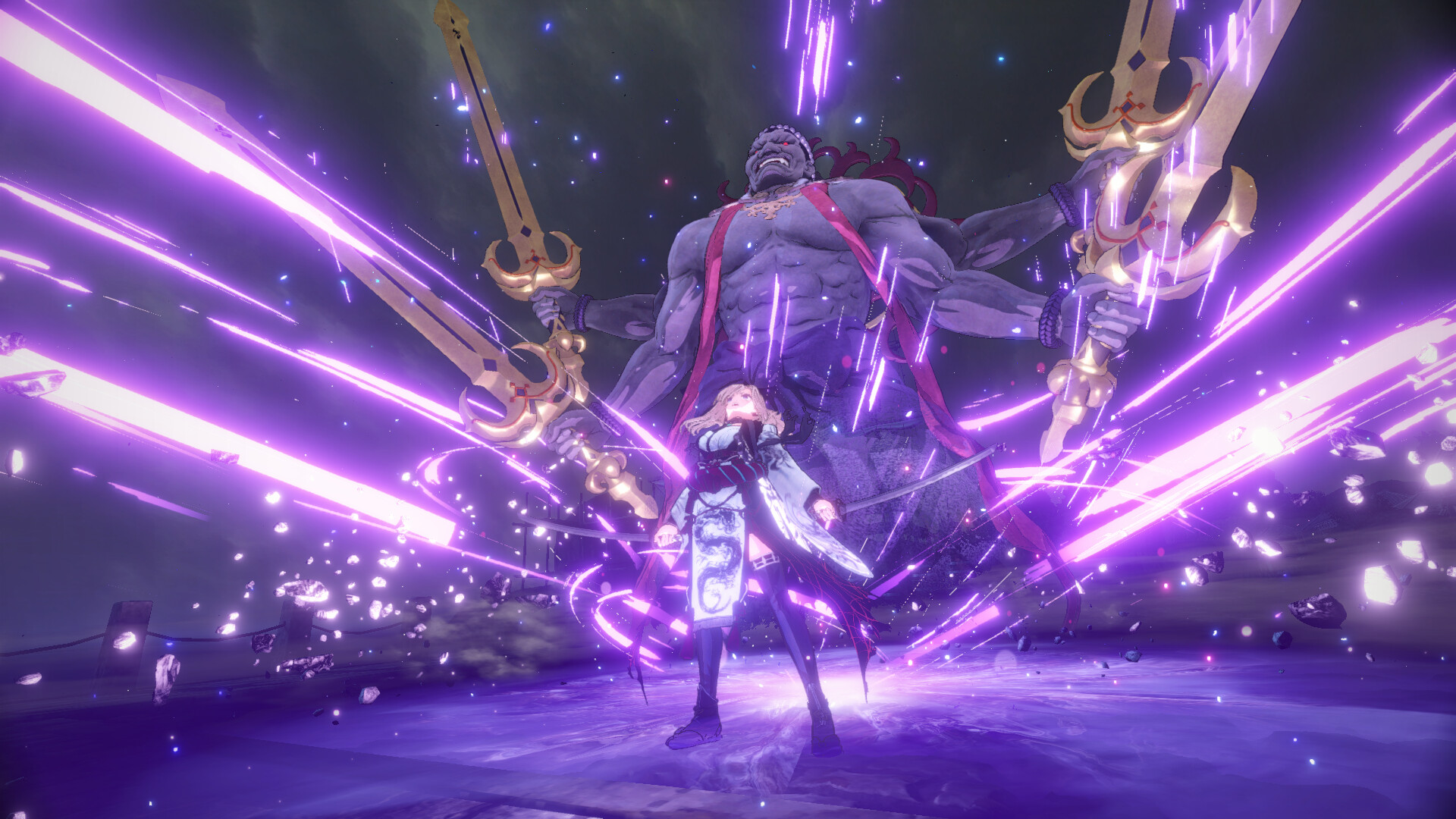
Dynasty Warriors: Origins - Visions of Four Heroes by developer Omega Force and publisher Koei Tecmo America—Sony PlayStation 5 review written by Nick with a copy provided by the publisher. #DynastyWarriorsOrigins #VisionsofFourHeroes
Estimated reading time: 5 minutes
Dynasty Warriors: Origins - Visions of Four Heroes - PS5 Review
Warriors: Abyss - One Year Later - Gaming Thoughts
WARRIORS: Abyss by developer Omega Force and publisher Koei Tecmo America—Sony PlayStation 5 feature written by Pierre-Yves with a copy originally provided by the publisher.
Estimated Reading Time: 4 minutes
Dynasty Warriors: Origins - Switch 2 Review
Dynasty Warriors: Origins by developer Omega Force and publisher Koei Tecmo America—Nintendo Switch 2 review written by Pierre-Yves with a copy provided by the publisher. #DynastyWarriors
Estimated Reading Time: 5 minutes.
Warriors: Abyss - PS5 Review
WARRIORS: Abyss by developer Omega Force and publisher Koei Tecmo America—Sony PlayStation 5 review written by Pierre-Yves with a copy provided by the publisher.
Estimated Reading Time: 5 minutes
I've been playing the Warriors series for a long time and I've seen some wonderful twists and turns over the years. From Dynasty Warriors to Samurai Warriors, Warriors Orochi, Berserk, Arslan and Allstars, I never thought it would go roguelike. This is definitely not your parent’s musou but they should love it!
Unlike
the rest of the warriors titles with grand overarching story lines, Abyss is
rather simple in scope. You have to fight through four layers of hell, each
with eight phases. The final phase of each layer is a boss. Fail at any point,
and that's game over. Start again.
This flow is easy to get into, which is great, because while you do start every run at level 1, those Karma Embers allow you to unlock new characters and permanent bonuses. This 2 in 1 deal makes going through the character unlock list potentially harder than it should be. On one hand, you can unlock your favorite characters to try out. On the other, a character you may not want may give you that stat boost that you've been needing. Decisions, decisions, decisions.
The
gameplay is familiar but at the same time it is not. Set in a top down
isometric view, you'll be moving and dodging your character along while
performing those square, square, triangle, triangle, triangle combos. What's
super neat about these is that it's not just pulling off a combo, but pulling
off a combo AND summoning in some help from your available support characters
to get the job done.
For
those that have played both Dynasty and Samurai series, characters from both
play as they would in their respective entries. Dynasty Warriors for example
use the Square button as the main focus of their attacks and the Triangle to
prompt something special. Samurai Warriors on the other hand use both and can
sail through the crowd of enemies if the Triangle button is used first. This
potentially small detail allows for fans of either series, or both, to find
familiar footing in an unfamiliar setting.
How far you make it through the layers of hell will depend on a few things. Skill certainly helps, but luck will be a huge factor and determine whether you have a great run through hell, or a horrible one. It all comes down to the paths you choose through the Abyss will make or break you. Are you trying to simply gather as much karma as possible? Or are you trying to make it all the way through to the final boss and win?
While that is a choice you'll need to make, it also won't be your only choice. As mentioned above, each phase will yield a reward, but so will completing each layer. Completing layers will grant you a choice of relics. Relics can be epic, but also double edge swords making you have to really evaluate your choices. And if that wasn't enough on its own? You'll also have to worry about the memories of the dead.
This last twist is perhaps the most interesting. Often these choices come with chances of good, bad, or nothing happening. Seventy percent chance of getting a stat boost or a thirty percent chance of losing maximum health. Maximum. Health. Not something you really want to risk but sometimes even that is the least of your worries. Other choices could be something as awesome as a permanent boost, but, for that one phase you'll lose 1% of maximum health for every dodge you perform. And believe me, if you want to stay alive you NEED to dodge.
This new, what I hope becomes its own series, isn't without its flaws. I would never begrudge the introduction stages as you learn the ropes, that's what they are for. What I do begrudge is that every powerful enemy, unit leader, mid boss types or main boss types, have barriers that are often simply obnoxious. Some characters simply, even with great upgrades, don't have enough power to both knock out the barrier and do great amounts of damage while the barrier is down.
This one factor haunted me for a while until I found certain characters that could shatter these barriers. Some could do more than that, they could shatter these barriers AND destroy the boss in one go. I won't lie, I laughed maniacally. But these characters were far between with the size of the roster. So there is a need to find a balance as these barriers were a bit ridiculous and one thing I would like to see softened, or modified, in the future.
All in all? WARRIORS: Abyss was loads of fun and had me playing for hours at a time and thinking it had only been a couple minutes with how quickly the phases go by. There is a solid gameplay loop and I really hope to see more of this style!
Score: 8 / 10
Dynasty Warriors: Origins - Xbox Review
Dynasty Warriors: Origins by developer Omega Force and publisher Koei Tecmo Games—Microsoft Xbox Series X Review written by Nick with a copy provided by the publisher.
Reading time: 8 minutes
Fate/Samurai Remnant Review
Fate/Samurai Remnant by developer Omega Force and publisher KoeiTecmo Games—Sony PlayStation 5 review written by Nick with a copy provided by the publisher.
Estimated reading time: 4 minutes
If you are a veteran of the Holy Grail War that is the primary plot point throughout the Fate series, Fate/Samurai Remnant should feel familiar. Even if you are not acquainted with the prior games, anime and manga, Fate/Samurai Remnant is a pretty approachable action-RPG that I found quite difficult to put down.
I’ve long been a fan of Fate – my son introduced me to the anime years ago and I’ve sunk many (maybe hundreds?) of hours into the various video game titles such as Fate/Extella Link. Fate/Samurai Remnant is the latest gaming release, with a very different setting from some of the prior titles, which had a much more contemporary or futuristic feeling. Instead we wind up in Japan during the 17th century. There is a lot going on with the story, especially if you’re relatively new to the concept of Masters and their summoned Servants. Our protagonist is Miyamoto Iori.
Thankfully the world-building is pretty solid here. It can be rather lengthy with its exposition dropped on players in large chunks initially, but if you’re invested in the protagonist and their story (which I very much was), it’s a worthwhile investment. This does give the early proceedings an almost visual novel-like feel to it because there is just so much text being dumped on the screen, but it’s well localized and it helps that the cutscenes are very well animated, doing the anime proud.
Really, in general the graphics are pretty enjoyable. The visuals are vibrant and colorful, and the animations are enjoyable and run at a smooth 60fps without any notable drops despite oodles of enemies filling the rooms at times. I especially enjoy many of the over-the-top super attacks that take the scene over when they occur. The music was not what I’d refer to as memorable, but certainly fitting for the game and generally enjoyable.
The Fate/Extella titles had a very sci-fi feel to them that was often rather cold to me. They were fun games, but I didn’t particularly love the settings. False virtual realities and people who might-not-be-actual people made it just a bit harder to develop warm and fuzzy feelings for. The much more authentic feeling of Japan and the characters encountered within the story of Fate/Samurai Remnant resonated considerably better for me.
Once you get through the initial text-heavy beginning, Fate/Samurai Remnant quickly reveals itself as a musuo style action game littered with RPG elements that fans of the Dynasty / Samurai Warriors games should feel quite familiar with. For those who have not played those titles, the basic structure is to have your character moving about the environment, taking on literally hundreds or thousands of easy-to-kill enemies in a one-against-many formula that culminates in bigger battles against much more capable Servants similar to your own.
It's an interesting combination of button-mashing action and the need to explore and power up for the more strategic boss battles. It’s an interesting, layered approach to combat that starts off feeling quite simple but allows enough nuance to keep what would otherwise be really repetitive battles feeling interesting as the stage progresses. Especially when so many of the stages also bake in objectives for you to try and reach within the stages. Another aspect that is worth calling out is that the enemy variety is better than prior games, and that helped to keep me on my toes as I progressed further into the story. I do, however, wish the camera was a bit less obtrusive. In an effort to try and frame areas in a specific way, the camera often gets fixed in such a way that it creates blind spots that had a way of annoying me at the worst of times.
Outside of combat, there is a combination of narrative and an experience system that dangles some nice character progression. There’s a skill tree that you can unlock nodes within as well as customizing your blade along the way. There’s even a sort of tactical game overlaying all of this regarding leylines that adds a bit of a tactical element to everything. Interacting with characters and animals between stages makes your efforts feel more meaningful within the context of the storyline.
Fate/Samurai Remnant is the best game in the series that I have played, full stop. It’s got a familiar combat system with more layers than one would expect for combat that is so accessible. Quests, characters and settings are the best I’ve seen in this series as well, making me well-invested in the story and the people populating it. Like many of these ‘Warriors-style’ games, there’s a fair amount of repetition to be had during stretches of gameplay, but credit to the developers for creating enough enemy varieties, systems for progression and quests to keep things enjoyable along the way.
Score: 8.5 / 10
Touken Ranbu Warriors Review
Touken Ranbu Warriors by developer Omega Force and publisher Koei Tecmo America—Nintendo Switch review written by Pierre-Yves with a copy provided by the publisher.
Estimated reading time: 7 minutes
In the latest adaptation to a Musou (Warriors) style, Omega Force and Koei Tecmo Games / America have brought us perhaps one of the prettiest ones yet. Based on a source material that I was unfamiliar with, Touken Ranbu -ONLINE-, it didn’t take long in order to get up to speed with what was going on. Based sometime in the future within the year 2205, those known as the Touken Danshi will travel back in time to the Sengoku Period of Japan to prevent those known as the History Revisionists from changing the past.
From a narrative standpoint, whether you know the source material or not, if you know any general Japanese history, or if you’ve played the Samurai Warriors series which embellishes history quite a bit in a fun way, you should be fine. Starting near what would be the end of Oda Nobunaga's life, the Touken Doushi will have to take to the field to protect and restore “the real” timeline by first ensuring that nothing abnormal happens to Toyotomi Hideyoshi on his campaigns both before and after the passing of Oda Nobunaga.
This premise is an interesting one as it takes from what we've seen several times over from
● Samurai Warriors 1-3,
● Spirit of Sanada and
and throws a twist on it. Instead of being a historical figure, you’re instead taking the role of outsiders trying to fix the historical timeline while also trying to remain unnoticed. It was a nice change of pace on the source material. With plenty of dialog both before, during and after each stage, there's enough material outside the combat to appease both those wanting more, and those that are here for the latest Musou.
The general concept of a Musou is an easy one. There's one of you, and there are hundreds to thousands of enemies with sprinkles of tougher leader type units around various corners. Generally set in a 1v1000 format, Touken Ranbu Warriors is more of a 1v100 keeping the scale smaller both for combat and stages generally allowing you to finish a stage in anywhere from 45 seconds to 5 minutes. While I do prefer my 10-25 minute stages, it works well enough as there are a lot of elements present that are designed to make it more accessible to new players.
From the very beginning, you are asked if you want to use the simplified control scheme that will take care of most of the actions, or a more normal control scheme if you’re used to the style. Even here though, the actions have been kept simple as while you can press “Y” to simply attack and “X” to unleash a move, you can at all times use the Right Shoulder and the appropriate button to launch that more special move, at no cost, making things that much easier overall. Adding in that you are asked if you want to play on Easy instead of at least Normal, Touken Ranbu Warriors I would almost suggest playing on Hard for a more normal Musou experience.
This isn’t a bad thing, even for a long time fan of the style, it’s just that it makes for a much more relaxing experience than the crazy or hectic “how the hell am I going to pull this off” of Berserk and the Band of the Hawk, Arslan: The Warriors of Legend or Warriors All-Stars for example. Would I have preferred longer stages than being done in 45 seconds? I would have, definitely, but the pacing often feels on point and follows through. There are plenty of other features such as “duels” in which you have to mash “Y” against more powerful foes and damage in which your character will both appear to have been hurt as well as allow for faster charging to their personal special attacks.
What doesn’t exactly follow through though are the amount of load screens between everything that could be the result of the aging Nintendo Switch hardware. Starting from the beginning of one mission, you’ll get:
● a load screen to go into the battle setup
● a load screen to go into a mission
● a results screen for the mission
● a dialog session post mission
● a load screen for the Honmaru (home base) menu
● a results screen for the Honmaru which differs from the mission
That’s a lot of load screens and result screens. While they are at all times pretty to look at, when you’re only fighting for 1-5 minutes tops, that’s a lot to ask someone to have to sit through. This is especially the case with the load screen to go back in time from 2205 to the 1500s, and then the reserse. It really wasn’t needed from a player’s perspective. This would perhaps be my major complaint, too many results and load screens to go through.
Otherwise, the rest of the interfaces are pretty easy and smooth to go through. Once out of a mission where you’ve been running around mowing down enemies, you’ll be returned to the Honmaru in order to both train and gear up for the next mission. While your characters will constantly level up, they’ll only really get more powerful if you unlock new abilities. These abilities are in the form of special combo, power or launch moves. On top of these, you'll also be able to unlock bonuses to your number of attacks, hit points, and a character's attack or defense power. To do these, you’ll need one or more currencies to unlock a set of nodes in a 3x3 grid. Once a grid is complete, you’ll move onto the next node to unlock even more.
A side bonus to this is your characters take to the field together where you’ll be able to unlock bonding conversations, or episodes. These episodes will showcase a special scene between those involved and deepen their bonds together which in turn also helps out on the field for the last special gauge that can be filled, the Soutu Mode. This final combat mode allows for you to use both your chosen character and their partner in tandem to mow down everyone in sight. Generally this should be used against tougher foes but with how the stages are set, use it whenever you can as there is no downside!
Finally, while in the Honmaru, there are minigames available for those that you station within the various nodes. These nodes will gain experience in the final loading screen after a mission making it very easy to keep all of your characters relatively up to date when specifically having to use others. This was a feature that I greatly enjoyed as too often unused characters will get left behind and making the catch up can be a chore or even a slog. Back to the minigames though, these are short and sweet games that can earn you more currency by making Onigiri, pouring tea, picking up items in the garden or matching poses of Konnosuke who’s an adorable looking fox and the Touken Doushi’s advisor.
On a different note to the above, Touken Ranbu Warriors is both really pretty to look at, and I do mean REALLY pretty with the chosen colors and the art style. While the Switch is starting to show its age, this was one area you wouldn’t have noticed it and it made for a very pleasant experience. Following the visuals, the audio was also very pleasant to listen to and some of the battle tracks could be left on for just a little bit longer to really get the full feel of the track as the stages are often over way too quickly.
Summary
While I can see Touken Ranbu Warriors not exactly appealing to the general Musou or Warriors crowd because of its more simplistic and ease of entry approach, I would still recommend giving it a try. If nothing else than flashy, the gameplay is fun and the visuals look incredible on screen as you take a fictional batch of characters from 2205 back into the Sengoku Period of Japan.
Score: 8 / 10Samurai Warriors 5 - PS4 Review
Samurai Warriors 5 by developer Omega Force and publisher Koei Tecmo America—Sony PlayStation 4 review written by Nick with a copy provided by the publisher.
Samurai Warriors 5 plays to the strengths of the series without really taking any new chances, but still delivering the smoothest, most polished title in the series to date. There’s plenty of cinematic flair during this retelling of Japan’s Warring States era that brings more life to the characters than ever before, and I found myself greatly enjoying several afternoons of one-against-many action.
My first exposure to this storyline came many, many years ago, and it was a very vague, watered down experience by comparison to what we get here in Samurai Warriors 5. I fell in love with the Koei strategy games many console generations ago, but Nobunaga’s Ambition was the first one I played. Now, that was a very slowly paced, strategic game that had you balancing economy as well as turn-based combat, but it gave me my first exposure to the story that I remained interested in for years.
I bring that up, because Samurai Warriors 5 certainly delivers a great deal more on the story front. Sure, it’s a hyper stylized telling of the Warrior States period, but the focus is on the characters. You get a much better sense of the bravado, bravery and cunning of the characters here. I find that this kind of storytelling works well with the type of gameplay the Warriors titles features as well. You are taking control of one character at a time (though you may switch back and forth with another in many maps), taking on hordes of nameless characters that you can mow down with little to no effort. They’re the red shirts of Star Trek, basically. They as individuals don’t matter to the plot at all, they’re just there to add a sense of scope to the idea of large, warring factions and that a handful of specific characters are much more important to the story than they are.
For those who haven’t played musou games, the concept is pretty simple. Your characters have a couple of different types of attacks, while chaining together kills and hits to build up gauges that in turn allow you to pull off spectacularly devastating super attacks. A normal horizontal swing might hit five or six enemies at a time, and three quick horizontal slashes in a row might be all it takes to kill them. However, unloading one massive attack could wipe out dozens of enemies at one or more, depending on the attack and how you time and aim it. There are more intricate controls baked in, such as horseback riding, special attacks, temporary stat boosts, blocking and parrying and so on, but most of the time you won’t need any of this. The average enemy is a few ordinary strikes away from defeat.
That being said, there are other important named characters on the battlefield, and not all of them are on your side. This is where those additional moves come in handy – especially on higher levels of difficulty. Most one-on-one duels are still fairly easy, but if you get clustered in and around three or four of these named generals on a higher level of difficulty, you could find yourself on the receiving end of a lot of damage very quickly.
If Samurai Warriors 5 was just about these simple combat situations, it would get old for me rather quickly. However, over the years the developer has gotten better and better and mixing up the content with battle conditions that often change during the level. You might start a stage with a cut and dry objective of “Kill the specific general on the other side” and a lost condition of “don’t let your top general die”. However, things seldom play out that easily, and this is one of the areas where Samurai Warriors 5 kept me thoroughly engaged. Almost every stage is segmented into small sections where combat tends to cluster up, but the series has evolved in such a way that the layout looks much more natural than it used to. Instead of looking like a bunch of rooms awkwardly strung together hallways, the terrain feels more open. This encourages you to use your horse to move from one side of the field to the next region more quickly.
This approach certainly lends a nice sense of scale to the combat. It feels like large armies warring against one another. You will get updated objectives throughout, such as lending assistance to a partner who is suddenly losing, or capturing a specific area in the battlefield. Along the way optional objectives will come up that that allow you to earn more experience and rewards, encouraging you to explore the battlefield and take on enemy generals you might not otherwise encounter.
The experience and items earned this way make up the almost Diablo-esque gameplay loop that I enjoy so much about most of the Warriors titles. Your chosen characters gain experience and can then unlock new skills and perks along the way. Additionally, there are quite a few different weapons that drop, and even if the weapon itself is not useful to you, oftentimes they have additional perks such as increased attack or adding fire to your swings that you can peel off of one weapon and apply to another for a cost. These lightweight RPG elements are a lot of fun, and Samurai Warriors 5 doubles down on that with its new system for upgrading your castle.
Gold and materials earned while playing the game can be used to purchase upgrades to your blacksmiths, shops, dojos and more. This allows you to purchase better items or provide better upgrades to your weapons or generals. It’s a fantastic progression element and comes with its own unique non-story mode that almost plays out like a tower defense mini-game for additional materials. This new mode is called Citadel Mode, and instead of the story campaign that usually sees you trying to conquer regions, you have a base (or multiple bases) that enemies stream towards and attack. You have to hold them off through a series of different scenarios that escalate in difficulty. Like everything else in the game, this gives you experience, gold and items that link to your primary pool of unlocked characters, continuously rewarding you for putting time in.
In terms of the presentation, Samurai Warriors 5 is by far the most attractive title in the series yet. The technical limitations of the console generation still show up here and there (environments are not overly animated and lively, armies of characters just materialize out of thin air at times, things like that), but the painted art style is incredibly attractive here. Characters look and move very nicely, especially in the cutscenes and it only lends that much more personality to the characters when you see Nobunaga’s well-meaning but arrogant demeanor coming through. Cutscenes not only occur between levels, but sometimes during gameplay. The first time or two was somewhat jarring when the action cut away to a scripted scene, but once I got used to seeing them, I began to anticipating them. These scenes are incredibly stylish, as are the game’s most powerful super attacks. Watching a character deliver a major attack to a hundred characters and strike a splashy watercolor-esque post afterwards is very satisfying.
The combat is not going to be for everyone, as it’s not overly technical or complicated, so the smashing of buttons is generally enough to see you through most of the game. The combat is not as deep or satisfying as the progression elements that occur between stages, but the varied objectives help to keep the stages fresh, even if the actual act of combat doesn’t vary up a great deal. It helps to try out different characters who specialize in different weapons. Of course, you can just dump all of your resources into a single powerhouse character, but there are some stages that require you use specific characters who might then be a bit underdeveloped.
Summary
There is a great deal to like about Samurai Warriors 5. The new art style is incredibly appealing, the progression elements make for a compelling gameplay loop and the focus on characters has made the narrative more interesting than ever. The series feels less niche than it has been in the past, with a handful of different modes to encourage replay, even if the combat itself still remains pretty simple by and large.
Score: 8.25 / 10
Hyrule Warriors: Age of Calamity - Switch Preview
Estimated reading time: 6 minutes
If there are two series that will spark a heated debate as to which one is best, one is Final Fantasy, which I streamed Final Fantasy IV (THE BEST ONE) for Extra Life 2020, and the other is the Legend of Zelda. Having originally started with the Legend of Zelda II, I would later fall in love with a total of three titles. A Link to the Past, Twilight Princess, and Hyrule Warriors which while not a core title, merged all of the timelines into one making everything truly canon to the timeline theories which were also published not that long back in the Hyrule Historia.
Instead of making a follow up to the 2014 Hyrule Warriors, Omega Force and Tecmo Koei have instead done something that a lot of fans have probably been wanting just as much as the sequel to Breath of the Wild, and that would be the prequel of the events one-hundred years prior. Starting off with a bang in the last moments before Calamity Ganon wins, a tiny guardian stored within Hyrule Castle wakes up and sends itself to the past in order to warn and potentially save Princess Zelda and her father’s kingdom. Falling into the hands of Link who was at the time no more than a soldier of the kingdom clearly not wearing a helmet to stand out, his and Zelda’s fates would soon become intertwined as they always do.
From a story perspective there’s a lot that we are going to be in a treat for as other than some flashbacks or mentions, a lot of what happens was up for grabs while turning it into a gameplay experience. With events starting off before everything happens, before Calamity Ganon is even a thought, a horde of monsters brings Link and Impa together as Link is helping defend the kingdom. Link and Impa’s meeting alongside the small guardian start to really set the tone for the adventure while also showing that there’s more than just gameplay in some of these rather stellar looking cutscnes.
From the get go two things were abundantly clear. The combat and the mechanics are solid and they’ve revamped the characters for their Breath of the Wild counterparts from the original Hyrule Warriors which were specifically designed for that adventure. The second is that I’m really unsure of how well the graphical representation handles itself. The original was clear, crisp and highly detailed while Age of Calamity is using the more cell shaded style of Breath of the Wild and I don’t think it’s doing the action as much justice as it should and that’s after spending time with it on a standard LED, a 4K QLED and in handheld mode.
My issues with the graphics aside, and combat felt rather smooth with the three characters that the demo currently allows you access to. Link, Impa and Zelda all handle rather differently with Link being our sword wielding beast on the field, Impa using ninjutsu like abilities and Zelda very much relying on the powers of the slate for some rather wild attacks. Following more in line with the Dynasty Warriors style of mechanics, basic attacks are all mapped to “X” and then after a certain number of presses you can use “Y” to unleash a character specific ability.
Where things start to get a bit interesting is in the use of abilities that a lot of us have used while exploring a post-war era version of Hyrule set one-hundred years later. Getting access to the slate, Link can use bombs, freeze enemies and the water they are standing in, and even without it Link can take up to the air with his glider before coming back down on his enemies. Keeping partially in line with the semi-RPG elements of leveling up to become more powerful, there are a few changes this time around which could either be really nice down the line or a complete pain depending on how they are implemented.
Set out on the world map through accessing the slate between missions, there are several points on the map that all serve as different functions. Some require handing over materials in order to unlock merchants who will in turn sell you ingredients that you can use to cook food and adjust your character’s stats in battle. Others are challenges that must be completed in order to unlock new abilities for your characters such as an extra “X” attack or adding in a new “Y” ability. These are no longer gained through leveling up so it could go either way as the demo only has two stages and a few challenges clocking in around the hour-ish mark depending on the amount of effort you wanted to put in.
Now I think it’s clear that if we are putting out a preview today, we didn’t get a copy for review, BUT, with it having come out today you can be sure as hell that this is what I’m basically going to be playing this weekend. As a Musou fan there’s honestly plenty to look forward to especially with the unlocking of abilities through trials instead of leveling up as well as what other kinds of challenges that can be set forth with the mechanics coming over from Breath of the Wild.
Summary
So to top it off, my only real concern is how polished the story is going to be as we all know how it has to end though using the first two missions and what’s already available I think it should go alright but only time will tell on that one. So check back soon for our full review of this latest Musou title that once again takes to the Hyrulian lands of The Legend of Zelda.
Score: N/A
Side Note: The save data of the demo version currently available is transferable into the main title upon launch.
Warriors Orochi 4 - Ultimate - Switch Review
Warriors Orochi 4 - Ultimate by developer Omega Force and publisher Koei Tecmo America—Nintendo Switch review written by Pierre-Yves with a copy provided by the publisher.
Estimated reading time: 11 minutes
Having originally released just before Halloween in 2018, Warriors Orochi 4 brought back the merging of warriors from various timelines in the Chinese and Japanese dynasties alongside a mystic realm created just for the occasion. Stepping it up a few notches from previous entries, Zeus, leader of the Greek Pantheon, decided to have some fun and started this merging all over again which could obviously only end badly. Just over a year later, both owners of the original or those having waited it out are in for a treat as several new characters have been added like the fan favourite Ryu Hayabusa and two new chapters taking an alternate path from the original ending chapter.
Being in the digital age, and on the same consoles as it was originally released, is great for the “Ultimate” Add-on. Instead of having to buy a whole new package if you’ve already picked it up on release or sometime between now and then, you can just grab the extras and be on your merry way. Didn’t get it back when it was released? The whole Warriors Orochi 4 Ultimate package is available both in physical and digital formats. Having personally picked it up on the PS4 on release to play with a friend, I was more than happy to start back at the beginning with the Ultimate version for the Switch.
Warriors Orochi 4
Being our first review of Warriors Orochi 4, we’re going to take a look at the basics before going into the new additions that Omega Force and Koei Tecmo have brought us. Being a little less dire than its predecessor where you literally start off with the last three warriors that had yet to fall in battle, the current version starts off a little more slowly with Naosama Li, his mother Naotora Li and Tadakatsu Honda as they find themselves no longer on the same battlefield that they started off on.
Immediately going in another direction from its predecessor, while you still have a team of three warriors to swap between, they are now only present one at a time on screen so chain attacks are possible but the wider range of attack isn’t. Easily swapped between with nothing more than the press of a button, you can easily change from one character into another and back again or even to the third without ever having to stop. With plenty of warriors already in the mix and some new entries from both the Norse and Greek pantheons? Things ramped up quickly.
If we look at Orochi 4 as its own warriors experience it does fairly well. Chinese and Japanese dynasties work together and clash against one another as they come to work against a common enemy but if you compare it to the third and even Spirit of Sanada? It's lacking a bit in the social department. on you still have the ability to bond and come closer with the other warriors, it's mostly now all done on the battlefield instead of being able to actually invite them to tea or have a meal as a group. I honestly missed this as you could specifically target certain members to raise affection with in the third while now if they aren't in your seven person battle group or in training? There's no way to increase it.
Warriors Orochi 3 offered a hub in which everything was available through people manning the stations and it only grew as time passed. Warriors Orochi 4 on the other hand has everything done through top level menus so while it doesn't take as long to before setting out on another mission, it doesn't feel as "homy" because of it. While I personally like being able to get right back into the action, when you have a cast this size it would have been nice to be able to continue to see the interactions between them when you were off of the battlefield. Finally, as a final comparison, Warriors Orochi 4 is a lot more straightforward than its predecessor offering one mission after another in a line of chapters instead of a series of possibilities that span out and require certain members to have been recruited before being able to be tackled.
Comparisons aside, this latest entry offers a fairly solid experience as the story carries straight through from start to finish without having to go down a series of spanning storylines. Does it offer as much gameplay and story as the previous one? Not as much but it stays true to the new direction that it set out. So setting out with the mesh of characters that are offered to you, there are some other new twists as not only do the gods have godly powers, but now so did some of your own warriors.
Making a modification to the rage system, now instead of accumulating a gauge and unleashing it when you see fit, you now have to fight a little for it. Found from a specific enemy called a Chaos Origin, until you level up far enough and power up your weapons, you’re going to need some magic to tackle them on. Magic you say? Yes Magic, but more on that in two seconds. Needing to have a combo count of at least three hundred, once you’ve taken out an origin it’ll drop an item that allows a character to go into rage mode. Rage, like in the other series allows for some instant changing in the flow of battle as the level of combat prowess just jumps through the roof. Where there’s another change though is that any of the eight characters that obtain a bracelet from the scary monsters like Lu Bu and Oda Nobunaga to the poster boys of the series Yukimura Sanada and Zhao Yun, rage mode turned into Deify, and what a trump card it is.
Using the power of the gods, any of these eight like Naotara Li, Guan Yinping, Cao Pi and Mitsunari Ishida switch forms and the appearance they take on is clear that they’ve gotten a power boost past the levels of Rage Mode. Operating under a huge boost for a short time, once that boost is over, they then fall into what is almost Rage Mode levels for another duration of time before going back into their standard mortal looks. On an original cast of 170 characters, with only eight containing these bracelets, you’ll find that you generally want one of them close by to use, but of these eight? You’ll only have access to about three to five until damned near the end of the story which makes facing off against your enemies at times rather scary… because Lu Bu is a terrifying monster and he’s so, so, so, not on your side this time around.
Ultimate Edition
Moving into the Ultimate edition there are several new additions that boost up the original experience. Starting off, with perhaps one of the more interesting additions, are the two new story chapters that take the “what if ‘X’” happened instead while leading into the finale. This allows for things to take a step back in the story to tell a new tale while simultaneously continuing to ramp up the difficulty because you’ve already completed the original story. Adding onto these are new sub-scenarios which are always worth doing for both experience and sometimes the hilarity such as the early on Parents vs Children and a much later everyone messing around about a banquet instead of gearing up for the final battle. These are necessary to complete the story, but without the massive grid of sub-scenarios, they add in some more content that way.
On top of the new story, new characters have also been added from some that had been hinted to over to some that, if you ask me, should have been there in the first place especially after how amazing they were in the third. Thank you for bringing back Ryu! But I still miss having Atelier’s Sterkenburg (Sterk, aka Sterky) and Soul Calibur’s Sophitia. Now that was a trio of destruction!
Getting back to the magic from earlier, there are items known as Sacred Treasures that can now be swapped out to customize your characters as you see fit. So for example, Tadakatsu Honda starts off with the ability to ride waves and crash into hordes of enemies but if you so choose now, you can switch off for a massive outward ice attack from Cerberus to freeze enemies and even gods in place as you close in the distance or just use the moment for what it’s worth and hack them down to size.
Finally, the last newly added mode is the infinity mode which hosts a series of twelve towers that host their own sets of challenges to be conquered. Zeus, being Zeus, decided to set up a bunch of challenges with the promised reward of being the ruler of Olympus. Setting out in order to take up the challenge are Ares and Athena alongside any other warriors believing that they are up for the challenge!
Now unlike the Story Mode, Infinity Mode doesn’t really have the same level of story attached to it, however, it packs in a load of quick paced gameplay under circumstantial conditions that are a load of fun and easy to pick up and put down as needed. Split into twelve towers named for each of the Zodiac, each tower has several floors that must be cleared in order to make it to the top and consider it complete. What’s really neat about these floors is that most of them have conditions like defeat 130 enemies within five minutes and then find the exit to the floor. Modifiers exist between different towers like double the counter if you defeat enemies with magic or musou attacks which really helps move things along as while defeating the amount of enemies isn’t hard, finding the exit can be. Can’t find the exit? You fail.
So to help with finding the exit, unlike the normal mode, your party of three actually act independently of each other on each of these floors. While this sounds a bit like Dynasty Warriors 8 where you could send out your allies to another point of the map and switch between them, instead, while your other two members are running around AND you can still switch between the three, you’ll never move from the spot that you are personally currently investigating. You can give orders to your other two members like explore or attack enemies, but you can never switch positions with them. It’s a neat mode that adds in some interesting new elements to the mix and if you do well enough? You can skip the floor that comes after from having just done well enough in the current one which will also greatly speed things up.
Wrapping up the new package
Now there are two things that stood out to me while replaying Warriors Orochi 4. The first is that it’s clear that gameplay had been polished because playing back through it on the Nintendo Switch was flawless whether playing with my Switch in one of my cradles on a TV or in the lunchroom with the Switch in my hands. It was simply smooth and there’s no other word for it. Where I had an issue with things however, isn’t exactly the titles fault, but the fault of the platform that it was on. Right now, playing a Warriors title online? I couldn’t find a single person to join up or join into a room in order to play one of the modes. I tried and left the game running for a bit, but as it stands now, if you’re going to want to hit that online mode? You’ll want to be on a PlayStation or an Xbox.
So overall, while it may not have the same expansive storyline of Warriors Orochi 3 Ultimate, Warriors Orochi 4 Ultimate is a solid experience which adds some neat quality of life features to the base title that came out over a year ago. Adding in just a few new characters was neat, but it’s the ability to change magics and the smoothness of the experience that really takes the show making the Ultimate add-on a worthy pick up to the original title.
Score: 8.5 / 10