• Culdcept the First - Xbox Review

    Culdcept the First (also attributed as Culdcept the First Saturn Tribute) is a very fun game, that does show its age. This is basically a re-issue of the 1997 Sega Saturn game that mashes together deckbuilding (think Magic: The Gathering) and boardgames (such as Monopoly).

  • NBA 2K27 - PlayStation 5 Review

    With these annual seasonal renewals of the sports season comes the related video games as well, and the question reviewers such as myself always face is this: Is this year’s game worth purchasing one year after the last one? My answer? Yes, absolutely. NBA fans are going to almost certainly enjoy NBA 2K27.

  • Midnight Moments - PC Steam Review

    Midnight Moments is a cozy cyberpunk diorama-building game that is stunning. Unlike games that require you to complete quests or take out assailants or even solve challenging puzzles, this one only requires one thing: imagination.

  • Isle of Reveries - PC Review

    Isle of Reveries is a top down 2D action adventure game that made my nostalgia for old school Zelda games flare up really hard. A good blending of puzzle, exploration, and combat, Isle of Reveries is a wonderful title to experience inside and out.

  • Outbound - PC Review

    Let me tell you about this cozy game my daughter and I are playing together called Outbound. Now, I've been following this game from the initial Kickstarter back in April 2025 to its full release in May 2026. The best Mother's Day gift for myself and my first ever collector's edition in a physical copy!

  • OVER REQUIEMZ - Nintendo Switch Review

    In OVER REQUIEMZ Yuhiru is thrown into the castle of Oz and is immediately accused of trying to assassinate the King and shoved into the dungeon. Not only is she treated like a criminal...

  • Dread Delusion - Xbox Series X|S Review

    Today we’re looking at what has rapidly become an absolute favorite in the open-world RPG genre for me. An interesting story, memorable NPCs, stunning visuals, and a setting absolutely dripping with flavor, Dread Delusion sets its tone immediately and sticks with it.

  • NHL 27 - PS5 Review

    ...and I have been playing NHL games since. It didn't matter whether it was EA or another game like 2K in the 2000s; I loved hockey games and still do, but is NHL 27 a step in the right direction?

  • Asdivine Knot - PS5 Review

    Asdivine Knot is the latest title in the Kemco JRPG library. Following protagonist Verselio, who's on the run from the church that they once served, he'll be accompanied by an odd selection of party members as they all find a reason to band together…

  • STEINS;GATE RE:BOOT - PC Review

    Our story begins in Akihabra, Tokyo Japan. The protagonist Okarin… Or rather Rintaro Okabe, (Voiced by Mamoru Minyano) is a recent high school graduate who rents an apartment with his best friend and resident computer hacker, Itaru ‘Daru’ Hashida (Voiced by Tomokazu Seki) during the summer of 2010.

Wingspan - XB1 Review


Wingspan
by developer and publisher Monster CouchMicrosoft Xbox One review written by Nick with a copy provided by the publisher.

Estimated reading time: 5 minutes


Wingspan is the digital adaptation of the popular boardgame that takes a bit of time to learn the ins and outs of, but once you do get the hang of its various rules, proves to be well worth the effort. The visuals and sound are charming, the gameplay is surprisingly deep and far too often I found myself taking that ‘Just one more game’ approach that kept me up quite multiple nights in a row.

Boardgames brought to PC and console are hardly new, but it feels as though developers have been getting better and better at it over the last couple of years. Wingspan is one such example of how a surprisingly deep card game can still translate well to the digital medium. This is ably assisted by a fantastic tutorial. I am no stranger to card games, but Wingspan took me a little bit of time to fully wrap my head around. The systems in place are unique, but also quite well-balanced once you understand how they work with one another.

For those unfamiliar with the premise, my quick rundown here will likely not do Wingspan’s depth any true justice, but I’ll give it a go. Essentially, Wingspan is all about playing birds. This is a card game with resource management at its heart. So when you first play, you pick from a handful of random bird cards, objective cards and food resources. Food is used to summon most birds (there are a few exceptions that don’t require a food cost). There are three rows where you can play birds, each one a different habitat. The top habitat is woods, the second fields and the bottom watery. This is important because the first bird you play in each habitat has the least amount of cost – you have to pay food and nothing more. However, as you add additional birds, you have to use another resource to play them: eggs. As you play more birds, the cost in eggs go up. However, as you play more birds, what each habitat provides also goes up.

Not only does each of the three habitats provide different places where you can play birds (some birds can only be played on a particular type of habitat. Other birds can be played on two or even all three habitats), but each one provides a different kind of resource. When you play the forest habitat, you draw food for summoning birds. When you play the middle habitat, you gain eggs to place on your birds. Lastly the water habitat is how you go about drawing new bird cards. You can however, only play a power from a single habitat or cast a single bird (in most instances) in a single turn. It is a pretty dense game overall, and I haven’t even touched on other aspects such as the four different rounds (each comprised of multiple turns) and their related, randomized goals, the scoring system or even how laying eggs on birds works. Suffice to say, Wingspan is a dense game with far greater depth than I would have guessed when learning about its premise.

The aforementioned tutorial is a big help however, in learning the basics. And like many boardgames, I went into my first couple of games thinking I knew what I was doing, but in reality was simply learning more nuance about the various systems and mechanics. The AI is pretty sharp here as well. Even on easiest setting, I found the 1-on-1 matches to be pretty challenging. You can have multiple live and computer players in a game. To be fair, I found the larger games of five players to be more fun, even with just four AI opponents, because the gameplay was considerably more unpredictable. If there’s a gripe here, it’s that the turns do feel just a bit bogged down when you start adding more players (especially if they’re people versus AI, but both situations slow the proceedings).

In terms of the presentation, the word ‘lovely’ comes to mind when I think about Wingspan. The visuals have a nicely hand-drawn quality to them, and the animated birds on the cards are certainly a nice touch you wouldn’t see in the actual boardgame. The music is slow, soft and fits the mood of trying to build you preserve as well. Summoning a bird gives you a brief audio clip giving you some information about it, and often leads to a series of quick, realistic bird chirping sounds. At least, my cats thought they were realistic enough. One of my kittens was perched on my lap snuggling as I played, and about two out of every three bird summonings caused her to poke her head up and look around with wide-eyed curiosity. It cracked me up, to say the least.

Summary

Wingspan is an interesting game. There is a good deal of strategy to it, and a lot of depth to the gameplay. It is certainly a more relaxing, less directly competitive type of game than many of them out there, making it one I particularly enjoy in the evenings when I am trying to wind down. Being based on a boardgame, there is an element of random luck in there that can subvert even the best strategies, but careful planning can certainly help pave the path to a win. All in all, Wingspan is a charming game that strategy fans should enjoy.

Score: 8 / 10


Share:

Take a Look at New Trailers of Sherlock Holmes Chapter One


Sherlock Holmes Chapter One reveals new trailers covering the troubled begins of a genius. Below are two press releases combined into one post.


12 June, 2021 - Kyiv, Ukraine + Dublin, Ireland | To kick off their E3 announcements, Frogwares has released a gripping CGI trailer that takes you into the storm that is Sherlock's investigative mind. A slew of new screenshots has also been released.

We also get a glimpse into the impending fate of the young sleuth. Sherlock Holmes Chapter One will delve into the story of how a young Sherlock could eventually become the troubled and broken genius that we all know. His first ever proper investigation into the mysterious death of his mother on the island of Cordona is only the start down this inevitable path.

More Sherlock Holmes Chapter One info is set to drop on June 17th with additional gameplay and developer info.

For those wanting to see how the game looks now, various gameplay videos have already been released along with a sleuth of first hands-on previews.


17 June, 2021 - Kyiv, Ukraine + Dublin, Ireland | To wrap up their E3 announcements, Frogwares has released a detailed video showing new gameplay, a look at the various city districts, and how the disguise mechanic plays out in Sherlock Holmes Chapter One.

Getting information out of suspects is a priority for Sherlock. But on the island of Cordona not everyone is so welcoming to outsiders. So hopefully a change of threads will get those tongues wagging.

Similar to Frogwares’ previous investigation themed titles, the game will however not simply tell you what disguise to find and use on characters. It’s up to players to logically conclude what disguise could work based on observation, additional clues and sound reasoning. Similarly, a certain disguise can have the opposite effect and cause a character to be even more tight lipped.

Sherlock Holmes Chapter One will release sometime in 2021 on PC (Steam, Epic, GOG), PS4, PS5, Xbox One and Xbox Series X/S.


Article by: Susan N.


Share:

Going Medieval - PC Preview


Going Medieval
by developer Foxy Voxel and publisher The Irregular CorporationPC preview written by Hayden with a copy provided by the publisher.

Estimated reading time: 7 minutes


What is it:

A medieval-themed colony builder where players start from a few stragglers to become a region-dominating power over time.

Going Medieval is the first game from developers Foxy Voxel, and is a bright, easily-approached colony builder that takes cues from the successful features of earlier games in the genre. The developer’s description of the game is “Stake your claim in this colony building sim and survive a turbulent Medieval age. Construct a multi-storey fortress in a land reclaimed by wilderness, defend against raids, and keep your villagers happy as their lives are shaped by the world.” At the time of preview, the game was just over a week into Early Access, and the developer’s blurb really does capture the essence of the game at this point. Nearly a dozen hours into the game, this Early Access title has been delightfully stable and free of visible bugs so far, and a treat to explore.

The game provides a good selection of options when diving into it for the first time, with a modest set of difficulty options clearly delineated as the default setup which are easily tweaked prior to launching into the world. In-game tutorials are handled by a series of short, clearly worded pop-up dialogs the first time a player performs an action, clicks on menus or unlocks some of the basic production items, and are handled in a way that likely wouldn’t be overly intrusive or aggravating for repeat players. Camera controls can take a bit of getting used to as the game uses a layer system to show/hide elevation levels in addition to standard pan/tilt/zoom/scroll options. After gaining a bit of familiarity with the game, however, it becomes extremely apparent why this layer system was added to the camera controls, as it allows the player to precisely access the desired floor of multi-story buildings and mines.

The core gameplay here is to use your starting settlers to provide food and shelter for themselves, while gradually researching additional equipment and production options. Food can be gathered from around the map, grown in various farms, or wild game hunted and butchered. Wood, clay and stone shelters provide a mix of durability and thermal regulation (yes, hot summers and freezing winters will affect your settlement), and careful planning of rooms and buildings can provide bonuses to production speeds or shelf-life of perishable foods.

The map uses an elevation system that splits terrain into clear ‘steps’ rather than smooth slopes, but this works nicely to simplify building as everything built on the same plain will have their floors in exact alignment, making it easy to modify, merge or split buildings and rooms. Settler activities are handled via a grid of job priorities that the player can rank per-settler from 1-5, with the ability to also select a specific settler and tell them to prioritize one action immediately. Over time additional settlers will arrive via event dialogs, often giving the player the choice whether or not to accept the new settler and clearly laying out any extra consequences that may come with it. For example, a new settler may be an escaped slave from another settlement, and accepting them into the player’s village will prompt an attack by the former owner.

This brings us to the next danger-factor for the player: hostile factions exist in the game world that range from desperate bandits to religious zealots, and angering them will result in direct attacks on the player. Foxy Voxel has done an excellent job of automatically scaling the difficulty of these attacks with the player’s progress, however, so while they always feel like a threat they aren’t an insurmountable problem on their own. If the settlement has been mismanaged and settlers are already starving or exhausted when an attack arrives, however, the player might find themselves in dire straits indeed! To defend themselves, the player can avail themselves of a variety of medieval defensive tactics: ditches, walls and traps provide static defences, while swords, axes, polearms, bows and crossbows provide firepower and a variety of armor types offer a mix of defense and speed debuffs that the player can choose from to protect their settlers and repulse invaders. A word of warning for aggressive players though - your settlers can die in combat, and additional settlers can be slow to arrive, so be careful who you put in harm's way!

Going Medieval is extremely playable in its current state, but some aspects do show that planned features have not yet been released - not surprising for a game that just entered Early Access. Developer Foxy Voxel has provided a link to their development roadmap directly in the game, and many of the items listed look like they will provide welcome additional depth to gameplay as the player progresses through multiple years in-game. For example, a regional map showing other nearby settlements (friendly and hostile) is accessible in-game and displays the player settlement’s influence, but doesn’t yet have a clear purpose. Based on the roadmap there are intentions to add trade and interaction with other settlements (among many other items), so players will have to wait and see how this is fleshed out over time.

The graphics in Going Medieval use a refreshingly bright palette, making a nice contrast to many other games on the market that portray anything medieval as dim, dingy, dirty and overwhelmed by hard-to-differentiate earthy browns and dingy greens. Settlers are always visible, appearing as a shaded or white outline when on a different layer than what the player is looking at, or hidden behind a wall in the current perspective. This is quite a nice touch, and makes it much easier to see what is going on when a settler runs into a building and down a flight of stairs into the basement - players can still see what they are doing without having to constantly flip up down floors to track them.

Lots of other visual cues are present in the game that help alleviate the need for text-based tooltips and heavy information menus: pie-chart-shaped progress icons show over working settlers and production equipment, with color coding showing the difference between collecting materials and actually producing items, for example. Projectile weapons in combat will have a brief trail showing trajectory when fired, in addition to ‘hit’ or ‘miss’ text pop-ups to make it clear what the outcome of the shot was. Status effects like whether or not a target’s armor was too heavy to pierce also show as easy-to-decipher icons that pop up when they are hit, and the list goes on.

Summary

Overall, Going Medieval is an excellent option both for players looking to try the colony-builder genre for the first time and for experienced colony builders that are looking for a new challenge. Clear, crisp graphics and well-presented information makes knowing what is going on easy to grasp, and a measured introduction of new concepts keeps the player engaged while their settlement grows. Developer Foxy Voxel has done a great job incorporating and balancing threats from environmental factors into the core gameplay, and their automatic scaling of attacks by hostile factions means that players should always feel threatened without feeling overwhelmed. This is a solid offering, and well worth adding to your Steam library even this soon in the Early Access process.

Score: N/A


Share:

Chivalry 2 - XB1 Review


Chivalry 2
by developer Torn Banner Studios and publishers Tripwire Interactive and Deep SilverMicrosoft Xbox One review written by Nick with a copy provided by the publisher.

Estimated reading time: 7 minutes


The original Chivalry title caught many people by surprise, myself included. At first glance, it really did not pique my interest, and I slept on it for some time. I finally got around to playing it though and found it to be pretty enjoyable. Now along comes Chivalry 2 several years later, and it has learned some lessons along the way and become a better game because of it.

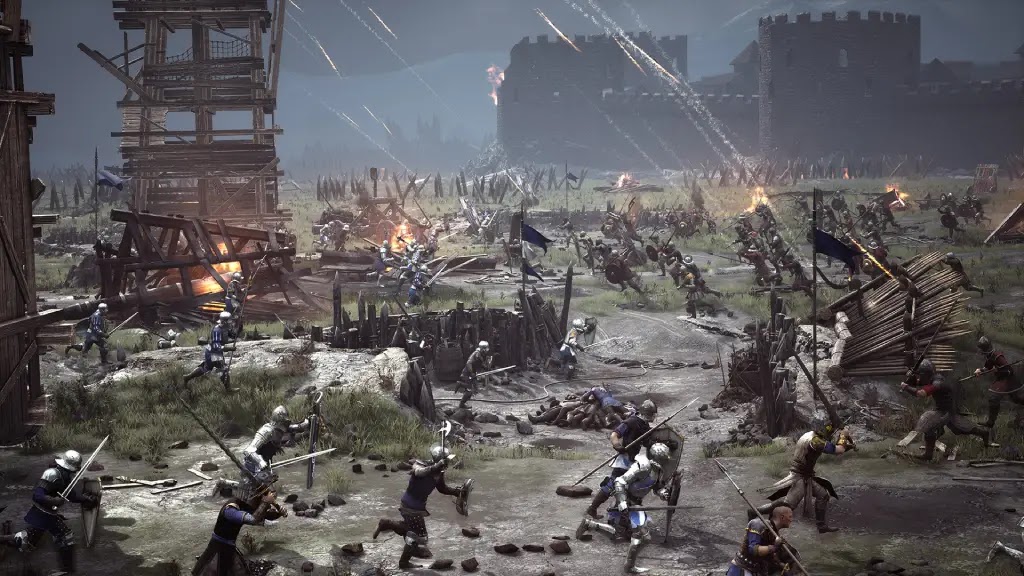
Chivalry 2 has an interesting brand of chaotic player versus player carnage. Attacking is a relatively simple thing. Attacking effectively however, is a completely different can of worms. Early in, you get a feel for the maps, the different weapons and mostly just run up to someone and flail about with a weapon. It plays like somewhat dumb, shallow fun and if that’s all you’re looking to get out of the game, that’s okay too. You’ll die a lot, get some gloriously bloody kills in along the way and experience the progression systems here and there.

For those willing to dig in a bit deeper though, you start to realize that the melee combat is actually pretty deep, and that a combination of skill and patience is rewarded via gameplay success. You learn to start managing your stamina and instead of simply holding your shield out in front of yourself, to time them better so as not to drain yourself. You start to make your swings count more, waiting for opportunities instead of wildly mashing away. There is a definite sense of satisfaction in besting your opponent one-on-one, but it pales next to taking down two or even three people in rapid succession during frenzied combat.

The maps and their design elements are generally excellent – if somewhat lacking in overall number. With only eight different maps, it’s pretty easy to see all of the different environments rather quickly. That being said, there are some pretty innovative ways to interact with the environment, such as creating chokepoints near a crossing or using catapults to launch other players.

You have four core classes to choose from, which might not sound like much until you dig in and realize that they each have a few different subclasses. This when combined with the different weapons at your disposal can help to create some interesting, varied loadouts not unlike what you might do in a Call of Duty game – just with swords and shields instead of guns and flashbangs. Appropriately, each of these classes comes with their own plusses and minuses. Archers can provide support to comrades from relative safety, but in close range their dagger is almost useless. Hulking warriors with heavy armor and weapons can take and deal a lot of punishment, but they are slow moving from one point to another and can find themselves surrounded easily as well. They may be able to survive a one-on-one fight, but that lack of mobility might limit their usefulness in other ways, such as objective-based maps. That being said, it sure would be nice to have even more customization options. Faces get a good deal of detail, but the armor and weapons could stand to have a bit more flexibility.

I never really considered the first game overly attractive visually, but the sound effects brought the carnage to life in a visceral way that worked within the presentation. Chivalry 2’s audio remains really good, but I enjoyed the graphics more this time around too. Granted, some of the character animations can be just a bit stiff / slow, making countering certain attacks a bit dicey at times, but these are smaller issues. There is a lot to soak in on the different stages as you look around the maps. They tell a sort of silent story that appealed to me as I continued to discover more of them each time.

I was also really happy with the cross-platform play. These are some massive battles, sometimes with dozens of combatants. It might have been challenging to fill the lobby if you were only drawing from say, a PS4 crowd. But the fact that PC and all of the consoles get to play in the sandbox together? That just makes these largescale, robust battles that much quicker and easier to fill up. That said, I didn’t see any options to do cross-platform parties, which was a bit of a downer. Combine the robust online player base right now with the progression system that lets you unlock new weapons and armor along the way, and the motivation to keep playing is strong here.  Meanwhile, the core gameplay revolves around deathmatch and objectives – hardly new for these kinds of online competitive games, but they feel different due to the heavy melee nature of combat here versus the plethora of online shooters out there.

Summary

Chivalry 2 works on most fronts, and certain where it is needed the most – bloody, visceral combat. To that end, the hackfest that is Chivalry 2’s meat and potatoes delivers a lot of fun for both casual players and those who want to dedicate their time into digging deeper into the gameplay mechanics. The progression system and maps are both quite good, even if I’d have liked to see a few more options with both. All in all though, Chivalry’s carnage-filled gameplay is just a whole lot of fun.

Score: 8.5 / 10



Share:

Rogue Lords - PC Preview


Rogue Lords by developers Leikir Studio, Cyanide Studio and publisher NaconPC preview written by Richard with a copy provided by the publisher.

Estimated reading time: 7 minutes


Rogue-likes: the bane of my existence and yet a genre I always find myself coming back to. This time we've got a preview look at Rogue Lords, a Van Helsing style "myths and monsters" themed journey to re-establish yourself as the best demon/dark lord in the land.

Rogue Lords takes a lesser used path, having you as the player command your minions as the "devil". Your goal is to dominate the lands of the humans, using your dedicated minions as a medium to spread your influence. Unlike the more traditional rogue style, this time comes at you as a bit of a deck builder with progressional choices as to what situations you want to find yourself in next.

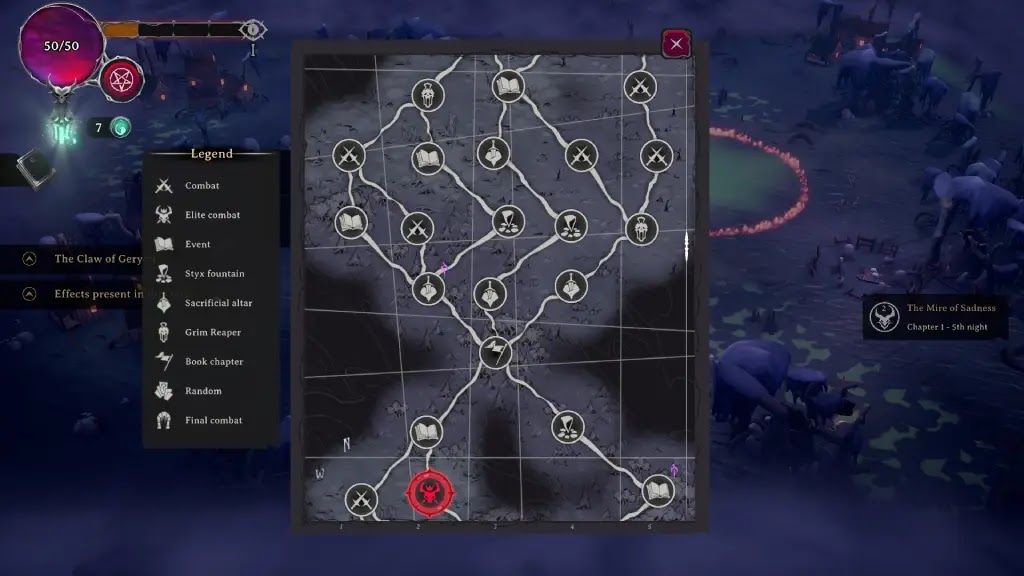
You can bring a team of three with you into each Book, which is subdivided into chapters. Each chapter will start at a node, branch out through different paths, and then culminate at a single point again. At the end of each stage you have a boss battle. Each node on the map is a new encounter, and can be randomly chosen from: a skill shop, a battle, an event, an elite battle, a random encounter, a "healing" pool, or maybe a sacrificial altar. The paths through each chapter are randomly decided, so you better start planning how you want to sit for the final encounter at the beginning of each Book. Your job as the devil takes on a few interesting facets, mainly the fact you can cheat. Which is nice, cuz most roguelikes make me want to cheat.

But first you need to know how each node works, and how the game progresses. Normal combat nodes, for instance, allow you a choice between a terror effect, a skill, or souls (the games currency) when entering combat, and will reward you upon completion. Event nodes task you to perform an action you deem beneficial to your characters, which will provide them with stat bonuses or effects upon success, or perhaps a fight on failure.Completing a node will let you take a branch to the next node in the 'tier' along the pathway. So how do you cheat? Well, you're the devil, you're not meant to play fair. During an event, combat, or on the map you can hit a "devil mode" button which will let you adjust things to your will. You only have a limited number of points to use though, and while you can recover those and the Springs nodes, you may need that power if you get into a tough fight as well.

On the map your cheating is pretty much restricted to connecting to a path branch you aren't able to reach from the path you're on. In events and battle however, cheating becomes a lot more integral. For events you select a character beforehand, only knowing what the succesful outcome will provide. You then have a measure against that characters peronality status to perform an action, which you get a choice from two or three options. The chance of success depends on how high your character personality status is. But what about when your success rate is super low for all your option? Well, then you cheat, and increase the chance of success. Congratulations, you've now completed your task and won your reward. Depending on the other characters in your team, there might be some short conversations and bonus rewards, or you might receive a negative trait if the character isn't happy with the outcome. As an example, of the three characters initially offered: Dracula, Headless Horseman, and Bloody Mary, I found Bloody Mary didn't like it when I attempted a stealth check as the horseman. She then got negative one to the "scare" stat for that.

Combat in Rogue Lords is both rather well balanced and yet horrifically unbalanced as well, at least for right now. You start with five action points, and each character has their own moves independant moves, although they all use the same action point pool. Each action will take a set number of points, and will then become unusable until rechatged. Each character has a recharge, some with different effects. For example, Bloody Mary can place a mirror behind a target that duplicates her attacks. Combat is turn based, so you go first, and then your enemies. You can cheat here by adjusting both your own unit health pools or enemy health pools, moving around staus effects, or recharging skills. So how is this both balanced yet unfair? Well, what skills you earn are randomized, so you may earn or have for purchase a lot of mediocre skills.

This won't bode well towards the end of the book when you need better skills. My first attempt at a full book had my Dracula largely useless, as I rarely got many skills that fit well with the build I was using. In addition to that, the second last fight I got in was wretched. The enemies kept spamming full party damaging moves, and I barely had enough output to outpace them. And then wave two came in with an almost identical set of enemies and I got demolished. On the other hand, I had an absolutely dirty setup going where I could build up twelve stacks of damage over time on every enemy, while dishing out an average of about sixty damage per turn, if played right. It's largely up to chance, hence the "rogue" in the title, although the battles can range from "super easy" to "nai wa" at basically any point.

I have to say, I really like what Leikir/Cyanide Studio has done with the skills. Your skills can be upgraded to increase damage and reduce action cost, either by collecting three of the same skill, or by leaving a skill at the shop, which you will get back upon your next visit, only upgraded. My only gripe is that if you get three of a skill and they 'can' fuse, they 'will' fuse. You can't just elect to keep them seperate if you wanted. You can also earn a skill, and skill slot, by sacrificing a skill at an altar. This unlocks a skill slot and gives you a replacement for the sacrificied skill.

To add to all this, you get the randomized effects that are either positive terror effects, or negative threat effects. A positive could be an extra skill after battle, and a negative could be a reduction in devil points restored from a fountain. Increasing terror also provides permanent better reward chances for a book as you invoke more of the effects. The threat effects are generally one-offs, at least from what I've experienced, and will drop on a random node ahead of you. Terror effects will be dropped on a 'row' of nodes, and may be fifferent for each node in the row.

Summary

One of my favourite aspects of Rogue Lords that I've seen is that it can boil down to strategy, even if you get a little hosed by RNGesus and the Gacha Lords. That being said, the 'cheating' mechanic is a really good way to help balance against luck insurance, and I was quite grateful for it. I'm really excited to see where the full release for Rogue Lords is going. It has a great concept with some fresh ideas, the art style is well suited for this style of gameplay, and the core mechanics seem well thought out. While a little balancing of the enemy AI might be desired, I suppose getting beat down like you're a sandbag is part of the challenge behind roguelike games. Here's hoping you were able to at least try out the demo while it was up, and if not, look forward to the release planned for some time this fall!

Score: N/A


Share:

Ninja Gaiden: Master Collection - XB1 Review


Ninja Gaiden: Master Collection by developer Team Ninja and publisher Koei Tecmo AmericaMicrosoft Xbox One review written by Nick with a copy provided by the publisher.

Estimated reading time: 5 minutes


Ninja Gaiden: Master Collection brings together three incredibly challenging, classic action games. Given the rise in popularity for challenging video games in a post-Souls world, it seems fitting that these titles would see a re-release that should appease fans of these titles or those who enjoy difficult action games and may have missed these titles the first time around. The collection itself doesn’t bring a lot of new frills to the packaging, but the games themselves are still fun to play.

Specifically, you are getting Ninja Gaiden Sigma, Ninja Gaiden Sigma 2 and Ninja Gaiden 3: Razor’s Edge. For those unfamiliar with the names at play here, just know that these are the enhanced versions of the original games just… re-enhanced? What this means is we get souped up visuals, complete with 4k and 60 frames per second with most of the DLC and modes (but not all) that were part of these earlier packages. However, with a lack of online features and nothing additional added besides the games (many collections bring new features, some developer videos, behind the scenes artwork, etc to the table – but not Ninja Gaiden: Master Collection) themselves.

To me, it has always been interesting to see how these games evolved from the original Ninja Gaiden games (both the arcade beat-‘em-up and the NES action / platformers). This series has always been punishing, just in different ways. The arcade game was meant to devour your quarters, and it did so in typical fashion – throwing tons of enemies at you and watching them inevitably chip away at your health and your life savings. The NES titles were a different kind of brutal, with heavy platforming elements that forced you to memorize enemy patterns and make pixel perfect jumps and attacks to avoid often plummeting to certain death. What made these titles so interesting was their heavy reliance on narrative. I still remember being in awe of the many cutscenes. They were just cool to watch, and the music was often fantastic. I can’t tell you how many times I beat those games just to relieve some of the cooler story moments again.

Then the series saw new life as something new. It had the many enemies of a beat-‘em-up, but still relied heavily on precision reflexes and timing. The Sigma versions of the games made things a little easier (mostly through reducing the number of enemies being thrown at you at any given time). The story still follows Ryu Hayabusa, though the narrative certainly feels stiff by today’s standards. These three titles never really hung their hats on storytelling, but the stiff dialog and sometimes odd camera angles are where the Ninja Gaiden: Master Collection shows its age most prominently.

View a short action video here: https://store.steampowered.com/app/1580780/NINJA_GAIDEN_Master_Collection_NINJA_GAIDEN/

If you look beyond those aspects however and focus on the combat – which is what these games really wants our attention to be anyways – odds are you will find a lot to like here. You don’t just button mash away like in a brawler. You need to be fast, but also careful and intentional at the same time. There are minor tweaks to the controls from one game to the next, but the core system is about using different weapons and upgrading your abilities, adding layers to Ryu’s combat options. Each newer game in the series feels just a bit smoother, making even basic actions such as defensive maneuvers more fluid. There are certainly periods where I was able to put my reflexes on autopilot as I got further into the games and found my groove – but caution is still required. However, new enemies do force you to study them just a bit to make sure you learn how to properly deal with them. You need to block, dodge and counterattack, and to this end all three games serve up platters of bloody, flashy goodness.

The aforementioned DLC touches on some nice additional features as well. Costumes, modes, other characters besides Ryu and more give these games some replay value outside of difficulty and achievements. Those are nice touches, but it still has me wondering where the other ‘collection’ extras are at. Also, as popular as those first two games in the series are, Ninja Gaiden 3 is often viewed as something of a stepsibling to the others. It makes sense to include it in this collection, but many fans chastise it for being far easier than the first two entries. That being said, the third title was the most advanced in terms of its presentation, and it sure is flashy and fun to look at with this new gloss of paint.

Summary

The Ninja Gaiden: Master Collection is a fun trio of games that will challenge most action fans while providing plenty of gore and flashy combat. There are times the games remind us that this series kicked off in the mid 2000’s, with camera angles that can still aggravate and a narrative that has not aged particularly well. Thankfully the combat is as fast and fun as ever, despite not really adding any extras to fully round it out as an actual collection.

Score: 7.25 / 10


Share:

DotEmu and Leikir Studio Announce Metal Slug Tactics During Summer Game Fest 2021!


PARIS (June 10, 2021)
- Publisher Dotemu and developer Leikir Studio in partnership with SNK today announced Metal Slug Tactics, an exciting adaptation of the iconic series’ satisfying action through grid-based tactical warfare coming to PC via Steam, as part of Summer Game Fest 2021.

Metal Slug Tactics reunites Marco, Eri, Fio, and Tarma as they lead the Peregrine Falcon Squad into a new battlefield through dynamic, strategic combat. Players wield classic METAL SLUG weaponry, leveraging skill trees, perks, and a super attack-fueling adrenaline system to outwit and demolish flanks of the series’ signature villains. Watch Metal Slug Tactics’ charismatic heroes return to the frontline via today’s exuberant announcement trailer:

Metal Slug Tactics’ challenging missions build levels from different combinations of hand-crafted terrain tiles, keeping battle layouts unpredictable and ensuring clashes are won through calculated strategy rather than memorization. Roguelite elements make missions highly replayable and victories feel truly earned, but should a cunning squad or fiendish boss persevere, rounds are quick to jump back into.

Paired with gorgeous pixel art and fluid animation which faithfully channels the series’ timeless aesthetic, Metal Slug Tactics is a natural extension of METAL SLUG’s beloved visuals. Each mission’s heated battle is energized through original music by Tee Lopes (Sonic Mania, League of Legends, Teenage Mutant Ninja Turtles: Shredder’s Revenge, and Streets of Rage 4’s Mr. X Nightmare DLC among other titles). Metal Slug Tactics is both a respectful homage to an all-time classic and an imaginative new way to celebrate the renowned series.

To secure the latest intel on Metal Slug Tactics, visit https://www.metalslugtactics.com/, flank @Dotemu and @LeikirStudio on Twitter, and wishlist the game on Steam via https://store.steampowered.com/app/1590760/Metal_Slug_Tactics/.

About Dotemu

Dotemu is a French video game company specializing in modern releases of beloved retro games. Our mission is simple: give every gamer access to yesteryear’s classic video games on today's platforms, including PC, mobile, console and more. Working alongside the world’s most cherished and recognized publishers, the Dotemu team has published a number of global top-sellers across both PC and console including Streets of Rage 4, Wonder Boy: The Dragon’s Trap, with additional development and publishing work on Windjammers 1 and 2, several games in the Ys series, and more. Dotemu is currently working on Teenage Mutant Ninja Turtles: Shredder’s Revenge with Tribute Games and Metal Slug Tactics with Leikir Studio.

Founded in 2007, Dotemu leverages its considerable technological know-how to maintain the original spirit of classic games while giving them a second life as rediscovered gems for a new generation of gamers.

About Leikir Studio

Leikir Studio is an independent studio based in Ivry sur Seine, France. Specialized in system games, we have at heart to carry projects that we are passionate about. We are the creators of the merciless Isbarah, the ruthless Wondershot, the robotic I AM LEGION and the diabolical Rogue Lords. Today, we put all our energy and talent on Metal Slug Tactics to honor the hours of joy spent on this mythical license.

About SNK

Headquartered in Osaka, Japan, SNK develops, publishes, and distributes interactive entertainment software on a global scale. Known for such franchises as METAL SLUG, THE KING OF FIGHTERS, and SAMURAI SHODOWN, SNK continues to focus on their rich console game and arcade history.


Article by: Susan N.


Share:

Terra Nil - PC Preview


Terra Nil
by developer Free Lives and publisher Devolver DigitalPC (Steam) preview written by Hayden with a copy provided by the publisher.

Estimated reading time: 4 minutes


What is it:

A eco-builder that challenges the player to undo the sort of industrial damage that city-builders and factory-builders normally inflict on their worlds.

Terra Nil is an interesting concept, turning the city-builder on its head by asking the player to guide efforts to clean up and restore an environment after it has been exploited instead of being the one to do the exploitation. At press time, Terra Nil has released a playable demo through publisher Devolver Digital, and our impressions here come from that. That said, this is a game with a history as noteworthy as its concept, and the original prototype of the full game from before it was taken on by current developer Fee Lives is still available on itch.io on a ‘pay what you want’ basis.

Bringing life back to a dead wasteland - from grey and brown to green and blue.

Terra Nil presents the player with a blasted, dead landscape. Brown and grey tones on soil and dried-up channels reinforce a barren, poisoned feeling to the map when you first see it. Quickly walking through the placement of the first wind turbine, soil cleaning equipment and irrigation equipment, the player is rewarded with their first sight of green grass smoothly rolling into view across the small patch of cleaned land. From there, the world gets bigger, and progressively more equipment is introduced that will flood streams, carve channels, and more.

Clean the soil, then just add water and you’ll start to get life in Terra Nil.
 

The core of Terra Nil is broken into four stages, introduced one at a time: soil cleaning, biome creation, atmosphere balancing, and recycling. Progress is limited by a few factors to challenge the player: currency (shown as a leaf), limited locations to place wind turbines (around which all other things must be placed), and the limited range of each building that the player can make. The game currency is interesting, in that it seems to represent the ecological balance - while it is spent to place buildings, it is earned through the restoration of areas by the very same buildings as they are placed. The more area restored by a single building placement, the more currency is earned. This is shown in-game by pop-up text while placing the building, showing the relative currency gain or loss due to the proposed action. This forces the player into careful placement choices, as trying to fill in small gaps between restored areas could be costly, while treating large swaths of land all at once is profitable enough to fund further operations.

Animals returning - deer, birds, frogs, bears and fish can all be seen as you restore the land.

Graphically, Terra Nil uses an isometric perspective view and simple but clean animated sprites. Menus are limited to a bottom-of-the-screen UI bar reminiscent of many classic RTS games, with tooltips that show requirements for placing and using particular buildings. As the player begins to repopulate biomes and meet their objectives, the fairly static imagery of grass and trees slowly begins to be supplemented by animal life that brings motion and life to otherwise static-looking areas. This is a perfect thematic move, as the reintroduction of animals really caps the feeling of bringing a dead region back to life.

A nice little easter egg here - “I prefer factories” directs you to the Steam store page for Factorio.

Summary

In order to finish the Terra Nil demo map, the player has to do something that runs very counter to the experience of most other games: they have to remove everything they have built. This becomes a game in itself, as the player needs to progressively recycle their structures with an eye towards having the final material pile end up close to a river, as this is the only place from which it can be collected. In the end, a successfully completed map on Terra Nil really lives up to the game’s name - there is nothing left of your presence on the ground. Unlike the player’s presence on the map, however, this demo should leave a mark on your Steam wishlist so that you can grab Terra Nil once it enters a fully playable state.

Score: N/A


Share:

ENDER LILIES: Quietus of the Knights – PC Review


ENDER LILIES: Quietus of the Knights
by developers Live Wire, adglobe and publisher Binary Haze InteractivePC review written by Pierre-Yves with a copy provided by the publisher.

Estimated reading time: 6 minutes


ENDER LILIES: Quietus of the Knights is a 2D side scrolling metroidvania that hit Early Access about six months ago now. Having offered a few solid hours of gameplay before telling me that I would have to wait until later to find out what happens on the rest of the journey, I am happy to say that while my previous save data was still in place, I was excited to restart the adventure from scratch and see how it all played out from start to the multiple finishes.

Very upfront, there’s nothing that I said previously back in January that doesn’t apply here. Ender Lilies is a super solid title from all aspects of its presentation. Awakening all alone inside of a dark crypt with no one in sight, our protagonist Lily is awakened by the spirit of a warrior knight offering her his sword in order to fight for her. While not able to defend her as he no longer has a real form of himself, he and other spirits over the course of the journey can materialize in order to give Lily what she needs. Weapons to defeat the blighted that stand between her and what it is that she’s looking for. Answers to who she is and what has happened to this world. 

Set in a dystopian world, Ender Lilies follows a lot of the soulslike formulas of “bad stuff has happened and we aren’t going to tell you anything more than what you can see”. The journey isn’t an easy one as for every new area that is explored, there are stronger and more terrifying foes that lay in wait just waiting to defeat you. To not be bested, Lily will need the help of the knight that offered her his sword as well as the might of others that can only be acquired once defeated. These major beings come in two formats, those that you will simply come across and grant you their powers in combat, and those that you know are about to show up and will test you at times much beyond your current means.

For these second ones, defeating them is the only way to progress through the world and unlock passageways once thought impossible. Breaking through barriers in the floors, double jumping, dashing through the air, swimming through water, and unlocking weird runed doors. Each of these abilities comes at the cost though as each of these souls must be purified and once purified, Lily herself takes on their blight, their corruption and the once pure white flower soon shows the signs of corruption herself which only helps to solidify the lore of the world as you uncover it.

As for the world that Lily finds herself in, it’s the stuff of nightmares. No one is really left alive and those powerful enough to have survived are almost mindless beings of immense power leaving nothing to get past them. Knights in the prior service of the Priestess who aimed to heal all those that she could, knight captains to the king that invaded this land and waged war upon those that were there first, scientists trying to bring back those that they lost to try to save others, and executioners whose job was to not let any blighted past. The land is filled with stories and sad tales of those that held out the longest while watching what they held dear fall to the blight.

For all of the sadness and the visual darkness that you’ll be exploring though, Ender Lilies is a story of hope as Lily attempts to purify those in front of her as she searches for her own answers to the questions that she has. From that perspective, the developers at Live Wire | Adglobe has done an absolutely amazing job. The visuals of the environments and that of the characters, the spirits that aid Lily in combat, the foes that will remain a constant thorn in your side, each of these has a care to their presentation and fit in the environments that you’ll find them in. Bosses in that sense have perhaps the greatest care second to Lily as often they’ll come in two to three phases and each phase visually shows you that you’re more and more “in for it” as their powers are steadily unleashed as they fight to not be defeated.

Topping all of this however is the music. I could quite literally sit there and listen to the various tracks for hours if I could. The meshing of the soft and quiet scores along with the heavy symphony of great challenges was also so smooth that it could take a second to realize just how real something got as the musical scores shifted in their gravity. The blending is so well done that there's never a solid break but always a smooth transition from one musical track to the next and the sheer emotions of these musical scores can almost bring one to tears at times. It's that good.

Now, I could go on and on about the mechanics behind the adventure as they are very well designed and feel natural to everything else in place in this fantasy world. But I won't as I've already done that in my preview. Instead, I wanted to concentrate more on how everything came together into a very well designed package offering anywhere between fifteen to twenty hours to complete. The only really difference in this timing will come down to two items. The first, how much lore do you really want to know about this world? And the second, how dedicated are you to seeing all of the endings?

Otherwise, I have no issues with Ender Lilies. Did I get a hiccup or two from time to time in one area? Sure, but the hiccup was so small and specific to one area that I only mention it as the only thing that was "wrong". Gameplay is solid. Level designs are well designed both structurally for various parts of the adventure and look great. Finally the music was some of the best that I've listened to in a long while especially with its blends from light into heavy arrangements depending on what's going on.

Summary

It's really hard not to recommend ENDER LILIES: Quietus of the Knights. From brilliant level designs over into a properly evolving gameplay and combat systems only ever supported by great musical arrangements, if there's one thing any fan of the style should sit down to this year? It should be this. Not a fan of the style? You should give it a go as even without the Souls-esque and Metroidvania nature's, there's a solid 2D action adventure platformer just waiting to be explored.

Score: 9 / 10


Share:

Random posts

Our Streamers

Susan "Jagtress" N.


S.M. Carrière

Aldren


Affiliates

JenEricDesigns – Coffee that ships to the US and Canada

JenEricDesigns – Coffee that ships to the US and Canada
Light, Medium and Dark Roast Coffee available.

Blog Archive

Labels