• NHL 27 - PS5 Review

    ...and I have been playing NHL games since. It didn't matter whether it was EA or another game like 2K in the 2000s; I loved hockey games and still do, but is NHL 27 a step in the right direction?

  • NBA 2K27 - PlayStation 5 Review

    With these annual seasonal renewals of the sports season comes the related video games as well, and the question reviewers such as myself always face is this: Is this year’s game worth purchasing one year after the last one? My answer? Yes, absolutely. NBA fans are going to almost certainly enjoy NBA 2K27.

  • Midnight Moments - PC Steam Review

    Midnight Moments is a cozy cyberpunk diorama-building game that is stunning. Unlike games that require you to complete quests or take out assailants or even solve challenging puzzles, this one only requires one thing: imagination.

  • Isle of Reveries - PC Review

    Isle of Reveries is a top down 2D action adventure game that made my nostalgia for old school Zelda games flare up really hard. A good blending of puzzle, exploration, and combat, Isle of Reveries is a wonderful title to experience inside and out.

  • Outbound - PC Review

    Let me tell you about this cozy game my daughter and I are playing together called Outbound. Now, I've been following this game from the initial Kickstarter back in April 2025 to its full release in May 2026. The best Mother's Day gift for myself and my first ever collector's edition in a physical copy!

  • OVER REQUIEMZ - Nintendo Switch Review

    In OVER REQUIEMZ Yuhiru is thrown into the castle of Oz and is immediately accused of trying to assassinate the King and shoved into the dungeon. Not only is she treated like a criminal...

  • Dread Delusion - Xbox Series X|S Review

    Today we’re looking at what has rapidly become an absolute favorite in the open-world RPG genre for me. An interesting story, memorable NPCs, stunning visuals, and a setting absolutely dripping with flavor, Dread Delusion sets its tone immediately and sticks with it.

  • HOT WHEELS Infinite Rush - PS5 Review

    ...Now Milestone, the original developer of the two Hot Wheels Unleashed games, is back, and I was hoping it would be as fun as the last two Hot Wheels games they made...

  • Asdivine Knot - PS5 Review

    Asdivine Knot is the latest title in the Kemco JRPG library. Following protagonist Verselio, who's on the run from the church that they once served, he'll be accompanied by an odd selection of party members as they all find a reason to band together…

  • STEINS;GATE RE:BOOT - PC Review

    Our story begins in Akihabra, Tokyo Japan. The protagonist Okarin… Or rather Rintaro Okabe, (Voiced by Mamoru Minyano) is a recent high school graduate who rents an apartment with his best friend and resident computer hacker, Itaru ‘Daru’ Hashida (Voiced by Tomokazu Seki) during the summer of 2010.

Capcom Fighting Collection Review

Capcom Fighting Collection by developer and publisher CapcomMicrosoft Xbox Series X|S review written by Nick with a copy provided by the publisher.

Estimated Reading Time: 6 minutes. 
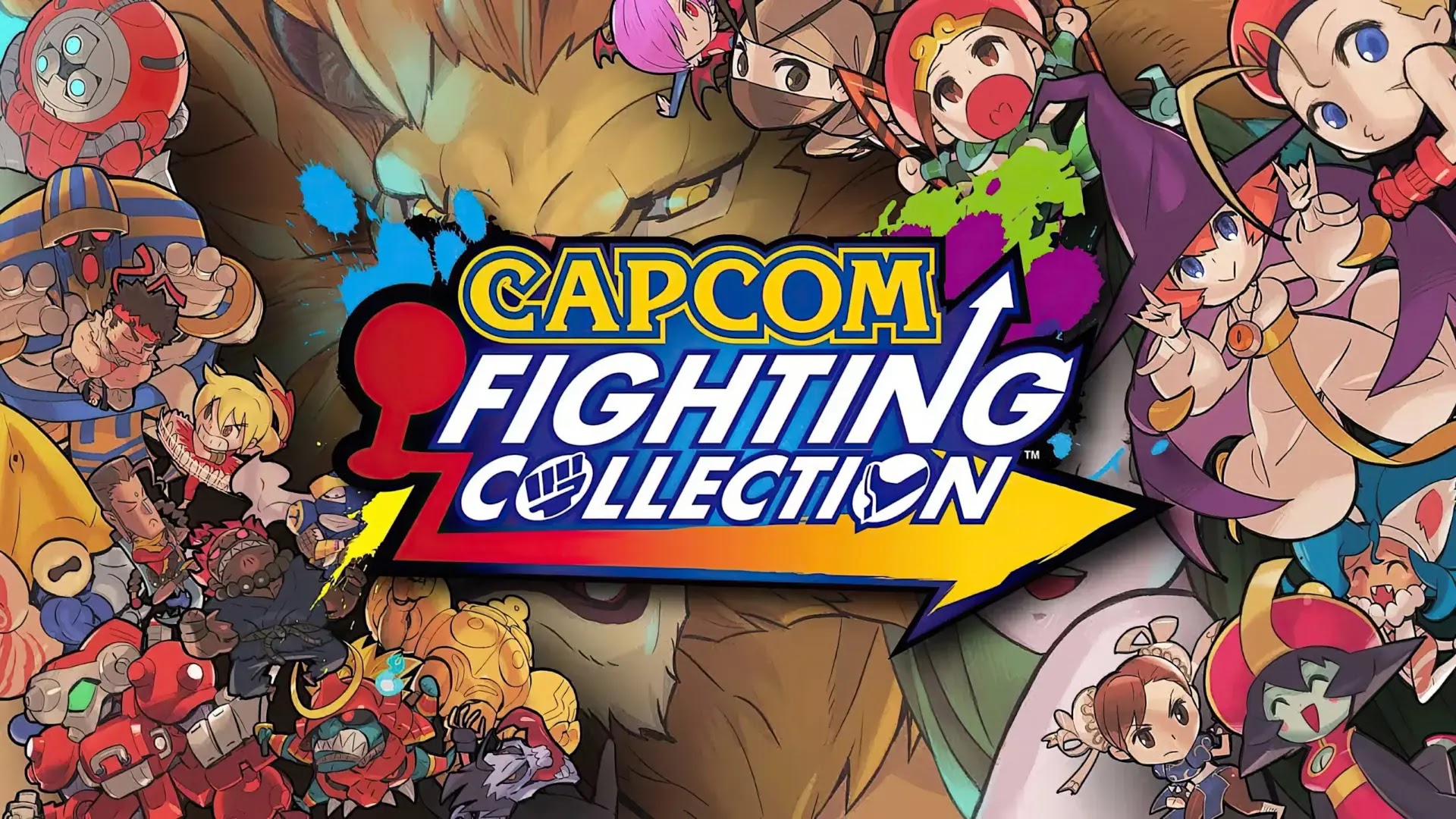


Capcom Fighting Collection is simply one of the best video game compilations I have played in a long time. One could quibble that it is a little Dark Stalkers heavy, but the mix of familiar and new with lots of extras makes this a thoroughly enjoyable release.

First, the collection of games:

     Darkstalkers: The Night Warriors

     Night Warriors: Darkstalkers’ Revenge

     Vampire Savior: The Lord of Vampire

     Vampire Hunter 2: Darkstalkers’ Revenge

     Vampire Savior 2: The Lord of Vampire

     Hyper Street Fighter II: The Anniversary Edition

     Super Puzzle Fighter II Turbo

     Super Gem Fighter Mini Mix

     Cyberbots: Full Metal Madness

     Red Earth

That’s a pretty robust list, and while I was familiar with several of the titles, there were some new ones to me as well. Of course, the first thing to note is that half of that list is made up for the excellent Darkstalkers titles. These always felt like a slightly floatier Street Fighter series, with some similar mechanics all wrapped up in a gothic theme. Vampires, werewolves, mummies and more make up the colorful cast.
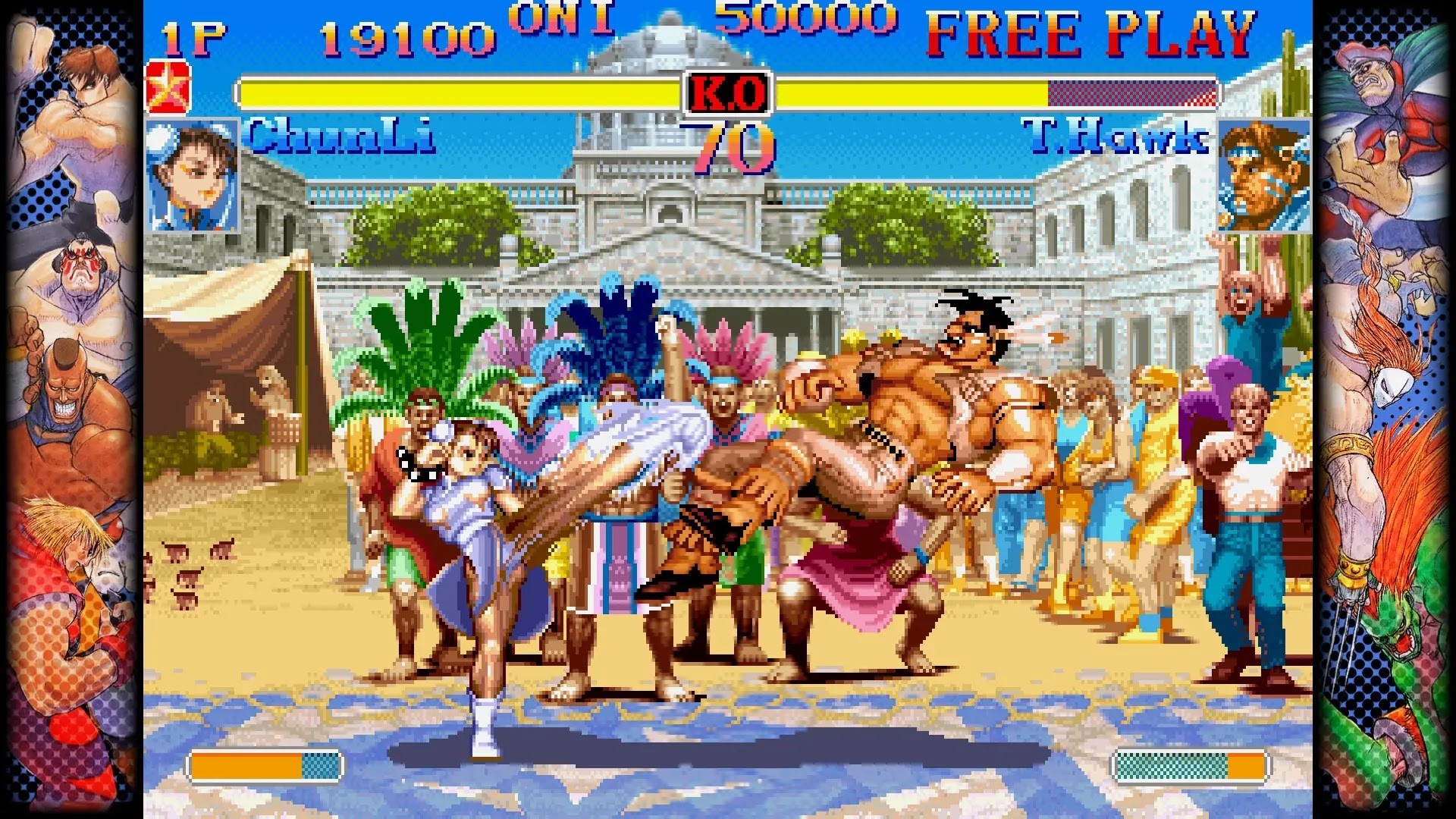
While I had played a few of these titles heavily back in the day, two of them were Japanese-only titles (Darkstalkers’ Revenge and Vampire Savior 2: The Lord of Vampire) that I had never played before. Admittedly, I wasn’t getting much out of the cut scenes sprinkled in between the fights, as I couldn’t read them – but I seldom played old school fighting games expecting narrative depth.

I was there for the combat.

To that end, the Darkstalkers title holds up really well today. Some of the games showed more evolution than others. For example, the differences between Darkstalkers: The Night Warriors and Night Warriors: Darkstalkers’ Revenge are rather minimal. Still good stuff, but perhaps not all that different from one another.

Then when you get into Vampire Savior 1 & 2 as well as Hunter 2, the style of the visuals shifts a bit. Whether it’s the characters and their designs (like Q Bee) felt fresh. The graphics and music were excellent for the times, but of course all of it is dated by modern standards. That said, the environments were more engaging here than the prior two games I discussed. It’s odd to use terms like ‘Gothic’ and colorful together, but those are the adjectives that come to mind. Character designs (such as the brightly colored Red Riding Hood inspired character) pop against the often gray / brown / dingy backgrounds.
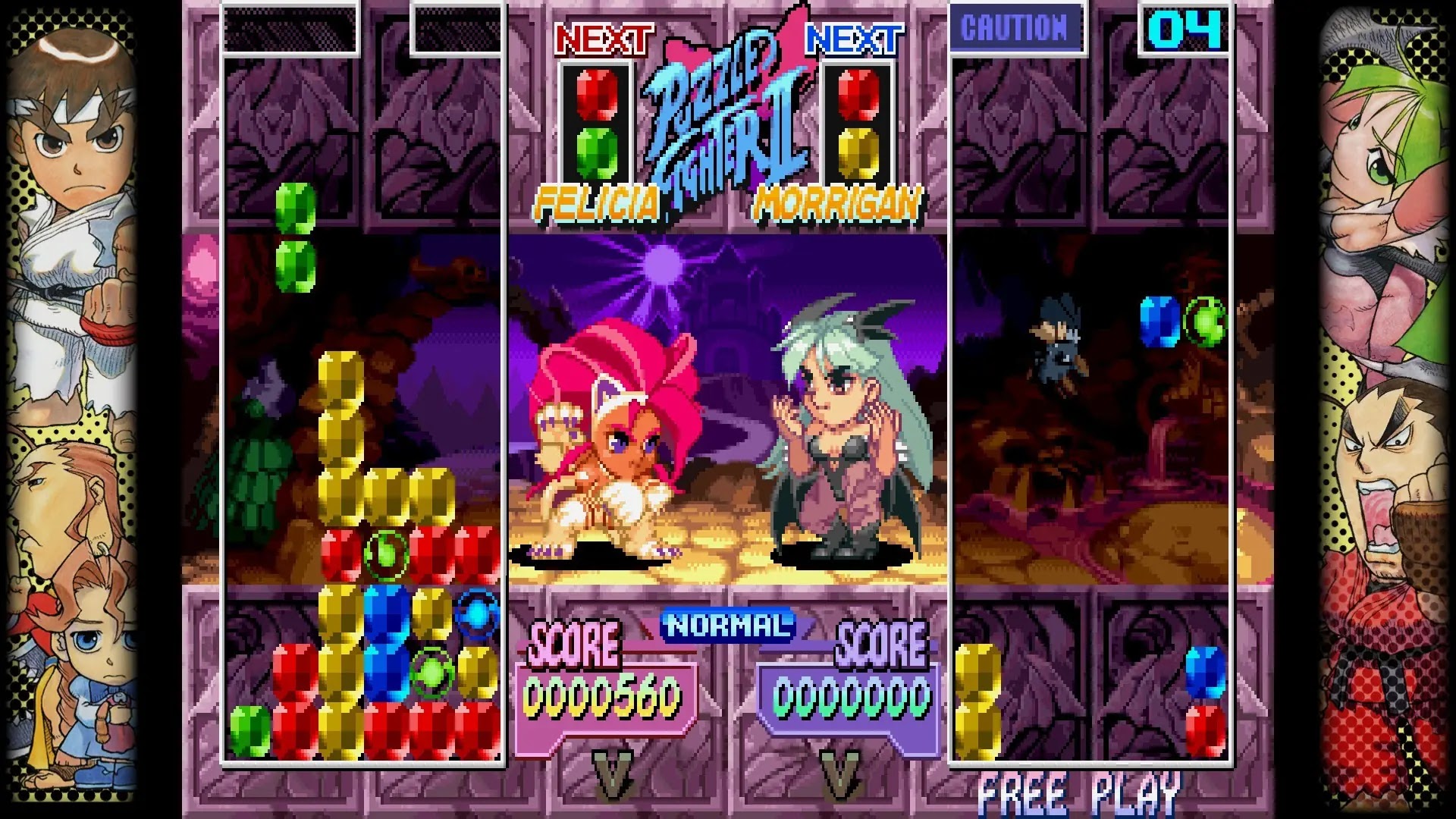
Hyper Street Fighter II: The Anniversary Edition likely needs little to no introduction. The Street Fighter II game (and it’s numerous spin-offs) were hugely popular in the arcades when I was a teenager, and I dropped a lot of quarters into those cabinets while I was sucking down Big Gulps at my local 7-11. Classic combat, brisk pacing, familiar characters – probably the biggest hit of nostalgia for me in the entire package.

Cyberbots: Fullmetal Madness was a game I had no context on, having never played it. Immediately it felt a little different because you pick a character – but all that does is play out the story for you differently. The combat has nothing to do with the character, but the type of mech you choose. There’s different classes and subclasses of mechs that act as your actual combatants. There’s a sort of clunky simplicity to the combat, which uses fewer buttons than some of the games, and giant metal-covered machines probably should feel a bit less graceful than an expert martial artist.

Throughout combat there’s an interesting sort of tension that gets applied where you can damage the machine and it has implications such as cleaving off your opponent’s arm, weakening their attack. It sort of reminded me of the Samurai Showdown titles where you could get disarmed (but more literally) and working from a limited position in combat until you retrieve and reconnect it.

Super Gem Fighter Minimix is an odd one, and probably my least favorite of the titles. This sort of thing is subjective of course, but a simplified, clunkier version of streetfighter where the focus is more on gathering gems to boost up your character than outright fighting your opponent is just sort of an odd premise. It’s cute, it just always struck me as kind of unfocused. As cool as this game is, calling it a ‘fighting’ game is a bit of a stretch, but at least the Street Fighter theme gives them a good excuse to include it, even if it’s really more of a puzzle game.

Super Puzzle Fight II Turbo has long been one of my favorite titles. I’ve always been a sucker for action / puzzle games such as Tetris or Columns, and this one is just addicting. The premise is simple enough – you drop colored gems onto other similarly colored gems to create larger blocks of gems that you can eventually match away to perform ‘attacks’ on your opponent in a visualization of Street Fighter. It’s a little hard to explain, but highly addicting and as much fun as I remember.

Red Earth is an odd duck, but a weirdly enjoyable one that I would have likely sunk oodles of time in had I played it when I was younger. At first I saw four characters to choose from and thought there was not going to be much meat on these bones. However, this fantasy title has some lightweight RPG elements (experience, leveling up, gaining new abilities) mixed with some different endings. They mostly revolve around how many continues are needed to win, but there’s some choices baked in there too. I honestly had never heard of this title before, but I think I spent as much (if not more) time with this than any of the others.

Still, the collection is about more than just the ten games. There’s quite a few options baked in here as well, from online modes, to a variety of settings that can make the games as hard or easy as you like, quick saves for those who need to leave before they’ve finished their session and a virtual museum with materials from across the ten titles such as music and artwork. In this day and age people are expecting more out of ‘collections’, and I would say by and large the packaging here does not disappoint.

Summary

Capcom Fighting Collection is a fantastic value for those who enjoy fighting games and want to play some of the best to ever come out. There’s traditional titles like Darkstalkers and Street Fighter, some unique takes on the genre with Cyberbots and Red Earth and even a fighting themed puzzle game squeezed in there for good measure. It’s perhaps a bit Darkstalkers heavy for some, but I appreciated the mix of familiar titles and games I had never played before.

Score: 8 / 10


Share:

Industria Review

Industria by developer Bleakmill and publisher Headup GamesSony PlayStation 5 review written by Pierre-Yves with a copy provided by the publisher.

Estimated Reading Time: 5 minutes. 


November 9, 1989 is known for a world changing event, the fall of the Berlin Wall. But what if history for two people went another route and they weren't there for it? What if a science experiment went wrong and they would never see this world again? Starting on the evening of November 9, 1989, life would change for Nora as she finds herself in a world not her own looking for her Walter.

Industria by Bleakmill and Headup Games is an adventure based first person "shooter" in a world similar to our own, yet more steampunk looking in its technology. Having seemingly lost control of ATLAS, a networked computer, Walter calls Nora, waking her up from her nap on the couch, and tells her to stay far enough away from their lab for her own safety. Obviously ignoring this warning as Walter is both her work and life partner, she rushes off and the adventure begins.

Finding yourself in this new world through the eyes of Nora, there's a reason I put shooter in quotations. Do you have access to guns? Yes, a pistol, submachine gun, rifle with a scope and a shotgun. Are they fundamentally important to the overall gameplay? Not really. They'll surely help along the adventure but your axe will do most of the talking as it can break down boards blocking your way as well as taking out the machines that are after you if you make enough noise.

Industria is really more about the adventure and the light puzzles that stand between Nora and her journey to find Walter in this parallel world. It's the journey of finding out a little more of what happened here once ATLAS, the same one(?) has apparently taken over. It’s about learning more from seemingly the only other human, a person named Brent, on the other side of a radio as Nora the first human he's talked to in who knows how long. Finally, it's a journey of not knowing if it'll have a happy ending or not as this world is quiet and empty short of the noise that the machines make once they realize there's a human present.

This was perhaps my biggest draw to Industria, the thickness of the silence and never knowing if you’re alone, or not. Designed in a “classic” sense, the world has detail but feels like an older style experience with the direction of the visuals. This isn’t a bad thing at all as it helps to bring all of the elements together such as the year that Industria is based in as well as the robot models that you’ll see over the course of the journey. From that perspective, it works rather well while trying to find Nora’s way forward through closed gates and blocked off passages.

To open up these passages there are some small events that’ll need to be handled like mixing up a rust remover, finding and throwing matches to light the flame of a furnace and finding wheels to open doors to move forward. Once again throwing the word shooter into quotations, most of these puzzles will be tackled at your own pace short of perhaps one or two. These others will require either a bit of running and gunning or just some creative moving around to not get swarmed and save your ammo for another rainy day. This would be the other element that I truly appreciated with Industria, it doesn’t fall into the trap of padding things out in order to make them last longer. It sets out to do what it's meant to and then closes the curtain with both questions answered, and questions left unsolved.

Where Nora’s adventure in Industria needed a bit of love and care though is in the control schemes. There are options available like being able to adjust the sensitivity, toggle your iron sights on or off and more such as toggling your crouching. This said, the default control scheme is tough to use and for me required a fair amount of tweaking to get it right. I switched things around like which button to use to run, which was your flashlight and which one was for crouching as for some reason, there’s no option to toggle your run. This could make things awkward when trying to press and hold L3 while reaching for shoulder buttons.

Finally, the only area of Industria that I would perhaps have a complaint in is within the checkpoints and the save points. Playing on normal will grant an autosave that is convenient to have especially if you missed a jump and are presented with the game over screen. There are also “newer” Resident Evil like typewriters kicking around to manually save your game which is the only way if you’re playing on the harder difficulty.

While these above elements work decently enough, the world that is restored is not the one you left, but the world in its default state meaning if you picked things up, you have to do it again. Managed to get one area clear of robots to take care of a switch and then died? You have to do both again. With how short the adventure is, it’s not the end of the world, but, when you don’t know that’s the case? You’re left wondering what you could possibly be missing.

Summary

Overall though, Bleakmill and Headup Games’ Industria is a decent adventure through a parallel world to our own. With a bit of discovery to find out what happened and quiet and atmospherically heavy locations to explore, while a short adventure it was one that I looked forward to going through a second time to find certain smaller elements that were missed the first time around while playing on a harder difficulty.

Score: 7.75 / 10


Share:

Dying Light 2 'Bloody Summer' Event is Upon Us! Free Rewards In-Game

Wrocław, Poland — June 30, 2022 — The latest free event for Dying Light 2 Stay Human is here and amps up the in-game carnage.

During the Bloody Summer event, the chance of cutting off limbs, slicing your enemies in half, or simply pulverizing them will be greatly increased. Moreover, some of the Hypermode rules will also apply, with more intense ragdoll effects and hit reactions.

The Bloody Summer event is also filled with awesome rewards:

● Chop off 1 limb to obtain a Harper’s Token, redeemable with Harper, the Nightrunner character introduced with "Chapter 1: In the Footsteps of a Nightrunner" seasonal content

● Cut off 300 limbs to obtain a Cutting Edge axe.

● Together with the entire community, slice off 3,000,000 limbs to obtain the Nightrunner Outfit.

Check out the special video for this event:


Stay tuned, as this is only the beginning of Techland's summer activities for Dying Light 2 Stay Human!

About Techland

Techland is one of the biggest and best-known Polish game developers with studios in Wroclaw and Warsaw. For over 30 years, we've carried a tradition of providing gamers with unforgettable experiences. We're an international team of over 400 highly-skilled professionals driven by a passion for gaming, always striving for the best quality.

We’re fueled by the support of our global community built on the foundation of successful AAA franchises such as Call of Juarez, Dead Island, or Dying Light. The gamers' trust in our games has resulted in our newest project, Dying Light 2 Stay Human, selling more than 5 million copies across all platforms within the first month after release.

On top of continuously growing the world of Dying Light through a robust post-launch support plan for Dying Light 2 Stay Human, we're also working on an unannounced AAA Open World Action RPG set in a brand new fantasy universe; our biggest project to date.

Techland's mission strictly determines every aspect of our work: we want to create unforgettable experiences.


Article by: Susan N.


Share:

Teenage Mutant Ninja Turtles: Shredder’s Revenge Review

Teenage Mutant Ninja Turtles: Shredder's Revenge by developer Tribute Games and publisher DotemuMicrosoft Xbox One review written by Nick with a copy provided by the publisher.

Estimated Reading Time: 5 minutes. 


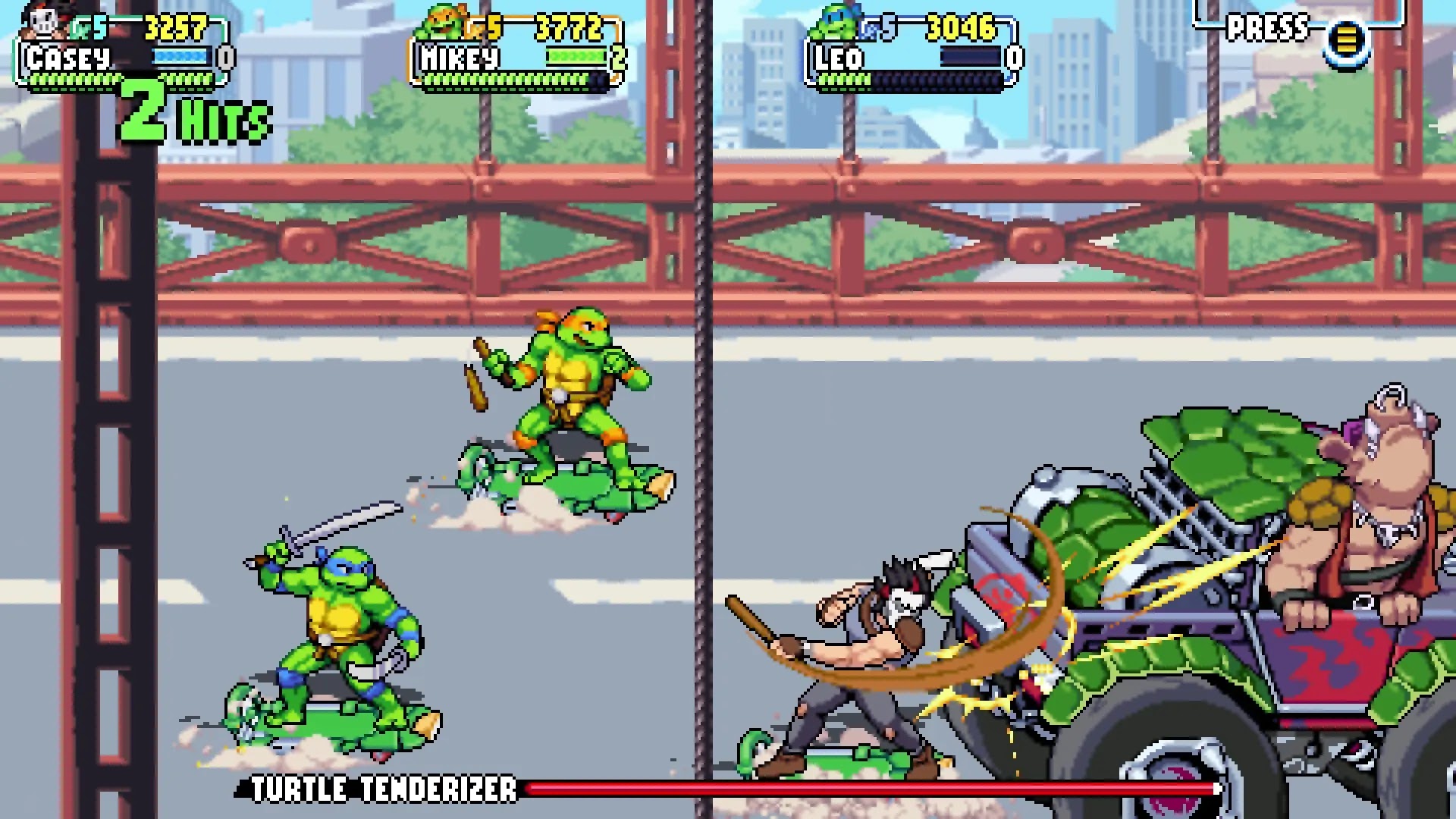
Teenage Mutant Ninja Turtles: Shredder's Revenge is the perfect throwback to those old arcade beam-‘em-up games that I used to throw quarters into over and over again. Everything from how it plays to how the title looks and sounds combines wonderfully with a handful of more modern tweaks that are more than welcome.

Also check out Pierre-Yves' Sony PlayStation 4 review!

To say that Teenage Mutant Ninja Turtles: Shredder's Revenge makes a great first impression is a bit of an understatement. The slightly remixed take on the familiar theme song (I was a big fan of the Turtles when I was younger, and watched the show and played pretty much any of the games I could get my hands on back in the day) as the characters made me nostalgic from the beginning. From there, you have typical workflow of picking your character with a bit of light narrative before pummeling dozens of baddies on your way to the ultimate showdown with Shredder.

Admittedly, saying that a game looks and sounds like it’s from roughly thirty years ago might not be seen as much of a compliment, but the TMNT games tended to have graphics and music that were better than most of their contemporaries. Also, the actual visual design choices just fit, even in this day and age. Sure, we’re talking pixilated characters, but the vibrant colors and familiar backdrops combined with the sound effects and music in a way that I simply appreciated. As someone who used to play these arcade machines for hours when I was younger, and then later invested in the generally inferior console ports, I enjoyed the throwback atmosphere.

That’s not to say everything is ripped from the 90’s. There is an arcade mode that certainly feels like a faster, more linear challenge, but there’s also a story mode that attempts to freshen things up a bit. Characters earn experience, giving them slightly better stats to work with while fending off hordes of Shredder’s henchmen. That gives you access to an overworld map where you unlock stages and can drive around, attempting and re-attempting them as you see fit. Each stage will have challenges baked in. Some are relatively easy (don’t use a super attack) while others can be far more challenging (don’t take damage all level). Oftentimes there’s hidden items or cameo characters baked in that you uncover by breaking something in the environment.

The environments are some of the best (and most frustrating) aspects of the game. Lots of creative visuals, tons of things to smash (and get smashed by) help to keep the gameplay fresher than a simple left-to-right walk and punch-fest. It helps that combat is as easy to pick up as the old games, focusing on things like rapid attacks, grabs, jumps, jumping attacks and super attacks – but sprinkled in some extra, more modern mechanics like flips, different kinds of throws and special attacks. It’s worth noting that while all of the playable characters (including the one you unlock after beating the story mode) function similarly.

Each character has different stats such as speed, damage and range – and their attacks sometimes work a bit differently too. There’s a notable difference in say, how Leonardo’s jumping spin attack hits things and Michelangelo’s jumping forward swing attack smacks the enemy. If you played Dotemu’s Streets of Rage 4, you have a pretty good idea what to expect here with Teenage Mutant Ninja Turtles: Shredder's Revenge.

This is meant to be a game that you play with others, as you can cram a half-dozen players in for maximum chaos. It’s pretty great, as there’s things you can do to interact with one another, such as revives and joint attacks, and you’re not just simply walking around and smacking enemies solo. It’s a small thing, but it lends itself nicely to the camaraderie that was such an important aspect of the source material.

Probably the biggest quibble that can be leveraged against Teenage Mutant Ninja Turtles: Shredder's Revenge is the amount of content. While the story mode is where I had the most fun, I dipped my toes in the arcade and survival modes. There is not a ton of replay value here. As I mentioned above, there’s a character that can be unlocked and for those who really dig the story mode, you can use and level up the various different characters and try to complete the challenges by revisiting stages you might not have gotten 100% on. However, like those old arcade games of the past, this is not a terribly long game to beat and there’s no variety in how it plays out or the rather lightweight narrative that comes with it.

There were a couple of quests that characters in the story mode can assign you once you find them, but they’re simply fetch quests where you gather X number of Y things and turn them in. As someone who smashed up the entire environment in every stage (with one exception where I missed a sort of sneaky breakable that I didn’t realize was a breakable), I found all of these quest items and hidden characters first try. There are difficulty levels that can be tweaked to make things more challenging, but it’s sort of that artificial harder where things just seem to hit harder and you seem to hit weaker.

Summary

Teenage Mutant Ninja Turtles: Shredder's Revenge is a fantastic throwback brawler with a solid presentation, fun combat and handful of modern additions that provide at least a little more depth than your typical 90’s arcade cabinet. I do wish there was a little more meat on these bones, but the Heroes in a Half Shell are worth going on this nostalgic trip with.

Score: 8.5 / 10


Share:

Thursday, July 7th Nacon Connect Has Surprises for You!


Lesquin, France, July 5, 2022 – NACON invites you to view the schedule and watch the teaser for NACON Connect, which will take place on July 7 via its official channels.

Two hosts will present the pre-show at 7pm when some news will be shared first. Following their show, the conference will showcase many of our projects. In total, 17 games will be shown, including highly anticipated ones like Steelrising, The Lord of the Rings: GollumTM, and Test Drive Unlimited Solar Crown, not to mention new products from our gaming accessories range. Our hosts will return after the show to discuss with the community about the news just shared.

Go to Twitch, YouTube, and Twitter to follow the event!

Watch the teaser trailer for NACON Connect via the following link:

https://youtu.be/TgnETjwKEHU 


Go to our official NACON channels on 7 July at 7pm CEST / 10am PDT to follow the announcements and join the live chat. #NACONCONNECT

Stay connected! More details will be shared very soon.

Find all NACON games and accessories at nacongaming.com

About NACON:

NACON is a company of the BIGBEN Group founded in 2019 to optimize its know-how through strong synergies in the video game market. By bringing together its 16 development studios, the publishing of AA video games, the design and distribution of premium gaming devices, NACON focuses 30 years of expertise in the service of players. https://www.nacongaming.com/


Article by: Susan N.


Share:

Symphony of War: The Nephilim Saga Review

Symphony of War: The Nephilim Saga by developer Dancing Dragon Games and publisher Freedom GamesPC (Steam) review written by Pierre-Yves with a copy provided by the publisher.

Estimated Reading Time: 11 minutes.


Announced years ago with nothing more than a concept art image of the protagonist, I've been waiting for Dancing Dragon Games' Symphony of War: The Nephilim Saga ever since. Recently launched in a stealthy move by announcing to the world that it has released, this Turn Based Strategy RPG continues to showcase the amazing works of indie developers.

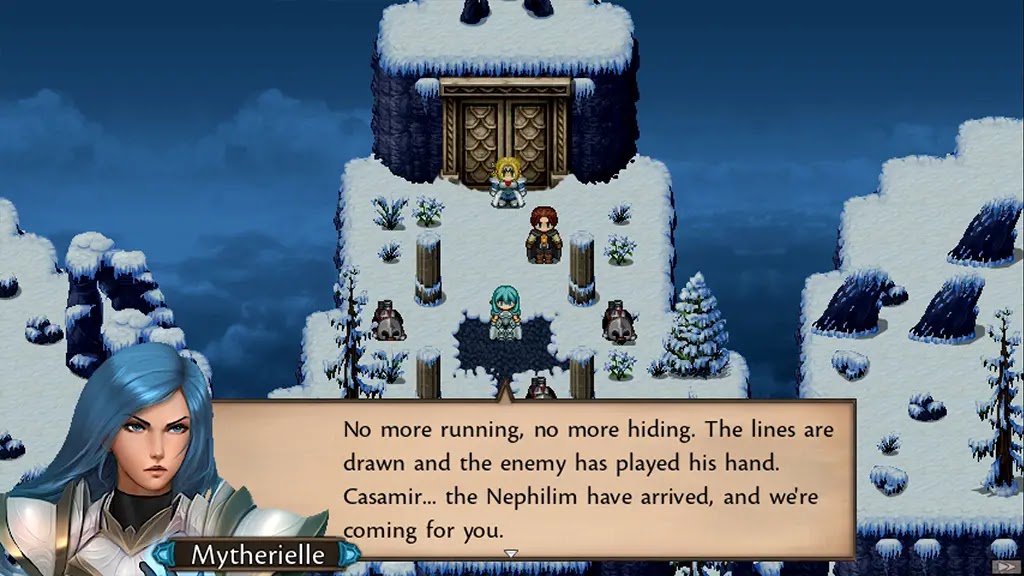
Taking place in that same world as their previous works of Steamborn and Echoes of Aetheria, the first chapter of Symphony of War begins some 100 years later, which itself, is 20 some odd years after the last major war. This I thought was a nice touch as it keeps building up the world that players would be familiar with, but, it didn’t need to worry about making sure that everything was perfectly lined up especially had there been multiple returning characters. Having put this distance in terms of time I felt also helped with the change in direction from the more JRPG based beginnings into the full blown turned based strategy that we now find ourselves in.

Maybe this is a bit of gushing because I know how hard it can be to create something more than “standard” with the RPG Maker softwares (MZ, MV, 2003, VX Ace) but Dancing Dragon Games, like Stegosoft Games (Ara Fell - RPG Maker 2003) / Rise of the Third Power - Custom Unity that looks like an RPG Maker) and Critical Games (8-Bit Adventures / Tales Across Time - RPG Maker XP), are good at what they do. Having used RPG Maker VX Ace, this latest experience will not have players exploring a rich world with plenty of side quests that keep popping up to distract from the main story. Instead, you’ll be thrown into a mission based setup with plenty of “optional” challenges keeping the spirit of the RPG roots in place as your troops and their leaders are deployed across the field.


Starting off with the current events, Symphony of War is not a happy story. Quoting directly from the Steam Store page because I couldn’t say it any better,

“At the turn of the millennium, the world of Tahnra is headed for a reckoning. The long and bloody conflict of Veridian Succession left the Empire of Veridia scarred, its people subject to brutal hardships. Under the reign of Empress Florina, the vicious cycle seemed to be broken, until a rogue General abducted her from the capital, mustering his own armies and raising the flag of rebellion. You, a young academy graduate, will command an expedition against these forces… a conflict that will set off a chain of events and shake the very foundations of the world.”

Symphony of War: The Nephilim Saga

So it’s here that we start with a few really brief tutorials to get started. Finding itself somewhere between the great styles of Fire Emblem and the Ogre Battle series, Symphony of War is exactly that. It’s a symphony of the styles that while seemingly “easy” to understand and “hard” to master, blends the two while also offering up several other elements to spice it up. While it could be hard to at this point in time not know about the Fire Emblem series, especially after the last three titles of Fates, Awakening (Conquest / Birthright), and Three Houses, the Ogre Battle series may be a bit more niche but adds a depth to the experience both in terms of management and strategy.

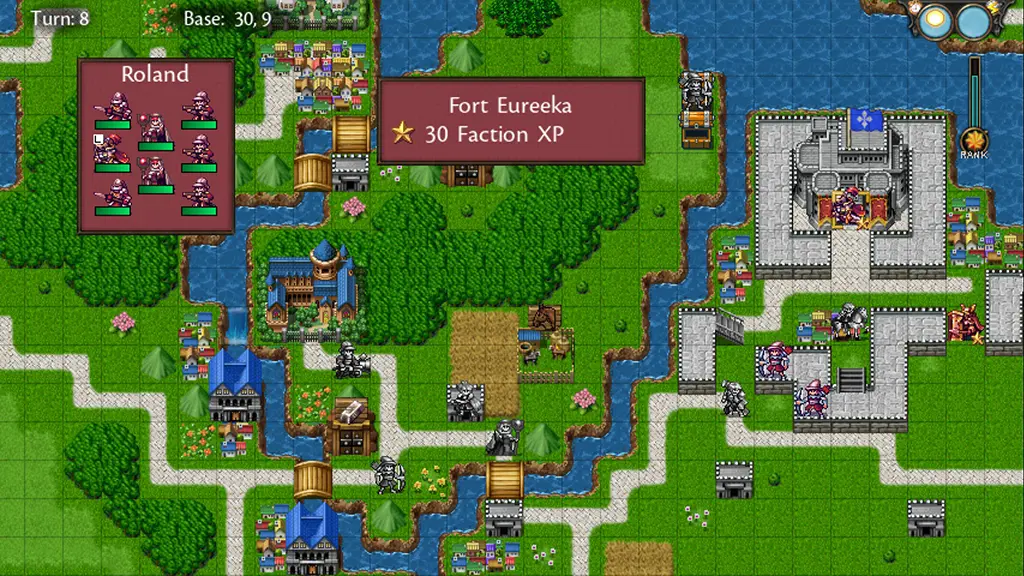
In terms of gameplay, from the Fire Emblem side you are given a series of units to control on the field. Each unit type has an advantage and disadvantage assigned to them, and it’s up to you to properly use these traits to come out on top in each scenario. The easiest example is that mounted chivalry are good against foot based units, as long as they don’t have spears in which case they would now be at a huge disadvantage. Swords-people, lance-people, archers, mages, healers, dragons, and horse and dragon riders all have their pros and cons basically making no one safe until the curtain closes on the performance.

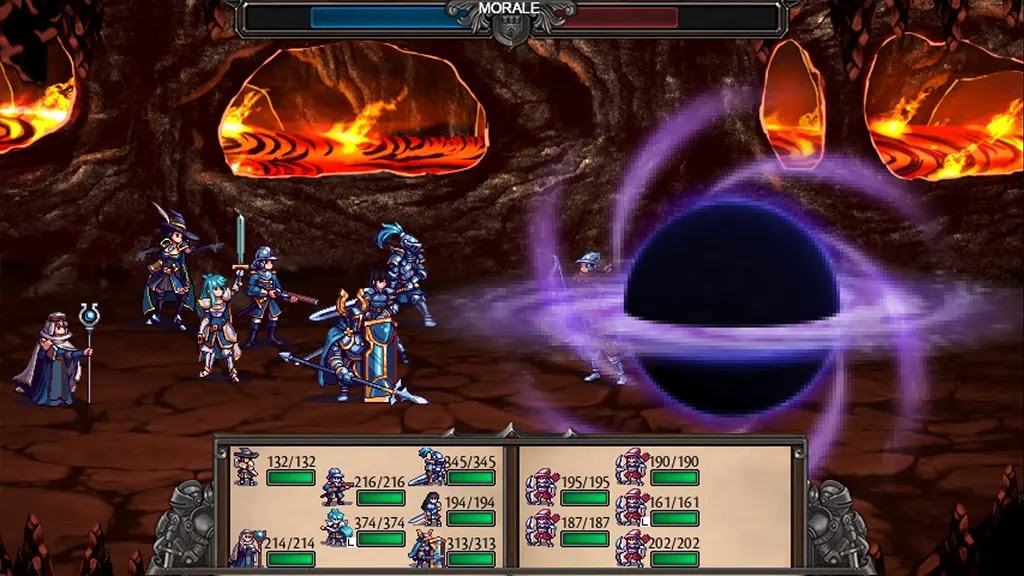
Ogre Battle by contrast, was about having squads do battle together, instead of just single units. So while the overall gameplay here is turn based, and not automatic, the influence of Ogre Battle is clear as day not only with being able to form up these squads in order to leverage advantages and disadvantages, but also for its unit class system. Unless a unit is a specific character class type related to the story, their unit class will affect what it can do and how good it is at doing it. Swords-people for example are the front line unit types, however, the base units will only be able to do so much. Once they’ve gotten enough experience points to level up their stats and have enough class points, they can then be upgraded to a more powerful version.


What I really enjoyed here is the ability to mix, match, and create whole new squads without a specific story based character unit attached as the leader. While some of the default loadouts are pretty well balanced and will definitely work in the long run, there’s always room for improvements as you set them out onto the field. Units being upgraded will help, but as leaderships get better, more unit capacity is gained and from there, additional units may be placed into the squad as long as there’s room which leads to the last aspect of squad compositions, I promise!

“This” last aspect (before more, I totally lied) is what I really loved about Symphony of War from a tactical perspective. Squads compositions are done on a 3x3 grid with a front, middle and back column. Each column unlike a normal 3x3 is actually more of a 5x3 as there are substeps that allow for a unit to be in the middle of row 1 and 2 for example. Other than in some cases being more aesthetically pleasing to see, this unit placement will help protect the units behind it. So if a unit is in this half step, it could potentially take the hit for any unit in either row 1 or row 2 from its placement in column 1.

Leveraging this will be key to victory as the battles move on and thankfully the system makes it pretty easy to manage. Each unit type will always showcase which classes it can become, or if needed, downgraded to if you need to make a switch. You’ll also be told “when” they can potentially be upgraded and the stats that are required for said upgrade. Some may take longer than others to achieve, such as needing to level up to meet stat requirements such as “X” amount of Strength, but it’s easy enough to not get bogged down especially when we are talking about doing this for dozens of units at a time. Finally, Dancing Dragon Games have made it easy for newcomers to get onboard with all of the systems properly explaining them without throwing the entire kitchen sink at you and having you figure it out on your own.

Before getting to ANY of that however, you’ll have to take to the field of battle which will require two things. One, a little bit of patience as Symphony of War is not a fast paced experience. While there are settings to speed up gameplay, my only note is that I wish there would have been a skip animation function entirely instead of just speeding them up. The second, is taking the time to see what you’re initially going to be in for and then planning your squad deployment accordingly as par for the course, there will always be more of them than you. From there, once your squads have been set into place, it’s time to get started.


Taking form in a “your turn”, “their turn”, “their turn” approach, you’ll generally have the first move. Not a typo in the first sentence, there will occasionally be more than just your forces present and they’ll act accordingly even if you want to just yell at them to stop. It could be that they are being decimated which will affect an optional objective, or that they are in the damned way of your own forces that you wanted to move into position. Once your turn however, you’ll have access to all your currently deployed squads which can be moved around the map to fight enemy units or take over key points on the map such as resource mines or horse stables.

Fighting enemy units is simple enough. Once in proximity, melee or ranged combat can be initiated. Generally starting first, you’ll attack, healers will heal, enemy will attack, enemy healers will heal, and then the counter-attacks will occur. If the only units left are healer types, they’ll generally surrender so it’s a good thing that the AI tends to target the attack types. There are other options that can be learnt through research, such as target the leader or force surrender, but these come with side effects. Attack leader will leave the unit open until the end of the turn with higher accuracy but less evasion while force surrender, if failed, will allow the enemy to attack first.

Once you get started, it’s a good thing that there is an option for a quick save that can be loaded from the main menu because these can take some serious time depending on the chapter. This is actually something that I appreciated as it wasn’t just over and done. Chapters are lengthy and contain plenty of elements on the field to either conquer or liberate your own forces. Materials that can be collected will help when upgrading your unit types for your squads. Temples will resurrect defeated troops or heal wounded ones for a price. Towns and strategic capture points will increase your faction’s reputation. There’s a lot “here” that will take some planning to get right, but if you take your time and work all of the optional objectives in? You’ll be in a much better position for the next chapter.

The chapter flow itself is rather smooth. Split between high level events or in character interactions, these will often (not always) lead to your main hub where you can perform all of your unit management. Re-assign or level up existing troops, hire new ones either at a base level for cheap and train them in battle or hire experts that while cost a pretty penny, are completely worth it. You can also buy materials to help keep enough in reserve for future unit upgrades, or, you can buy new gear called artifacts to equip your squads with. These artifacts are often give and take granting more attack power but at the cost of magic for example. Some are just bonuses such as increasing squad capacity which is great especially when you were just shy of adding in a new unit.

On perhaps a final note, Dancing Dragon Games probably didn’t want to scare any newcomers away and hid permadeath behind completing Symphony of War for the first time. This one feature, while perhaps small to some, is huge for others. I. Hate. Permadeath. Outside of roguelikes anyways and this is probably because I’m generally like, this is a good idea and then while I should have survived an encounter, I was cursed with critical hits on the worst units possible decimating my squad. So between this decision, the ease of use of the unit and squad systems, the great gameplay (short of not being able to skip your own forces’ animations) and the story that ties it together? The wait of the last five years and that fateful tweet have been worth it.

Summary

The latest from Dancing Dragon Games, Symphony of War: The Nephilim Saga, blew away my expectations. Starting off with a traditional RPG with Steamborn into a more customized turned based RPG with strategy elements in Echoes of Aetheria, the first installment of Symphony of War designed with RPG Maker Ace is a prime example of why RPG Maker Games, and their developers, are worth looking into and The Nephilim Saga is shining proof.

Score: 9 / 10


Share:

Roguebook from NACON is Out on Stadia!

Lesquin, France, June 28, 2022 – Soon, the adventure will have no boundaries: the critically-acclaimed roguelike deckbuilder Roguebook will be available on Stadia Pro and the Stadia Store on July 1st, 2022. Thwart the evil book’s traps on your phones, tablets, or computers!

Developed by Abrakam Entertainment, the developers of Faeria, and co-designed by Richard Garfield, the creator of Magic: The Gathering™, Roguebook takes place in the enchanted world of Faeria. In the game, players choose 2 heroes amongst the 5 available and form a team to take on the legends of the Roguebook, a cursed book whose existence threatens all living creatures.

Upgrade your deck: you can boost the effects of cards by adding gems. You can also transmute your cards to create completely new effects!

Collect as many cards as possible: unlike other games of this type where refining your deck is one of the most common strategies, Roguebook encourages players to build as big a deck as possible to unlock unique skills for your heroes. These skills can be crucial to the success of your quest!

Explore the world in your own way: the chapters of Roguebook are told in a non-linear way. Reveal areas of the map with the ingenious ink system and explore as much of the map as possible to unearth all its treasures!

Every run counts: in true roguelike fashion, you must start from the beginning after a defeat. But you become more powerful with each run thanks to the new cards, skills, and permanent upgrades you have unlocked!

Roguebook is now available on PC, PlayStation®4, PlayStation®5, Xbox One, Xbox Series X|S and Nintendo SwitchTM, and Stadia

Roguebook is on Facebook, Twitter, Discord, and YouTube.

All NACON Games and accessories are here: nacongaming.com

About Abrakam Entertainment

ABRAKAM ENTERTAINMENT is the AA Video Game Developer of the successful PC strategy game 'Faeria,' which launched in 2017 to 85% positive Steam reviews and praise from critics and major influencers. With their own tools and a very dedicated team, ABRAKAM has the ability to develop innovative strategy games efficiently. Roguebook, a roguelike card game, is their next major title to be launched on PC and Consoles.

About NACON

NACON is a company of the BIGBEN Group founded in 2019 to optimize its know-how through strong synergies in the video game market. By bringing together its 10 development studios, the publishing of AA video games, and the design and distribution of premium gaming devices, NACON focuses 20 years of expertise in the service of players. This new unified business unit strengthens NACON's position in the market, enables it to innovate by creating new unique competitive advantages, and achieves its ambition to become one of the world's leading players in gaming. https://www.nacongaming.com/


Article by: Susan N.


Share:

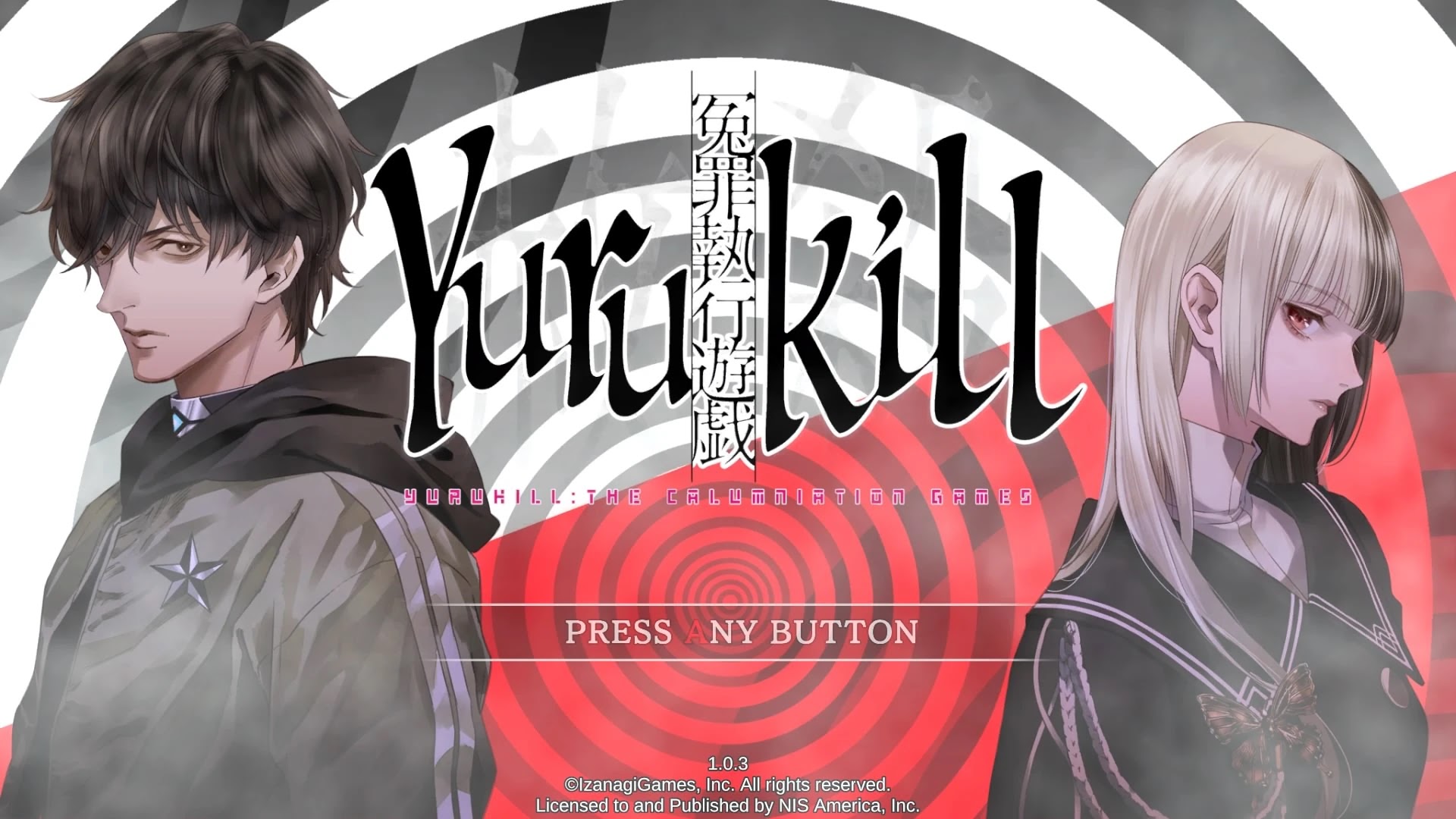
Yurukill: The Calumniation Games Review

Yurukill: The Calumniation Games by developer IzanagiGames and publisher NIS America Inc.Sony PlayStation 4 review written by Richard with a copy provided by the publisher.

Estimated Reading Time: 10 minutes. 


Yurukill: The Calumniation Games is an interesting title that combines room escape with shoot'em up, while adding in pop quiz segments for fun. A tale of prisoners trying to prove the claims against them false while vying for their lives, by…playing room escape and virtual shooting games…? Seem a little eclectic and confusing? Well, let's take a look into Yurukill, to see how it all comes together.

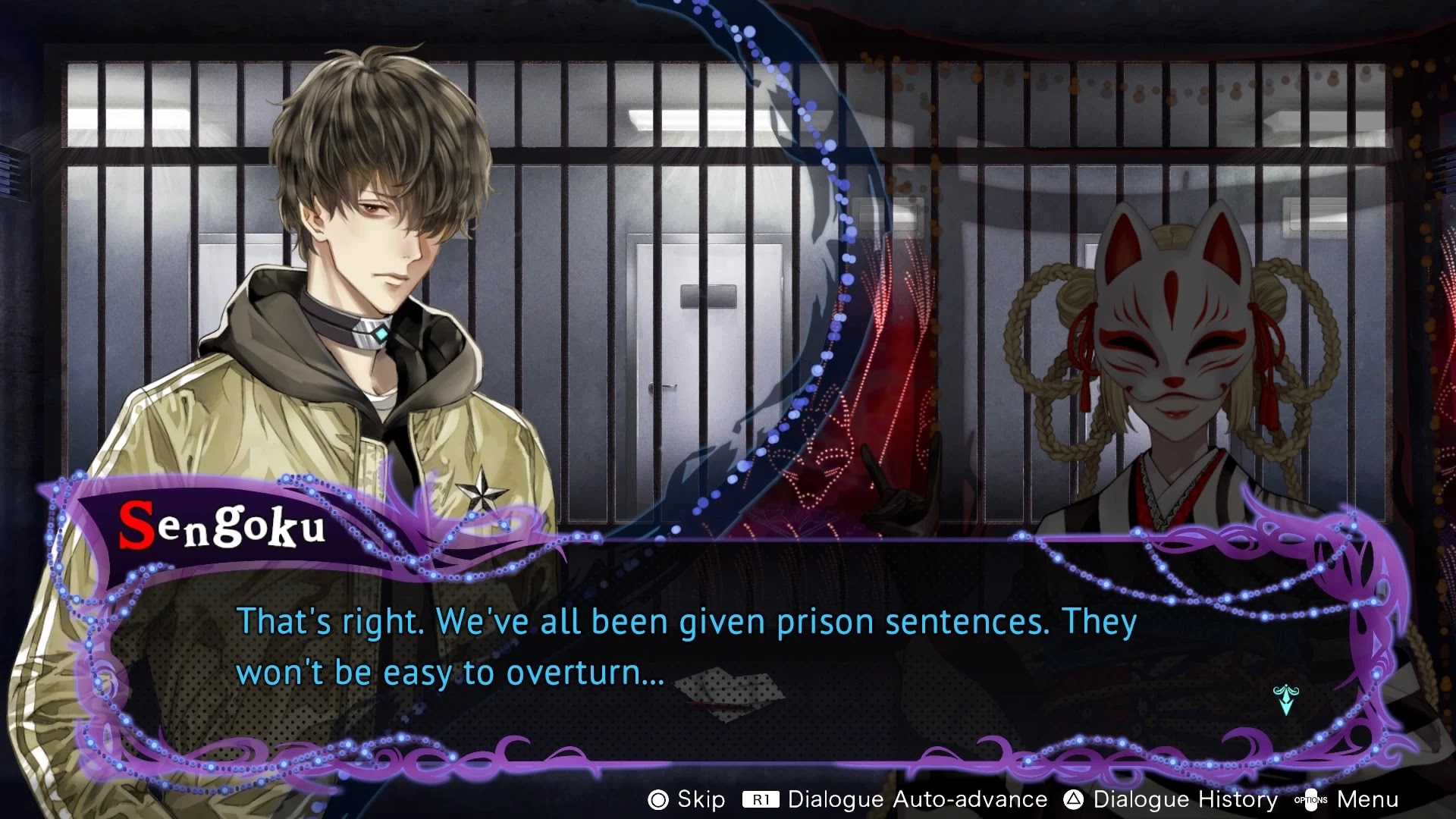
Waking up in a holding cell aboard a ship, convicted prisoner Sengoku Shunju discovers that he, and a handful of other prisoners, are all being transported to Yurukill Island, a sort of deranged theme park where the prisoners must bet their lives as they visit the park attractions. Notified by a strange girl in a fox mask, calling herself Binko, that the successful prisoner will be given the evidence necessary to prove that they were falsely accused of their crimes. In addition, an Executor will follow each prisoner around, thereby creating a team. The executors will have a wish granted if they win, and are also in charge of the prisoners' lives, as a collar has been attached to their necks that can inject a lethal poison if the Executors so desire.

So just to let you know ahead of time, half this review will probably be a rant about the room escape half of the game. For this reason, I'll be more or less dividing Yurukill into two, with a tag about the "pop quiz" type gimmick. I personally believe Yurukill feels like a shoot em up that someone decided to tack room escape elements on to for plot or to appeal to a wider audience without really giving it enough thought, which I'll try and be really spoiler free about explaining.

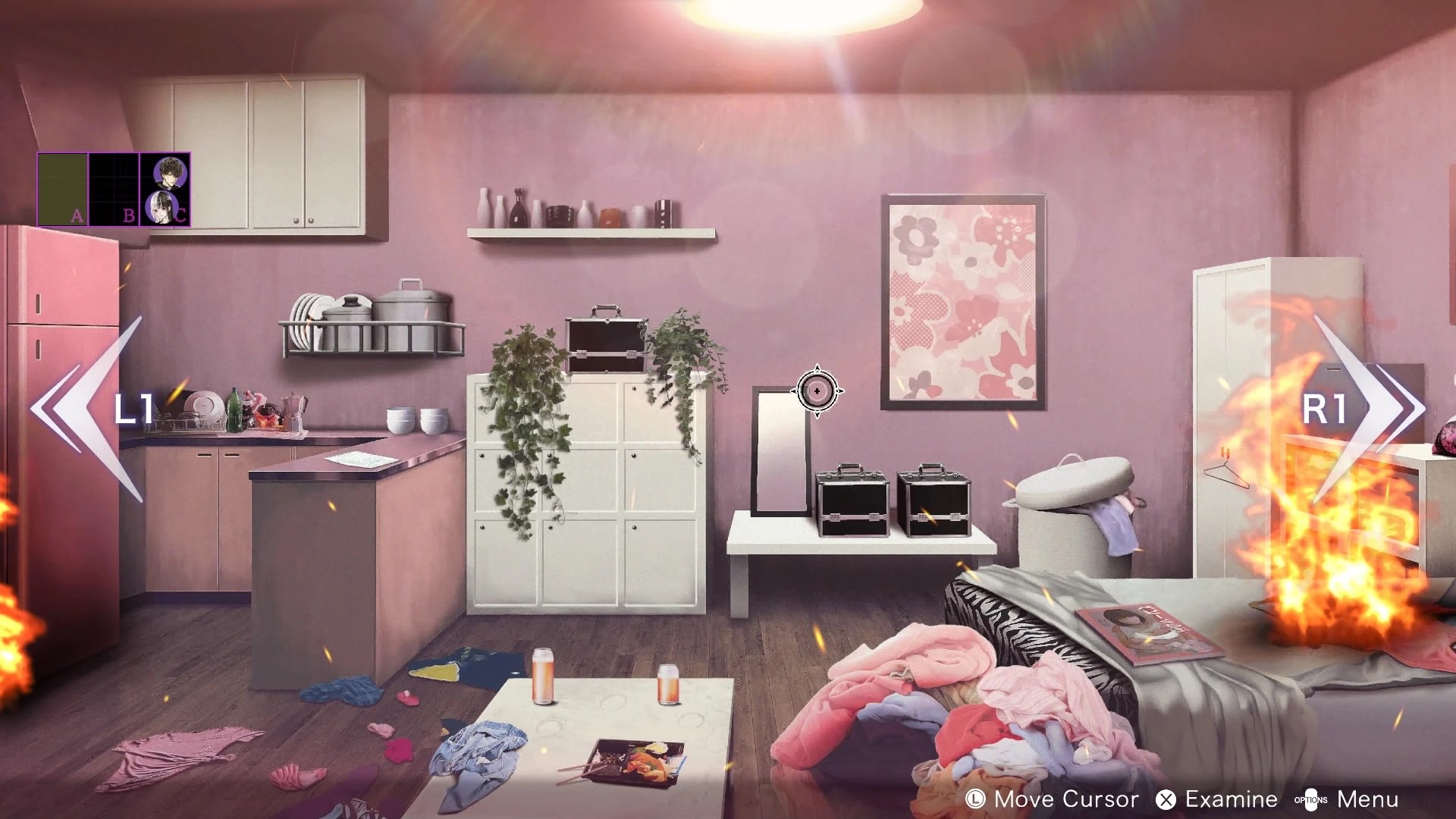
The room escape sequences are pretty standard, you can examine rooms, move a magnifying glass around and examine objects, find puzzles and hints, solve the puzzles, and make your way through. There aren't really all that many segments, and some are closer to puzzle rooms than escape rooms per se. Each attraction in the park starts off with a different set of characters exploring a room escape attraction associated with the crime the prisoner was convicted of. The attractions are, for the most part, three areas with each area having one central room and two side rooms, or just one large room. You must solve puzzles to open the door to the next area, leaving the previous area behind.

This is all pretty standard fare for room escape titles. So, why do I dislike the room escape segments so much? Well, the truth is I actually love room escape games. That is, provided the puzzles are reasonable. The puzzles in Yurukill are, except for maybe one puzzle, either extremely simple or frustratingly underexplained or poorly translated. Well, maybe it isn't that they are "poorly translated" rather than there is a lot lost in translation. Keep in mind that the game is Japanese, with anime stylized characters, and the voice acting is also in Japanese. This means that anything that either uses English as a hint, or Japanese wordplay, won't come across well, if at all, if translated literally. Normally I'm not a huge fan of localizers taking "artistic license" with translations unless necessary, and this is one of those times it's absolutely necessary.

Thankfully, you're given up to three hints for each puzzle, and while most can be solved fairly easily with a hint or two, there were exactly two puzzles that made me want to throw something. The first is in the first attraction, and it involves choosing one of two bottles. The second is in the second attraction, and if I recall correctly was the very first puzzle. Good lord, I want to beat whoever thought the solution to that puzzle was a good idea. Even after having the hints literally give me the answer, it still took about 15 minutes for me to get the correct answer. Sometimes it's easier to hit the reset button and start with nothing than try and put in an answer.

Just so you know, I did clear the full game, so I did manage to solve everything, one way or another, but it really was either extremely frustrating or disappointingly easy. Fortunately, after clearing the escape room, you get to my favourite part of the game: the shoot em up segment. Explained in-game as some sort of neural interface into the brain, the characters will get in these pods and then pilot ships in a bullet hell type shooter segment. The actual in-game explanation may be a little forced, but I found the way the shoot em up segment was handled was very well done.

The general outline of the shooting segments is that they come in three stages. This is a theme throughout the game it seems, where each stage will have a boss to defeat before moving on to the next. During the stage leading up to the boss, you will be assaulted by a number of enemies. These enemies can be shot down with either bomb energy or normal shots in one of two configurations. Normal shots are performed in two different ways, depending on what the button you use is. One normal shot is pretty basic, having your ship fire ahead, and any sub ships also firing as normal. The other firing mode has your ship reduce in movement speed, but usually allows you to manage your sub ships in a way.

For example, one character ship can get a number of sub ships to follow them around. Normal firing will have all the ships fire as they follow the exact same flight pattern you take. The secondary firing mode locks them in their place while firing. Power ups to your shot and subships are acquired by defeating certain types of enemies.

As you defeat enemies, hit things with your normal shot, or collect score items, you have a bomb gauge that will increase. The bomb gauge can be used as either a one-off shot or as an actual bomb. The shot will take a set amount of energy, while the bomb consumes it all. Both bombs and shots using the bomb energy gauge can destroy bullets, and can be immensely helpful, as one hit and you die. Another use is that there will be fox masks, one per stage, which are invisible until hit. If hit with bomb energy, they can be collected for a large chunk of score as well as an extra life.

So, now we come to the gimmick of the game: the pop quizzes. These will happen during four points in the game: once per initial escape room segment, at the start of a shoot em up segment, mid boss fight in the shoot em ups, and at the end of the shoot em ups. During the escape room sequence, it is called "maji kill time" and you have to choose the answers that will keep the executioner from killing you. You have four options, and honestly, sometimes the options are as dumb as: Yes, No, Maybe, and That shouldn't be right. Yup, and getting that wrong means you're dead. You need to get four right to continue. At the beginning of the shoot em up segment, correctly answering questions will give you a corresponding number of lives for the segment. Mid boss fight you get asked to provide evidence that you aren't the real culprit of the crime you've been accused of. The final pop quiz is basically like "confirming the events of the crime". While the Maji kill time and the evidence presentation aren't timed, the other two are.

Now I have to draw attention to this, but the music is actually really good, especially the boss themes for the shoot em up segments. MMM. The characters were all really unique and pretty much everyone was quirky in some way or another, making all the character interactions entertaining. The art style was also well drawn for the characters and shoot em up segments, and while it was a little bland in the escape room backgrounds and art, it wasn't bad by any means.

So now comes the tough part where I need to score this. I honestly really loved the shoot em up segments. They were fun, unique layouts and enemy types and spawn patterns, the areas you go through are well varied, and all of the bosses are really neat. Did I mention that enemy shots take priority, meaning they're easier to see over anything else? Yeah, definite praise for that. On the other hand, the escape room segments seem kinda rushed, or shoddily put together. While a lot of my issue stems from how the English language localization made a few gaffes here and there, it was still largely underwhelming, and seemed like it was only there to prevent you from getting bored of the plot or to pad out the game length. The puzzles were almost all way too easy, except the localization ones which were almost relegated to guesswork.

If this were entirely based on the escape room portions, I would be forced to probably give it a 4 out of 10 for boring puzzles and being frustratingly obtuse at times. A pure shmup, I would rate it rather high at a 9 out of 10. Now, while usually I would just average these values out, I do need to give credit where it's due for have one of the weirdest mash-ups of genres. Despite the rather poor in-game justification for it, I found the genre mix actually worked really well. After completing an escape room, I sure as hell didn't want to go back to another one, so the shmup stage was a nice break. After having a rather good length shmup stage, I was ready to go back to the room escape as a break from a repetitive shooter. With the weird pop quiz elements thrown in to break up some of the tedium, it meshed extremely well together, despite my initial hesitation.

Summary

Overall Yurukill: The Calumniation Games is about as weird as its title suggest. A wacky mash up of escape room and shmup with Phoenix Wright/pop quiz elements thrown in that was weirdly endearing. While Yurukill certainly fell flat in some areas, it certainly had a good showing with the cast of characters, interesting storylines, and decently integrated genre changes.

I'll be honest, it can be frustrating at times, but I still found myself wanting to continue so I could figure out the truth, and to see if I could guess at what happened before the reveal in each chapter. I laughed, I cried, I raged, but in the end, I had a lot of fun.

Score: 7 / 10


Share:

Phantom Breaker IP Acquired by Rocket Panda Games!

El Segundo, Calif. - June 28, 2022 - Publisher Rocket Panda Games is delighted to announce that they have acquired the Phantom Breaker IP from developer MAGES., which includes the 2D fighting game series and side-scrolling beat-’em-up spin-off, “Phantom Breaker: Battle Grounds.”

The long-running fighting game series created by MAGES. with designs by Hiro Suzuhira and music by Takeshi Abo has roots back in the PlayStation 2 era and spawned numerous core games, arcade versions, and pixel-brawling spin-off titles. Recently revitalized with the launch of Phantom Breaker: Omnia, Rocket Panda Games is excited to further explore new directions for the IP and is committed to maximizing the series’ potential for fans around the world.

“Today marks the beginning of a new chapter in the Phantom Breaker franchise, and we couldn’t be more thrilled,” says M. Panda. “We go way back with SakariP (Producer) and have a great relationship with MAGES., and we’re super happy to carry on the torch for the series. The team’s got some great stuff in store that we can’t wait to share with everyone in due time.”


About Phantom Breaker

Phantom Breaker is a fast-paced 2D anime fighting game series that was first conceptualized on the PS2 in a series of adventure/visual novel games (Season of L 1-2, Missing Blue, and D→A: WHITE) and debuted in 2011 as a standalone title on the Xbox 360. It has since gone on to have numerous entries and spin-offs such as the Sega RingEdge 2 arcade version, Phantom Breaker: Another Code, and the pixel-brawler Phantom Breaker: Battle Grounds games on the PlayStation 3, Xbox Live Arcade, Steam, Nintendo Switch, PlayStation 4, and Xbox One. The most recent title in the series, Phantom Breaker: Omnia, saw a worldwide release in March 2022.

For more information, check out: https://phantombreakeromnia.com/

About Rocket Panda Games

Yeah, we're new, but our team has been around the game industry block. We're gamers and we're fans, and we want the same things you do: cool games, more options, and a better gaming experience. We're in the business of fun!

Follow us on Facebook, Twitter, YouTube, Discord, or on our official website.

About MAGES.

In a time of rapid technological development, MAGES. strives to deliver fun and exciting experiences to audiences worldwide. With a strong focus on visual novels, MAGES. has developed and published several well-received IPs including the Phantom Breaker series and Steins;Gate in its native country of Japan.


Article by: Susan N.


Share:

New KOF XV Trailer of DLC Team Awakened Orochi Plus KOF '98 UM FE Update!


Osaka, Japan, June 21, 2022
– SNK CORPORATION (Corporate HQ: Suita-city, Osaka, Japan, Company President & CEO: Kenji Matsubara) is proud to announce the DLC Team AWAKENED OROCHI is coming to THE KING OF FIGHTERS XV in August of 2022.

The DLC Characters Orochi Shermie, Orochi Yashiro, and Orochi Chris join the fray. The three characters worked in the shadows to revive Orochi in KOF '97. Now they are back to form Team AWAKENED OROCHI and are now available in KOF XV!

13 DLC characters are coming in 2022, bringing the roster to a massive 52 playable fighters. In addition to TEAM GAROU (3 characters), OMEGA RUGAL, and TEAM SOUTH TOWN (3 characters) currently available, TEAM AWAKENED OROCHI will be available in August 2022. Combined with the 39 fighters in the main game, a total of 52 fighters are joining the fight.

Try out The Awakened Orochi Team in KOF ’98 UM FE, now with rollback netcode, releasing on PlayStation®4 today. THE KING OF FIGHTERS '98 ULTIMATE MATCH FINAL EDITION, a fully tuned-up version of KOF '98 which is still an immensely popular game in the KOF series, is finally coming to PlayStation®4. Based on KOF '98, this new "ULTIMATE MATCH" features a unique new "Ultimate Mode" system and game balance adjustments. Various game modes such as "Challenge Mode" and "Practice Mode" have also been added. In addition, this title adopts rollback netcode for its online matches. Online lobbies can accommodate up to nine players and features a spectator mode. Online functions have also been greatly overhauled, including a replay function for battles and settings for matchmaking conditions. Aim for the top by winning the ultimate battle between 64 popular characters from KOF's history!

The trailer is available here:

KOF ’98 UM FE releases on PlayStation®4 digitally today for 14.99€. More information can be found here: https://www.snk-corp.co.jp/us/games/steam/kof98umfe

THE KING OF FIGHTERS XV released for PlayStation, Xbox Series X|S, and PC via Steam and Epic Games Store on February 17th, 2022. The game is available in different editions, the Deluxe Edition features the KOF XV Team Pass 1 with the first six DLC characters. More information is available here: https://www.snk-corp.co.jp/us/games/kof-xv

©SNK CORPORATION ALL RIGHTS RESERVED.

  • All in-game footage displayed is work-in-progress. Design and specifications are subject to change.
    ※“PlayStation” is a registered trademark or trademark of Sony Interactive Entertainment Inc.


Article by: Susan N.


Share:

Redout 2 Review

Redout 2 by developer 34BigThings and publisher Saber InteractiveSony PlayStation 5 review written by Nick with a copy provided by the publisher.

Estimated Reading Time: 5 minutes. 


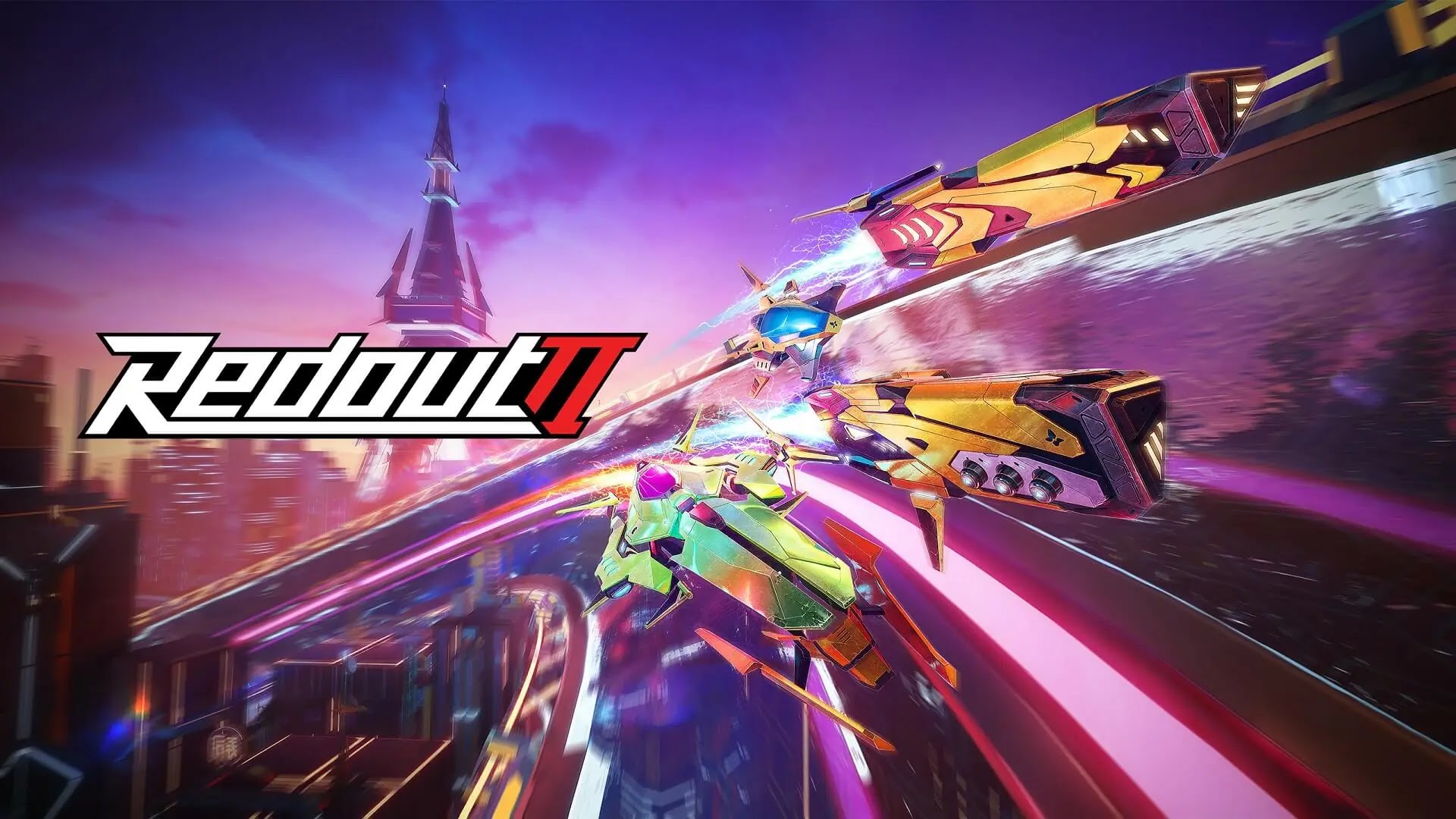
Redout 2 is a futuristic racing game in more than just appearance. There’s a notable learning curve to the gameplay, but for those looking for something a little different and are willing to put the time in to be patient through the game’s uneven difficulty spikes, there is a lot to like here. However, for those looking for a slick, more casual game they can jump into and enjoy, Redout 2 might not be for that crowd.

I was a tremendous fan of the original Redout, having played it on my PC and in particular, enjoying it in virtual reality. While this version of the game does not have that feature (yet? Maybe down the road?), it does take a lot of the same elements that made the original game a lot of fun, and applied them here.

For those new to what is now a series, Redout is a futuristic racer that kind of comes off like the lovechild of Wipeout and F-Zero. It has that same sci-fi, anti-gravity type of gameplay that feels slick and fast when you’re zooming across tracks. To that end, Redout 2 does a fantastic job of creating a sense of speed, which is really the primary feeling you want from most racing games.

There’s a lot of meat on these bones, as you can do customizations of your vehicles, acquiring new vehicles, and doing hundreds of events spread out over numerous tracks. There’s a ton of content to the career mode – if you get into this game, you have a great deal to work with. The various unlockables range from cosmetic to performance impacting, and it adds a nice level of strategy to the mix. There’s quick race, career and online modes as well, just to give players plenty of options.

What helps to make Redout 2 so unique however, is quite possibly what will keep it from gaining a lot of public appreciation. You can turn, but you can also strafe for more subtle movements. You can combine the two for sharper turns. Going up and down ramps, it’s quite easy to get separated from the track, so make sure you are pointing your nose up and down as appropriate.

As you get deeper into the game’s tracks, you’ll find more and more that don’t have rails, but do have sharp turns you might not be ready for. There are some boost options that must be leveraged heavily – but overheat yourself and your vehicle starts to take damage from the exertion. It’s a lot to manage, and it’s not always intuitive. These uneven spikes in difficulty frustrated me at times, so I can only imagine those new to the series might feel about them.

It is a shame too, because those who pass on Redout 2 might have enjoyed its unique brand of futuristic racing. They will miss out on some insanely fun, if challenging tracks. There’s just something about going inverted on loops or splashing into a watery section as you zip along the track that had me holding my breath with excitement. However, some of those aforementioned difficulty spikes - especially when merged with the 'Speed' events (which were easily my least favorite) - will almost certainly frustrate more casual players.

The more typical events like racing against opponents while jockeying for position were the most fun, whereas the speed events are all about racking up a certain number of points within a specific timeframe. These push you to the limit of boosting as much as possible to earn points through speed, while hoping to have a borderline perfect run on the track. Since even a couple of mishaps (falling off, getting spun around, just slamming into a wall when having too much damage already – usually from boosting) will tank your run and you’ll have to start again. I just did not find this mode to be much fun – but you have to play it if you want to advance eventually.

Those looking for online competition may find the lack of players somewhat frustrating as well. Depending on the time of day (early evening, weekend), I’m usually able to find full / mostly full races. But I had numerous runs where there were only one or two other racers in it with me.

For those looking to challenge the AI, and maybe take advantage of the difficulty settings, you will likely find mixed results. There’s tweaks that can be made to how the car handles, but it’s far from a set of training wheels. Impacting the enemy AI is great for the typical races, but doesn’t make the game any easier on Time Trials or Speed runs. There were also a handful of glitchy tracks I encountered. In a couple of them, I would be landing from massive jumps, only to fall right through the track.

The penalty for falling off of the track feels inconsistent at times as well. Sometimes I wind up back on the track, and I was very far back. Sometimes I would fall off, and almost immediately spawn, and seem to have lost almost no time at all. Those inconsistencies made some tracks feel less polished than they looked at first glance. There’s just something about the flow of the first game that I enjoyed more.

Summary

For those willing to stick those lumps out, build the muscle memory to hit those perfect lines on specific tracks? There’s a lot to like here. The environments are gorgeous, the sense of speed is fun and there are those aforementioned unlockables that combine with the lengthy career mode to create a very nice sense of progression.

However, the uneven difficulty and some areas where the rough edges show through might be just enough to turn many players off before they ever reach those racing heights mentioned above.

Score: 7 / 10


Share:

Random posts

Our Streamers

Susan "Jagtress" N.


S.M. Carrière

Aldren


Affiliates

JenEricDesigns – Coffee that ships to the US and Canada

JenEricDesigns – Coffee that ships to the US and Canada
Light, Medium and Dark Roast Coffee available.

Blog Archive

Labels