• When The Embers Wake - PC Review

    When The Embers Wake is a third-person narrative walking simulator about grief where the narrator, Emmie, is working through the loss of her mother. This struggle is portrayed through a red panda and mother panda.

  • Godzilla: Destroy All Monsters Melee Remastered - Xbox Review

    Two and a half decades after the game first released, we have Godzilla: Destroy All Monsters Melee Remastered available on modern consoles, and this title is absolutely a blast from the past.

  • Map Map - A Game About Maps - PC Review

    Sometimes a game will hit your feed that is completely unexpected. That is the reaction I had when I discovered Map Map - A Game About Maps (which I'll refer to as Map Map from here on out). It is a puzzle exploration game where you take the role of a young cartographer setting out on a relaxing journey to many unknown islands.

  • Fallen Tear: The Ascension - PC Review

    Welcome to an adventure across the land of Raoah! Help guide Hira on this metroidvania quest across a land that is being choked by corruption. Can you help Hira return peace to Raoah with the help of the companions he meets along the way, or will the world fall into desolation? Only you can help out in Fallen Tear: The Ascension!

  • Outbound - PC Review

    Let me tell you about this cozy game my daughter and I are playing together called Outbound. Now, I've been following this game from the initial Kickstarter back in April 2025 to its full release in May 2026. The best Mother's Day gift for myself and my first ever collector's edition in a physical copy!

  • OVER REQUIEMZ - Nintendo Switch Review

    In OVER REQUIEMZ Yuhiru is thrown into the castle of Oz and is immediately accused of trying to assassinate the King and shoved into the dungeon. Not only is she treated like a criminal...

  • Dread Delusion - Xbox Series X|S Review

    Today we’re looking at what has rapidly become an absolute favorite in the open-world RPG genre for me. An interesting story, memorable NPCs, stunning visuals, and a setting absolutely dripping with flavor, Dread Delusion sets its tone immediately and sticks with it.

  • NHL 27 - PS5 Review

    ...and I have been playing NHL games since. It didn't matter whether it was EA or another game like 2K in the 2000s; I loved hockey games and still do, but is NHL 27 a step in the right direction?

  • YAR: Forgotten Throne - Playstation 5 Review

    YAR: the Forgotten Throne will see you “Choose your path as a Warrior, Volkhv, or Archer and journey across the lands of Borea in a story-driven open-world RPG. Uncover the source of the darkness poisoning its forests and wildlife...

  • Nivalis Nights - PC Review

    Nivalis Nights is an experience that gives a strong sense of what a talented team of visionary minds can create. Nivalis Nights crafts a living breathing painting of neon basked splendor with a futuristic new art style of game that is both beautiful and urban futuristic.

Rogue Lords Review


Rogue Lords
by developers Leikir Studio, Cyanide Studio and publisher Nacon—Microsoft Xbox One review written by Nick with a copy provided by the publisher.

Estimated reading time: 6 minutes 


Rogue Lords benefits from an interesting premise, great visual design and some cool ideas that might not be wholly original, but also seldom feel derivative. That being said, the need for patience is real as Rogue Lords does demonstrate some of the more frustration qualities of the roguelike genre as well.

The story and overall introduction kick things off wonderfully. I’ve always had a bit of a soft spot for games like Overlord or Dungeons games that cast you in the role of the bad guy, and as the Devil himself? You are the apex villain. The developers have a lot of fun with this premise, sprinkling in well-known horrors such as Dracula, the Headless Horseman, Blood Mary and more as your principle characters.

The narrative revolves around how Van Helsing and his fellow demon hunters drove back the very Devil himself, claiming a great victory and providing a time of peace for mortals. Of course, the Devil is never truly beaten it seems, and he bides his time collecting souls and gathering his strength until… the souls stop coming to him and he has to send his loyal disciples back into the fray to figure out what is happening.

This backdrop is ably supported by game voice acting, colorful animations and period appropriate music as the stage is set in a gothic world from centuries ago. All of this dresses up a game that in many ways resembles other roguelike RPGs, with turn-based combat, procedurally generated maps and an almost certainty that you will die on many of your attempted runs through the game.

Some of the more unique aspects include how characters have health and spirit points – and while in many RPG’s something like ‘spirit points’ would be seen as a mana bar for casting spells, here it is viewed a second sort of health bar. In combat, the objective is to lower your opponent’s health or spirit to zero, at which point they are down – but not out – of the battle. You need to get one more killing blow in at that point, or risk that character rallying and still causing trouble.

Each run begins with you picking a trio of characters and then set out on the map where you have branching paths that sort of let you plot your path. You will have battles, lightweight roleplay interactions where you talk with / terrorize citizens, find nodes that let you replenish your resources a bit and more. The various ways you can advance progression on any given run are varied and interesting, from improving skills, boosting stats, building / acquiring artifacts and more.

By and large gameplay is what you would expect. Conversations are just option-oriented. When you start combat you choose what kind of attack you make, which yields different boons when you are done. Combat is a turn-based affair where you use skills that burn up action points that limit how many activities your characters can perform in a given turn. All three of your characters have their health and spirit bars as mentioned above, but unlike your opponents – they don’t die initially. Instead they draw off of a pool of demonic power that you have in your reserve. Not only does this serve as a sort of back-up life pool, but it plays into another feature as well.

This one really interesting feature that felt completely fresh to me was the ‘Devil Mode’, which is a sort of glorified cheat mode. The way it is handled is wildly amusing as you can use it to boost your odds on a conversation event to changing combat parameters in unnatural ways. For example, I had an early encounter where my characters found corpses and they could extract a small amount of energy for them, or with a 20% success rate, craft a powerful artifact from the corpse’s heart.

Or… employ this Devil Mode and you can jack that percentage to a 100% value if you want – at the cost of your demonic power reserves. Or in combat, you can do things like manipulate hit or spirit points, or steal a character’s negative debuff and swap it with an opponent’s active boon and suddenly you’ve flipped the script and turned a weakness into a strength. Thematically speaking, this is a fun feature that plays right into the notion that the devil doesn’t play by the rules.

Admittedly, early on I was incredibly conservative in my use of this ability, and made my adventure harder than necessary – at least initially. I then found a pretty good balance in managing that demonic power resource and how to leverage the Devil Mode options effectively. That becomes part of Rogue Lords’ difficulty curve. However, some of where Rogue Lords fell down for me was later in the game. I just felt like a lot of my progression did not carry over quite as much as I would have liked, and this made subsequent runs harder to the point of not just frustrating, but also kind of… boring.

The reason for this, is because counting stats become quite large, and gameplay is less about attacking and more about buffs and debuffs, turning what were five minute battles earlier in the game into sometimes twenty minute slogs. That is probably my biggest issue with Rogue Lords – that the pacing began to bog down for me and that ‘one more encounter’ kind of gameplay hook that was so addicting in the game’s earlier hours, became more of a ‘more of this again?’ kind of vibe at times. This did not happen all of the time, but it occurred just often enough for me to be notable.

Summary

Rogue Lords is a solid overall RPG roguelike with an interesting theme and a really cool mechanic in its Devil Mode. These things help to separate Rogue Lords from the pack, but unfortunately some uneven difficulty spikes and combat’s pacing slowing down in later runs takes a bit of the shine off the game’s longevity. It’s still worth playing until that happens.

Score: 7.5 / 10
Share:

Trek to Yomi Review


Trek to Yomi
by developers Leonard Menchiari, Flying Wild Hog and publisher Devolver Digital—PC (Steam) review written by Robert with a copy provided by the publisher.

Estimated reading time: 4 minutes 


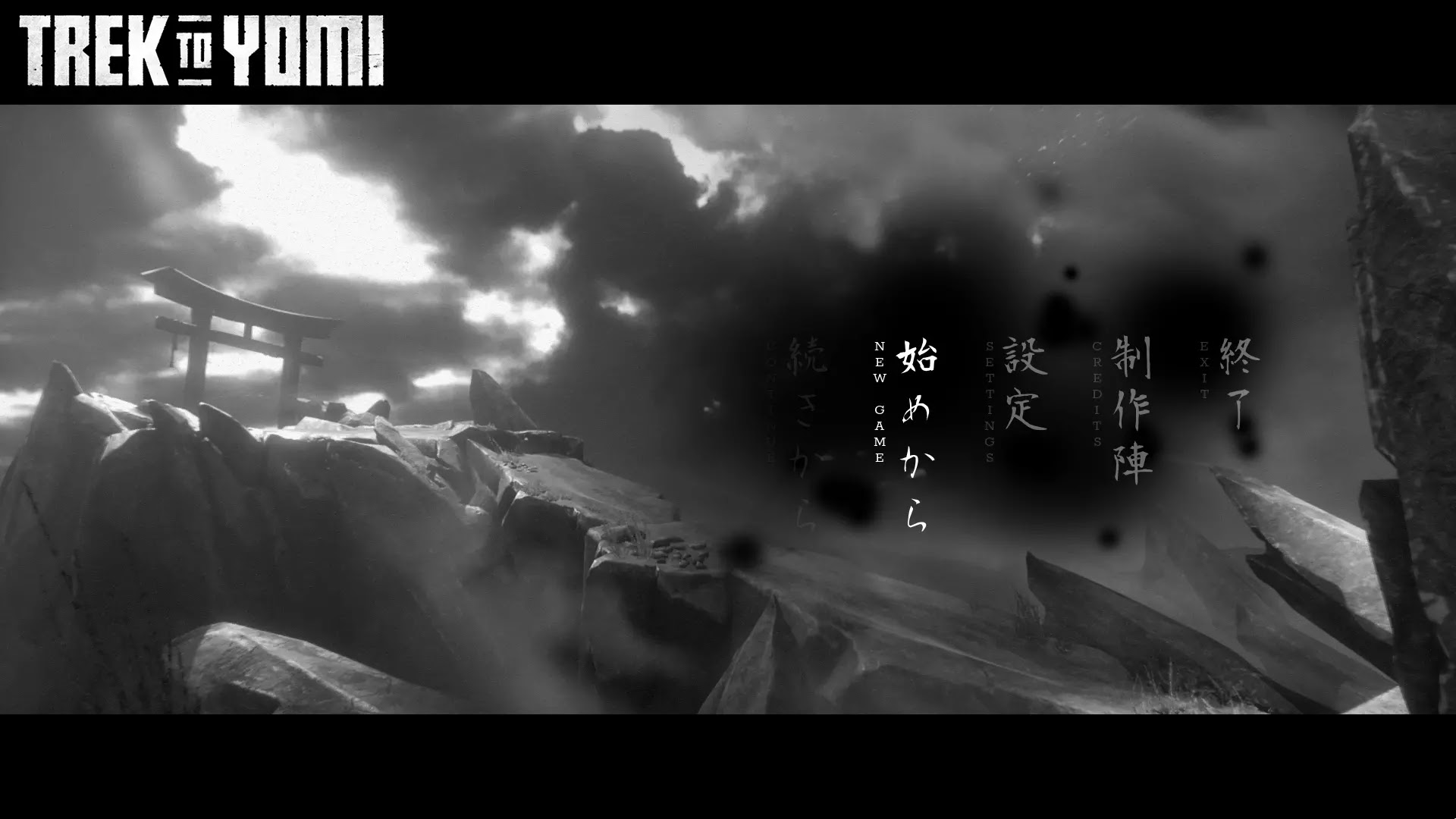
Trek to Yomi by Flying Wild Hog and Leonard Menchiari is an artistically beautiful side-scrolling action-adventure game set during a turbulent time in a fictionalized Japan. Every new screen you visit is an artistic masterpiece that warrants smashing that screenshot button with jarring regularity. The beauty of Trek to Yomi is perfectly framed by the game's composer, Cody Matthew Johnson taking a more haunting approach with its music. Tie that to the black and white aesthetic and it absolutely screams "classic samurai film," a sentiment that I wholeheartedly stand behind but where Trek to Yomi stumbles though, is in the poor execution of combat.

Trek to Yomi is a bit of an interesting beast- visually stunning in its classic use of black and white cinematography and is aurally enchanting in that haunting-kind-of-way. The combination of the eerily beautiful audio and the fixed camera angle ensures we only see and hear exactly what the developers and artists want us to see. That can be a powerful mix and it's that very mix that is evident throughout Trek to Yomi; every shot is essentially perfectly curated with a complimentary soundtrack.

While creative artistry and overly-designed (in a good way) visuals are important to a good title, especially one that will inevitably draw some comparisons in setting, style, and overarching themes to Sucker Punch Productions' near-perfect, classic samurai media-influenced, and jaw-droppingly-gorgeous, Ghost of Tsushima; these two titles are wildly different from one another.

Ghost of Tsushima, a 90+ hour epic set in a massive, thriving world with a brilliantly designed main story, and exceptionally well-written side stories (I refuse to call them "missions" or "quests" because they are just so much more) that have set the bar so incredibly high that few games will match it. Trek to Yomi on the other hand is a relatively short (beatable in a about 4-5 hours if you struggle with the combat* the way I did) side-scrolling, action game that takes place in a relatively small but stunning environment that is only enhanced by the black-and-white color palette that Flying Wild Hogs went with.

Now, many of you may be scratching your head about drawing that comparison- I admit, at first glance, it seems rather silly to compare the two. However, as you peel away the difference in combat and world design (linear vs. open-world), both titles are clear love letters to samurai films of yesteryear like Kurosawa Akira's spin on Shakespeare's King Lear with 1985's epic, Ran or through their clear focus on setting a scene and letting it quietly carry the gravitas that oozes out of both titles' very makeup.

Toss in there the main story being about a man on the search for vengeance and... these titles could almost be twins; now, would I claim that Trek to Yomi is better? If you like side-scrollers it is, but it's silly to grade those two games against one another, it's just that throughout the relatively short campaign, I could not help but feel the same weight and heavy atmosphere that both games exhibit.

Though its combat at the time of this writing is frustrating, Flying Wild Hog have come out and publicly stated that they are hoping to push out a patch in short order that addresses many of the issues with combat (as well as a number of other issues, some console-related, some not). At the time of this writing, though, combat was still in a sorry state and that really puts a sour taste in my mouth. With luck, their upcoming patch will address these concerns, though a part of me does wish these struggles were caught (and addressed) in their QA process. Let's be real, though- it's relatively rare to see a title drop without some sort of chonky bugs to deal with.

Summary

Trek to Yomi is an enjoyable, heavy, and atmospheric side-scroller whose presentation along can place it with the greats by way of Flying Wild Hog titles that's hampered by poor combat. The engrossing story, immersive and highly cinematic presentation, and an excellent score are all indicators of greatness and Trek to Yomi seems to be on its way to being one of 2022's best Indie titles; only time will tell.

Score: 7 / 10


Share:

Dice Legacy: Corrupted Fates Review


Dice Legacy: Corrupted Fates
by developer DESTINYbit and publisher Ravenscourt—Nintendo Switch review written by Hayden with a copy provided by the publisher.

Estimated reading time: 5 minutes 


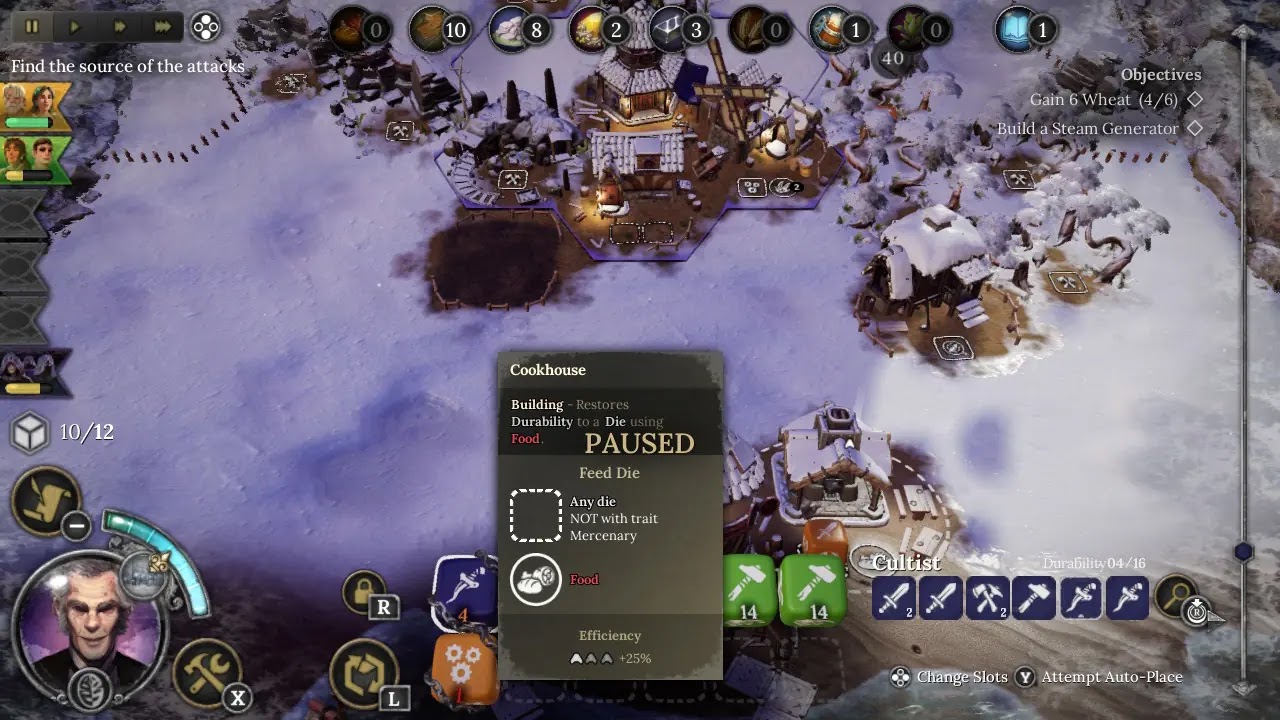
Dice Legacy: Corrupted Fates by developer DESTINYbit and publisher Ravenscourt is the first DLC offering for this unique take on the city builder genre. Based around the classic DLC fodder of letting the player experience the game from the “bad guys” point of view, Corrupted Fates brings a number of welcome changes to the game. This relatively low-cost DLC (only $8.99 CDN at publishing time) expands the world of Dice Legacy with new mechanics and a new storyline, keeping the game fresh some eight months after its original release.

For those unfamiliar with the franchise, here is my review of the original base game.

Dice Legacy: Corrupted Fates brings a number of new options that are immediately visible upon starting a new game, some of which address criticisms of the original game. In particular, players starting a new game will have a new difficulty setting available. Peaceful mode aims to keep the stress of constant invasions to a minimum. In peaceful mode, the player will only come under attack when they deliberately provoke an enemy by initiating an attack on an encampment or similar.

The second new set of options helps control how the game speed functions. Settings for disabling the ability to pause (labeled as the way the game was intended to be played) are here, as well as going all the way to the other extreme where the player can not only pause the game at will but also manipulate and assign their dice while paused. Returning to the game again after a while away, this last setting was a true savior. Finally with this setting I had time to not only read tooltips but to actually grab a drink or go to the bathroom without having to save and quit out to the main menu.

The next immediately visible addition to the game is a new leader - the Vicar - who begins with and uses a new class of dice, the cultist. Cultists are a fairly aggressive class of dice with plenty of attack options, but they also gain a new tech tree oriented around sacrificing one die to empower others. In addition, Cultists enable new options for ways to interact with encampments you find during your exploration, for good or ill. This of course also means that the player now has another dice class to balance the approval of, play politics with, and generally have even more options on how you want to approach your game.

Overall, the new game setup options resolve a number of issues I had with the game at original release. One big pet peeve remained front and center during my time with Dice Legacy: Corrupted Fates, however - UI clutter. Dice Legacy: Corrupted Fates does its very best to support players with a plethora of tool tips that pop up when your cursor passes over each building, and to an extent this is helpful in how it shows exactly which die faces and resources are needed to operate a structure. When faced with the small screen area of the Nintendo Switch in handheld mode, however, these tooltips quickly transformed from being a boon to a persistent irritant.


The game centers around quick and efficient manipulation of the dice shown in the ‘tray’ in the bottom center of the screen, so this is a critical item to always be able to see. Dice Legacy: Corrupted Fates' tooltips pop into existence in front of this UI, blocking off the player’s ability to see their dice and effectively use them. The easy solution would be to make the tooltips slide “under” the die tray UI element.

Instead, these tooltips have remained “over” the die tray UI element both in the original release and the Dice Legacy: Corrupted Fates DLC.  The only way to restore visual access to the UI is to scroll the world map around so that the building’s pop-out tooltip is slid out of the way. This can be a potentially fatal time sink when playing the “as intended” original unpausable game, and remains highly annoying even in game modes where pausing is possible.

Dice Legacy: Corrupted Fates also adds a new game mode, playable after progressing a sufficient distance into the basic campaign. This mode allows players to turn the tables and play from the perspective of the “Others”, offering new story and exploration options. This is a common trope for games for the solid reason that it lets players see an alternate perspective. Dice Legacy: Corrupted Fates uses this for that very reason, and players will appreciate the new viewpoint. As this is the marquee feature of the DLC’s campaign, however, I won’t go into much detail of the revealed story here, however, for fear of ruining the exploration of it for players.

 Summary

Dice Legacy: Corrupted Fates provides a good balance of new and updated features and additional content for the price point it has launched at. Extra game options address criticisms of the base game for being somewhat stressful as the campaign progresses, and the addition of a new dice class can make even the original campaign play differently this time through. Additional leader and political options further refresh the title, making this DLC a solid addition for players who enjoyed the original game.

Score: 8.5 / 10
Share:

Prinny Presents NIS Classics Volume 2: ZHP: Unlosing Ranger vs. Darkdeath Evilman Review


Prinny Presents NIS Classics Volume 2: ZHP: Unlosing Ranger vs. Darkdeath Evilman
by developer Nippon Ichi Software and publisher NIS America Inc.—Nintendo Switch review written by Pierre-Yves with a copy provided by the publisher.

Estimated reading time: 8 minutes 


Prinny Presents NIS Classics Volume 2: Makai Kingdom: Reclaimed and Rebound / ZHP: Unlosing Ranger vs. Darkdeath Evilman is the second of the two volumes to bring back PS2 and PSP era titles to the Nintendo Switch. Moving into the second title of ZHP: Unlosing Ranger vs. Darkdeath Evilman, the roguelike action has never had the stakes so high!

Compared to the turn-based strategies that NIS has created over the years, Zettai Hero Project (ZHP) which originally launched for the PSP is probably one of their best Roguelikes easily outshining the spiritual sequels of The Guided Fate Paradox and the The Awakened Fate Ultimatum both respectively reviewed by Nick. Heavily mixing in comedy to what is often viewed as a more hard core style, the whole story is about just one fight to prevent the end of the world and you, a nobody, will have to keep on training and dying until you truly become the hero and defeat Darkdeath Evilman.

The premise is perfect for the style. Roguelikes are all about dying, learning from your mistakes, and then hoping for the absolute best that you'll be able to pick up what you need in order to survive the next time. Meshing these principles with a story all about this happening over and over, and while on live television I may add, the absurdity was only ever highlighted by the narratives throughout the chapters.

Taking it from the top, ZHP is the story of your ordinary average "guy" thrust into the world of Heroes as the actual Unlosing Ranger is run over by a pair of siblings in a van. Receiving the belt that will give you power, you set out to fight Darkdeath Evilman and lose in the first five seconds basically dooming the world to its destruction. Having a few clauses in place to make sure that the world doesn't end, you're brought to a hero training facility on Bizarro Earth and you know what they say. What doesn't kill you, makes you stronger. Welcome to hero camp!?

Quite literally, this camp teaches you the ropes of a roguelike, to survive in this world you'll be exploring dangerous locations designed to kill you. Moving around one square at a time, your typical roguelike elements will faithfully always be by your side. If you move around, your enemies move around. If you move around, you get hungry. If you swing your weapons around, you get hungry. Run out of food? You start to lose hit points and die.

Pretty faithful to the harder aspects of roguelike dungeon crawling, ZHP isn't easy but it's ok to fail here. While you'll definitely still lose all of your stuff and money when you die, your core base stats will steadily increase as you complete more floors so you'll never truly be worse off as regardless of how many times you fail, you'll get stronger as the chapters and the story advance.

Doubling down on this is that ZHP also delves into body modifications allowing you to install acquired gear into a shadow version of yourself to boost your core stats even further. Not sure the combination is currently working out? These modifications can be swapped out with different ones until you feel like you've gotten it right for your playstyle. Adding another level to this is that you can as of the third chapter start to add boosters to these modifications making them even more potent.

To also help yourself out you'll be able to buy and sell items while in the hub as well as store items that you want to keep safe or repair them for continued use. While useful, the way that ZHP is designed generally allows for you to easily pick up new gear and then use these items as projectile weapons once their durability has reached zero. Why repair an old busted up weapon when you can throw it at an enemy's head for a lot of damage? The easy answer is that you could also use it to modify yourself but with limited inventory spaces while out in the field? You’ll want to make sure you have food and medication above all else.

Being that this was a smaller title on the PSP back when it first released, the transition from the smaller screen over to the big screen looks great. If you were lucky enough to have a PSP 3000 with the component cable attachment to play on the TV this may not be new for you but if you didn’t? It looks great as you move from square to square trying to stay alive long enough to make it count and raise your core stats or actually come out on top and bring home some new and shiny gear to use as new modifications!

Summary

Overall, ZHP was a great addition to bring back as many people who may not have had the chance to play it on the PSP when it originally released. Mixing in an end of the world comedy alongside a hardcore Roguelike dungeon crawler just works and it’s easy to spend hours upon hours making yourself tougher and tougher in hopes of finally coming out victorious against Darkdeath Evilman!

Score: 8 / 10


In terms of the collection, Prinny Presents NIS Classics Volume 2: Makai Kingdom: Reclaimed and Rebound / ZHP: Unlosing Ranger vs. Darkdeath Evilman was an awesome follow-up to Volume 1: Phantom Brave: The Hermuda Triangle Remastered / Soul Nomad & the World Eaters. Thankfully we won’t have to wait long for Volume 3:  La Pucelle: Ragnarok / Rhapsody: A Musical Adventure.

Total score for Volume 2: 8 / 10


Share:

Prinny Presents NIS Classics Volume 2: Makai Kingdom: Reclaimed and Rebound Review


Prinny Presents NIS Classics Volume 2: Makai Kingdom: Reclaimed and Rebound
by developer Nippon Ichi Software and publisher NIS America Inc.—Nintendo Switch review written by Pierre-Yves with a copy provided by the publisher.

Estimated reading time: 10 minutes


Prinny Presents NIS Classics Volume 2: Makai Kingdom: Reclaimed and Rebound / ZHP: Unlosing Ranger vs. Darkdeath Evilman is the second of the two volumes to bring back PS2 and PSP era titles to the Nintendo Switch. Starting off with Makai Kingdom, welcome back to one of the craziest titles to come out of the Netherworld.

The first half of this collection, Makai Kingdom: Reclaimed and Rebound, contains previously unreleased Japanese-only content from the 2011 PSP port that followed six years after the initial release of the PS2 edition in 2005. Containing both the original version where we follow along Lord Zetta, the biggest and baddest overlord that you'll ever piss off, the alternate mode similar to the Etna (Disgaea 1), Axel (Disgaea 2), and Beryl (Disgaea 3) modes contains the Petta Mode titled "Papa is the Strongest Overlord in the Universe" starring Zetta's daughter Petta who apparently comes from the future.

Starting with the core mode, Makai Kingdom: Chronicles of the Sacred Tome, Zetta starts the ball rolling for what could only be the biggest mistake that he could have ever made. Torching the Sacred Tome after it called him stupid, Zetta would bind his soul to the tome in order to try to prevent both his and his Netherworld's destruction complete destruction. While binding his soul to the Sacred Tome worked, the rest of the plan didn’t and his netherworld was wiped from existence. Queue the ensuing shenanigans!

Both body and netherworld-less, Zetta is found floating in space by the Oracle Pram who doesn't take long to start making literary jokes. Telling Zetta that she would help him out however, Pram sends out a call for aid to some of the other overlords who are basically frenemies to write in a wish to the Sacred Tome along with their own power to create new lands filled with enemies to defeat in order to restore Zetta to his former glory.

From this point forward, while Zetta creates the first member of his new army to be his arms and legs as he no longer has any, the rest is up to you. Given a new castle to rule in the form of a dog house, this small, yet robust, "facility" will serve as part of your base of operations in the field alongside a shop and a hospital. Once your first few minions have been created, Makai Kingdom plays out like a lot of other Nippon Ichi titles. Broken down between chapters and stages, each stage will have enemies that you need to tactically defeat in order to move on. What's different with Makai Kingdom however is how you move onto the next stage.

Unlike the core Disgaea Series, or other of Nippon Ichi’s SRPG entries, Makai Kingdom followed up on another unique spin to the turned-based Strategy RPG style. Staying in a more 3D environment like its predecessor Phantom Brave, instead of binding phantoms to objects on a map, here, you could either summon a unit or a facility that you've assigned them to in order to deploy them for combat. Bonus? If your enemies are close enough to Zetta's starting location you could summon the facility right on top of them mwahahahaha.


From this point the rest plays out in a "your turn their turn" approach. Always starting off on your turn, you'll sometimes have the chance to eliminate the enemy from the board. This all depends however on the size of the maps that you'll be fighting on which is another feature unique to Makai Kingdom. Instead of set maps that you could essentially build strategies around, here they are procedurally generated so you're never quite sure what you're in for.

Another aspect that makes Makak Kingdom unpredictable is that in order to complete a stage you either need to decimate absolutely everyone, or, reach a score of 1,000. Sometimes hitting the 1k mark is super easy as enemy units could be worth a few hundred each, other times though, there'll be a horde of enemies and they are worth next to nothing as they wipe your forces from the map. You basically always have to be ready for anything.

The rest though is pretty standard for the netherworld craziness where you can level up your characters to obscene levels all while accumulating Mana that can be used for wishes (new facilities, dungeons, Prinnies) and re-incarnation. Another twist on this is that unlike Disgaea where you simply go for re-incarnation, in Makai Kingdom a character has to be sacrificed first by spending their mana on something and only then could their soul be re-bound into a worldly object to bring them back. The better the item, the better the stat bonus! You just have to hope that you do find something good to bring back while out on the field of battle.

Now that’s the core mode and while these aspects all apply to the Petta Mode titled "Papa is the Strongest Overlord in the Universe", the story like the Axel, Etna and Beryl Modes is a whole new adventure in which if you’ve never played, like me, you’re in for a brand new experience. Starting at the same point as the core game, things take a whole different turn as Zetta bites his tongue and fails to properly bind himself to the tome costing him a thousand years to recover. As a lot can change in a thousand years, the playing field has changed and Zetta is going to have to really step up his game if he’s going to return to the title as the strongest freakin overlord.

This new content should also, unless you’re really, really, REALLY good at what you do, should not be attempted until after you’ve finished the core game at least once as the starting levels of the enemies is just under where the end levels of the main story leave off. Just be warned that once a story is started, it has to be finished and the clear data saved in order to switch back.

If there are some elements to Makai Kingdom that I wish were a bit better it would be in some of the smaller details. The pathfinding at times can be pretty bad making you wonder just what the hell the AI is thinking as it’s generally easier to move your characters on your own and then perform a move than hope that it’ll be taken care of on its own. The other element is a toss up.

Like Phantom Brave, weapons are items that can be carried by your units and thrown around if need be. If the item is tossed off the map though it’s gone and you won’t be getting it back. Early game this is BAD, late game is manageable but oftentimes a map won’t have any items to throw off in order to expand to where you need to go so the only thing left are your shiny awesome gear… unless you throw your own units overboard.

The very last thing applies to both Makai Kingdom and ZHP, but the issue I had with how out of place the sprites felt in Phantom Brave wasn’t as much of an issue here. They blended together a lot better and felt like they belonged instead of having rich textured backgrounds and then very pixelated sprites. It helped the adventures along!

Summary

Overall though, I was very pleased with Prinny Presents NIS Classics Volume 2: Makai Kingdom: Reclaimed and Rebound. Like with Vol 1, these titles have been ported forward and run very well on the Switch. While I do still wish there had been some work done to touch up the quality of the sprites, the gameplay speaks for itself and Makai Kingdom is still as much fun as it used to be.

Score: 8 / 10


Share:

Rogue Legacy 2 Review


Rogue Legacy 2
by developer and publisher Cellar Door Games—Microsoft Xbox Series X|S review written by Nick with a copy provided by the publisher.

Estimated reading time: 6 minutes 


Having first released nearly a decade ago now, Rogue Legacy is now the ancestor that has passed along some of what it was, while yielding something unique to its next generation. The original Rogue Legacy had that addictive ‘one more run’ gameplay mixed with a handful of different roguelike elements. Rogue Legacy 2 takes a lot of those same fundamentals, mixes them up a bit and manages to create something that somehow feels both familiar yet fresh in an experience that is difficult to put down.

You start off a simple knight, venturing into a tower where you learn the basics of Rogue Legacy 2. The same vibrant visuals as the original are here, just a bit more punched up in terms of animations on the screen and variety. The presentation is just rock solid, with music that matches the graphics beautifully. There’s a lot going on at times visually, and that’s part of the challenge as you try to navigate spikes, jumps, projectiles and enemies.

The core gameplay is still run, jump, attack – but there’s a lot of small twists added. You can unlock new abilities by undergoing certain trails sprinkled along the way, and man – some of these are hard. But eventually you’ll learn the ability to read messages left behind, or dash in the air and more. The best part is, these abilities carry over when you die. In fact, one of the things that can be most hit-and-miss with me and roguelikes is whether or not they are too punitive. I’m fine dying a lot, but I don’t like the feeling that I am no longer progressing. Rogue Legacy 2 does a great job of making almost every run feel at least slightly fruitful.

This comes in a couple of different flavors. For one, as you fight your way through the tower, you earn gold. When you inevitably die, you pick from one of three ancestors who have various traits and abilities and classes (more on that in a bit) and then you go to your castle, where you spend gold to unlock new classes, better stats, some in-game perks, or just purchase and make things in the shops outside your castle as well. These bite-sized progressions seldom make a big difference on a single run, but their cumulative impact can be felt over several.

There are some other elements that can persist, such as unlocking pizza routes (I laughed when I discovered this), or spending a percentage of your gold each time to lock down the map of the tower and prevent it from getting procedurally generated after you die, and some gems you can buy that grant you particular boons along the way as well.

Like the original title, Rogue Legacy 2 has a lot of abilities and powers to discover. I think my absolute favorite (at least to laugh at – it was stupidly challenging and you were never going to win with this run) was a character wielding a peace sign. You could knock enemies back with it – but you couldn’t kill them. But it had a massive gold find modifier that made exploration fruitful, but combat borderline pointless. There are a variety of traits and weapons that can be found on randomly generated characters, and this also helps to keep runs fresh as you may not always have your preferred class available.

Classes are a great wrinkle in Rogue Legacy 2, because they are fundamentally the same with jumping, attacking and a special skill. Some of the classes are more closely aligned to one another (like melee classes such as Barbarian or Valkyrie) than others (Mages and Rangers are slower, more thoughtful classes as you try to figure out how to eliminate enemies from range). You can even unlock an ability to earn experience towards classes, and as you use them more, they grow more powerful. Again, you’ll die – but that sense of progression persists.

However, beating Rogue Legacy 2 is going to take a lot of work. As I mentioned above, there’s a hecticness to the gameplay that often keeps you from getting to strategize your best approach. There are some baked in puzzles and some interesting enemy placements that will reward thoughtful approaches – but there are times when you enter the room and are almost immediate besieged by flying daggers, projectiles that can go through walls and enemies that will dash at you as soon as you are on their plane. Sprinkle in some jumping and some environmental hazards such as spikes, and you will have your hands full.

Thankfully, for those looking to progress but perhaps lacking the twitchy hand-eye coordination needed to best some of the areas, there is a ‘House Rules’ option that lets you apply some cheats to the gameplay. You can make enemies hit more weakly, or have less health. You can negate most bodycheck damage (but keep in mind weapon swings and projectiles will still damage you) and more. The biggest game breaker is the ability to fly (as opposed to having to run and jump) – but even that has a caveat as getting hit while in flight will cause you to fall to the ground, making it even more important that you avoid projectiles and don’t get lazy while soaring around.

Summary

Rogue Legacy 2 is a delightful mix of action-platforming with enough progression elements baked in to keep the many deaths from getting too frustrating. Unlocking new areas of my tower or discovering new traits was enjoyable, as was trying out new class / weapon / ability combinations with each new generation.


Rogue Legacy 2 is a worthy successor to its ancestor.

Score: 8.75 / 10

Share:

Sumire Review


Sumire
by developer and publisher GameTomo—Mobile (Apple iOS) review written by Pierre-Yves with a copy provided by the publisher.

Estimated reading time: 4 minutes 


Sumire, by GameTomo, is a story about grief which can be a really hard emotion to convey as no one experiences it in the same way. The loss of a loved one, a partner, a friend or a pet to name the most common ones, they all have something in common. You being left behind, and how you deal with that. That's a big part of what Sumire is about.

Set over the course of one day, one very special day, Sumire, our titular protagonist, has the opportunity to make choices that could affect both her and other people's lives for either better or worse. Do you choose to lash out or do you put your anger aside? Do you do what you want to in order to satisfy your own selfishness or do you do what's best for everyone involved and hold their potential feelings above yours?

Having recently lost her grandmother and going through her parents' separation, it's clear that things are not currently going well in Sumire’s life. Combined with being a more shy and reserved personality alongside being bullied by some of the others her age? It can be hard to follow along especially if you've been at any of these points in your own life. Given the chance, wouldn't you have liked to have something different happen? What about seeing that lost loved one one last time?

This is where the journey starts. In the early hours of a morning, Sumire is woken up by something unrelated when a seed comes crashing through her bedroom window. Planting this seed in a flower pot, she would wake up later that morning with a flower full of life, promising that today would be the most special day, and for today only, things could be different if she wished for it. Sumire just had to pick herself up and start walking.

While very simple in principle, it's the execution of making these choices that could be hard to do at times. Moving Sumire around each place you visit with the left side of the screen and interacting with points of interest on the right, you'll also have a fair amount of dialog prompts. Like the main theme of dealing with grief, you'll also have smaller problems to solve or promises that you can make, and then break if you don't follow through within a specified timeline. Like life, grief can come from several places and compound itself if you let it.

These elements are what raises the bar on what Sumire, and Sumire's adventure, set out to do. Some of these seemingly smaller decisions can wrap back around later when once again dealing with the same person. Were you nice to them even if no one would blame you for lashing out? Or did you lash out? Did you say something potentially hurtful like you hated the game that was invented even if you truly felt it was fun? What kind of person is Sumire? And what kind of person are you?

Not an overly long adventure, Sumire may take about two or so hours on and off depending on how you are with a smartphone. I think this timing was perfect for the style as it doesn’t have a chance to go on for too long. It gets its message across, and allows for you to load it right back up and see what could have been different had you said something else at a few points in time. Of course this assumes you aren’t already an emotional mess from what some portions of the journey have in store for you.

This is another element that I enjoyed. Like life, there are some days where you really do not want to have to deal with certain situations as “today”, it is not your problem. You do not have that emotional bandwidth to give to yet another person, and because of this, you’ll have to politely decline and move on. What happens after that? With real life you may wonder what happened if you didn’t stop to help, but here? Here you simply move forwards through this one day in Sumire’s life.

And there’s a lot to unpack here from a variety of different sources, which like grief itself, will affect everyone differently. I don’t deny I got teary eyed a few times, and there’s plenty of things within this short adventure that I could relate to, but I think that the developers did a good job with the portrayal of it all. 

Summary

So overall, if you have the chance to sit down to Sumire? I would, but be prepared as you may not get through without a few tears or heartaches.

Score: 8 / 10

Share:

Dungeon Alchemist Preview


Dungeon Alchemist
by developer and publisher Briganti—PC (Steam) preview written by Robert with a copy provided by the publisher.

Estimated reading time: 4 minutes 


Dungeon Alchemist by Briganti is the perfect tool for those aspiring tabletop dungeon masters out there that are looking for tools to help spice up their tabletop games. Given my inner cartographer has been screaming to be let out lately, when the opportunity arose, I hopped at the chance to take Dungeon Alchemist out for a spin. Needless to say, I am extremely impressed at the ease of use, quality of the Early Access title, and just the general concept of simplicity found rampant throughout the various features, tilesets, and just overall experience. That’s the sign of a must-own in my book…


Though still in Early Access, Dungeon Alchemist is well worth its modest price, if for nothing more than just how well the utility runs. Devoid of the typical Early Access struggles found in pre-release software like frequent crashes, variable framerates, and poor audio, are blessedly absent here. That’s not even to get in on the actual functionality and overall experience. Polished, presentable, and most importantly, easily accessible make Dungeon Alchemist a must-have companion for any budding dungeon masters out there. If anything, the only real complaint that I have is one that I am confident will eventually be addressed. I want more than typical fantasy fare by way of the available tilesets that govern the overall theme of the map you’re creating.

Dungeon Alchemist is clearly geared towards D&D-esque fantasy settings. While I’m 100% on board with the different fantasy-esque tilesets, I really hope to see some sci-fi-esque tilesets (inside of stations/ships, urban sprawls, etc.) as I would spend hours at a time tossing entire scenes/campaigns together. Besides, I’m not doing that with the current fantasy-geared tilesets, I most certainly am doing that. It’s just that I really hope to see more themes in the available tilesets because I’m absolutely hooked on the simplicity of Dungeon Alchemist that I’d like to use it to create entire world maps.

Enough about the overall concept though, eh? What’s neat about the software, you ask? Everything.

To start, there are three basic terrain palettes currently available; Dark Parchment, Forest, and Grasslands. Where the Dark Parchment option is clean and simple, the Forest and Grasslands options add a few more elements to their initial designs. For both of those map options, you’ll have elevation choices ranging from Flat and Fjords to Ravines and Canyons, though I don’t personally use anything higher than Hills. It's partially because any of the scenes/maps that I have in mind don’t exactly “fit” in mountainous regions, but also because any elevation beyond the Hills option I typically go with because the terrain variances (like elevation, water, etc.) seem to me to be “off.” 

I’m making relatively small 28x28 maps (that can handle 2-3 buildings or a dozen or so decent-sized rooms) but when you start adding water and mountains to the features in the map, you quickly run into the problem of scale. See, the biggest “issue” I have with Dungeon Alchemist is that anything other than the relatively flat elevations feels like the scene is designed for buildings/environments that are wildly different sizes.

As you can see, when there are variations to the maps, while they look fantastic, once you start adding buildings/rooms, you can see that the building cuts into the terrain since actual assets that you apply to the map don’t follow the actual terrain, but rather on the “sea level” axis. However, this is still very Early Access and the chances are good that things like this (along with additional themes for tilesets/terrain) will eventually be ironed out.

Summary

Simplicity is king here and Dungeon Alchemist is by far the most easily accessible DM/GM utility when compared to the likes of CC3+ and DungeonDraft. Its simplicity and approachability is why my first map took just inside two hours, but my second map was just under 30 minutes. The map that is shown in our intro video was completed in about 10 minutes. Once I'm happy with the map, I can quickly export to a JPG, or even to tabletop sites like Roll20!

Score: N/A

Share:

Deck of Ashes: Complete Edition Review


Deck of Ashes: Complete Edition
by developer AY Games and publisher Buka Entertainment—Microsoft Xbox One review written by Nick with a copy provided by the publisher.

Estimated reading time: 7 minutes


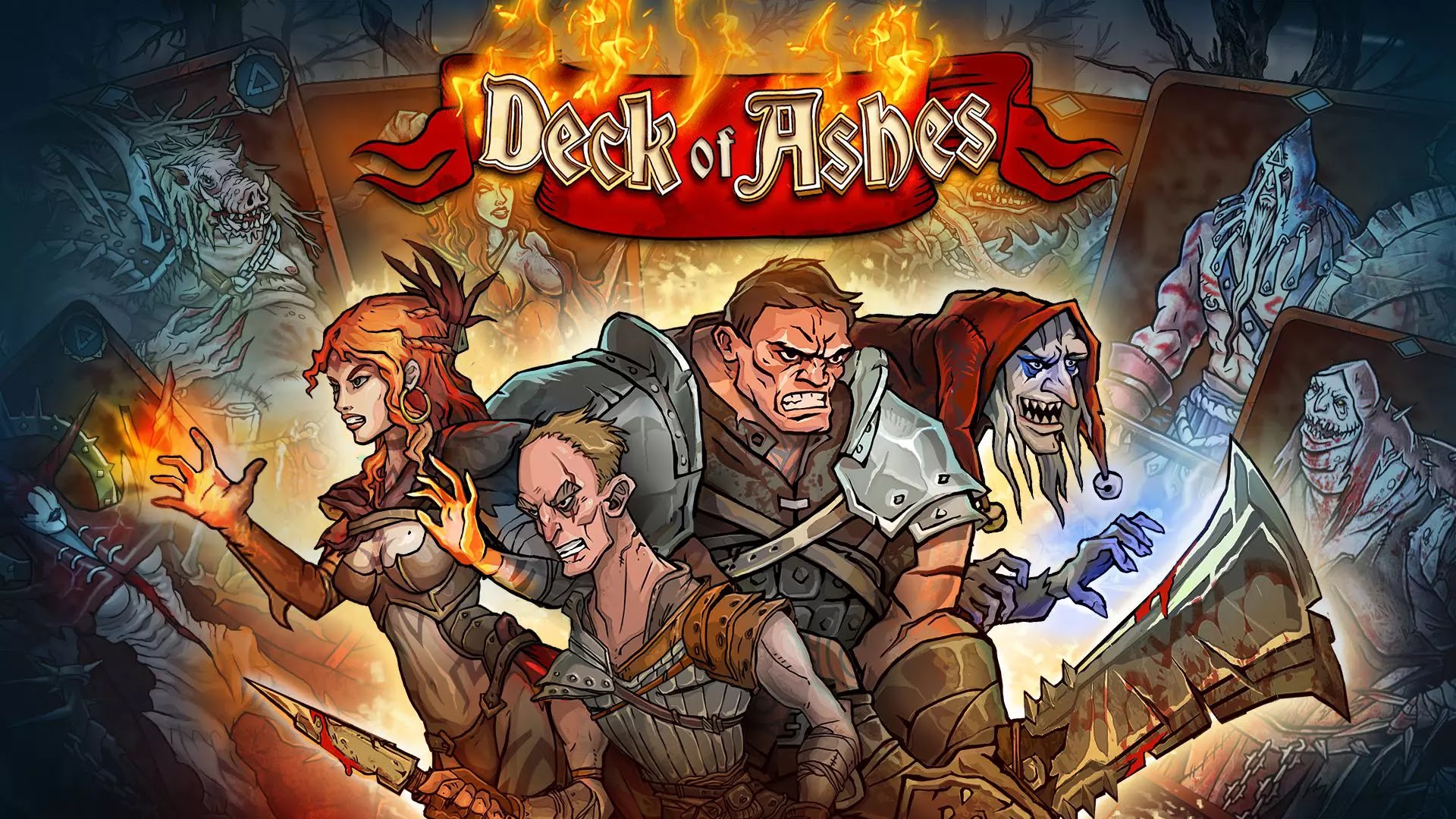
Deck of Ashes: Complete Edition is an addicting mix of strategy, RPG and card collecting mechanics tossed into a moderately forgiving roguelike that gets a lot of things right. Some technical hiccups however, create some rough edges that diminished my enjoyment along the way.

Turn-based card battling roguelikes have really hit a stride over the last couple of years or so with titles like Slay the Spire helping to pave the way. Some of them like Roguebook are exceptionally well-balanced and bring some new ideas to the table, while others like Nowhere Prophet struggles with balance and polish. Deck of Ashes falls somewhere in between those two polar opposites.

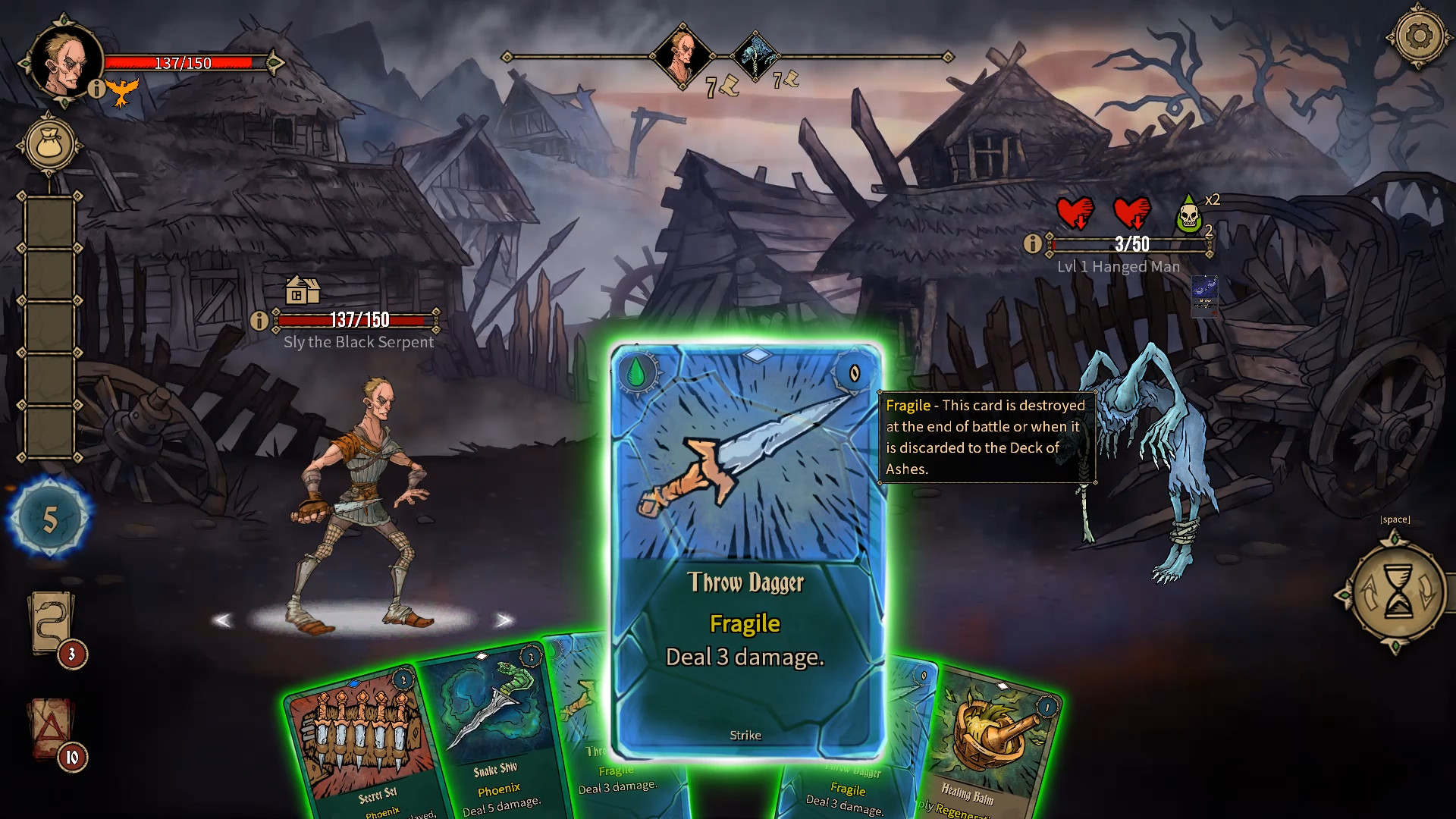
There are quite a few things that Deck of Ashes gets right. I enjoy the unique concept of how cards are ‘burned’ – or used up. It creates a bit of a seesaw back and forth between what to use and not – especially since ‘refreshing’ the cards can cause your character to lose life. In a lot of these deck battling games, having a large library of cards actually can hurt you as opposed to having a finely honed set of really strong cards. The way your cards get ‘used up’ in Deck of Ashes makes the case for larger decks.

The different characters you can use build their decks up in unique and interesting ways. These decks are not always the most approachable – some of the strategies take a bit of time to fully surface themselves, but once I got the hang of them? The end result was incredibly satisfying, especially when my decks were really humming through more challenging battles. Deck of Ashes doesn’t start off as the most approachable game in the genre, but the difficulty options and fewer spikes in enemy stats makes for one of the better balanced difficulty curves I’ve seen out of these types of games.

The visuals are well-drawn, if lightly animated, and the music suits the theme and tone of the game without being overly memorable but still pleasant. It’s a solid enough presentation, especially with some voice acting thrown into the story to boot. The tutorial was basic enough to learn how the core mechanics work, even if it left plenty of room to learn through trial and error later when playing the core game.

At its best, Deck of Ashes was wholly engrossing for me. I spent my first night playing until about four in the morning. However, I started stumbling onto some technical difficulties along the way that had me questioning how the port was handled.

There are some finicky controls at play here as well. The two most glaring examples really started to wear on me by the end of the third chapter of my second character playthrough. Firstly, selecting nodes on the map is often unresponsive. I’m not sure why – it shouldn’t be so hard to just press the left stick in a direction and have it select – but the longer I play, the less often it works. There are times where I am just ‘stuck’, unable to select the node right next to me until I quit and come back. Then the action works just fine… for a while. After twenty or so minutes, it stops working again. Now, I have found a workaround for it sometimes, by pressing the left button to move the 'cursor' to the left item bar and then back again, seeming to refocus it on where it should go - most of the time. Still, there are some times when you should be able to move in multiple directions (the cursor moves between larger and smaller to indicate that it is an option on the map), but no matter what I try, sometimes I simply cannot choose a direction unless I move off of my current node and back again. And then it mysteriously works.

The other issue I saw was in the card management / refreshing burned cards. Some playstyles and cards favor keeping a card burned, so you don’t want to spend your camp points refreshing those ones. But if you pile up too many cards in your deck, the middle rows are not selectable. I can select the top two rows and the bottom two rows, but if I acquire enough burned cards that there are five or more rows, I simply can’t select and refresh any of those middle rows. I’ve got video of the two above instances, as they became so frustrating to deal with.

My last quibble is just a questionable UI decision. Often times during combat, when you move over to a card in your hand, it balloons up so you can view the text. That in and of itself makes sense, but it can obscure enemies to the right side of the screen and make it challenging / impossible to see which one you are looking to target with a spell. This combined with the other issues I encountered hold Deck of Ashes back from reaching its full potential for me.

Summary

Deck of Ashes: Complete Edition is a mixed experience for me right now. The core experience was engaging and one that I enjoyed – when things worked the way I expected them to. Unfortunately, I ran into enough technical hurdles that I stopped my second playthrough and have only picked it up once since then (three days ago to see if the issue with not being able to refresh middle rows of cards was still happening – it is).

It’s a shame, as things currently stand - but thankfully with a few tweaks to polish up some of the rough edges and make the most of the core experience.

Score: 7 / 10


Share:

Random posts

Our Streamers

Susan "Jagtress" N.


S.M. Carrière

Aldren


Affiliates

JenEricDesigns – Coffee that ships to the US and Canada

JenEricDesigns – Coffee that ships to the US and Canada
Light, Medium and Dark Roast Coffee available.

Blog Archive

Labels