• When The Embers Wake - PC Review

    When The Embers Wake is a third-person narrative walking simulator about grief where the narrator, Emmie, is working through the loss of her mother. This struggle is portrayed through a red panda and mother panda.

  • Godzilla: Destroy All Monsters Melee Remastered - Xbox Review

    Two and a half decades after the game first released, we have Godzilla: Destroy All Monsters Melee Remastered available on modern consoles, and this title is absolutely a blast from the past.

  • Map Map - A Game About Maps - PC Review

    Sometimes a game will hit your feed that is completely unexpected. That is the reaction I had when I discovered Map Map - A Game About Maps (which I'll refer to as Map Map from here on out). It is a puzzle exploration game where you take the role of a young cartographer setting out on a relaxing journey to many unknown islands.

  • Fallen Tear: The Ascension - PC Review

    Welcome to an adventure across the land of Raoah! Help guide Hira on this metroidvania quest across a land that is being choked by corruption. Can you help Hira return peace to Raoah with the help of the companions he meets along the way, or will the world fall into desolation? Only you can help out in Fallen Tear: The Ascension!

  • Outbound - PC Review

    Let me tell you about this cozy game my daughter and I are playing together called Outbound. Now, I've been following this game from the initial Kickstarter back in April 2025 to its full release in May 2026. The best Mother's Day gift for myself and my first ever collector's edition in a physical copy!

  • OVER REQUIEMZ - Nintendo Switch Review

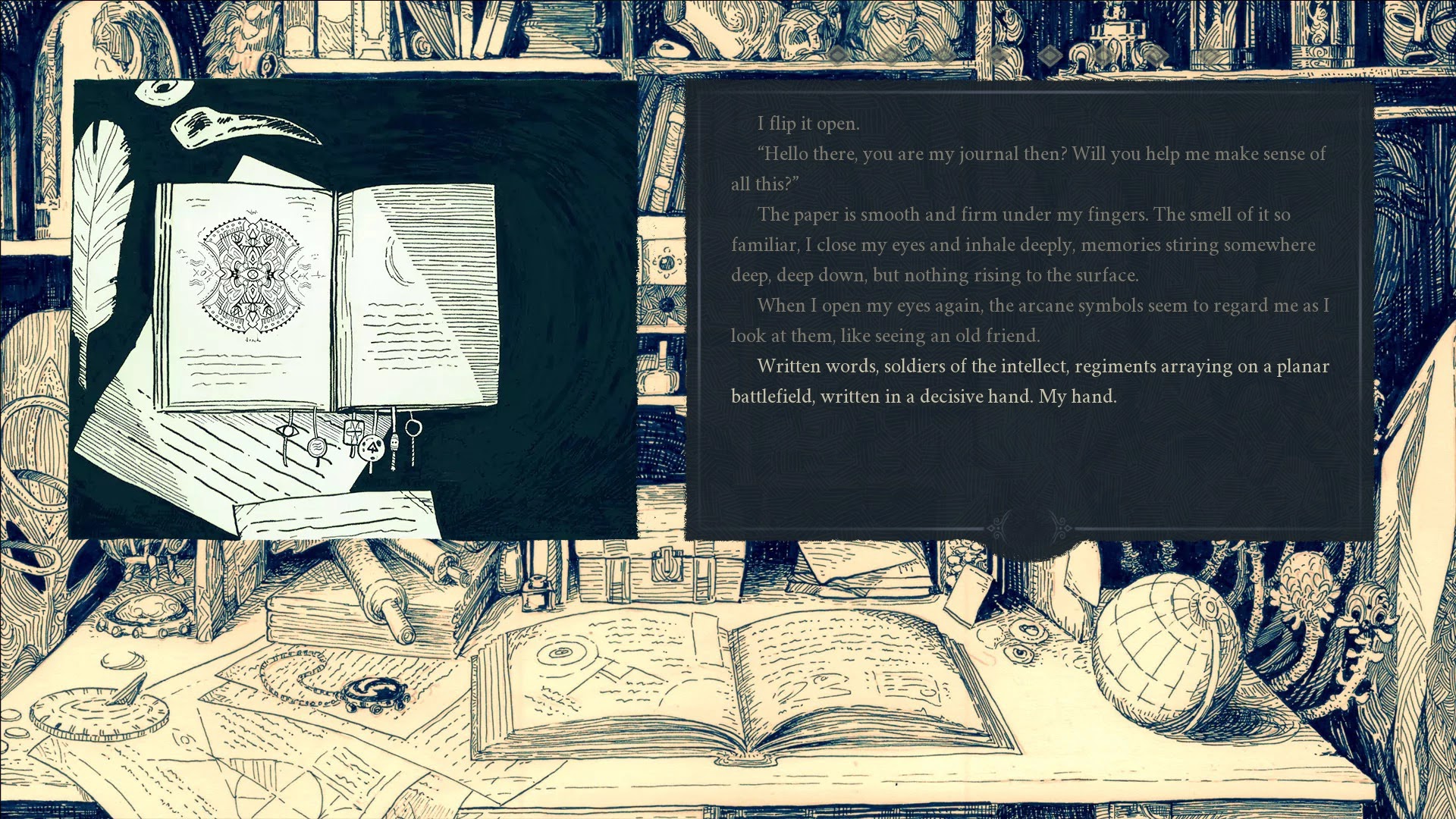
    In OVER REQUIEMZ Yuhiru is thrown into the castle of Oz and is immediately accused of trying to assassinate the King and shoved into the dungeon. Not only is she treated like a criminal...

  • Dread Delusion - Xbox Series X|S Review

    Today we’re looking at what has rapidly become an absolute favorite in the open-world RPG genre for me. An interesting story, memorable NPCs, stunning visuals, and a setting absolutely dripping with flavor, Dread Delusion sets its tone immediately and sticks with it.

  • NHL 27 - PS5 Review

    ...and I have been playing NHL games since. It didn't matter whether it was EA or another game like 2K in the 2000s; I loved hockey games and still do, but is NHL 27 a step in the right direction?

  • YAR: Forgotten Throne - Playstation 5 Review

    YAR: the Forgotten Throne will see you “Choose your path as a Warrior, Volkhv, or Archer and journey across the lands of Borea in a story-driven open-world RPG. Uncover the source of the darkness poisoning its forests and wildlife...

  • Nivalis Nights - PC Review

    Nivalis Nights is an experience that gives a strong sense of what a talented team of visionary minds can create. Nivalis Nights crafts a living breathing painting of neon basked splendor with a futuristic new art style of game that is both beautiful and urban futuristic.

In Nightmare - PS5 Review

In Nightmare by developer Beijing Magic Fish Technology Co., Ltd. and publisher Maximum Games—Sony PlayStation 5 review written by Pierre-Yves with a copy provided by the publisher.

Estimated reading time: 5 minutes.


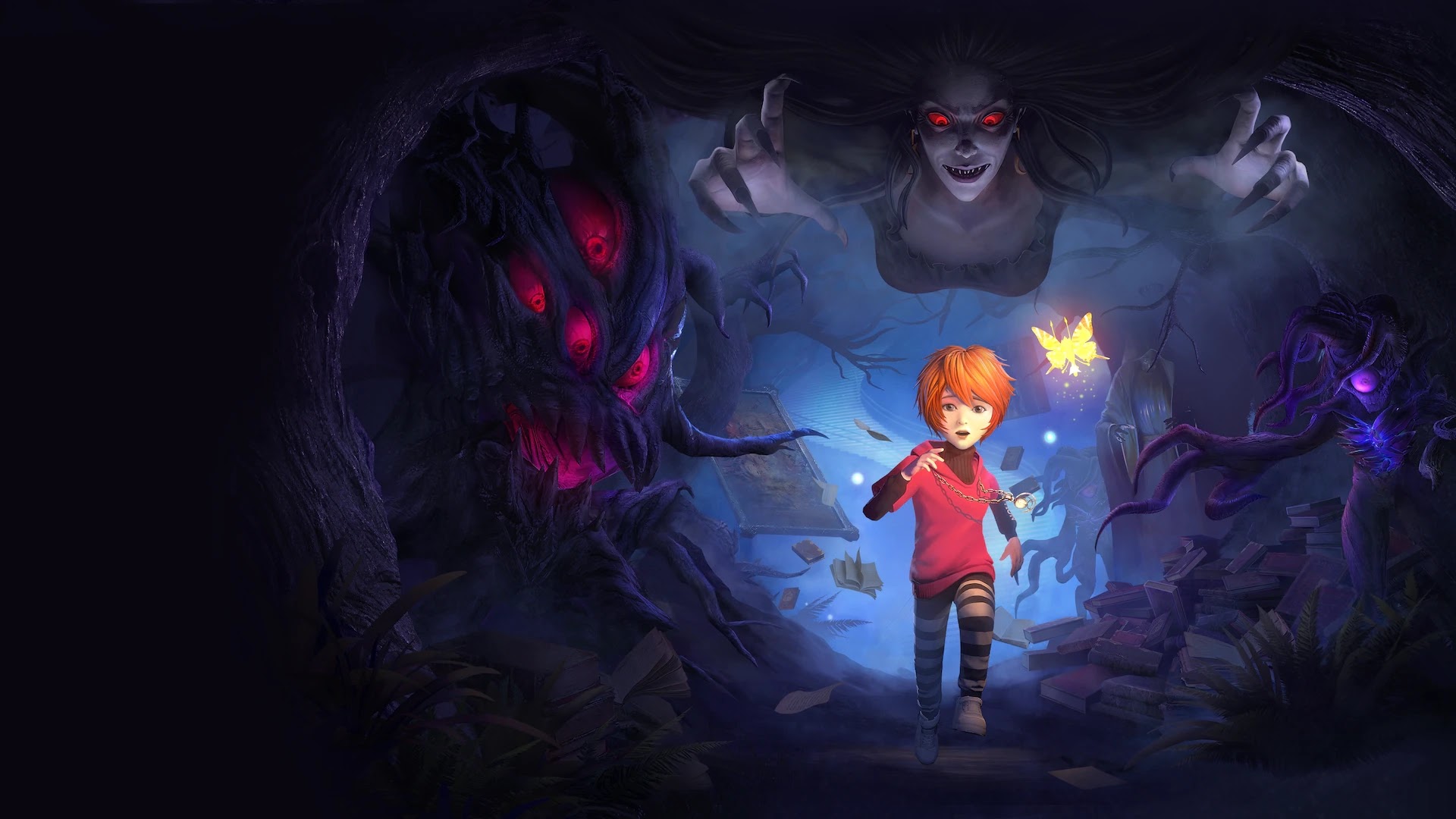
In Nightmare, by Beijing Magic Fish Technology and Maximum Games, is a dark horror puzzle based adventure of a youth named Billy who is trapped within their own subconscious. It'll be up to you and their dream spirit to help them escape this nightmarish dream world filled with creatures and horrible memories simply adding fuel to the fire.

While seemingly dark and gloomy, In Nightmare is actually really nice to look at. While the very dark color palette may seem like it would be hard to see anything, there’s plenty of texture to be able to see and appreciate the world that has been built for this intricate and perhaps too well designed nightmarish journey. The only thing to mention in regards to the very darkly designed adventure is that it’s really hard to play in the daylight. Unless you have thick curtains to pull over the windows, I would suggest waiting for the evening or heading into the basement which only adds to the creepy atmosphere.

For the adventure itself though, puzzles, love them or hate them, get them off the bat or scratching your head in confusion, are not for everyone. The harder they are, the more frustrations that can come through. Estimated at about 8-10 hours, I blew right past that number as I often found myself wondering how the hell I was going to make it through some of the challenges set before me as there’s often not a lot to go on.

This is perhaps where I had the disconnect. There is nothing wrong with this approach when it is done right as it forces you to really look through your environment to not miss anything. Adding an extra level of difficulty is that sometimes you are forced to sneak carefully through and not alert the monsters, while in others, you are running for Billy’s life and there’s nowhere to hide. The only way out is forwards. Or at least you hope it is. To do this, you’ll be moving Billy around with the left stick and can use the “O” button to inspect items and interact with switches.

Adding a bit of twin-stick mechanics, you’ll also have access to Billy’s dream spirit. This butterfly-like creature can shine light through the darkness, use sonar to see where enemies could be in relation to Billy, and inspect things such as objects, floors and walls not currently perceptible to the human eye. Shining light in the darkness allows for you to better see where you’re going and what the footing is like as well as see further ahead and if it’s safe to move there or if it's a dead end while running for Billy’s life.

Switching from shining through the darkness to inspecting what is hidden to the eye, this becomes more and more necessary as time moves on. Items required to push forward such as fuses and cables to get a door back up and running are just as important as “upgrades” to enhance your spirit’s abilities as well as Billy’s own stamina as there is a lot of running away to be done. It’s not simply items and secrets though, you’ll also have to inspect your footing forward often as the paths ahead are invisible and you won’t want to fall off.

This all works really well as the controls are well designed and never get over complicated. Where the issues and the disconnect come in is that you’ll not only have very little to go on, sometimes you’ll have nothing and you have to just “guess” in order to get it right. With some of the puzzles, this is fine when you have nothing to go on and the puzzle is self explanatory. With others though? It could take me 30-40 minutes to figure it out and even then I was left looking at the screen wondering how anyone was supposed to figure that out. Looking at the “escape the room through the right door” puzzle.

Which leaves me in a weird place. On one hand, I appreciated the difficulty and the presentation of In Nightmare as you can clearly see the work that went into it. Not only do you guide Billy through this ever evolving nightmare, but you also get glimpses of how this nightmare came to be with notes and ghost-like flashbacks to what’s happened in the real world. Parents fighting, divorcing, new step-parents wanting nothing to do with them, teachers not wanting a child from a divorced family in their class as it would “ruin” the school's reputation, physical bullying and the list goes on.

On the other hand, you have super complicated puzzles that just break the flow as it can take a ridiculous amount of time to figure each of these out. The carefully required balance for the give and take just wasn’t there and it turned an interesting journey into what felt more like a chore to see it through. The enjoyment because of this break in the flow was simply no longer there.

Summary

So overall, In Nightmare does a lot of things right and never overcomplicates its mechanics while helping Billy escape this world of nightmares. On the other hand, the puzzles are often simply too complicated and when combined with chapters that can take hours to complete, the flow of the adventure is just not there causing more frustration than enjoyment.

Score: 6.5 / 10


Share:

Chronicles of Tal’Dun: The Remainder - PC (Steam) Review


Chronicles of Tal’Dun: The Remainder
by developer and publisher Square Weasel Studio—PC (Steam) review written by Hayden with a copy provided by the publisher.

Estimated reading time: 5 minutes.


Chronicles of Tal’Dun: The Remainder by developer and publisher Square Weasel Studio is not your average fantasy adventure. Open this software and you are immediately confronted by a stark warning:

“The game includes descriptions of sexual themes, violence, blood, physical and mental abuse, self harm, death, and suicide. Characters are going through emotional struggle and are dealing with a life threatening situation. If you are sensitive to some of this content please proceed with care. Recommended to a mature audience.“

They aren’t kidding.  The first time I played, I clicked past the warning with a jaded ‘yeah, whatever’.  Shortly thereafter, I messaged my editor in shock: “I….lasted 16 minutes. And died. To a magic knife with a living eyeball in the handle that took over my hand and made me stab myself. I, uh, I was not prepared for this game.”

Don’t be like me.  If there are things mentioned in that warning that you’re not prepared to deal with, this is not a game you want to open.

With that out of the way, let's get on with the review!

Chronicles is an absolutely gorgeous game, presented in a very text-heavy visual novel style that brought me back to childhood days reading choose-your-own-adventure novels. There is interaction to be had and choices to be made here, and the obvious path is not always the right one. The player takes the role of Vyn, one of two magi in a tower dealing with a magic ritual. Having awoken with no memory, you need to quickly gather what clues you can to guide you as you try to unravel the mysteries around you - starting with ‘why am I standing over here when I can clearly see myself over there at the same time?’.

Your inconstant companion in this journey is Ilar, another magi whose motivations, abilities and honesty are at times unclear. Even the relationship between the characters needs to be explored and discovered as you progress, if you truly want to understand what is going on. Keep in mind that this is a game for mature audiences, and that the developer saw fit to put a giant content warning out front, and you’ll be fine - right? Along that line is one of Chronicles most interesting assumptions that underpin the game: death happens, and sometimes it is the only way to learn. Don’t be discouraged when you find yourself in a bad end, just use the knowledge to make better (or at least different) choices the next time.

For being the first game out of the two-person team at Square Weasel Studios, Chronicles gets a lot of things right.  Careful use of audio to enhance the scenes, limited splashes of colour in a mostly sepia-toned palette, and just enough timed decisions (where not choosing is in itself a choice) keep the player engaged and on their toes.  Decision timers in particular really woke me up when I was indulging in ill-considered late night play sessions - from reading a few lazy paragraphs of text, suddenly I had to choose, and if I didn’t choose that was a choice too and it had its own consequences and !!! ….and now I was wide awake and giving things the attention they deserved.  Nicely done, Square Weasel Studios, nicely done.

Normally I would be filling paragraphs here picking into the pros and cons of graphics, audio, gameplay choices and the foibles that make things not quite right. Chronicles is the first game that I’ve run into in a long time where that has become surprisingly hard - while I have criticized text-heavy games in the past for being too static and unengaging, Chronicles has managed to sidestep that here. While admittedly there is a lot to read, it unveils itself line by line in a manner that feels like it is being spoken, but yet is fast enough that it doesn’t frustrate faster readers.

The artwork too has managed to bypass beefs that I have expressed with previous titles - while the main body of the artwork in a given scene is often static, there are enough animated touches that the area feels alive where it needs to, and feels like enhancements on a static novel rather than a video recording of a PowerPoint presentation. Perhaps the only beef I have with the game is its name - every time I have to laboriously type out the whole thing during this review I wonder if I can just get away with calling it “Chronicles” again!

In summary, Chronicles of Tal’Dun: The Remainder is a gem of a visual novel, a real must-have for players who want a solid story with good presentation, and don’t mind the mature themes that come with that.  That said, this is a visual novel first and foremost, so players looking for the latest action-adventure or D&D-derived isometric RPG won’t find it here. 

Summary

The small team at Square Weasel Studios has delivered an understated hit of an interactive visual novel, and I highly recommend it for people interested in that style of gaming experience.

Score: 9.5 / 10


Share:

Weird West - PS4 Review

Weird West by developer Wolfeye Studios and publisher Devolver Digital Games—Sony PlayStation 4 review written by Pierre-Yves with a copy provided by the publisher.

Estimated reading time: 8 minutes.


I have been on many ‘a journey but some take weirder routes better than others. Coming to us from Wolfeye Games and Devolver Digital, Weird West is just the right amount of weird when exploring the “wild west”. Split between five different protagonists, you’ll be exploring a world filled with some rather weird sights, weirder people and the weirdest creatures? Who ever thought humans were a good idea!?

What I really enjoyed about Weird West is that each individual journey is tied in some fashion to one another. As one journey comes to an end, the next starts up chronologically which lets you see some of the ramifications of some of your previous decisions. Let an outlaw go? Cleaned up an abandoned town from outlaws or monsters? Maybe even cleared out a bustling town by having gunned everyone down. In any of these cases, you’ll see the world change around you, if, and only if, you can even get into town…


This is where some of the magic happens. Split between the five protagonists, each have their own backgrounds but not all of them are currently human or entirely mundane, allowing them to be able to use supernatural powers. The more human of the characters, such as the Bounty Hunter, will have no issues walking into town and perusing the local goods as they buy ammo and offload the metric ton of loot from the defeated. By immediate contrast, your second journey will see you in the form of a Pigman, a man hacked to pieces and magically sewn into a human-like pig creature and will shoot you before you can even tell them that you’re not mindless and would like to buy some ammo.

These limitations on how you can go about your journey will lead to some creative problem solving. In one way, you could just decide to sneak around town and grab whatever isn’t nailed to the floor. In another, you could simply lay waste to everything, not feel bad, and take everything that you want as there will be other locations willing to do business with you. Finally, you could just be “the” better person and walk away and find other ways of making it big. Ultimately the decision is up to you and the developers know their clientele as they straight up tell you about the quick save features in order to do all of the crazy and simply reload if it doesn’t work out.

These spaces and towns that you’ll explore are spread across a fairly large map that can take a bit of time to fully uncover but nothing is stopping you from doing this in your first journey. A lot of this wide open space is pointless to really explore unless you really “want” to, which I did… my OCD kicked in and I needed to know if I could wipe off all of the fog from the map but it takes time especially when traveling by foot. So what was a Bounty Hunter to do? I hunted a few bounties for cash, “borrowing” horses when needed to make it go faster until I could finally buy my own that not only added more storage, but also didn’t run away once I reached my destinations.

Now whether on your first or fifth journey, you'll be exploring the world and leaving your mark(s) in a similar fashion. Set between three zoom levels, you'll be looking at the world in a top down third person isometric view and maneuvering through the use of your two joysticks for some rather slick twin-stick action. If you want to look in a particular direction, you just have to move the right stick, if you want to aim, hold L2 and use the right stick. Just don’t try to move the camera and aim at the same time as it really doesn’t end well if you’re in the middle of combat which is just fun.

Twin-stick combat tends to require a bit more concentration of your surroundings in order to properly know where and when to shoot at your enemies. Are they ducking behind a rock? Did they dodgeroll behind the wall of a building? Or are you standing out in the middle of the field of battle essentially saying to everyone to come and get some? Regardless of which case you’re looking at, you’ll have access to a small variety of weapons that handle for better or worse depending on your situation. Pistols are fairly versatile, shotguns need to be up close, rifles can bring death from afar, melee weapons require a certain level of insanity to be that close in combat and finally bows bring about the silent death.

Adding to these are various other fun objects in your environment such as the ability to crouch in tall grass or hide behind giant boulders. If they can’t see you, they can’t see it coming which can often allow you to sneak up, knock them out, loot them for everything they are worth, and let them simply sleep it off. Just because you can lay waste to all of your enemies doesn’t mean that you actually have to. Passed out or dead, the loot is the same. The only difference is if you can actually eat the freshly dead to recover health. What? It’s “Weird” West for a reason.

Combining the above with other more elemental elements such as water on the ground, you could easily send electricity through it to damage those around you. By comparison, you could also knock someone out, throw them close by an explosive or toxic barrel, let everyone go on high alert as they come close to see what happened, and then throw a stick of dynamite. There’s a lot of options and while some require some levels of creativity to pull off, there’s no wrong answer and like the developers said, there’s always the quick save until you get it right.

Now while I had to keep reminding myself that Weird West is not an RPG, as it can often feel like one with its third person isometric style, it does have some RPG-esque elements to it. Split between purple looking Nimp Relics and Golden Aces of Spades, you’ll be able to level up both your current protagonist and your entire future crew respectively. Nimp relics can be used to either unlock core character abilities to use in combat or specific weapon abilities. The Golden Aces of Spades however will unlock global perks such as being able to strengthen your NPCs, move faster while in stealth and so much more. Only needing one Golden Ace of Spade to unlock the first level of a perk, you’ll soon need a lot more to get to the higher levels and really unlock their potential.

The great thing though is that you don’t have to do this alone. There are plenty of NPCs around the world just itching to take it out on someone and while some will join for free, others? You’ll have to pay them some crazy fees and more often than not, they won’t even hold up their end of the bargain as they are dead on the ground after a shootout. The. Nerve. But they are useful to pull enemies' attention away from you, hold onto some of that extra loot as well as accept new weapons and armor to last a bit longer in combat.

The greatest thing about NPCs though starts to show up in your second journey. By this point, you know what works, you know what doesn’t, and best of all? While you may have lost access to your stupid expensive horse to travel around, your previous protagonist is now an available NPC that will follow you no questions asked. By the third? Why look around for some generic NPC when you can go grab BOTH your previous protagonists. By the fourth journey choice paralysis sets in and you really have to weigh the pros and cons.

Overall it works very well and if something doesn’t quite seem to be working, you can always try it again, and again, and again, and then hope that time works. If there’s one element of Weird West that didn’t quite work so well it was in the inventory management. It was awful at times as you always had to be careful as to not sell your current equipment which while equipped on your character, was also right there in your inventory lineup still taking up valuable slots. When you’re looting as much as you are, one zone will generally fill up your inventory and all depending on the rest of that small crusade, your NPCs and horse’s inventories as well.

Summary

Weird West was fun. Combining an RPG like third person isometric style but without having to grind for experience points with a real time twin-stick shooter throughout five different yet attached stories and there will be plenty of tales to tell. With plenty of different ways to go about each protagonist’s journey, Weird West has the capacity to not only hold your interest for a while, but make you come back for more.

Score: 8 / 10


Share:

Crystar - Switch Review


Crystar
by developer FURYU Corporation and publisher NIS America Inc.—Nintendo Switch review written by Richard with a copy provided by the publisher.

Estimated reading time: 6 minutes.


Crystar is an action-RPG originally released in 2018, now coming to you in a Switch port. A story of the broken, trying to find that piece that completes themselves. Crystar is an emotional adventure into what people will do for both their loved ones and the sake of their own ego.

Crystar tells the story of the young girl Rei Hatada, who wakes up in a mysterious world as a butterfly. This world, as it turns out, is Purgatory, the land where the souls of the dead reside before being purified of their memories and reincarnated. Rei, however, isn't actually dead, she has simply been drawn there by a powerful spirit. After a confrontation with the malicious spirit, Rei's sister who was dragged along as well, Mirai, is killed. Two demons then appear, providing Rei with the opportunity to sign a contract. In exchange for cleaning out the more malicious residual spirits, or Revenants, they will restore Mirai to life, but only if Rei can recover her soul before she gets purified. So Rei's journey begins into the depths of Purgatory, combating Revenants and meeting friends and new party members along the way.

As far as gameplay is concerned, Crystar is fairly basic in its playstyle. It is very much a traditional sort of 3D hack-and-slash style gameplay, with small groups of enemies, the occasional tough enemy, and a boss each stage. You have your dash, light attack, heavy attack, special attacks that can be assigned, and jump. You have a sort of "over-limit" gauge that will build up, and then you can use for increased firepower and a special attack. Exploring Purgatory is also fairly generic, as you will explore floors looking for a gate to the next floor, or a fight with some Revenants to clear the zone, or "Ordeal", as it is called in-game. Purgatory is divided into floors, usually with each floor featuring new enemies, sometimes simply palette swaps of old enemies, three story based Ordeals, and one optional bonus Ordeal that unlocks after the story Ordeals.

Where the gameplay is a little more interesting is in the powered up enemies you find, the Revenants. Upon defeating a Revenant, they will drop a torment, of which you can hold ten at a time. Upon returning to your room, you can cleanse the torments by crying them out. These torments are then turned into sentiments, which are the equipment for Crystar. Each character has their own unique weapon sentiments, and they share defensive and accessory type sentiments. In addition to being equipment, these torments can unlock interesting background history on the Revenants you find them from. Sometimes this is as basic as telling you they died from overwork, other times you get this horrendous tale of how a child's friends tricked him into hiding in an old fridge during hide and seek, and then left him stuck in there until his body was found several years later. I haven't looked at my fridge the same since.

I'd like to mention right now that if you do pick up Crystar, you may be frustrated that you can't sell anything. Well, that's wrong. If you go into items, then to your sentiments, then select discard, you can turn them into "essence", which is then used in the fusing and modifying of sentiments to make them stronger or give them special passive effects, such as confusion immunity. Also, you have a floofy dog named Thelema, and she's the best girl, and you should totally pet her all the time cuzshe'sjustsocuteandlookatthatlittlefaceIjustwannacuddleandsnuggleandruffleand- ahem, sorry, yes, cute doggo. Best girl. Give pets.

To be perfectly frank, Crystar is a little repetitive. The combat gets fairly stale rather quick once you figure it out, the areas tend to be mixes of different sets of the same "tiles", just organized differently, and at times it can feel like a slog getting through an area, especially since there are no checkpoints mid-Ordeal. I suppose the upsides here are that the combat isn't that difficult, and the Switch port is rather useful to mitigate the repetitive nature.

Seriously though, I have this tendency to get about halfway through a review title, and then see how far I can speedrun through the rest of the game before I have to go back to playing reasonably. I finished my first ending while only fighting the bare minimum amount of enemies and not changing equipment since the halfway point to that ending. I definitely wouldn't suggest this, but it does set the tone for the difficulty rating. Alternatively, you can swap characters a lot to try and stave off the muscle memory. I tried to swap to a new character each time one leveled, in order to both keep them all at the same level, as well as keep things interesting. Thankfully each character has their own unique playstyle.

The Switch port is also handy, as it is rather easy to pause mid Ordeal and put down for a bit, keeping things fresh for longer. While the Switch port does seem to have received a graphic quality reduction from the PS4 version I've also played, at least from what I can tell, the game still runs smoothly, and being able to take it around as a hand-held title is nice. Even for the PS4 version, I was only doing a few stages here and there between other things, so this type of playing habit makes good use of the Switch portability.

While Crystar may be a little repetitive in nature, it tries really hard to set the tone in its visuals, music direction, and storytelling. The character artwork is really pretty, and the character models are really well done, albeit a little rougher on the Switch port. The backgrounds and layout on each floor are interesting and well themed, and the music does a good job of matching the tone. It's also really neat that every time you perform a different action in Rei's room, she has a different background situation. For example, if you listen to the music gallery, she will be sitting with a media player and headphones on.

Summary

Overall, I have to say I quite enjoyed my time with Crystar. While the combat and areas you progress through tended to get a little repetitive, the storytelling, art, and music direction, as well as an interesting cast of characters, is what really keeps the title together. While I wouldn't recommend picking up the Switch version if you already own Crystar, it is quite nice for a title that you can pick up every so often to go through a floor or two, or some of the shorter stages, without feeling the burnout.

Score: 7.5 / 10


Share:

Roguebook - XBSX Review


Roguebook
by developer Abrakam SA and publisher Nacon—Microsoft Xbox Series X review written by Nick with a copy provided by the publisher.

Estimated reading time: 6 minutes.


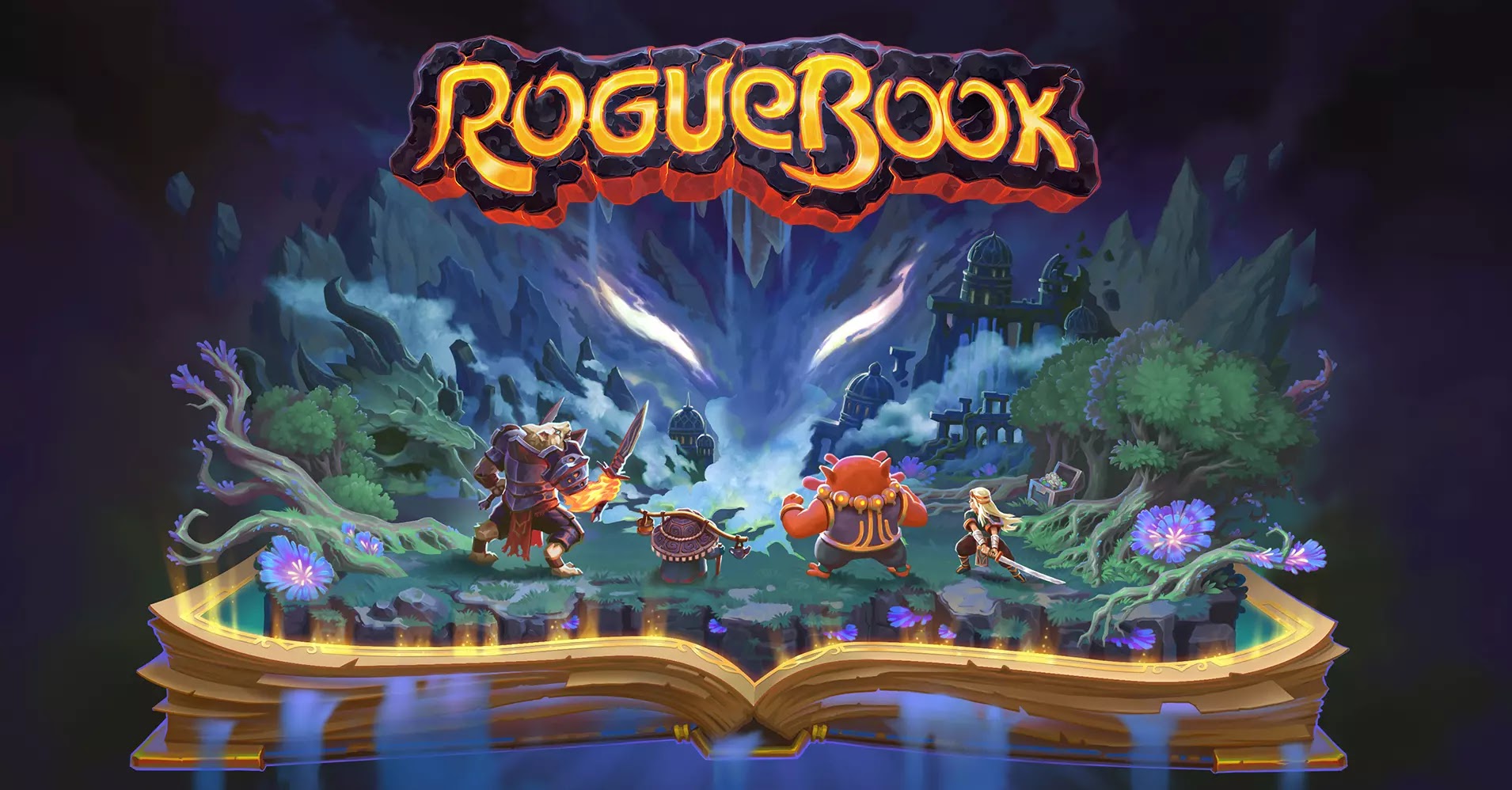
While the deckbuilding roguelite genre has been pretty active over the last couple of years, Roguebook brings enough new to the table to warrant a look. Richard Garfield of Magic: The Gathering fame has his fingerprints all over this, and that’s a good thing as I found myself absolutely sucked in by this game’s mechanics.

Slay the Spire, Monster Train and other similar titles have been huge time sucks for me over the last couple of years. So getting a bit of that MTG DNA in here along with developer Abrakam’s visuals and music as well as characters and worldbuilding all harken back to their prior game Faeria – which I was a huge fan of as well. I am all-in on these developers continuing to flesh out this fantasy world of theirs.

But what about Roguebook itself? Well for one, like Faeria, it feels like a mashup of genres. You start off with a quick bit of story and then proceed to get dumped onto a hexagonal map that looks like something out of a 4x strategy game. However, that map is simply about exploration. You are in the Roguebook, and there are a handful of notable things (generally encounters) and a limited amount of shown real estate right off of the bat in this map, but after that you need to manage a resource called ink to uncover more of the map. There are broad brush strokes that allow you to reveal all around your character, and there are more targeted ink pots that can reveal tiles in a straight line to varying degrees. Early on, there is an urge to just explore everything in front of you, but you quickly learn that ink is a limited resource and you need to be selective in how you use it, making sure you can uncover as many tiles as possible.

Why? Because you can rush right to the boss, but odds are you’ll be underpowered and get crushed, especially after the first chapter. However, there is risk and reward to venturing around the map, as you can unlock new cards, gems to enhance cards, artifacts that boost your party in various ways and more. There are also enemies to battle along the way, which have drops of their own. Characters don’t level up via experience like RPGs, but as your collection of cards grows, you can unlock new abilities for either of your two characters or a shared party unlock as a third option. The more you battle, the more likely you are to be in a weakened state before the end boss, so fighting everything you see along the way makes you question the risk versus the rewards.

These are all somewhat common elements of the growing roguelite deckbuilding genre, but one of the places Roguebook really sets itself apart from the pack is this idea of a party. I’d love to see more characters added in time, but anyone who played Faeria will immediately recognize some of the characters as they get revealed. The party concept is an interesting one, because characters have different types of cards and different abilities and health. Most of the time, the character in the front is going to get hit by the enemies, so the order in which you play certain cards can matter a great deal. If you get too stabby with your glass cannon character, she might be stuck out front getting smacked around at the end of that turn, instead of her beefy companion who has nearly double her life and tends to have abilities that allow him to take more abuse. It’s a fascinating dynamic that only grows more involved as you unlock additional characters who have their own mechanics as you try to work out which combinations suit you best.

However, being a roguelike / roguelite game, the expectation is you’re going to die along the way. On my initial playthrough I made it to the second stage and then died halfway. On my second playthrough I made it to the second stage and died in the boss fight. My next couple I wiped in the first stage. There is a lot of randomness in the encounters, items, and things of that nature. Best laid plans and all that go out the window when your front-line character gets absolutely crushed by an elite attack and you don’t have the same quality of cards or block items as your last run.

That being said, despite the random nature of Roguebook (item drops, procedurally generated maps, opponent types, even bosses at the end of stages) seldom frustrated me, because the gameplay itself is very addicting and pretty brisk. Some of these card battlers become wars of attrition where battles long overstay their welcome, but that doesn’t really happen here very often.

I also enjoyed the sense of progression here, making this more of that ‘lite’ in the roguelite. I am someone who doesn’t like losing progress. Once the run is done, multiple things can be leveled up. Characters level up, adding newer / more powerful cards to their potential decks in future runs. There is also a branching skill table of sorts you can unlock perks between runs. You earn these unlock ‘points’ by exploring the maps and finding them. It’s a slow trickle that encourages you to make dozens – if not hundreds – of runs. It’s sort of a bold assumption that players will stick around and play that much but… in the first two days, I did about two dozen runs. Safe to say I am hooked.

Summary

Roguebook is an excellent mashup of collectible card game, with exploration and progression elements that keep the experience fresh for subsequent runs. I was almost immediately hooked, playing with different party combinations and structuring my decks to see if I could make it just a bit further on my next run. And the one after that. And the one after that. I’m going to stop writing now and go back for another run now.

Score: 9 / 10


Share:

Distant Worlds 2 - PC (Steam) Review


Distant Worlds 2
by developer Code Force and publisher Slitherine Ltd— PC (Steam) review written by Robert with a copy provided by the publisher.

Estimated reading time: 10 minutes


Distant Worlds 2 is by Code Force and published by Slitherine Ltd. It is the long-awaited follow-up to one of my all-time favorite titles, Distant Worlds: Universe. Similar to its predecessor, Distant Worlds 2 is a real-time with pause 4x title that leans heavily into the automation of your empire as you explore your choice of galaxy and is more than just a shiny paint job. Distant Worlds 2 has been built on an all-new 64-bit engine and uses 3D models rather than the 2D pixel art found in Distant Worlds.

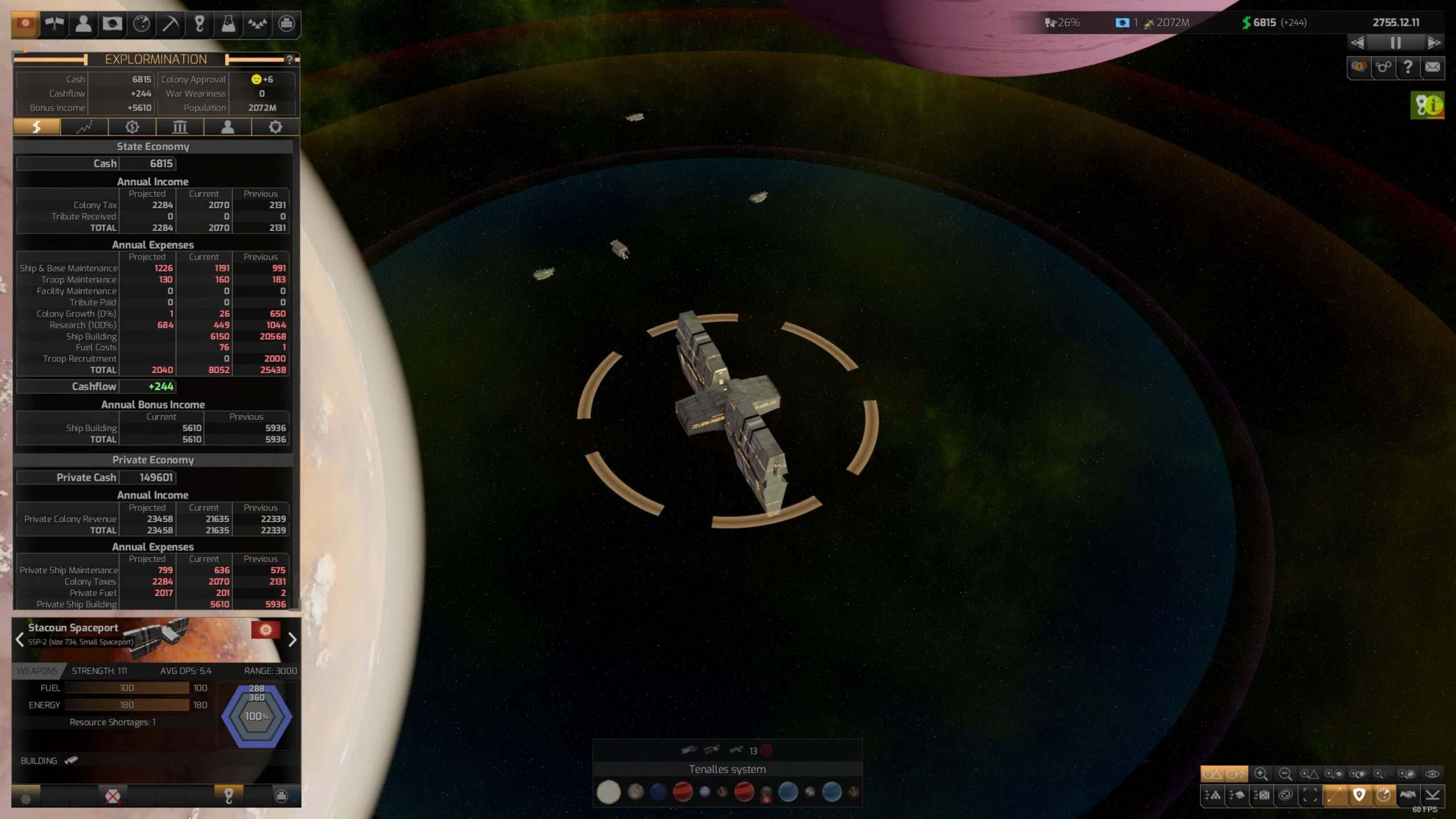
Distant Worlds 2 is a mixed-bag for me, which is actually a bit surprising given how much I loved the first one. While Distant Worlds 2 is by no means “bad,” far from it—it is in fact, excellent. Where I struggle with it is in the absolutely and utterly and laughably broken civilian economy and, believe it or not … the switch to 3D feels really bizarre for some reason. The “skybox” (background, more like) is wonderful, the 3D planets are eye-catching … but the ships / stations? They feel and look bland:

Sure, some are nice looking, but most feel patched together and nearly every ship and station in Distant Worlds 2 feels (and looks) less interesting than the 2D sprites of its predecessor. While I know that this is subjective, it was very difficult to truly immerse myself when it was hard to enjoy some of these ship designs. There’s something less immersive than the blocky 3D assets in comparison to the more nostalgic 2D ships. I do genuinely hope that we’ll see modders start putting out new ship designs and community balance patches, as having a bit of variety may help with this weird displacement feeling.

While I may not be a fan of the ship models, the new, more responsive user interface is a welcome evolution over Distant Worlds: Universe. Accessing pertinent information quickly is easily done through the clean, simple icons and pages. Policies, which are how you tweak your automation settings, I found I regularly jumped back and forth between automation and manual settings. Why switch back and forth you didn’t ask? For me, it’s about immersio. Sometimes it’s nice to really get in and micro/macro-manage my empire (which, interestingly enough, I really enjoyed the Feudalism government type) it just really clicked with me and I found the most enjoyment out of tweaking Humans to fit that feudal empire style.

Fortunately the sheer amount of automation customizations that you can make are mind-boggling; with Distant Worlds 2 you almost don’t need to play. It would be a shame because you’d miss out on some great ad hoc missions and a relatively good, if simple “main arc” that covers a basic storyline. Where the story actually excels is in relation to the gameplay, not necessarily the actual story. I felt it more like a prolonged and necessary tutorial that … didn’t feel like a tutorial. Another gameplay arc / mechanic that seemed far more brutal than in its predecessor, was surrounding Pirates. They can be more than an annoyance, to the point that their protection rackets were costing so much. The tithes that I had to pay to the ridiculous amount of pirates that I encountered in the first 4-5 hours of the day put a significant damper on my excitement to play—I'm not proud of it, but I may have rage quit a few times those first few sessions. Once I was able to get away from the "here, have 7 pirate factions within stones throw while pre-warp" and just play, it was smooth-ish sailing for a solid 10-12 until the real action started.

I do think that there is some bias here for me that I have yet to work through, in part because I really truly dove into Distant Worlds well after its initial release; the first Distant Worlds first launched in 2010 and I didn’t dive into Distant Worlds until Universe came out … in 2014. By that time, Matrix Games and Slitherine had 4 years of balance patches and content in it so it was in the most polished state that it could be in. Distant Worlds 2? Not exactly polished right out of the gate. Looming optimization issues saw Distant Worlds 2 really start to chug in the later game, granted that was a test on a machine running slightly better than the bare minimum requirements. However, on my primary gaming rig, I didn’t experience the same slow down / skipping that I did on the old machine, so you’ll want to make sure you’re running newer hardware (if you can find it…) before you get into the larger galaxy maps.

Summary

Though it may fall short of its predecessor, Distant Worlds 2 is laudable sequel to what I feel is one of the most enjoyable and unique 4x titles on the market. That’s a hard gig to follow and though there are plenty of balance-related issues and more optimization can be done and I imagine that were Distant Worlds 2 given the same 4-5 years post-launch that Distant Worlds: Universe had, I imagine Distant Worlds 2 could very well be a quintessentially perfect 4x experience.

Score: 7.5 / 10


Share:

Dark Deity - Switch Review


Dark Deity
by developer Sword & Axe LLC and publisher Freedom Games—Nintendo Switch review written by Hayden with a copy provided by the publisher.

Estimated reading time: 5 minutes


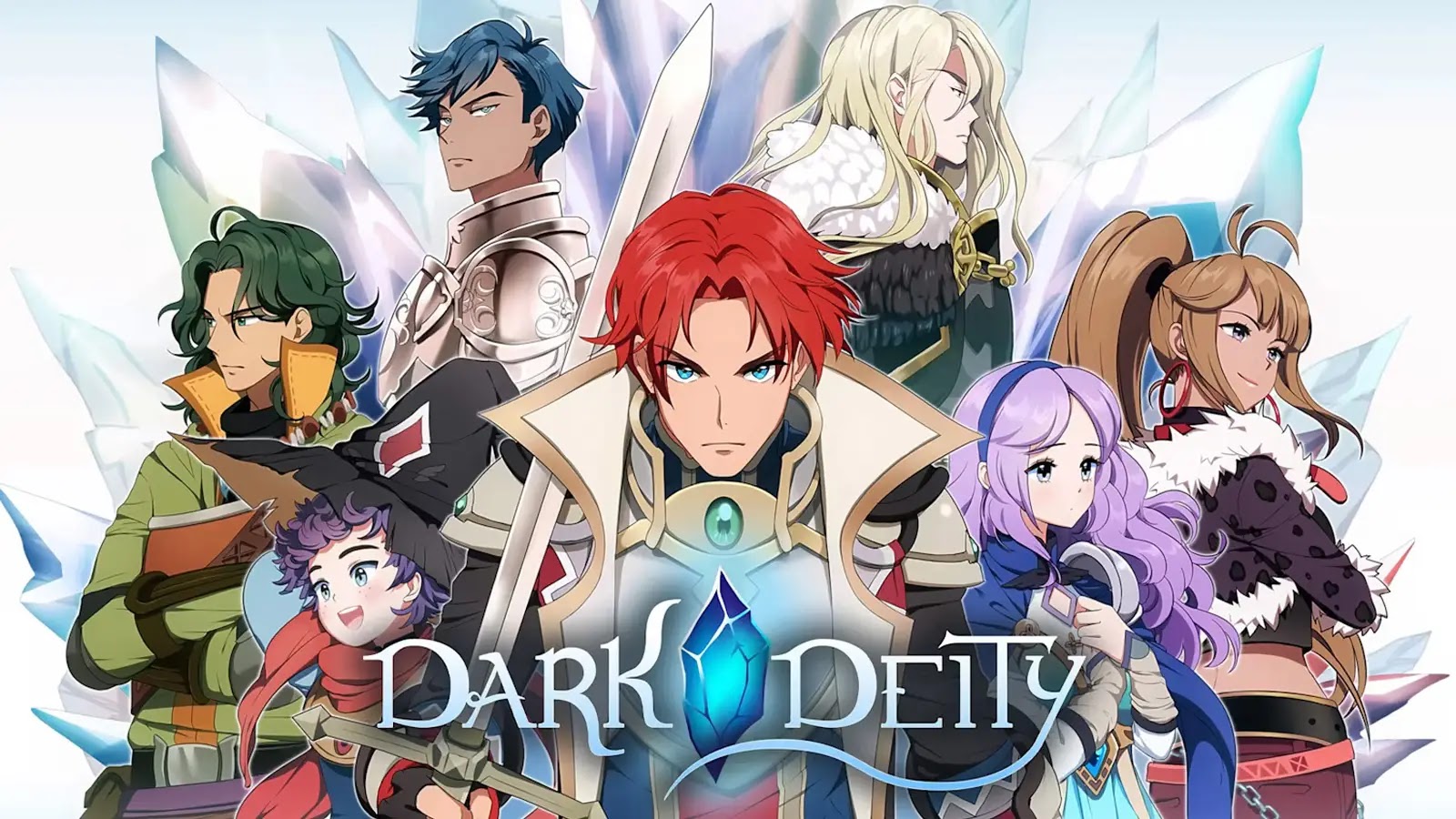
Dark Deity by developer Sword & Axe LLC and publisher Freedom Games has made the jump from PC to a format where it feels truly at home. This battle-tactics RPG garnered positive attention when it released on PC in June last year, but its classic pixel-sprite 2D graphics and posed-art dialogue sequences feel like the great console games of the NES / SNES era. On the small screen of the Nintendo Switch in portable mode, opening up Dark Deity really felt like it brought me back in time to the heyday of tactical RPGs on console.

Coming from a PC release last year (Pierre-Yves' Review), many of the details of the core of this game have been reviewed and hashed over before, but for those experiencing it for the first time I’ll step through the broad outline. Dark Deity places the player in control of a party of military academy students rushed from school to the front lines as their kingdom’s war demands ever more soldiers to fight. The story is presented in a series of static tableaus, with dialogue boxes presenting the narrative in text.

Once in control of characters, the player will enter a 2D battlefield where they must consider positioning and abilities for their team, controlling their individual sprites to try to maneuver for best advantage and preventing the enemy from singling out any one member of your team. Progressing through the short chapters (each generally consisting of 1-2 battles in between dialogue sections) will net the player additional characters to use in the team, as well as the RPG standard of ever-increasing levels yielding more powerful abilities. Once the team is big enough, rest periods between battles can also be used for inter-character chats that seek to show the character’s background and personality while building up bonds between characters that buff their abilities at later levels.

Dark Deity got a lot right in how the game presents itself, tapping strongly into the legacy of tactical RPGs from previous console generations. Both the in-battle 2D sprites and out-of-battle static artwork scenes feel like they could have come straight out of an early-generation console tactics RPG, and the control scheme on the switch is simple enough that it feels as though playing it with just a D-pad and four buttons would be enough. While 2D, the battle maps are unique enough that each provides a feeling for your surroundings, and often provide enough terrain to consider that you don’t end up with the sensation of every battle being the same.

While a great source of nostalgia and inspiration, Dark Deity’s emulation of old tactical RPGs is also in some ways the source of its greatest weakness. The art style is a throwback to earlier generations, and while there isn’t anything inherently wrong with this it can leave the game feeling like it is 20 years behind the times once the nostalgia begins to wear off. The static tableaus used to tell the story are similarly interesting and impressive at first, but after nearly wearing out the “A” button on the joycon paging through seemingly endless amounts of dialogue windows I was longing for a change in scenery. Finally, while Dark Deity presents varied map layouts for its battles, the 2D format and the low-detail sprites feel constrained and dated when coming from games where the player can see details about an enemy through the visual representation of the gear they are carrying.

The single largest flaw that can be found with Dark Deity is one that will only annoy players once - the complete lack of a tutorial or other explanation of game systems and mechanics. Like most RPGs, Dark Deity has information sheets for each character, showing a myriad of stats for each one. Unfortunately, these stats are completely unexplained within the game, leaving it for the player to puzzle out what stats influence particular behaviors or may be more desirable for particular characters. For a game that casts the player’s starting characters as students at a military academy, it seems like a major oversight to not have offered them an optional “refresher class” or similar excuse to run through at least the basic systems before throwing the player straight into their first team tactical combat with no idea of the controls.

Summary

A modern homage to the tile-based TRPG’s of the late 1990’s, Dark Deity will land solidly as a nostalgia hit with older gamers who grew up playing these games. Unfortunately, two decades of progress in game design have left elements of this format feeling dated and behind the times.

With excessive reliance on static tableaus behind endless text dialogue windows, limited visual information during player-controlled battle segments and a lack of any tutorial or introduction to the game’s mechanics, Dark Deity simply doesn’t stack up favorably against other modern offerings.

Score: 7 / 10


Share:

Sherlock Keeps the Lights On By Releasing DLC for Chapter One and a Switch Version of The Devil's Daughter


24 March 2022, Dublin, Ireland + Kyiv, Ukraine |
Today Frogwares has announced the release of the final major paid DLC to Sherlock Holmes Chapter One and also that they will be able to release Sherlock Holmes: The Devil’s Daughter on the Nintendo Switch on April 7th, 2022.

Despite being embroiled in a horrendous war, the majority Ukrainian-based team managed this through external partners and a handful of remote-based staff. They are now aiming to adapt to the situation and do what they can to keep the studio semi-functioning and afloat.

Put simply, we need to keep the studio alive and functioning to the best of our abilities now more than ever. Nobody on the team is expected to work, only those who can and want to. Some on the team have become full-time volunteers in the humanitarian efforts around the country. Others have joined the defense forces. The rest are in various, safer locations abroad or around the country and have made themselves available to work remotely. And we continue to pay all of these people on the team. For those fighting or volunteering, each of their spots on the team will be waiting for them at the end of the war. But essentially it is through a collection of staff that either fled Ukraine to neighboring EU countries and those who have relocated to safer areas who are keeping Frogwares going right now. We are an independent studio with no external financing, investors, or parent company keeping us afloat. So it's up to us alone and through the support of our players wanting to play our games that will keep this studio alive. And as this war drags out more and more, we and people all around Ukraine are seeing that even if they are not involved in the fighting directly, they need to somehow keep things moving forward. So that when this is all over and it’s time to rebuild and restart, we are not starting from zero.” – Wael Amr, CEO, Frogwares.

Sherlock Holmes: Chapter One M For Mystery DLC  – Out Now

The final paid DLC for the studio’s latest game is now available on PC, PS5, and X Series X/S. In this 2+ hour mission, a cunning spy has outsmarted one of Mycroft's agents and managed to steal confidential documents. Sherlock must now step in to face a shadowy figure known only as “M” as he tries to unravel the work of a master spy and saboteur.

The M For Mystery DLC is free for all owners of the Deluxe Edition and the Season Pass or can be purchased separately.

Sherlock Holmes: The Devils’ Daughter on Switch - Coming April 7th, 2022

Initially released in 2016, Frogwares partnered with Mataboo back in 2021 to bring the game to the Nintendo Switch. Sherlock Holmes: The Devil’s Daughter is an investigative adventure with a flare of the supernatural. Something dark and sinister is gripping London and has come very close to Sherlock’s own personal life. But is it just smoke and mirrors from cunning crooks or is something truly supernatural at play here? Each case will require you to strike the right balance between logic, gut instinct, morality, and superstitious beliefs. Track down evil in the darkest corners of London and the human soul, be it from this world or possibly another.


Sherlock Holmes: The Devils’ Daughter will be priced at 29.99 USD / 29.99 EUR and is a digital-only release. Pre-orders will go live on March 24th on Nintendo eShop with a 15% off discount. Owners of Frogware’s The Sinking City or Sherlock Holmes: Crimes and Punishments on Switch will get an additional 10% off.

Article by:  Susan N.

Share:

WWE 2K22 - XBSX Review


WWE 2K22
by developers Take-Two Interactive and Visual Concepts and publisher 2K Games—Microsoft Xbox Series X|S review written by Nick with a copy provided by the publisher.

Estimated reading time: 10 minutes 


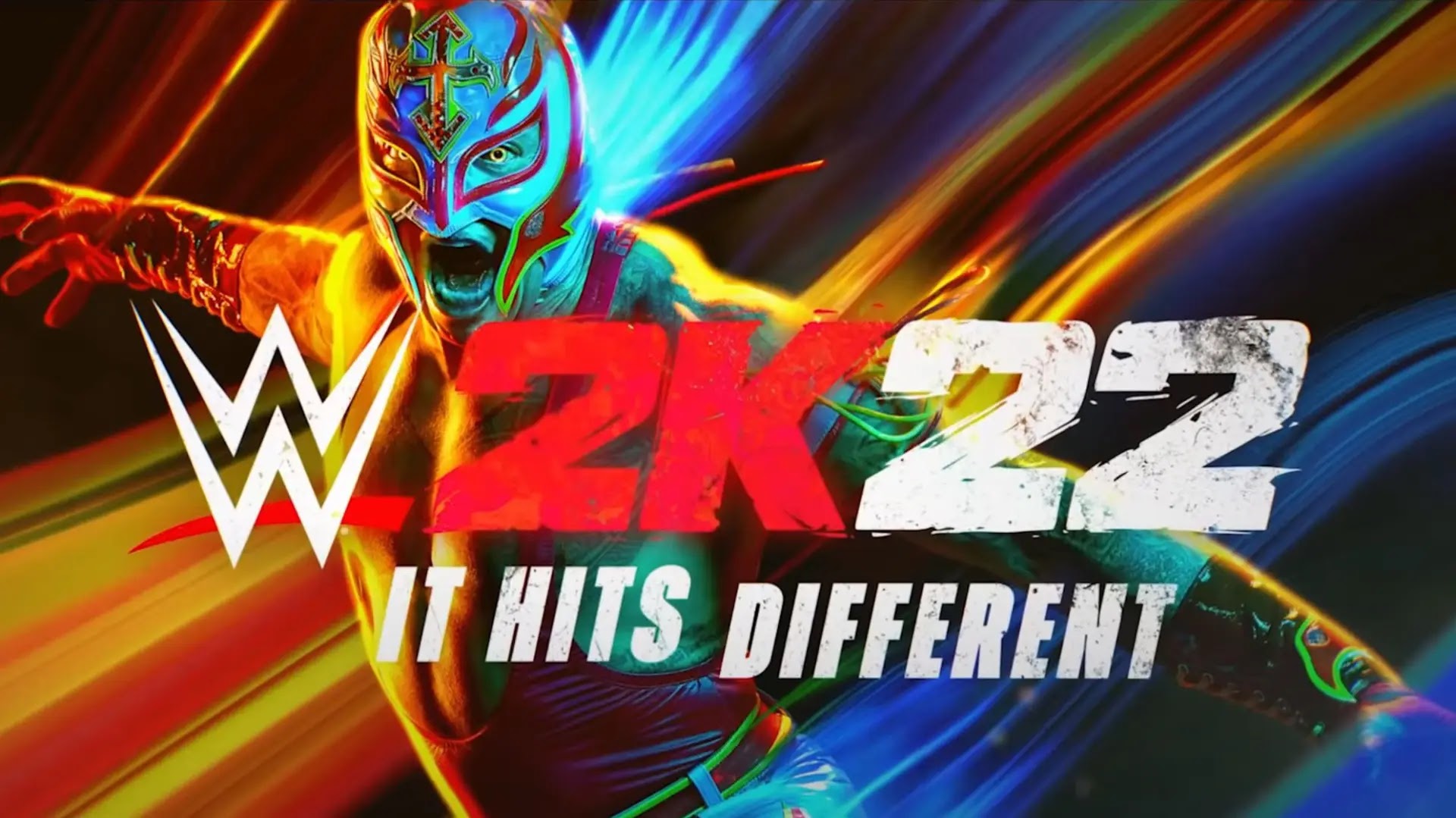
WWE 2K22 is back after a bit of a break, and it appears to have been time well spent. WWE 2K22 is a successful return to form for the wrestling franchise, with a bevy of modes and content to keep fans coming back for more.

It’s no secret that WWE 2K20 was rough. A transition between development teams led to some cutting of teeth with this franchise that left the series heavily panned a couple of years ago. I for one appreciated that the developers recognized this and opted to spend some extra time on this new release. The marketing team has done an excellent job of branding this release with this tagline:

It hits different.

It’s bold, sure – but it’s accurate as well. This series has long been a mashup of arcade action and simulation, with WWE 2K22 feeling as though it is leaning just a tad towards the arcade side of things here. Which is fine, frankly. NBA 2K has long straddled that line as well, with equal parts strategic pacing and frantic action, and WWE 2K22 delivers a similar experience.

So what’s going on in this release? A lot of things. There’s quickplay, where you just get to set up your own ideal match with whomever you want from what is an impressively large roster of characters. MyFaction is akin to MyTeam in the NBA 2K games – it’s basically a collectible card game mixed with a sort of fantasy sports approach to wrestling. There are several different types of games and series of matches you can put your roster through, and as you earn currency (probably one of the things that is bound to irk people, as WWE 2K22 does continue the longstanding tradition of offering you virtual currency for real money) to purchase more packs of cards, leading to more wrestlers and ways to customize said wresters in hopes of improving your odds of success in the ring.

There are other options such as MyGM, which is more about running the show than just participating in it. On the other side of things, you have MyRise, which is a career mode. Instead here, the focus is on your character. Or characters. Why did I add a plural? Because the MyRise mode has a very cool branching storyline and it encourages you to play multiple times to experience how things can go differently. There’s even differentiation between a men’s and women’s division. With tons of customization options and a heavier roleplay-like feel to it? I was all-in on MyRise and I enjoyed the hell out of it. There’s a lot to chew on here, and like the NbA 2K games, this is where I spend the bulk of my time. If there’s a quibble I have, it’s that there doesn’t seem to be any sort of export / import where you can create a superstar outside of MyRise and bring them in, or any way to export your creation into the other modes. I sort of get it, given that your characters are always progressing and changing, but on the other hand? It seems a bit of a waste to not be able to use your creations in other spaces. Still, I sunk a lot of time into MyRise and kept coming back for more.

I’ve always enjoyed the WWE Showcase modes as well, and that holds true with this year’s iteration featuring Rey Mysterio Jr. As a wrestler, his flashy style is a great way to show off the engine and numerous gameplay options. I played the game’s tutorial when I first fired up WWE 2K22, but I think I learned more about the depths of the gameplay by spending the next few hours on the Showcase mode. Essentially this is a set of some of Mysterio’s most famous matches, with a list of objectives that chain together. Almost all of them start easily enough as you punch your opponent a few times or pull off a special type of grapple, but things certainly get complicated in a hurry. You can of course win the match at any time – but you miss out on rewards and seeing the match fully play out.

To make the most out of Showcase, you have to complete all of the objectives, which are challenging on multiple levels. Sometimes they leave your wrestling in a compromised state, or sometimes they are just plain hard to pull off because they require a specific move at a specific time with your opponent in a specific position. I get why the devs wanted to showcase some of these maneuvers that player might not otherwise ever see, let alone perform, but there were times these conditions were pretty frustrating as well. Thankfully though, with a bit of persistence, I was able to see all of the chained objectives through unlocking a bonus fight and some more unlockables.

There are a couple of aspects that made Showcase pretty memorable. For one, Rey Mysterio Jr. has long been one of the most colorful, flashy wrestlers in the business. As a result, these matches often have highlight worthy moments as the match blends video gaming with movies. Pull off the first three objectives, and the video game fades out to be replaced by actual video footage from the match. This might play out for a couple dozen seconds or even a couple of minutes, before it transitions back to the video game. It’s a really cool effect that I thought would get old after a bit, but I enjoyed it right through to the end. That’s how you wind up in rough spots however, as sometimes you are dominating your opponent, pulling off the desired sequence, and then taking Mysterio back over after he got smacked around a bit by his opponent.

The other nice touch on this mode is that they had Mysterio helping to narrate things. There is video of him being interviewed leading into and out of the matches, often explaining why that particular match was important to him and even how the match’s results impacted his career later. Mysterio also narrates the video sequences that are spliced in, and he’s simply enjoyable to listen to as he talks about some of these bigger moments in his career. It was a thoughtful, interesting mode that serves as a more advanced tutorial in the process.

Of course, all of the modes in the world don’t matter if the gameplay sucks. Thankfully, that’s not the case here. There are times that things feel a bit clunky. These are most evident when objects or multiple wrestlers are involved. Tag team matches – especially with three or four person teams – can be kind of annoying. I know some wrestling matches are long and meant to test the wrestlers’ endurance, but I found them occasionally testing my patience as well. I can dominate the crap out of my opponent, but not get them pinned because unless I do some shenanigans to the opposing person’s partners first, they just come in and break up the pin. Every. Single. Time.

This is especially annoying in a mixed tag match where you can’t strike the person of opposite gender, but they can run in and hit you to break up the pin. First time it happened, I was submitting my opponent to hammering away at the strike button when the female wrestler from the other team dove in to break up my submission attempt and my character immediately jabbed her in the face and got me disqualified. In these instances I just found it easier to take the match out of the ring and try to force a 10 count out. I would appreciate it if my partner AI was better at running interference, like getting into the ring sooner and actually engaging the other wrestler first. For me, this was probably the single biggest annoyance as matches I was dominating from the beginning and should have been over in a matter of a few minutes sometimes took 20-30 minutes unless I resorted to cheap tactics like the 10 second count out.

Additionally, targeting items / the right opponents can be a little dicey in the ring. Pressing the left button to pick up the item at your feet can be pretty hit and miss, and there were definitely times in free-for-all matches where I just couldn’t get the detection to focus on the right person. I might have dropped an opponent at my feet, but been unable to actually target the guy a half-inch further away from him, despite that person actually still being a threat. It certainly handles better than years past, but still feels like a weak spot in the gameplay.

Beyond those aforementioned concerns however, WWE 2K22 provides some pretty great action. Punches and kicks land with a weightiness to them, and splashy dives off of the top turnbuckle or finishers applied to a vulnerable opponent’s head still had a way of making me wince, despite this… you know, just being a video game. I appreciate the variety of different match types out there as well, from cell matches, to Money in the Bank, no disqualification and more – it helps to keep things fresh.

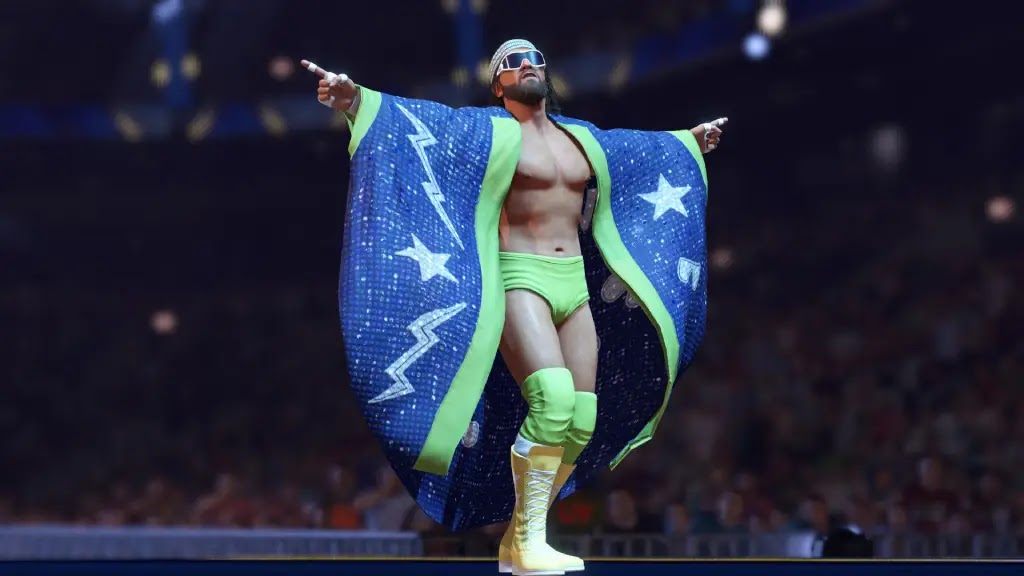
In terms of the overall production values, WWE 2K22 is pretty solid. Sure, there’s a bit of glitchiness around the ropes at times or character model collisions, but that’s to be expected. There is so much going on as characters not only strike and grab, but respond to being hit or pulled or pushed into ropes – the physics engine has its work cut out for it. Even now and again I would see something odd like a wrestler grabbing a bunch of air instead of their opponent’s leg, or ropes getting into weird spots – once my character got ‘stuck’ in the ropes and just could not get out. The ropes vibrated wildly, opponents moved around me but couldn’t engage, things like that. But these types of glitches were pretty rare and worlds better than the buggy release of WWE 2K20. Overall, the character models look good, the announcing is authentic and the music is pretty great. At one point my wife walked in and remarked how it was getting scary how blurred the line between game and reality was getting.

Summary

WWE 2K22 is a fantastic return to form for the series, and probably the best wrestling game I’ve played in several years. Admittedly there are some rough edges here and there, but the MyRise mode in particular was incredibly enjoyable and most importantly: the game was just fun to hit. WWE 2K22 does in fact hit different.

Score: 8.25 / 10


Share:

Random posts

Our Streamers

Susan "Jagtress" N.


S.M. Carrière

Aldren


Affiliates

JenEricDesigns – Coffee that ships to the US and Canada

JenEricDesigns – Coffee that ships to the US and Canada
Light, Medium and Dark Roast Coffee available.

Blog Archive

Labels