• Blue Reflection Quartet - PS5 Review

    The Blue Reflection series by Gust is a high school slice of life with apocalyptic level situations and magical girls. With the world on the brink of destruction, it'll be up to a select few to tackle those that wish to destroy it, all while managing the emotions of their friends, fellow students, and themselves…

  • Gobliiins Collection - Switch Review

    In the early 90s, Coktel Vision (which later became Sierra On-Line) released a quirky point and click adventure game titled Gobliiins which had players bouncing between three different Goblins to find a cure for good King Angoulafre.

  • Cat Mail Co. - PC Review

    What a meow-gnificent evening it is to send your paw-rcels out to those family and friends! Are mew looking to pick up an item or send something out? Well at Cat Mail Co. we can send and receive all your deliveries!

  • Volontes - Nintendo Switch Review

    Have you ever grown up feeling like you don't belong? For our Heroine, that's the feeling she lives with everyday in her small farming village. But it's not her only secret...

  • STARSEEKER: Astroneer Expeditions - PC Preview

    STARSEEKER: Astroneer Expeditions is just that! Massively co-operative and not an MMO! When you first run the game you are instantly into the tutorial...

  • Dread Delusion - Xbox Series X|S Review

    Today we’re looking at what has rapidly become an absolute favorite in the open-world RPG genre for me. An interesting story, memorable NPCs, stunning visuals, and a setting absolutely dripping with flavor, Dread Delusion sets its tone immediately and sticks with it.

  • House Flipper Remastered Collection - PC Review

    I enjoy simulation-type games, and I enjoyed the original release of House Flipper, but I never got around to getting the DLC. When the remastered version of the game was released, I figured it would be the best way to experience the DLC while checking out how the base game was upgraded.

  • GranBlue Fantasy: ReLink Endless Ragnarok - PS5 Review

    GranBlue Fantasy: ReLink released in 2024 bringing the GranBlue universe to an action adventure JRPG format. With a party of up to four members, this band of skyfarers set out for new skies, adventures, and dangers. Two years later, Endless Ragnarok...

  • 70s-Style Robot Anime Geppy-X - PS5 Review

    70s-Style Robot Anime Geppy-X is a mouthful of a title, but you know what? It’s quite the challenging game to describe as well. At its core, 70s-Style Robot Anime Geppy-X is a shooter...

  • Gunvolt Chronicles: Luminous Avenger iX 1+2 Dual Collection - PS5 Review

    Are you ready for the package deal for the Azure Striker spin-offs before the third title in the spinoff series drops? Do you love the Megaman X games but want something fresh and musical? Do you wanna feel totally inadequate when you get a crappy score rating after beating what you thought was a tough fight?

Steam Festival Digital Tabletop Fest returns with Blood & Dice


Celebrating tabletop-inspired games and the players who enjoy them

Bristol, UK – 22 March 2023. The third iteration of Digital Tabletop Fest returns to Steam on March 23rd through March 27th. This event will celebrate board, card, and tabletop-inspired games through a wide array of discounts, in-depth panels with notable figures from the community, and exclusive let’s plays. The theme this year is Blood & Dice, which will have a special focus on fantasy, horror, versus, and war games. 

With tabletop games influencing video games from direct board game adaptations to first-person shooters, there’s a whole host of genres involved in the festival. Established hits such as Slay the Spire, Disco Elysium, Terra Invicta, and Wildermyth join upcoming games like Warhammer 40,000: Boltgun, For the King II, Mars Horizon 2: The Search for Life, and Breachway.

Exclusive Boltgun Gameplay Footage

A let’s play for Warhammer 40,000: Boltgun will premiere during the festival in never-before-seen footage. Viewers will get an in-depth look at the game’s first two levels as members from the development team face-off in a competition to defeat all enemies as quickly as possible.

Digital Tabletop Fest: Blood & Dice is run entirely by Auroch Digital, who partnered with Steam for the previous two festivals. Studio Director at Auroch Digital and Co-Founder of Digital Tabletop Fest, Tom Rawlings, is excited to see the festival return.  

Tom says: “It’s been great to organise the third Digital Tabletop event, and it’s a genre that’s so close to our hearts. To be able to showcase so many tabletop-inspired games, from indie through to AAA, shows us just how varied the tabletop space is for video games. It’s incredible to see different takes on board and card games, as well as other titles that are inspired by tabletop mechanics or IPs. We can’t wait for Digital Tabletop Fest: Blood & Dice to begin!” 

In addition to a variety of discounts on many of the participating titles, Auroch Digital will also publish pre-recorded panels based around the themes of the festival. These panels feature prominent figures from both the video game industry and physical tabletop space and cover topics such as: Vampires in Gaming, Dice, Randomness & Gaming, and Conflict and Competition in Card Games. The guests featured in the panels include Lead Designer on Vampire The Masquerade 5th Edition, Kenneth Hite, Brand Community Developer for World of Darkness, Martyna Zych, Lead Producer for For the King II, Dan Mascall, Game Designer for The City of Games, Frank West, and Concept Artist for V Rising, Viktor Blomqvist, as well as many more industry experts.


The recently announced Mars Horizon 2: The Search for Life will be discussed with the game’s Lead Designer, Producer, and Lead Marketing Manager while playing the original Mars Horizon. The team will look at the original game and discuss the tweaks and enhancements that are being made to the sequel. The final let’s play of the festival will see members of the Brewmaster: Beer Brewing Simulator team attempting to brew a blood-red ale in the game as they closely follow a special recipe.

Below is a schedule for the Digital Tabletop Fest: Blood & Dice content: 


Digital Tabletop Fest: Blood & Dice takes place on Steam from March 23rd – 27th. The page will be live from 5pm GMT on March 23rd and the promotion will end at 6pm BST on March 27th. For more information, follow @SteamFestivals and @AurochDigital

You can visit the Coming Soon page now to sign up for a reminder and see more information about the featured content: https://store.steampowered.com/sale/tabletopfest 

About Auroch Digital

Auroch Digital is part of the Sumo PLC Group. They are a small game development studio based in Bristol, UK and founded in 2010. The studio works on original titles, partnerships, and work-for-hire projects, specialising in strategy and digital tabletop games, working with the likes of Games Workshop and Ndemic Creations. Auroch also has an interest in making games that relate to and deal with real-world issues.  

Auroch Digital's titles include boomer shooter style Warhammer 40,000: Boltgun, the authentic beer brewing simulator Brewmaster, action-strategy hybrid Dark Future: Blood Red States, the console versions of fishy theme park management game Megaquarium and cute robot city builder The Colonists, and Mars Horizon which was made in collaboration with the European Space Agency. The studio is currently working on several titles, both original IPs and ports. 

Auroch Digital continues to grow and is recognised as a leading studio within the gamedev community for its talent in connecting the real with the digital. It is also recognised for its craft in porting games from one platform to another, be that physical tabletop to digital, or between PC and console. 

For more information visit: www.aurochdigital.com 

Follow us: Twitter | Discord | Linkedin | TikTok | YouTube


Article by: Susan N.


Share:

The Legend of Heroes: Trails to Azure - PS4 Review

The Legend of Heroes: Trails to Azure by developer Nihon Falcom and publisher NIS America Inc.Sony PlayStation 5 review written by Pierre-Yves with a copy provided by the publisher.

Estimated Reading Time: 8 minutes

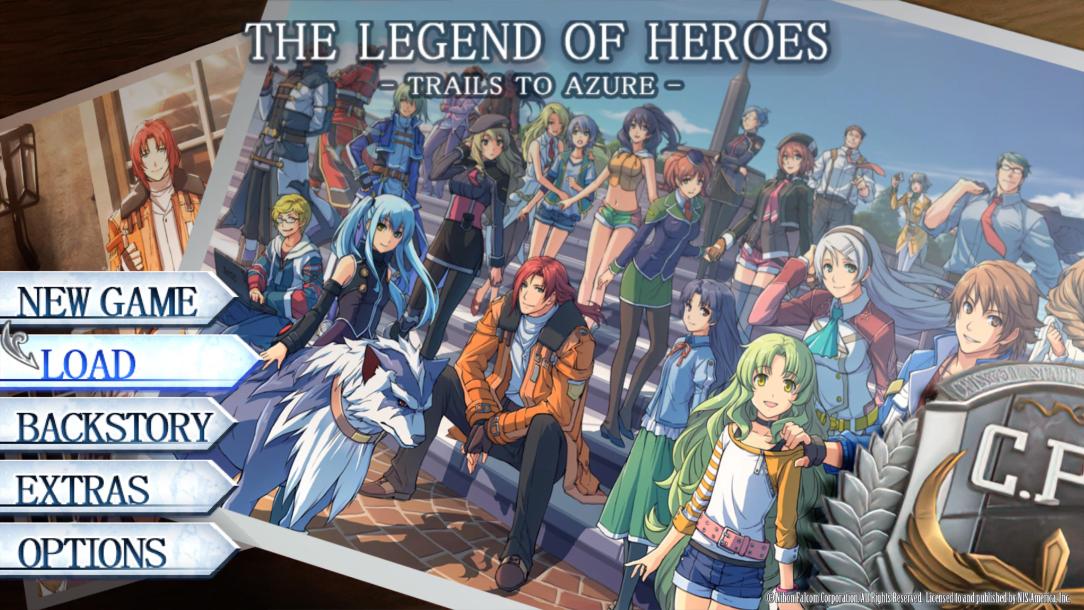
The Legend of Heroes: Trails to Azure is the direct sequel to Trails From Zero that we happily received last year. Continuing on the story of Lloyd, Elli, Randy and Tio, players who have played through Trails of Cold Steel will finally find out just what happened in Crossbell while the Civil War was raging in Erebonia.

There are a few things to be happy about here. The first, is that we, waves globally, are finally getting to see the entire events that transpired in Crossbell. The second, is that these events give more background into various cast members to Trails of Cold Steel III and IV, but also to the upcoming localization of Trails Into Reverie that sees everything up to this point in the timeline converge. Sky, Zero / Azure, Steel. Finally? It's damned good and solidly gives us a new 40-50 hour experience in a city and its outskirts that we've already spent 40-50 hours exploring.

Sequels oftentimes find themselves in a tough spot. How do you stay faithful to the entry before it while still keeping things feeling new and interesting? This can be doubled down when it's another entry into a long running series. Falcom thankfully has that down pretty well especially considering how many entries this series has before even considering the Ys Series.

So starting up three months after the events of Trails From Zero, Trails to Azure returns us to the point of view of "a day in the life of" the Special Support Section of the Crossbell Police Department. The start of every day sees the issuing of a series of tasks in an order of importance and of time to complete. Do you have to do all the tasks? No. Some of these could be ignored completely if you're trying to rush through, but that would be a disservice to yourself, and to the design and localization teams. Queue montage!

Puns

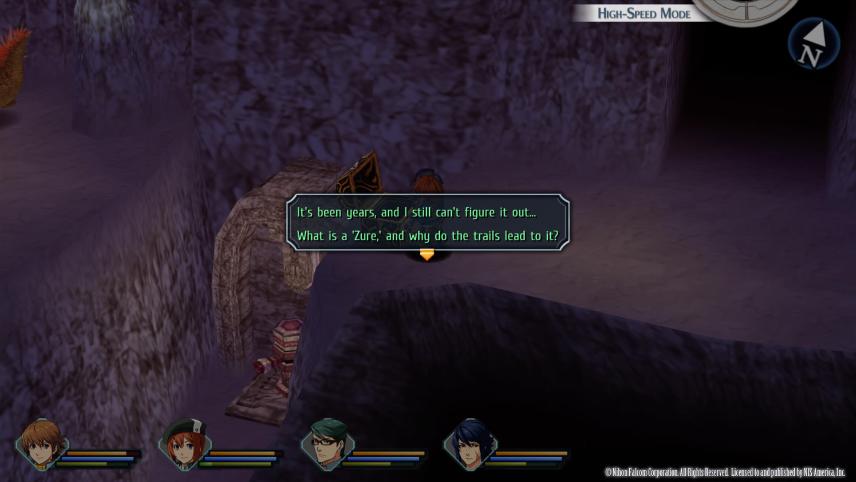
It’s been years, and I still can’t figure it out… what is ‘Zure,’ and why do the trails lead to it?

What is the difference between an RPG protagonist and a rare metal collector? One treasures your steel, and the other steals your treasure.

My name is Inigo Chestoya. You opened my father. Prepare to die.

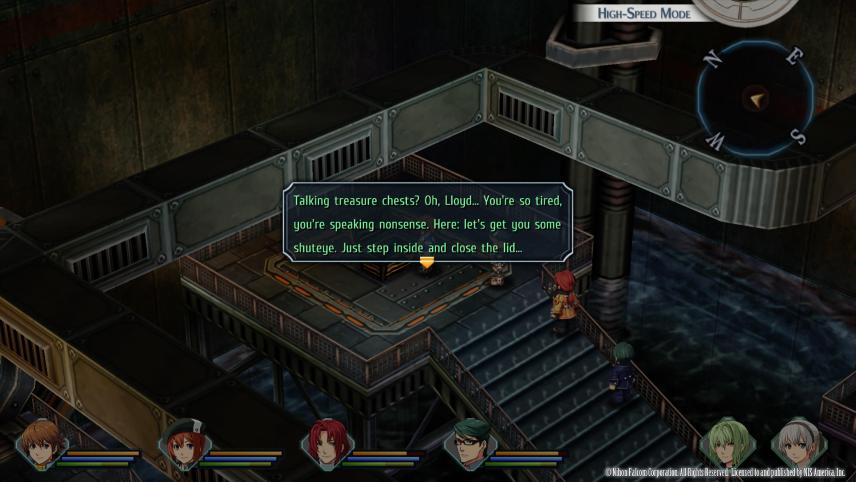
Talking treasure chests? Oh, Lloyd… You’re so tired, you’re speaking nonsense. Here: let’s get you some shuteye. Just step inside and close the lid…

Congratulations on beating Chst IX: Monstrum Knox. <- Hilarious in its own right as Ys IX: Monstrum Nox came out in 2019 while this was originally released in 2011.

Dunno much about the orbal net, but cloud storage sounds like heresy. Chestkind should not infringe upon the domain of Chestios, She Who Stores Above…

Take me down to the Crossbell City where the Plemora is blue and the girls are pretty, oh, won’t you please take me home?

To sum it up, I’d say she’s… a bat out of Gehenna? <- Yay Meatloaf Bat out of Hell reference

Messages of thanks

Thank you to the Geofront for giving me the chance to help release the definitive version of the Crossbell arc in English. I hope you all enjoyed it as much as I did. -- ‘AG’

Though it had its ups and downs, I’m grateful for the opportunity working on these two games gave me. -- ‘AZ’

This series set my path in life with its incredible focus on attention to detail. I was led to finding a community--a group of friends and passionate fans. Together, we made two wonders we can be eternally proud of. -- ‘NB’

Back to the review

Back to the reason that we are all here though, that's one of the major draws to this series. The level of depth that goes into any aspect of the story. Main events or simply side content, each of these are well crafted and worth going out of your way to explore. Not all of these events will be added to your journal once you check in at the start of the day. Some of these require exploring the town and speaking to residents to see if there's anything that could be helped with.

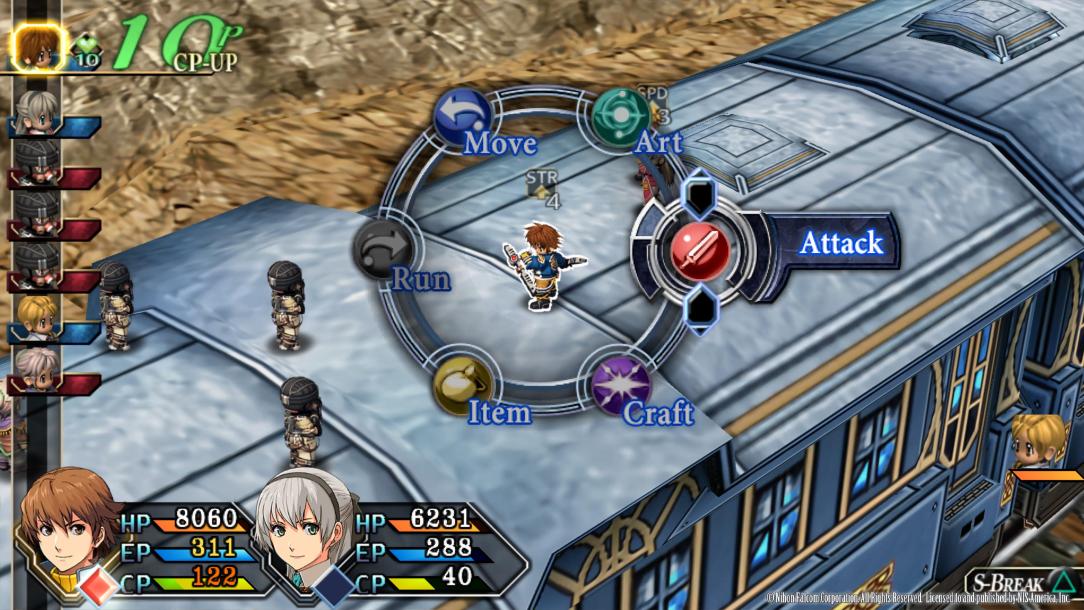
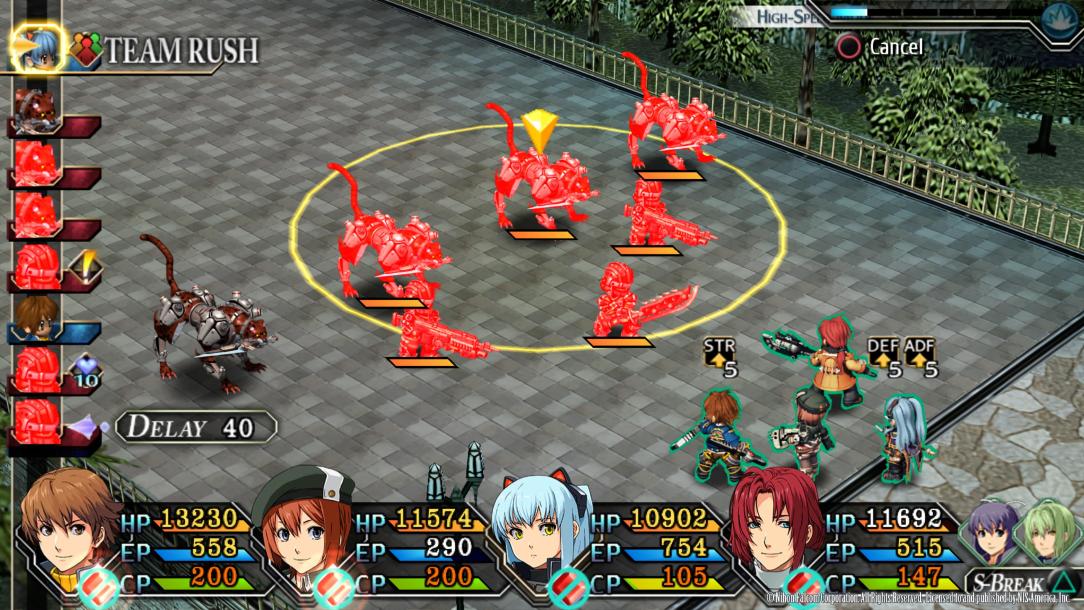
The visual style and gameplay are nearly identical to Trails From Zero with only a few small tweaks such as the inclusion of Burst Mode for battle. Burst Mode allows all four party members to act instantly, removes any cast time, recovers all ailments and can interrupt both enemies arts and crafts. This can't be used all the time but more within climactic story events. So, unlike most things that you may be saving up for on a rainy day? This should be used whenever possible. Plus you get a 20% attack power boost and your Craft Points regenerate automatically.

Getting around another feature that a lot of sequels have issues with, new Enigma units for Orbal Arts are assigned at the very start which easily explains why you have to restart your quartz collection from scratch in order to cast arts. Your Crafts at least are still intact and will continue to improve, but when it comes to the spells to cast? It may take a while before they are back in your hands for some serious damage.

In terms of more accessibility in getting around, you are only forced to "walk" for the first small portion of the game. This is highlighted by one of your characters saying they are neither designed or dressed for it. Sorry Wazy! You should have worn better boots if you're going to keep up with the rest of the veteran Special Support Section and military personnel. From there though, you are given a car which makes taking public transit a thing of the past unless you've parked down the highway while chasing after dangerous monsters. If you did? You can tell your car to go home and you can pick it up there. Yay!

All of this comes together so well that it's shocking that this was all originally only available in the palm of your hands with a PlayStation Portable like Trails in the Sky before it. More impressively, is how this 9/10 adventure, will definitely be playing again, managed to steal some magic away from two other titles.

Having come out long before Trails of Cold Steel III and IV as well as Ys VIII: Lacrimosa of Dana, I feel like their magic was lessened a bit by Trails to Azure. Trails to Azure, probably should have been split between two titles itself. The first two thirds probably brought me up to some 35 hours and I’m certain I missed a bunch of things. The last act though, was a 15 hour thrill ride that did away with the day in the life of and instead went for a “this just got real” Crossbell world tour adventure. You had strict goals and it channeled the linear JRPG route but in such a great way that it was so hard to put down.

The reason I feel like it lessened the magic of the other two is in the “how” it had done it. In the later Trails of Cold Steel entries, you essentially end up within the same format of gameplay and it felt so fresh compared to the “a day in the life of” as the Thor’s Military Academy Class VII are learning a different route which is half Bracer, half Military. They have that flexibility and so, they generally have the same gameplay flow. So when you get to the linear, well written parts, they feel new and fresh. Seeing that it had already been done, well I felt like that magic disappeared but made my appreciation that much more for this title that was done on a previous set of hardware that you wouldn’t even think could handle that load.

As for Ys VII: Lacrimosa of Dana, I felt like there were some design choices in some of the late game dungeons that looked so cool in there, but diving into them here? It too had already been done, making me once again appreciate this all the more because of how long ago it was originally released. This could obviously also be just an over romanization of how freaking good Trails to Azure is as both a sequel and a finale to its story arc. That and that it’s been a very long time since I’ve played Trails in the Sky Chapters 1 and 2, that I need to replay those and then Chapter 3 to brush up on Estelle and Joshua’s adventures.

That said though, seeing that these all came before made Trails to Azure all the more impressive. Not only that, but the localization team did such a fantastic job. There is A LOT of dialog in this game, voiced over in Japanese or simply plain text. In either case, it’s on the screen, it had to be translated, and they obviously took some liberties such as the joke about Ys IX: Monstrum Nox. They had fun with it and it only increased how much fun it was to go through.

So overall, The Legend of Heroes: Trails to Azure is a great conclusion to the Crossbell Arc. While only two titles, both of these are action packed, contain some twists that I didn’t exactly see coming and were really hard to put down as hours could go by and only feel like minutes. Thank you Falcom and NISA for bringing these two games over as well as the continued work on the series!

Score: 9 / 10
Share:

Our Favorite Games Through the Years - Part 4 - Gaming Thoughts

Estimated Reading Time: 5 minutes

The disc-based rea was an interesting one. Hardware had more moving parts than ever, leading consoles to often break down more quickly than their cartridge-based ancestors. That being said, it opened up so much more storage space and audio fidelity. Gaming soundtracks evolved into more than a series of repetitive series of loops to full-blown music.

Robert:

PlayStation One: Castlevania: Symphony of the Night

Those that know me may actually be shocked at this one- given my adoration of JRPGs, you'd think I'd pick one of the many, many influential and high-quality JRPGs on the PS One. But nope ... SotN is uniquely special because of the absolute rug pull that happened at the "end" of the game. Nobody saw it coming and it was well before the widespread availability of the internet so spoilers were minimal. A beautifully-designed game, Symphony of the Night brings me back to hot, humid summers (without air conditioning), Creed, and just genuinely loving the innocence of childhood.

The PS One is an interesting beast for me as it was the last console of mine that I played while still something of a child. By the time the Xbox generation appeared, I was a newly-minted adult and that very "childhood innocence" that the PS One so wonderfully represented would be shattered just a few months prior to the Xbox's November 2001 launch.

Pierre-Yves:

GameCube: The Legend of Zelda: Wind Waker

I bounced a lot on this one. Skies of Arcadia was stellar but I never got to play enough of it. My brother actually bought me a copy a few years back and I need to set my Wii up to stream it for an Extra Life marathon one of these years… maybe that could be this year’s main event! Baiten Kaitos was also fun with a card based RPG system.

But, as much as I hate open worlds, Wind Waker was just fun as there was an ease to it that a lot of other titles still don’t have. This was also one of the first titles where Link was being given a personality which was fun. The cell shaded graphic also made this scary enough adventure a lot more approachable and I was more than happy to buy the Wii U Edition and the console of it.

PlayStation One: Breath of Fire III

Game of the everything and I’m sad that Capcom have left the series… nowhere. A bit like Mega Man if we are being honest.

Breath of Fire 3 had it all. Amazing story, accessible design, minimalist transitions to get to and from battle always keeping things moving, it was perfect, and it still holds up today. That’s it. This is probably my #1 game.

Sadly, most of what made BoF III amazing didn’t translate to BoF IV and the chance they took on Dragon Quarter for the PS2 didn’t work for most people. The series would basically see nothing until BoF VI which I don’t know much about other than being a mobile title that I don’t think has been localized.

Being that the PS1 has a vast and amazing library, honorable mentions go to: Lunar: Silver Star Story - Complete, Lunar 2: Eternal Blue - Complete and The Legend of Dragoon.

Richard:

GameCube: Metroid Prime

Continuing with Nintendo consoles, we have the GameCube. This was an insanely easy choice for me: Metroid Prime. Yeah, this is probably one of the more "mainstream" entries on my list, but that doesn't matter. I've always been a big fan of Metroid games, and Metroid Prime really drove it home. From the soundtrack to the gameplay to the environment and tricks you need to do to earn some of the powerups, I loved absolutely everything about Metroid Prime. Every so often I still break out my GameCube for this, because man is it a great 1st person Metroid title. The boss fights, the environments, even the cool sequence breaks you can do are just so much fun. I love Metroid Prime, and really hope they continue making Metroid games like this in the future as well.

PlayStation: Spryo the Dragon

Moving onto the Sony consoles, we have our first title, and one I expect most people to recognize: Spyro the Dragon. Yup, that sassy purple lizard wins my PS1 category, and for good reason too. Spyro the Dragon is an absolutely amazing classic title. Even if you play the reignited trilogy, which is a sort of remaster, the game is still as great as it ever was. I've played Spyro the Dragon so many times and so often, that I actually once used to be able to complete it in a timeframe where I would be able to get it included in the 120% speed run listing. Not a great ranking, as I played it glitches, but not in the last 50 either. Spyro the Dragon holds a really special place in my heart and is almost always my go-to game when I don't know what to do. Well, it ends up turning into the first three titles, but it's Spyro the Dragon nonetheless.

Nick:

Sony PlayStation: Final Fantasy VII – to say that there were a lot of great games on this console would be an understatement. Like the NES and Genesis, I had a ton of games for this. Early titles like Battle Arena Toshinden and Beyond the Beyond broke me in. Tecmo’s Deception still ranks as one of my favorites of all-time. Many of my sports franchises like Madden and NCAA Football hit their stride here. And the fighting games! But Final Fantasy VII just resonated with me from the start. It was the first game I ever pre-ordered (from an Electronics Boutique – anyone remember those? I got a free t-shirt with my pre-order…). It was this massive, multi-disc game. My friends would come over to play it while I was off at college or work. I think there were four or five of us playing through it at once. I know that to many people, this title has become overrated over the years, but there’s no discounting the impact it’s had on gaming since.

Sega Dreamcast: NBA 2K – The Dreamcast was an underrated console, and sadly Sega’s swansong in that market. There were a ton of really cool, underappreciated games that released on it. However, no game stuck with me and my friends quite the way NBA 2K did. It had a ton of arcade flair, but plenty of stat-tracking baked in as well. Playing a franchise mode was a hoot, and the little mini-units in the controls that updated you on things like player stats along the way were just cool.

Nintendo GameCube: Fire Emblem: Path of Radiance – The further I get into this list, the more convinced that if PY asked me to, I could almost do a convincing top 10 for about 80% of these categories, and the GameCube is another reason why. There were a ton of fun games on this console, but this was my introduction to the Fire Emblem series, and it was love at first sight. That you could later port this over to the Wii game, Radiant Dawn just made it that much cooler later on. But the combination of strategy and RPG elements, plus punishing tactical difficulty made this my favorite game on the platform, hands-down. 


Article by RobertPierre-YvesRichard, and Nick

Share:

WWE 2K23 Review

WWE 2K23 by developer Visual Concepts and publisher 2K Games-Xbox Series X review written by Nick with a copy provided by the publisher.

Estimated reading time: 9 minutes

Last year saw the WWE 2K series bounce back after a rough outing with its 2K20 release. It was an acknowledgement from 2K Games that in taking another year to make sure they got it right, that there was plenty of room for improvement. This year’s release of WWE 2K23 builds upon that foundation from last year’s iteration and maintains or improves the game in just about every way possible. Last year the team pushed a theme of how 2K22 hit different, and this year the team of “Even Stronger” resonates just as well.

First of all, WWE 2K23 does what the series always seems to – which is to provide a ton of modes and options. That has almost never been an issue, and Visual Concepts continues to provide that here in the latest release. What is even more impressive however, is how the various modes have even more depth than last year. I spent a ton of hours going through the myriad modes and options in 2K22, and it’s clear to me that I’ll have even more great content to work through in WWE 2K23 well after this review has gone live.

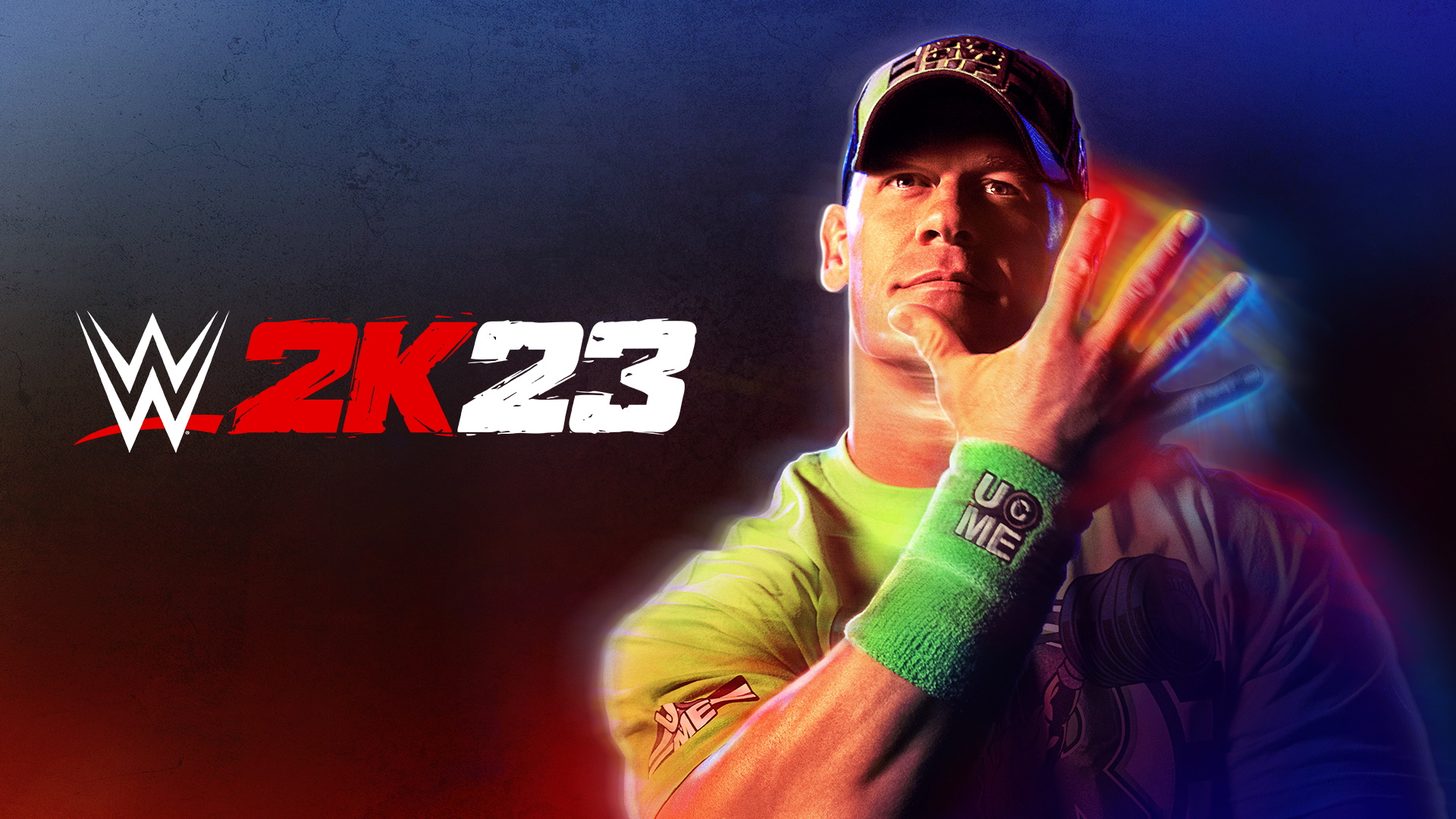
Let’s start with the cover star, John Cena. Several years ago WWE began to provide a ‘Showcase’ feature that let us get to know wrestlers like Stone Cold Steve Austin and Rey Mysterio better, putting you in their shoes (boots, colorful outfits, you get the idea) and play through some of their biggest matches ever. The script gets flipped a bit this year though, because instead of focusing on the star wrestler’s biggest wins and pulling their moves off, you are facing John Cena as he relives some of his biggest losses.

Simply put, I love this approach for a few reasons. One, it’s a completely fresh take on things, as Cena is more focused on the match, the crowds, the environments and not just tooting his own horn throughout. Sure, some of those losses happened in dubious ways (I mean, that’s a hallmark of the WWE), but it’s still nice to see a star willing to talk about failure and not just triumph. More than that, from a gameplay perspective, it’s just a lot more fun to get to play as different wrestlers. You might not get quite as good with that single wrestler in this scenario, but it’s a lot less of a grind and far more interesting how you get to switch it up every match.

Showcase is really all about telling the story of the chosen wrestler – in this case John Cena. For those new to the mode, it not only sets up the biggest matches – which you still want to win, but it intersperses the fights with a series of objectives. You might be asked to pull off a signature move in a specific location, or to pull off a series of light combo strikes, something specific to that match that actually happened. You can of course choose not to, but you won’t get ‘full credit’ and unlock all of the available rewards. One aspect of this mode that I’ve always enjoyed is how many times, these specific objectives set up a scripted scene that sees the wrestlers recreating what actually happened in the match, but then fading from the game video to replace it with actual footage from the fight. It’s always been a slick presentation feature, and it has only gotten smoother transitioning from archival footage to gameplay in WWE 2K23.

My one quibble with this year’s iteration of the Showcase mode is that there’s less of a documentary style feel to it than years past. John Cena’s very comfortable talking in front of the microphone by now, and he is given ample space to describe why a match was important to him in between matches as he reflects on his career. It’s engaging to hear, but in the past we’ve had the featured athletes adding commentary during the fight, so it’s not just the announcers and the cut scenes. It’s still an improved mode overall, but that’s one design change I don’t love, as I’d have enjoyed hearing more of Cena’s thoughts during the matches.

Another mode to call out due to his massive improvement is MyGM. This mode was okay last year, but this year it’s seen a lot of small tweaks that have seriously added to the depth here. Probably the biggest change is that instead of watching your story end after a single season, it’s more like an NBA 2K game in that you can run multiple seasons and try to cap them off with an induction into the Hall of Fame. I still find it a bit odd that there’s no online feature (or if there is, I certainly didn’t find it). While playing this mode with friends on a couch would probably be the ideal method, that’s just not an option available to everyone and I could see that as a bit of a letdown for some players.

There’s plenty of other modes, all of which have received various tweaks. You can wrestle online, take on some AI opponents, and participate in. The most open-ended mode is probably Universe, which is a sort of sandbox feature for diehard fans to create the WWE world the way they see fit. MyFACTION is the mix of fantasy sports / card collection that seems to be a monetization staple of every sports game that comes out anymore. You pull wrestlers from packs of cards, you acquire consumable items to upgrade them or extend the number of matches they can participate in, things of that nature. You then take your stable of wrestlers (both male and female) into various settings called ‘towers’ that pit your wrestlers against a variety of challenges. 

Completing these challenges earns you some currency that you can use to purchase more packs of cards. Of course, it’s a bit of a grind and you can always accelerate the process by spending more real money on the VC (virtual currency) and buy more packs that way. This mode’s got a few new flavors of challenge baked in there, and it’s always fun pulling a higher tier wrestler that you like, but I’ve never found it to be the most compelling mode and this year’s tweaks didn’t change that for me personally.

That being said, MyRISE is still where I have the vast majority of my fun. Say what you will about annual releases, microtransactions and all of the other things naysayers ding the 2K games for, I get a ton of enjoyment out of these RPG-like modes, and that holds true in WWE 2K23 as well. There’s been a shift in recent years to include female wrestlers into the mix, but it’s been a somewhat bumpy transition. At one point in the series, the divas felt simply bolted on. Then they tried to do a single story involving both male and female wrestlers in the disastrous 2K20 outing. Last year, they offered male and female careers, but they were essentially the same thing. I played as a ‘good person’ with one and a ‘heel’ with the other just to see some differences in there, but they were pretty miniscule.

WWE 2K23 offers two very distinct storylines, fully voiced options, essentially creating two stories to play through on your way to a (hopefully) Hall of Fame career. You play matches, make choices (which offers solid replay value for either of the two paths if you’re so inclined to see how the stories could play out differently) and continue to upgrade your superstars with new moves and abilities. The storylines on either path in MyRISE is pretty well-done, and I easily spent the bulk of my time here. It’s also worth noting that you can (finally) create a superstar and properly import them into this mode. I’m sure that I’ve been hardly alone in being annoyed by going through all of this work to create a specifically stylized character only to find out I have to do it all over again once I fired up my career mode, because there was no way to import them. That always seemed like a rather silly oversight and I’m glad to see that’s been remedied.

Last but not least, a bevy of modes and features are all well and good, but they don’t mean a whole lot if the in-ring action doesn’t deliver. Thankfully after the rough outing of 2K20, the developers spent a lot of time refining the controls and collision detection in last year’s release. As a result, I’d describe the gameplay of WWE 2K23 as more of a refinement than anything else. There’s a new option for kicking out of pins if you choose to use it (flicking the stick up during a sort of timed minigame as opposed to mashing a single button repeatedly). I personally use this method now myself, as it just feels slightly better than the previous button-mash method. Otherwise, the game’s controls are pretty similar to last year.

One on one fights still handle better than mass melees, but that’s some of the product’s charm I suppose as well. Still, there are times opponent selection or even hit detection during canned moves can look and feel a bit dodgy. Also, the game is not entirely bug-free.While nothing like what released a few years ago, I did have a couple of odd instances where things just did not seem to collide properly and wrestlers were doing moves against thin air instead of one another, but I can count the number of times that occurred for me on one hand. Match types from past years are here, but with the addition of a cool new one called WarGames, which I had a lot of fun with as well.

Summary

WWE 2K23 is the best in the series, and it avoids any major missteps along the way. Some of the modes received much improved death, while gameplay tweaks are minor but progressive. MyRISE is still the best mode in WWE 2K23, and I have and will likely continue to sink a ton of hours into it. It’s great to see WWE 2K23 building upon the solid foundation from last year and gives ample hope that the series will continue to shine.

Score 8.5 / 10


Share:

Fatal Frame: Mask of the Lunar Eclipse Review

Fatal Frame: Mask of the Lunar Eclipse by developer and publisher Koei Tecmo GamesXboxSeries X review written by Nick with a copy provided by the publisher.

Estimated Reading Time: 6 minutes 

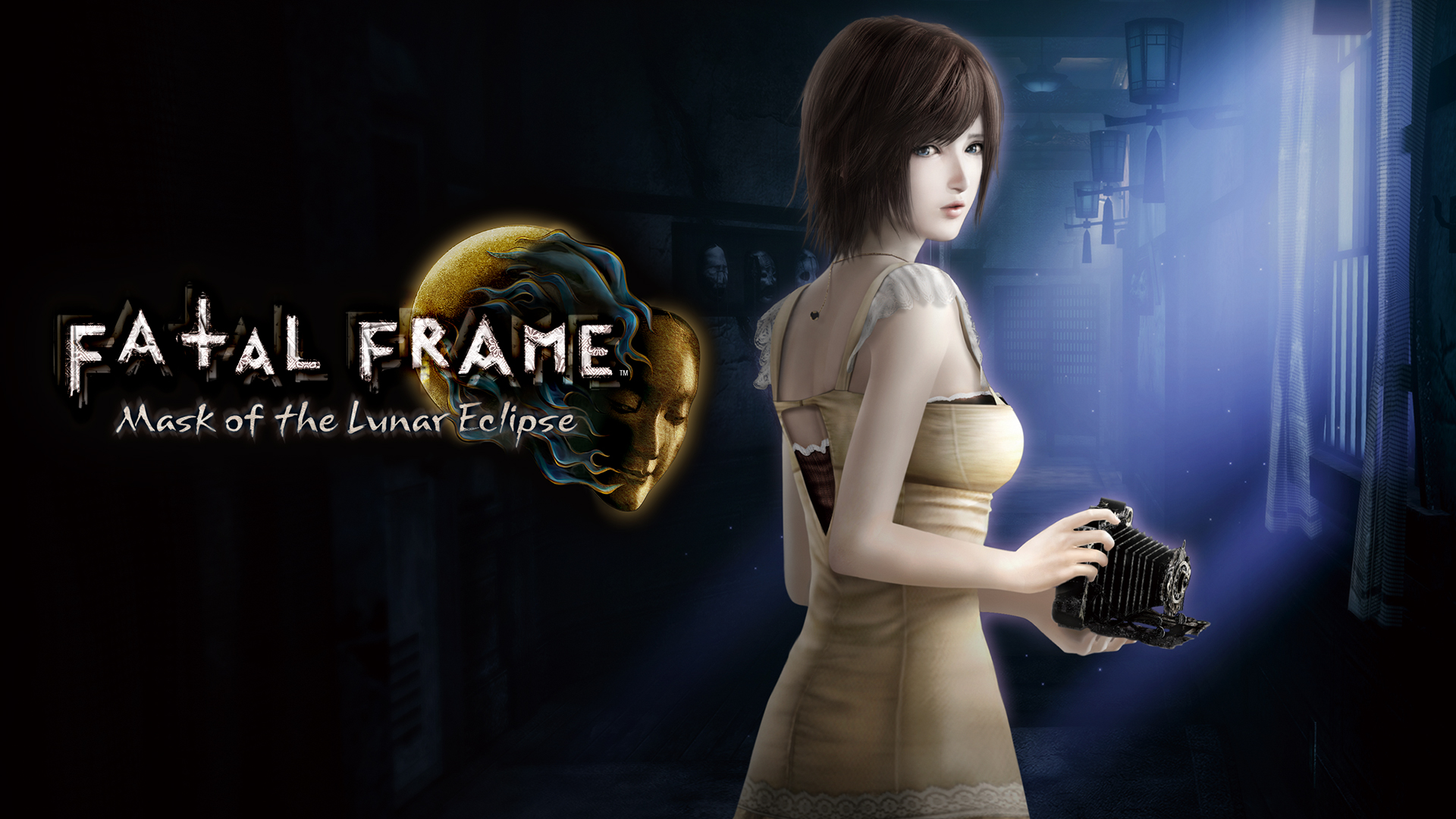
Fatal Frame: Mask of the Lunar Eclipse is not going to be for everyone, as this is an update to an older title that benefits from modern technology, but at the same time still shows its age. While games like Resident Evil are getting complete overhauls, the last two Fatal Frame releases are really just polishing up experiences that are quite a bit more dated, and this especially shows in the movement mechanics. That being said? This fourth installment in the series is finally getting the respect it deserves with a Western release, and I am thrilled about it. 

A lot of people might not at a glance realize the order of the Fatal Frame games, not that it generally matters. They have an interwoven DNA in gaming mechanics and presentation, but they aren’t neatly bound together in any sort of chronological order with recurring characters spanning the series. Each game tends to focus on unique characters and settings, even if the core gameplay is relatively the same. 

The first three titles got Western releases, and I played the snot out of them on PlayStation 2. Then I heard about this title, the fourth, getting released – but only in Japan. So keep in mind that this is an older title as it saw release for the Wii in 2008. For those familiar to the site, I reviewed Fatal Frame: Maiden of Blackwater a couple of years ago, which is the proper fifth main entry to the series (and originally came out in 2014). So for those who played that title and now move to this, know that the core game is several years older, and sometimes that older structure shows through in less flattering ways. Footnote for those curious about the series as a whole, there was a mobile release called Real Zero in 2004 and an interesting 3DS release called Spirit Camera that would be loosely considered spin-off games but not part of the series proper. 

In what has become a core mechanic in the Fatal Frame storytelling, Mask of the Lunar Eclipse follows multiple characters who visit a location called Rogestu Isle. As children, they had temporarily become missing on said Isle during a festival, but their memories have holes in them that they try to fill. The story takes these different characters, weaving their narrative together using a combination of cutscenes, dialog and found items (usually documents of some sort) to pull the mystery together. 

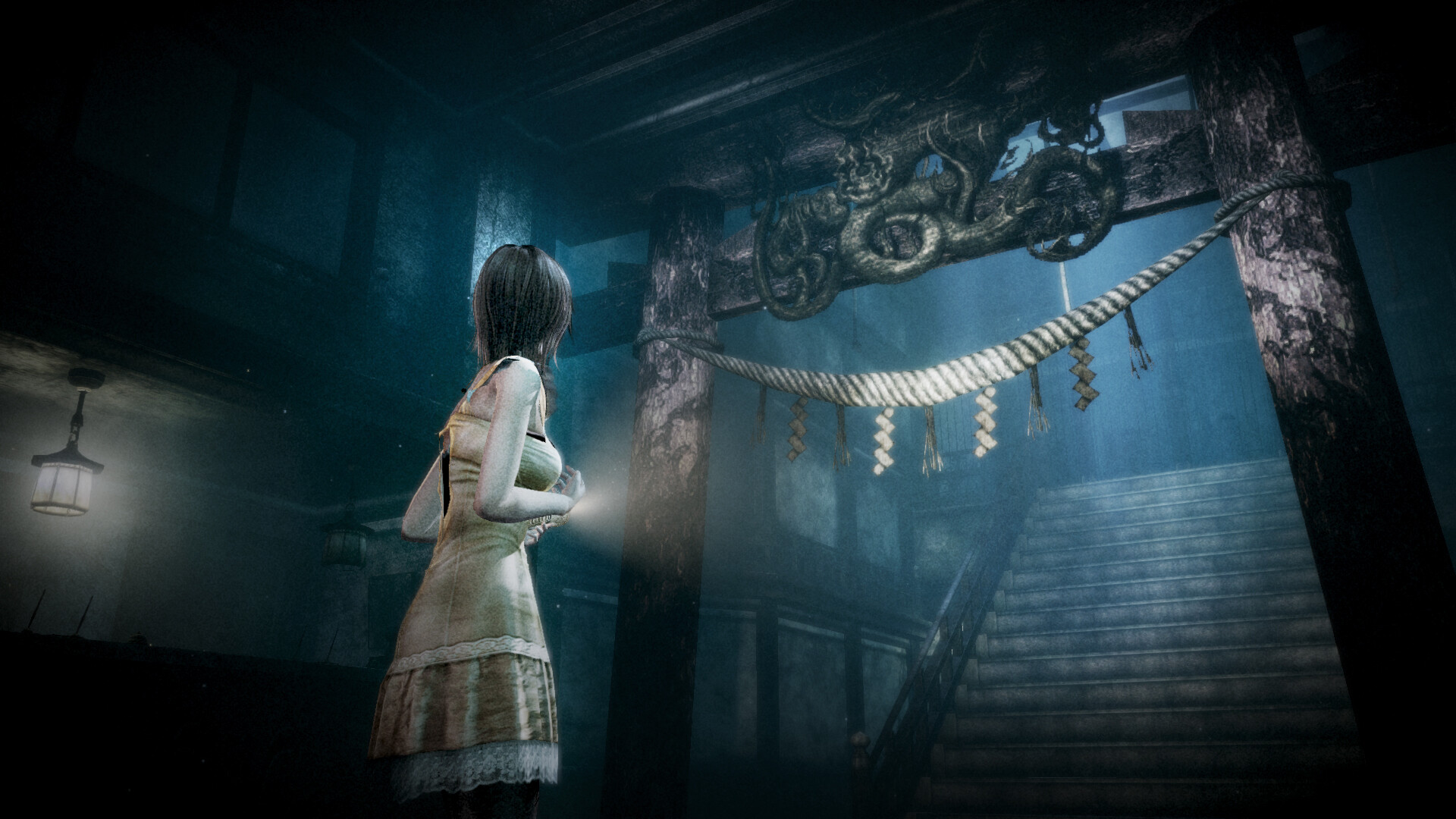
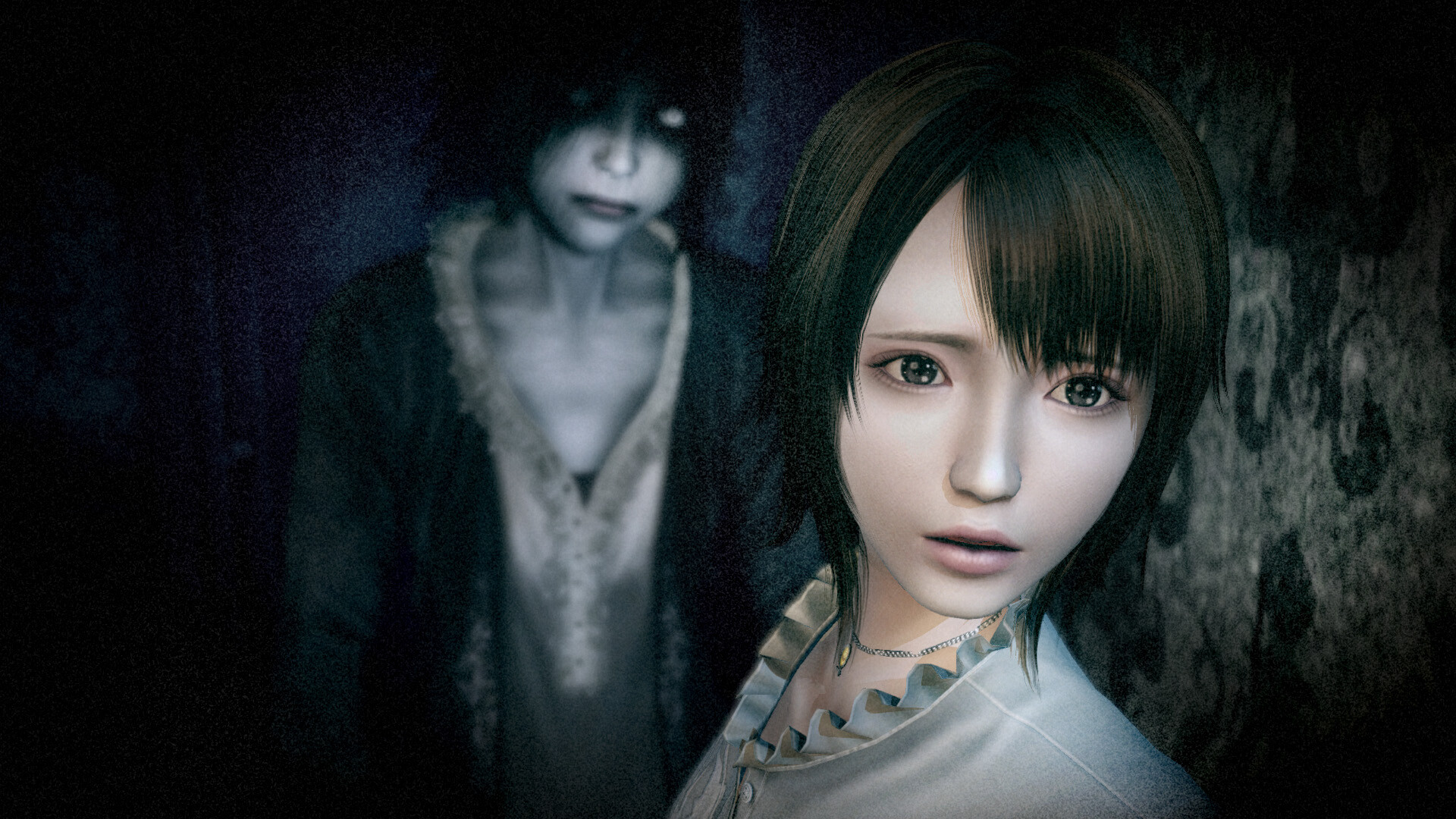
To say that the game is creepy would be a dramatic understatement. The team behind these games always seems to make outstanding use of shadow and sound, creating a creepy ambiance even when nothing is happening. That sense of isolation is often intense, and there are numerous times where there are blink-and-you-will-miss-it encounters that are in no way threatening to you, but it raises the specter that something could happen. It leaves you constantly wondering what could be around the next corner. The audio design really sells this, as sounds both subtle and startling can tip you off to threats or just simply cause the hairs on the back of your neck to stand on end. 

When Fatal Frame first came out, it provided a third-person horror game with some forced camera angles similar to Resident Evil and Silent Hill. What always separated Fatal Frame from those games has been the Camera Obscura. This is used to take pictures of the environment, allowing you to capture some of those brief encounters and get a better look at the spook that dropped in to surprise you, but also as your primary weapon. There’s a lightweight RPG mechanic in leveling the camera up and finding better film for it that strengthens its abilities. And the idea is that you shift from third to first person perspective when you raise the camera to combat the ghosts. For my money, this has always made the Fatal Frame games far more immersive, seeing the spirits coming at you from this first-person view is a lot more frightening than shooting or stabbing at your enemies in a persistent third-person view. 

Fatal Frame: Mask of the Lunar Eclipse has seen greatly improved visuals as the primary selling point in this update (aside from just finally getting to play the game). The lighting engine, textures and character models look considerably better than what I had seen from the game originally. There’s also a  lightweight fluff added in a new snapshot / photo mode where you can pose against the environment. It’s fun for a few minutes in a handful of particularly interesting environments, but that’s about it in terms of notable updates. 

However, with those being the only real upgrades, that is where Fatal Frame: Mask of the Lunar Eclipse can start to show its age a bit. The infamous ‘tank controls’ as they’ve often been referred to in horror games over the years are still in full effect here. They are clunky and slow and more than probably any aspect of Fatal Frame: Mask of the Lunar Eclipse, reflect the age of the game. To be honest, I’m not entirely sure how you solve that – so much of the atmosphere is created by making the player move slowly through the environments and I really don’t know how the camera combat would handle if it was greatly sped up with different controls. Smarter people than me could probably figure it out, but this is going to be the biggest gripe from most players. 

The slow pace of movement and frequency of retracing your steps through previously traversed environments (that become accessible after some event / item unlocks a prior barricade) pads the time a bit and helps to mask how small the game really is. There is a tendency to ‘go to the same well’ by having you visit a room that was previously creepy but harmless, then coming back to it and having it become dangerous, and then it is part of the bigger puzzles forcing you to pass through it a couple more times. About the third or fourth time you traverse certain rooms or areas, you start to realize that Fatal Frame: Mask of the Lunar Eclipse is not an overly expansive game. 

Despite these various nitpicks… boy Fatal Frame: Mask of the Lunar Eclipse is intense and fun. I love horror games, and I appreciate a wide variety of different series in the genre. That being said, I am willing to die on this hill: the Fatal Frame series is the best horror franchise in gaming, and it has been almost borderline underappreciated over the last couple of decades. The atmosphere as good as anything in the genre, and the stories are always compelling. With any luck, we’ll see new releases in the series going forward, fully updated for a modern audience to appreciate.

Score: 7.5 / 10

Share:

Silver Surfer - Retro Reflections - TBT

Silver Surfer by developer Software Creations and publisher Arcadia Systems—NES Throwback Thursday review written by Hamza. 1990.

Estimated reading time: 6 minutes


Silver Surfer on the NES has the cosmic-power (see what I did thar?) to both attract and offend. Badly.Its intense difficulty was intimidating and spiked several times during the gameplay. At times it would spike so badly that Sonic would have a hard time jumping over it; and at other times it would spike so badly that MegaMan would have a hard time jumping over it. See? Silver Surfer is easily one of the most challenging games I’ve played and certainly the least rewarding of all, because all it shows for your pin-point precision timing and tremendous effort is a half-baked image of the Surfer in a victory position as if he just won the marathon. Who does he think he is? Usain Bolt of the Cosmic Universe? The fastest man in all of space? Embarrassing!

Why has GamesRadar called it one of the worst video games is, frankly, quite beyond me. If its low rating and the bestowed title comes from the fact that this game is the most anti-superhero game ever made; or that the titular character has to fight through seemingly anachronistic enemies with zero boss battles... then yes, Silver Surfer can be called lacklustre, uninspiring and tame, but not the worst. In fact, I dare say this game is one of the enjoyable on the NES. With the graphics style and a majority of the gameplay very reminiscent of NES’s own Section Z and Gradius, Silver Surfer is a shooter that alternates between top-down and side-scrolling – a similar move that was adopted by Axelayto more critical acclaim 2 years later on the SNES.


With the strong difficulty in check, Silver Surfer is pretty much standard fare that only shows glimpses of ideas or something different... but these expectations are always betrayed by the game’s ugly habit of rehashing itself, to the point where it almost becomes a horizontal escalatar, coming back to square one after a few intense minutes. Further, like most pain-in-the-butt games, Silver Surfer adopts the “contact upon death” mentality that I still to this day cannot understand or does good to whom. Sure, the developers may have been having a nerdy, half-suppressed laugh about this, but this is beyond frustrating and the complete opposite of all that is fun. It’s as if games with this feature are begging to be a nuisance. I’ve seen Dennis the Menace behave better.

Now, the story of Silver Surfer goes like this; a terror “from the beyond” is threatening the universe, and presumably Earth, since sci-fi and comic book writers cannot contain themselves from terrorizing and annihilating their own home. Humans and their weirdness! Galactus summons the titular character and tells him to collect the scattered pieces of the Cosmic Devicefor reasons I have forgotten. There are five worlds and one can play them in any order as they wish. I suggest leaving the top right world for the last, for the boss of that stage, Firelord, seemingly keeps flipping the bird at you. Intentional or not, that effect is best saved for last.


When I say boss, I mean it in the most casual sense of it. The boss is nothing more than a big collection of pixels that requires five more hits than the common enemies. That’s it. No epic Metroid-style battles or such. The, er, battle, as it supposedly calls itself, is nothing more than staying in one position, shooting enough cosmic power, then quickly descending or ascending to avoid the boss’s projectiles. Repeat until boss is dead.

When you finish the five stages, Galactus then tells you to go to the Magik Domain to finally put an end to the aforementioned “terror from beyond” menace by laying dirt to the main enemy who I believe was created specifically for the game. I’m no comic-book junkie but I haven’t seen that character before. The Magik Domain turns out to be nothing more than a series a minty green top-hat projectiles and of the same color squashed top-hats – if you think I’m joking, check it out for yourself. Also, small skeletons with large heads also make an appearance that made me question both the boss’s nature and the supposed ‘humor’ of the developers. The skeletons resembled that of babies, and that had me worried. Unlike in the previous chapters, the boss battle here is long and surprisingly extra-challenging. The purple and green villain keeps going back and forth across the screen, while shooting yellow bolts in both a straight and angular fashion. The straight ones can be easily avoided but it’s the angular ones you should watch out for. After when that’s done, Silver Surfer takes the finished Cosmic Device from Galactus and keeps it on a very high kitchen shelf... out of the reach of human and non-human hands alike!


Silver Surfer on paper and in reviews may sound as a badly realized game, but when you play other titles on the NES and then this, you will realize Silver Surfer was just being an obedient student of the requirements of the NES and nothing more. It's just its uninspired gameplay, as well as its difficulty, and reluctance to give its superhero titular character something heroic and dashing to do, Silver Surfer failed to blow me away and didn’t provide enough incentive to warrant replays from me.

Despite the negativity the world bestows upon it, almost everyone, including I, come to this universal conclusion that its music is arguably one of the coolest on the NES, and the single redeeming factor from the game. The music... is AWESOME! There is no other word to describe it. Its energetic tone and fast rhythm almost makes it an epic on a smaller scale. *sigh* if only the game were like that; because frankly, Silver Surfer had the potential of being one of the greatest scrolling-shooters on the market. The other feature I enjoyed was the movements of the Surfer himself. When you pressed down, he would slightly bend down and the upper deck of his board would be revealed; likewise, in opposite, when you press up. When you press back, he would tilt the board in his direction. These little effects were satisfying, and anytime you feel the game is giving you a temper, just press any of the directional buttons and calm yourself a bit.


In conclusion, Silver Surfer on the NES is not a bad game at all, no sir. Though I played it only once, I found the game enjoyable and provided adequate fun for 1 hour. But that’s how it’s gonna remain; Once! Once! Once! Once! No twice!

Score: 5.5 / 10


Share:

A Return to Idle Champions of the Forgotten Realms – Gaming Thoughts

Idle Champions of the Forgotten Realms by developer and publisher Codename Entertainment Inc.PC - article by Nick.

Estimated Reading Time: 9 minutes


I last discussed this title a few years ago, in a review I did on console. There’s something oddly comfortable about this game – so much so that I garnered all of the achievements on Xbox and got the Platinum Trophy on PlayStation. However, this is a game that was first released on PC, which oddly was a platform I had never experienced it on.

I’m not really sure what possessed me to just randomly up and install it via Steam recently, but I did and found myself falling very easily back into the routines of this title. Now, this game doesn’t go cross-platform. I was starting from ground zero yet again, but honestly? I’m not sure I’d have it any other way. While there were plenty of familiar elements to this combination idle / strategy game that I was once very well-versed in, a lot had changed in Idle Champions of the Forgotten Realms over the last few years, and this allowed me the chance to experience some of those changes and adapt accordingly.

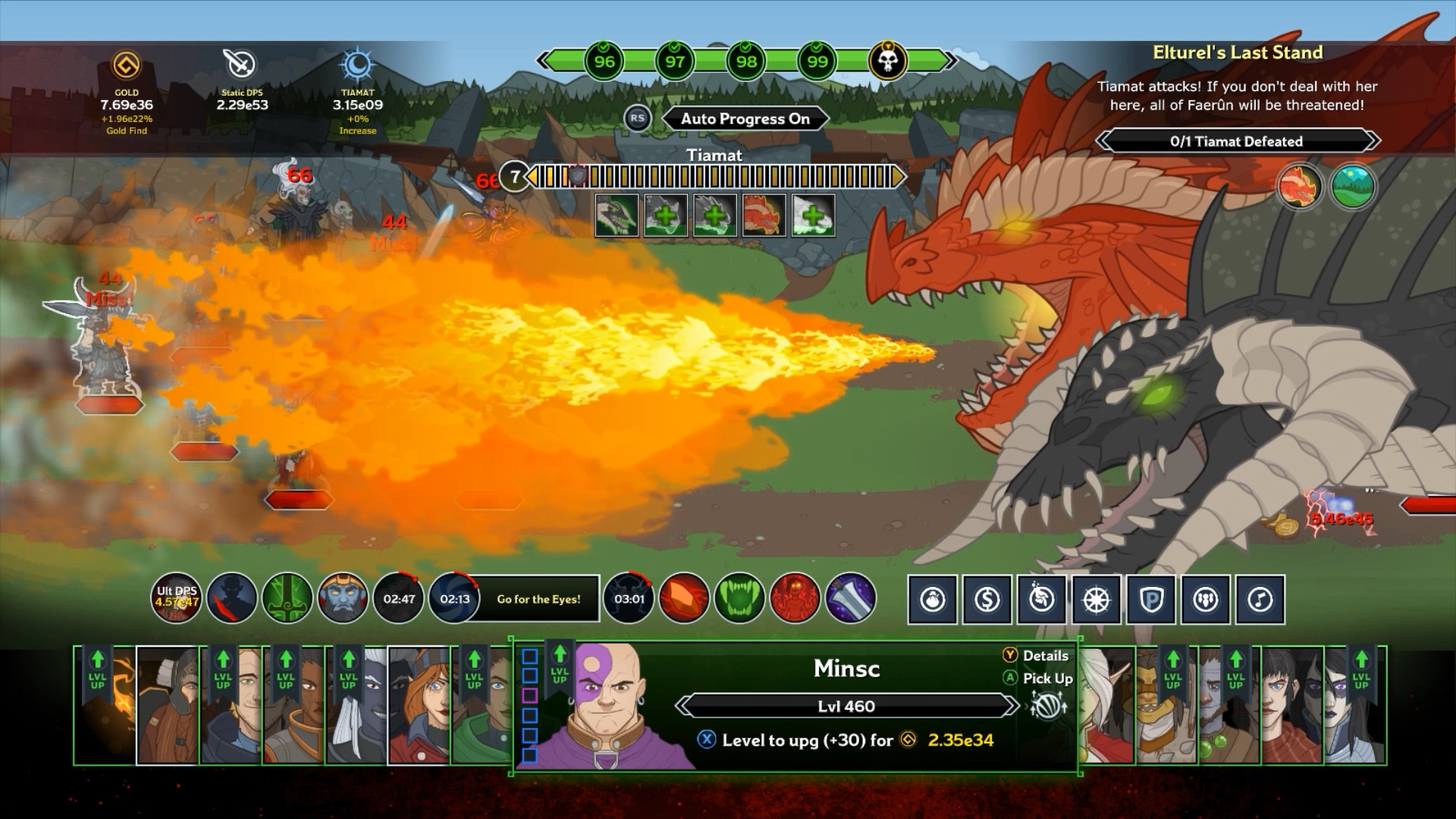
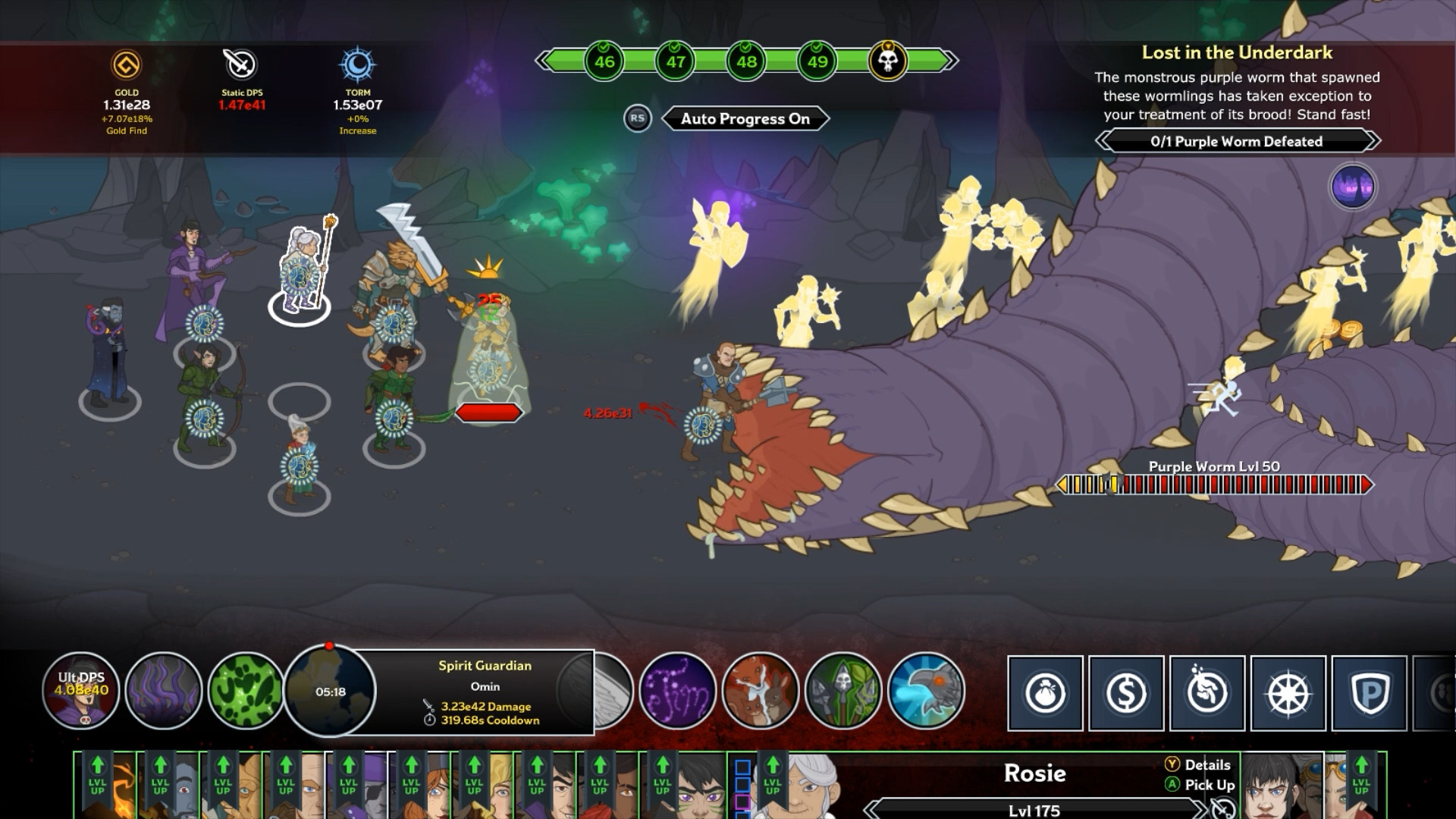
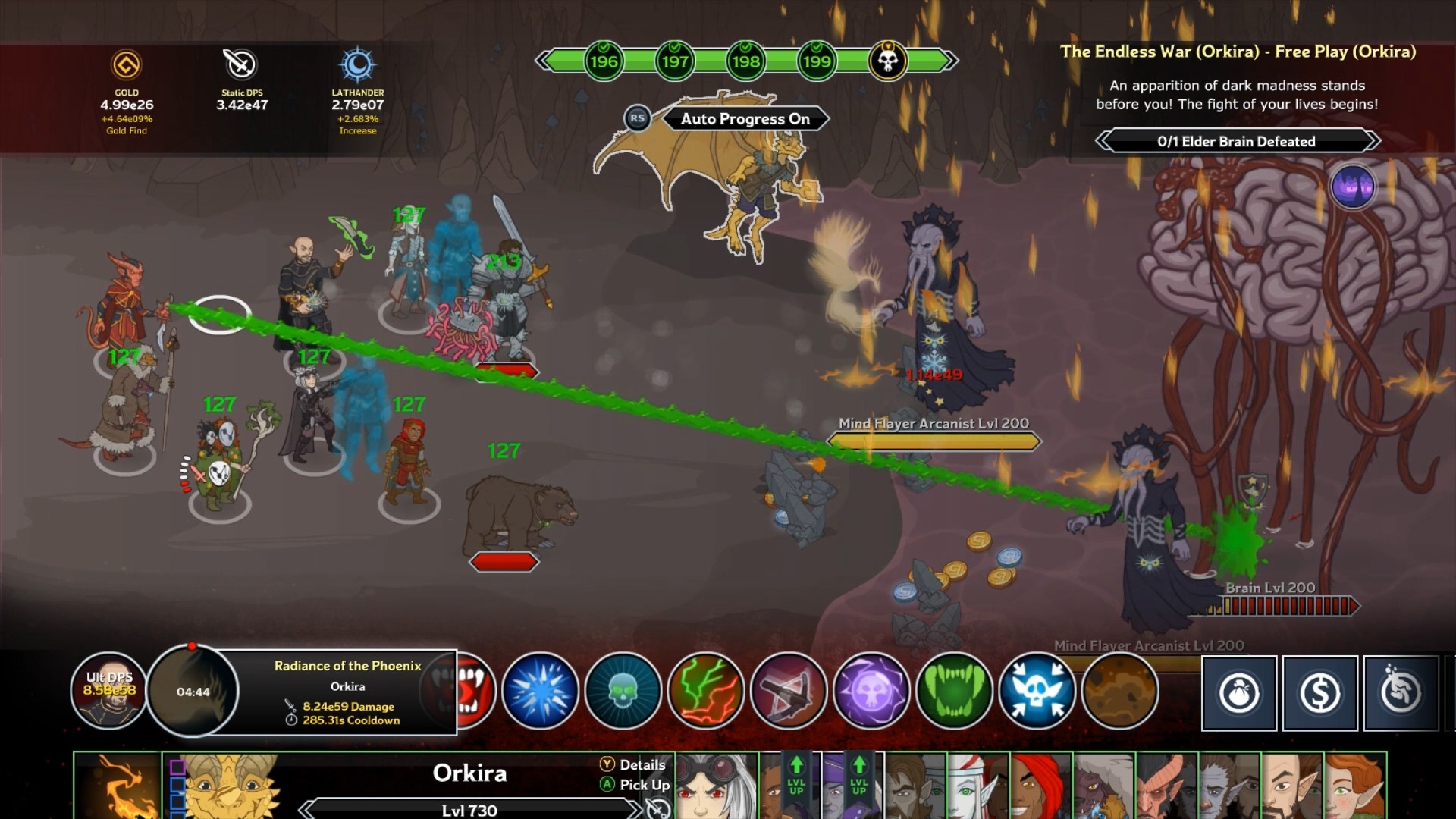
I will start with a quick rundown of what Idle Champions of the Forgotten Realms is (though you can read my prior review for a much more detail description). Essentially, it’s primarily and idle game. Those can come in a lot of flavors, from ‘mash button repeatedly without looking at the screen’ to ‘set things up and let them run for hours unattended’. Technically, this game is closer to the latter than the former, but it’s not really all that hands off. It’s great for when I’m doing some other things, because it can and will run without intervention for minutes (or sometimes hours at a time, like when I go to bed or work). You are always progressing in some fashion, as your characters meet objectives and move to the next level. At the next level they earn more gold. More gold unlocks higher character levels, which make them stronger so they can continue advancement.

At its heart, Idle Champions of the Forgotten Realms is a lightweight RPG based on – well, the granddaddy of RPG: Dungeons & Dragons. Specifically Forgotten Realms (though interestingly enough, there’s been more Dragonlance references of late in say, their weekly event that’s taking place – more on that later). So you have well-known characters like Bruenor and Drizzt from established Forgotten Realms lore interspersed with characters popularized in shows like Critical Role. These characters are the core to the game as there’s a ton of them, and they all interact with one another and enemies in various ways to aid in progression.

Now, ‘progression’ could be seen as an odd term to use, because you earn tons of gold in each run, only to have it vanish at the end. Your characters level up, but your next run on a new map starts them off at level zero. When I first played Idle Champions of the Forgotten Realms, this struck me as a bit odd. After all, most RPGs are founded on a principle of gain experience and find loot to make yourself stronger and stronger. However, there are multiple systems in place that create a true sense of progression. Gold disappears at the end of a run, but it turns into a deity’s ‘favor’, and these points allow you to unlock new perks (like the middle row in your formation can do additional damage), or you can sit on those favor points and they work into the math behind the scenes as a gold-earning multiplier on your next run. This of course allows you more money for further leveling up your characters, even if they did start at level one on your next run.

Additionally, there are a handful of characters who can farm some stats that persist through runs and become a core part of their strength over time. Beyond those, there’s also equipment, which slowly but steadily grows in value and level and boosts the character stats as well. So over time, even if your characters start at level 1 each time and your gold is lost with each new run, they all incrementally improve your odds of future success.

Now, I had always had this notion that Idle Champions of the Forgotten Realms was a PC-first game. I would read about it from time-to-time during my times playing it on console, and there were characters and updates on PC that hadn’t been released on console yet. However, I now realize that this title simply works better on PC as well. That’s not to take anything away from the console versions, which I had a lot of fun with, but I think if I had started on PC first and then moved over from mouse to controller? I would have found it a somewhat rough transition.

For one, on the console your ‘clicks’ just target whatever critter is closest to your party. There were absolutely times I wished I could click a specific target, but couldn’t. On PC? Use a mouse to target and click – that functionality is there. Also the various menus and shortcut options for leveling and selecting things is a lot smoother. Every now and then on the consoles, things would get into weird states, like swapping chars out of the active lineup to the bench and they would get hung up and force me to start / stop. Lastly, performance issues really dogged the PlayStation in particular back then, forcing me to restart every now and again, or it would stutter and bog down – or even crash. None of those issues crept up on the Steam version of the game.

But what about the game itself? I had mentioned before that quite a bit had changed in three years. While the core mechanics are the same, the cast of characters has grown a great deal. This leads a great deal more strategy in laying things out. One of my favorite aspects of Idle Champions of the Forgotten Realms is experimenting with new combinations. Also, many of the prior characters have seen tweaks. Some of those are relatively minor, others have seen some significant reworkings. I also appreciate that there’s greater synergy now. There were a handful of groups like the Champions of the Hall or Force Grey out there, but there seem to be more now with stronger ties into those teams. Heroes of Baldur’s Gate seem better than I remember them being back then. Also with more characters come more classes and races, making some of those abilities that tie into a specific race or class easier to pull off now and creating more rewarding combinations.

There is also just more content in general. Two more large regions with their many smaller zones have been added since I last played. There’s also additional zones. Patron variants were already in existence when I last played, creating new and challenging combinations to test players and now there is one more patron that adds even more replay value to the existing zones. Another feature I didn’t experience on consoles before but happened into the middle of when I started on Steam was the idea of ‘seasons’. These come with a purchasable ‘Battle Pass’ component where you can unlock some items for free by meeting various objectives on a daily and weekly basis, but having the battle pass gives you access to even more rewards. It’s optional, and I didn’t feel pressured into buying it – but I did complete most of the objectives (about 70%) despite coming into things mid-season. I’m looking forward to the next one that I can hit from day one.

Idle Champions of the Forgotten Realms has always had a strong community tie-in. I had mentioned how popular D&D shows have played into some of the characters that have been rolled out. There’s frequent Twitch streams that the game makes you aware of in case you want to see the passionate team behind the game talking about strategies and upcoming features. Right now there’s a weeks-long event called Fury of the Black Rose. This is an adventure being roleplayed out and shown on YouTube, but one fun feature is Idle Champions of the Forgotten Realms lets players vote on some plot elements to be rolled out. You can see how your votes impact the livestream.

As a lifelong Dragonlance fan, I’m kind of stoked to see that this is taking place on Kyrrn, so having characters like Soth at the heart of it, or a daily vote asking if Miria is going to encounter Dalamar the Dark or Raistlin (sadly, my vote was for Raistlin, but he only got 34% - so Dalamar it is) is pretty entertaining for me. It also gives me a sliver of hope that while this is ‘of the Forgotten Realms’ – maybe we’ll get some proper characters from D&D lore in other worlds to show up in-game in the future? Either way, these votes give you Reward Tokens you can spend to unlock more things in the game, and it all just ties in too neatly to that sense of community that D&D really thrives off of.

It would be easy to take a glance at this title and think it’s some sort of lazy fan service money grab, but I think it’s just the right type of fan service. It features the proper IP, but also pulls in a lot of the community’s creativity along the way. It’s a lot of fun seeing locations or creatures from Dungeons & Dragons, even if the presentation is fairly simple with colorful but basic visuals and enjoyable if limited amounts of music (compared to the many, many levels you’ll traverse). It’s a free game with lots of options to pay to speed things up, but eventually? You can unlock most of what you want just through grinding. If you are going to drop a few bucks (which I’ve done on all three platforms now, to help support the clearly passionate devs behind this title), I usually go for the familiars. That auto-clicking is great for when you turn off your monitor and keep the units grinding away at night. Trust me, your mouse will thank you for it.

How long will I be playing Idle Champions of the Forgotten Realms in this, my third go-round with the game? Hard to say. It has some nice long legs on it due to the large amount of content, and it’s not super demanding of me time-wise. Often I have it running on a side screen while watching something or playing a console game on my television, poking at my group as adjustments are needed. As such, it’s a fun, comfortable experience that keeps me entertained without necessarily asking a lot out of me at the same time. I can’t help but think that the PC version of the game is probably the best one, and I’m certainly enjoying my return to the Forgotten Realms.

Share:

Pharaoh: A New Era - PC (Steam) Review


Pharaoh: A New Era by developer Triskell Interactive and publisher DotemuPC (Steam) review written by Susan N. with a copy provided by the publisher.

Estimated reading time: 10 minutes

Share:

Maybe Give That Game Another Chance – Gaming Thoughts

Reading Time: 6 minutes

As I’ve grown older, I find it harder and harder to get into brand new games. This is certainly accurate when compared to my youth, but in fairness a lot has changed since then. This is true both of myself and video games as a whole. Old arcade cabinets and early Atari titles had a very low barrier of entry. You move around your spaceship and avoid getting hit while trying to shoot the enemies. Throw a quarter into Double Dragon, and you know that you’re supposed to move from left to right, punching the bad guys that are trying to punch you. NES titles could be beaten in under an hour once you took the time to memorize levels or enemy patterns.

These are all blanket statements that of course aren’t 100% true, but in general gaming has gotten harder. Gone are one or two button controllers. Instead, most games have no less than seven inputs to master. With this comes deep and often satisfying gameplay elements, but they take a different kind of mastery than jumping into the fire and just learning the bullet patterns of opposing ships.

As I mentioned though, it’s not just the games that have changed. My reflexes are not as good as they were twenty years ago. I have a full-time job and a lot more responsibilities than I did as a kid on summer break. I simply have less physical energy than I once did. I also have more money, which means I have more games to choose from. I used to go to video rental stores (remember those?) to grab a game for two nights, and I had to make the most of those two nights to try and beat it. Or to at least figure out if I liked it enough to buy later and add to my collection of maybe fifteen or so games. Now? My steam account passed 1,000 titles years ago, and I have consoles on top of that.

All of these things have led to an interesting observation I’ve made about myself: if a game doesn’t hook me right away? I may just try a different one instead of really giving it a chance. Far too often, it seems me slipping back to games I already know or are comfortable with. While that’s not a bad thing necessarily, it can lead to missed opportunities.

I got on this topic the other day with my daughter. She saw me playing Mass Effect somewhat recently, and she mentioned how she liked the game, but never played any of them beyond the first. That’s when I told her about how she at least got through Mass Effect on her first try. When I first played it? I gave up on it. In retrospect, that seems crazy, right? Anyone who has read my articles over the years likely knows I consider the Mass Effect trilogy among my favorite series of games ever. I recently scored the Legendary Edition of the trilogy a 9 out of 10.

And I nearly never played those next two games. 

Why? It’s hard to say, to be honest. It’s been more than fifteen years since it happened now. It was not a hard game. I don’t recall disliking it in any notable way at the time. But conversely? I just… didn’t like it either. I had a lot going on with life at the time. I had started a new job, in a new city. My kids were small, I was trying to make ends meet and I was just tired most of the time when I came home from work. I had small children, a wife and plenty of other commitments. Video game time was hard to come by back then, and when I did play, it seemed I wanted something easy and familiar. I would go back to World of Warcraft or maybe the latest fighting game. Mass Effect was a bit different, and I picked it up based on the glowing reviews at the time. I was a fan of previous BioWare PC games (especially Dungeons & Dragons ones).

So, I sat down to play it one afternoon. I progressed to the first world. It did not impress me all that much, something or other came up, so I saved it and quit – and just didn’t come back to it. Not until several months later, maybe even close to a year later. I’m not entirely sure what changed. Maybe because I was more comfortable with the no-longer-new job, or the kids were a bit older and better settled in, or maybe I just happened upon a very slow weekend where I had more time than usual to do what I wanted.

Either which way, I fired up Mass Effect again, from scratch. I wanted to give it another shot – and well, boy am I glad that I did. I loved the game, and the further I got into it, the harder it was for me to put down the controller. In fact, after beating it as a paragon the first time, I immediately restarted it to do another go with the renegade path, just to see how things would differ along the way.

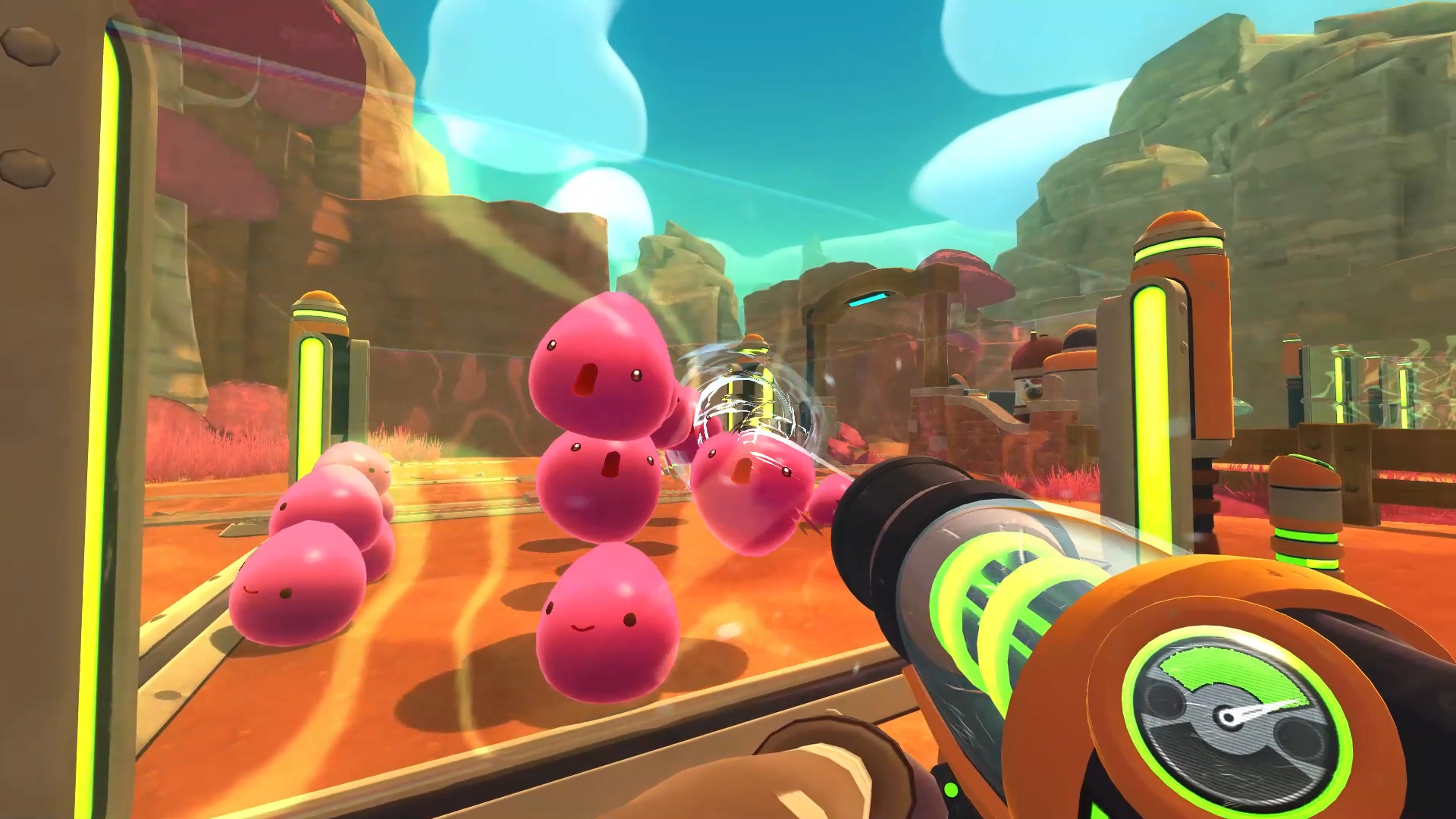
After I explained this to my daughter, we began to talk about other games that had failed to initially click for us. She called out Slime Rancher in particular. Here was a game she said she just thought was stupid the first time she played it. I had it on the Xbox 360 as a freebie gold title, and she was bored one day and thumbing through games looking for something she would like. She then later said a friend recommended she play it, and when my daughter said she had and didn’t like it, her friend insisted she give it another shot. For whatever reason, it stuck that time. She sunk dozens of hours and first day of release purchased Slime Rancher 2 and has over a hundred hours into that one as well now.

I then began to think back over the years about some of the games I had initially been annoyed with. Demon’s Souls due to its difficulty. Suikoden games that sometimes take an hour or so to get into any of the gameplay elements. Sometimes a game like No Man’s Sky simply got better after release due to the development team giving it more updates. Darkest Dungeon was weirdly confusing to me the first time I played it as a Game Pass title on Xbox, and I gave up on it almost right away. I recently picked it up on PlayStation stupidly cheap and for some reason I can’t explain, it just clicked for me this time and I have well over fifty hours into it now.

So, my proposal here? Find a game or two you gave up on that you really thought you would like. Maybe it still won’t click. Maybe you’ll find that your situation has improved, or maybe the game itself has improved and you may just very well discover a new favorite instead of a previous disappointment. This doesn’t work for every game, obviously. I’ve certainly stuck with a game longer than it deserved (I’m looking at you Mass Effect Andromeda and Dead Space 3), and some games you play and simply realize they are not for you. I had that experience not so long ago with Dungeons & Dragons: Dark Alliance. I was so excited for that one… until I played it.

That being said, maybe there’s a Mass Effect in your catalog that deserves a second chance?

Article by Nick
Share:

Random posts

Our Streamers

Susan "Jagtress" N.


S.M. Carrière

Aldren


Affiliates

JenEricDesigns – Coffee that ships to the US and Canada

JenEricDesigns – Coffee that ships to the US and Canada
Light, Medium and Dark Roast Coffee available.

Blog Archive

Labels