• When The Embers Wake - PC Review

    When The Embers Wake is a third-person narrative walking simulator about grief where the narrator, Emmie, is working through the loss of her mother. This struggle is portrayed through a red panda and mother panda.

  • Godzilla: Destroy All Monsters Melee Remastered - Xbox Review

    Two and a half decades after the game first released, we have Godzilla: Destroy All Monsters Melee Remastered available on modern consoles, and this title is absolutely a blast from the past.

  • Map Map - A Game About Maps - PC Review

    Sometimes a game will hit your feed that is completely unexpected. That is the reaction I had when I discovered Map Map - A Game About Maps (which I'll refer to as Map Map from here on out). It is a puzzle exploration game where you take the role of a young cartographer setting out on a relaxing journey to many unknown islands.

  • Fallen Tear: The Ascension - PC Review

    Welcome to an adventure across the land of Raoah! Help guide Hira on this metroidvania quest across a land that is being choked by corruption. Can you help Hira return peace to Raoah with the help of the companions he meets along the way, or will the world fall into desolation? Only you can help out in Fallen Tear: The Ascension!

  • Outbound - PC Review

    Let me tell you about this cozy game my daughter and I are playing together called Outbound. Now, I've been following this game from the initial Kickstarter back in April 2025 to its full release in May 2026. The best Mother's Day gift for myself and my first ever collector's edition in a physical copy!

  • OVER REQUIEMZ - Nintendo Switch Review

    In OVER REQUIEMZ Yuhiru is thrown into the castle of Oz and is immediately accused of trying to assassinate the King and shoved into the dungeon. Not only is she treated like a criminal...

  • Dread Delusion - Xbox Series X|S Review

    Today we’re looking at what has rapidly become an absolute favorite in the open-world RPG genre for me. An interesting story, memorable NPCs, stunning visuals, and a setting absolutely dripping with flavor, Dread Delusion sets its tone immediately and sticks with it.

  • NHL 27 - PS5 Review

    ...and I have been playing NHL games since. It didn't matter whether it was EA or another game like 2K in the 2000s; I loved hockey games and still do, but is NHL 27 a step in the right direction?

  • YAR: Forgotten Throne - Playstation 5 Review

    YAR: the Forgotten Throne will see you “Choose your path as a Warrior, Volkhv, or Archer and journey across the lands of Borea in a story-driven open-world RPG. Uncover the source of the darkness poisoning its forests and wildlife...

  • Nivalis Nights - PC Review

    Nivalis Nights is an experience that gives a strong sense of what a talented team of visionary minds can create. Nivalis Nights crafts a living breathing painting of neon basked splendor with a futuristic new art style of game that is both beautiful and urban futuristic.

Chernobylite Review


Chernobylite
developed by The Farm 51 Games published by All In Games—Microsoft Xbox Series X|S review written by David with a copy provided by the publisher.

Estimated reading time: 6 minutes.


Chernobylite is an engaging sci-fi title set in the Chernobyl exclusion zone that dips into half a dozen genres while keeping that realistic grounding. Inspired by the S.T.A.L.K.E.R. games, Chernobylite maintains its own identity and story. You play as Professor Igor Khymynuk, a former Soviet scientist working on a project at the Chernobyl power plant when the disaster struck. Thirty years later, a substance created by the disaster called Chernobylite is being studied by a private organization known as the NAR. Using technology associated with the substance, Igor returns to the Zone seeking answers about the disappearance of his partner, Tatyana, after receiving a pre-disaster picture of her.

The game opens with Igor having a disorganized nightmare that serves as a super brief tutorial before dumping you into the action, being woken up by the two mercenaries, Olivier and Anton, whom you've hired to help you get you through The Zone. Once awake, a more practical tutorial happens here mostly involving navigation and stealth and you have a moment where Igor volunteers without player input to take down one of the soldiers blocking the path forward. The stealth takedown prompt causes Igor to choke the man out from behind here and Olivier reprimands you for hesitating and not using the knife.

Following this moment, your future stealth takedowns will involve multiple graphic stabs to the chest from behind. On that note, it is a graphic game. Many game ratings mention graphic violence and gore, but most of them don't reach the head-bursting level of this title. Heads up for anyone not wanting to see a pretty messy bullet wound in their foes. The prologue continues, you get some Chernobylite, and then a big nasty guy in all black shows up, teleports, kills Anton, and then hesitates when they see your picture of Tatyana you dropped, giving you just enough time to escape.

Pripyat, the Ferris Wheel, and a downed chopper. How familiar was this view?

Chernobylite has an interesting story, and your comrades all have their own motivations and end goals, so the non-linear approach makes getting your team together and picking work for the day feel engaging rather than repetitive. Each day you organize your inventory for the day, outfit your allies, and either pick a section of the Zone to send them to, carrying out an objective like securing a food drop or simply clearing the way to make your own story mission easier to accomplish, especially if it takes some skills you personally don't have. No matter the goal, there's almost always more than one way to solve a problem. Stealth is helpful, but slow, and the longer you spend in the zone, the worse the storms that manifest become, and the more Chernohosts you have to deal with right up until the Black Stalker appears again.

The game reacts to your play too. The more you kill, the more allies and enemies acknowledge it. On day eleven, I started noticing helmets in places I'd previously made one-shot messes in. The Zone gains radiation, Chernobylite crystals take over more and more, you begin finding it consuming soldiers, and the Stalker comes sooner, all based on whether you craft and maintain environmental modifiers or simply make different choices. Crafting isn't such a prevalent part of the game as far as "build a shelter and survive" as it is "organize and allocate resources across your team."

You maintain a base, but it's premade. Health and Psyche are stats you all deal with, and the crafting is centered on those and field-utility. Maintaining your base involves air quality, radiation maintenance, comfort level, and making sure everyone has a good enough place to sleep. At the end of every mission, you give out food. From no food to a double portion, you decide how much each person gets each day. I didn't usually find a benefit in shorting people, but when we found enough I made sure those who did well, or who simply needed it, gained a double portion. Food affects psyche and health as well, which also affects performance on the next mission.

I hate dolls.

Every day is about choices. From who will go where, to how much everyone will eat, to what resources get used, Igor makes choices. Story missions though, these come with a choice of a different kind. Your comrades usually have an opinion too. Do you blow up Duga RADAR or use it to enhance your scanner. Do you leave a kid in a secret NAR prison where at least he's guarded or do you set him out to run through the Red Forest and hope the locals in a village there take him in, that he survives the trip? These choices are a bit less final though, because Chernobylite dips into roguelite territory, making death an integral part of the game. Upon death, you can spend Chernobylite to change certain choices. Some situations have multiple choices you can change that all affect the world and game when you return.

The game is scored beautifully too, from soft strings sneaking through the underbrush to heart-pumping crescendos as combat progresses. More than just the score though, the sound design is fantastic. Every crunch of grass makes me feel immersed, the lighting combined with these crank that spooky factor way up as soon as the sun goes down. When you've rounded a corner in a brutalist apartment building in Pripyat, relying on your flashlight or a thermal scope, holding your own breath so you can tell what's Igor and what's a lurker gasping it's way toward you in the dark.

Everybody got a double portion this day, I showed up with 12 myself.

The gunplay is pretty comfortable, and while I wouldn't call ammo scarce, I also wouldn't advise mag-dumping your AK. Back at your base, you can craft weapons you need, if you need to, and each weapon has a range of customizations available to assist in your play style. My AK is a full-on sniper with the way it's customized, with a drum mag to make that semi-auto last longer, and my shotgun has the Thermal on it for when my light is less than helpful. My go-to though is my Big Iron. The first gun Igor gets is a revolver. I've got a double-cylinder mod for extra ammo, a "sniper" barrel that suppresses and extends the functional range, and just a closed red-dot to aim before I paint. Works though, at least until the helmets started appearing and making me adjust my aim.

Summary

Chernobylite is a captivating first person shooter adventure that blends survival and roguelite elements into a thoroughly engaging, conspiratorial sci-fi/horror mystery to unravel.

Score: 9 / 10


Share:

Achilles: Legends Untold Second Preview

Achilles: Legends Untold by developer and publisher Dark Point Games—PC (Steam) preview written by Pierre-Yves with a copy provided by the publisher.

Estimated reading time: 6 minutes 


Having taken a first action packed look at Achilles: Legends Untold in early February, Dark Point Games' third person isometric Soulslike has now hit Early Access. Moving from the catered experience that left no dull moment as Achilles stormed into the city of Troy to showcase everything that could be done, this new look takes its time and puts things into a more narrative perspective.


Originally having access to leveling up with the souls of the defeated (Fate) through the various shrines to the Greek God of the Underworld Hades, this new look will have you storming right through a more streamlined Troy with near invincibility and no inside optional areas. Adding in auto regeneration for your health and most enemies including the bosses of Hector and Paris are nothing more than a joke when they were once fearsome foes… until you die at the end of the battle and are sent to Tartarus in the Underworld.

Striking a deal with Hades to not spend a bleak eternity for your afterlife, you are sent back to the real world where the adventure starts for real and the fangs of your enemies become very real within this Soulslike. Immediately put to work, you'll be tasked with finding Hades' nephew Hephaestus as something seems to be holding them up. Picking up a sword that has seen better days, you head out.

The first look that we got of Achilles: Legends Untold was a very catered experience which had a singular path forward with just two small side areas to showcase what could be in store for players. Unlike that first look, this new Early Access build takes all of that originally displayed awesome and adds in a world reminiscent of Titan's Quest, Grim Dawn and Diablo. Not to be confused with a hack & slash though, Achilles' adventure is very refreshing as it instead takes the Soulslike formula and makes it its own under a third person isometric view not unlike Sands of Aura also currently within Early Access.

The latest version of Achilles is actually kind of hard as you’ll often find yourself alone against multiple foes managing both melee and ranged, standard and tanky foes making you question if it’s even currently worth it. In the end it always is as you’ll need Fate in order to level up and eventually once you find Hephaestus level up your gear, but there will be times that you’ll want to simply run straight through a crowd to get back to where you last died especially if it was for the fourth or fifth time.

This is where I found myself both loving and hating Achilles’ adventure. On one hand, the more open world with plenty of paths forward was great as it allows for the flexibility of choice. Do you follow the “Fable 2” dust line forward to your goal, or do you go explore the other direction for better gear and other loot? This can often lead to items that are the difference between an easy time and a hell of one. On the other hand, there are some enemy types because of how this world is designed that are simply “unfair” such as archers with precision aim and do way too much damage. Oftentimes they come in pairs or squads leaving no place to really hide or angles to shield yourself.

Other than the archers, the other enemies seemed decent enough from the more straightforward grunts to the more heavily armored captions before getting into the tanks that are walking walls of muscle that you’ll definitely want to get out of the way of. Human or otherwise. Could some balancing be done? Yes. Can this often be overcome with an armor upgrade or leveling up? Also yes. It is Soulslike after all and if you can’t beat them, grind a bit and then crush them afterwards!

Leveling up is simple enough and can be done at any Shrine of Hades as long as you’ve accumulated enough Fate. What I really enjoyed about this aspect isn’t that you could level individual stats and learn new abilities through a skill tree set in the form of a constellation, it was that it didn’t reset the world every time you did it. Most Soulslikes, if you “rest” at one of these points everything defeated will respawn and you’ll have to do it all over again. Here, that is a choice. You can level up as needed, or, you can level up as needed and then select the option to “rest” which will then respawn the world. Having that choice was fantastic.

Finally, while eventually mowing my way through the currently available content, there are certain areas where instead of accumulating Fate, you’ll instead be accumulating points that can eventually be turned into Fate through a multiplier depending on how far down you go through the dungeon. You get a bit of a taste of this midway through the adventure and I look forward to seeing more of what could be done with it as it would really help to level, as long as you survive of course.

In terms of issues, Achilles is in Early Access and I did have to restart my adventure once or twice from scratch because of some game breaking bugs but that’s to be expected in the early versions. What this allowed me to do is take different points of view from taking out absolutely everything around me to running right through and seeing what I could accomplish if I didn’t have certain items or gear that had been collected. Did it suck to lose 4-6 hours at a time? Sure, but it really let me dive into everything that was there a few times even if I was grumbly about it after the second time.

Otherwise, Achilles Legend Untold is in decent shape but there are some areas that will need some polishing (See Known Issues and Player Feedback) but that’s what Early Access is for. The developers at Dark Point Games are already working hard to polish things up and release new patches (See Patch 0.1.1 from May 13) so it’s entirely possible some of the above listed may not even be an issue once you take the dive into this Greek Mythology based Soulslike.

Score: N/A


Share:

Winter Ember Review


Winter Ember
by developer Blowfish Studios and publisher Sky Machine Studios—Microsoft Series X|S review written by David with a copy provided by the publisher.

Estimated reading time: 7 minutes. 


Winter Ember is an isometric stealth-action set in a Victorian-esque setting in which you seek out vengeance as Arthur Artorias for the slaughter of his family. Between the setting and the amount of loot in a violent revenge-plot game, the inspiration behind Winter Ember shows clearly in those classic Thief: The Dark Project roots, despite the perspective differences. I’m not sure of the actual resources involved, but I’ve always found graphic novel tie-ins ambitious, and this title’s got one. Ambition and roots don’t always get us where we’re going though, so let’s see where Blowfish Studios takes us.

Arthur’s a bit of a party boy, and we open on a carriage arriving at an urban victorian manor, out of which steps a confident, attractive, rich young man and his feminine accompaniment for the night. Arthur is greeted by the butler, berated by his father, and retires to his room as planned. Flash forward, and we witness the family murdered one-by-one by a group of hooded intruders, Arthur is knocked unconscious but is rescued by one of the women he’d brought home. All of this is shown in an anime-style cinematic and is pretty engaging; I’d watch a full production of what I saw there without hesitation.

The game shifts from here though, and we skip forward eight years, shift to an isometric viewpoint with a realistic art style as Arthur steps out and we take control, given no further information on who we’re about to encounter. The tutorial is a pretty solid level itself, though it’d be better if the game allowed you to use certain abilities before it tells you about them. Stealth knockouts mostly, as the combat is both punishing and boring. It doesn’t really get better either. More varied, kinda, but most enemies still boil down to “Parry, slice” or “guard break, slice” without any real thought beyond watching the animation.

This felt so familiar and fluid to just dive right into. Hold 'til it shakes, release it in time or break the pick

There is a lot of loot throughout this beginning zone. By the time I could sell my inventory, I’d made over 15k to start off with health potions and bandages, which was useful while I got the hang of parrying everything, and lockpicks because those tumblers get finicky. That’s a specific strength this game plays to. The lockpicking feels nice, and works well even while in a hurry trying to avoid being spotted.

After the tutorial, you’re in the first open zone. South Anargal, complete with side quests, a shop (after you open it fairly quickly), and a couple avenues of diegetic fast travel options to help you avoid running or sneaking across the whole city just to unload your loot or top up those supplies before a job. I love the design of this place, even with the tight camera and inexplicably-hostile guys that look like guards.

There’s another faction here established as extortionate thugs upon your first meeting with them, but they’re different. These cop-looking guys just start swinging in the tutorial and you’re enemies for life despite having taken a train across the country and not having rapid-communication technology. The design though is fantastic, simultaneously elaborate, broken, filthy, and ornate. The city is a snow-covered maze of alleyways and looping streets. It’s the first night of Winter, and the townsfolk are well-wishing and sharing good tidings.

Save often, these shrines aren't always obvious before you activate them

You get Skill Tokens as a reward for various tasks and at various intervals, and use these at hard-save points to put points across three trees: Combat, Stealth, and Utility. Inventory management is a thing, using a grid-system you’ll see everywhere from Deus Ex to Path of Exile, every item being worth a number of slots in one of a handful of rectangular patterns, making its management (and expansion through the skill tree) familiar and easy to manage. Your loot stacks, thankfully, meaning you only need space for unique items and overflow. Your weapon doesn’t count, though your arrows do, but things you drop in the world persist for you to find where you left it, should you need the extra room.

Arrows are another spot I see a massive nod to Garrett from the Thief franchise. The bow, and the breadth of use that it has is where I think I had the most fun. From blasting water arrows into street lamps to darken an intersection before popping off a smoke arrow to get the drop on a trio of baddies. It’s nice, and works well once you get used to it. The crafting system for them is great too, with each arrow being split in its construction between “Head,” “Shaft,” and “Misc.”. You attach things like Rope to your Claw headed arrows to make climbable Rope Arrows that help you reach new areas and entries, and the official page for the game boasts 30 varieties.

Quest variety is another strength that the game makes up for its lack of narrative pacing with, and you’ve often got a couple ways to handle things. Too often conflicts require lethal options though, but that seems pretty standard, regardless of how disappointing it always is. A trio of thugs mugging a couple in need, helping a man into his building, fetching a woman’s lost necklace, and swiping an alchemist’s stash of seeds are among the first things you can do when you get to Anargal.

Getting stuck on furniture was a consistent issue, usually due to a cover or climb prompt from the game

When I say lack of narrative pacing, I know there’s a level of that to be expected with sandboxes, but it really feels like they left the whole of the storytelling out. With a work up to their handful of cinematics and the graphic novel, dropping even the voice acting effort for anyone but Arthur, the story aspect was missing. Characters pass by, quests are assigned, and without that side media, I don’t know that I’d have found a reason to care. I mean, at this point, the game hasn’t even shown you itself in what way Arthur is disfigured. You have to sit idle at the title screen, have caught the announcement trailer, or sought it out. Or purchased the graphic novel, of course.

I like the gameplay. I love the setting, but I can’t help feeling like the title lets itself down, that it wasn’t the more that it could have been had a bit more care gone into it. Between the lackluster combat, getting stuck on objects, prompt-required actions, and the lack of engagement the game itself has with the story, it quickly became just Something To Do. It’s gonna keep being Something To Do though, because while sword fighting is boring, nothing else about the experience playing the game is, and Faceless Man mode is a challenge I haven’t conquered yet. It’s a short game, and I’ve not spent grand hours with it yet. I doubt I’ve seen all there is to see with how this game plays. After all, I’ve got three skill trees and 30 arrows.

Summary

Winter Ember is an ambitious isometric stealth-action that pays strong homage to its genre roots while holding its own entertaining identity, but fails to stick the landing on telling their story.

Score: 7.5 / 10


Share:

As Far as the Eye Review


As Far As The Eye
by developer Unexpected Studios and publisher Goblinz Publishing—Nintendo Switch review written by Susan N. with a copy provided by the publisher.

Estimated reading time: 6 minutes.


As Far As The Eye by developer Unexpected Studios is a turn-based strategy roguelike game that does not include combat elements. It’s a beautiful-looking title with plenty of relaxing gameplay elements. However, after playing the game on the Nintendo Switch I find that while I like the concept of it, the game is frustrating. And I became aggravated with it as time went on. It has some flaws dear readers.

Gameplay

Upon beginning the game, players learn the general concept of As Far As The Eye. We must save the pupils from an impending flood. In order to escape it, they have to make a break for the ‘Eye’. To successfully do so, players must collect as many resources as they can carry without wasting materials. It gives off the vibe of a spiritual journey a la Syberia but is much less interesting.

Unlike other strategy games, As Far As The Eye’s mantra is ‘less is more.’ Players that stockpile too many resources, not only need to Tetris the supplies in the caravan but are penalized for wasting resources. As the flood inches closer, the game throws a ton of natural disasters like lightning, curses, and rodent infestations. The only exception to this mantra is perhaps in the case of food where it can be challenging to have too much. At times players have four mouths to feed which requires most of the tribe to maintain a steady supply. Not to mention the fact that players must complete the settlement or ‘halt’ goal to progress. As Far As The Eye is not for the faint of heart.

While the concept is intriguing, the methods players employ to achieve their goal is frustrating. For instance, a campaign level requires a farm, a bakery, and a pepkin harvester to achieve the minimum food supply needed. The fourth pupil is tasked with gathering EVERYTHING ELSE. Normally that wouldn’t be an issue except the fourth pupil cannot do anything without a place to sleep! It's logical, but micromanaging supplies while staving off hunger is brutal. Plus, you have to assign a pupil to build the camp! Otherwise, you forget that you still need to harvest ore, wool, and trees to continue. After failing to complete this campaign I gave up. Between the turn restriction, minimal workers, and multiple tasks, I found the game to be more frustrating than XCOM 2. Yet, despite the challenge the game poses, those pale in comparison to something even more aggravating; the UI is terrible.

Graphics and UI

Let’s begin there, shall we?

My biggest gripe with the Nintendo Switch port is the terrible UI layout. I’m not sure I can begin to describe my dislike for it yet here we are. Once players get four pupils, it's challenging to keep track of their tasks. Again that one mission had two pupils with blue balloons which often confused me. In open-world or custom maps, they can get lost in the graphics. Literally. Yet, this is the nicest of the frustrations because navigating the menus is a pain. When building structures, it's hard to see the ‘build’ button at the top of the screen in a tiny box. Never fear though, players can dismantle structures, but good luck finding that option! Sadly, this is rather common with game ports. Menu navigation on the Switch is often irritating, which is a shame since the game is wonderful otherwise.

Besides the layout of the game menus, the overall graphics are gorgeous. As Far As The Eye is vibrant and randomly generated (aside from the campaign missions), allowing for excellent replayability. Each map has a hexagonal grid and is littered with resources like pepkin patches, fish ponds, and heavily forested areas. Some maps will hinder progress with shrines that protect the area. This is illustrated through the use of a purple sparkling aura. While it is pretty, too much of a good thing makes gameplay more challenging on a small Nintendo Switch screen. I can’t deny that the graphics of As Far As The Eye are breathtaking but players need to be able to see what they’re doing!

Pros and Cons

Breaking the game down into core positive and negative points I would say:

●     The game concept is intriguing and fun, allowing for hours of challenging scenarios

●     Graphically vibrant and beautiful

●     Gameplay is easy to understand once you figure out the UI

●     The ‘less is more’ strategy helps players effectively reach their goals

That said, there are some flaws with the game.

●     The UI is abysmal on the Nintendo Switch. The popups are too small, menus often glitch to permanently stick over the top of an area, and some of the menu prompts are located unintuitively.

●     Tutorial or campaign levels have too much text

●     There doesn’t appear to be a way to see disaster history during a session

●     Gameplay is often reliant on luck as opposed to skill

●     Sometimes passing turns makes the game dull

Final Thoughts

As Far As The Eye is a neat game that doesn’t require any form of combat, but I find that it’s not implemented as well as it could be. I spent a ton of time trying to maneuver through the strange UI menus that hindered gameplay more than it should have. The text is way too small for the Nintendo Switch screen. Even though I generally had a decent experience with the title, I would love a section where players could learn more about the lore of the game. I feel that there isn’t enough substance to really make it stand out.

Summary

I like As Far As The Eye in terms of its concept and curious lore, but found that there wasn’t enough for me to really get into it. Despite having no combat, gameplay is reduced to passing time which fails to grip players. The success of one's journey is dictated by a luck of the draw. Starvation is often the worst offender in the pupil’s survival but adding natural disasters and curses in the mix made the game much more interesting. 

Score: 8 / 10

Share:

Seven Pirates H Review


Seven Pirates H
by developers Compile Heart, Idea Factory, Felistella and publisher EastAsiaSoft Limited—Nintendo Switch review written by Richard with a copy provided by the publisher.

Estimated reading time: 8 minutes

Warning: Mature themes ahead


Well folks, it's time for another one of those titles that seems to always make its way into my "Guilty Pleasure" nomination for our game of the year selections. That's right, another title in the Genkai Tokki series, the same series that brought us Moero Chronicles (Hyper) and Moero Crystal H, now brings to us Seven Pirates H.

Seven Pirates H tells the tale of the pirate, Parute. One day on her ship, she gets rammed by an otter type creature, Otton, flying through the sky. She gets knocked overboard and ends up washing ashore in the Monsupi sea, a sea devoid of humans like her, but filled with "monster girls", H monsters, and Paizoku (Booby Pirates). Using a mystical compass that points towards treasure, Parute sets off to collect all the treasures of the Monsupi Sea, while filling her crew with as many people as she can get her hands on. On her adventure she will meet six others, making up the "Seven Pirates", as she sails around the sea.

Seven Pirates (or Oppairates, as I've taken to calling it) has a pretty textbook basis for gameplay, with a few interesting quirks thrown in to make it more interesting. If you've played any of the Moero titles, you should know that Seven Pirates is not the same type of dungeon crawler. Instead, Seven Pirates features sailing around an ocean to explore islands, 3D roaming around some of the larger islands, and that turn-based combat you're familiar with, just now in 3D and with a few twists.

Upon really starting the game, Parute will find herself washed up on an island, so we'll start with the 3D exploration. Annoyingly enough, I found this to be the weakest part of Seven Pirates. You can walk around, jump, open treasure chests, and pick up shinnies to get items that you can exchange later. You will see enemies meandering around the map. If you run "chest" first into their back, you start combat with advantage. If the enemies take you from behind, they get the advantage.

Later on you unlock the ability to ride Ottan automatically whenever you approach water or climbable walls. Pro tip: if you can't figure out where to go, you can open a map of the area with the 'Y' button. I only figured this out after getting the 100% completion while I was goofing around afterwards. If you're wondering why exploration is the weakest part, that's because each area is pretty dang small, and there aren't a whole lot of areas to explore.

Once you make contact with an enemy, or get into an event battle, it's time for combat! Similar to Moero Chronicle/Crystal, combat is a turn-based feature, where higher agility scores dictate turn order and frequency. Each character has both HP and MP, where MP is gained from attacking or being attacked. Each character has an element, and you play rock-paper-scissors with weakness to do more or less damage with each element, except here they're called pheromones. Now, here's where things get a little bit more interesting.

MP has a maximum value of 200, and above 100 your character will get "excited", and gain a stat boost. If they hit 200, then they enter a sort of "limit break" mode and get a bigger stat boost as well as access to a really high damaging skill. After five turns the MP will be reduced to 0 and they will exit the state. This is a bit more interesting for a battle feature because you need to balance conserving MP for healing and buffing or using it, and deciding if you want to remain between that 100 to 200 range, or if you want to hit 200 for the power moves.

Once you've finished hanging out on the island, you return to your ship to explore the expanse of the sea! Well, sort of. You actually have a very restricted area to work with when you start off. In order to unlock more of the sea, you need to find torn maps, which will open up more areas for you to explore. Exploring the sea allows you to do a few different things. As you're sailing around, you may encounter event points, which could either result in a battle, or some dialogue. You may also run over an exploration area, which could net you an item, a discovery, or a Booby Pirate. There will also be little islands that you can explore for the same results as the exploration points.

While you are on your ship, you can also make use of any Booby Pirates you've found. Basically, these little fellas can be found around the world, sometimes from side quests, sometimes from exploration points or chests, and sometimes from beating certain bosses. These Pirate kin come in three varieties: Pirate, Merchant, and Scholar. Each does something different for you, and will unlock different things for you. Pirate kin will unlock common skills, which are skills usable by any party member. These skills include buffs, heals, and even a skill to change your pheromone color (element). Merchants will increase what is available in the store, as well as unlock new options to "exchange" for, which allows you to hand over some materials and money for equipment. Scholars will unlock new info options and requests for you to complete.

Equipment is interesting, as it comes in two pieces: bras and panties. Bras will provide a skill to the character, and panties are where all your stat increases come from. As you progress through the game, you will either discover or unlock new equipment. Sometimes you may even be rewarded with it from completing a side quest. The side quests are fairly standard fare, asking you to beat up certain enemies, or to collect a certain type of item. Some side quests are mandatory to progress, and will be clearly noted. Some will unlock maps for increasing the range of your sailing, so it's a good idea to pay attention to these.

The last thing to do on the ship is to access the "Info" section. These are either tips or hints from the scholars, which can either unlock events, provide helpful gameplay tips, or allow you to find items/Booby pirates or optional battles. Just note that some Info may take a long while before it actually becomes relevant.

Alright, fine. It's time for what all you degenerates are probably here for: the Booby Training. Yeah, that's right, if you weren't aware, it's a thing. After finishing a battle, in addition to money and items, you will also acquire "pheromone points". Earn enough and you will get a character specific Training Extract. You can then use the training Extract in the Booby Training menu in order to "level" your character.

While training, you alter the characters' boobs a certain way in order to increase the breasts' qualities, such as: size, perkiness, height, cleavage, softness, and firmness. Upon making 10 adjustments, the training ends and you earn status points. In addition, you get a passive stat bonus depending on how you train the boobs. As an example, if you decide to max out all the options, you will get a 30% attack boost, and 10% to health, defense, and agility. The changes you make during training also affect your character model, which is a neat concept, if not for the form it's being implemented in.

You know, despite the somewhat… iffy substance of the game, I actually quite enjoyed the title. The battle system was pretty entertaining, and the music was pretty good too. You can swap characters out pretty much anytime outside of battle, and there are a lot of interesting ways to build your characters. On the other hand, the game is incredibly short. It only took me about 20 hours to complete everything the game had to offer. There aren't many areas to explore, and they're all really small too. One is even a rehash of an area you've already visited!

Summary

Overall, I have to say that Seven Pirates H has a lot of promise. There's a solid basis for sea based exploration, the battle system is pretty fun, and the music is pretty catchy. Unfortunately, this effort seems undermined by how short the game is and how small the explorable areas are. 

If Seven Pirates H was more like the Moero titles in terms of dungeon length and bonus zones, I feel like Seven Pirates H would have fared much better. Even the upgrade system, where it allowed you to adjust your stat distribution, was an interesting idea, just falling flat against the backdrop of small areas with not much to them.

Score: 7 / 10


Share:

Eiyuden Chronicle: Rising Review


Eiyuden Chronicle: Rising
by developer Rabbit & Bear Studios and publisher 505 Games—Sony PlayStation 5 review written by Pierre-Yves with a copy provided by the publisher.

Estimated reading time: 6 minutes 


After a VERY successful start to their Kickstarter campaign within the first 24 hours alone, Rabbit & Bear Studios' Eiyuden Chronicle: Hundred Heroes had me basically squeeing. I may not have been getting my Suikoden VI, I was getting the next best thing. While still waiting for that title however, Rabbit & Bear Studios are also giving us the “other” next best thing with a metroidvania-lite prequel to their upcoming JRPG.

Check out our Interview with the creative minds behind Eiyuden Chronicle: Hundred Heroes

Eiyuden Chronicle: Rising starts off with our protagonist CJ on her coming of age story which sees her traveling to the town of New Navaeh. She's searching for the largest lens she can find in order to surpass her father's own find on his own coming of age journey years ago. Events will keep her here for a little while as she both hunts for this lens and helps absolutely everyone in need for stamps!

Essentially becoming a bit of a recurring gag, stamps are the form of currency that adventurers, scavengers and others are given for helping out the local townsfolk with anything that could be needed. Finding cats, hunting monsters, collecting ore, wood or other building materials, if they want it, you can get a stamp for it. The reason that CJ “needs” stamps? At first it’s to pay for her adventuring license in order to head down into the burrows where she hopes to find a lens. After that though, it becomes almost an obsession as the acting mayor says that CJ can get something amazing if she fills out this stamp card.

This is what will really help break players into Eiyuden Chronicle: Rising as a lot of time will be spent in and around this town as you talk to the local people and help them better their town. This makes me think a lot of Suikoden III’s fourth, and secondary, storyline to rebuild the castle town. All of these side quests in one way or another will be helping to not only build up shops and give the out of towners a place to stay, but it’ll also improve them over time. This allows you to buy better items and upgrade your adventuring gear. In addition, every time that you fill up a stamp card the town itself will get an upgrade allowing you to get even more out of it including a visual facelift and new background music.

Playing devil’s advocate for a moment, the way that this adventure is formed could turn some people away as it will require a lot of backtracking especially at certain parts of the story where you won’t be able to proceed until you can get a few quests completed. To me this wasn’t necessarily a bad thing as it brings the focus on helping the town and it’s people grow. All CJ really wants to do is head out and collect that giant lens.

Where I did think things could be a bit of a slog was when certain quests required you to specifically go back up “again” in order to find one item that couldn’t be acquired without this quest having been taken, or in some cases, tracked. For the most part, you’ll be able to breeze through the material collections and hand them in just as fast. The one-time specifics, especially when five are given at the same time? You just want to move on for a moment especially if you had just done a few others.

Mentioned a few times above, and one of the main driving points of the story, not only does CJ need to find a giant lens that surpasses her father’s own find, but without it? She’s not allowed to go home as that’s part of their customs. The younger generation must one-up the previous generation’s find. So to help CJ find this lens, you’ll be guiding her, and eventually two others, through the town’s outskirts. Built in a lighter Metroidvania style, these outskirts will comprise of a few areas that you will be able unlock shortcuts as you collect new gear and throw some switches to open previously locked passageways.

The gameplay itself is never really complicated with standard enough attack patterns, the ability to jump, dodge and eventually double jump and air dodge to reach new locations. Where things get a bit fun is exploration and combat. While there are two control modes, the default is set up similarly to Valkyrie Profile or Exist Archive: The Other Side of the Sky where each character is set to a specific button and combinations can be made.

The only difference here is that everything is in real time as you’re jumping, dodging, blocking or teleporting to safety while in hazardous situations. Adding a bit to the depth, is that not only can each character simply be used as is to perform their own combination attacks that develop over time, but they can also be linked together for some pretty awesome damage which is almost necessary during boss fights.

On a wholly different note, the influence of the Suikoden Series is present in small ways that longtime fans will appreciate. Elemental Runes are present in the form of Lenses allowing characters to use world elements such as fire, ice, electricity and earth. Also present from the very beginning is a character named Hogan that brought me right back to Suikoden III Lizard Tribe which had some of my favorite secondary characters. How much these elements will blend into Hundred Heroes though will be something to see when the time comes.

Summary

Otherwise, on an overall, Eiyuden Chronicle: Rising keeps things fairly simple for the shorter adventure and while it may not be for everyone, I enjoyed my first glimpse of this new world. With more side quest stories than a main line story, the story of this town was an enjoyable one and I look forward to the main event of Eiyuden Chronicle: Hundred Heroes once it releases.

Score: 7.75 / 10


Share:

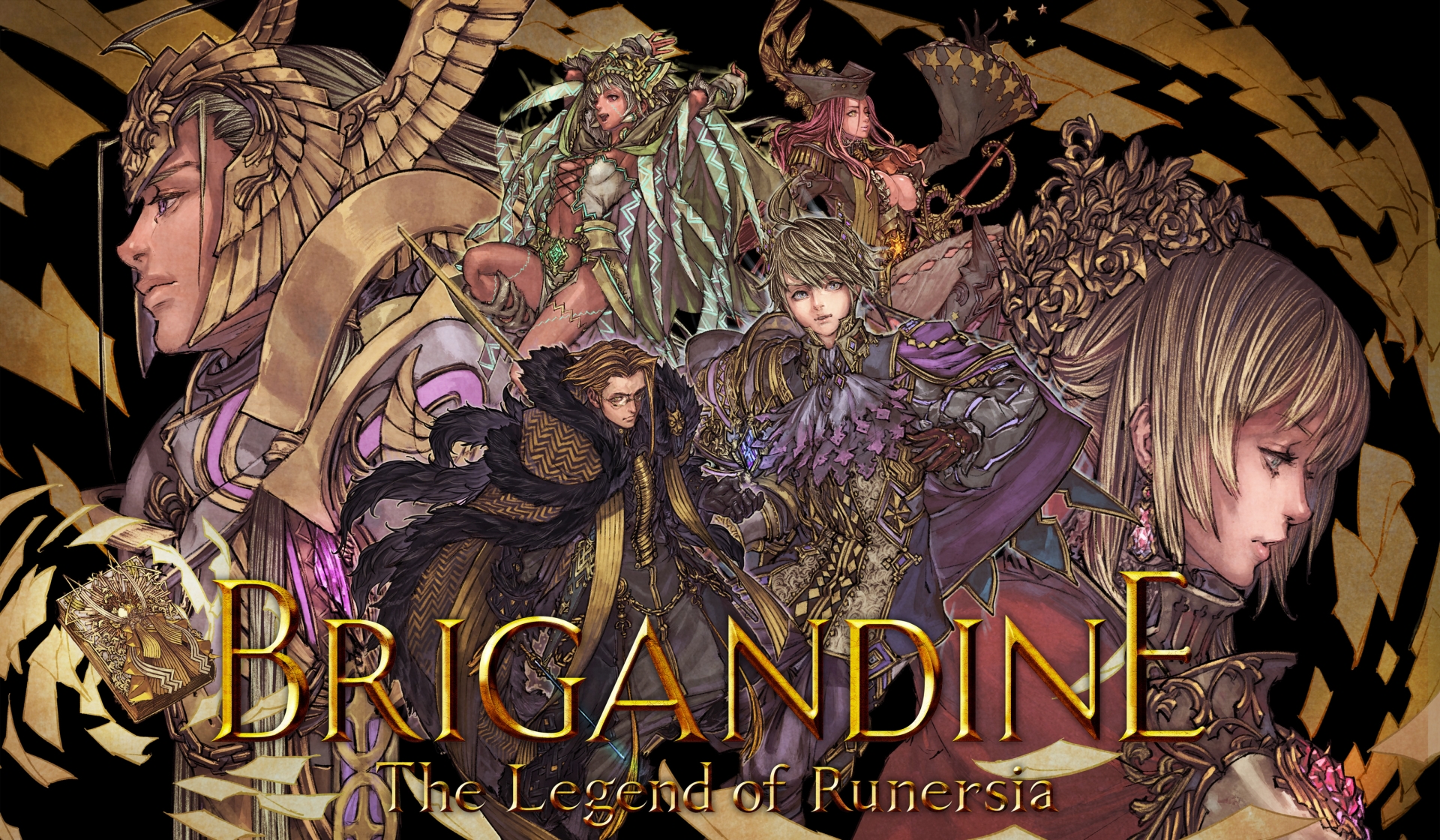
Brigandine: The Legend of Runersia Review


Brigandine: The Legend of Runersia
by developer Matrix Software and publisher Happinet—PC (Steam) review written by Hayden with a copy provided by the publisher.

Estimated reading time: 7 minutes 


Brigandine: The Legend of Runersia has returned for its third round of release, jumping to PC via Steam. Chalyr’s Game Room has covered the game's original debut on Nintendo Switch (here, in July 2020) and later on PlayStation 4 (here, in December 2020). Both of the previous reviews have gone into detail on the mechanics of the game, which are essentially unchanged. The game is jumping into the PC market, fighting against titles built from the ground up on the PC format. Accordingly, I’m going to focus on the game as a PC title - a different benchmark than it faced on consoles.

English Localization

Players will notice that this is not a game that was designed and built in English for the English-speaking market. What we’re assessing here is both the game’s port from console to PC, and also the English localization in particular. This has added extra difficulty to Matrix Software’s job in moving the game to the English-speaking PC market.

Overall Matrix Software has done a great job on this localization. There are a few areas like voiced character lines (inspirational comments or snide quips, I don’t know) during combat that remain in the original Japanese and don’t have subtitles. These areas are few enough that I was never left feeling that I had missed something critical. Text in the game is expertly translated, with none of the poor spelling or grammatical oddities that betray rushed or cut-rate localization work. Impressively, the game successfully pulls off a variety of double-entendre and other humor. Humor is an area which often does not translate well between languages and cultures, and this shows Matrix Software’s superb efforts to make their game accessible to an English speaking audience.

In-game User Experience

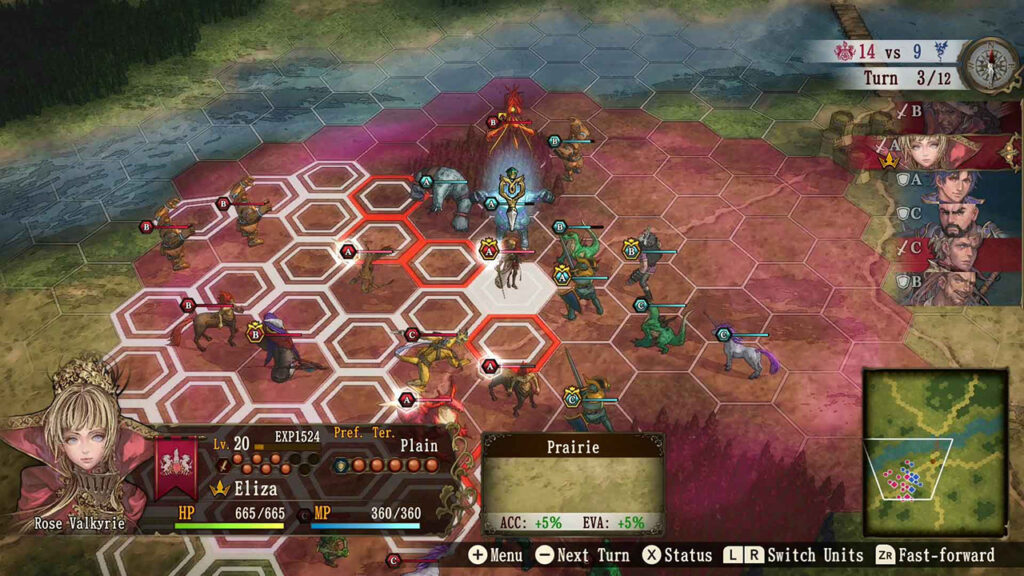
Mechanically, Brigandine: The Legend of Runersia betrays its roots as a console title in how it plays on PC. Brigandine supports keyboard and mouse options, but does not follow through on using the mouse in particular. Indeed, during the time I was reviewing Brigandine: The Legend of Runersia on PC prior to its official release on 11 May 2022, I found myself exclusively using keyboard inputs after a time because using the mouse felt more cumbersome than helpful. Much of this comes from Brigandine’s combat map system, which uses an isometric view of a hex map.

As the player’s units sit on (and in the case of flyers, hover above) the hexes, the instinct of a PC gamer using a mouse is to click on the unit sprite to select it. In Brigandine: The Legend of Runersia, selection is done by clicking the hex, not the unit sprite. This method works fine when you are scrolling the cursor around via d-pad or keyboard-emulating button presses and the cursor highlights which hex it is on. When moving the cursor around with the mouse though, no such hex-highlighting occurs, and clicking on the sprite often ends up selecting the hex behind the sprite instead.

As mentioned earlier, this ended up feeling so cumbersome after a time that I ended up using the keyboard alone as the better option. PC players rapidly select items and navigate the map, so these shortcomings are disappointing. In the end, combat feels much slower and less engaging due to the inefficient selection system. Since the tactical combat system is where players will end up spending the majority of their time, this is a glaring weakness when stacked up against other PC-native titles.

Pet Peeves and Oversights

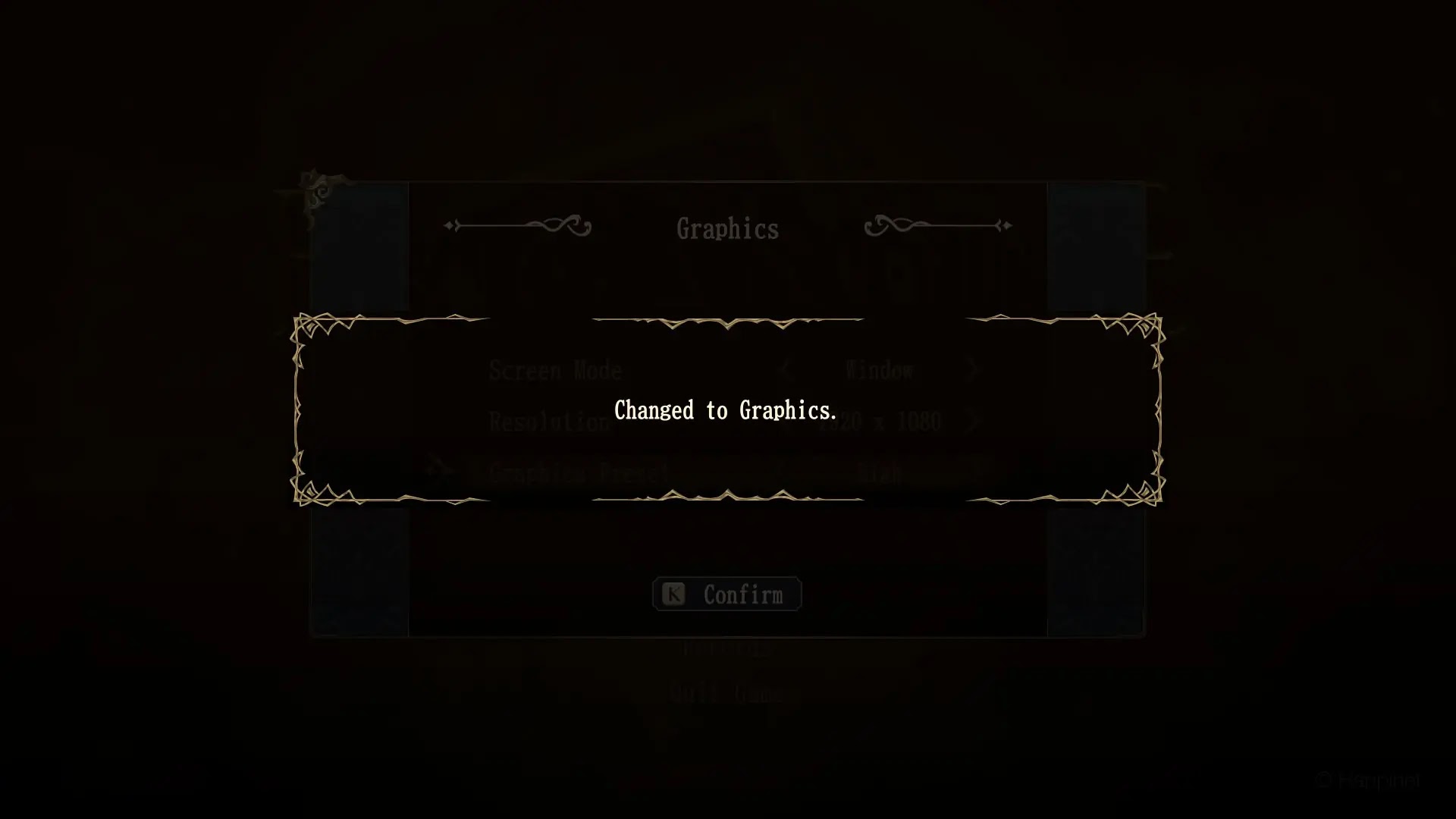
The performance of Brigandine: The Legend of Runersia on PC was generally quite good. Unfortunately, a few odd behaviors soured the first impression that the game provided. On first entry, many players will try to access the Settings or Options screen off the Main Menu. The game expects players to use "J" or "K" to accept or cancel these screens - with no indication of this at times. These conventions are clearly taught within the gameplay, but these Settings screens are accessible (and frequently accessed) before the tutorial. These windows even lacked the familiar "Accept/Close" buttons or even an “X” to close windows in the top right corners.


On the heels of this was an item that (while small and silly to obsess over) became a personal irritant through the game - a single missing space. Visible in the image below, it looks like in moving from the button-symbol to a keyboard character, nobody thought to add a space between the input setting and the word “key”. The first time the game asked me to “press the KKey” during the very first tutorial mission raised an eyebrow, the hundredth time this showed up in the main campaign my teeth were starting to grind. To me, this was a clear and repetitive indication that the game was a console-to-PC port, and it wouldn’t let me forget it.

User Interface - PC vs Console

The menu design of Brigandine: The Legend of Runersia betrays its console roots compared to many PC titles. Developers designing user interfaces for consoles have to contend with a very limited number of available buttons. The Nintendo Switch that Brigandine was first released on, for example, has a total of: two sticks; four trigger buttons; and eight standard buttons (of which four normally serve as a directional pad). This effectively gives developers 8 button inputs normally available for use. This leads to a system where the player needs to delve into multiple layers of menus before getting to the item they are seeking.

Games native to PC have a huge number of input options available: 26 alphabet keys; ten number keys; twelve function keys; and modifiers like Ctrl, Alt and Shift. This typically leads to fewer menus, with many hotkeys available to allow the player to rapidly navigate to particular options. The PC version of Brigandine maintains the console-style nested menu system and introduces few hotkeys to the player. The end result is a game that still feels like a console product on the PC. Comparatively slow and difficult to navigate, it comes up short against the optimized user experiences of PC-native titles.


Conclusion

The gameplay mechanics of Brigandine: The Legend of Runersia are still fun, and the game itself is still quite enjoyable. Earlier reviews gave it a 8.25 and 8.5/10, and the game certainly still has merit on the PC. Against other titles designed to use the PC’s broader capabilities and input options, Brigandine feels clumsy and slow to use. Brigandine could compete effectively on PC, but it will require an overhaul of the user experience to get there.

Summary

Originally for Nintendo Switch, Brigandine: The Legend of Runersia comes through PlayStation 4 before now arriving on PC via Steam. The gameplay mechanics are enjoyable, but this port has ignored the mouse and the PC’s range of keyboard inputs. The lack of a streamlined user experience leaves this game feeling slow and clumsy compared to PC-native titles. A good title, but not a great fit for the PC in its current state.

Score: 7 / 10

Share:

Random posts

Our Streamers

Susan "Jagtress" N.


S.M. Carrière

Aldren


Affiliates

JenEricDesigns – Coffee that ships to the US and Canada

JenEricDesigns – Coffee that ships to the US and Canada
Light, Medium and Dark Roast Coffee available.

Blog Archive

Labels