• Games of the Year in 2025

    2025 was a year with a number of very strong entries. Our team found themselves talking about many of the titles at length...

  • Escape Simulator 2 - PC Review

    Escape Simulator 2 is a fantastic escape room game developed by Pine Studio. The sequel has new exciting locations, challenging puzzles, and an updated room editor.

  • Purrrifiers: Cleaning Chaos - PC Preview

    Purrrifiers: Cleaning Chaos is a goofy clean-up game that has you battling the forces of dirt, grime, and weird characters asking for some really weird things.

  • Mistonia's Hope: The Lost Delight - Nintendo Switch Review

    Mistonia's Hope: The Lost Delight is a fantasy based Otome visual novel that dives you into a world of Humans, Fairies and Revenge! This story follows our beautiful protagonist Rose...

  • Egypt Frontiers - PC Preview

    Freemind S.A. has extended their building simulation games (another reviewed here) into the country of Egypt where a fellow author and myself would love to visit. Welcome to Egypt Frontiers where you, a master builder...

  • Marvel Cosmic Invasion - PS5 Review

    Marvel Cosmic Invasion is a very good brawler that provides a large roster of characters, excellent pixel art visuals and plenty of replayability. It’s a rather short beat-‘em-up...

  • Hot Wheels Let's Race: Ultimate Speed - Xbox Series X|S Review

    Hot Wheels Let's Race: Ultimate Speed is a game based on a Netflix cartoon series. I never knew about it until I reviewed this game, so I am unsure whether the game is anything like the show, but I can tell you what I do know, having played it.

  • Sacred 2 Remaster - PS5 Review

    It's 2008. I'm halfway through my second college certification which will propel me onto my career path. My PC is getting older, it's not running the software I need. Sacred 2, which I've been waiting on forever to come out after playing the original Sacred and its expansion, is here.

  • Moonlighter 2: The Endless Vault - PC Review

    The long awaited sequel to Moonlighter is finally here after many years in development as well as a slight delay from the original release date. Digital Sun launched Moonlighter 2: The Endless Vault into early access and I'm loving what I'm seeing so far.

Rogue Spirit - PC Preview


Rogue Spirit
by developer Kids with Sticks and published by 505 GamesPC preview written by Richard with a copy provided by publisher.

Estimated reading time: 11 minutes


Rogue Spirit is an interesting combination of stealth and hack 'n slash, all packaged in an interesting roguelike state now available as Early Access. As a spirit, you must posses the bodies of your foes, moving from body to body in order to defeat the evil spirits that are causing trouble across the land. Can you help the spirit in his endeavor, or will the lands be forever infested with demons and evil spirits?

In Rogue Spirit you take on the role of the Prince of the Midra Kingdom, resurrected by a group of monks in order to combat the evil that has taken over the kingdom. But how can the Prince do this as a ghost? Well, turns out that, as a ghost, the Prince can posses corpses. It is now the Prince's job to use the body offered by the priests to beat up other baddies, and then take over their bodies if they have better statistics. That's right, the roguelike element is actually the enemies, which then can become YOUR body.

Each enemy you possess has different stats assigned to your primary attack, secondary attack, and health. The Prince also has a Spirit value, which allows you to heal when you swap bodies, if you have any left. As you swap bodies, your spirit will heal you, but you'll lose your spirit, and will need to recover spirit if you want to heal more. Each enemy has their own style of attacking, such as the ranged knife throwers, or the more melee slashers. In addition to the normal enemies, there will also be elite enemies that you can possess that have significantly better stats compared to the common mobs. There are also demons that you cannot posses, as well as bosses that you will need to fight every so often that you won't be able to possess either.

As you defeat enemies, you are awarded with money and spirit gems. Money can be used when you run across a monk selling perks for you, whereas the spirit gems can be exchanged on death to purchase permanent upgrades, such as faster movement, or a better starting body. One rather effective method of finding money and spirit gems, at least early game, is to be on the lookout for treasure chests hidden in each map. These are generally hidden in bushes making them hard to see. As a spirit though, the chests will glow a little, making them easier to spot.

This brings us to one of the aspects I enjoyed the most in Rogue Spirit: the ability to swap between spirit and physical body. As I've mentioned, the main objective of the Prince is to possess powerful bodies to help stem the tide of evil. Well, once you've possessed a body, you can swap between the two freely, provided there aren't enemies up in your face. As a spirit, the entire feel of the game changes.

So what's so different between spirit gameplay and physical body gameplay? Well, in a physical body, it's basically a hack and slash standard formula. As a spirit though, you become harder to detect, and get to see a range of detection for enemies. This allows you to sneak up behind enemies to land some critical hits (which seem rather finicky in the early access build) or to bypass them completely. Additionally, if you float into the outer range of the enemies vision, the will go towards you to investigate, but not alert their friends. You can use this to your advantage by drawing out enemies one at a time so you don't get swarmed. If you do get surrounded, there is a dodge and parry mechanic, although you still take damage if hit while dodging, so maybe get used to the parry, or turning every fight into a one-on-one.

As you are roaming around maps, beating up baddies and searching for the exit, you may come across either stone monuments, pillars, or item caches. The stone monuments will provide a boost, generally elemental, to help you out for a limited time. An example would be the power of ice, which slows enemies affected. Very helpful. Pillars are destructible, and upon destroying one you can examine its remains to receive a perk. Some perks are quite good, such as increasing primary or secondary attack by a decent amount. Others I found absolutely useless, such as destroying items for a chance of summoning a projectile that does 3 damage.

The item caches are full of money, spirit stones, as well as blueprints, but require you completing a challenge to unlock, such as defeating a bunch of enemies while only doing damage if parrying. If you win, you can get access to abilities through the blueprints. Both abilities, and pets, can be unlocked through blueprints, with abilities being acquired through challenges and pets if you discover one and touch it while in spirit form. You can then purchase them from your starting hub, and bring two abilities and one pet along with you every time you go out adventuring. There are even sub quests for upgrading them you can complete! These tools will help you save your land!

That being said, there are certainly still some key issues I had while playing. First of, you have a map you can bring up to keep track of merchants, monuments, and areas of key interest that you can fast travel to. Seems nice, but the problem is that there are almost always areas of the map that don't fill in properly, making it look like there's an unexplored path, when really it's just blocked by a rock, or a wall that just didn't update on the map properly. Second issue is from the boss fights, or perhaps after them.

If you go to enter a boss fight, a barrier appears preventing you from leaving, or enemies from coming in. All is fine until you beat the boss, where I discovered that the game thinks the boss is still alive, and I can't pick up the spoils, because the enemies that followed me make me "in combat". I had to rely on my pet to shoot a miniscule amount of damage in order to kill the enemies, allowing me to both pick up my loot and leave. Occasionally I also found the player character clipping through objects or corners. While this doesn't really impact gameplay, it certainly isn't pleasant to see.

That's all for my purely technical issues, but there were a few notes on the gameplay side that I found a little lacking. Possessing bodies is a great idea, but the body type balance is pretty awful. To give a brief overview, enemy types can be broadly divided into: heavy, light, and ranged. The ranged characters have that extra reach, but their attacks tend to be fairly unwieldly or awkward, and take a lot of getting used, not to mention the associated bodies are generally weaker than their contemporaries.

Heavy enemies are slower, and you would imagine they'd be bulkier and hit harder, right? Well, not really. I found their stats to be similar to the light enemies, just with the added detriment of slower attack speed and movement speed. The brings up another issue with possessing bodies: you want to covet what you get. What I mean is that, if you find a really good body, suddenly you don't want to fight anything anymore in order to preserve health, something that I found myself feeling the longer I played for.

Summary

All in all, Rogue Spirit is a refreshing twist on the standard roguelike fare. Combining stealth and hack and slash elements certainly isn't something I'd immediately think of, but I'm glad to say it came out quite nicely. There are are a lot of elements that need refining, such as possession target and perk balancing, but I quite enjoyed my time with Rogue Spirit nonetheless. While the title is still in Early Access at the time I'm writing this, I am really hoping the developers use this time to flesh out what could be a great title. I'm looking forward to what they do with it in the future.

Score: N/A


Share:

WRC 10 FIA World Rally Championship - PS5 Review


WRC 10 FIA World Rally Championship
by developer KT Racing - Kylotonn and publisher NaconSony PlayStation 5 review written by Pierre-Yves with a copy provided by the publisher.

Estimated reading time: 6 minutes


Celebrating fifty years of racing, Kylotonn's off road racing simulator WRC 10 is doing a lot more than bringing the latest edition over to the newest generation of gaming hardware. Celebrating fifty years worth of epic driving, this latest version has multiple modes and eras to drive in for everyone from novices like me to pros making me wonder just how they do that.

Now this is something that I've been waiting to see both how it looks and how it handles after the WRC 9 upgrade to the latest consoles. Amazing landscapes, crystal clear sound and in the case of the PS5, haptic feedback though the controller which is what really settled for me which console that I wanted to have this experience on. The change in direction of the haptic feedback over the traditional rumble as well as the adaptive triggers are really two elements that help increase the immersion short of building your own bucket seat with pedals and a steering wheel.

For a comparison on this immersion, I had re-downloaded WRC 9 to see how the controller felt in my hands compared to WRC 10. For the most part, what was done within WRC 9 still relatively applies to WRC 10 with more and more feedback being provided on rougher road conditions. You can feel where the car is struggling and adapt to what part of the road you are driving on. This feeling I found helped me concentrate a lot more on what was coming as I was driving down a treacherous road at 135 km/h if I was going to at least meet the bare minimum of the challenge requirements.

What really inspires some panic though is that there are some turns that you’re going to need to take that you really can’t drift through, you’re going to have to actually hit the brakes and not just pull on the handbrake. This would be fine, but panic may start to set in when you’ve got about 80 km/h to drop down and your trigger is fighting you as you’re trying to brake. It’s nuts but like the haptic feedback, these responses from the controller in your hand eventually start to make everything feel more natural and settled in than ever before because you know through a physical response, just how bad that upcoming tight turn is going to be.

Following the same format as before, there are a few modes to experience depending on your personal playstyles. There’s the single player training to get acquainted with driving off road and the types of situations that you can find yourself in. What I really like about this mode is that it doesn’t just teach you how to get the job done, it challenges you to get the job done. Going through the motions isn’t enough, you actually have target times in order to complete the challenge and with each level of bronze, silver and gold, you unlock more points which unlock more training situations.

The added bonus to these situations is that it gives you a chance to really learn how to maneuver one of these cars without having to worry about stress, cash flow for repairs and the mental state of your staff. You don’t need to stop for breaks or worry about relationships with manufacturers like in the campaign mode. You can simply just drive and learn through small circuit drifting challenges or much longer treacherous situations with a half broken car in the rain, at night, in the middle of nowhere. Those were perhaps the most fun as you REALLY need to be paying attention but at the same time, you also need to go fast and these busted up cars? May or may not respond to you in the same ways that they should depending on what’s been busted for the challenge.

WRC 10 screenshot of drifting a modern car through an off road forest track.

Possibly the most interesting addition is that regardless of the mode from training to campaigns, vintage cars from over the course of the last fifty years have been available for you to drive. What makes these cars so interesting is that they offer a new perspective of driving. These are much older vehicles and just taking them out on the same potentially treacherous tracks makes you wonder, as these cars have nowhere near the same level of responsiveness as today and with some of the tracks that they were driven on, how crazy were these people back then?

Now I found myself with a love-hate relationship when it came to driving vintage cars. I loved the idea, and I loved the look and the realism, and I realize some of these cars are fifty years old and that the technology was completely different, BUT, I sucked when it came to taking those out onto the tracks making me wonder what am I doing wrong “this” time. While I’ve now been playing the series for a few entries, I’m still rather a beginner when it comes to taking these cars offroad and sometimes think I know better (clearly don’t) when I drift around a certain corner only to go right past the road.

So when it comes to these vintage cars, they aren’t as powerful, they don’t glide as well, and from that standpoint it falls squarely into realism because they wouldn't handle like brand new cars designed today. My issue though is that for a novice like me, throwing those kinds of cars into both the training sessions as well as your career mode is like asking a brand new person to the Souls series to ace it on their first try. It’s going to be a rough ride and it can cause some frustration. This is especially the case after taking out a manufacturer’s new model in which with just a light touch of the controls has you going from 0-100 in seconds instead of wondering when the trigger is all of the way down why you’re barely breaking 70km/h.

WRC 10 screenshot of drifting a vintage car through an off road mountain track.

Otherwise, everything else is as I've come to expect of the WRC series. The courses are gorgeous to look at, treacherous to drive on and you have to pay so much attention to what you’re doing as well as what you need to do. Whether working with your partner calling out what types of twists and turns are coming up or finding out for yourself through a variety of challenges, the cars, busted or in pristine condition, are responsive and can potentially make you wonder about trying this out yourself one day. Maybe one day… on a closed circuit… with plenty of experts on hand!

Top to bottom though, Kylotonn's latest in the WRC series is worth picking especially if you were on the fence coming over from WRC 9. There’s more content to be found within WRC 10 and the addition of the vintage cars from the offroading history adds an extra layer of challenge to something that’s already challenging enough. It’s fun, it’s gorgeous to look at and the responsiveness from the PlayStation 5 controller from the haptic feedback and the adaptive triggers just increase the immersion all from the safety of your living room.

Score: 9 / 10


Share:

Pathfinder: Wrath of the Righteous – PC Review


Pathfinder: Wrath of the Righteous
by developer Owlcat Games and publisher META PublishingPC review written by David with a copy provided by the publisher.

Estimated reading time: 8 minutes


Back for the final release of Owlcat’s newest interpretation of an Adventure Path by Paizo Publishing for their game Pathfinder, called Wrath of the Righteous, and I am excited to have had my hands on this. I play a smattering of these tabletop systems, and Pathfinder’s first edition (with some tweaks, admittedly) has been my home for over a decade now. I’ve even got a play-by-post campaign I’ve been running with one other friend over Discord almost as long as Discord has been the gaming go-to. It’s a system that works in a lot of mediums, can be adjusted for a lot of settings, and holds a cornucopia-world setting that doesn’t feel too forced. These are all true for other rulesets, other settings, but while we can list wonderfully crafted CRPGs that hold true to their world, how many truly capture that feeling of the source material? I’ve only got one hand worth of fingers for my answer to that question, and Owlcat crafted two of them.

I already talked about how the game opens and the first chapter or so’s story overview in general in my beta preview article, so we’re not gonna rehash the story, since they didn’t change any of it. Here, we’ll be talking primarily about mechanics and design choices, limitations, comparisons with Kingmaker, which I also reviewed, as well as the revival of both isometric adventure computer RPGs and tabletops. If you’d like to see where Owlcat came from, or more context for the plot than you get here, check those out. In Wrath of the Righteous, you’re the Commander of the Fifth Crusade against the invading demon hordes of the Worldwound.

My biggest gripe with the game brings down one of my otherwise favorite parts, the narrative choice. Just like Kingmaker, this game is interspersed with scenes framed as if taken out of a book written by a bard you’ll meet. Unlike Kingmaker, this bard is a side character, not involved with the party, and I didn’t meet at all that I remember until Act 2. Wrath also seems to want to force an extreme out of the character outside of situations that don’t directly impact your alignment. At one point, I came across a Hellknight, an order allied to the Crusades, unarmed, unarmored, bruised and battered, looking as though he’d swum the abyss-plagued river to reach us, to tell me of his squad, under attack and outmatched by the ambush.

Your choices are binary: You can either ride out to save them immediately or, and I quote, “Throw him out.” instructing your guards to just eject a wounded ally from the camp. No middle ground, no chance to help him another way. I’m Chaotic Good, and while the game does a decent job of making sure your alignment can shine through, the fact that I just didn’t have time to backtrack my entire army two days to save his squad kinda felt like something Kingmaker’s final form would have at least had some option in the middle attitude wise, if not leaving the whole thing open as an issue for the Baron themself to solve as a choice. Pretty minor complaint, but one that stuck out to me.

Switching gears, I’m a huge fan of the characters in this one. Irabeth and Anevia Tirabade are paizo creations, the dynamic of a half-orc Paladin and a human rogue who leads a Crusader spy network, married and stomping demons together, but their personality and voice are all the work of Owlcat writers and the fantastic voice actors slotted into these roles. Companions too, Woljif holding steady as my favorite so far, we've got a pretty solid and intriguing cast that has me wanting to know more, from the Life Oracle with a taste for the cruel to the odd elf girl with the new Witch archetype.

Here’s another thing Owlcat has nailed this time around, the variety. Increased classes, races, and archetypes to choose from, backgrounds that affect your skills and proficiencies, it’s all golden to bring out that feeling of the Pathfinder RPG. Along with the standard Paizo fare (with all Unchained classes being represented instead of the CRB versions), Owlcat has created a few archetypes (and all of the background traits) of their own. Some are interesting, some are simple, all fit the way official Pathfinder RPG archetypes interact with their classes. The Arcanist has a "Nature Mage" archetype that didn't exist whose only purpose is to give an otherwise unaltered Arcanist class the Druid spell list instead of the usual one, the Witch has one that shifts the class to function more akin to an Oracle, gaining a curse and a Charisma casting ability score instead of the Intelligence and a Patron, they get to keep the familiar though, which is golden. Arcane Enforcer is a Slayer archetype that replaces Slayer Talents with Arcanist Exploits, allowing me to make a martially capable assassin character with full Base attack bonus and a telephone ability to ignore obstacles and Attacks of Opportunity keeping me from my sneak attack. I enjoyed this archetype so much that I converted it to work in the tabletop and have it currently in use in a game.

While Kenabres kinda hurt to get around in its limitations, the real overworld opens up into a dual-map system with wide open roads like we remember from the Stolen Lands. The default map is your party travel, it works essentially the same as Kingmaker’s did. You travel based on your party’s average speed, settings to determine if encumbrance slows, rest to avoid fatigue, the whole drill. Wrath of the Righteous adds to it though. Two new feats, which each come with their own camp task, and a third camp task. With the same six-member party, you’ll have to divide responsibilities a little more carefully, and prioritize what you need. Brewing Potions and cooking a meal for a camp benefit take the same task slot, for example. Scribe Scroll is the other new feat, taking its execution at camp rest as well. these two are party-savers in the core difficulty, especially the stronger my Cleric and Wizard get.

The final new camp task is a ritual to prevent corruption. This entire game takes place in a land called simply the Worldwound. Once a mighty Kellid kingdom of Shamans and Witches, it is now a festering wound profusely bleeding, demons directly from the abyss flooding the land and everything from the soil to the weather corrupting to hostile, toxic, barren waste, and the longer you spend there, the worse it gets. Wrath includes three stages, and each one comes with significant stat penalties. You get a view of the corruption level every chance to rest, and your army’s Camp is a consistent safe place to get that cleaned out.

The map comes with a secondary layer though, the Crusade Map. Shifted near the overworld’s clock, the new map shows your armies, which have limited movement each day, while those movements don’t take up your party’s clock time. As you win battles, your morale will increase, and your armies will gain levels and resources. Spending these resources is as important as earning them, as improving and recruiting more armies will keep you making progress in the Worldwound, the game actually leaving you unable to progress unless you can take the fort before the next city, Drezen, using your armies instead of your party. These battles play out on a grid, with most units not really having abilities, and I couldn’t find myself engaged by them. Staying true to their tendency toward a customizable experience, I simply turned off the automatic decision to fight these battles. I still get the option when I move my armies over them, but for the most part, I just take what happens based on a dice roll and move on.

Kingmaker’s release was painful, I love the game and I think most would agree. Wrath of the Righteous is not. While there are some issues here and there, mostly odd interactions between effects, Owlcat is on it and has released a couple patches already since release. Both issues I had noted to bring up in here were known bugs by the team, and don’t exist at all now, so if you’re weary of the game that direction, feel secure knowing that the lesson was learned.

Summary

While not a perfect one-to-one of the tabletop experience, it might be as close as you can get. Bringing the best of both RPG worlds it stands firmly planted in, a whole stack of options and sliders to adjust which one of those worlds you play in, and the return of the on-the-fly toggling between turn-based and real-time-with-pause, Owlcat’s Pathfinder: Wrath of the Righteous is an exciting, attention-snatching, replayable role-playing experience you’ll spend dozens, if not hundreds of hours in. Whether you play it now on PC, or after it releases on consoles March 22nd, welcome to the Fifth Mendevian Crusade.

Score: 9 / 10


Share:

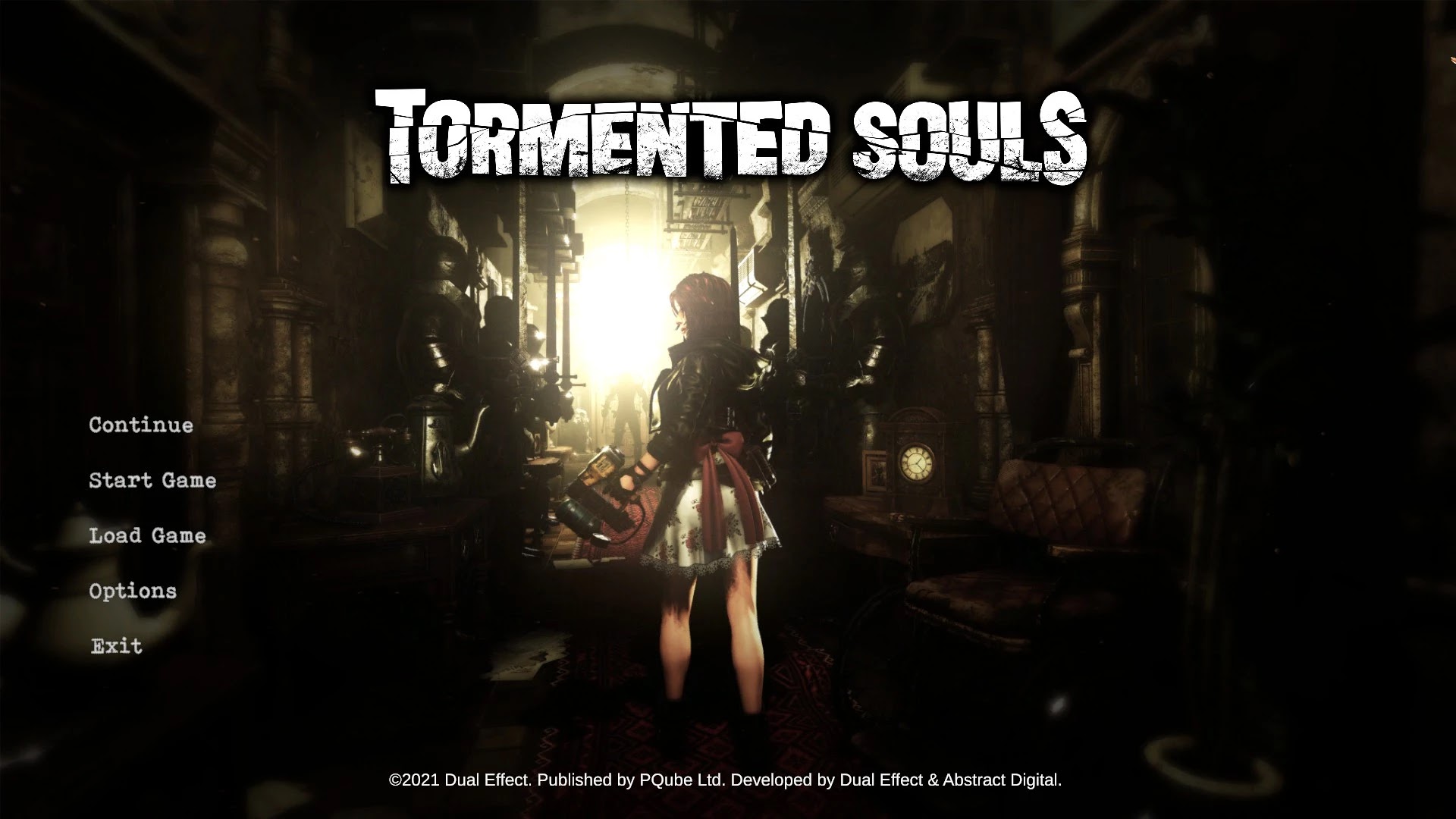
Tormented Souls - PC Review


Tormented Souls
by developers Dual Effect, Abstract Digital and publisher PQubePC review written by Natasha with a copy provided by the publisher.

Estimated reading time: 12 minutes


Let me tell you something… If you get a mysterious photo in the mail, covered in blood and with a message that reads “Come to the old hospital if you wish to know the truth!” Burn it! Throw it away! Eat it! Sell it to the next gullible person because no one in their right state of mind would do something so suspicious. However in this game, that cliché trope strikes again… And I love every dark second of it!

Story

Our story focuses on our beautifully dressed protagonist named Caroline Walker. One morning she receives a strange photo in the mail. On it is a picture of two young girls, and a message that reads: “You think you can just abandon us?” Confused and curious, she sets off to an abandoned hospital located in the mountains, far from her home. Once she sets foot inside, she is greeted by the unique architecture and design of the building, almost like she stepped into a hotel or a mansion. Upon further exploration she is attacked by an unknown assailant.

As she wakes from her unconscious state she finds herself in a tub, naked and strapped to a ventilation machine. Shocked, she hurries to dress herself and happens upon a mirror in the room. Her clothes weren't the only thing missing when she woke. Her right eye is gone, too. Scared, she flees into the halls looking for help, and only seems to run into creatures that aren't human. Feeling trapped and alone, will Caroline make it out in one piece, or succumb to the darkness and monsters that inhabit this distorted hospital?

Gameplay

Tormented Souls works in a very simply fashion. From shooting enemies down, point and click investigation, picking up items and combining certain materials in order to solve puzzles. As long as you have a good head on your shoulders you'll have no trouble solving dangerous situations. The enemies in the game come in all shapes and sizes, so you'll need a good weapon to combat them. This game doesn't give you your typical starter handgun, no no, instead you'll start off with a nail gun. No bullets required since you'll happen upon nails from time to time.

The game will offer stronger weapons as you progress through the story, but they'll be harder to collect as some are hidden behind puzzles and others are disassembled into pieces which you'll find laying around as you venture through the hospital. I wouldn't say ammo is sparse, but try to make most shots count. I can't explain my frustration on trying to reload and accidentally firing off a random round. You're also given a crowbar at the beginning. Now, I thought it was only used during certain moments, but you can actually equip it as a melee weapon if you're low on shots or trying to conserve ammunition.

Your character does have the ability to dodge enemy attacks, but they need to be precise in order to receive no damage. I've noticed that enemies that can attack you from a distance can still land a hit while you dodge, since the dodge only allows you to take a quick back step, you'll have to make your character side step manually if you wish to avoid it. Investigating your surroundings will be the key in escaping the hospital. Exploring every room will help you discover ammunition, health items, notebook entries, keys or possible items to help solve puzzles. Certain interactive items or surfaces might require you to carefully examine the area.

Luckily, your on-screen cursor will highlight over points of interest to help you along. Everything you collect in the game will be stored in your inventory. You'll become great friends fast as you'll need to open your inventory to swap weapons, use items, read maps, etc. If you hover over your items in menu you'll have the option to either examine them, combine, equip or use during appropriate times. Not all items are able to be combined.

Guess what? Remember how good it felt to write down your save progress on a typewriter in Resident Evil? Well, Tormented Souls provides you with a tape recorder! And an old time one at that. You'll find them in safe rooms where the music feels more calming and hopeful. But, you can't just upright and save. You'll have to find tape reels in order to save your progress. The game doesn't provide you with a lot of them so use them sparingly or you might find yourself in a tight spot.

Another thing that will try and kill you is the darkness itself. Caroline must have a great fear of the dark because anytime she finds herself walking into a black corridor or a dark spot in a room she'll begin to panic. Your screen will start to go fuzzy and eventually it will kill her. Most of the building is dark so if you find yourself walking into the unknown you can simply just open your menu and pull out your lighter.

Lastly, you'll run into a bunch of puzzles that will stop Caroline in her tracks, but don't worry, there is always a solution to each one. Some are obvious, others might require you to put two and two together. Memory is a big factor in some of them, while others might require you to think outside the box. The good news is there really isn't any mathematical ones (hurray for those who have trouble with numbers points at self). The further you dive into the game, however, the harder each puzzle will get, so be ready to grind your teeth during the more irritating ones.

Visuals

As I've mentioned before, the game takes place in a hospital, but the building itself seems to have different layouts that resembles either a hotel or a mansion. The main lobby is definitely structured in homage to Resident Evil 2's Raccoon City Police Department, which I imagine this game takes inspiration from. A great level of detail was put into each room you explore, though as most of the game is submerged in darkness you might have to take extra care in really examining certain things. Even a lit room with electricity can still be quite dark. You do have the option to toggle with the brightness in the option menu, however when I tried to enhance it the game looked more like the sun was shining in my eyes, or more accurately the camera.

Speaking of the camera, you'll find that this game uses fixed camera angles that scream classic horror. This may be frustrating to some, but I find myself being on edge and excited when I walk into a room and hear something groaning in the darkness. As my palms get sweaty with fear, it takes every ounce of courage just to turn the corner and change that camera to see what I'm dealing with, which is perfect in this genre of gaming. Thankfully these camera angles usually give you enough range to see what you are doing, unless you draw an enemy back into a bad spot. The camera angles are definitely more of an homage to the games that inspired them, while doing a good job of not being frustrating like they were in the classic titles.

Let's not forget the enemies in this game, as I believe they deserve a moment of praise. These are not your typical modified Zom-Zom's I'm used to in most Resident Evil games. Oh no! Silent Hill creeps into my mind as I run from these grotesque creatures. Every monster you encounter in this hospital was unfortunately experimented on from a mad doctor who thought that body horror was the hottest new trend. They wander aimlessly, most likely out for revenge, for anyone to suffer and die the same fate they received. They can range from creepy to down right gross in appearance, and sport the “I'm in a hospital” theme by either crawling toward you on wheel chairs, crutches or surgical deformities. Laugh now, but when that thing's chasing you, with an appetite for a cute girl in a short dress, you'll most likely be screaming as you try to shake off the goosebumps that cover your body.

Music

The music in this game is simple, yet appropriate. Switching between somber piano pieces, to jarring string moments and absolute silence, with nothing more than the pitter-patter of your footsteps. Ambience is placed in rooms where you're not sure if you're safe, making you doubt your next move. There were plenty of moments where I'd walk into a hallway and just stop and listen for any sign of life, holding my breath just in case a monster might hear me through my microphone.

Heavily inspired by past horror games, it does a great job of giving me that nostalgic feeling when I walk around. Remember the score pieces when walking into a safe/save room; making you wipe the sweat off your brow because you know you're safe for the moment? Yeah… that kind of feeling. However I do find the game gives away certain moments with its soundtracks. An example of this is when I explain the intense moment of not knowing what might be waiting for you around every corner. Well, the enemies have a good way of letting you know when you've been spotted when you hear the tempo change. The music picks up speed and basically tells you something is coming to get ya! Giving you a bit of time to prepare or run away.

Another example is this enemy that REALLY doesn't like you and will randomly appear in different room, while most enemies are glued to their programmed location, this one was free roam throughout the building. IT MAKES TRAVELLING AROUND TEN TIMES SCARIER! However, once again the music kinda gives away the scare. Anytime I walked into a room and it changed to the monster's theme song I simply said 'NOPE' and ran back into the previous room. The best part (or worst depending how you view it) about leaving and re-entering the same room is that there is a 90% chance it re-spawned in another area of the hospital. Plus, it doesn't give chase if you run into a different room. This is a nice breath of fresh air for those with a frail heart for horror, but for hardcore fans it would've been a nice challenge to escape it if it was persistent. Thanks for giving me the heads up soundtrack, free drinks on me!

Ups and Downs

The game did bring out some appealing aspects as I played through. First off, it was set in Canada. The location of the hospital, in game, is Blackwood Island in Saskatchewan. But there wasn't any creepy abandoned hospitals when I looked it up. HOWEVER, the main character Caroline lives in Campbell River, British Columbia, which DOES have a fully functional hospital, that was built back in 1957. Coincidence? I'm not sure, but it is interesting. It's nice to see my home country being used as a location of interest. (Note to self: Don't explore abandoned hospitals in the mountains, overlooking a lake) Another fact that I found interesting was the classic item menu swap-out (where you open up your menu and select every item individually for each use). To some, this can be extremely annoying, but for me, jumping into this game knowing it was going to play like an old school horror game made me excited. It was a nice touch of the past. The menu handling was always fast and easy to use so I never had any issues.

Now, let's talk about some of the minor issues that did tend to stick out for me. I noticed after a round of combat the character model would freeze in the fighting position for about 3 seconds after every kill. Why it would do this? I'm not certain, but it happened every time. Another bug that would come and go would make my character float off the ground if I was pushing an enemy back while fighting on some stairs. This can also happen if you spin around near objects that are supposed to be obstacles. Great for escaping, but probably not intentional. Sometimes the music would cut off, and at first I thought I triggered an enemy or a cut-scene to play, but nope, it would just stop. Leaving the room and re-entering would fix the problem.

The last thing would be the voice overs. I'm not sure if they were trying to make it cringey to support past titles, but it was very monotone. Like, girl, you could be a bit more surprised that buddy lost a limb? Plus the voice overs wouldn't match the text box at times. Probably used google translate, am I right? I also noticed in one room with a compass rose inscribed on the floor, the compass was most likely in French or Spanish, as the "W" was an "O".

Summary

To conclude, this game is a near perfect example of a classic horror game. With fixed camera angles, spine chilling enemies and puzzle solving for days you'll feel like a kid hiding behind a pillow and blanket. With nostalgic music to help keep the pacing of the story I doubt you'll put this game down until you finish it. I'm giving Tormented Souls a 9.5 out of 10 for being a thrilling reminder of --- hold on, my life's soundtrack just told me that an enemies nearby.

Let me just close the door. Closes and opens door OKAY, EVERY THINGS GOOD! IT LEFT!

Score: 9.5 / 10


Share:

Disciples: Liberation - PC Preview


Disciples: Liberation
by developer Frima Studio and publisher Kalypso MediaPC preview written by Pierre-Yves with a copy provided by the publisher.

Estimated reading time: 9 minutes


The Disciples series, originally designed by Strategy First, is back again with its fourth entry currently within Early Access by developer Frima Studios and returning publisher Kalypso Media. Taking a turn towards something new in this turned based building strategy compared to its predecessors, I've easily sunk over a dozen hours and can honestly say that I'm sure I've barely begun to scrape the top.

Now unlike the much more known Heroes of Might & Magic series started by 3DO and then picked up by Ubisoft for HoMM V and on, Disciples fell into a more niche category that unless you knew someone who played it or took a chance at picking up the box on a shelf? You could have easily missed it. What made this series different is that instead of gathering resources for giant armies, you raised the strength of individual units to fight for you. This brought more of a "personal" touch to the experience as you really didn't want to lose anyone unless it really was a tough battle and then perhaps cried a bit even in victory.

Not having played the series in quite some time, I re-loaded Disciples II: Gallean's Return (Dark Prophecy / Guardians of the Light / Servants of the Dark), Disciples II: Rise of the Elves and Disciples III: Renaissance. Having gone back through where the series has come from allowed for quite a comparison of how far the series has come. No longer the series that I used to spend entire weekends playing the campaign or going head to head with a few friends, gone are most of the turn-based elements of the world of exploration in favor of a real-time faster paced experience.

This move was perhaps one of the biggest changes to get used to. A lot of this series and those like it have relied for so long on the fact that units could only move so far per turn allowing you to deviously calculate your next move or frantically scramble to defend your main base. These elements are both actually now gone as our protagonist Avyanna moves around the world in real time conquering ore mines, wood mills and other resource sources as needed. Or at least, as what’s possible within her current army strength and your own strategic mind.

Along with this turn to a more real-time experience, Disciples: Liberation has also moved into a more RPG like direction with choices and consequences. Now instead of having a campaign based on scenarios, the campaign is based in chapters with your choices forming your path forward as well as your relationships with your allies. Are you friendly? Cruel? Power hungry? That’s up to you but just be sure to prepare for the consequences as some people will really not have the tolerance for your wit even if you yourself found what you said quite funny.

This was perhaps my favorite part of the shift in direction for the series. Falling more in line with the likes of BlackIsles, Interplay, Bioware, Obsidian Entertainment, Bethesda and more, the adventure that you find yourself within is a lot more hands on than simply moving an army or a force to be reckoned with across the map and then winning battles against crazy odds. Where do you want to start? What do you want to do while you’re there? How much do you actually want to do while you’re there? These choices are all yours as this adventure is all about how Avyanna is building up a force of her own with elements from returning factions such as Legion of the Damned, the Undead Hordes, the Elven Alliance and the Empire (basically humans).

Continuing on the twists of the series, Avyanna does have a home base in order to build new buildings and research new spells, but it doesn’t exist in any of the areas that you are exploring. Instead, your base of operations exists somewhere that can at all times be teleported to as long as you're in the outside world and not diving underground or inside into a dungeon-like area. This base of operations lets you build structures in order to hire new units that can be leveled up and upgraded over time to be more useful to you.

Now there are three elements that I really enjoyed with this feature. The first, is that because Avyanna leads her own faction, you get to pick which buildings are put into place. Want a hybrid set of undead, demons and elves? Go for it! There’s nothing stopping you from doing this. The second element is that as there is limited space, you aren’t bound by early game decisions. Once you run out of place and want to switch things up, all you need to do is phase out what you don’t want and either phase something in or build it from scratch. It keeps with the level of customization and it doesn’t punish you for trying new things out down the line.

The third element that I really enjoyed is that unlike the previous entries into the series, if you lose your minions you don’t need to cry (as much) as long as you’re not deep deep within a dungeon. The reason is that because of the more open ended approach to the adventure, there are elements in place that allow you to hire new units and then train them up to Avyanna’s level as needed. This not only avoids having to try to keep new units alive while at low levels, but it also lets you catch up units that you may be keeping in reserve in case something does happen.

Combining the hirable units with Avyanna herself, and there’s one more element to take into account before heading into battle. Alongside the hirable units, any companion of Avyanna’s can join her in battle. Each of these units are much more powerful, contain incredible abilities and unlike hirable units, if they are downed in combat, they’ll come right back once the curtain has fallen on the corpses of your enemies.

With the real-time shift of the rest of the adventure, this latest in the series takes the hex based combat put into place by Disciples: Renaissance and refines it. This switch from the your forces on one side and the enemy on the other offered up a much higher stakes tactical game as you now had to worry about where all your forces were at all times such as with others in this vein like Black Guards (2) and Gloomhaven. Now instead of worrying about Avyanna’s level, her companions levels and her hired units levels, you also have to worry about where everyone is standing on the field so to both maximize your force’s capabilities and minimize your casualties.

Set up in an initiative order, battle takes place in rounds that give every unit the ability to act at least once per round short of counter-attacks and attacks of opportunity. Unlike your traditional experience though, characters, companions and hirable units all have two mana modules of differing or matching colours. What these mana modules do is allow any and all characters to move and to act. What the change in colours do however is allow for certain units to attack twice if they have the same colour of mana as long as they don’t move. It’s an extra layer in the strategy as it applies as much to your forces as it does to your enemies.

The rest of combat is “pretty easy”. Set up on a hexagonal board, each unit can move a certain amount of spaces per their turn and then either attack an enemy or perform a supportive action such as healing or increasing their attack or defense. From there, as it’s a hex based grid, you’ll have to be careful on how you line your units up as some spaces will not allow you to attack at a range as you will no longer be line of sight, while other positions can land you into the perfect flanking positions or the worst ones.

What I loved / hated about flanking is that you can technically flank a unit three times because of how the hex grid is designed. This allows for some rather neat “ambushes'' if you hold your initiative for just a little while or if you play your cards just right and get lucky that the enemy moved right where you wanted them to. There’s a learning curve to get it right depending on your unit setup and which faction you decided to go and see first as it’s an open choice and I have no regrets having seen the Elven Alliance first. The hate would be sometimes you think something is going to be great only to find yourself double flanked and potentially rather dead.

If there’s one thing that I would have a complaint about it would be the speed of combat. Just about the rest works rather well from moving around the main map, teleporting to and from the main base, checking out your unit formations and equipment loadouts, but combat takes a long time especially against archer units that keep running away all of the time. I would like the ability to speed it up either to 2x or to 4x the normal speed as the increase in speed would not detract from the thrill of winning or losing. It would simply make things a bit smoother especially when there are almost twenty people on the field and each and every one gets at least one action.

Finally, a quick note for multiplayer, as it currently stands the option was disabled to try so we’ll try to take a closer look at that on full release as I’m quite curious how this new style will affect the player versus player approach that is listed.

     Will Disciples: Liberation include multiplayer? Yes. You can battle with a friend in two-player online skirmishes

Summary

So overall, even with the shift of the Disciples series with Disciples: Liberation to a more real-time and turn-based tactics RPG than the older entries of “player versus player” styles, it’s in good shape. The shift isn’t a bad one but as mentioned above, a few small tweaks could definitely help to polish this off even further regardless of if you decide to drop into this dark and intriguing world on the PC or on the consoles at the beginning of next month.

Score: N/A



Share:

Mayhem Brawler - XB1 Review


Mayhem Brawler by developer and publisher Hero ConceptMicrosoft Xbox One review written by Nick Herber with a copy provided by the publisher.

Estimated reading time: 5 minutes


Mayhem Brawler is a good but not great beam-‘em-up game that reminded me of Streets of Rage 4, just with a bit less polish. That’s certainly solid company to be in, even if it never quite reaches the same heights. Fans of the side scrolling brawling genre should enjoy their time with this one, but I doubt it will bring in new fans to the beat-‘em-up genre either.

The plot is set up by a rather sharp looking comic book style of presentation that pops up to progress the narrative as you play the game. It’s a nice aesthetic that carries over well to the game’s bright, colorful visuals. The inner city setting is a common one for these types of games (Final Fight, Double Dragon, the aforementioned Streets of Rage and more), and works well enough here, even if it feels a bit unoriginal. One nice twist is there is a bit of a supernatural element tossed in.

The plot revolves around picking one of three supernatural police officers that are part of a group named Stronghold. You have the three usual archetypes here: Dolphin is the large, lumbering heavy-hitter (my least favorite style). Star is the speedy female character with telekinetic ability and Trouble is a werewolf who lands in the middle stat-wise. While there’s plenty of standard-issue thugs here, the enemies have a supernatural vibe as well, which aligns nicely with the theme here. These characters tend to have relevant special attacks that make them a bit more challenging than the typical punching and kicking street thug in these games, and it definitely makes Mayhem Brawler more challenging than the average brawler.

In terms of the overall gameplay, it’s pretty standard stuff for the genre. You mostly kick and punch and kill guys to pick up weapons with a limited number of uses. I liked how the special attack had its own bar instead of draining your health, and there is a block button as well. For years there have been enemy types who can block – so it’s nice to finally return the favor. Unfortunately despite these little wrinkles, the gameplay itself just feels kind of stiff. Maybe it’s that weapons don’t get knocked out of hands on impacting enemies, but requiring you to best them first. Or just because the animations feel a little on the stiff side.

Adding to the difficulty is that from about mid-game on, it sure feels like every enemy has a string of combos they can unleash or grappling moves that render you helpless unless you break out your special attack and they largely negate the value of the block button. That’s probably the biggest knock on Mayhem Brawler. You spend most of your time fighting, and the actual combat just feels unpolished and very rough around the edges. It’s enjoyable enough, but it could have been better.

One of the key things to a good brawler is replay value, so while the actual combat left me a little frustrated, I could appreciate several other aspects of Mayhem Brawler. For one, there’s pretty solid enemy variety. The aforementioned supernatural characters do a great job of creating opportunities for new enemies. Instead of just color and name swaps of the same six basic enemies, there’s actually a pretty healthy variety to be had here.

Furthermore, I mentioned the comic book style narrative presentation. Aside from just looking and sounding really slick, there’s a faux twitter feed along the side that kept me interested in what was being said as the followers ‘react’ to events. Additionally, while a single playthrough is not terribly long, you get to make some choices during these between stage scenes. This not only impacts which level you play through, but the ending you get as well. All of these things as well as three distinctive main characters to choose from help Mayhem Brawler’s replay value than most games in the genre.

In terms of the overall presentation, Mayhem Brawer is a pretty sound entry. While the character animations are a bit on the stiff side, the environments look awesome. That same comic strip style for the narrative scenes actually caries over quite nicely to the core gameplay as well. The sound effects and music are decent. None of the songs from the soundtrack struck me as terribly memorable, but the tunes fit the action and visuals well enough.

Summary

Mayhem Brawler is a solid beat-‘em-up game that manages to do something few games in the genre do: make the narrative interesting. This is handled through a bevy of excellent comic book style panels and the ability to choose your own path to different endings. I do wish the combat was just a bit smoother, since that is what the core gameplay is all about, but the oodles of variety and fun supernatural theme make Mayhem Brawler fun despite its flaws.

Score: 7 / 10


Share:

Random posts

Our Streamers

Susan "Jagtress" N.


S.M. Carrière

Louis aka Esefine

Aldren


Affiliates

JenEricDesigns – Coffee that ships to the US and Canada

JenEricDesigns – Coffee that ships to the US and Canada
Light, Medium and Dark Roast Coffee available.

Blog Archive

Labels