• Games of the Year in 2025

    2025 was a year with a number of very strong entries. Our team found themselves talking about many of the titles at length...

  • Escape Simulator 2 - PC Review

    Escape Simulator 2 is a fantastic escape room game developed by Pine Studio. The sequel has new exciting locations, challenging puzzles, and an updated room editor.

  • Purrrifiers: Cleaning Chaos - PC Preview

    Purrrifiers: Cleaning Chaos is a goofy clean-up game that has you battling the forces of dirt, grime, and weird characters asking for some really weird things.

  • Mistonia's Hope: The Lost Delight - Nintendo Switch Review

    Mistonia's Hope: The Lost Delight is a fantasy based Otome visual novel that dives you into a world of Humans, Fairies and Revenge! This story follows our beautiful protagonist Rose...

  • Egypt Frontiers - PC Preview

    Freemind S.A. has extended their building simulation games (another reviewed here) into the country of Egypt where a fellow author and myself would love to visit. Welcome to Egypt Frontiers where you, a master builder...

  • Marvel Cosmic Invasion - PS5 Review

    Marvel Cosmic Invasion is a very good brawler that provides a large roster of characters, excellent pixel art visuals and plenty of replayability. It’s a rather short beat-‘em-up...

  • Hot Wheels Let's Race: Ultimate Speed - Xbox Series X|S Review

    Hot Wheels Let's Race: Ultimate Speed is a game based on a Netflix cartoon series. I never knew about it until I reviewed this game, so I am unsure whether the game is anything like the show, but I can tell you what I do know, having played it.

  • Sacred 2 Remaster - PS5 Review

    It's 2008. I'm halfway through my second college certification which will propel me onto my career path. My PC is getting older, it's not running the software I need. Sacred 2, which I've been waiting on forever to come out after playing the original Sacred and its expansion, is here.

  • Moonlighter 2: The Endless Vault - PC Review

    The long awaited sequel to Moonlighter is finally here after many years in development as well as a slight delay from the original release date. Digital Sun launched Moonlighter 2: The Endless Vault into early access and I'm loving what I'm seeing so far.

Legend of Keepers: Career of a Dungeon Manager - PC Review


Legend of Keepers: Career of a Dungeon Manager
by developer Goblinz Studio and publisher Goblinz PublishingPC (Steam) review written by Pierre-Yves with a copy provided by the publisher.

Estimated reading time: 7 minutes


Some days it's good to be the boss... even if you have corporate hovering over your shoulder to get the job done and Legend of Keepers: Career of a Dungeon Manager by Goblinz Studio / Publishing is one such experience. While you are the boss, you're still going to have to navigate some red tape in order to hire new hands to defend various dungeons' treasure, lend a hand to other initiatives, and raid other locations for resources all while worrying about your own hired hands' wellbeing. Thankfully, there are therapists for that!

I honestly think that reverse dungeon crawlers are not as popular as they should be as releases in the genre seem to be few and far between. That said, Legend of Keepers isn't just a small addition to that pile but a solid one that can easily keep on giving as the hours tick by. Hosting not just resource management options, there is plenty of strategy as you set up a dungeon's defenses and order your troops in battle to defend the treasure that corporate tasked you with from one week to the next.

Unlike the Dungeon Keeper series and the War for the Overworld which will have you micromanaging your forces, here, it's a turn- based affair and each dungeon that you defend is a bit different than the one prior to it. See, Legend of Keepers isn't just a reverse dungeon crawler, but it's a reverse dungeon crawler in which your forces never really die and "corporate" needs you to be ready on a moment's notice to deploy to various dungeons that they've teased treasure. That said, the fun and games are what you make of them.

Set up in a series of weeks, each week “you” will be choosing what you wish to do. Options range from defending a dungeon from adventurers, sending out units to raid other locations, visiting an alchemist to transmute resources, upgrade your traps, upgrade your units, and so on. So with this in mind in order to keep the action rolling, each dungeon that you defend isn't going to be a one, two, or three hour affair. It's going to take minutes and then you'll just as easily be on to the next one as you don't need to worry about cleaning up the mess. That's corporate's problem. What you need to worry about is that everything you have access to. Troops, traps, and your own Dungeon Master have to be in tip top shape and continue to evolve in order to meet the expectations set before you. To meet these expectations, you’ll have to make strategic choices from one week to the next.

This is where the gameplay literally shines as there was so much that could have gone wrong. Hardcore dungeon crawlers such as Darkest Dungeon, Vambrace: Cold Soul, and MistOver are designed to kill you outright and the punishment is harsh as you’ll never see those units again. Legend of Keepers, while designed to kill your forces as you are guarding treasure from perky adventurers, has plenty of safeguards such as necromancers and therapists to resurrect and heal the minds of those that die over, and over, and over, and over again. From there, you can level up your units through a variety of choices that will present themselves over time such as paying for training sessions to make them more powerful.

For your traps, you'll also be able to sink some cold hard earned cash in order to make them more viable to your strategies. Do you want to demoralize the enemy? Do you want to enrage your own units to do more damage? Buzz saw your enemies to drain some health? Set them on fire? Each type of trap has its own pros and cons and like your above mentioned troops, you’ll want to make sure to be keeping them leveled up as the challenges will only continue to rise as the weeks go on.

Putting it all together is where the bulk of your gameplay will be as you put your troops and traps to work in the best strategic formation that you can think of. Set up in a series of rooms, rooms will consist of “troop rooms” for turn- based combat, “trap rooms” that are basically one and done, and then the alluring “empty rooms” that exist to pelt the unsuspecting and intruding adventurers with spells from your spell book. IF, IF they make it through all of these rooms? There’s the final boss room to truly ruin their day as you send whoever is left to the grave. It’s a solid design and with the constant changing of the rooms, what you have on hand, the type of adventurers that keep on coming in for the treasure, it’s as fun a few hours down the line as it is in the opening tutorial.

Probably the best part of all of this is that Legend of Keepers can fit into any kind of day. Only have a few minutes? That’s fine as you can simply go through a few weeks and maybe one reverse dungeon crawl. Have nothing on your calendar? Go the whole nine yards and see just how far you can make it. Only ever adding to the action is that there's a "campaign" trail that leads you from easier to tougher challenges. Once you've finished a campaign trail, your Dungeon Master will gain experience allowing them to level up and learn new abilities through their own skill tree. This isn't the only way to level them up as it can be done through events, but since you never really know if that event will come up, at least you'll always know that there's experience points at the end of the line!

Now because it's not all sunshine and rainbows, you could end up kicking the bucket. If that happens, well, at least you had a good run at it and then can start a campaign trail all over again. Depending on how far you've made it by this point though you could have unlocked a new Dungeon Master to use in your fights against evil. Unlocking the Enchantress requires the base Slaver to be level 5 and the Engineer requires the Enchantress to be at least level 3. So obviously it's going to take some time but with the amount of gameplay ahead, it shouldn't really be an issue to obtain. Finally, if things are just going super sour you can always hit the give up and then just start a new campaign trail instead of waiting for an inevitable demise as one way or the other, if you lose or quit, you unfortunately receive no experience points in order to level up.

Summary

So overall, there’s plenty to love about Legend of Keepers: Career of a Dungeon Manager. There’s strategy, there’s resource management, and there’s just some good plain old fun as you get to be in charge of repelling pesky adventurers just drooling at the prospect of the treasures hidden away inside of the dungeons that you are charged with protecting. Again, the best part? You don’t have to clean up the mess! That’s corporate’s problem.

Score: 8 / 10


Share:

We Are The Caretakers - PC Preview


We Are The Caretakers
by developer and publisher Heart Shaped Games LLCPC (Steam) preview written by Pierre-Yves with a copy provided by the publisher.

Estimated reading time: 5 minutes


We Are The Caretakers hit on a few notes with me that I hadn't realized I had been missing. Mixing in both real time strategy elements and turn based combat, this new and currently in Early Access title is one to keep an eye on.

Taking the following straight from the main webpage, "We Are The Caretakers is an afrofuturist sci-fi squad management RPG about protecting endangered animals and your planet from extinction. Recruit, train, manage and build squads of arcane protectors called The Caretakers, after the massive energy barrier that separates you from a wider universe mysteriously falls. Blending inspirations from Ogre Battle, XCOM, Darkest Dungeon, and Northgard, We Are The Caretakers is a strategy game like nothing else you've played before. Grow a resistance of over 70 characters while managing your reputation, funds, animals, and alliances."

And it's done well. Having played XCOM 2 recently enough, Darkest Dungeon just last year and big fan of the likes of Ogre Battle and Disciples which was a niche turned based strategy when 3DO still reigned supreme with Heroes of Might and Magic III, We Are The Caretakers feels both familiar while having a magic all of its own.

Starting off with the Story Mode in order to get my feet wet and learn the ins and outs before getting totally demolished and rethink my life choices, "you" are put in the role of the Conductor and will have plenty of both easy and hard choices to make. Starting off inside of the missions themselves, you'll be moving your forces which consist of a number of squads from a central point to whenever you wish them to move. Split into various areas, each area needs to be scouted before it can be moved into. This process is all done in real time and as your squad performs these actions, they'll steadily become more and more exhausted.

As this is done in real time, managing the exhaustion of your troops is critical to your survival. Allowing them to rest up for a bit where rest zones are located, which can be settlements or cities, isn't just that if they are exhausted they won't be able to continue. The main reason to allow your squads to rest is that if they are exhausted and their stamina is drained it will take seconds for an enemy to wipe the floor with you.

As you traverse the various landscapes and inspect areas for both traps to disarm resources to pick up and settlements to rest at, you'll come across enemies. Like you, enemies have two main attributes for combat. Stamina and Willpower. Break either or these and you win. Have either of these broken and you lose. Falling from real time into turn-based combat though you'll have some time to think out your actions as the turn order is clearly indicated for who will be acting next.

Unit types are a variety of well known archetypes. Glass cannon snipers, tanky front line brawlers, mixes of healers and mystics to keep both Stamina and Willpower up, and other things in between. The squads themselves can have up to six units but the trade off to this is that deploying them onto the field gets more expensive as units are added and depending on the types of units added which is where the second form of gameplay comes into play.

Between missions, as the Conductor, you have the choice to go through the list of enemies that were defeated and brought back to base. Not all enemies will provide the same choices as some will ask for bribes to go away quietly, some will accept bribes for information, some will give you money and you’ll never see them again while others, for a bit of a hit to your reputation, will join up with you as a new unit for your squads. Money is always a good thing especially as squads become more expensive to deploy however intelligence allows for reaching new stuff such as armors and ways to decrease stamina loss while exploring so a glance at your current setup is never a bad idea before making these choices.

Finally topping it off for your units and squad compositions, units over time can both be levelled up as well as perform class changes in order to get access to both more and better skills. This, like any good strategy such as Disciples, X-Com, and Fire Emblem, requires you to make a choice of who's going to go after certain enemy groups. Is it your main squad in order to really bring the pain when the time comes? Or is it going to be one of the secondary units so that if something does happen to your main squad, the pain train can still leave the station? All of these decisions will impact how well you move forward, or, if you move forward.

Summary

Overall, at this current point, We Are The Caretakers is in good shape. There’s a decent balance in the gameplay between exploration and combat as well as your decision making back at home base which can affect your exploration and your combat performance. I look forward to seeing what comes next from Heart Shaped Games LLC and as mentioned right above, don’t forget that Heart Shaped Games donates 10% of net revenue from We Are The Caretakers to Wildlife Conservation Network's Rhino Recovery Fund.

Score: N/A for previews


GIVING 10% TO SAVE RHINOS

Heart Shaped Games donates 10% of net revenue from We Are The Caretakers to Wildlife Conservation Network's Rhino Recovery Fund. Get a great game and support a great cause!


Share:

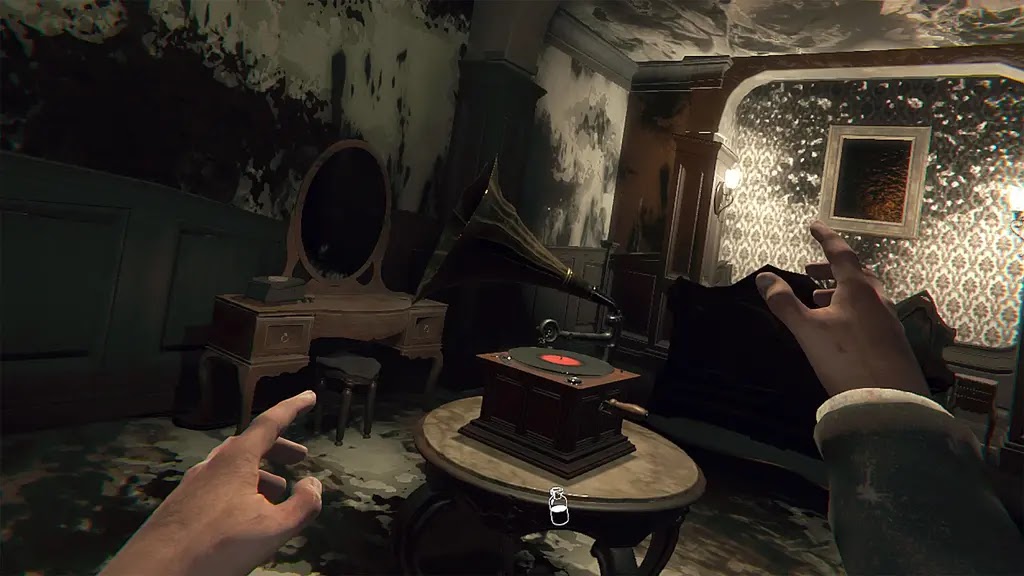
Layers of Fear VR - PSVR Review


Layers of Fear VR
by developer and publisher Bloober TeamSony PlayStation VR review written by Nick with a copy provided by the publisher.

Estimated reading time: 5 minutes


When Layers of Fear first came out, it was something of a divisive title. It relied heavily on jump scares and tension building, making excellent use of audio. However, it’s somewhat slow burn pacing and gameplay was not for everyone. If you were a fan of this title when it released, the good news is that Layers of Fear VR is the same game you enjoyed the first time around – it’s just getting a PSVR coat of paint that allows the game to pop in a new and interesting way. If you did not care for the title when it first came out? Odds are this new take on Layers of Fear won’t be what makes you a convert.

I enjoyed Layers of Fear when it came out. I was in the camp of gamers who could admit that while the game had some pacing issues at times, its overall atmosphere (which was ably assisted by excellent sound design) kept me engaged – despite a relatively short play time of a few hours. However, Layers of Fear is now nearly half a decade old, and it is showing its age a bit. It has had sequels. So the VR touch-up feels a bit late in getting here.

That being said, because the original “flat screen” game was handled from a first-person perspective, it is one of those titles I sometimes thought about as a potentially great fit for virtual reality. I can’t help it – I’m a sucker for horror games and their jump scares get magnified in VR.

For those who have not yet played the original game and are unaware of the story – it’s built around an artist looking to pain his masterpiece. Your character is exploring this house and essentially the gameplay starts to turn into something of a series of fetch quests, prompting you to explore the house to work through different ‘layers’ in the panting. However, as you trek through the house, what is real and what is not becomes an increasingly blurry line that builds up to most of the scares experienced.

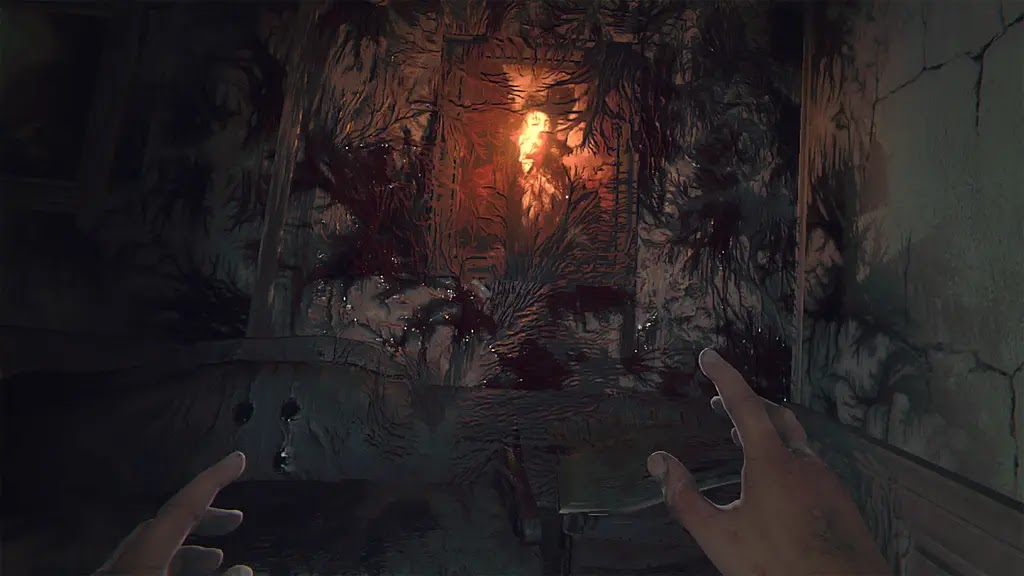
The implementation however, is not completely perfect. This was not a game that was built with VR in mind. It is a title that is half a decade old with virtual reality bolted onto it. As such, the visuals are not always perfect. I really did appreciate how effectively the VR touch-up made the atmosphere and scares that much more palpable, but there were times where the interactions just felt a little janky and off, making it more challenging than it should have been to simply interact with an object in the environment. There is not a ton of actual gameplay to be had in either iteration of Layers of Fear – you mostly walk about and interact with things. But the VR implementation just feels clumsy at times and that hinders the experience.

I found Layers of Fear VR to be a comfortable game to play however, which kind of surprised me. Sometimes moving around in a slightly claustrophobic environment in virtual reality can cause a bit of VR sickness, but I never ran into that here. There’s some odd distortion effects that occur as well, and I was surprised that they did not disorient me more. I dare say – I just thought they looked really cool in VR. Really the only time I struggled was with the sometimes frustrating interactions / inability to move because I got hung up on something in the environment unseen while walking. Similar to other first-person horror games, Layers of Fear VR relies heavily on perspective. The devs do a nice job with lines of sight and angles to help pull off some of the game’s more notable scary moments.

I will say that from a quality standpoint, Layers of Fear started slowly for me and got better in the second half. Now, because I played it before, there were a few moments that were slightly diminished for me. It’s been a few years, so there were definitely cobwebs in places, but I had some moments where I could clearly recall what was coming as well.

Summary

Layers of Fear VR is targeting a very specific niche. It’s a horror game that is somewhat short in nature and relies heavily on jump scares. This plays into the VR medium, and to that end I still had fun with it – but the original game came out several years ago and the VR here is tacked onto to an already slightly older title. The end result is a somewhat mixed bag that is appropriately scarier than the original, but also suffers a bit in terms of gameplay. If you are a fan of first-person horror games and have a PSVR, Layers of Fear VR is worth a go. If this genre is not normally to your liking though, odds are the VR additions won’t convince you to overlook this game’s issues.

Score: 7 / 10


Share:

Resident Evil Village - PS5 Review


Resident Evil Village
by developer Capcom and publisher Capcom USASony PlayStation 5 review written by Pierre-Yves with a copy provided by the publisher.

Estimated reading time: 7 minutes


Following the path set up before it with Capcom's Resident Evil 7: Biohazard, Resident Evil Village, aka Resident Evil 8, returns to Ethan Winters' misadventures through a world filled with mutated horrors. Having moved from the United States to a remote European location, it doesn't take long for life to go sideways and once again pick up a gun in order to attempt to save those that he loves.

While I appreciate what RE7 had done by going to a first person view and adding to the horror elements, Village takes those aspects and blends them with elements reminiscent of RE 4-5-6. There's action, there's horror, there's puzzle solving, and there's metroidvania-ness written all over it with some over the top boss fights that you always have to wonder if you have enough ammo to plow through it. Further upping the ante is the change in location as unlike the wet and humid climate of Louisiana's Bayou, this cold Northern European climate will have a whole new set of challenges including a giant castle filled with Vampires.

Now in a sign of good design, once I loaded everything up I had a really hard time putting it down. While maybe not the longest title once you get your final total on a clear data save where I clocked in right under nine hours, this was more a twenty hour adventure but even then it never felt like it. The adventure as a whole like RE7 is in one location that opens up as you push forwards but there's always something a little new in the places already visited once you come back. New weapons, treasures, and even new enemies at times.

The reason that this is more a twenty hour adventure instead of a nine hour one is because of all the trial and errors of what works or what doesn't. Spent too much ammo? Could always reload to the previous save or auto save to try something else. Died? You won't have the choice but to do the same thing. It adds up but it's a part of the adventure. As for the pacing though, when you're in a segment it can feel proper as you're constantly moving forwards and looking for the way out or the way to the boss. Outside these moments some could find it slow and disjointed if they don't like looking for collectibles and loot but for me? I wanted to stick up and found these moments of reprieve something to look forward to.

One thing that I really appreciated with that overall design is that unlike its predecessor and a lot of other more recent titles out there, it doesn't overstay its welcome. It starts, it tells its story in four parts, it ends. The other thing that I appreciated with its design is that unlike RE7 taking place on a family’s estate, Village takes place in an actual Village containing several other surrounding areas such as a gothic castle, a manufacturing factory, a dam and a creepy ass house up on a secluded hill that often had me wanting to “nope” right out of there. Each of these environments both feel different and offer a different set of challenges in order to make your way through it.

To help making your way through these locations is the return of an actual merchant known as the Duke. The Duke will buy, sell, and even cook you food for permanent upgrades to your health and your defense if you bring him some of the local livestock such as chickens, pigs and fish if you dive into the water to catch them. Most weapons will be stuff that you find between the various locations but the Duke will have access to some upgrades to these weapons as well as a way to increase your inventory space if you feel like you’re starting to run short, or, if you have multiple types of pistols and shotguns, well, sell a few off and you can always buy them back later if you need to.

The real interesting part of the implementation of the Duke is that with the already enlarged inventory space, a safebox has been removed from the equation. If it doesn’t fit, you’ll need to get rid of it or save up a bit of cash to buy one of those expansions. I honestly didn’t realize it until halfway through which is when I realized, if done well, you don’t need the safebox at all. The way around this is that key items, keys, cards, cranks, wheels to turn wells, all of these aren’t part of your default inventory but instead are under another tab never having to make you worry about trying to figure out what you do or do not need on hand. After having come straight in from RE7, this was fantastic.

Perhaps one of the two biggest issues that I had with Resident Evil Village are the same that I had with Resident Evil 7. This issue is that unlike the rest of the series' recurring protagonists of Chris, Jill, Claire and Leon, Ethan gets lost with the rest of the powerful personalities on the stage from both returning voices and the new ones presented with the crew acting as the title’s antagonists. A good first person design will work around this with the dialog and perhaps banter, but Ethan both doesn't really say that much and when he actually does, it’s almost campy and out of place belonging more in an actual B-Horror setting. Ethan for lack of a better everything is your vessel into this world without a personality and the overall experience suffers from this especially with the appearance of series veteran Chris Redfield.

I did until nearly the end of the game have a second issue, however, to get into that would not only be potentially a game breaking spoiler, but it would also spoil a fair amount of Resident Evil 7: Biohazard. That said, this issue was solved with some key information if you get far enough into the title.

Finally, once you’ve made it to the end, watched the credits, and saved your data, you are given points for having completed objectives over the course of the adventure. These points can be used to buy new weapons, unlock infinite ammo, unlock figures and concept art, and finally, unlock the Mercenaries Mode. Mercenaries was… interesting. Take the scary out of the equation and basically throw Ethan into a Resident Evil 6 Chris Redfield like scenario which is all about the running and gunning down of enemies in a certain amount of time. The faster you do it and the better your score. The closer that you take enemies out one after another, the higher your combos and thus the higher your score. It’s a neat little addition to the overall, but it may not be enough to keep people around for long as it really is a single player affair.

Summary

Overall though, Resident Evil Village is a fantastic entry into the realm of Resident Evil. It continues the storyline, it causes more questions than it answers, it allows for future entries to pick up from both the pre and post credits, and it was fun. Do I wish that Ethan Winters had more personality like our once again returning Chris Redfield? Yes. Was it enough to take me away from the gorgeous mountain views and the terrifying creepy haunted mansion on a hill? No, it sadly wasn’t and I really never want to see that house again!

Score: 8.5 / 10


Share:

Resident Evil 7: Biohazard - PS4 Review


Resident Evil 7: Biohazard by developer Capcom and publisher Capcom USASony PlayStation 4 review written by Pierre-Yves with a copy provided by the publisher.

Estimated reading time: 5 minutes 


Resident Evil 7: Biohazard is one of those titles that I have taken a long time to get around to playing. Having started the series back with Resident Evil 2 on the original PlayStation when Louis lent it to me, I've basically been playing the series since. Having recently been replaying Resident Evil 6 in preparation for the seventh entry (yes I needed that much lead time for a horror experience), no amount of action, running and gunning could prepare me for a return to a slower and much scarier time.

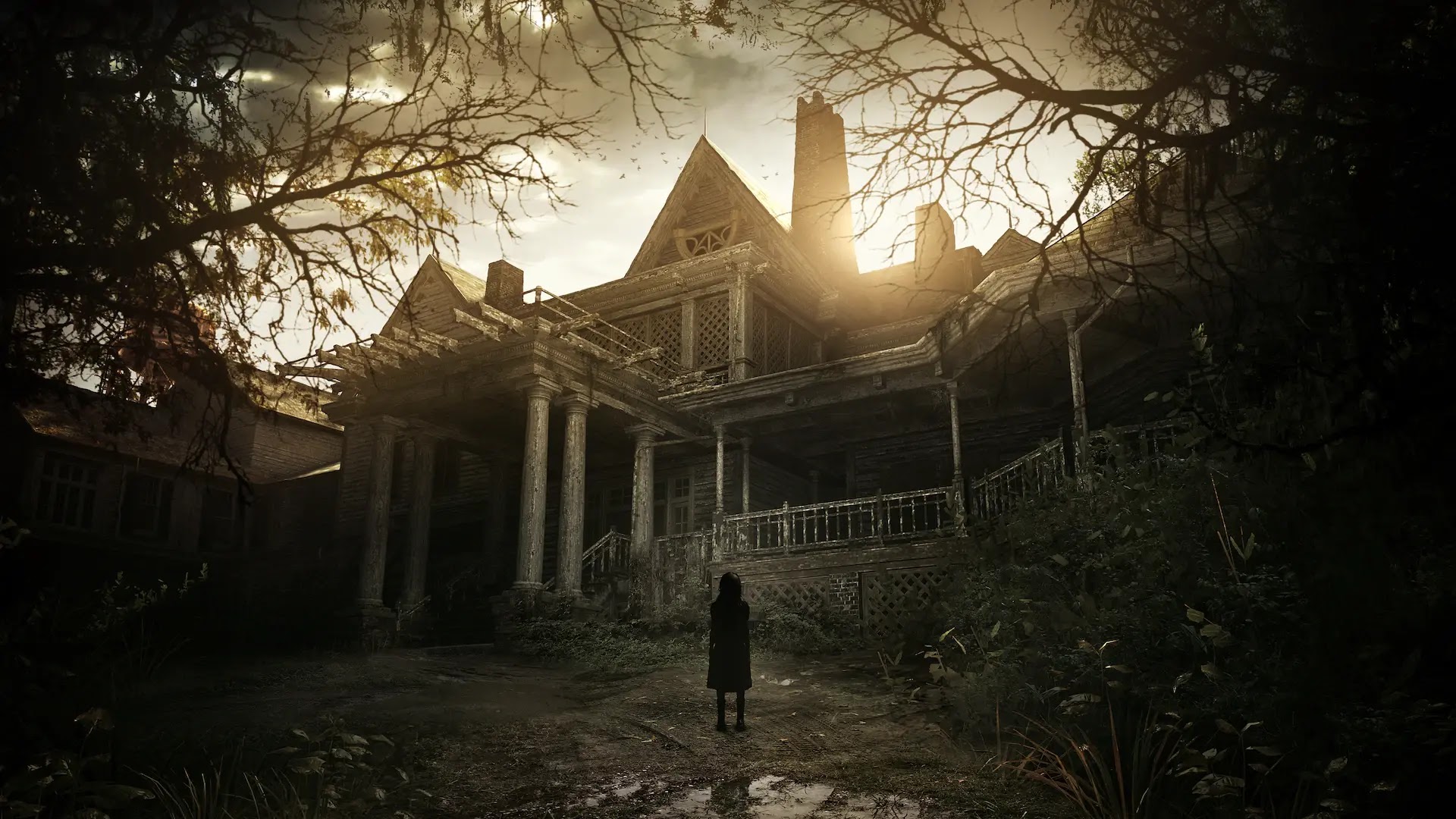
While graphically superior to the rest of the series up until this point, Resident Evil 7 is a throwback to the older days of jump scares and atmospheric horror. Letting go of a lot that has already passed at this point, this latest entry starred a brand new protagonist looking for his wife that went missing years prior. So after receiving an email from his wife Mia, Ethan sets out to Louisiana to find her and the place she wrote to him.

Now, as a general rule, I don't do actual horror as it's not something I generally handle well or without a nightlight or ten. Thinking that the remake of Resident Evil 2 was scary in the beginning just didn't cut for how terrifying the series gets when thrown into a first person view. Set deep in some remote area of Louisiana's Bayou, even with the sun out most of your time will be in the shadows or the full on dark with the trees overhead and the thick mansion walls separating you from the outside.

What I appreciated with the setup and the layouts of this mansion and the surrounding property is that it was a throwback to the older titles which starred mansions and cryptic puzzle solving police stations. You're not sprinting around, you're cautiously looking out for what could be around the next corner. You’re opening and closing doors as decoys or protective barriers to buy you a few seconds to get away. There's plenty of places to hide, that is, until there isn't as the environment itself was insane to go through at times. What was once safe becomes a trap with enemies being able to crash right through walls you didn't even know were breakable.

It was scary but it also added to the experience as nothing was ever safe and like the Mr. X and Nemesis before them, the family that owns this place and holds both you and Mia hostage are infected and until their own real boss fights? In. Vin. Ci. Ble. This aspect only helped to drive the horror as while they could potentially be put down with a few clips from your pistol or shotgun, it's temporary. You need to figure out the way around them all while avoiding and taking out these mold like creatures that spawn in several different forms to make your life that much harder.

With the way that the stage is set up with the property that Ethan finds himself on and the infected family that owns it, I found it a bit sad that with all of their personality, Ethan barely has any. At first while playing through the base story I thought that this could have been a side effect of the switch from a third to first person approach. You no longer see your protagonist go through the horror from a slightly detached perspective, instead you get to see it up front and personal and you essentially become Ethan. This was the case of course until loading up the post DLC addition of “Not a Hero” featuring series veteran Chris Redfield who has all of the personality that he’s always had. So maybe, just maybe this is a case of a brand new face into a long existing series with plenty of forces of personality to fall back on.

If I had perhaps one real complaint about RE7, it would be that it goes on much longer than it should have. The first two thirds of the adventure take place within the mansion grounds as Ethan is searching for both Mia and a way out for the two of them. From there though, things switch narrative points of views twice and just keep on going and going much longer than it ever should have and honestly? I didn’t find that the last two chapters did much to help the story. While they added background to everything, those two chapters could have been a) covered in a cutscene entry and b) cut out entirely. Otherwise, I jumped plenty of times as while yes they are jump scares, some of them are impossible to see coming as in the realm of reality, it should not have been possible so congrats on that one Capcom.

Now, perhaps the major question that you may have on this review is "why now?". RE7 has been out for years and RE8, Resident Evil Village just dropped last week. Well the reason is simple, how could one review the latest in the series objectively without having played it's predecessor especially when it's a new protagonist at the helm? So settling in for a weekend of horror, I came away pleasantly surprised and made sure that this was written before loading Village.

Summary

So with that said, Resident Evil 7: Biohazard was fairly well done. Having previously picked up the Gold version and also having it on PS+, there's no reason that it should have taken this long to go through it but the throwbacks to a scarier time was worth the experience.

Score: 8 / 10


Share:

R-Type 2 Final - XB1 Review


R-Type 2 Final
by developer Granzella Inc. and publisher NIS America Inc.Microsoft Xbox One review written by Nick with a copy provided by the publisher.

Estimated reading time: 5 minutes


It’s been a long time since we saw a new R-Type game released, despite being one of the great series in the genre. This latest iteration in the series doubles down on the things that have made the series so great over the years, which should please hardcore fans of the series and genre. It’s not perfect, but R-Type Final 2 is still very good.

R-Type is one of those franchises I will always have fond memories of. I still remember the original game and some of its crazy boss fights. So to say I came into this title with a potent case of nostalgia is a safe bet. The good news is, R-Type Final 2 pretty much hit most of the expectations I had for it, even if it did not offer much in the way of surprises.

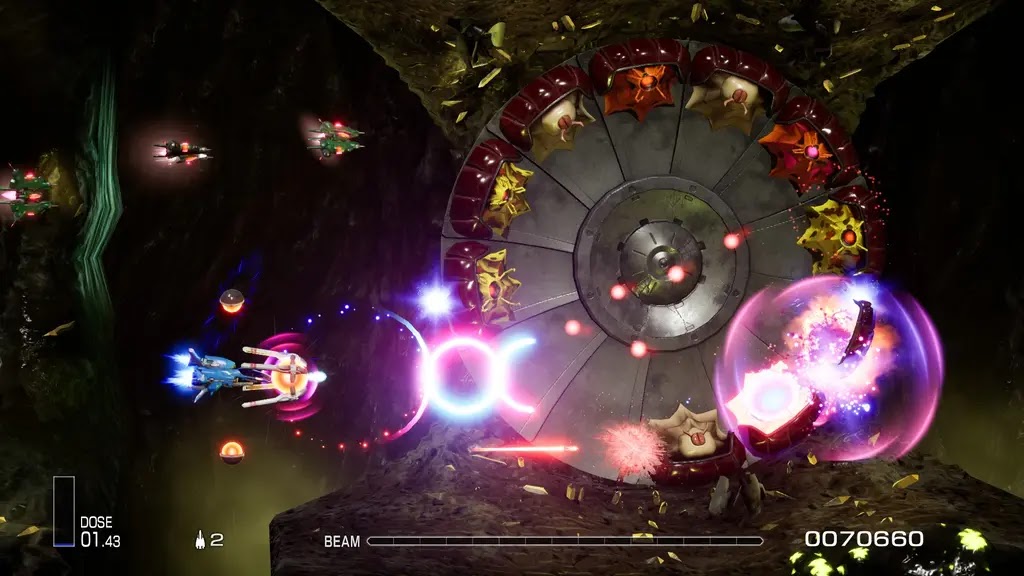
The first thing to understand about the R-Type games, and it holds true in this release as well, is that it is a shooter – but not exactly a bullet hell one. There is a greater emphasis on memorization than reflexes to be successful. There is plenty happening on the screen, but it seldom reaches the insanity of shooters that paint you into one of two or three one-inch spaces of safety on the screen amidst waves of projectiles. Enemies move relatively slowly, and their numbers and gunfire seldom overwhelms – but you still have to be quite careful. This is one-hit-and-you-die territory, not a life bar that provides room for error like in many others in the genre.

Instead of fast-flying debris to contend with, R-Type Final 2 focuses on more persistent threats. Objects or enemies that take multiple shots to kill and environments that have a knack for cramming you into narrow, claustrophobic spaces provide plenty of challenge, despite the somewhat slower pacing of R-Type. Like most shoot –‘em-up games, you earn power-ups as you play that help to even the odds.

Bouncing lasers, wide rings of energy, homing missiles and more factor into your ability to take out enemies that are not directly in front of you, but still a threat. These come in very handy when you are flying through some of the narrow passageways and have enemies at ground level just waiting for you to emerge. It never feels cheap – but it does require that you start to memorize patterns to lean from your mistakes. There are not just the power-ups, but there is your primary weapon which has some flexibility to it as well. You can charge it up – hitting different ‘points’ of power. It’s tempting just to hold down the rapid fire button, and that’s good enough for the average enemies, but those charged shots are a huge help against enemies that take multiple hits – especially bosses.

Part of learning the lay of the land is in how to make best use of your companion pod, as it can help deal additional damage, shoot enemies that might not be horizontal to you, or used as a sort of barrier to prevent your ship from taking a critical hit that has you dying. Like the older games in the series, you don’t spawn right where you died – you go back a bit. That can be particularly frustrating in boss fights, as it makes you learn how to be perfect in besting them.

You can’t just mess up, take a hit and respawn with a few frames of invincibility that allows you to get some cheap hits in. Despite the slightly slower pace - R-Type Final 2 is not an easy shooter. Checkpoints can be a bit rough, especially when you don’t always have the opportunity to replace your lost power-ups, making it even harder to survive the spot where you just died. The game feels unapologetically old-school in this regard, for better and for worse.

In terms of the presentation, it’s more good than not. The music is generally peppy and fits the action nicely enough, with the requisite sound effects as you blast away enemies. Visually, it’s the best-looking game in the series, but is not the flashiest shooter out there either. I’ve always enjoyed the use of bright colors and creative enemies though – especially the often distinctive-looking bosses.

In terms of overall replay value, the biggest hook are the numerous ships and weapons configurations that can be unlocked. There’s about a hundred ships – so there’s plenty to unlock along the way, and those who enjoy collecting / unlocking will have a lot of content here. There is also a Score Attack mode, though it doesn’t really offer anything all that compelling above and beyond the core campaign.

Summary

R-Type Final 2 wears its classic shoot-‘em-up trappings on its sleeve. This was a game funded by fans of the series, and they should be happy with what’s here as R-Type Final 2 absolutely feels like a part of the venerable series. It may not be the most approachable game though, for those who don’t have nostalgic love for the series or sometimes find the genre inaccessible. There are different difficulty settings, but on any level – you will die a lot as it really does boil down to your persistence and your willingness to memorize the stages.

Score: 7.5 / 10


Share:

Atelier Sophie: The Alchemist of the Mysterious Book DX - PS4 Review


Atelier Sophie: The Alchemist of the Mysterious Book DX by developers Gust Co. Ltd., Koei Tecmo and publisher Koei Tecmo AmericaSony PlayStation 4 review written by Richard with a copy provided by the publisher.

Estimated reading time: 12 minutes


Atelier Mysterious Trilogy Deluxe Pack: Atelier Sophie: The Alchemist of the Mysterious Book DX by developer Gust and publisher Koei Tecmo AmericaSony PlayStation 4 review written by Richard with a copy provided by the publisher.

The Atelier series of games has always been a personal favorite of mine. Dating back all the way to 1997 on the PS1, albeit Japanese only release, the Atelier series has held a rather unique approach to a crafting/combat RPG. The games in the Atelier series are generally grouped in sets of three, and will have a connected theme and style. Originally released in 2015, now rereleasing as a “DX” version, we have Atelier Sophie: The Alchemist of the Mysterious Book DX.

A bit of a disclaimer for those who've already played the original version: I did play Sophie when it initially released, and while the details in my mind are a little vague as it has been a while, there aren't a whole lot of differences between the DX version and original game. If you've already played the original, and bought the DLC for it, you won't really be getting much new. That being said, if you've only started your delve into the Atelier games recently, picking up Sophie DX, or the “Mysterious DX” triple pack, may be a good choice. That's the blunt part for previous players, so let's get into the details for those more new to Sophie.

The storyline for Sophie revolves around the titular character, Sophie, practicing alchemy after her late grandmother has passed away, leaving her on her own. As she is trying to make a recipe for some medicine to help out a local villager, she writes the recipe down in a reference book her grandmother left behind. A little bit of light show later, and the book starts floating. And talking. Turns out, the reference book is named Plachta, and it wants to be used to create even better alchemic items. New goal for Sophie: fill up Plachta with alchemy recipes to gain Plachta's knowledge.

So, how does one go about learning Alchemy? Well first, let's take a look at what Alchemy is: the power to transmute materials into other materials or items. So the first thing you're going to need to do is gather those materials. While you might be able to find a few items floating around Kirchen Bell, Sophie's home village, most of what you need will be farther away. Unfortunately, the world outside the walls of town isn't too safe, as vicious, and maybe cute, monsters roam around. While Atelier Sophie definitely has the focus majorly on the crafting component, that doesn't mean there won't be combat involved. The basic flow of gameplay will be traveling to locations to pick up materials, returning to synthesize items, figuring out new recipes from Plachta's hints, and then doing it over again.

The first part is to think up new recipes. Thankfully, Plachta will give you some hints as to what will spark that new idea, all of which is available in a sort of growth chart you can check in “Recipe Ideas” in your main menu. Sometimes the recipe idea requires you to talk to someone, gather a certain item/material, craft an item with certain traits/effects, or defeat a certain monster. So now that you have an idea, sometimes woefully cryptic, off you go to the outside of town to wherever you need to be to come up with a new idea or gather the materials you need. So you bring along up to four friends with you out into the field to get what you need. To get there, you need to travel on the world map to a series of nodes, which will both consume LP and progress time. Thankfully time doesn't have any pressing concerns, as there is no time limit, but I will explain a bit about how that works later. The LP on the other hand, basically functions as numerical stamina: the further you travel, the more it decreases. At certain levels you will start to see a decrease in party member stats in battle, so pay attention to that.

While actually exploring the areas you travel to, there will be enemies floating around, as well as harvest points where you can pick up items. Monsters can also drop items upon defeat, as well as money and experience, so you shouldn't necessarily avoid them, if you can beat them. Gathering is simple enough: go interact with harvest point. They will appear on the mini-map as green dots, while enemies appear as red stars. Do pay attention though, as you only have so much space to collect items before you have to return with them or discard some. Your Atelier has tons of space though. Seriously, if you can manage to fill out the Atelier inventory, that's probably a few hundred hours worth of just harvesting. As you gather, or fight monsters, time will progress, and monsters and harvest points may change, especially between night and day. Be careful because enemies get more powerful at night. While I don't have a particularly good grasp of how much stronger they get at night, but that could explain why some of the bosses beat me senseless one time, then got demolished the next...huh, well, hindsight is 20/20 I suppose.

In addition to what I mentioned about gathering, there is also a “Gathering Level” that goes up to five. The higher the level, the better quality items you find, with better effects. The downside is that enemies also get stronger. While the day/night system never really put me off slapping a monster at night, the gathering level could be the difference between a level 8 and a level 18 enemy. And considering your own level caps out at 20? That's a big deal. If you find yourself wanting a higher level for better items, simply gather and beat monsters until it goes up. Worry not if it takes too long, as you can make an item later to speed up, or slow down, the process.

Since we're already in the field anyway, let's take a look at combat. Atelier Sophie has changed up the combat from the previous titles, and will probably be different from future titles. Combat is turn based, with turn order dictated by a characters speed. You can tell where a turn will happen after selecting an action based on a dynamic bar that appears on the left side of the screen. Like any good RPG, you've got many of the basic actions in battle: Attack, Skill, Run, Item, and Defend. All those should probably be pretty self explanatory, there are a few intricacies going on. First up we have the concept of stances. While selecting an action, you can choose to be in either an offensive or defensive stance. Offence focuses on attack power, while defensive focuses on defence.

If you're like me and believe that the enemy can't kill you if they're dead, just keep in mind that a late game boss hit one of my party members for 130 damage in offence stance, and only about 27 damage in defence stance. Atelier Sophie also has “chain attacks” and “chain guards”. Basically, there is a “unison gauge” that fills up as you perform actions and get attacked. The higher it is, the more likely your teammates are to help you out. In Offence stance, this is mostly follow up attacks and moves with special effects as follow up attacks. In defence stance, you can still do follow up attacks, but can also guard your teammates. Note that each character can select a different stance, so you can split between offence and defence. New to the DX version, you can speed up battle up to 2x speed, making the battles o by a lot faster if you're trying to farm a certain material or experience.

Now that you've collected some items, it's time to actually make something! Off to your Atelier you go, walk up to your cauldron, and you can start the synthesis process. First you select what you want to make from your list of recipes, then you have to select the ingredients. Items you synthesize will usually have different effects, which are based on the “value” of the selected materials. These are shown on a bar at the right side of the screen, and each effect is tied to the materials you select for that specific category. Next is Quality, which is determined by either a “rating” or a numerical value later in the game. This value can get up to 999, although you probably won't be hitting that until the post-game, and is a modifier for the abilities tied to items, or the equipment specs. Once you've selected your materials, you have to Tetris them into your cauldron of choice. The cauldron will have a grid you need to slot the materials on, where there are bonuses that will enhance the value effects when you put a material on them. After finalizing your positions, you create your item! Unless your quality is too low. After making the item, you can attach traits to the item. These traits are carried over from the materials you used during synthesis, and depending on alchemy level, you can put up to three traits on an item.

That's it for the main bulk of the gameplay, so what else is there to do around town? Well, you can interact with residents, accept quests and rumours from Horst, and improve your bond with your party members. This is also where the time system comes more into play, as certain NPCs will only be around or available during certain days of the week or times of day. The time system also determines when items will become available in shops again after purchasing all their stock. In addition to that, you can register items with one of the characters ad they will produce more of them for you to purchase at set time intervals. Requests and rumours will probably be a chunk of how you earn, and spend, cash. Requests will task you either with providing items, or hunting a certain monster. Monster hunting requests have a time limit in days, but are so long they aren't really a practical issue. Rumours can be anything from causing certain traits to appear on items, to summoning super strong optional boss type monsters on the field. Let it be known that your money will probably fluctuate between “lots” and “none” throughout the entire game.

In addition to the base game, there was also DLC available for Atelier Sophie. The DX version comes complete with the DLC, including the harder despair difficulty, the post-game “dungeon”, new traits for items, a few new cauldrons, the ability to speed up battle, the ability to run on the field maps, and I believe a new outfit. That's about it for “bonus content”, so if you've already purchased Sophie and the DLC before? Probably not a whole lot to make you consider the DX version. If you didn't get the DLC or finish Sophie, and you want to, you may be more inclined to pick this version up.

So how does it stack up for newer players? Well, the graphics for the fields feel a little dated, but the character graphics still look pretty sharp. The DLC soundtrack items come with the DX version as well, and since the music for the Atelier games hasn't let me down yet, and Sophie is no exception, it should be good to still listen to. Gameplay is a bit of a mixed bag. My first Atelier games had a huge focus on the combat, with the alchemy being a supplement. In Sophie, it's the opposite: the alchemy is the focus and the combat kind of exists. Really, the combat is there just to spice up the game really. Trust me, when you hit late game and start making items five points down a synthesis chain so you can put a “Power to Destroy Gods” on an item you are trying to make, while also trying to recursively make Geist Aizen to hit quality 999 for the best gear, it gets a little...heavy.

On the other hand, I basically ran through the game on normal, and beat the last boss with low quality early game armour and two tier 3 and two tier 2 weapons (out of 5 tiers), so it isn't like it's impossibly difficult. It was a little dumb end game because there's a small difficulty spike, which wouldn't be noticeable if I had actually kept up with my equipment crafting. You also will notice your wallet will have a constant hole in it, because once you start consigning items for duplication, it costs a lot. Pro tip: you earn more exp and money on despair, and gold Punis are still easy at that difficulty.

Summary

Overall, Atelier Sophie: The Alchemist and the Mysterious Book DX was a lot of fun. The combat had an interesting take to it, the alchemy was really well done, if not incredibly daunting for the first half of the game, and I really liked the trait conferral and effect creation aspect. While there is a really low character level, it is supported by a stat increase system, although limited, to supplement you if you can't create the equipment you want or need. While late game alchemy may start feeling like a bit of a slog, the ease of which you can gather materials by that point makes it more reasonable than would first seem. The characters may be a little bland in personality for the most part, but are varied enough to at least be entertaining. No time limits allow you to craft freely, but does result in a sense of little to no urgency to actually carry on the plot. While I wouldn't be able to recommend the DX version to somebody who has already completed Atelier Sophie previously, especially not someone who has purchased the DLC, it definitely won't feel particularly lacking in the lineup of Atelier titles I have on my shelf.

Score: 8.5 / 10


Share:

Random posts

Our Streamers

Susan "Jagtress" N.


S.M. Carrière

Louis aka Esefine

Aldren


Affiliates

JenEricDesigns – Coffee that ships to the US and Canada

JenEricDesigns – Coffee that ships to the US and Canada
Light, Medium and Dark Roast Coffee available.

Blog Archive

Labels